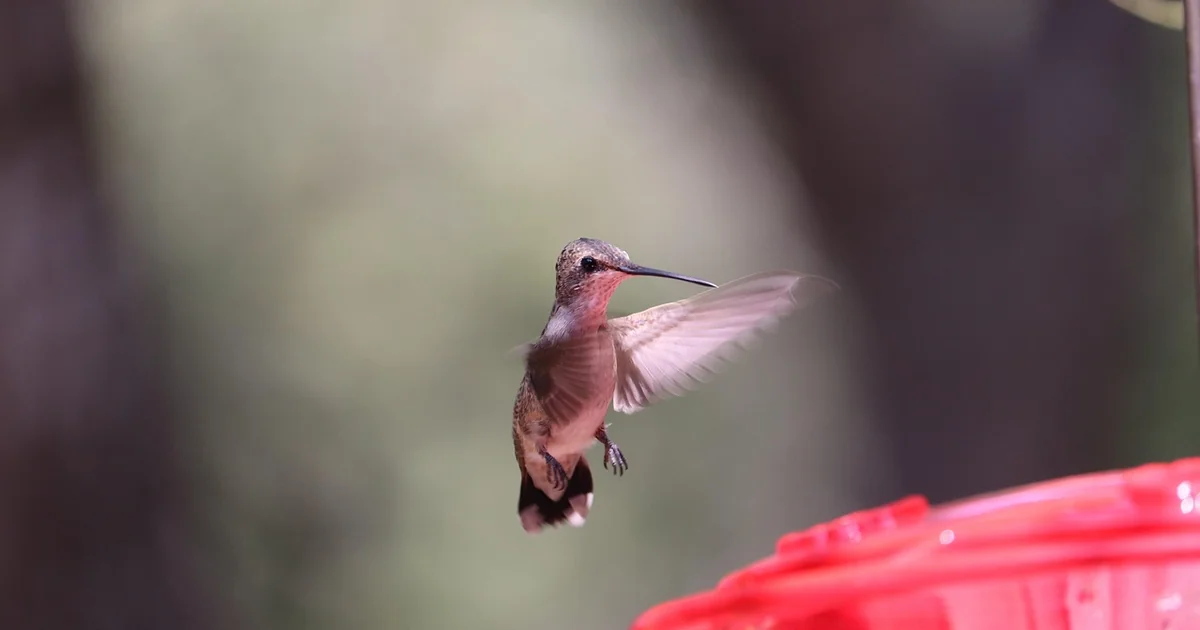
May arrives, and with it comes a familiar thrill. That electric buzz, a flash of emerald and ruby, the frantic darting between blossoms. The hummingbirds are back. It is easy to assume a simple feeder full of sugar water is all they need. That is a good start, certainly. But it is just the beginning. Think of it like this: you can survive on crackers and water, but you would not thrive. Hummingbirds need much more than just a sugary snack to rebuild their strength after migration and to raise their next generation.
Why Sugar Water Alone Falls Short
That red plastic feeder is a beacon. It draws them in with the promise of quick energy. Hummingbirds burn through calories at an astonishing rate. Their hearts beat up to 1,260 times per minute. They need that sucrose fuel just to keep their motors running. But a diet of only sugar water is like a human eating only candy. It lacks the essential building blocks for life.
After a long migration across the Gulf of Mexico, a hummingbird may have lost half its body weight. It craves protein desperately. Protein repairs muscle, builds strong feathers, and supports the entire breeding process. A female hummingbird needs extra protein to produce healthy eggs. The chicks need it to grow. If your yard only offers sugar water, you are providing a snack bar, not a home. To truly meet their hummingbird backyard needs, you must think about the whole menu, not just the dessert course.
1. Plant a Succession of Nectar-Rich Wildflowers
A feeder is artificial. Wildflowers are the original source. Planting a dedicated bed or even a small meadow of tubular blossoms is one of the most effective strategies. Hummingbirds have co-evolved with certain flower shapes. Their long, thin beaks and even longer tongues are perfectly designed to reach deep into trumpet-shaped blooms. They are drawn most strongly to red, orange, and deep pink flowers. These colors signal a high-sugar reward in the natural world.
The real trick, however, is planning for a continuous bloom. May is just the start. If you plant only flowers that peak in May, your yard will be a food desert by July. You need a succession plan. Choose a mix of early, mid, and late-season bloomers. This ensures a steady supply of nectar from spring through the first frost.
Best Choices for a May-to-August Bloom Cycle
For May, consider wild columbine (Aquilegia canadensis). Its nodding red and yellow bells are a classic early-season favorite. Scarlet sage (Salvia coccinea) also starts blooming in late spring and continues until autumn if you deadhead it. For June and July, plant bee balm (Monarda didyma). Its spiky, fragrant heads are irresistible. Cardinal flower (Lobelia cardinalis) is a brilliant red native that explodes in mid-to-late summer. It thrives in moist soil near a rain garden or downspout. For August, trumpet honeysuckle (Lonicera sempervirens) is a non-invasive vine that keeps pumping out nectar when other flowers fade.
Aim for a mix of at least five species with overlapping bloom times. This is not just about volume. It is about reliability. A sudden gap in flowers can force hummers to leave your yard to find food elsewhere. A well-planned garden keeps them close, giving you weeks of front-row viewing.
2. Provide Protective Cover with Shrubs and Small Trees
Hummingbirds are tiny. They are prey for larger birds, cats, and even praying mantises. They will not linger in an exposed yard, no matter how many feeders you hang. Safety is a non-negotiable part of their hummingbird backyard needs. They need places to dart into for cover. They need sturdy branches for resting and preening. And the females need safe, hidden sites to build their nests.
A hummingbird nest is a marvel of engineering. It is about the size of a walnut shell. It is built from plant down, spider silk, and lichen. It stretches as the chicks grow. The female usually places it on a small, downward-slanting branch of a deciduous tree, often 10 to 20 feet off the ground. Oak, maple, and birch trees are common choices. But you do not need a mature forest. A mix of flowering shrubs and small trees creates the layered habitat they require.
Shrubs That Serve Double Duty
Choose shrubs that provide both cover and food. Butterfly bush (Buddleia davidii) is a magnet for hummingbirds and insects alike. Its long, conical flower clusters are loaded with nectar. Flowering quince (Chaenomeles) blooms very early in spring, offering a critical food source when little else is available. Weigela is another excellent choice. Its trumpet-shaped flowers come in shades of pink and red. These shrubs also attract small insects, which brings us to the next critical need.
3. Attract Protein-Rich Insects (Yes, On Purpose)
This is the point where many people hesitate. We are conditioned to kill bugs. We spray for mosquitoes. We swat flies. But for a hummingbird, a single mosquito is a protein-packed snack. A spider web is a source of both nesting material and trapped insects. A significant portion of a hummingbird’s daily diet, especially during breeding season, comes from tiny arthropods. They eat gnats, aphids, leafhoppers, and small spiders. They will even pluck insects from spider webs.
If you want to truly meet their needs, you must stop trying to eliminate every bug from your yard. Instead, encourage a healthy insect population. This does not mean tolerating a plague of pests. It means using organic gardening practices. Avoid broad-spectrum pesticides. They kill the good bugs along with the bad ones. A single application of a pesticide can wipe out the protein source for a nesting female and her chicks.
The Overripe Fruit Trick
One of the easiest ways to boost the insect population for hummingbirds is to leave out overripe fruit. Place a small bowl or a hanging basket of very soft bananas, mushy strawberries, or a cut-up cantaloupe near your feeders. The sweet, fermenting smell attracts fruit flies and gnats almost immediately. Hummingbirds are incredibly agile. They will hover near the fruit and snap up the tiny insects one by one. It is a fascinating behavior to watch. You are providing a protein buffet with almost zero effort. Just replace the fruit every few days to prevent mold.
4. Hang Multiple Feeders to Reduce Aggression
Hummingbirds are fiercely territorial. A single dominant male will often claim a feeder as his own. He will perch nearby and chase away any other hummingbird that tries to approach. This is exhausting for him and stressful for everyone else. It also means other birds, especially females and juveniles, may not get enough to eat. This is a common problem that many well-meaning hosts encounter.
The solution is surprisingly simple. Do not place all your feeders in one location. Instead, hang two, three, or even four feeders in different parts of your yard. The key is to place them where a hummingbird on one feeder cannot see another feeder. Use visual barriers. Hang one feeder on the front porch. Put another in the backyard near a large shrub. Place a third on the side of the house, partially hidden by a tree branch. When a hummingbird cannot see a rival, it feels less threatened. It will defend its own small territory, but it will not waste energy chasing birds it cannot see.
You may also enjoy reading: 7 Tips to Plant and Grow Serviceberry.
Spacing and Placement Tips
Aim for a minimum of 15 feet between feeders. More distance is even better. If you have a small yard, use foliage to break the line of sight. A single large bush between two feeders can make all the difference. You will notice the difference immediately. Instead of one bird dominating and others being chased away, you will see multiple birds feeding peacefully at the same time. This simple adjustment is one of the most impactful hummingbird backyard needs you can address.
5. Provide a Dedicated Water Source
Hummingbirds get some moisture from nectar and sugar water. But they cannot bathe in a feeder. Bathing is essential for feather maintenance. Clean feathers are crucial for insulation and flight efficiency. A hummingbird with dirty or damaged feathers cannot fly as well. It will struggle to catch insects and escape predators.
A standard bird bath is often too deep for a hummingbird. They prefer a very shallow, gentle water source. A moving mister or a dripper is far more attractive to them than a still basin. The sound of splashing water catches their attention. They will fly right through a fine mist to cool off and clean their feathers.
Simple Water Features That Work
You do not need an expensive pond. A simple mister attachment for a garden hose works wonders. Attach it to a stake or hang it near a shrub. Set it on a timer to run for a few minutes in the heat of the afternoon. You can also buy a drip jug. It is a simple container with a tiny hole that drips water onto a leaf or a flat rock. Even a shallow saucer filled with pebbles and a little water can serve as a bathing spot. The pebbles give the hummingbird a safe place to perch while it dips into the water. Change the water every day to prevent mosquitoes from breeding.
6. Keep the Feeders Clean and Fresh
This might seem obvious, but it is the most commonly neglected aspect of hummingbird care. Sugar water ferments quickly in warm weather. Fermented nectar can grow mold. Mold is deadly to hummingbirds. It can cause a fatal fungal infection of the tongue. A dirty feeder is worse than no feeder at all.
In May, when temperatures are moderate, you should change the sugar water every two to three days. Once the summer heat arrives, you must change it daily. Do not fill the feeder to the brim. Fill it with only as much as the birds will drink in two days. This reduces waste and keeps the nectar fresher.
The Cleaning Routine
Every time you refill the feeder, give it a quick rinse. At least once a week, give it a deep clean. Use hot water and a bottle brush. Never use soap. Soap residue can be harmful. A solution of one part white vinegar to four parts water works perfectly. Let it soak for a few minutes, scrub thoroughly, and rinse very well. Let it dry completely before refilling. This simple habit will keep your visitors healthy and coming back all season long.
7. Avoid Red Dye and Unnecessary Additives
There is a persistent myth that you must add red food coloring to hummingbird nectar to attract them. This is false. It is also potentially harmful. The long-term effects of artificial dyes on such tiny birds are not fully understood, but there is no benefit to taking the risk. The red parts of your feeder are enough to catch their attention. The flowers you plant are a natural signal.
Make your own nectar. It is cheaper and safer. The recipe is simple. Mix one part white granulated sugar with four parts water. Boil the water to help the sugar dissolve and to slow fermentation. Let it cool completely before filling your feeder. Do not use honey. Honey can cause a fatal fungal infection. Do not use artificial sweeteners. They provide no calories and will starve the birds. Do not use brown sugar or raw sugar. They contain iron and other minerals that can be harmful in high concentrations. Plain white sugar is the closest approximation to the natural sucrose in flower nectar.
When you cover these seven areas, you move from being a casual observer to an active steward. You are not just feeding birds. You are creating a complete habitat that supports their entire life cycle. The reward is immense. You will see more hummingbirds, more often, for longer periods. You will witness behaviors that most people never see: a female gathering spider silk for her nest, a juvenile practicing its hovering, a male performing his pendulum-like courtship dive. May is the perfect month to start building this sanctuary. The hummingbirds are waiting.