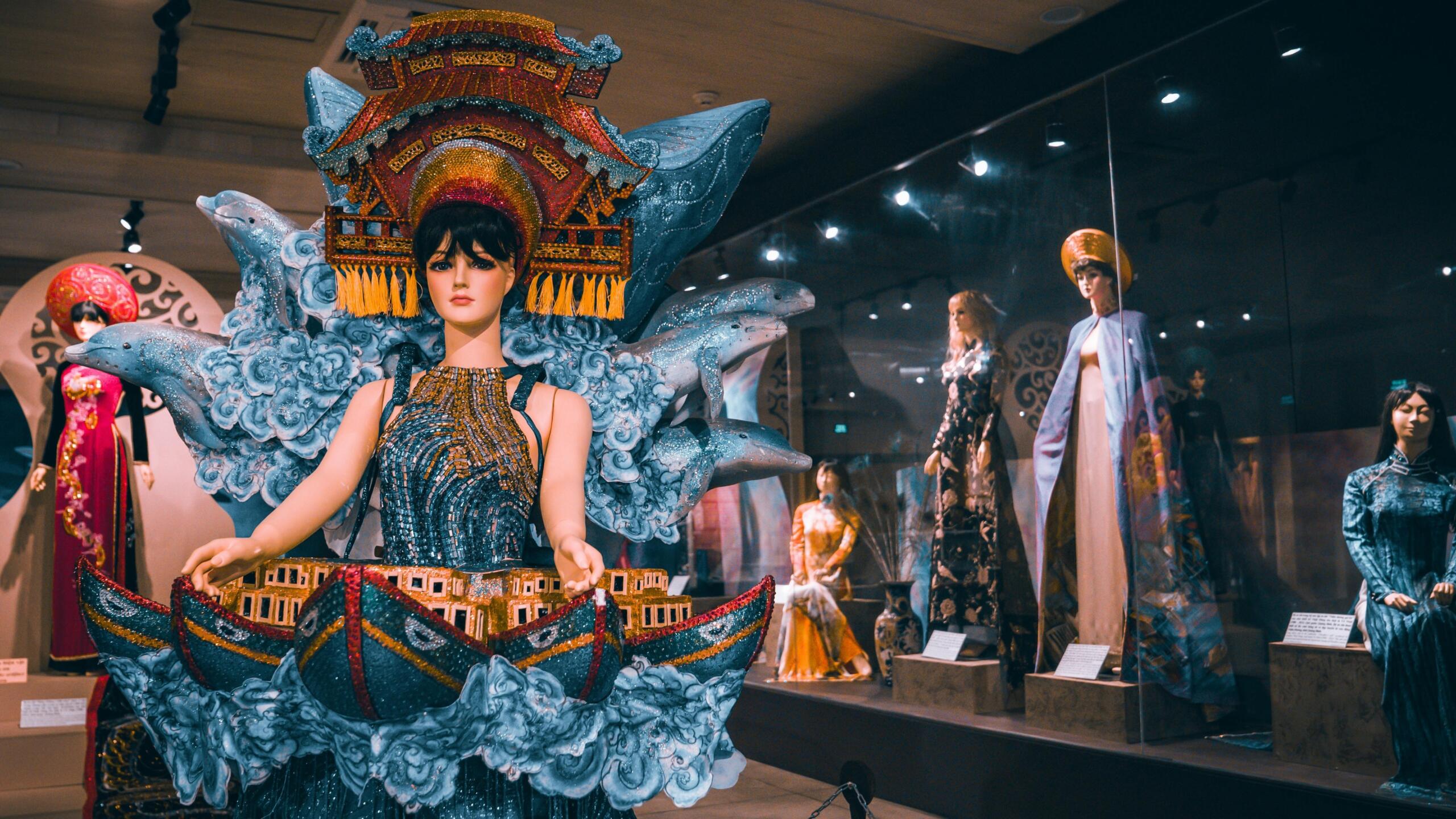
The art fashion collection at the Phoenix Art Museum contains nearly 9,000 objects spanning five centuries, with works selected for their design merit, historical significance, and condition. Key designers represented include Alexander McQueen, Chanel, and Christian Dior, with important pieces from avant-garde and mid-century haute couture movements, showcasing fashion as fine art. Art fashion at the Phoenix Art Museum is a designation for garments valued for design innovation and historical significance, selected to represent fashion as fine art.
This guide delves into the rich history and significant pieces within the Phoenix Art Museum’s remarkable fashion design collection.
What Is Art Fashion at the Phoenix Art Museum?
The art fashion collection at the Phoenix Art Museum is meticulously curated, housing nearly 9,000 objects that include couture garments, accessories, and ephemera. Items are selected for inclusion based on their intrinsic artistic merit, their importance in fashion history, and their preservation state. This approach ensures that the collection represents fashion not just as clothing, but as a significant art form. The designation of “art fashion” signifies that each piece is valued for its design innovation and historical context.
The collection’s core principle is that each work is judged on its merit as a work of art, considering design, historical significance in fashion, and condition. This ensures that visitors are viewing garments that have made a substantial impact on the landscape of fashion and design. What is the Phoenix Art Museum’s fashion design collection? It is a comprehensive archive of significant garments and accessories, treated as works of art. How are items selected for the collection? They are chosen based on their artistic value, historical importance, and physical condition.
Art fashion at the Phoenix Art Museum is a designation for garments valued for design innovation and historical significance, selected to represent fashion as fine art.
The Phoenix Art Museum’s fashion design collection features nearly 9,000 objects of couture, accessories, and ephemera. This vast collection allows for a deep exploration of fashion’s evolution.
How Did the Phoenix Art Museum Fashion Design Collection Begin?
The fashion design collection at the Phoenix Art Museum was established in 1966, marking a significant step in recognizing fashion as a legitimate area of artistic study and preservation. Since its inception, it has grown to encompass a remarkable span of nearly five hundred years of fashion history. This extensive timeline allows for a comprehensive view of how styles, materials, and craftsmanship have evolved across different eras. The collection’s foundational year established its commitment to preserving these sartorial artifacts for future generations.
When was the fashion design collection founded? The fashion design collection was founded in 1966. How long does the collection span? The fashion design collection spans nearly five hundred years.
The collection’s establishment in 1966 laid the groundwork for its impressive scope, covering centuries of design.
Which Iconic Designers Are Featured in the Collection?
The Phoenix Art Museum’s fashion design collection boasts an impressive roster of iconic designers, showcasing a diverse range of styles and historical periods. Notable names include avant-garde visionaries like Alexander McQueen, Yohji Yamamoto, and Iris van Herpen, alongside masters of classic haute couture such as Chanel and Christian Dior, and influential American designers like Claire McCardell and Halston. The collection also features the unique designs of Fortuny, Giorgio di Sant Angelo, and Schiaparelli, offering a rich tapestry of fashion history.
Two specific pieces highlight the caliber of the collection: a stunning ball gown by the influential French designer Christian Dior, created in 1952 and gifted by Mrs. Lois Alberts, and a distinctive ball gown from 1928 by the pioneering American designer Hattie Carnegie, a generous donation from Mr. and Mrs. Stanley Stone. These contributions underscore the importance of community support in building such a comprehensive archive.
Who are the notable designers in the collection? Notable designers in the Phoenix Art Museum’s fashion design collection include Alexander McQueen, Chanel, Christian Dior, Claire McCardell, Fortuny, Giorgio di Sant Angelo, Halston, Ralph Rucci, Iris van Herpen, Yohji Yamamoto, and Schiaparelli. What specific pieces by Christian Dior and Hattie Carnegie are included? A ball gown by Christian Dior (1952) and a ball gown by Hattie Carnegie (1928) are included.
- Alexander McQueen: Known for his dramatic and boundary-pushing designs.
- Chanel: Iconic for revolutionizing women’s fashion with elegance and simplicity.
- Christian Dior: Famed for the “New Look” that redefined post-war silhouettes.
- Claire McCardell: A pioneer of American sportswear, emphasizing comfort and practicality.
- Fortuny: Celebrated for his innovative pleating techniques and timeless designs.
- Giorgio di Sant Angelo: Recognized for his eclectic and bohemian-inspired creations.
- Halston: Epitomized 1970s American glamour with minimalist, fluid designs.
- Ralph Rucci: Contemporary designer known for his masterful craftsmanship and luxurious materials.
- Iris van Herpen: A leader in high-tech couture, exploring 3D printing and innovative materials.
- Yohji Yamamoto: Celebrated for his avant-garde deconstructed silhouettes and use of black.
- Schiaparelli: Known for her surrealist-inspired designs and collaborations with artists.
- Hattie Carnegie: A significant figure in American fashion, known for her bespoke designs.
The collection features many iconic designers, offering a broad overview of fashion’s most influential figures.
What Are the Mid-Century Haute Couture Highlights?
The Phoenix Art Museum’s fashion design collection features a distinguished selection of mid-century haute couture, with a particular emphasis on pieces worn by the notable socialite and fashion patron Ann Bonfoey Taylor. This curated group includes exquisite creations from legendary designers such as Charles James, Balenciaga, Givenchy, and Madame Grès. These garments represent the pinnacle of craftsmanship and design from a pivotal era in fashion history, embodying the elegance and sophistication of the 1940s and 1950s high fashion scene. The inclusion of garments worn by Ann Bonfoey Taylor adds a layer of personal history and context to these masterworks.
What mid-century couture pieces are highlighted? The mid-century haute couture highlights include a collection by Charles James, Balenciaga, Givenchy, and Madame Grès. Who wore the mid-century haute couture? The mid-century haute couture was worn by Ann Bonfoey Taylor.
These mid-century masterpieces showcase the artistry and refined aesthetics that defined an era of unparalleled elegance.
What Makes the Avant-Garde Archive Unique?
The avant-garde archive within the Phoenix Art Museum’s fashion design collection is distinguished by its focus on designers who pushed the boundaries of creativity and construction. This section highlights the work of influential figures such as Azzedine Alaïa, Jean Paul Gaultier, Claude Montana, Thierry Mugler, and Issey Miyake. These designers are celebrated for their innovative use of materials, unconventional silhouettes, and willingness to challenge traditional notions of beauty and dress. Their contributions represent a critical evolution in fashion, moving beyond mainstream trends to explore more experimental and artistic expressions.
Why is the avant-garde archive notable? The avant-garde archive is notable for its collection of groundbreaking designs that challenged fashion norms. What avant-garde designers are in the collection? The avant-garde designers in the collection include Azzedine Alaïa, Jean Paul Gaultier, Claude Montana, Thierry Mugler, and Issey Miyake.
The avant-garde archive showcases designers who have redefined fashion through bold experimentation and visionary concepts.
What Are the Key Notable Pieces in the Collection?
The collection is enriched by a variety of specific, notable pieces, many of which are generous gifts from designers and patrons that honor significant occasions or individuals. These contributions highlight the museum’s commitment to acquiring works of exceptional quality and historical importance across different eras and styles. Each item tells a story of design innovation, craftsmanship, and the philanthropic spirit that supports the collection’s growth.
| Garment/Accessory | Designer | Year | Nationality | Donor Information |
|---|---|---|---|---|
| Asymmetrical dress | Stéphane Rolland | 2008 | French | Gift of Stephane Rolland Haute Couture in honor of the exhibition Extending the Runway: Tatiana Sorokko Style. |
| Coat | Geoffrey Beene | Fall 1996 | American | Gift of The Geoffrey Beene Foundation in honor of the Museum’s 50th Anniversary. |
| Hat | Lulu Guinness | 2000 | British | Gift of Mrs. Linda Herold. |
| ‘Liesel’ gown | Monique Lhuillier | Spring 2011 | American | Gift of Ms. Monique Lhuillier in honor of the exhibition Extending the Runway: Tatiana Sorokko Style. |
| ‘Motherwell’ Infanta gown | Ralph Rucci | Spring 2005 | American | Gift of Chado Ralph Rucci in honor of the Museum’s 50th Anniversary. |
| ‘The Dancers’ gown | Ralph Rucci | Spring 2010 | American | Gift of Chado Ralph Rucci in honor of the exhibition Extending the Runway: Tatiana Sorokko Style. |
What specific notable pieces are in the collection? Specific notable pieces include an asymmetrical dress by Stéphane Rolland, a coat by Geoffrey Beene, a hat by Lulu Guinness, and gowns by Monique Lhuillier and Ralph Rucci. Who donated the asymmetrical dress by Stéphane Rolland? The asymmetrical dress by Stéphane Rolland was a gift of Stephane Rolland Haute Couture.
These gifted garments represent significant contributions to the collection, underscoring the impact of individual designers and donors.
What Research Resources Does the Astaire Library Offer?
Complementing the museum’s exhibition spaces, the Astaire Library, situated within the Phoenix Art Museum’s Lemon Research Library, offers extensive research resources for those interested in fashion history. This specialized library holds a significant collection of books and magazines dedicated to fashion, fashion design, and costume. Patrons can access a wealth of information, including extensive back issues of influential publications such as Vogue, Harper’s Bazaar, and Godey’s Ladies Book, providing invaluable context and visual material for academic study and personal interest.
What is the Astaire Library? The Astaire Library is a specialized collection within the Lemon Research Library focused on fashion and costume research. What fashion magazines does the library have? The library has extensive holdings of fashion magazines, including Vogue, Harper’s Bazaar, and Godey’s Ladies Book.
The Astaire Library serves as a vital hub for in-depth study and exploration of fashion’s rich past.
Conclusion: The Enduring Legacy of Art Fashion at Phoenix Art Museum
The fashion design collection at the Phoenix Art Museum stands as a testament to the enduring significance of fashion as an art form. Spanning over five centuries and featuring more than 8,000 objects, the collection meticulously documents the evolution of fashionable dress and accessories for men, women, and children, from the late 17th century to the present day. Each work is evaluated critically, with its artistic merit, historical importance, and condition playing key roles in its selection. This comprehensive approach ensures that the collection not only showcases beautiful garments but also provides deep insights into cultural history, technological advancements, and societal shifts reflected through clothing. Reports indicate that the Phoenix Art Museum’s dedication to preserving and presenting these pieces solidifies its role as a crucial institution for the study and appreciation of art fashion.
The collection represents art fashion by treating garments as artistic creations, judged on their design, historical significance, and condition. Why is the Phoenix Art Museum fashion design collection important? It is important because it preserves and presents five centuries of fashion history as a significant art form, offering valuable insights into culture and design. Each work in the collection is judged on its merit as a work of art, considering design, historical significance, and condition.
FAQ
Q: How many objects does the Phoenix Art Museum fashion design collection hold?
A: The Phoenix Art Museum’s fashion design collection features nearly 9,000 objects of couture, accessories, and ephemera.
Q: What designers are in the Phoenix Art Museum fashion design collection?
A: Notable designers include Alexander McQueen, Chanel, Christian Dior, Claire McCardell, Fortuny, Giorgio di Sant Angelo, Halston, Ralph Rucci, Iris van Herpen, Yohji Yamamoto, and Schiaparelli.
Q: When was the Phoenix Art Museum fashion design collection founded?
A: The fashion design collection was founded in 1966.
Q: What is the ‘Motherwell’ Infanta gown?
A: The ‘Motherwell’ Infanta gown by Ralph Rucci (spring 2005) is a gift of Chado Ralph Rucci in honor of the Museum’s 50th Anniversary.
Q: Does the Phoenix Art Museum have research resources for fashion?
A: Yes, the Astaire Library within the Lemon Research Library houses fashion books and magazines, including Vogue and Harper’s Bazaar.
Q: What mid-century haute couture highlights are in the collection?
A: Highlights include a collection of mid-century haute couture by Charles James, Balenciaga, Givenchy, and Madame Grès worn by Ann Bonfoey Taylor.