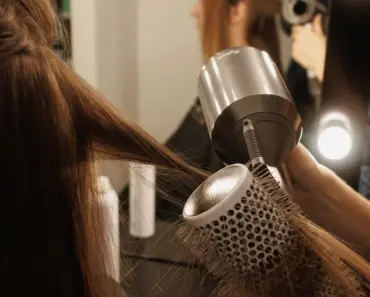
Known for her timeless beauty, the model and TV personality took to social media to share a candid video of her solo shopping trip and the results of her latest salon visit.
The celebrity hair makeover features beautiful low-lights and face-framing layers by her hairdresser of 25 years, Steven Carey. Fans quickly flooded the comments with heart eyes, red love hearts, and a flame emoji, showing their admiration for the Penny Lancaster haircut. This 70s hairstyle is pure vintage hair inspiration for anyone ready to channel some retro charm.
Decoding the 70s Hair Transformation: Low-Lights and Face-Framing Layers
Penny Lancaster’s latest look is a masterclass in vintage hair trends, but what exactly makes it feel so authentically 70s? The key lies in two specific techniques: low-lights and face-framing layers. In a candid video from her solo shopping trip, Penny revealed the results of her salon visit with hairdresser Steven Carey, showing off these elements that together create a retro hair transformation.

The low-lights technique adds subtle depth and dimension to the hair. Unlike highlights that lighten strands, low-lights weave in darker tones, creating a richer, more natural-looking base. This was a hallmark of 70s hair, where dimensional colour gave hair movement without being too stark. The result is a soft, lived-in appearance that feels effortlessly cool and perfectly in line with vintage hair inspiration.
Equally important are the face-framing layers. These shorter pieces around the face add softness and movement, echoing the iconic 70s shag haircut. The shag was all about texture and shape, and these layers achieve that same breezy, carefree vibe. Together, the low-lights and layers give Penny’s hair a timeless yet retro feel that you can easily bring to your own style. Whether you’re after a full 70s hair transformation or just want to add some vintage-inspired dimension, these techniques are a practical starting point for channeling that retro charm.
Body Image Struggles: Penny Lancaster’s Journey from Modeling to Self-Acceptance
Penny’s recent 70s hair transformation may be more than just a style update. It could also symbolize her evolving relationship with her body after years of intense scrutiny. For someone who spent decades in the modeling industry, the pressure to look a certain way is constant. Penny has previously admitted that throughout her life, she has been subject to scrutiny about her body. She told Woman and Home about constantly analyzing and criticizing her body as a model. This kind of body scrutiny is common in the fashion world, where every curve and line is judged.

Early in her relationship with Rod Stewart, Penny’s body image issues were especially raw. She worried about whether he had seen a stretch mark and expected perfection. That fear of being seen as anything less than flawless is a heavy burden. It shows how modeling pressure can follow you even into your personal life, affecting your self-esteem and relationships.
Now, by embracing a bold 70s hair transformation, Penny might be signaling a shift toward self-acceptance. While she hasn’t explicitly linked the hair change to her body image journey, it’s easy to see the connection. Choosing a dramatic, retro look takes confidence. It suggests a willingness to stand out and be seen on your own terms, rather than hiding from judgment. For anyone on their own self-acceptance journey, this is a powerful reminder: small changes in how you present yourself can reflect deeper inner growth. You don’t need to wait until you feel perfect to try something new. Sometimes, the act of changing your look helps you feel more comfortable in your own skin.
Rod Stewart’s Support: How Love Helped Overcome Insecurities
Having a supportive partner can make all the difference when you are stepping outside your comfort zone. For Penny Lancaster, her husband Rod Stewart has been exactly that. Last year, Penny, who has dyslexia, told HELLO! about how Rod supported her while she wrote her book, helping her through the script and reassuring her every step of the way. This kind of unwavering belief from a partner builds a strong foundation for personal confidence.
While Rod hasn’t publicly commented specifically on her recent 70s hair transformation, it is easy to imagine his encouragement played a part there, too. A big style change can feel vulnerable, especially when you worry about what those closest to you will think. Knowing you have a partner who values your happiness over a specific look gives you the freedom to experiment and express yourself without fear.
This public partnership offers a lovely contrast to the private insecurities many of us feel before making a change. It is natural to fear judgment, even from a loving spouse. Penny’s journey shows that overcoming insecurities often starts with open communication and trust. If you are thinking about a bold change, talk to your partner. Their encouragement might be exactly the push you need to try something new and feel great about it.
The Book Journey: Penny Lancaster’s Writing Project and Dyslexia
Penny’s recent 70s hair transformation is a bold statement of personal style, but her resilience runs much deeper than her new look. Last year, Penny revealed a different kind of challenge: writing her own book. As a celebrity author, she opened up about the process, showing that creativity and determination go far beyond fashion.

Penny has dyslexia, a condition that can make reading and writing more difficult. For anyone considering a writing project, this might feel like a major hurdle. However, Penny’s experience proves that with the right support, it is entirely possible to overcome such challenges. She shared with HELLO! how her husband, Rod Stewart, played a key role in her book journey. Rod helped her through the script, offering reassurance and practical help. This partnership highlights how having a supportive partner can make a daunting task feel manageable.
If you are working on a personal project, whether it is a book, a blog, or even a detailed family letter, remember that asking for help is a strength. Writing with dyslexia often requires extra patience and different strategies, such as using voice-to-text software or working with an editor. Penny’s story is a reminder that a 70s hair transformation might catch the eye, but it is the inner strength and support from loved ones that truly define a person. Her book project shows that overcoming challenges, like dyslexia and writing, is possible with persistence and a strong support network.
A 25-Year Partnership: Penny Lancaster’s Trust in Hairdresser Steven Carey
Penny Lancaster’s stunning 70s hair transformation didn’t happen by chance. In the caption of the post, she took a moment to thank Steven Carey, her hairdresser of 25 years. That kind of loyalty speaks volumes. When you find a stylist who truly understands your hair, your style, and how you want to feel, you hold onto them. For Penny, this long-term relationship with Steven Carey isn’t just about convenience—it’s about deep trust and consistency.
Think about your own hair journey. Have you ever switched stylists frequently, only to end up with a cut or color you didn’t love? Building a bond with one hairdresser, like Penny has, can be a game-changer. A long-term hair stylist knows your hair’s history, its texture, and what works for your face shape. They also understand your personality and what makes you feel confident. That’s the kind of partnership that makes a dramatic 70s hair transformation feel effortless and authentic.
Penny’s 25-year relationship with Steven Carey may also be tied to her desire for reliability amid past body image struggles. When you have a trusted professional in your corner, you can experiment with bold styles—like voluminous curls or retro waves—without fear. The trust allows you to take creative risks, knowing the result will suit you.
So, how can you build that same trust with your own hairdresser? Start by being open about what you want, but also listen to their advice. Show up consistently for appointments, and don’t be afraid to ask questions. Over time, that loyal partnership can transform not just your hair, but your whole outlook on self-care.
Frequently Asked Questions
How can I achieve a 70s hair transformation like Penny Lancaster’s?
Start by asking your stylist for face-framing layers and low-lights, which add depth and movement reminiscent of the era. A soft, feathered cut around the face creates that iconic 70s shape, and you can use a round brush when blow-drying to boost volume at the roots. Keeping the style low-maintenance with regular trims every six to eight weeks helps maintain the shape.
Is a 70s hair transformation suitable for all hair lengths and textures?
Yes, the 70s hair transformation can be adapted to suit most hair types, though it works best on medium to long hair to showcase the layers. For shorter hair, focus on soft, wispy layers around the face to mimic the style, and use texturizing products to add movement. Straight or wavy textures hold the look well, while curly hair may need a light styling cream to define layers without frizz.
How does a 70s hair transformation compare to other retro hairstyles in terms of maintenance?
A 70s hair transformation is generally more low-maintenance than tightly curled or heavily structured retro styles, as it relies on natural movement and soft layers. You can refresh the look between washes with a dry shampoo and a quick tousle, rather than needing daily heat styling. This makes it a practical choice for busy lifestyles, offering a welcoming, effortless vibe that fits modern routines.