Afrohemian Decor: How to Create a Warm, Personal Home
Afrohemian decor combines African and African diaspora art, textiles, and craftsmanship with the relaxed layering of bohemian interiors. To bring it into your home, start with furniture you enjoy using, choose one expressive textile or artwork, and connect the room through color, texture, and comfortable lighting.
You do not need a room full of patterns or a new furniture set. A thoughtful mix of everyday pieces and work by makers you can identify gives the style more depth than a collection of vaguely “African-inspired” accessories.
Start With a Room That Works for You
Before buying anything, decide what the room needs to do better. A living room may need a reading light, a bedroom may need less visual clutter, and a dining area may need storage. Let those needs guide your choices.
Build your first arrangement around three elements:
- A useful foundation: the sofa, bed, dining table, or chair you already rely on.
- A focal point: a textile, painting, or well-made furniture piece that draws your eye.
- A connecting detail: a color or material repeated elsewhere in the room.
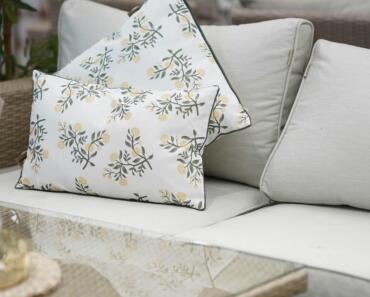
For example, an existing cream sofa can work with a patterned cushion, a dark wood side table, and a print that repeats one cushion color. Live with that arrangement before adding more. A room does not need to be finished in one shopping trip.
Understand the Craft Behind the Look
Use “Afrohemian” as a broad styling description, not the name of one African tradition. Africa includes many distinct cultures and design histories; a room can acknowledge those differences by naming makers, places, and techniques accurately.
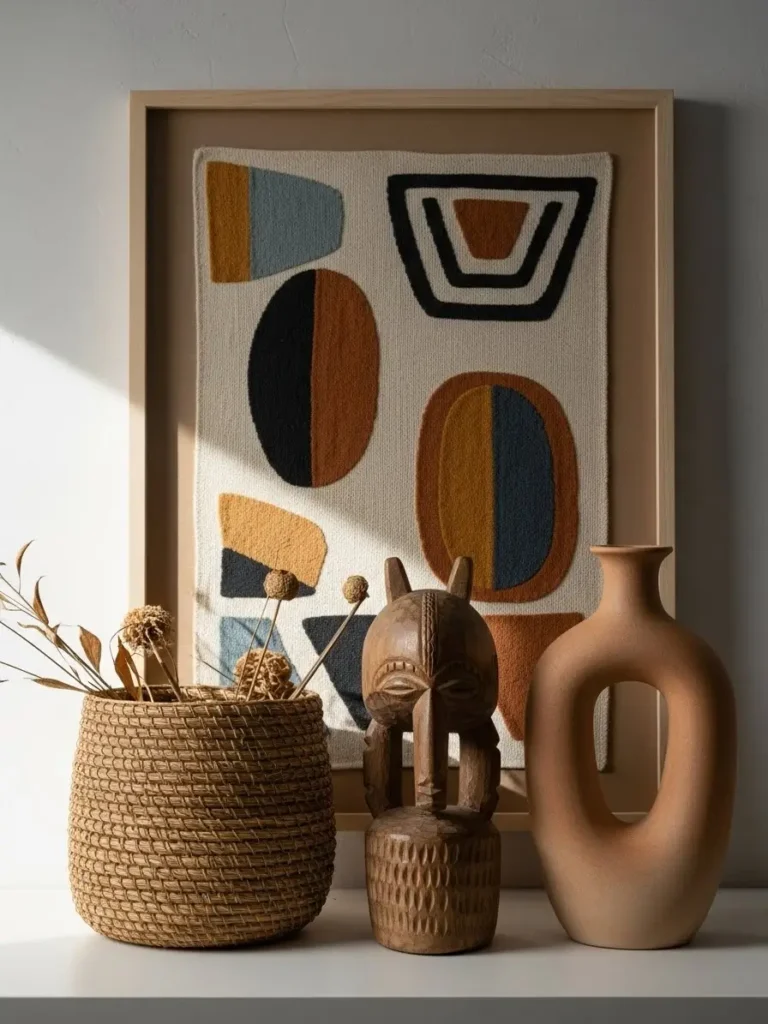
Woven baskets, rattan furniture, and earth tones can support the look, but none of them establishes an object’s origin. Contemporary photography, abstract painting, ceramics, and furniture by African or diaspora designers can be just as relevant as traditional textiles.
Ask better questions when shopping
- Who made or designed the piece, and where?
- Is it woven, printed, embroidered, carved, or assembled?
- Does the seller describe its materials and care requirements?
- Is it a contemporary decorative object, a reproduction, or an older cultural object?
- What evidence supports claims such as handmade, vintage, or fair trade?
A clearly described printed cushion can be a sensible purchase. The problem is presenting a print as a handwoven textile or treating an unidentified object as a cultural collectible. If a piece is described as sacred or ceremonial, learn about its intended use and provenance before buying it as decoration.
Choose a Palette From Something You Love
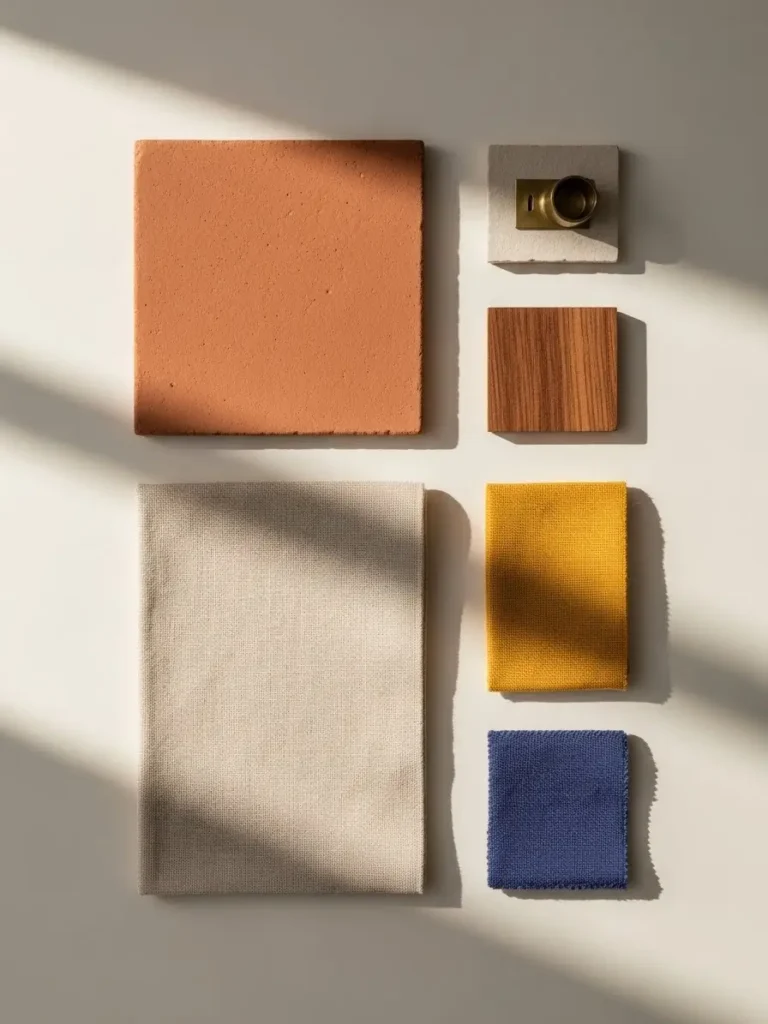
The easiest starting point is an artwork or textile that already contains colors you enjoy. Pull a background color, a supporting shade, and an accent from that piece. This gives new purchases a reference point.
Try one of these combinations as a starting idea:
- Cream, walnut, and indigo: a light background with dark wood and blue accents.
- Sand, terracotta, and olive: an earthy combination suited to woven textures and matte ceramics.
- Warm white, charcoal, and ochre: a simple base for graphic textiles.
- Deep brown, soft ivory, and rust: a richer palette with contrast supplied by lighter upholstery or bedding.
These are decorating options, not rules of cultural authenticity. You can keep cool gray walls, a colorful sofa, or an existing blue rug. Repeat a color from that fixed element in your new additions so it feels included.
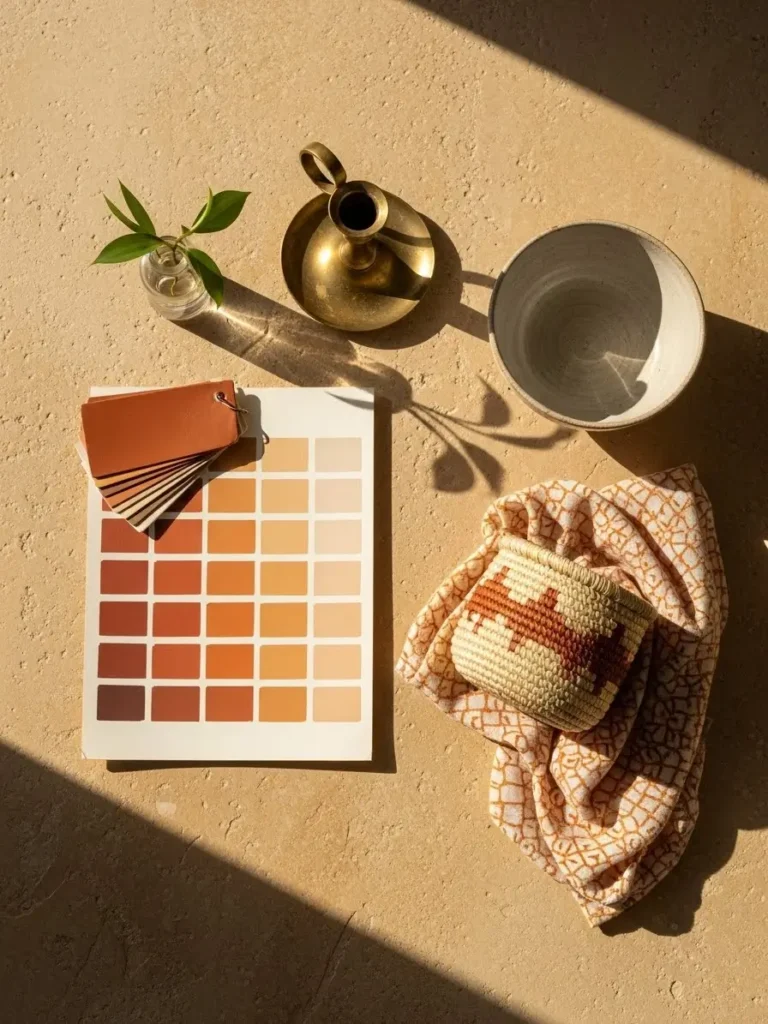
Check paint and fabric samples together in daylight and under your evening lights. If you use the familiar 60–30–10 color guideline, treat it as a rough way to distribute color, not a percentage you must measure.
Select Textiles for Both Their Story and Their Use
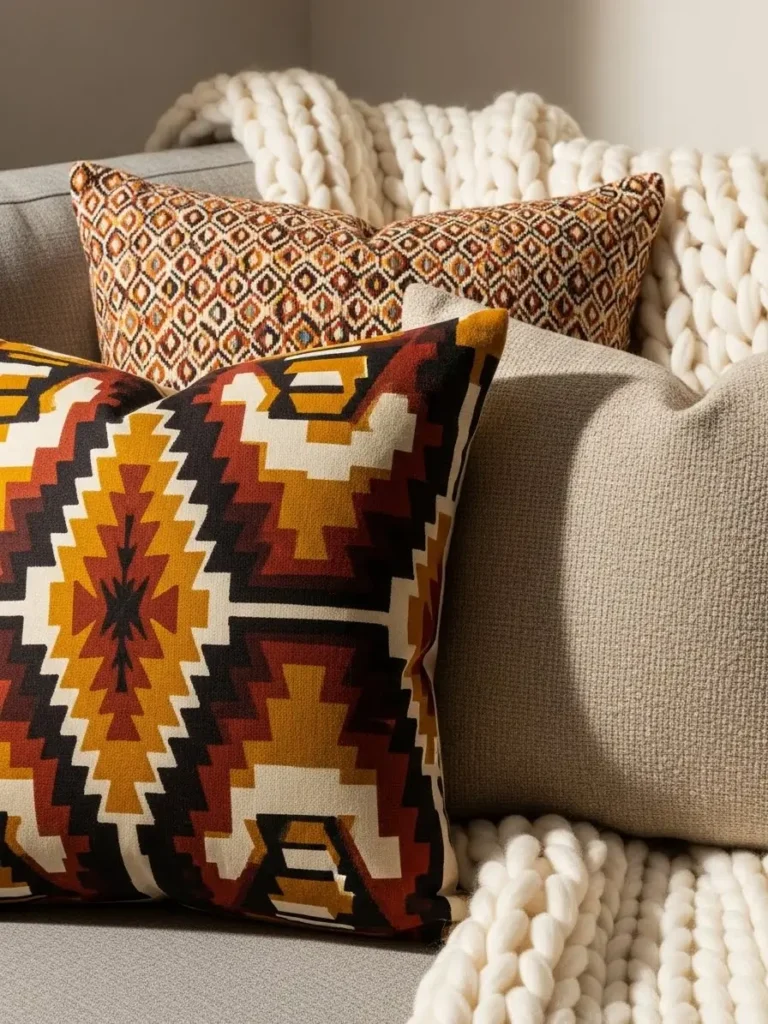
Textiles can provide the room’s strongest pattern, but their construction matters as much as their appearance. Something suitable for display may not be suitable for a washable cushion or a frequently used seat.
Know what the textile name means
Bogolan, often called mud cloth, is associated with Mali and mud-dyeing techniques. The Smithsonian’s documentation of artist Nakunte Diarra’s work describes a process involving cotton, plant materials, earth, and sunlight. A commercially printed “mud cloth-inspired” design is a different product from cloth made through that process. :contentReference[oaicite:0]{index=0}
Kente includes weaving traditions associated with Asante and Ewe communities in Ghana and neighboring Togo. Its construction uses narrow woven strips joined together. The Met’s Ewe kente example explains both the weaving and the cloth’s role at significant occasions. A printed imitation should be identified as a print. :contentReference[oaicite:1]{index=1}
Kuba textiles from the present-day Democratic Republic of the Congo include raffia weaving with embroidery, appliqué, and cut-pile work. The Met’s Kuba prestige panel shows why surface texture is part of the design, rather than simply a geometric pattern to reproduce. :contentReference[oaicite:2]{index=2}
Make everyday fabrics easy to live with
For cushions, ask whether the cover is removable and how it should be cleaned. For a throw, check softness as well as appearance. Follow the maker’s care instructions; do not assume every woven or dyed fabric is machine washable.
If a textile is fragile, valuable, or intended for display, consider professional mounting instead of cutting it into a cushion or using it on a dining table. Choose fabric made for household use when spills and frequent washing are likely.
Mix patterns by changing their scale
Start with one large pattern, add a smaller pattern that shares a color, and give both some plain fabric around them. For example, combine a broad geometric cushion with a narrow stripe and a solid linen cushion.
If your rug already carries a strong pattern, let it lead. If the room feels busy, remove one competing print before buying another accessory to “tie everything together.”
Choose Furniture for Comfort, Scale, and Movement
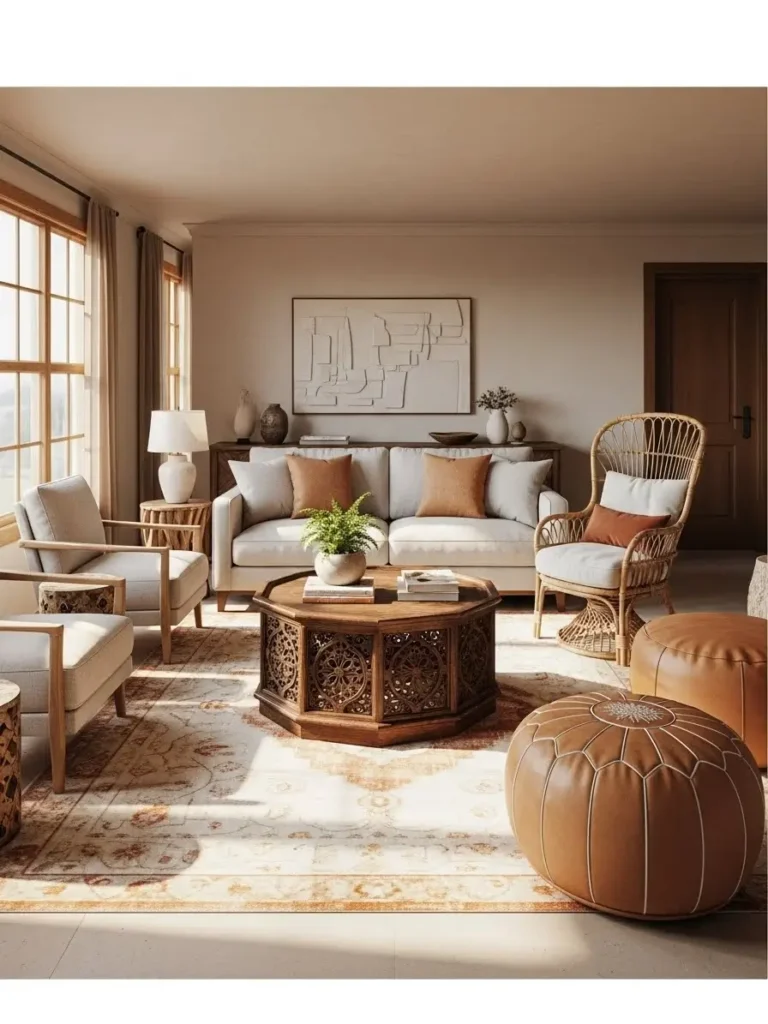
A carved table, woven chair, or wood cabinet can anchor the room, but none is mandatory. Keep serviceable furniture and introduce new pieces where they improve how you use the space.
Measure the footprint before buying. Mark it on the floor with removable tape, then check whether doors open, dining chairs pull out, and people can pass without turning sideways. Include the extra space needed for recliners or cabinet doors.
Pulling a sofa away from the wall can help define a conversation area when space allows. In a narrow room, keeping it against the wall may be the more comfortable choice. The layout should serve the room rather than follow a styling slogan.
Likewise, a low bed or floor cushion is optional. Choose seating and bed heights that are comfortable for the people using them. Decorative stools should only double as seats when their construction and intended use support that.
Give Art and Decorative Objects Space
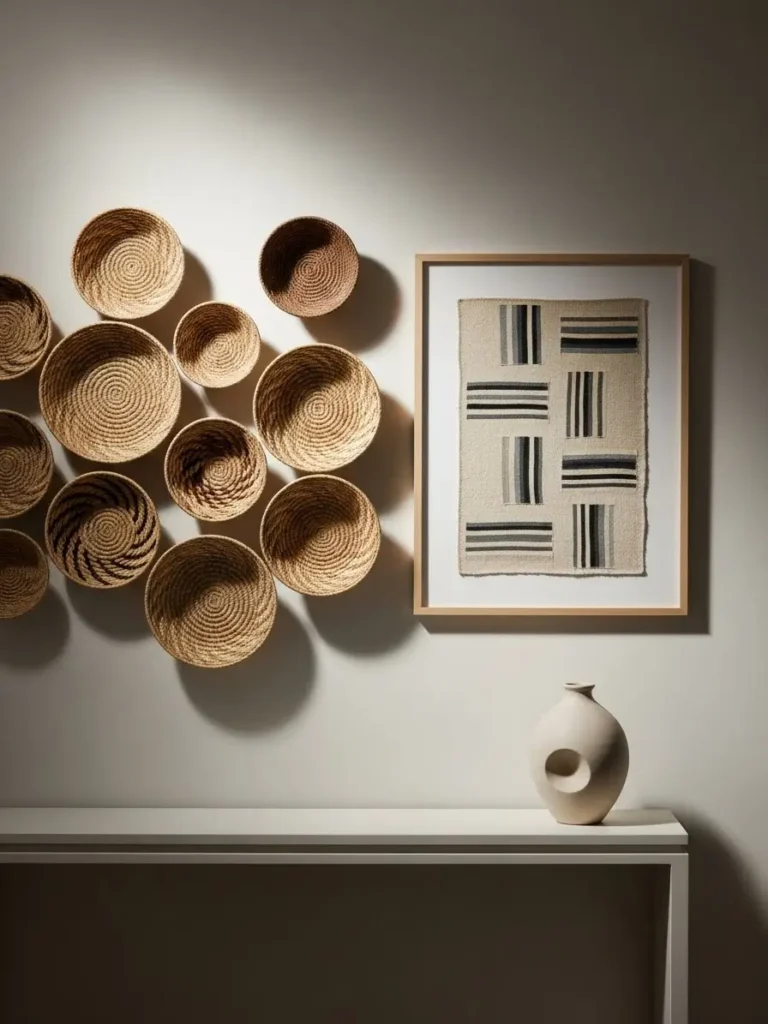
One substantial artwork can give a room more focus than several unrelated small pieces. Look for work you want to keep looking at: a photograph, a painting, a textile composition, or an illustration by an artist whose work interests you.
For a gallery wall, arrange paper templates before making holes. Begin with the largest piece, add supporting works, and keep the group visually connected through spacing or frames. Judge the arrangement from where you normally sit, not only while standing close to the wall.
If you enjoy a basket wall, choose baskets intended for decorative display and use a mounting method that suits their construction. Repeat a weave color or shape while allowing differences in size. Stop when the group feels balanced; the remaining wall space is part of the arrangement.
Keep the maker’s name, purchase information, and any explanation of the work. Those details are more meaningful than describing every object with a generic style label.
Layer Lighting Around Daily Activities
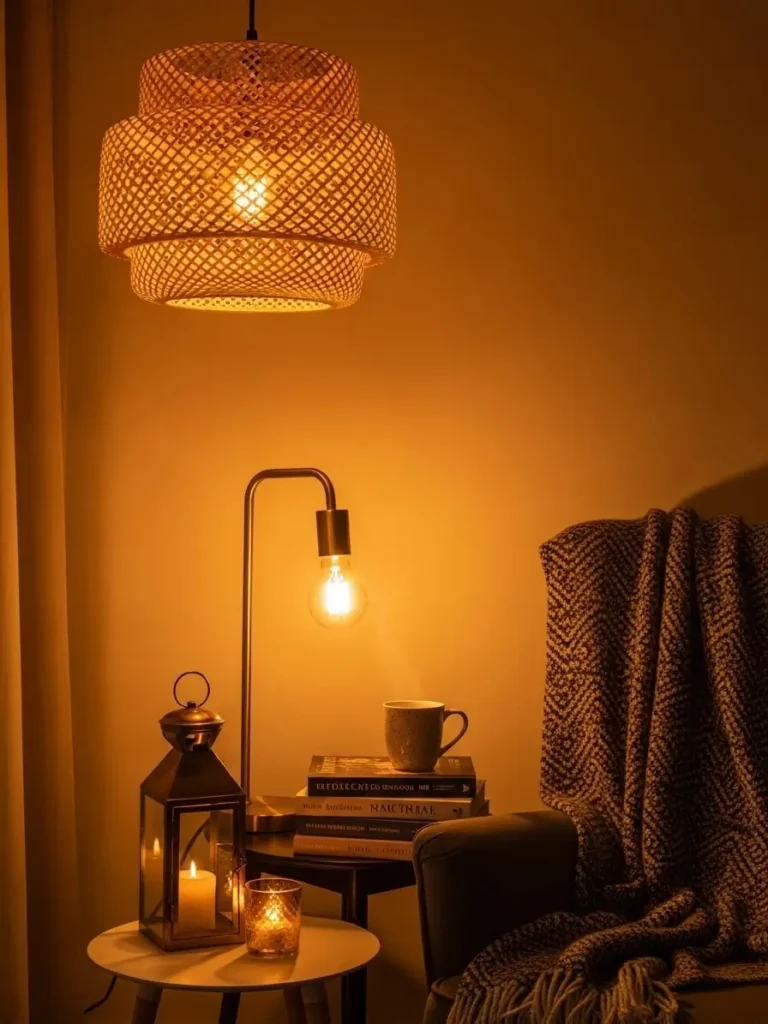
Plan lighting by purpose: general light for moving around, task light for reading or working, and softer accent light for atmosphere. One ceiling fixture rarely serves all three equally well.
A shaded lamp beside a sofa can make an evening reading spot more useful. A second lamp across the room can balance the arrangement. Before choosing a woven shade for a task lamp, consider whether its shadows will make the activity harder.
Test one warm-white bulb in your own room before changing every bulb. Check the fixture’s requirements and dimmer compatibility, and keep enough light for the task. Battery-powered LED candles are an option when you want a candle-like glow among textiles and baskets.
For an adjoining kitchen, carry through a wood finish or accent color rather than repeating every decorative element. These kitchen design ideas offer more ways to connect practical features with your home’s overall style.
Add Plants Where the Conditions Suit Them
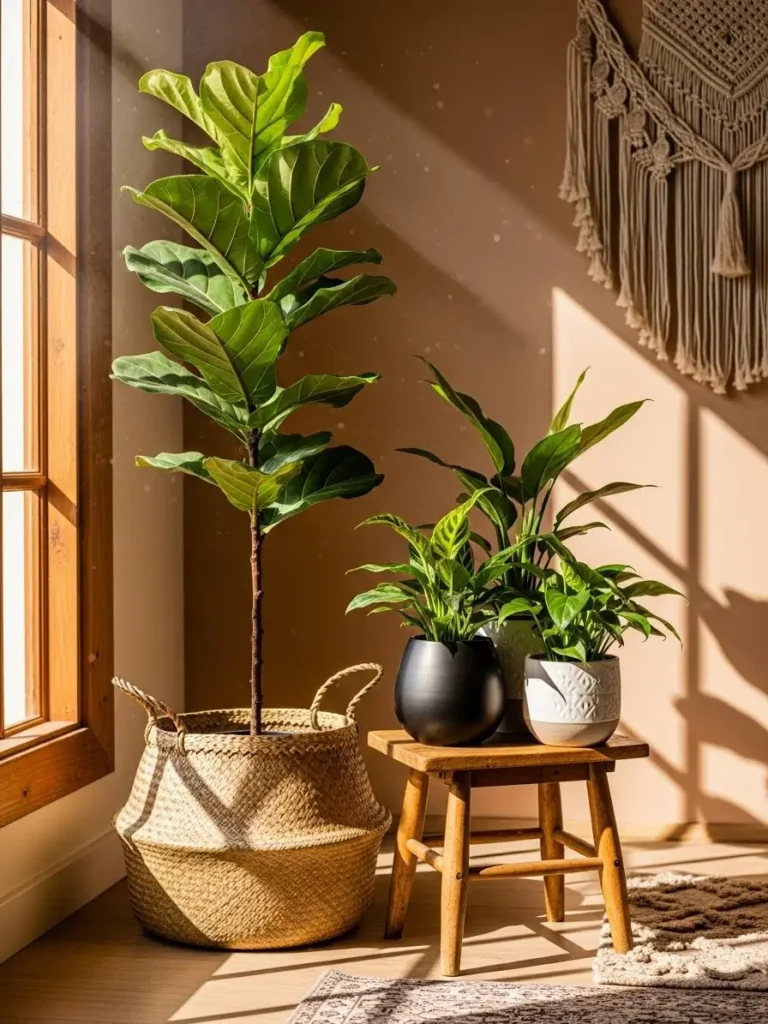
Choose a plant for the available light and the care you can provide. A dark corner is not automatically a suitable place for a large plant, even if the composition looks attractive.
Use a woven basket as an outer decorative container, with the plant in an appropriate inner pot. Remove it for watering and let it drain before returning it. Protect the basket and floor from moisture rather than relying on the weave to contain water.
Check the exact plant species for suitability if children or pets may chew its leaves. If a room lacks suitable growing conditions, use wood, ceramics, or woven storage to add texture. Plants are an option, not a requirement for the style.
Adapt Afrohemian Decor to Each Room
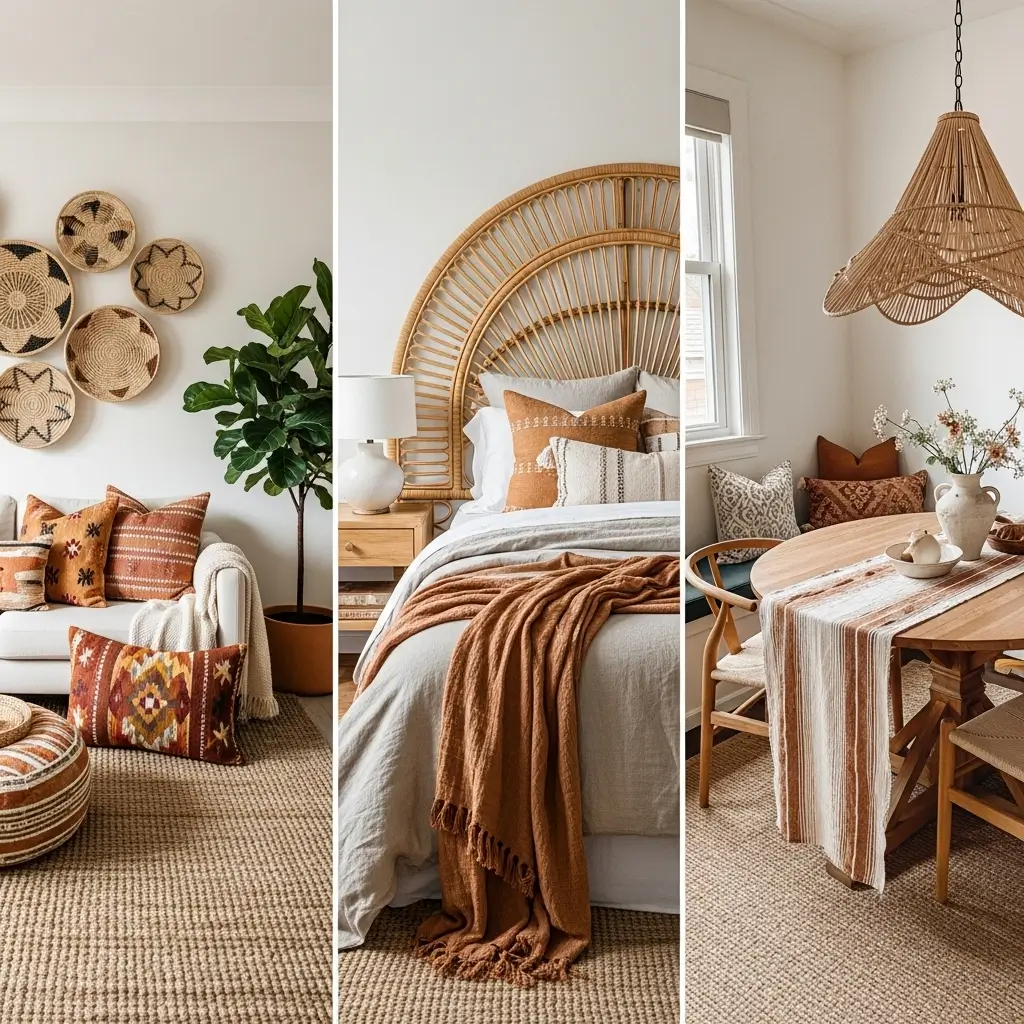
Living room: balance expression with usable space
Let a rug, artwork, or cushion grouping supply the main pattern. Add convenient places to set drinks and enough light near the seats people use. A storage basket can hold throws without taking over the sofa.
Choose a rug texture that suits bare feet, cleaning needs, and household wear. Layer rugs only if they lie securely and do not obstruct doors or walking routes; one well-sized rug is often easier to manage.
Bedroom: keep the daily routine simple
Use comfortable bedding as the base, then add a patterned coverlet or a single accent cushion. Leave room on bedside tables for the things you actually use. If the bed already has a prominent headboard, keep the wall treatment quieter.
Washable household textiles can provide pattern while a special textile hangs elsewhere as art. This separates everyday wear from display without sacrificing character.
Dining area: decorate around meals
A runner, bowl, or artwork can introduce color while leaving the table usable. Keep centerpieces low enough for conversation. If you mix dining chairs, compare their seat heights and comfort rather than choosing solely by appearance.
A sideboard is a useful place for a small collection because it leaves the dining surface clear. Repeat one color from the table setting in the nearby art.
Bathroom: prioritize materials that tolerate the setting
Use washable mats and accessories appropriate for damp conditions. Keep woven storage away from splash zones, and avoid displaying delicate textiles where they may be repeatedly exposed to moisture.
A plant still needs suitable light; bathroom humidity alone is not enough. A ceramic container or washable patterned towel can bring the room into the palette just as effectively.
Small spaces and rentals: concentrate the details
Choose one main focal point and a few useful supporting pieces. Cushion covers, lamps, bedding, and freestanding furniture let you change the atmosphere without a renovation. Check your lease and wall-surface requirements before using removable hooks or other mounting products.
Build the Look on a Realistic Budget
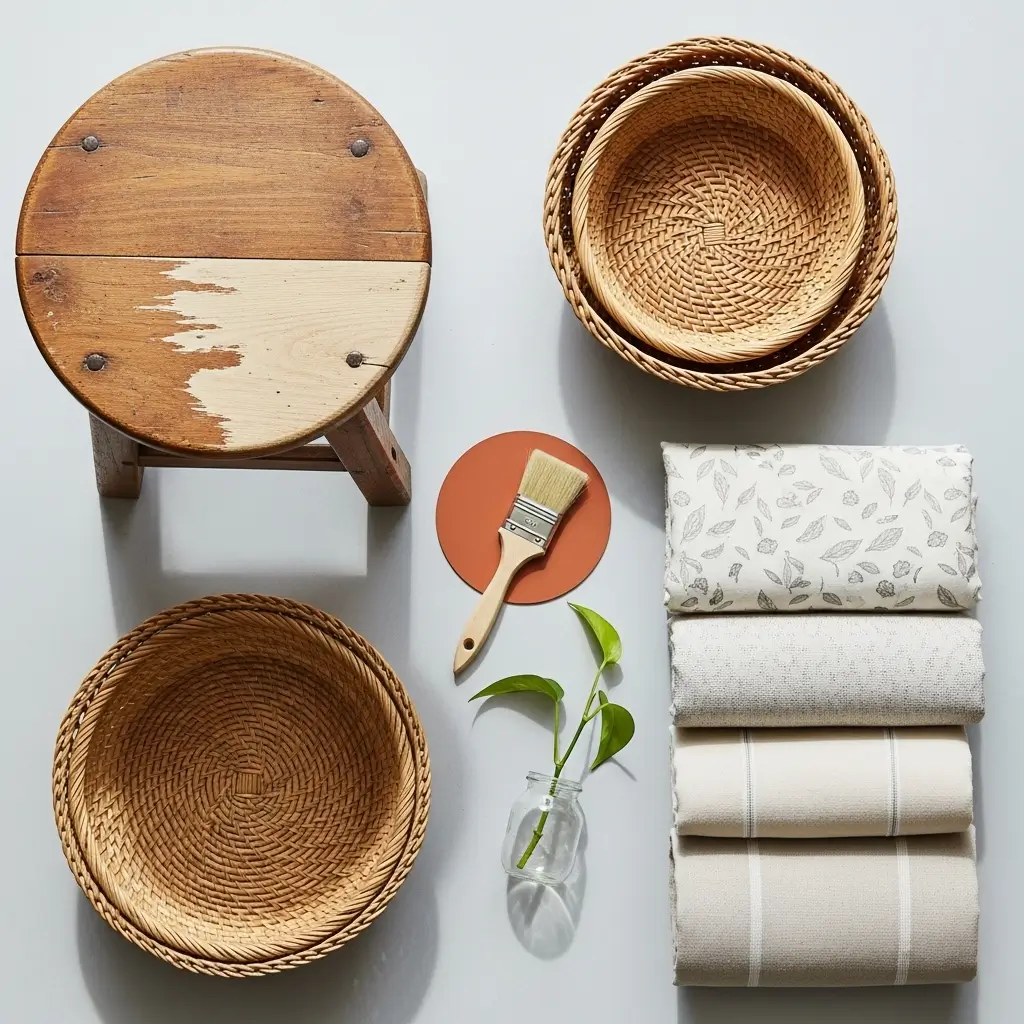
Spend first on the room’s biggest practical gap. Better lighting may matter more than another cushion; a comfortable chair may matter more than a large decorative arrangement.
- Rearrange what you own. Bring together objects with related colors or materials, and clear surfaces you need to use.
- Choose one focal purchase. Make it something you can afford and want to keep, whether that is a print, textile, or useful furniture piece.
- Reuse the supporting pieces. Existing frames, cushion inserts, lamps, and furniture may need no replacement.
- Buy for care as well as appearance. Check dimensions, cleaning instructions, delivery costs, and return terms.
- Leave the next purchase open. Use the room for a while before deciding what is missing.
When shopping secondhand, inspect furniture for stability, odors, damage, and missing parts. Avoid assuming that every worn piece needs stripping or refinishing; sometimes cleaning and a different placement are enough.
Start with one corner you use every day. Give it a comfortable seat, suitable light, and one piece you value. Let its colors and materials guide the rest of the room, adding only what makes the space more useful or more personal.