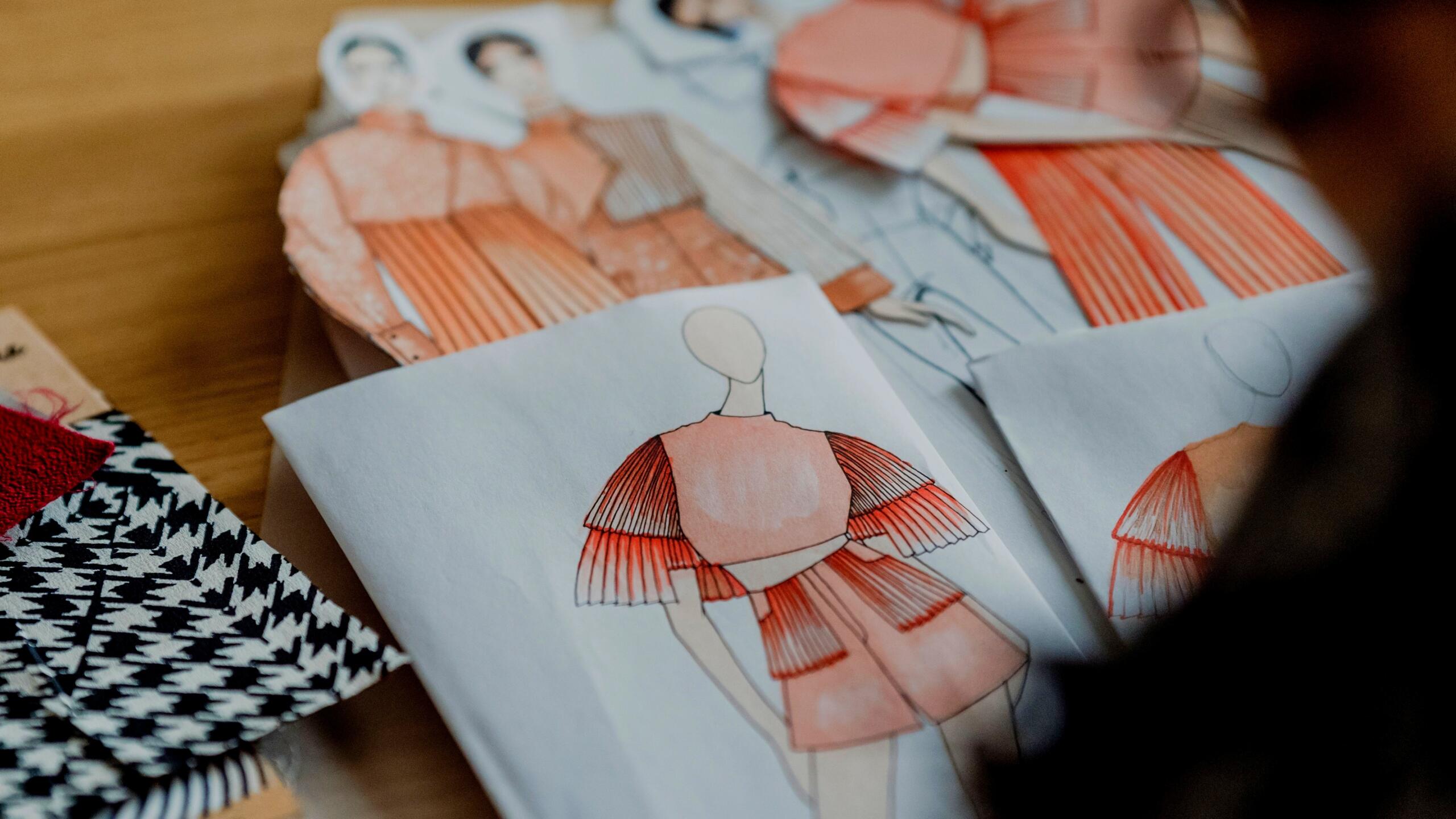
For a bachelor’s degree in fashion designing, top options include Arizona State University’s BA in Fashion (Design) from ASU FIDM, Otis College’s BFA in Fashion Design, and FIT’s BFA in Fashion Design. The key differentiator is post-graduation employment: Otis reports 86% of graduates employed within three months, while FIT offers extensive industry internships and ASU FIDM provides a transdisciplinary sustainability focus. A bachelor’s degree in fashion designing is an undergraduate program that combines design, construction, and business to prepare students for careers in the global fashion industry.
The coursework for such a degree encompasses English, communications, business, marketing, creative fashion design, drafting and sewing, history of costume, textile science, computer applications, and pattern drafting. Universities often require a fashion design internship for class credit, integrating hands-on industry experience directly into the curriculum.
How Do Top Bachelor’s Degrees in Fashion Designing Compare?
The following table provides a side-by-side comparison of key features for three prominent bachelor’s degrees in fashion designing, helping to illuminate their distinct approaches and offerings.
| Feature | Arizona State University (ASU FIDM) | Otis College of Art and Design | Fashion Institute of Technology (FIT) |
|---|---|---|---|
| Program Name | BA in Fashion (Design) | BFA in Fashion Design | BFA in Fashion Design |
| Curriculum Focus | Transdisciplinary; integrates design, construction, wearable tech, sustainability, management, leadership, international experience, and fashion culture. | Creates garments under industry mentors; emphasizes sustainability in every mentor project. | Offers concentrations in children’s wear, intimate apparel, knitwear, special occasion, and sportswear. |
| Internship/Experience | Opportunities for internships and study abroad advance professional goals. | Extensive networking component; professional designers serve as mentors giving authentic design challenges. | Culminating internship and senior collection guided by acclaimed designer mentors; student work showcased in Future of Fashion runway show. |
| Location | Downtown Phoenix and ASU at Los Angeles. | Located in Los Angeles. | Located in New York City. |
| Student Work Exposure | Design capstone develops a runway collection under mentorship. | Junior and senior classes present designs at annual O-Launch fashion show; top senior work showcased at Otis Atelier benefit. | Senior collection and internships; students have interned at Calvin Klein, Donna Karan, Ralph Lauren, Tommy Hilfiger, Josie Natori, J. Mendel, Michael Kors, and Victoria’s Secret. |
| Notable Feature | Students from western states may be eligible for reduced nonresident tuition via Western Undergraduate Exchange (WUE). | Considered a think tank for industry innovation through partnerships; curriculum pillars include taking direction, construction, drawing, and digital skills. | FIT’s Fashion Design BFA program requires a culminating internship and a senior collection guided by acclaimed designers as mentors. |
Arizona State University (ASU FIDM): BA in Fashion (Design)
ASU FIDM’s BA in Fashion (Design) is a transdisciplinary program offered by the Herberger Institute for Design and the Arts, combining history, business practices, and hands-on studio experience to prepare students for roles in the global fashion industry. The program is offered at both Downtown Phoenix and ASU at Los Angeles.
Students gain proficiency in illustration skills and fluency with materials, traditional techniques, and digital technologies. In the design capstone experience, students develop a runway collection under mentorship of experienced faculty and industry professionals. The curriculum is designed for interdisciplinary collaborations across design, construction, wearable technology, sustainability, management and leadership, international experience, and fashion and culture.
Pros:
- Transdisciplinary Focus: Integrates sustainability, technology, business, and leadership into the core design education.
- Flexible Locations: Offers campuses in Phoenix and Los Angeles, providing geographical options.
- Financial Options: Students from western states may qualify for the Western Undergraduate Exchange (WUE), offering reduced nonresident tuition.
- Broad Career Preparation: Prepares students for diverse roles such as design assistant, fabric and apparel patternmaker, fashion designer, fashion illustrator, and textile designer.
Cons:
- No STEM-OPT Eligibility: The program is not eligible for the STEM-OPT extension, which may affect international students seeking longer U.S. work authorization.
- General Math Intensity: The math requirement is classified as General, with the first required course being MAT 114 – College Mathematics, which may not satisfy students seeking a more technical or STEM-aligned curriculum.
- No Language Requirement: The program has no second language requirement, which could be a drawback for students aiming for a truly global industry skill set.
Best For: Students seeking a fashion education with a strong emphasis on sustainability and interdisciplinary studies, or those looking for a program with potential tuition savings through the WUE program. It is ideal for learners who value a blend of design, business, and technological innovation. Notable Feature: The program’s design capstone culminates in a runway collection developed under professional mentorship, providing a tangible portfolio piece.
Otis College of Art and Design: BFA in Fashion Design
Otis College of Art and Design’s BFA in Fashion Design is a program that has prepared students for the global fashion industry for decades. The curriculum emphasizes developing capable, innovative, professional fashion designers with an understanding of consumer markets. Students learn to create and construct garments under industry professionals called mentors and faculty.
Sustainability is core to the approach, with every mentor project touching on sustainability. The program includes an extensive networking component, and its Fashion Design department is considered a think tank for industry innovation through partnerships with industry leaders. Professional designers serve as mentors, giving students authentic design challenges.
Pros:
- Strong Mentorship Model: Junior and senior mentorships challenge students to design with sustainability in mind; some brand partners even provide fabrics or recycled materials for sustainable projects.
- Industry Showcases: Junior and senior classes present designs at the annual fashion show during O-Launch exhibition weekend, and top senior student work is showcased at Otis Atelier, an annual fashion benefit supporting scholarships.
- Clear Career Pathways: Alumni enter roles such as assistant designer, associate designer, illustrator, costume designer, textile designer, accessory designer, and product designer.
Cons:
- Intensive Focus: The program’s deep immersion in design and mentorship may offer less formal business or marketing coursework compared to some broader university programs.
- Location Specific: Being located solely in Los Angeles limits geographic options for students preferring other regions.
- Competitive Environment: The high-caliber, mentorship-driven model can be intensely competitive, which may not suit all learning styles.
Best For: Students prioritizing hands-on mentorship from practicing designers and a curriculum where sustainability is woven into every project. It is excellent for those who thrive in a collaborative, studio-based environment focused on professional design challenges. Notable Feature: The program’s pillars include taking direction, clothing construction, drawing by hand, and digital skills, ensuring a comprehensive technical foundation.
Fashion Institute of Technology (FIT): BFA in Fashion Design
FIT’s BFA in Fashion Design program builds upon a strong foundation provided by its AAS program, which covers computer-aided design, sketching, draping, patternmaking, construction, sewing techniques, and textiles. After earning the AAS, students can apply for the BFA in Fashion Design. The BFA program requires a culminating internship and a senior collection guided by acclaimed designers as mentors.
Student work could be showcased in FIT’s Future of Fashion runway show. BFA students create designs informed by market research and inspired by history, art, and culture. The program offers concentrations in children’s wear, intimate apparel, knitwear, special occasion, and sportswear.
Pros:
- Extensive Industry Access: Students have interned at premier brands like Calvin Klein, Donna Karan, Ralph Lauren, Tommy Hilfiger, Josie Natori, J. Mendel, Michael Kors, and Victoria’s Secret.
- Specialized Concentrations: Five distinct concentration options allow for deep specialization within the fashion industry.
- Pathway Flexibility: The AAS-to-BFA structure allows for a staged entry, and AAS graduates can also apply to related BFA and BS programs in Fabric Styling, Textile Development, and more.
- High-Profile Collaborations: Students engage in projects with major companies; for example, a collaboration with The RealReal allowed students to design sustainable luxury dresses using unsold inventory.
Cons:
- Sequential Structure: Requires completion of the AAS degree before application to the BFA, which may extend the total time to a bachelor’s degree for some students.
- New York Focus: The program’s location and industry ties are deeply rooted in New York City, which may not align with students targeting other fashion hubs.
- Competitive Admissions: The pathway from AAS to BFA is competitive, given the prestige and limited slots in the BFA program.
Best For: Students who want direct, high-level industry internships in New York City and seek specialization within a particular apparel category. It is ideal for those comfortable with a two-step (AAS then BFA) educational path and who value mentorship from acclaimed designers.
Notable Feature: Graduates have worked at top firms like Donna Karan, Tommy Hilfiger, Calvin Klein, Polo Ralph Lauren, and Giorgio Armani. They may work as assistants, technical designers, or head fashion designers. Other graduates manage boutiques or start their own lines, like alumnus Peter Do, who creates sophisticated red-carpet looks.
How to Choose the Right Fashion Design Degree
Choosing the right bachelor’s degree in fashion designing involves aligning a program’s strengths with your personal career goals and learning preferences. First, evaluate the curriculum focus. Does the program emphasize technical construction, business integration, sustainability, or specialized concentrations?
Next, consider the internship and professional exposure opportunities. Programs with mandatory internships or deep industry mentorship provide critical networking and real-world experience.
Financial considerations, such as tuition rates and potential scholarships, are also vital. For art-and-design-based schools, the design portfolio is often the most crucial part of the application, while most selective schools also use an Academic Index based on grades, test scores, and class rankings to evaluate academic aptitude.
Furthermore, think about long-term career paths. A master’s degree is typically unnecessary for B.F.A. fashion design graduates’ careers. Graduates often start as pattern designers, costume designers, or fashion assistants before advancing to directorial roles.
Many schools offer intensive study-abroad opportunities and exchange programs, which can broaden a student’s global perspective. Finally, assess the program’s community and location—being in a major fashion hub like New York or Los Angeles offers distinct advantages in terms of industry access and cultural immersion.
Best Fashion Design Degree for Your Goals
Selecting the best program depends on your specific priorities. For students passionate about sustainability, Arizona State University’s BA program stands out. Its transdisciplinary curriculum explicitly integrates sustainability, management, and leadership, preparing designers for the evolving ethical demands of the industry.
For those seeking direct industry connections and internship placements, Fashion Institute of Technology is a notable choice. Its location in New York City and history of student internships at major brands provide significant access. Many B.F.A. fashion design graduates from such programs become fashion marketers, bloggers, product managers, or fashion buyers, leveraging this network.
If your goal is high job placement immediately after graduation, Otis College of Art and Design’s BFA program is notable. Its mentorship model and strong job placement rate are designed for rapid professional integration. For flexibility in educational path and specialization, FIT offers a structured AAS-to-BFA route with multiple concentration options, while ASU FIDM provides geographical flexibility with campuses in Phoenix and Los Angeles and potential tuition savings via the WUE. Many fashion design students pick specialized electives, so a program with robust concentration offerings can be crucial for tailoring your education.
Conclusion
Arizona State University, Otis College of Art and Design, and Fashion Institute of Technology each offer a distinguished bachelor’s degree in fashion designing with unique strengths. ASU FIDM provides a transdisciplinary approach with a strong sustainability and business focus, ideal for the modern, ethically-conscious designer. Otis College delivers strong job placement rates through its intensive mentorship and industry-integrated curriculum.
FIT offers strong industry immersion in New York City, with specialized concentrations and a proven pathway to top design houses. Your decision should hinge on which program’s blend of curriculum, location, internship opportunities, and career outcomes best aligns with your personal vision for a career in fashion design.
FAQ
Q: Which fashion design program has the highest job placement rate?
A: Otis College’s Fashion Design program has a strong job placement rate. FIT and ASU also have strong job outcomes, with FIT’s extensive internship network and ASU’s diverse career examples.
Q: Can I transfer from an AAS to a BFA at FIT?
A: Yes, after completing FIT’s AAS in Fashion Design, you can apply for a BFA in Fashion Design. You may also apply to other BFA programs in Fabric Styling, Textile/Surface Design, and Toy Design, or BS programs in Production Management, Technical Design, and Textile Development and Marketing.
Q: Does ASU FIDM require a second language?
A: No, the BA in Fashion (Design) at ASU FIDM has no second language requirement. The math intensity is General, and the first required math course is MAT 114 – College Mathematics.