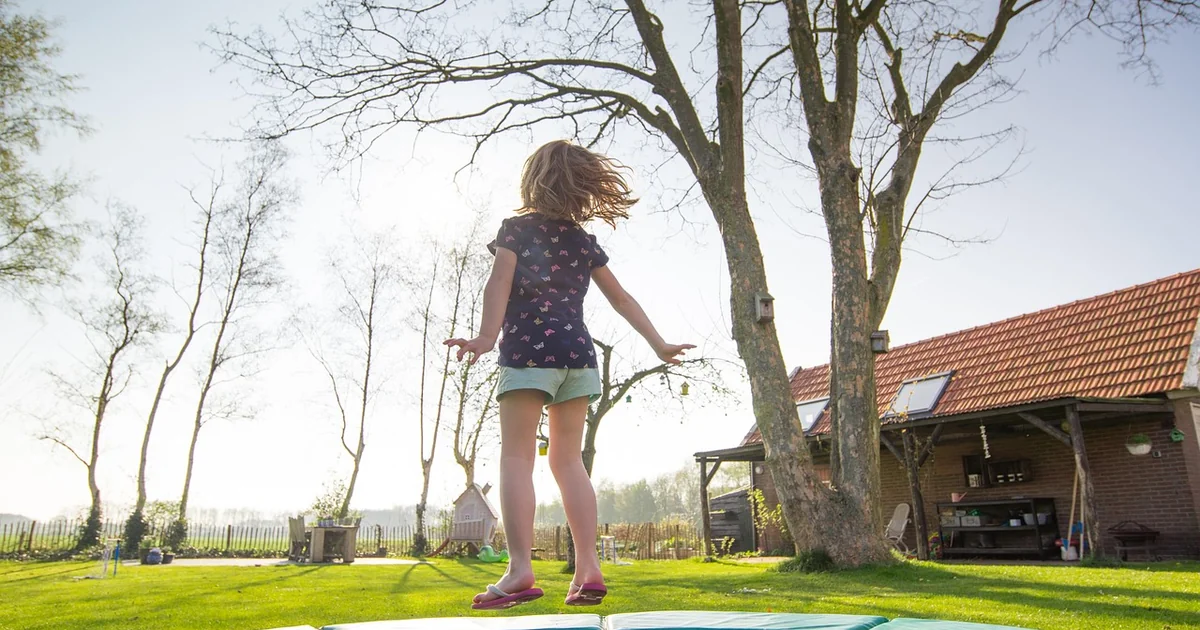
Picture your backyard on a sunny afternoon. The air is filled with laughter as children soar into the sky, defying gravity for a fleeting, joyful moment. That quintessential childhood experience hinges on one crucial piece of equipment. Selecting the right one isn’t just about fun; it’s a careful balance of physics, safety, and family logistics. Getting it wrong can lead to a dusty, unused eyesore or, worse, an unnecessary hazard.
Understanding Trampoline Shapes: The Physics of Fun
Before browsing models, grasp the fundamental difference between the two main shapes. This isn’t merely an aesthetic choice; it’s about the direction of energy and the intended use.
The Centripetal Pull of Round Trampolines
Circular models are the classic backyard staple for a compelling reason. Their springs are arranged evenly around the entire perimeter. When a jumper lands off-center, the springs on that side compress more forcefully, creating a rebound that naturally directs the user back toward the middle. This built-in centripetal force acts as a gentle, continuous safety guide, making them the superior choice for casual, recreational bouncing. Multiple kids can jump with a reduced risk of colliding at the edges, as the mat subtly encourages everyone toward the central zone. For families seeking unstructured play, this self-correcting bounce is a significant advantage.
The Controlled Rebound of Rectangular Trampolines
In contrast, the rectangular design offers a more uniform and predictable bounce across the entire surface area. Because the springs are typically longer and the frame is straight, the energy transfer is more direct and even. This allows for higher, more controlled vertical leaps and is essential for practicing specific skills like flips or tumbling passes. Competitive gymnasts train on this shape for a reason: it provides consistent feedback and maximizes upward propulsion. Spatially, a rectangle can often fit more efficiently into the typical rectangular footprint of a yard, maximizing the usable jumping surface without wasting corner space.
Critical Safety and Setup Fundamentals
A trampoline is a dynamic piece of sports equipment, not passive playground furniture. Its safety is determined as much by its environment and rules as by its construction.
The single most important installation rule is surface selection. A shock-absorbing base is non-negotiable. Concrete, asphalt, packed dirt, or even patio stones are unacceptable and dramatically increase injury severity. The ideal foundation is a level, soft lawn. For added protection, specialized trampoline safety pads or a bed of mulch or sand extending at least six feet around the perimeter can be used. Always ensure there’s a minimum vertical clearance of 24 feet from the jumping surface to any overhead hazards like tree branches, wires, or eaves.
Modern safety enclosures are engineering marvels. Look for nets with a fine mesh that prevents fingers and toes from slipping through, attached directly to the jumping mat rather than the outer padding. The net poles should bend inward, not outward, so a falling jumper is directed back onto the mat. Check that all springs are fully covered by thick, UV-resistant padding that locks securely in place. These features, combined with a strict “one jumper at a time” rule for recreational models, address the majority of common backyard incidents.
Top 13 Best Trampolines for Kids in 2026
Our curated list anticipates trends in durability, smart safety, and space-saving design, offering options for every family dynamic and backyard size. Each model was evaluated for its construction, safety features, and overall value proposition.
1. The All-Weather Anchor: SkyBound Fortress 14′ Round
Built for longevity, the Fortress features galvanized steel frames and springs treated with a proprietary anti-corrosion coating that withstands coastal salt air and rainy climates. Its jump mat is woven from polypropylene strands with a tensile strength of 9,000 psi, resisting UV degradation and sagging. The safety net uses a patented “no-gap” stitching technology that eliminates seams where tiny fingers could catch.
2. The Space-Saver: JumpFlex Sport 10’x17′ Rectangle
This model answers the call for high performance in narrower yards. Its elongated rectangle shape provides a superior bounce for aspiring athletes while fitting into side yards or long, thin spaces. The frame uses a T-socket construction for wobble-free stability, and the springs are rated for over 100,000 cycles of compression. It’s a tournament-ready design scaled for home use.
- The Toddler Energy Burner: Little Leaps 360° Handle Bar
Spring-free and designed for indoor stability, this toddler trampoline uses 30 elastic bands under the mat for a gentle, quiet bounce. The handlebar adjusts to three height positions and rotates 360 degrees, allowing little ones to safely practice turning. The entire unit weighs under 12 pounds and folds flat for storage under a bed. It supports up to 110 pounds, ensuring years of use.
4. The Smart Trampoline: BounceTech Connect 12′ Round
Integrating technology, the Connect features a Bluetooth-enabled mat sensor that syncs to an app. It tracks total jump time, estimates calories burned, and can even guide kids through simple, safe bounce games. Parents receive alerts if the safety net is unclipped. The frame includes reinforced anchoring points for optional ground stakes, a must for wind-prone areas.
5. The Backyard Centerpiece: AeroMax Grand 16′ Round
For large families, the Grand offers a massive 16-foot diameter jumping surface. It boasts a 450-pound weight capacity, facilitated by a dual-frame design where an inner ring supports the mat independently from the outer leg structure. The safety enclosure is a two-layer system: a standard net inside a wider, softer mesh barrier that acts as a second buffer zone.
6. The No-Tools Assembly: QuickJump Eclipse 8′ Round
Revolutionizing setup, the Eclipse uses a click-lock frame system that requires zero tools. All connections are large, color-coded pins and sockets that snap together audibly. The entire trampoline, including the net, can be assembled by two adults in under 25 minutes. It’s the perfect solution for families who move frequently or want seasonal disassembly to be effortless.
7. The Gym-Grade Trainer: ProForm TumblTrak 9’x15′
Used by many junior Olympic development programs, this rectangular trampoline features Olympic-grade, 10-inch long springs that provide a remarkably soft yet powerful lift. The bed is made from a cross-stitched Permatron® material, the same used in professional facilities. It forgoes a net enclosure, as it’s designed for supervised, skill-based training with appropriate crash mats.
8. The Eco-Conscious Choice: TerraBounce Organic 10′ Round
Addressing environmental concerns, TerraBounce uses a frame made from 85% recycled steel and a jumping mat crafted from organic, naturally dyed cotton canvas over a recycled rubber pad system. Even the packaging is plant-based and compostable. It proves that sustainable materials can meet rigorous safety and durability standards for family recreation.
9. The All-in-One Play Zone: Adventure Peak Combo 12′
More than a trampoline, this model includes an integrated, removable basketball hoop, a ball toss target on the safety net, and a shaded canopy that attaches over the enclosure. The base features a built-in storage bin for balls and toys. It’s designed to be the singular destination for backyard play, maximizing engagement and minimizing the “I’m bored” chorus.
10. The Ultra-Compact: Urban Hop 6′ Round
For apartments, townhomes, or tiny yards, the Urban Hop delivers a full bouncing experience in a minimal footprint. Its unique design uses a tensioned web instead of traditional springs, creating a quiet bounce perfect for noise-sensitive communities. The entire unit is only 28 inches high, making the net enclosure lower and the profile less obtrusive.
11. The Accessibility-Focused Model: Inclusive Bounce 10′ Round
Designed with input from physical therapists, this trampoline features a wider, reinforced entry door in the net, a lower step-up height, and a handlebar that can be installed on the frame for additional stability. The mat has slightly more tension for supportive yet gentle bouncing, ideal for children working on balance, coordination, or sensory integration.
You may also enjoy reading: 9 Millennial Prom Traditions Worth Bringing Back.
12. The Weather-Ready Powerhouse: StormRider 14′ Round
Engineered for extreme climates, the StormRider can be anchored directly into a concrete foundation (sold separately). Its wind rating exceeds 55 MPH when properly secured. The jump mat is waterproof and treated with an anti-mold agent, and all metal components have a triple-layer weatherproof finish. It’s built to stay outdoors year-round in almost any condition.
13. The Fitness-Family Hybrid: CardioJump 9′ Round with Barre
Blending kid fun and adult fitness, this model includes a removable, stabilizing barre that encircles the net. Kids can use it for support, while adults can perform low-impact cardio and strength exercises like bounce-assisted squats and leg lifts. It comes with a digital guide for family-friendly workout routines, making it a true multi-generational investment.
Essential Features Beyond the Bounce
While the bounce is the main event, these supporting features define the long-term ownership experience.
Investigate the warranty as a direct reflection of manufacturer confidence. A robust frame should have a 10-year or lifetime warranty. The jumping mat and safety net might be covered for 3-5 years, and springs for 1-2 years. A longer, comprehensive warranty often indicates higher-grade materials and construction.
Ease of assembly is a major practical consideration. Look for models with clear, diagram-heavy instructions, pre-attached net sleeves, and tools included. Some brands now offer QR codes linking to video assembly tutorials. Consider if you’ll need professional installation, especially for larger or more complex rectangular models.
Finally, think about the end of the trampoline’s life. Some companies have started take-back or recycling programs for their old frames and mats. Choosing a brand committed to a circular economy can be a responsible final step in your purchasing decision.
Frequently Asked Questions
At what age is it safe for a child to use a full-size trampoline?
Most safety organizations recommend children be at least six years old before using a large outdoor trampoline. Their motor skills, bone density, and ability to follow safety rules are more developed at this age. For younger children, spring-free toddler trampolines with handlebars and close supervision are the appropriate alternative.
Can a trampoline be left outside all winter?
It can, but it requires preparation. High-quality, weather-resistant models are designed for it. However, you should remove the safety net to prevent snow load from damaging it, and consider using a heavy-duty, anchored weather cover to protect the mat from ice and UV damage. In areas with heavy snow, regularly brush accumulation off the mat to prevent undue stress.
How often should I inspect my trampoline for safety?
Perform a thorough inspection at the start and end of each season. Before every use, do a quick visual check for obvious issues: tears in the mat or net, missing or damaged padding, sagging springs, or any frame rust or bending. Tighten any loose bolts or connections immediately.
Are there exercises adults can do on a kids’ trampoline?
Absolutely, provided the weight capacity is respected. Low-impact bouncing is excellent for lymphatic drainage and joint health. Adults can use it for gentle rebounding, balance exercises, or even as a stable base for bodyweight workouts like push-ups or planks (on the frame, not the mat). Always ensure the trampoline is on a perfectly level surface for adult use.
What is the most common maintenance task trampoline owners forget?
Rotating the jumping mat. Just like rotating your car tires, periodically rotating the mat 90 degrees ensures even wear from the most frequent landing spots. This simple act, done every 3-6 months depending on use, can double the lifespan of the mat and maintain a consistent bounce quality.
Selecting from the best trampolines for kids is an investment in active play, cherished memories, and physical development. By prioritizing safety engineering, matching the shape to your family’s style of fun, and carefully considering size and placement, you create a backyard destination that delivers joy season after season. The right choice isn’t just about the highest bounce—it’s about creating a secure, durable platform for those moments of weightless laughter.