25 Companion Planting Combinations for a Healthier, More Productive Garden
Companion planting works best when you treat it as practical garden design rather than a collection of magical plant pairings. Growing compatible plants together can save space, provide shade or support, attract pollinators and beneficial insects, suppress weeds, and sometimes reduce pest damage. However, results depend on your climate, soil, spacing, pest pressure, and the varieties you grow.
Scientific support is strongest for strategies such as intercropping, trap cropping, maintaining flowers for beneficial insects, and combining plants with complementary growth habits. Claims that one plant automatically improves another crop’s flavor or eliminates pests are less certain. The most reliable approach is to choose each combination for a specific, observable purpose.
How Companion Planting Can Help Your Garden
It Can Make Crops Harder for Pests to Find
Mixed plantings may interrupt the visual and scent cues insects use to locate host plants. Aromatic herbs and alliums can sometimes contribute to this effect, but they should supplement regular pest monitoring rather than replace it.
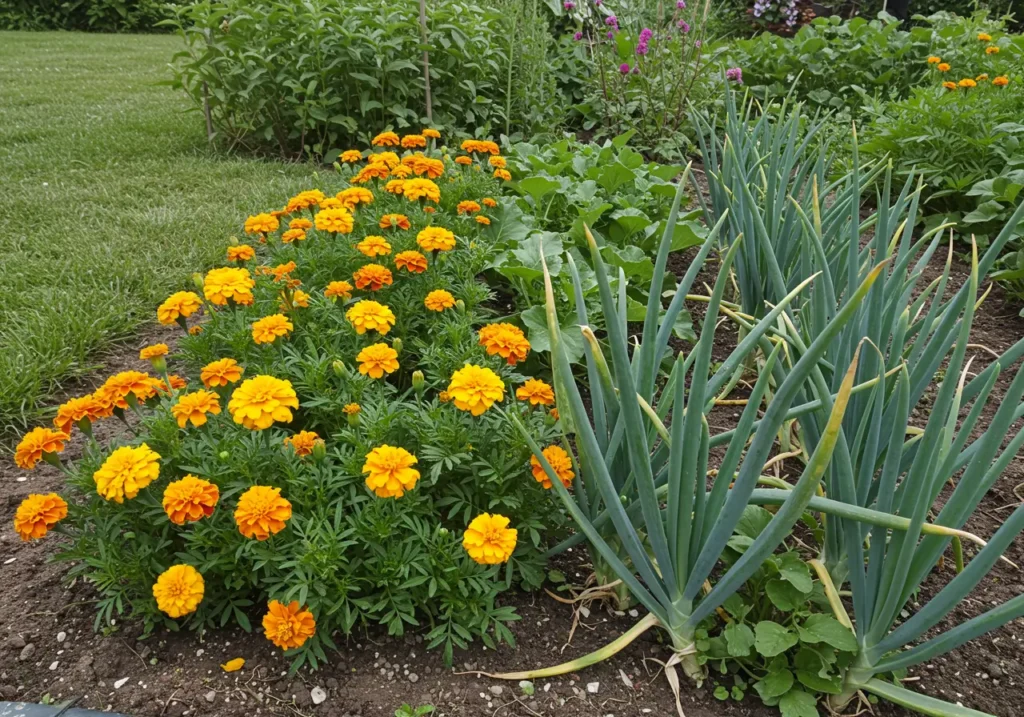
Trap cropping is another useful technique. A deliberately selected plant attracts a particular pest away from the main crop. For it to work, you must inspect the trap crop and remove pests, treat the trap crop appropriately, or remove the plant before the insects migrate to the crop you intended to protect.
Flowers Support Pollinators and Natural Enemies
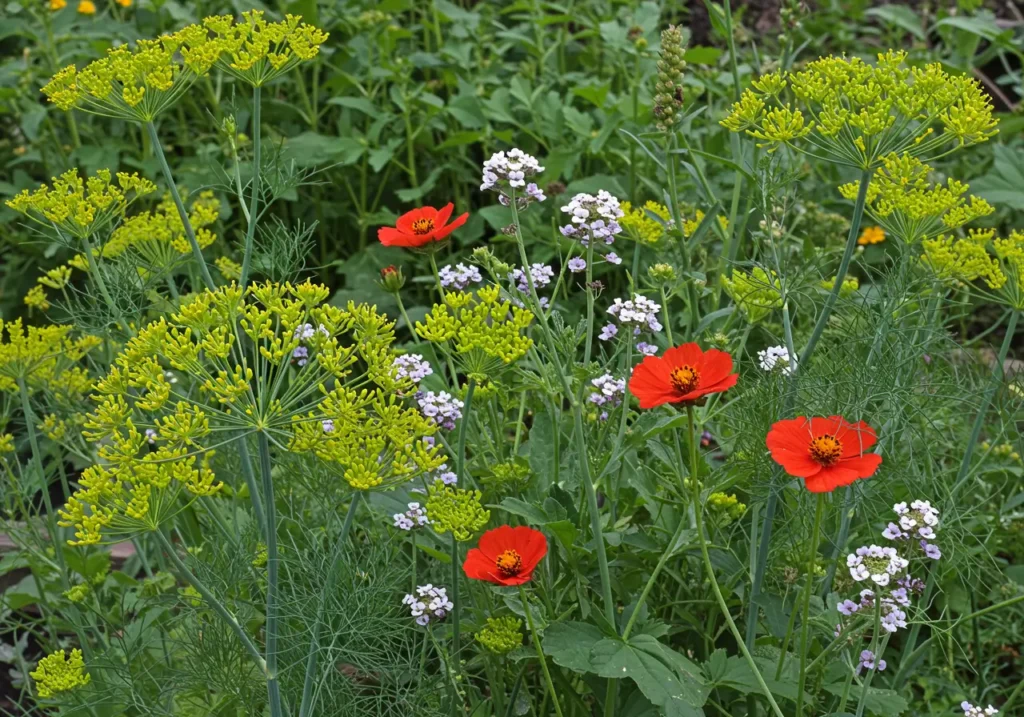
Flowering herbs and annuals provide nectar and pollen for bees, hoverflies, parasitic wasps, lacewings, and lady beetles. Shallow, accessible flowers such as dill, coriander, and sweet alyssum are especially useful to many beneficial insects. A succession of different flowers is more valuable than one variety that blooms for only a short period.
If you want to establish a larger flowering area, the HOME GROWN Monarch Butterfly Wildflower Mix contains more than 20,000 seeds in a two-ounce package and includes milkweed. Confirm that every species in the selected mix is appropriate and noninvasive in your region before sowing it. Wildflower mixes are generally better suited to a dedicated border or pollinator area than to tightly planted vegetable rows.
Flowers do not guarantee pest-free plants. They create habitat that can strengthen an integrated pest-management plan that also includes inspection, crop rotation, physical barriers, sanitation, and targeted treatment when necessary.
Different Growth Habits Help Use Space Efficiently
Tall crops can support lightweight vines or provide afternoon shade for heat-sensitive vegetables. Low-growing plants can cover bare soil, while fast crops such as radishes can be harvested before slower plants need the space. These physical relationships are among the easiest companion-planting benefits to observe.
Plant Diversity Can Support Soil Health
Combining plants with different root depths keeps more living roots in the soil and may help crops use water and nutrients from different parts of the soil profile. Legumes such as beans and peas fix atmospheric nitrogen through a relationship with compatible rhizobia bacteria.
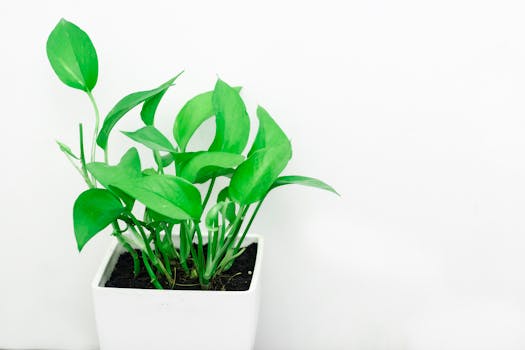
Amazon US Verified
Organic Perlite Horticultural Soil Conditioner
Lightweight volcanic mineral that improves root aeration and prevents compaction.
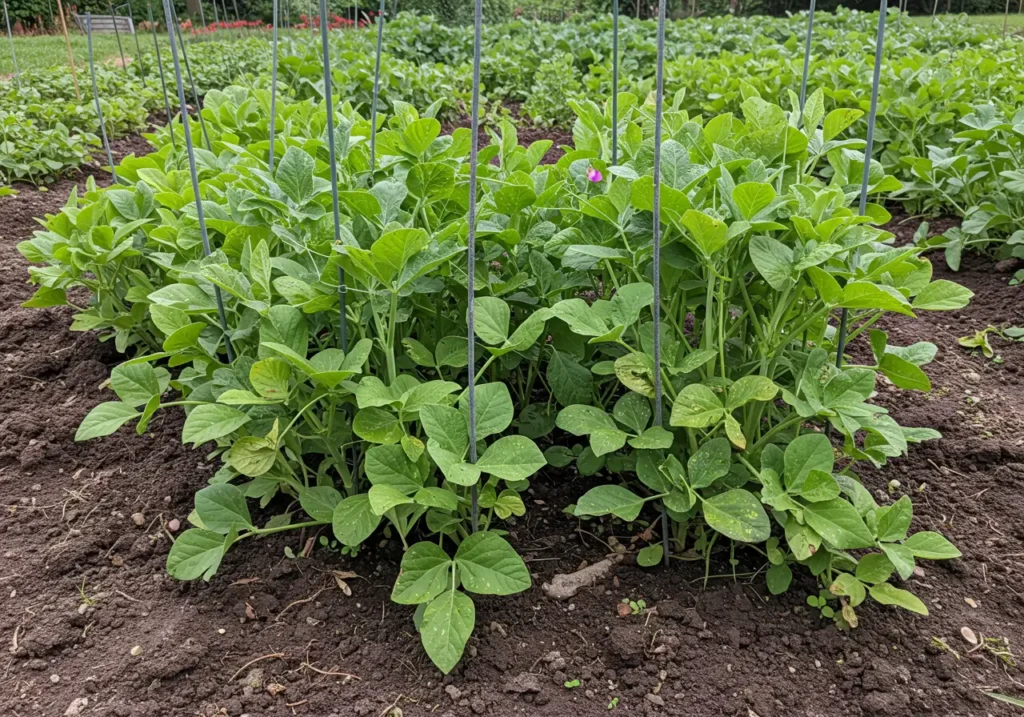
Legumes do not necessarily release large amounts of nitrogen to a neighboring vegetable while both plants are actively growing. Much of that nitrogen remains in the legume and becomes available later as roots and plant residues decompose.
Instead of assuming beans will satisfy another crop’s fertilizer requirements, test the soil first. The Rapitest Soil Test Kit for gardens, vegetables, flowers, and lawns can measure soil pH and the primary nutrients nitrogen, phosphorus, and potassium. Follow the sampling and color-comparison directions carefully, and consider a professional laboratory test when you need more detailed or locally specific recommendations.
25 Useful Companion Planting Combinations
1. Tomatoes and Basil

Basil fits beneath or beside tomatoes because it stays relatively compact and prefers similar warm growing conditions. Research summarized by the University of Minnesota Extension indicates that basil intercropping may reduce thrips and support tomato growth in some settings.
Do not crowd the tomato’s base. Leave enough room for watering, pruning, and air circulation. Harvest basil regularly so it does not compete heavily for light. Although tomatoes and basil taste good together after harvest, convincing evidence that basil changes tomato flavor while the plants grow is limited.
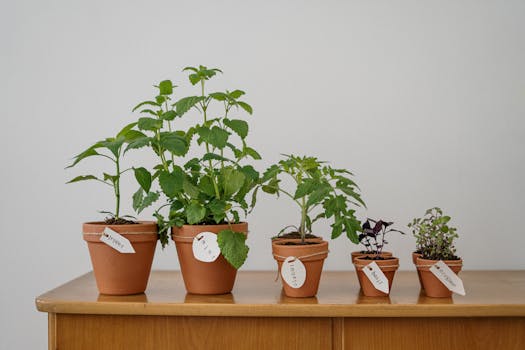
Amazon US Verified
Digital 3-in-1 Soil Moisture & pH Meter
Accurate probe to test deep root zone moisture and prevent accidental overwatering.
2. Corn, Beans, and Squash
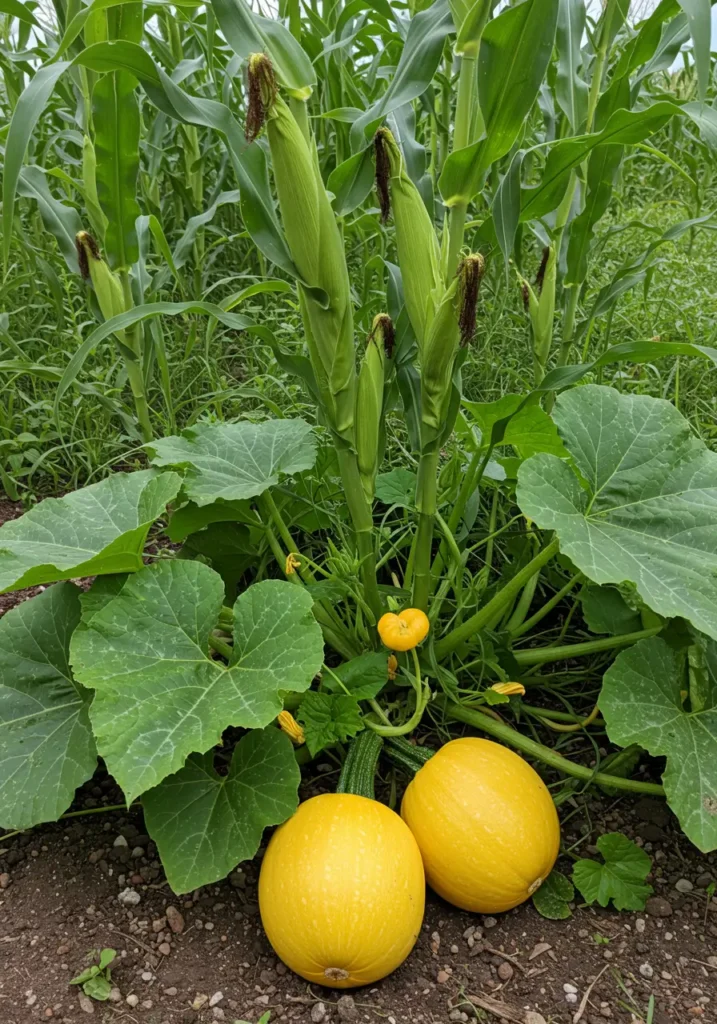
The Three Sisters system combines tall corn, climbing beans, and sprawling squash. Corn can support suitably sized pole beans, while squash shades the ground and helps conserve moisture. Beans contribute nitrogen to the system over time, especially when their roots and residues remain in the soil.
This Indigenous agricultural system is more sophisticated than placing three plants in one small hole. Use sturdy corn rather than short or weak varieties, allow the corn to establish before beans begin climbing, and provide generous spacing for squash. In a small garden, compact varieties are easier to manage.
3. Carrots and Rosemary
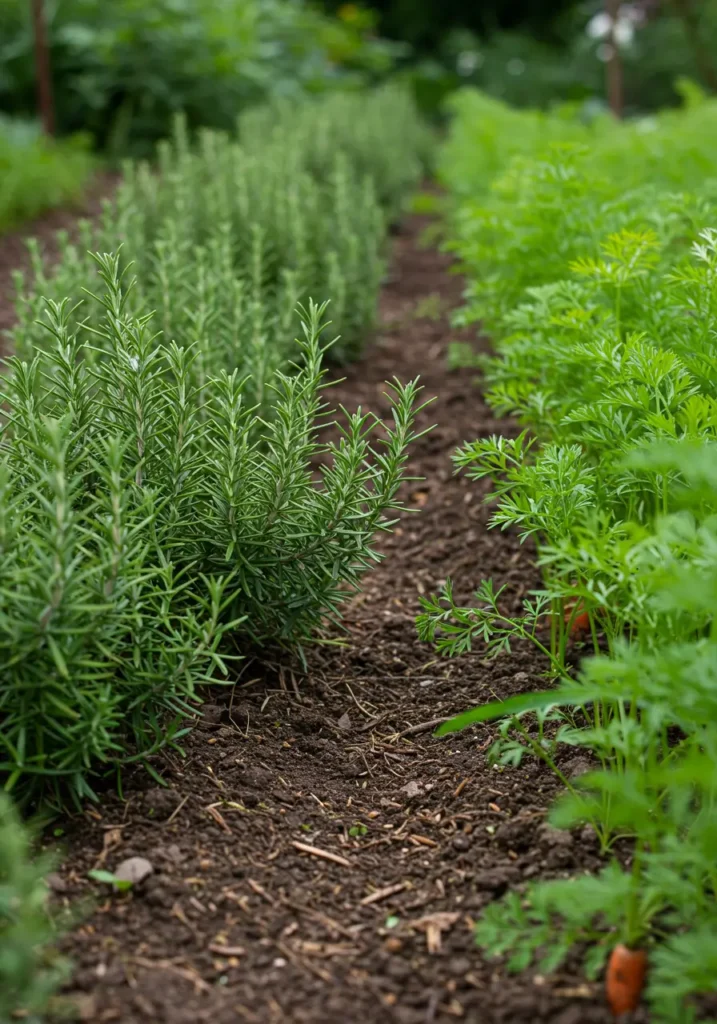
Rosemary’s aromatic foliage may make nearby carrots more difficult for some pests to locate, but the effect will vary. The clearest reason to combine them is that upright rosemary occupies a different layer of the bed from carrot roots.
Keep mature rosemary far enough away that it does not shade seedlings or compete for water. In cold climates, place potted rosemary beside the carrot bed so it can be moved indoors when temperatures fall.
4. Cabbage and Dill
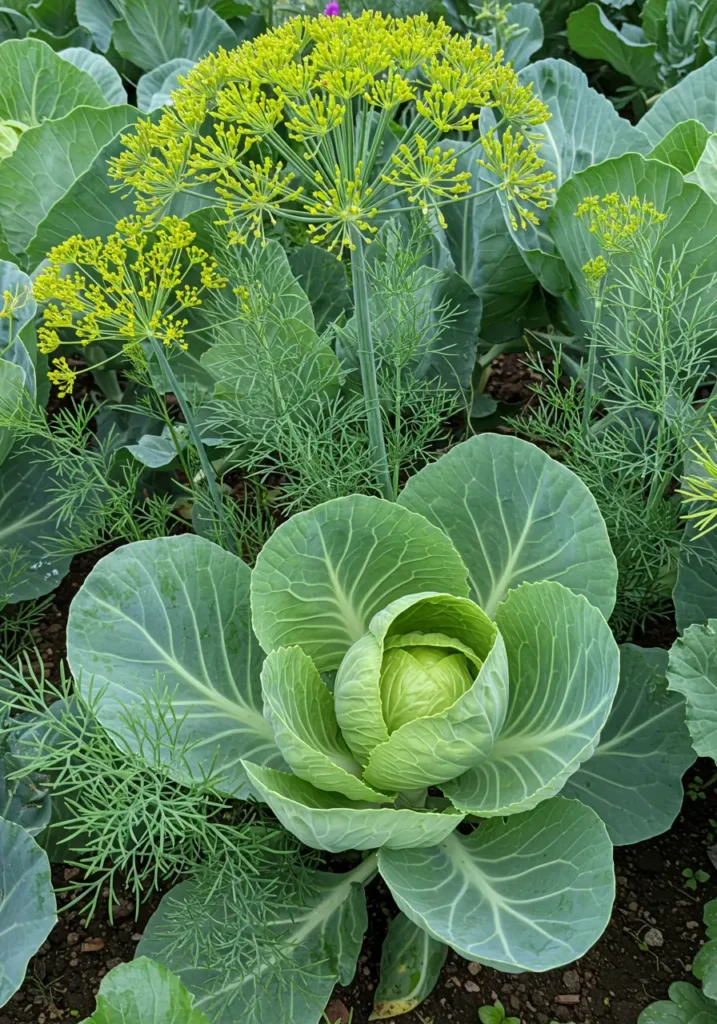
Flowering dill supplies nectar and pollen to hoverflies, lady beetles, and small parasitoid wasps, some of which attack aphids or caterpillars. Let several dill plants flower, but position them where their height will not shade young cabbage.
Inspect cabbage leaves regularly for eggs and caterpillars. Dill may help attract useful insects, but insect netting or row cover offers more direct protection when installed before cabbage pests arrive.
5. Lettuce and Mint
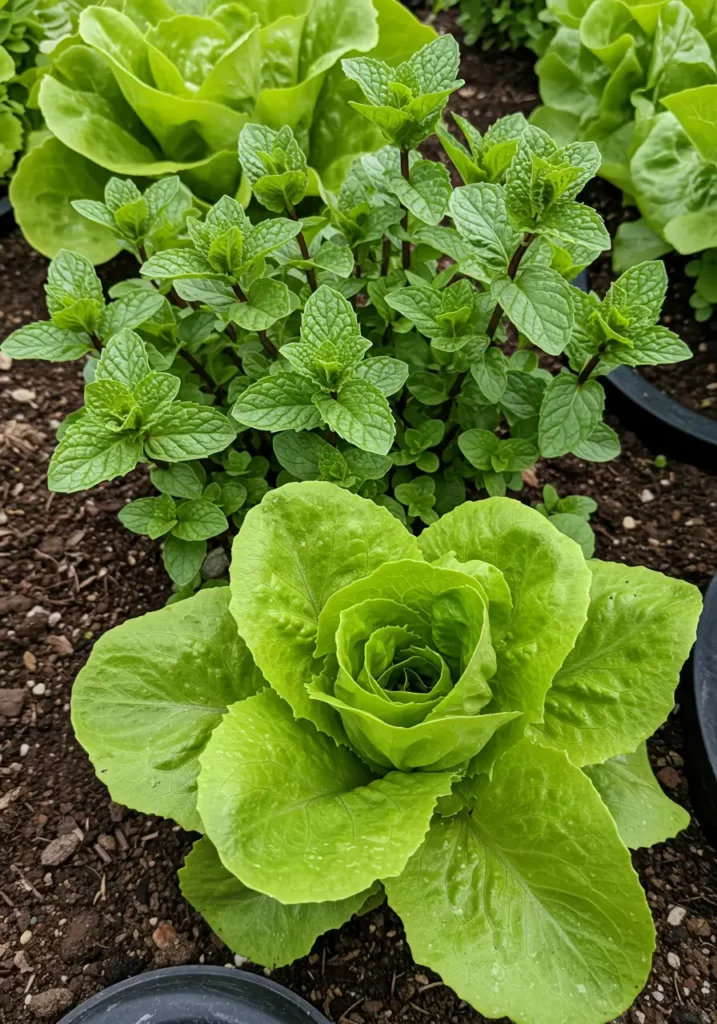
Mint’s scent may discourage certain pests, and its flowers can feed beneficial insects. The main challenge is its aggressive underground spread. Grow mint in a container and position it beside the lettuce instead of planting it directly in the bed.
Mint will not reliably stop every slug. Reduce slug hiding places, water early in the day, inspect plants after dark, and use an appropriate barrier or control method if damage continues.
6. Roses and Chives
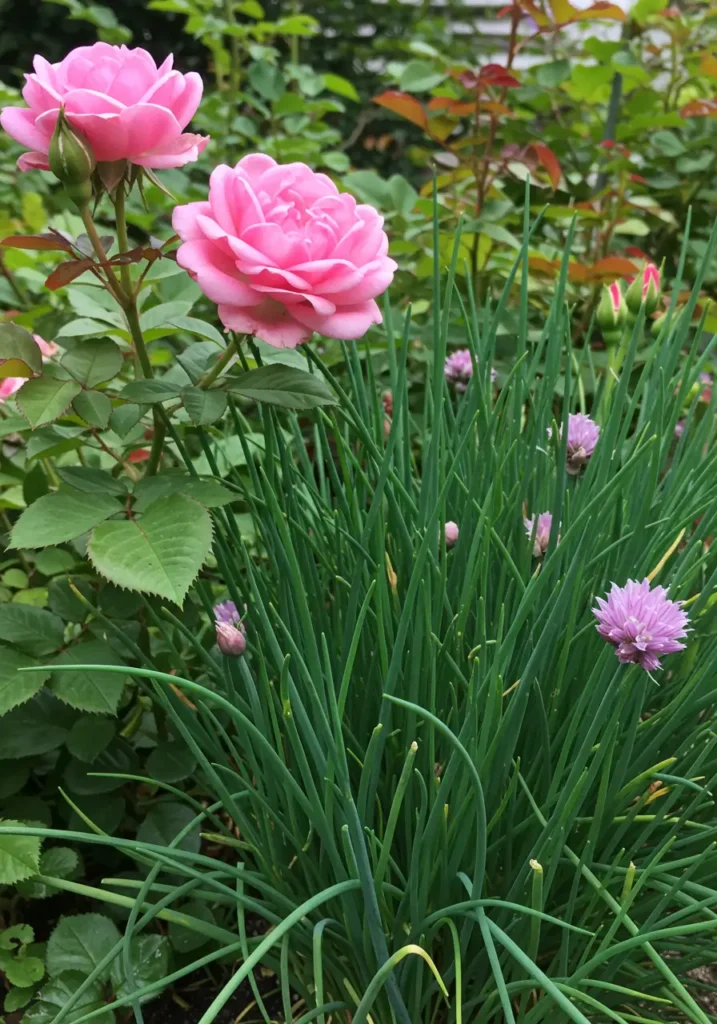
Compact chives fit neatly around roses, and their flowers provide food for pollinators. Their scent may also interfere with some insects searching for host plants. Allow space around rose stems so you can remove fallen leaves and maintain airflow.
Do not rely on chives to prevent rose black spot. Choose resistant rose varieties, avoid wetting foliage unnecessarily, remove infected material, and follow locally appropriate disease-management guidance.
7. Peppers and Marigolds
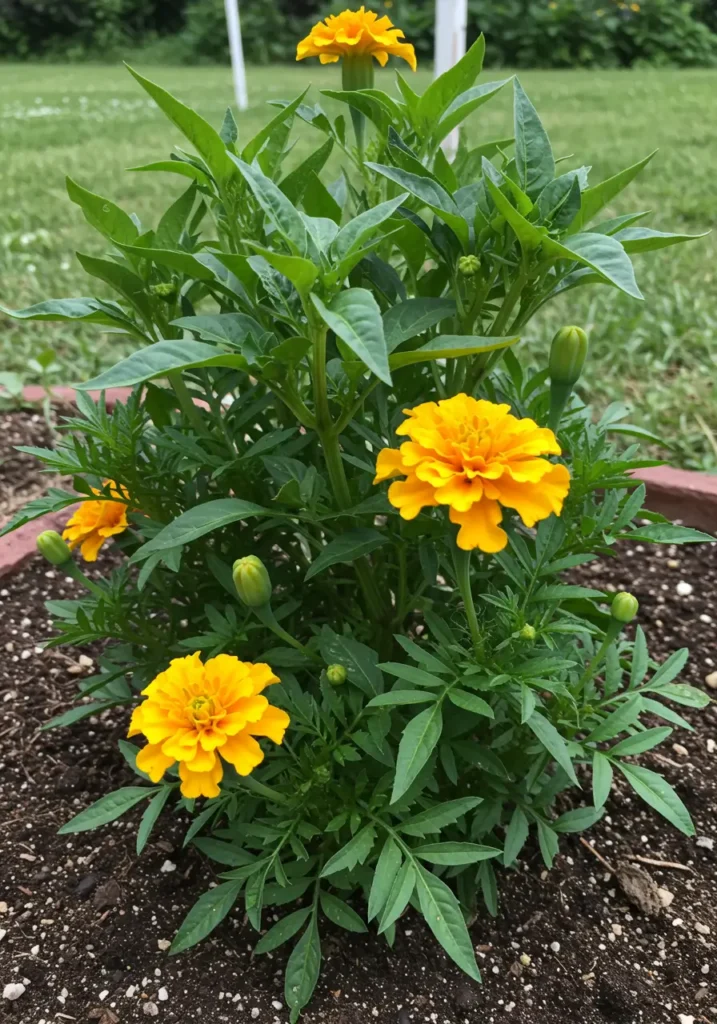
Marigolds add a long flowering period around peppers and can attract pollinators and natural enemies. The Tri-Color Dwarf French Marigold bulk seed package contains a large quantity intended for outdoor beds, borders, and mass planting. Because 30,000 seeds is far more than most small gardens need, calculate the planting area and storage requirements before ordering.
Some French and African marigolds can suppress certain plant-parasitic nematodes, but the result depends on the marigold species, nematode species, planting density, and how the plants are managed. A few decorative marigolds beside an already infested pepper will not cure root damage.
If nematodes are suspected, identify the problem first and consider rotation, resistant varieties, soil solarization, or a densely planted marigold cover crop suited to the target nematode.
8. Cucumbers and Nasturtiums
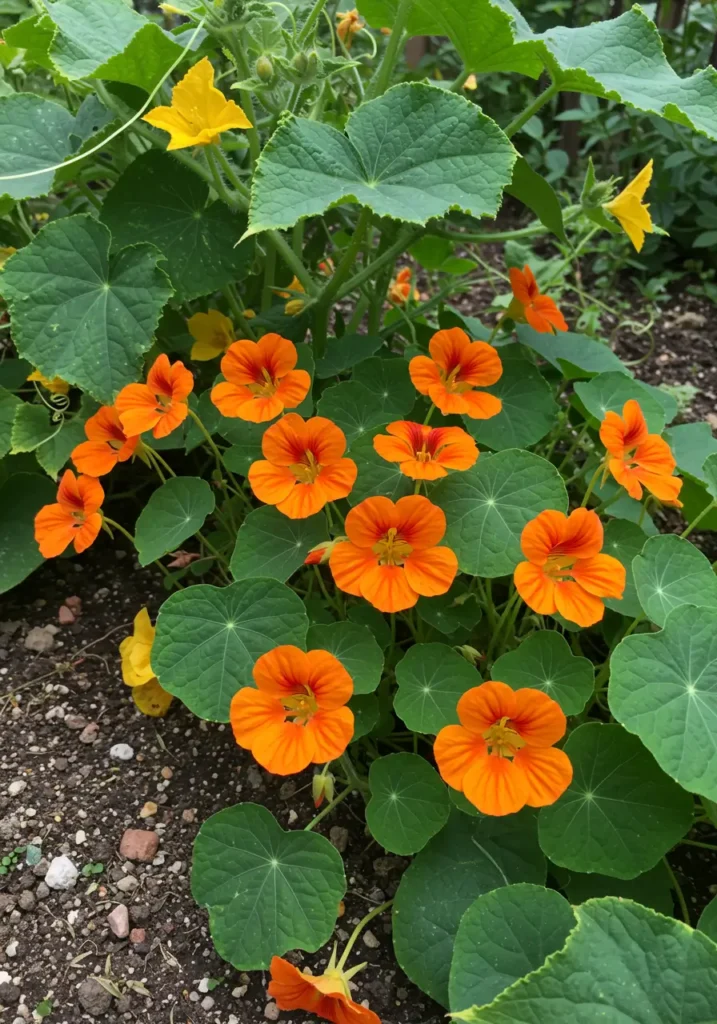
Nasturtiums provide flowers for pollinators and may help reduce damage from certain cucurbit pests. They can also attract aphids, which makes them useful as monitoring plants or potential trap crops.
The HOME GROWN Nasturtium Dwarf, Tall, and Trailing Mix offers more than 250 seeds of Tropaeolum majus. The varied growth habits can suit bed edges, containers, and areas where trailing plants have room to spread. Check the seed packet’s mature dimensions so the taller or trailing plants do not overwhelm young cucumbers.
Inspect nasturtiums frequently. If aphids become numerous, remove heavily infested growth before winged aphids disperse. Keep vines separated enough that you can reach cucumber leaves and harvest fruit easily.
9. Potatoes and Beans
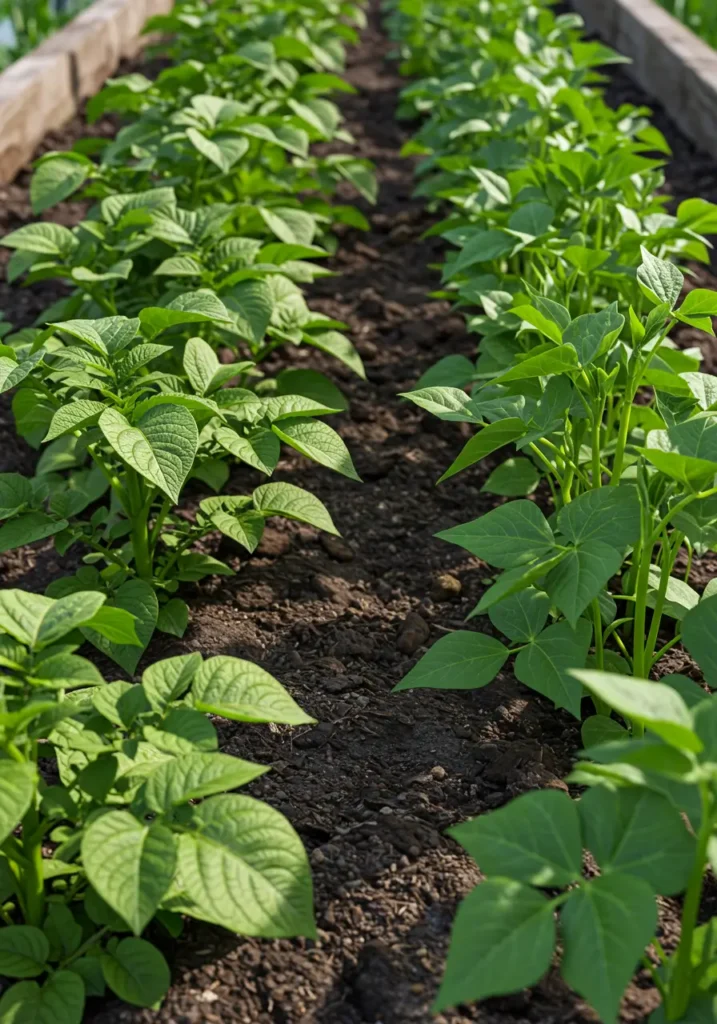
Bush beans and potatoes can share a bed when each crop receives adequate sun, water, and root space. Their different shapes can make efficient use of a wide planting area. Beans may contribute nitrogen to later crops after their residues break down, but potatoes still need fertility based on soil conditions.
Do not assume potatoes will repel Mexican bean beetles. Monitor both crops independently, and avoid damaging shallow potato tubers when maintaining or harvesting beans.
10. Broccoli and Chamomile
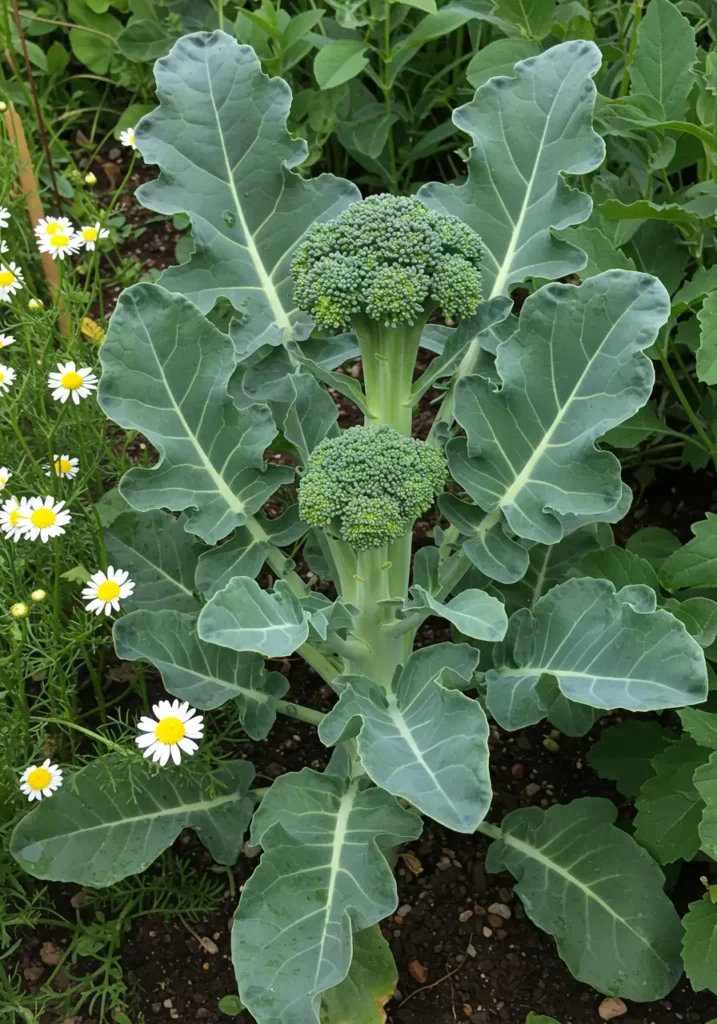
Chamomile’s small flowers can attract beneficial insects, making it a useful biodiversity plant near broccoli. Claims that it improves broccoli flavor or vigor are largely traditional rather than well established.
Use chamomile along a bed edge and leave enough room for the broccoli’s broad leaves. If caterpillars are common, inspect leaf undersides and consider insect netting rather than expecting flowers alone to protect the crop.
11. Strawberries and Borage
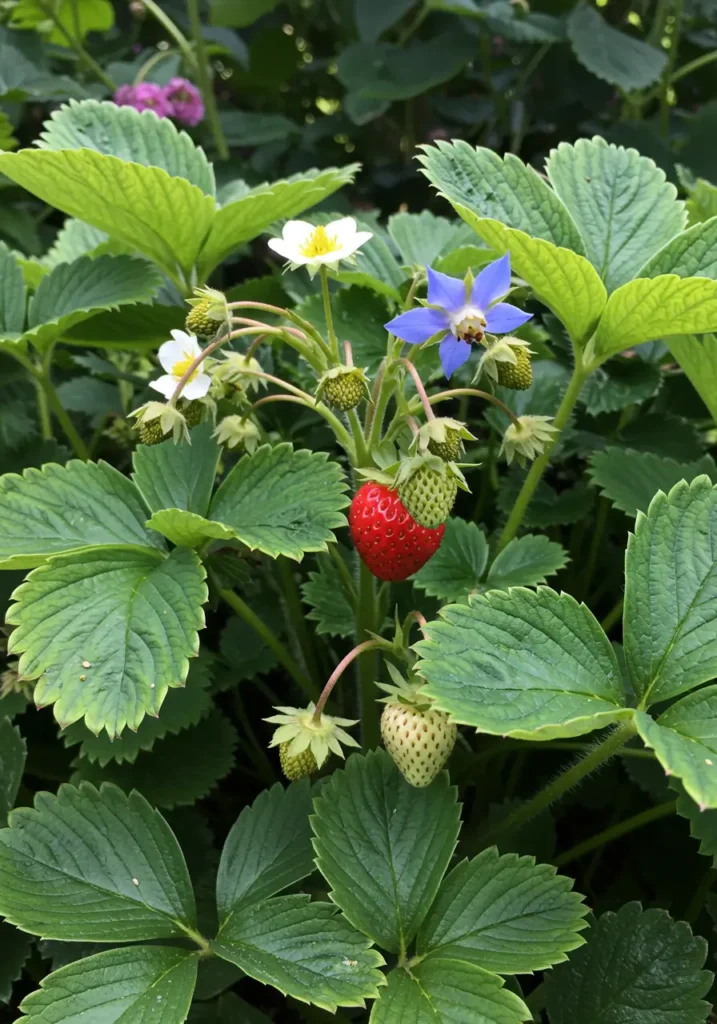
Borage produces nectar-rich flowers that attract bees and can increase floral diversity around strawberries. Place it along the northern side or outside the bed because mature borage can become large and shade low-growing strawberry plants.
Borage readily self-seeds in suitable conditions. Remove unwanted seedlings and cut off some flower heads before seeds mature if you want to control its spread.
12. Onions or Garlic and Carrots
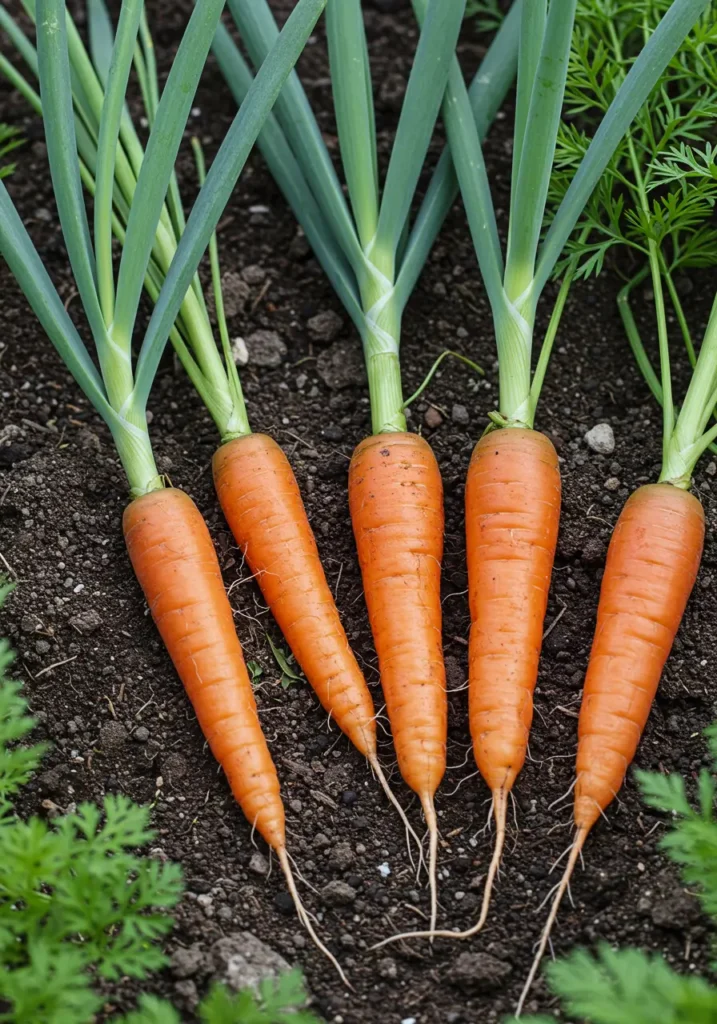
Alternating carrots with onions or garlic creates a more diverse scent environment that may make host crops less obvious to certain insects. The narrow, upright foliage of alliums also allows light to reach carrots when spacing is adequate.
This pairing is not a complete barrier against carrot rust fly or onion pests. Rotate crop families, use fine insect mesh where these pests are serious, and follow the spacing instructions for each vegetable.
13. Corn and Pumpkins
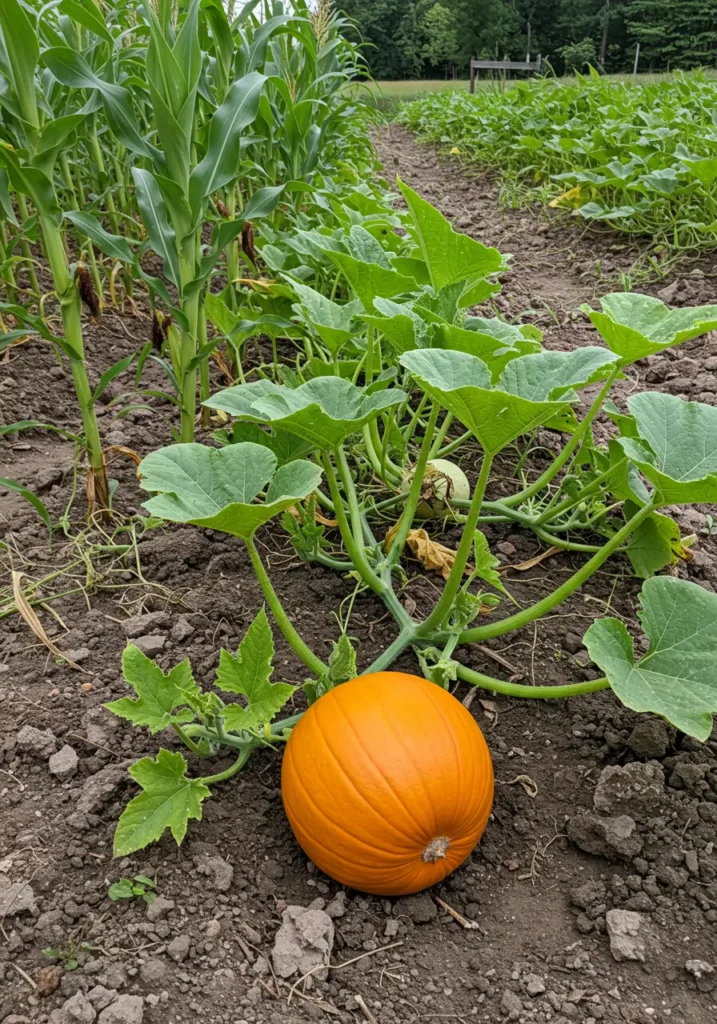
Pumpkin foliage covers the ground around corn, helping shade weeds and reduce surface evaporation. The pairing requires fertile soil and considerable space because both crops are demanding feeders.
Plant pumpkins toward the outside of the corn block and direct their vines into open ground. Do not expect pumpkin vines to stop every raccoon or other animal; use secure fencing where wildlife damage is frequent.
14. Squash and Borage
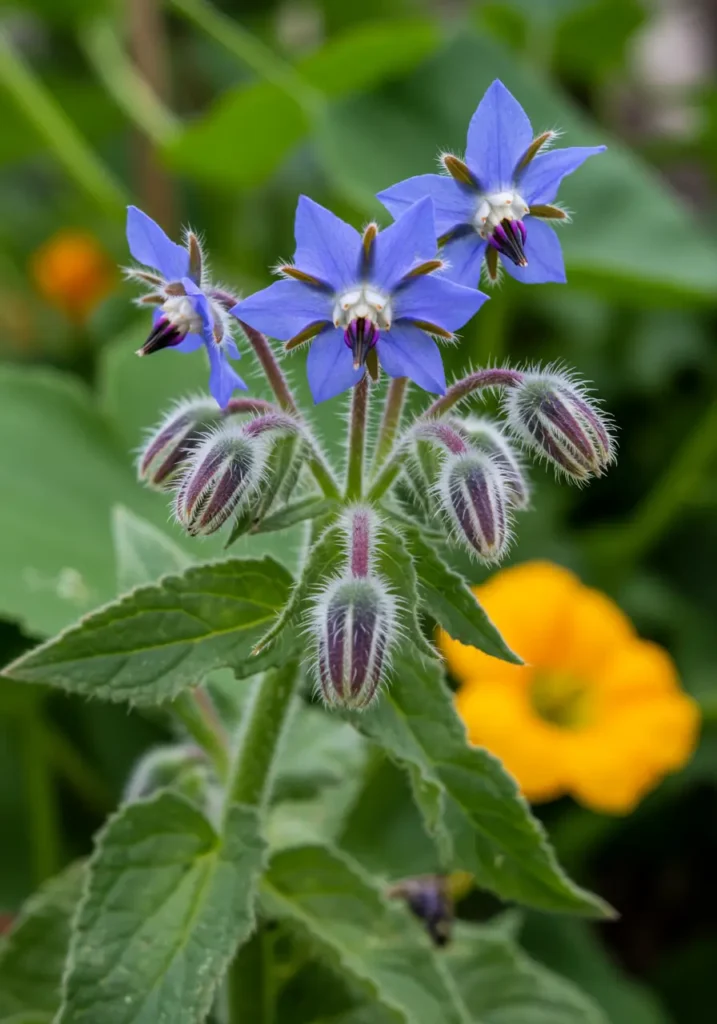
Borage flowers attract bees, while squash depends on insect pollination to produce well-shaped fruit. This makes the pairing useful when the goal is to maintain visible pollinator activity around the crop.
Evidence that borage directly repels squash vine borers is limited. Check stems for damage, learn when the pest is active locally, and use row cover only before flowering because covered squash flowers cannot be reached by pollinators.
15. Asparagus and Tomatoes
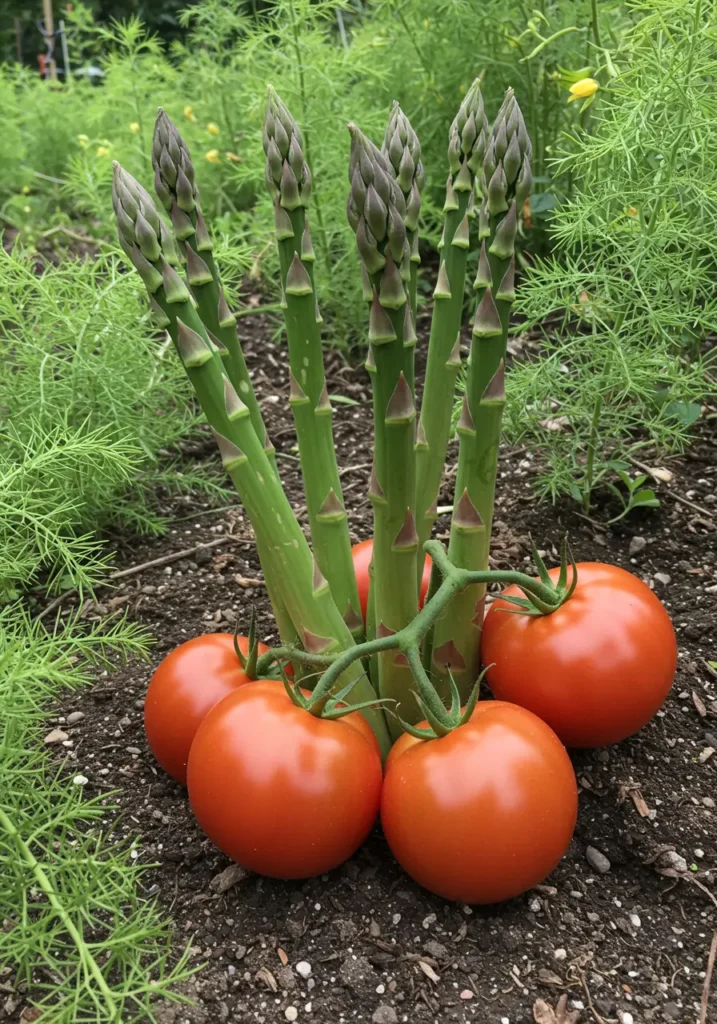
Tomatoes can occupy space near asparagus after the asparagus harvest period, but this pairing needs careful layout. Asparagus is a long-lived perennial with an expanding root and crown system, whereas tomatoes require annual planting, feeding, and support.
Keep digging and tomato stakes away from asparagus crowns. Treat claims that the two plants repel each other’s pests as possibilities rather than guaranteed protection.
16. Potatoes and Marigolds
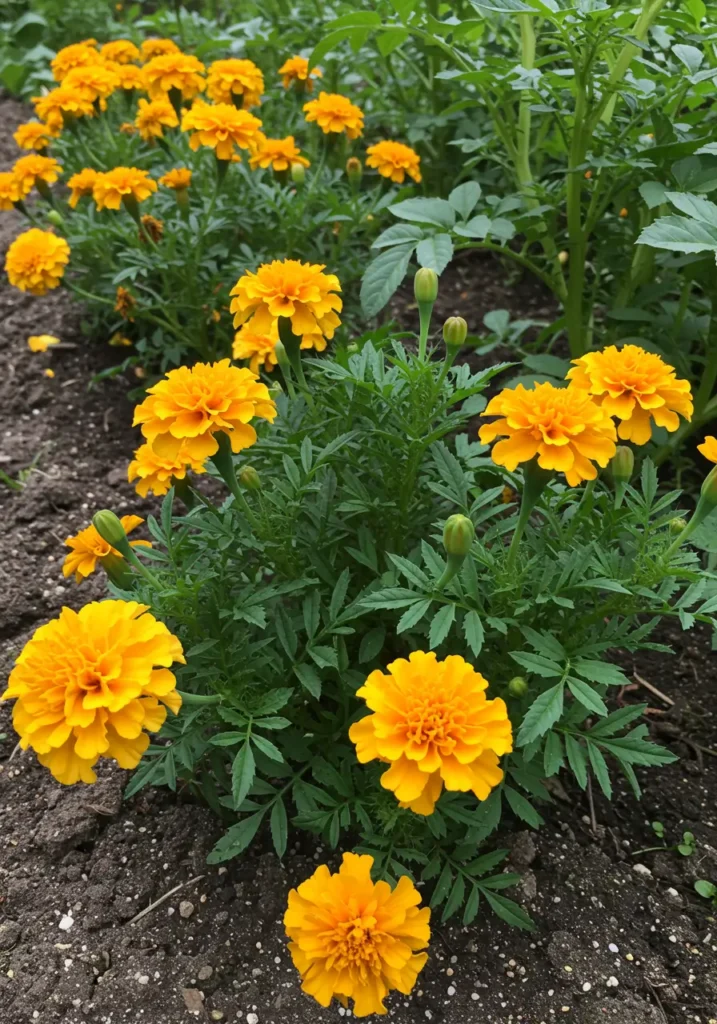
Marigolds add flowers and plant diversity around potatoes, but they should not be presented as a reliable Colorado potato beetle trap crop. Multiple studies summarized by University of Minnesota Extension found that marigolds did not deter this beetle.
Scout the undersides of potato leaves for orange egg clusters and remove beetles or larvae promptly in small gardens. Use marigolds for flowers and habitat, not as a substitute for potato-beetle management.
17. Spinach and Radishes
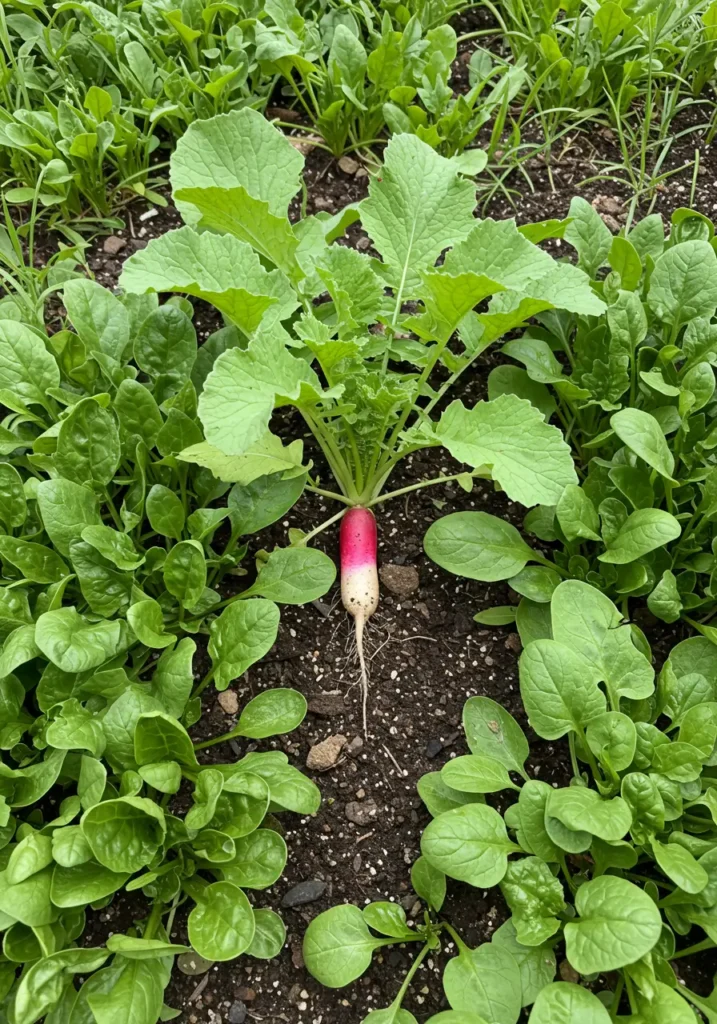
Spinach and radishes are compatible cool-season crops that can use one bed efficiently. Radishes mature quickly and can be removed as spinach expands. Neither crop needs to provide a special chemical benefit for the combination to be worthwhile.
Sow radishes between or along spinach rows, then harvest them promptly before their roots become woody. Both crops may bolt or become bitter in hot weather, so plant them during the cooler part of your season.
18. Sunflowers and Cucumbers

Strong sunflower stems may support small-fruited cucumber varieties, and the flowers attract bees. Large slicing cucumbers can become too heavy for sunflower stems, so a separate trellis is safer for vigorous vines.
For a larger vertical planting, the VIVOSUN 5-by-30-foot heavy-duty polyester plant trellis netting two-pack can support climbing peas, beans, cucumbers, and lightweight flowering vines when attached to a stable frame. Match the netting and frame strength to the expected crop weight, and secure every edge so wind cannot pull the structure loose.
Place sunflowers where they will not cast excessive shade. Both crops need regular moisture, and nearby plants may compete strongly during hot, dry weather.
19. Broccoli and Onions

Onions have narrow foliage and can fit between widely spaced broccoli plants. Research has found that onion and other aromatic companions can reduce some caterpillar damage in brassica plantings under certain conditions.
Results are not universal. Continue checking broccoli for cabbageworm eggs and feeding damage, and protect young plants with insect netting where pressure is high.
20. Peppers and Okra
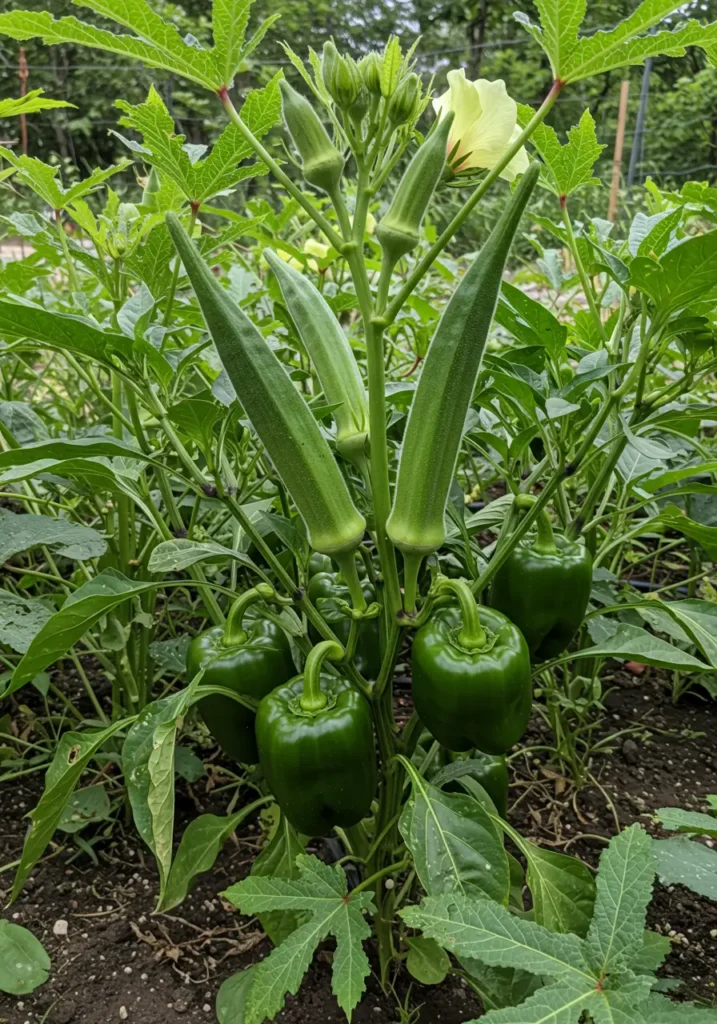
Peppers and okra both appreciate warm conditions. Tall okra can provide limited afternoon shade in regions where intense sun causes pepper fruit to develop sunscald.
Plant okra on the side of the bed that blocks harsh afternoon sun without depriving peppers of most of the day’s light. Give both crops enough room because mature okra develops a broad canopy and substantial root system.
21. Zucchini and Nasturtiums
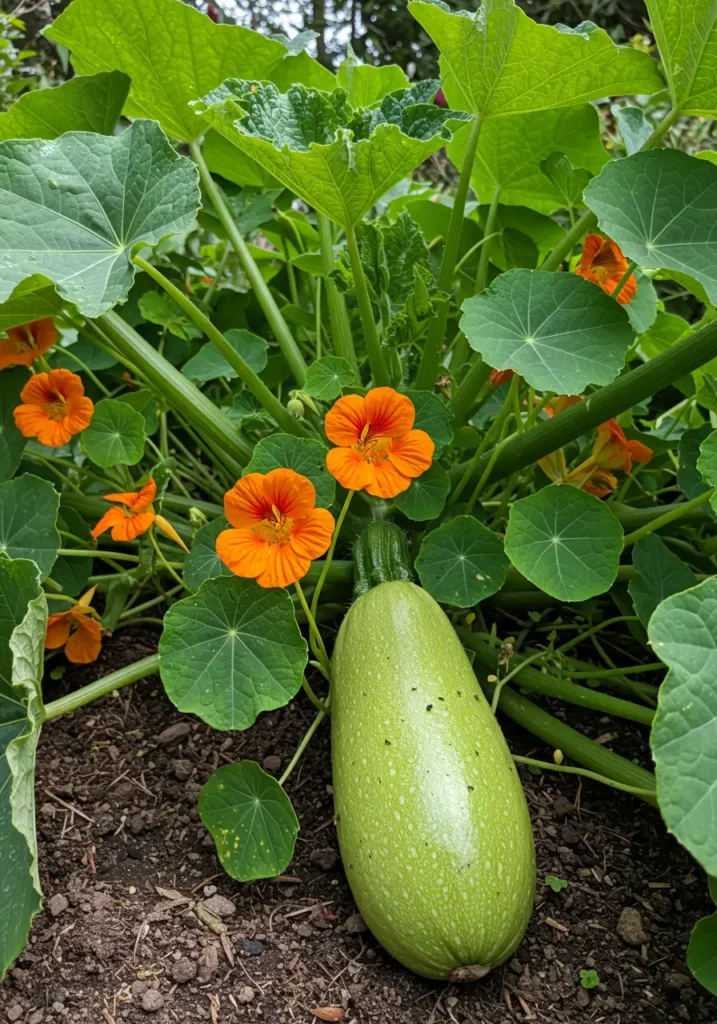
Nasturtiums attract pollinators and may reduce damage from squash bugs or cucumber beetles in some plantings. Their spreading habit also covers open soil around the edge of a zucchini bed.
Do not allow nasturtiums to smother young zucchini plants. Inspect both crops regularly, especially beneath leaves where squash-bug eggs can be hidden.
22. Peas and Turnips
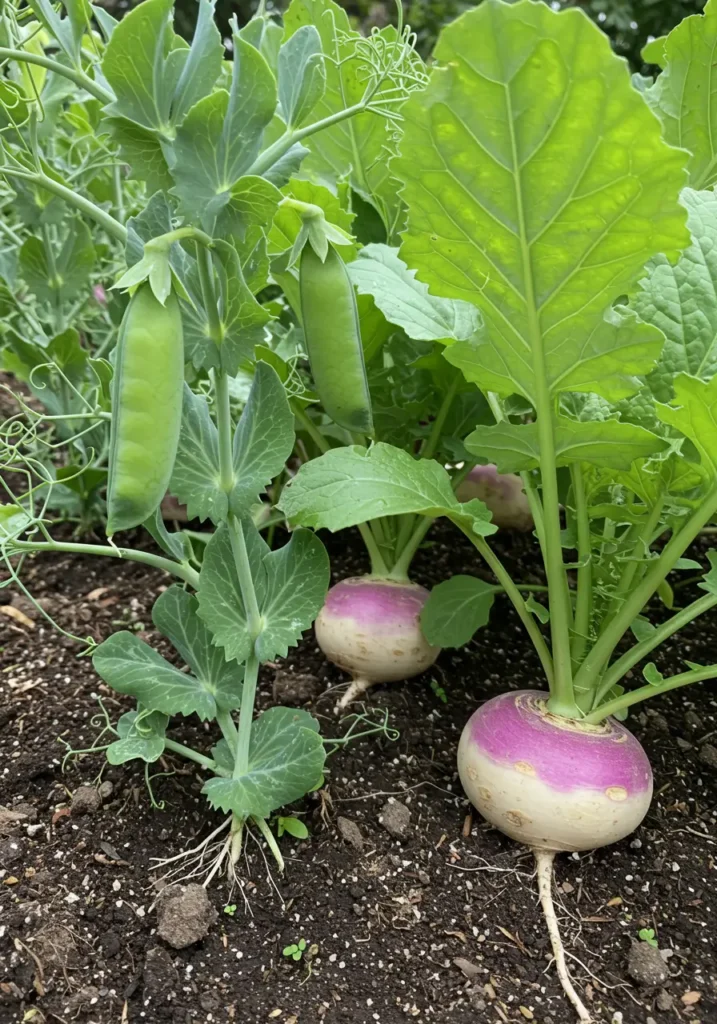
Peas and turnips prefer cool weather and can share a bed when peas grow vertically on a trellis. Turnips use the lower space, while peas capture light above them.
Peas primarily use the nitrogen they fix themselves; they do not automatically fertilize actively growing turnips. Leave healthy pea roots in the soil after harvest so their residues can contribute to later nutrient cycling.
23. Swiss Chard and Bush Beans
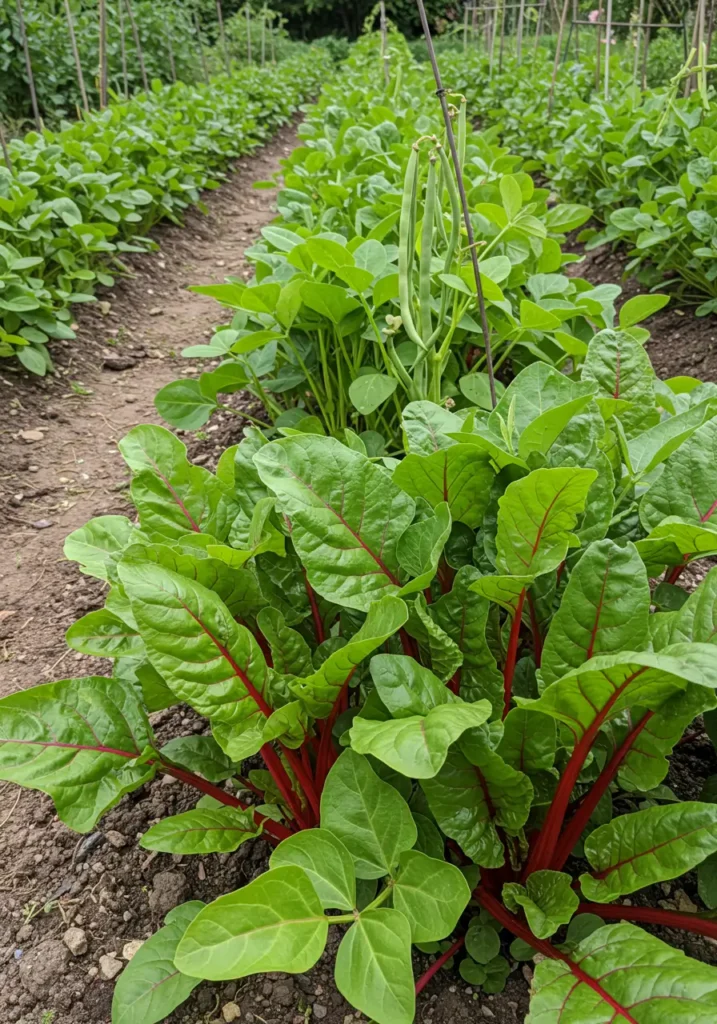
Bush beans mature relatively quickly, while Swiss chard can remain productive for a long season. Planting them in alternating groups can make efficient use of a bed, provided the beans do not shade young chard.
Feed each crop according to soil-test results. The beans’ greatest nitrogen contribution is more likely to benefit a later crop after residues decompose than the neighboring chard immediately.
24. Green Beans and Marigolds
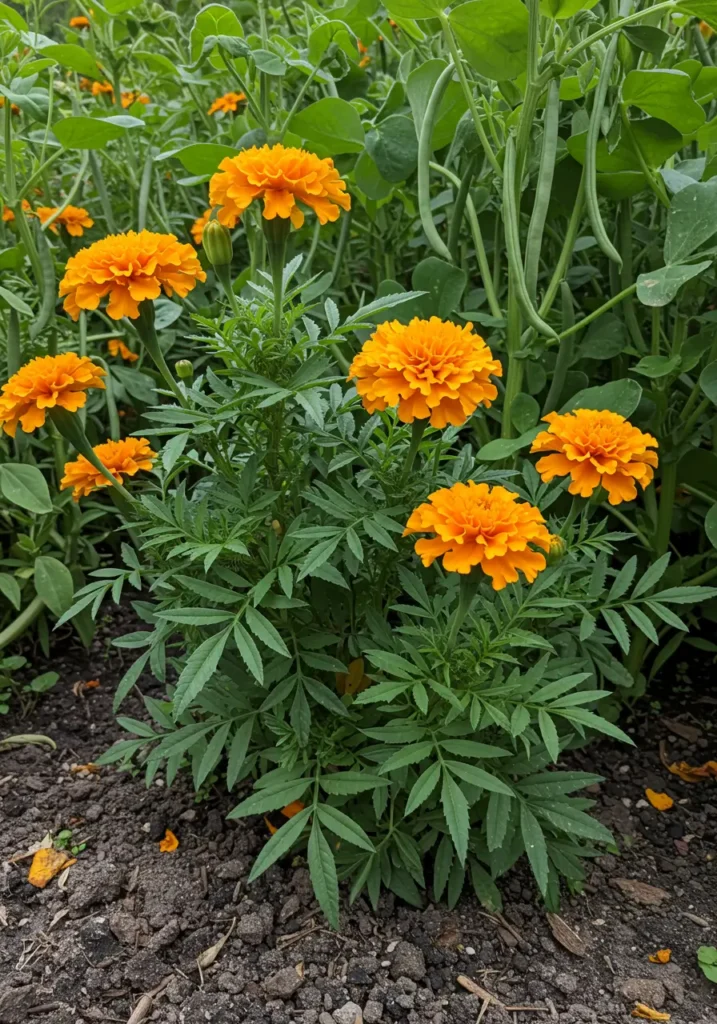
Marigold flowers can increase garden diversity and provide nectar and pollen near green beans. Certain marigolds can suppress particular nematodes when grown densely and managed as a cover crop, but effectiveness varies considerably.
Do not assume a small border will protect bean roots from every nematode. Confirm the pest, select an appropriate marigold species or cultivar, rotate crops, and remove badly affected plants when necessary.
25. Kale and Calendula
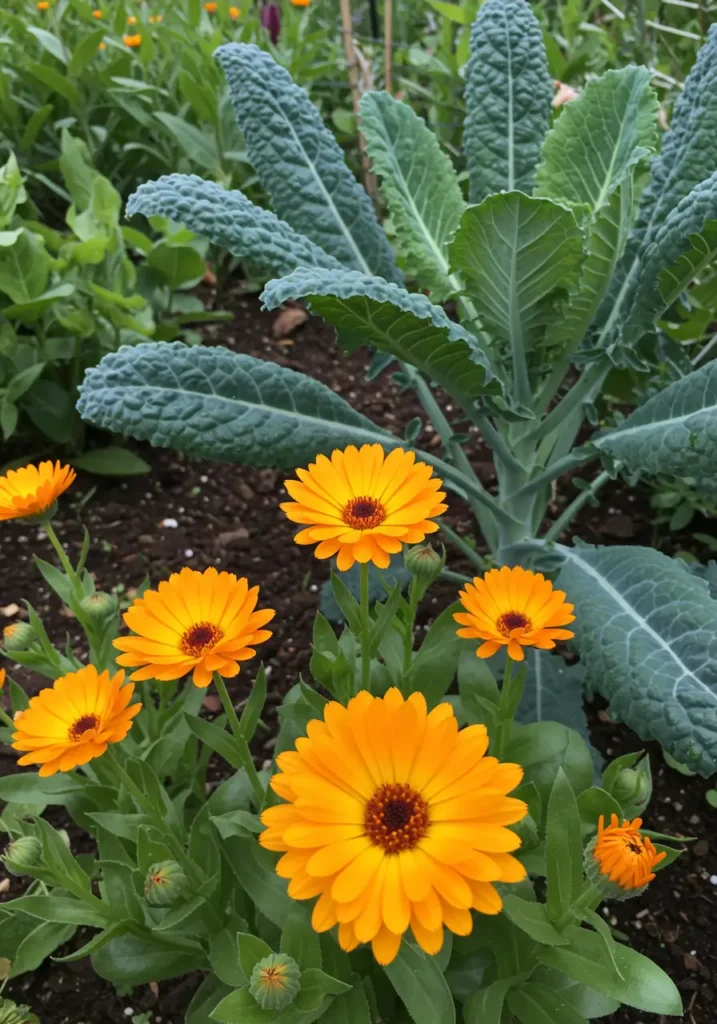
Calendula adds accessible flowers near kale and can help support hoverflies and other beneficial insects. Its upright growth makes it easier to manage than many sprawling flowering companions.
Plant calendula along the bed edge, maintain airflow around kale, and continue inspecting leaves for aphids and caterpillars. Flowers support the garden food web, but they do not eliminate the need to monitor the crop.
Also read: Transform Your Space: Creating Your Dream Home
How to Plan a Companion-Planted Bed
Start With the Main Crop
Choose the vegetable you most want to harvest, then select companions that solve a real design problem. A useful companion might provide flowers, cover bare soil, mature early, climb vertically, or tolerate the same moisture and light conditions.
Match Water, Light, and Temperature Requirements
Plants sharing a bed should have reasonably compatible needs. Mediterranean herbs such as rosemary prefer sharp drainage and may struggle beside vegetables receiving frequent irrigation. Cool-season spinach and warm-season okra cannot deliver their best growth under the same temperatures.
Respect Mature Plant Size
Companion planting does not mean planting as closely as possible. Overcrowding increases competition and makes harvesting, inspection, and airflow more difficult. Use the recommended spacing for the main crop, then place smaller companions along edges or in gaps that will remain accessible.
Plan a Sequence, Not Just a Pair
Timing can make a combination more effective. Sow radishes between slow-growing vegetables and harvest them early. Grow lettuce before tomato plants form a large canopy. Allow flowers to begin blooming before the period when pollinators or natural enemies are most needed.
Use More Than One Pest-Control Method
Companion planting belongs within integrated pest management. Combine it with crop rotation, resistant varieties, healthy soil, row covers, sanitation, hand removal, and targeted controls selected for the identified pest.
The 10-by-33-foot ultra-fine mesh garden netting can provide a physical barrier around susceptible vegetables. Install the mesh before pests reach the crop, seal the edges, and support it so the material does not press tightly against leaves. Remove or open the cover when insect-pollinated plants begin flowering unless you plan to hand-pollinate them.
Avoid routine broad-spectrum insecticide use, which can kill pollinators and natural enemies along with pests.
A Simple Bed Design for Beginners
- North or back edge: Install a trellis for peas in cool weather or cucumbers and pole beans during warm weather.
- Center: Grow the main crop, such as tomatoes, peppers, broccoli, or kale, at its recommended spacing.
- Open gaps: Add quick crops such as radishes or lettuce that can be harvested before the main plants expand.
- Sunny edges: Plant basil, dill, calendula, nasturtiums, or compact marigolds.
- Nearby container: Keep mint or another spreading herb in a pot so it cannot take over the bed.
Keep paths accessible and avoid filling every gap. You need room to water at soil level, inspect leaves, remove weeds, and harvest without damaging neighboring plants.
Amazon US Verified
Self-Watering Planters with Drainage Aerators
Elevated reservoir design that prevents soggy roots and ensures steady hydration.
How to Tell Whether a Combination Works
Garden conditions change from year to year, so evaluate companion planting through observation rather than expectation. Compare a mixed planting with a similar crop elsewhere in the garden when possible.
- Record planting dates, varieties, spacing, and major weather conditions.
- Inspect plants at least once a week and note pest numbers or visible damage.
- Track flowering periods and the beneficial insects you observe.
- Compare plant health and harvest quantity, not just the appearance of the bed.
- Repeat promising combinations before deciding that one season proves the result.
Common Companion Planting Mistakes
- Expecting total pest prevention: Companion plants may reduce risk, but no pairing guarantees protection.
- Assuming all legumes immediately feed neighboring crops: Most fixed nitrogen becomes useful to other plants after legume tissue decomposes.
- Using an unmanaged trap crop: A pest-filled trap plant can become a source of infestation if it is ignored.
- Overcrowding: Insufficient airflow and strong competition can outweigh any potential benefit.
- Ignoring crop families: Closely related plants may share diseases and pests, which matters when planning crop rotation.
- Using row covers incorrectly: Unsealed edges admit pests, while covers left on flowering cucurbits can prevent pollination.
- Following universal “enemy plant” lists: Many incompatibility claims lack strong evidence. Prioritize measurable needs such as space, moisture, light, and fertility.
Frequently Asked Questions
Does companion planting really work?
Some methods have solid practical or research support, including space-saving intercropping, flower strips for beneficial insects, selected trap crops, and the physical support provided in systems such as the Three Sisters. Evidence for many highly specific claims—especially improved flavor or complete pest repellence—is limited or inconsistent.
How close should companion plants be?
They should be close enough to share the intended benefit without violating their mature spacing requirements. The correct distance depends on plant size, soil fertility, airflow, irrigation, and climate. Bed edges are often the safest place for flowers and herbs.
Can companion planting replace fertilizer?
No. Legumes can contribute to long-term nitrogen cycling, but companion planting does not correct every nutrient deficiency. Use compost appropriately and base significant fertilizer applications on a soil test and the needs of the crop.
Can companion planting eliminate pesticides?
It may reduce pest pressure and the need for intervention, but it cannot guarantee a pest-free garden. Monitor plants and choose the least disruptive effective control when pest populations reach damaging levels.
Are wildflower seed mixes suitable for every garden?
No. The species in a mix may not all suit your climate, available space, or local ecosystem. Review the complete seed list, check regional recommendations, and avoid planting species considered invasive in your area. A dedicated pollinator strip is usually easier to manage than scattering a large mix through vegetable beds.
What is the easiest combination for a beginner?
Try tomatoes with basil, spinach with radishes, or kale with calendula. These combinations are straightforward to arrange, make practical use of space, and allow you to observe how mixed planting performs in your own garden.
Build Your Garden Around Functions, Not Folklore
The best companion planting combinations have a clear purpose: supporting pollinators, attracting natural enemies, covering soil, providing shade or structure, or fitting two harvests into one space. Start with two or three manageable combinations, record what happens, and adjust the layout next season. Careful spacing, healthy soil, suitable varieties, and regular observation will influence your harvest more reliably than any single “perfect” pairing.
Affiliate disclosure: This post contains affiliate links. If you purchase through one of these links, Azuloz may earn a commission at no additional cost to you. Product specifications, package quantities, availability, and prices can change, so review the current Amazon listing before ordering.
As an Amazon Associate, azuloz.com earns from qualifying purchases.