Fashion Psychology: 10 Design Elements for Better Everyday Outfits
You put on jeans you like, a sweater that fits, and shoes you have worn a hundred times. Each piece works on its own. Together, something feels unfinished. You change the sweater, then the shoes, and suddenly getting dressed has taken more energy than the morning allows.
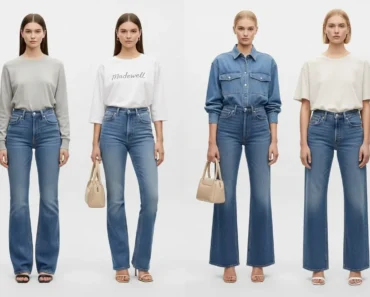
Before you decide your closet needs an overhaul, look at how the pieces relate. A jacket hem, a sharp color contrast, or several competing details may explain what feels off. Start with comfort and the overall shape of your outfit, then adjust one design element at a time. That gives you something specific to try with clothes you already own.
Fashion psychology offers a useful way to think about clothing, identity, and personal meaning. Pair that perspective with practical design principles, and you can build outfits that suit your day without turning every morning into a shopping problem.
What Fashion Psychology Can Tell You About Getting Dressed
Fashion psychology explores the relationship between clothing and the people who wear, choose, and interpret it. In the American Psychological Association’s conversation with psychologist Carolyn Mair, clothing is discussed as part of identity and emotional experience. That helps explain why an outfit can mean more to you than its color or price tag.
Consider a blazer you associate with a successful presentation. You might enjoy wearing it because of that memory. Someone else might find the same style uncomfortable or overly formal. Your experiences, surroundings, and preferences belong in the decision.
The ten elements below are styling tools, not a scientifically validated personality test. A pointed shoe does not establish competence, and a floral dress does not reveal someone’s temperament. Use the suggestions to explore what you enjoy and what works in your setting.
Before looking in the mirror, ask a practical question: What does this outfit need to let me do? A day of driving, sitting through meetings, and carrying groceries calls for different choices than an evening at a restaurant. Start there, then choose how you want the clothes to look.
10 Design Elements You Can Adjust Without Replacing Your Wardrobe
1. Color: Build Around a Shade You Enjoy Wearing
Color can carry personal and cultural associations, but universal promises such as “blue makes everyone trust you” go too far. A review of color psychology published in Frontiers in Psychology emphasizes context and cautions against overly broad applications of research findings. Treat color advice as a starting point for experimentation.
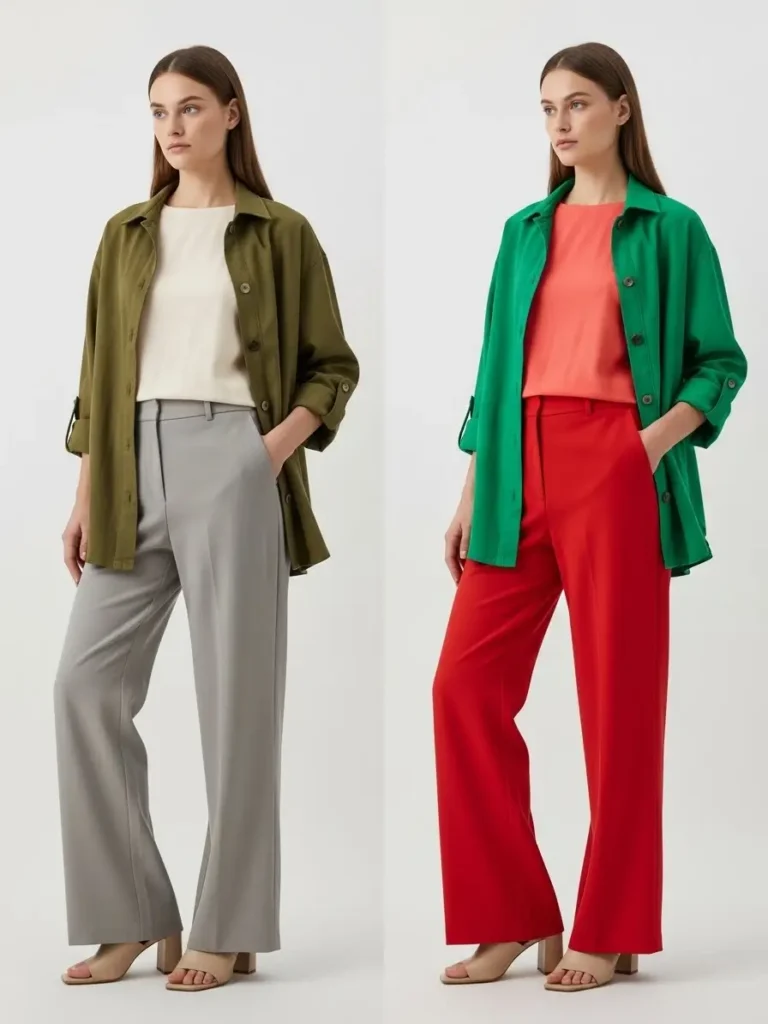
Look at the clothes you actually reach for. Perhaps burgundy feels familiar, green reminds you of being outside, or navy is simply easy to coordinate. Choose one shade you enjoy and build a combination around it. You do not need a particular seasonal palette to have permission to wear a color.
For example, try a green cardigan with dark jeans and brown shoes. Next time, use the same cardigan with cream pants. Notice which combination suits your preferences and your plans.
If a bright sweater feels like too much, introduce that color in a scarf or bag. You can change the amount of color without abandoning it.
2. Value and Contrast: Decide How Strongly Pieces Stand Apart
Value means how light or dark a color appears. Contrast describes a difference between elements; in this case, their lightness and darkness. A white shirt against black pants creates a stronger value contrast than a charcoal shirt with those same pants.
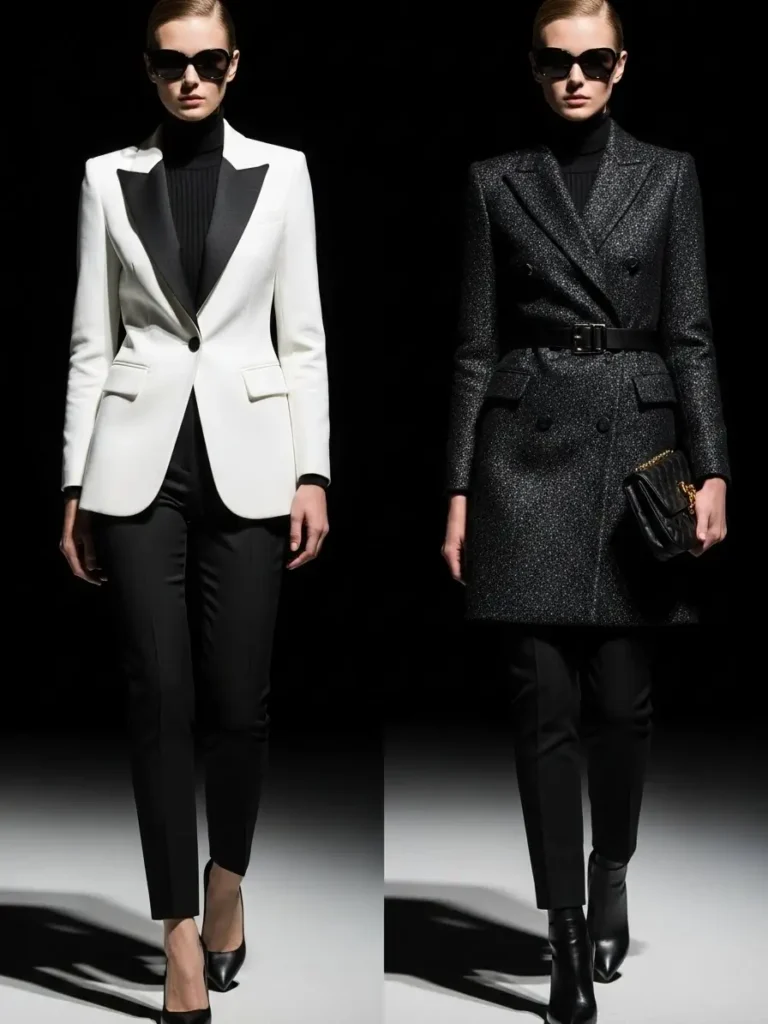
Use this distinction when an outfit feels more dramatic or more subdued than you intended. For a gentler transition, combine neighboring values, such as oatmeal and camel. For a distinct division, try cream with deep navy.
Similar colors do not have to look flat. A ribbed sweater and smooth pants can add variety within a narrow palette. Conversely, a high-contrast outfit may need very little decoration if you already enjoy its clear blocks of color.
Compare two tops with the same pants. Keep your shoes and accessories unchanged so you can see whether contrast is the detail making the difference.
3. Line: Notice Seams, Openings, and Edges
Lines appear throughout clothing: in a row of buttons, a trouser crease, a sleeve cuff, or the opening of a cardigan. Some are printed; others come from construction or the way garments overlap.
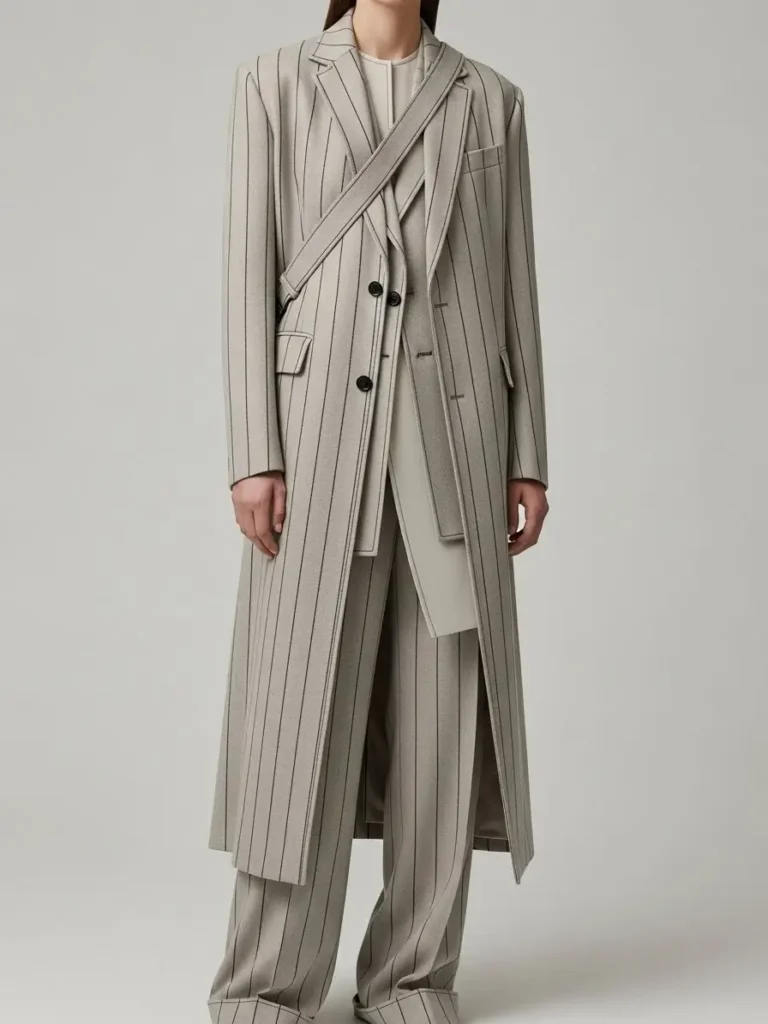
An open jacket creates two long edges around the layer underneath. A contrasting belt creates a visible horizontal division. A wrap front adds a diagonal. None is automatically better, and none needs to serve a body-correction goal.
When an outfit feels interrupted, look for several edges close together. A shirt hem, jacket hem, and bold belt may all land within a few inches. Try removing the belt or changing the jacket length to see whether you prefer fewer divisions.
You can also repeat a line deliberately. The straight edge of a simple coat can complement straight-leg pants. Focus on the relationship you can see rather than relying on promises that a certain stripe will always make someone look taller or smaller.
4. Shape: Connect the Details
Shape describes individual forms within an outfit, including a curved neckline, rectangular pocket, rounded bag, or angular collar. Repeating a shape can give different pieces a visual connection.
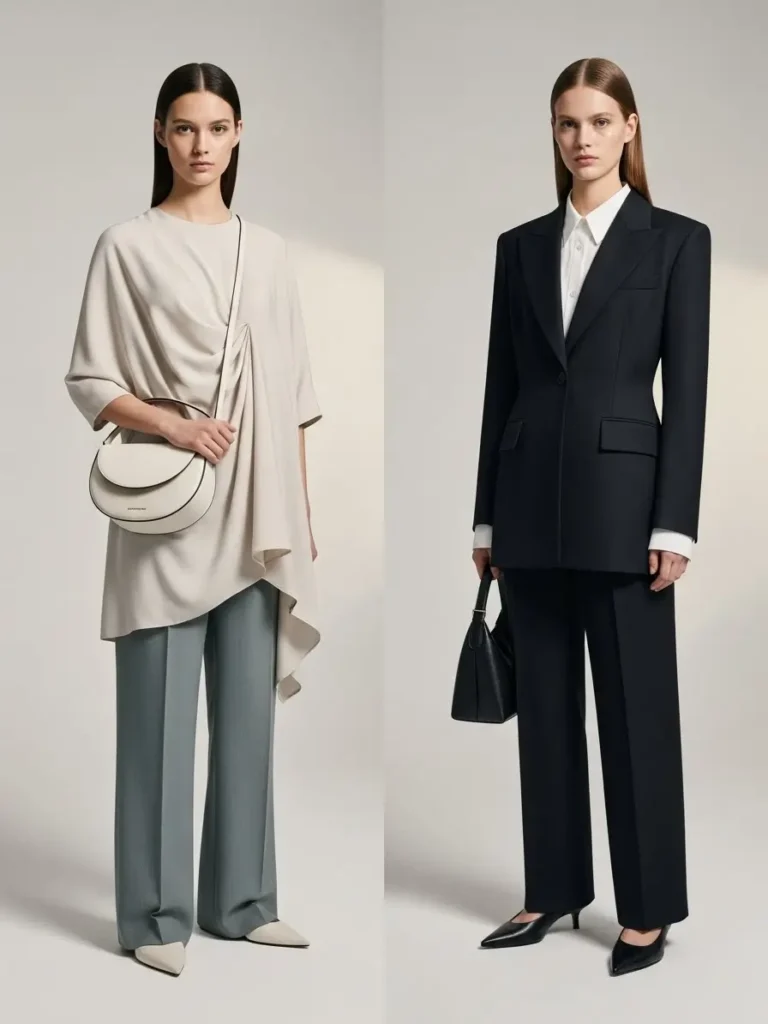
Try a rounded neckline with small hoop earrings, or a pointed collar with a rectangular bag. The pieces do not need to match perfectly. A subtle relationship may be enough to help you understand why you like them together.
Mixing shapes is equally useful. A soft, rounded bag can introduce a different note to a jacket with strong shoulders. If an outfit feels too rigid for your taste, change one angular accessory for a curved one and compare.
Pay attention to function alongside appearance. A beautifully shaped bag still needs an opening you can use easily and enough room for what you carry.
When comparing necklines and accessories, include your usual hairstyle in the picture. If you are considering a shorter cut, explore this guide to the bixie haircut alongside your favorite collars and earrings.
5. Silhouette: Look at the Complete Outline
Silhouette is the overall outline created by your clothes. It brings separate pieces into one picture: a long, relatively straight shape; a roomy rectangular shape; or a combination with a defined waist and fuller skirt.
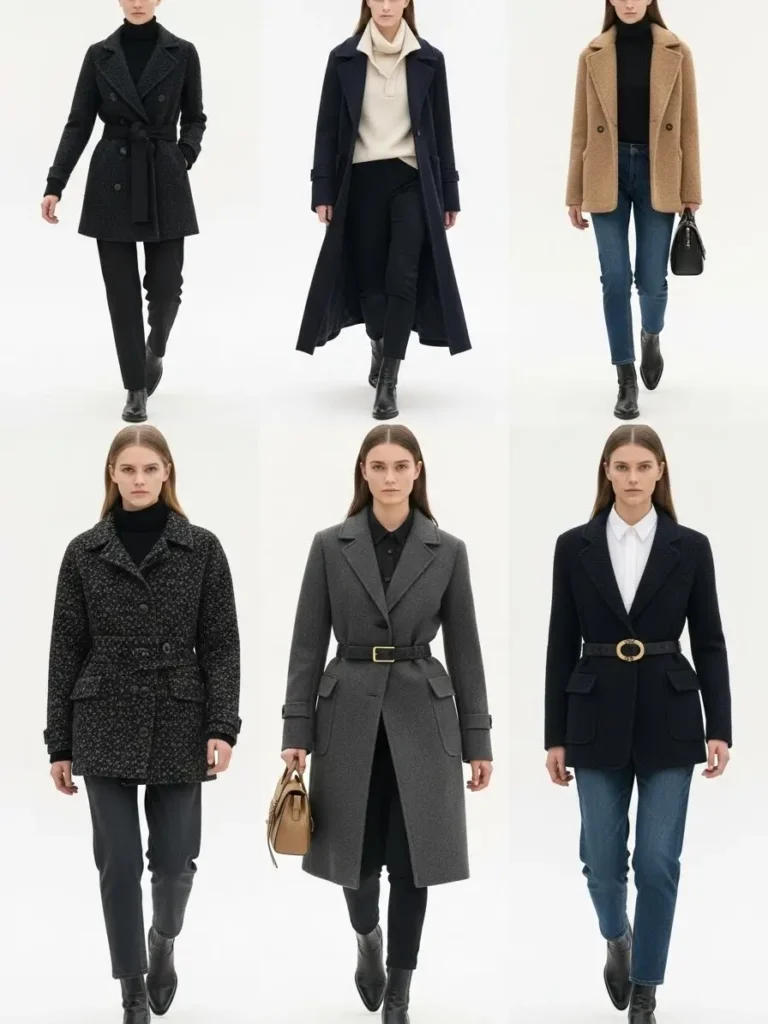
Choose an outline you enjoy rather than assigning yourself a restrictive body category. You can wear a loose dress one day and a belted jacket the next.
- For a continuous outline: Try straight pants with a simple top and an open layer of similar length and volume.
- For room and movement: Pair a relaxed shirt with wide-leg pants, checking that the fabric falls comfortably.
- For waist definition: Try a wrap detail, a shaped jacket, or a belt that feels comfortable when seated.
Look at the outfit with the coat or jacket you will actually wear. An outer layer can change the entire silhouette, so include it before deciding the combination is finished.
6. Proportion: Adjust Where Garments Begin and End
Proportion is the relationship between the parts of your outfit. A long shirt over wide pants produces a different arrangement from a shorter shirt over the same pants, even when the colors stay identical.
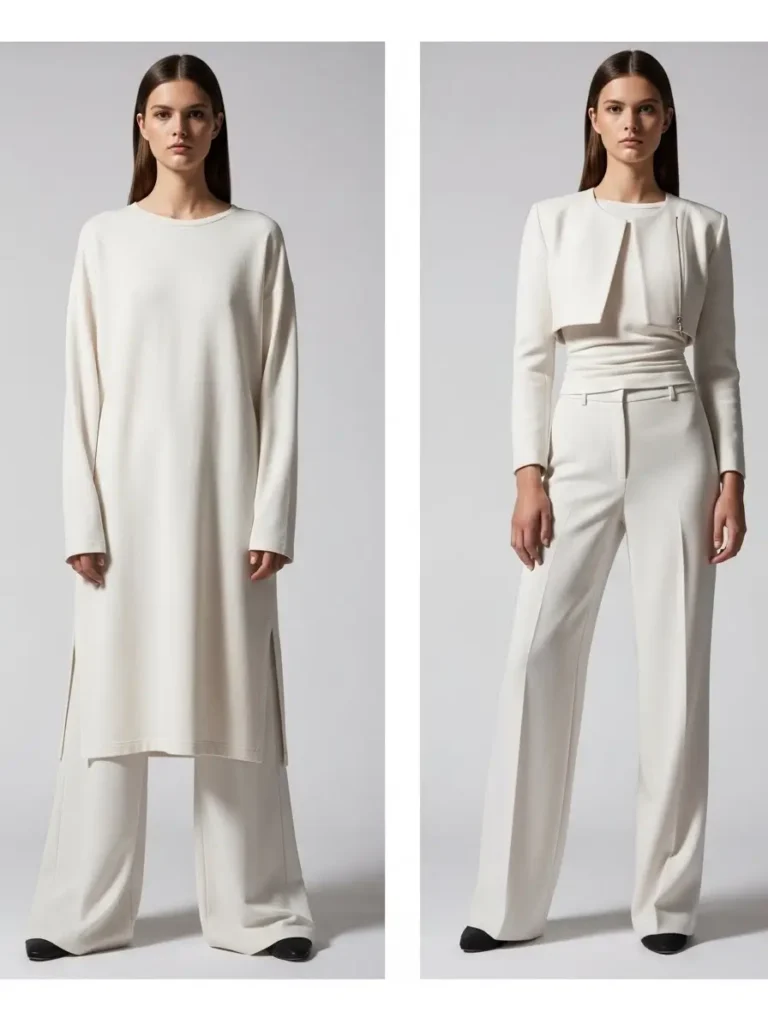
If something feels awkward, experiment with length before changing everything. Fold a sweater hem inward briefly to preview a shorter version. Compare a hip-length jacket with one that ends higher. Try a sleeve cuff to alter how much of the underlying layer shows.
You may prefer a shorter layer with a long skirt, but there is no requirement to divide your outfit into a particular mathematical ratio. Longer layers can work beautifully when that is the shape you want.
You also do not need a tight top or exposed skin to balance roomy pants. A shirt that fits comfortably through the shoulders, a defined collar, or a shorter jacket can provide structure while keeping your preferred coverage.
7. Scale: Compare the Size of Details
Scale concerns the size of a design feature relative to the other things around it. Think of a broad collar beside tiny earrings, an oversized tote beside a small handbag, or large flowers compared with a fine floral print.
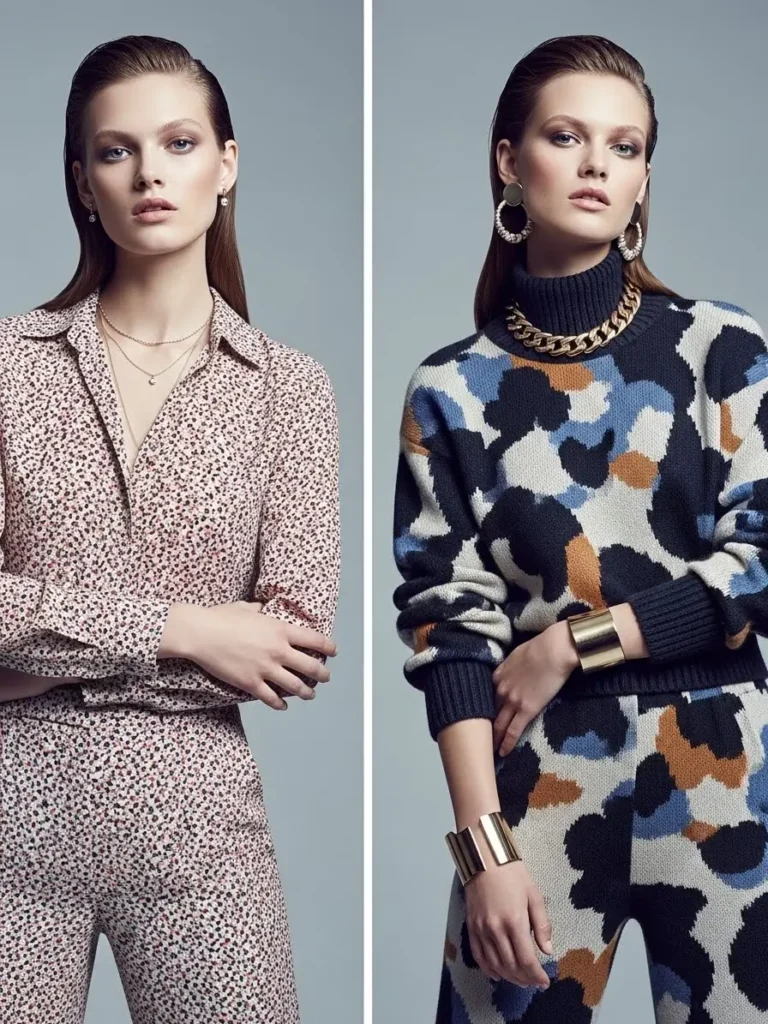
If several details feel demanding together, vary their scale. You might pair a chunky necklace with a plain top, or keep a large checked coat as the strongest feature in an otherwise simple outfit.
Your height or clothing size does not disqualify you from bold jewelry, large prints, or substantial bags. Start with what appeals to you and how the pieces work together.
Include everyday practicality in the comparison. Heavy earrings may be uncomfortable, while a tiny bag may require you to carry a second bag. The right scale should support both your preferred look and your routine.
8. Texture: Add Interest Through Surface and Feel
Texture includes what fabric looks like and what it feels like against your skin. A smooth knit, washed denim, ribbed cotton, and a fuzzy cardigan create different surfaces even when their colors are similar.
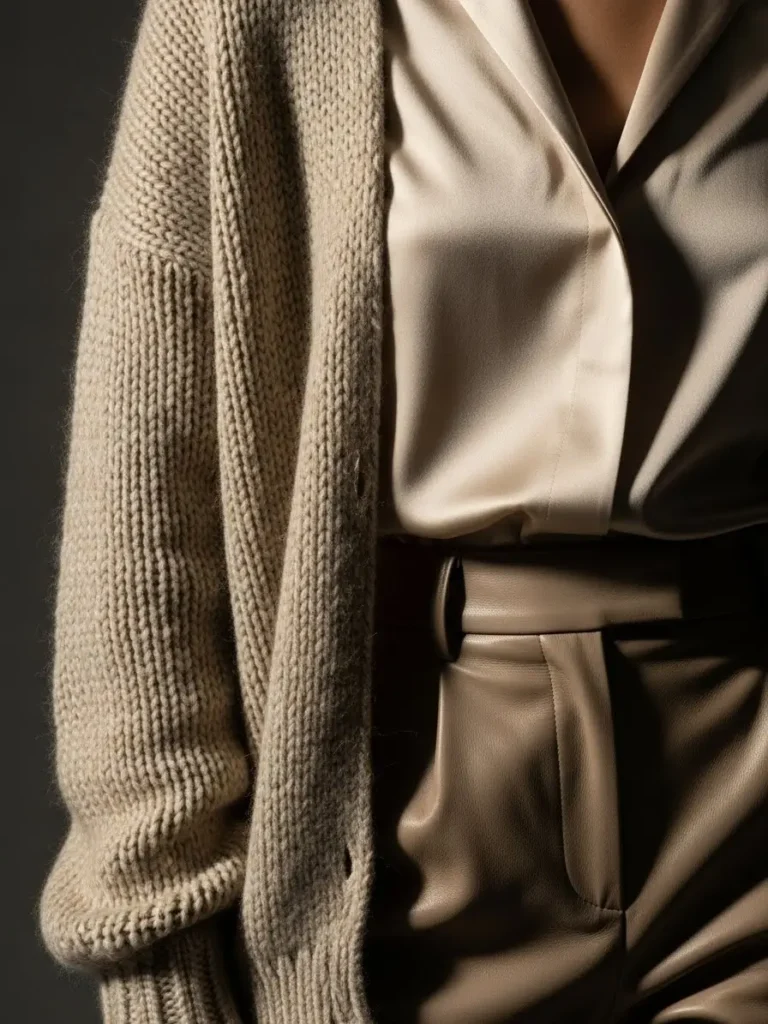
This makes texture useful when you love a simple palette. Try a cream cotton shirt with cream denim, then compare it with a cream ribbed sweater and smooth pants. The interest comes from the materials rather than additional colors or accessories.
For a straightforward starting point, combine two noticeably different surfaces: a textured sweater with smooth trousers, or a crisp shirt with soft corduroy. Add a third only if you like the result.
Check the inside of the outfit, too. Scratchy seams, stiff linings, and irritating labels matter even when they are invisible. Prioritize fabrics you can comfortably wear for the full day, then read the care label before adding them to your regular rotation.
9. Pattern: Find a Connection Between Repeated Motifs
Stripes, checks, dots, florals, and abstract prints introduce repetition. Their effect depends on several elements working together, including color, contrast, spacing, and scale.
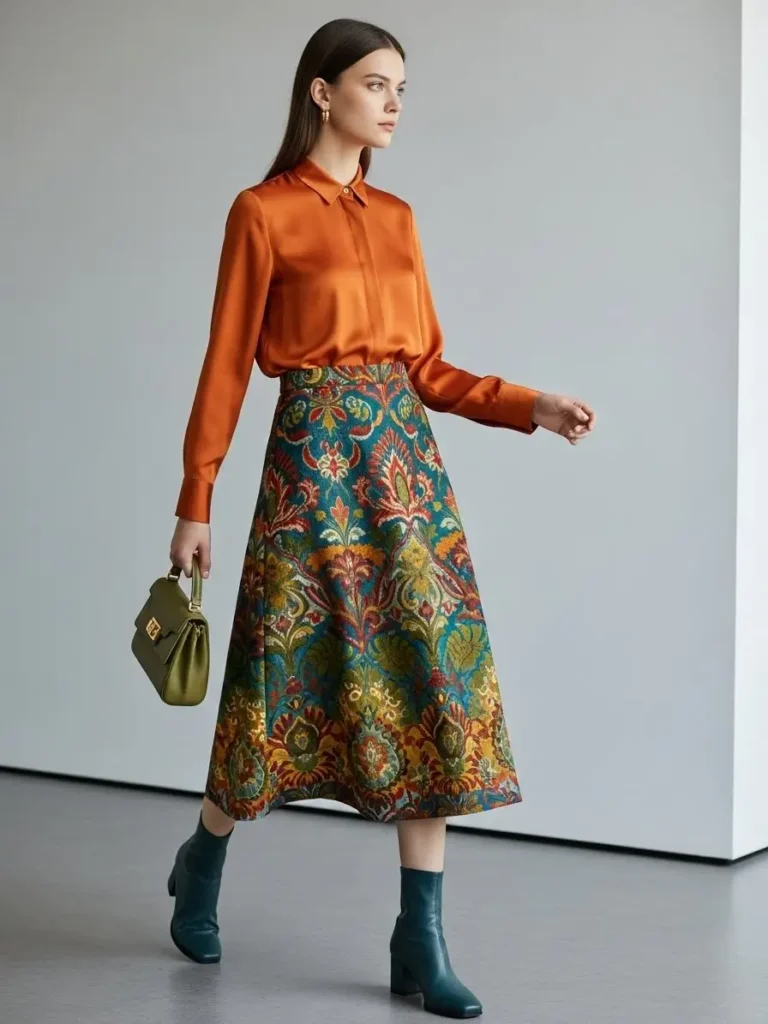
A small black-and-white check can feel visually active because of its contrast. A much larger print in closely related shades may feel quieter. If you dislike a patterned outfit, the pattern’s size may not be the only issue.
Start by pairing one print with a solid color already present in it. A floral skirt containing olive green gives you a straightforward reason to try an olive sweater. For two patterns, test a shared color or a noticeable difference in scale.
On video-call days, preview the outfit in your camera app. Fine, closely repeated patterns sometimes produce distracting artifacts on screen. Let the actual camera image guide your choice rather than assuming every stripe will be a problem.
10. Balance and Emphasis: Choose What You Want to Notice
Balance describes how visual interest is distributed. Emphasis describes what stands out. A bright shoe, large brooch, patterned jacket, or reflective necklace can become a focal point relative to its surroundings.
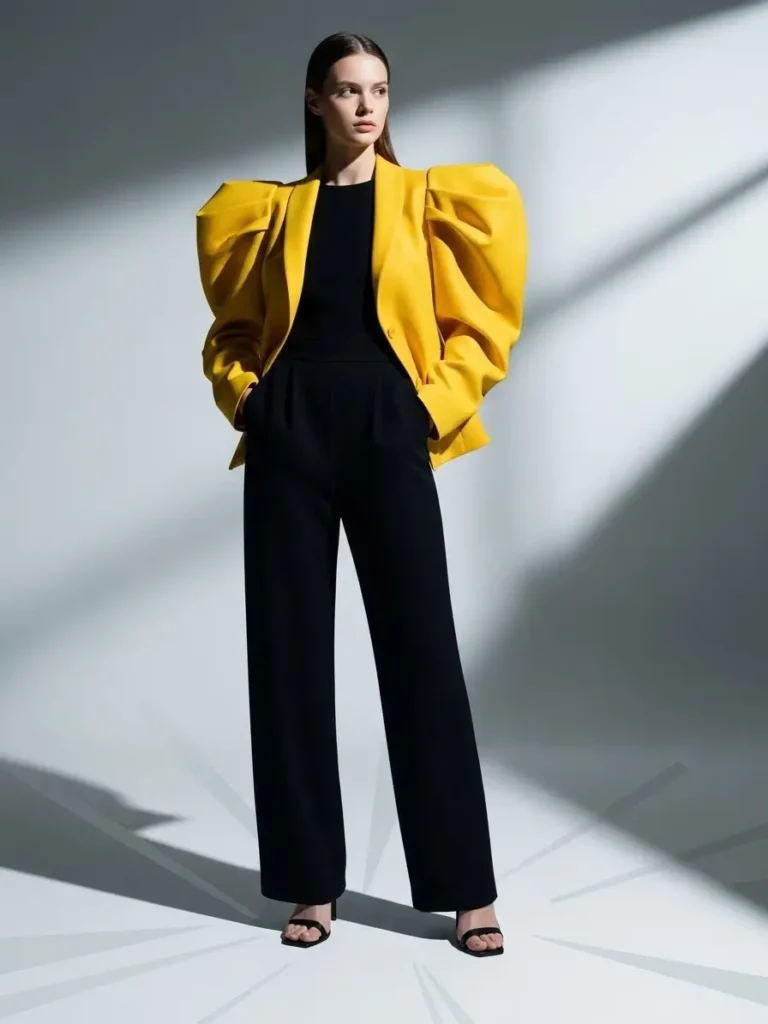
When an outfit feels crowded, choose the detail you most want to keep. If it is a printed jacket, compare the look with a simpler bag or necklace. Removing something is one option; repeating a color can also help connect the pieces.
One focal point is a useful starting exercise, not a requirement. If you love expressive outfits with several strong details, look for a thread that links them, such as repeated colors or a consistent mix of textures.
Balance does not require perfect symmetry. An asymmetrical neckline or a scarf draped to one side can be the detail you enjoy most. Ask whether the arrangement feels intentional to you and comfortable to wear.
A Practical Outfit Method for Busy Mornings
You do not need to assess ten elements before breakfast. Use this shorter sequence, then return to the individual elements only when you want to troubleshoot.
- Check the day’s requirements. Consider weather, walking, sitting, dress expectations, and how much you need to carry. Choose suitable shoes early.
- Start with one dependable piece. Use pants that fit comfortably, a dress you enjoy, or a shirt that works with your plans. Build around something reliable.
- Choose the overall outline. Decide whether you want more room, a straighter shape, or some waist definition. Add the remaining garments accordingly.
- Create one connection. Repeat a color, pair two textures, or echo a shape. Keep the choice simple enough to repeat another day.
- Move before leaving. Sit, reach, bend, and walk. Check for pulling, slipping, uncomfortable pressure, or hems that catch under your shoes.
If you like the result, save a quick photo for yourself. Add a useful note such as “comfortable for driving” or “needs a warmer layer.” Over time, these become outfit reminders based on your actual life.
Three Ways to Apply the Same Ideas
For Work: Start With the Setting
In an office where relaxed business clothing is appropriate, you might pair straight trousers with a knit top and an unstructured jacket. Repeat the trouser color in your shoes for a connected palette, or choose a contrasting shoe if you prefer a stronger break.
For remote work, check how the neckline, color, and pattern appear in your usual lighting. A comfortable outfit that looks clear on your camera may be more useful than a highly styled combination that needs constant adjustment.
For Errands: Let Movement Lead
Start with walking shoes and comfortable jeans or pull-on pants. Add a tee, sweater, or shirt that allows easy reaching, then use an overshirt or jacket if the weather calls for it.
If the combination feels unfinished, try repeating one shoe color elsewhere or adjusting a sleeve cuff. You can create a visible connection without adding accessories that get in the way of bags, children, or groceries.
For Dinner or an Event: Change One Feature
Begin with a familiar combination, such as a long skirt and a comfortable top. Introduce one detail you associate with dressing up: a lustrous fabric, a favorite brooch, a distinctive bag, or a more structured jacket.
Try the complete outfit before the event, including underlayers and shoes. Check it while seated as well as standing. If you cannot relax in it at home, give yourself time to choose another combination.
When an Outfit Feels Off, Make the Smallest Useful Change
Describe the problem as specifically as possible. “Too many competing details” gives you a clear experiment. “Nothing looks good on me” gives you nowhere helpful to start.
| What you notice | What to examine | One change to test |
|---|---|---|
| The outfit feels visually busy | Contrast, pattern, and emphasis | Replace one patterned or highly detailed item with a simpler piece. |
| The colors work, but the outfit feels flat | Texture and shape | Try a textured layer or a more defined collar. |
| Something feels awkward around the middle | Garment lengths and overlapping edges | Compare a different jacket length or an untucked shirt. |
| The outfit looks good but distracts you all day | Fit, fabric, and movement | Change the item that pinches, slips, scratches, or needs repeated adjustment. |
| The look feels too formal for your plans | Structure and materials | Try a softer layer or a more casual shoe suited to the activity. |
Change one thing, then reassess. Replacing several pieces at once makes it harder to understand what helped. You are collecting useful information about your preferences, not grading your appearance.
Use Pinterest Inspiration Without Copying Every Piece
A saved outfit photo is most useful when you identify what attracts you. Is it the long coat? The contrast between cream and brown? The roomy silhouette? The combination of denim and a soft sweater?
Translate that detail into your own wardrobe. If you love the palette, try it with clothes that suit your climate. If you love the silhouette, experiment with similar lengths before buying the exact garments. Keep the shoes, coverage, and practical features you need.
Remember that a still photograph cannot tell you how clothing behaves through a full day. Check your version while moving, sitting, and carrying your usual bag. Let your experience decide whether the idea belongs in your rotation.
Turn Outfit Experiments Into Better Wardrobe Decisions
Choose three outfits you already wear often and look for what they share. You may find that you consistently enjoy roomy sleeves, similar color values, a particular jacket length, or shoes with an uncomplicated shape. Those details are more useful shopping clues than a broad instruction to buy “better basics.”
Then look at one piece you rarely wear. Give it a fair try with a different proportion, texture, or color combination. If it remains uncomfortable or incompatible with your routine, you do not need to build an entire wardrobe around rescuing it.
Before buying something new, name the job it will do. “A washable layer that works over these two dresses” is a clearer brief than “something to make me stylish.” Consider care requirements, storage, and whether the item works with shoes and underlayers you already own.
For tomorrow, set out one familiar outfit and test a single change: a different jacket length, a lower-contrast top, or a texture you have not paired with it before. Choose the version you enjoy wearing and can move through your day in comfortably. That is a useful place to begin.