The human foot is an astonishing piece of biological engineering. Comprising twenty-six bones, thirty-three joints, and over one hundred muscles, tendons, and ligaments, your feet bear the brunt of your entire body weight with every single step. Yet, despite the immense mechanical load they carry daily, they are frequently the most neglected part of our regular wellness routines. By the time evening arrives, the combination of stiff footwear and unyielding hard floors can leave you with throbbing arches, tense calves, and exhausted heels. Creating a reliable foot soak recipe at home is one of the most effective, accessible ways to reverse that daily physical stress while actively improving the health of your skin.
You do not need to book expensive spa appointments or purchase bulky massage gadgets to find meaningful relief. With a simple basin, warm water, and a few common household ingredients, you can easily formulate a targeted foot soak recipe to ease muscle tension, soften stubborn calluses, and give your central nervous system a much-needed cue to power down. By understanding the science of how water temperature and specific minerals interact with your body, you can tailor your routine to address your exact physical complaints.
The Science of Thermotherapy: Why Warm Water Heals
Before mixing any ingredients into your chosen foot soak recipe, it helps to understand why immersing your feet feels so immediately comforting. Warm water triggers a localized physiological response known as vasodilation. As the temperature of the water gently warms the skin, your blood vessels expand. This widening allows oxygen-rich blood to circulate much more freely through the microscopic capillaries in your toes, soles, and heels.
This flush of fresh circulation performs a critical biological cleanup. It helps flush out cellular waste products, such as lactic acid, which accumulate in the muscle tissues after long periods of standing, walking, or running. As the blood flow increases, the tense ligaments and fascia in the arches of your feet begin to loosen and stretch more easily. A well-designed foot soak recipe utilizes the physical buoyancy of the water to remove the burden of gravity, giving your load-bearing joints a temporary, weightless reprieve.
Beyond the physical mechanics, foot baths have a profound impact on the autonomic nervous system. The lower extremities contain thousands of nerve endings. Immersing them in a warm, soothing environment shifts the body away from the sympathetic nervous system’s high-alert state and engages the parasympathetic rest-and-digest state.
Safety First: When You Should Avoid Soaking
Before you fill a basin to prepare a new foot soak recipe, it is vital to verify whether a home soak is actually safe for your current health status. For most healthy adults without circulation or nerve problems, a short, warm foot bath is a completely safe self-care practice. However, certain medical conditions make soaking risky.
Foot specialists strictly advise people with diabetes to avoid routine soaks, no matter how gentle the foot soak recipe might be. Water exposure can quickly break down the skin barrier, increasing the risk of microscopic cracks and bacterial infection. If you have diabetic neuropathy, reduced circulation, or a history of foot ulcers, even a tiny injury on a softened foot can escalate rapidly into a medical emergency. You should also skip home soaks entirely and consult a doctor if you have open sores, blisters, severe numbness, or known peripheral artery disease.
In these situations, executing any foot soak recipe can lead to maceration. Maceration is the medical term for skin that has been exposed to moisture for too long, resulting in a pale, deeply wrinkled, and spongy appearance. This overly softened skin loses its structural integrity and provides zero defense against fungal or bacterial invaders.
Building Your Base: The Fundamental Foot Soak Recipe
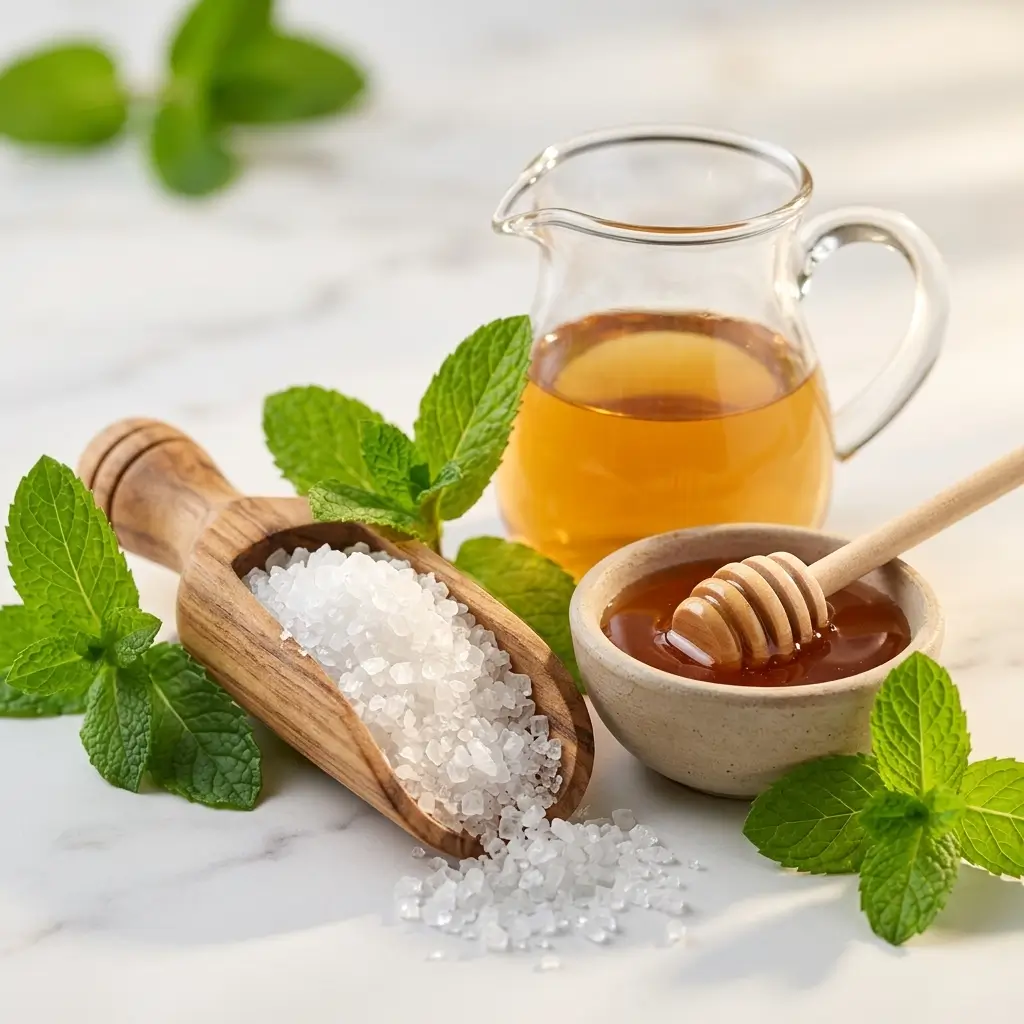
Every effective treatment begins with a solid foundation. Before you experiment with specialized botanicals or acids, you need to master the basic mechanics of a safe, comfortable water bath. The core of any fundamental foot soak recipe relies on three precise elements: temperature, volume, and timing. Getting these wrong can lead to skin dehydration or even minor thermal burns.
For your base setup, you will need a basin wide enough for both feet to rest flat without cramping, and deep enough for water to reach your ankles. A dedicated plastic foot tub works perfectly, but a large mixing bowl or the bottom of your bathtub is also fine. Follow these structural rules to prepare your foundational foot soak recipe:
- Measure the Temperature: Fill your basin with water ranging between 92°F and 100°F. The water should feel deeply warm but never hot enough to make you instinctively pull your foot away. Scalding water strips away natural lipids.
- Dissolve the Solutes: If your foot soak recipe calls for salts or powders, add them while the water is running and vigorously stir them in before inserting your feet. Undissolved crystals resting on the bottom of the basin can act like coarse gravel and irritate tender skin.
- Watch the Clock: Limit your soak to 15 to 20 minutes. Soaking longer pulls too much natural oil from the skin, making it more likely to crack later.
- Dry Meticulously: Once finished, remove your feet and dry them immediately with a clean towel, paying special attention to the tight spaces between your toes where moisture-loving fungi tend to thrive.
7 Targeted Foot Soak Recipe Variations for Common Aches
A plain bowl of hot water is easily forgotten because it does nothing special. A targeted foot soak recipe that addresses a specific annoyance sticks in your memory and actually makes a difference. The seven blends below each have a clear biological job to do. They use precise amounts that effectively treat the problem without crossing over into irritation.
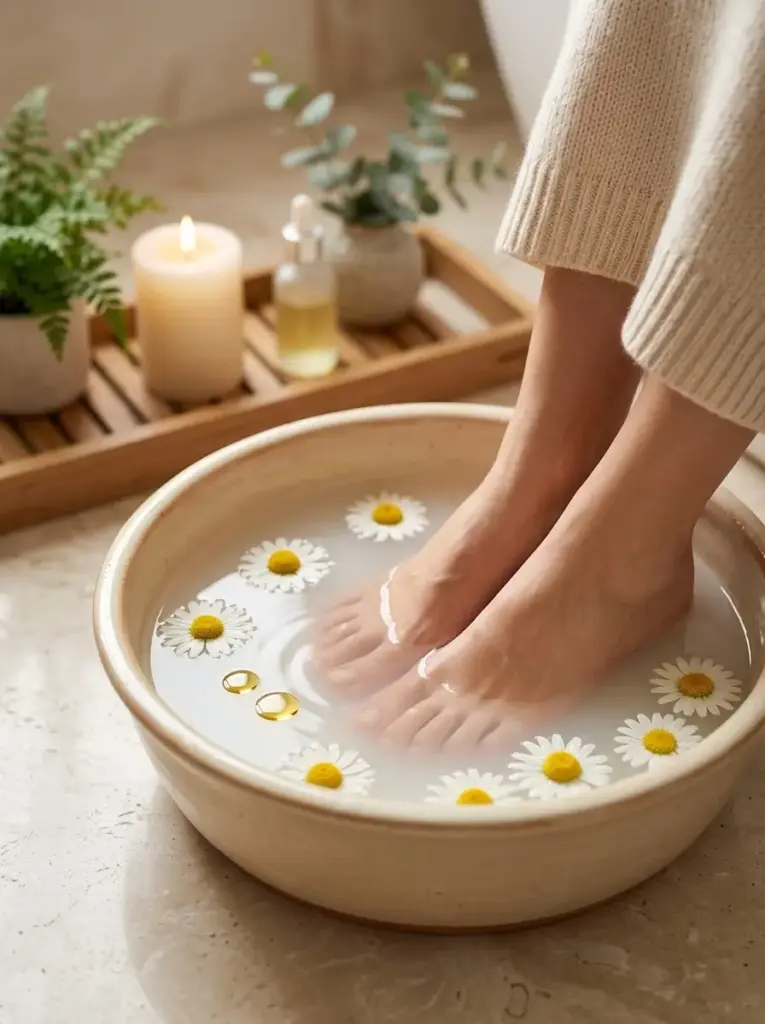
1. The Heavy-Legs Relief Foot Soak Recipe
If you spend eight to ten hours on concrete floors, tile hallways, or just upright without much sitting, the pressure on your metatarsal bones builds up into a persistent background ache. This specific foot soak recipe is designed precisely for that kind of deep fatigue. Epsom salt does the heavy lifting by encouraging built-up fluid to move away from puffy ankles. Lavender essential oil pulls double duty, acting as a mild skin soother while its scent helps lower cortisol levels.
- Ingredients: Half a cup of pure Epsom salt, six drops of pure lavender essential oil, and one tablespoon of a light carrier oil like sweet almond or jojoba oil.
- Method: Stir the lavender into the carrier oil first before adding the mixture to the basin. This prevents the essential oil from floating on the surface in a concentrated, potentially irritating droplet.
- Duration: Enjoy this foot soak recipe for a maximum of twenty minutes to relieve swelling without drying out your heels.
2. The Odor-Fighting Apple Cider Vinegar Foot Soak Recipe
Foot odor, scientifically known as bromodermatosis, occurs when sweat mixes with naturally occurring bacteria on your skin. These bacteria feed on the sweat and dead skin cells, producing isovaleric acid, which is responsible for the distinct smell. Healthy human skin features an acid mantle with a pH hovering around 4.7 to 5.5. Synthetic footwear can disrupt this balance, turning the skin more alkaline. An apple cider vinegar foot soak recipe restores your skin’s natural acidic barrier, effectively neutralizing odor-causing bacteria.
- Ingredients: One cup of raw, unfiltered apple cider vinegar and four cups of warm water (a one-to-four ratio).
- Method: Pour the vinegar into the basin first, then dilute it thoroughly with the warm water to complete the foot soak recipe.
- Usage Note: Limit this treatment to twice a week. Keep this mixture far away from any cracked or bleeding spots, as the acidity will sting intensely.
3. The Cool-Down Peppermint Foot Soak Recipe
There is a particular kind of heavy, hot feeling that settles into feet after a long flight or during a humid summer stretch. Fluid pools in the lower extremities, and the whole foot feels oddly swollen. Warm water still boosts circulation, but adding peppermint to your foot soak recipe tricks the nervous system into sensing coolness. It wakes up the exact same cold receptors in your skin that mint chewing gum triggers in your mouth, resulting in a refreshing contradiction that dials back the sensation of heat.
- Ingredients: A quarter cup of Epsom salt, a quarter cup of sea salt, four drops of peppermint essential oil, and a tablespoon of carrier oil.
- Method: Dissolve the salts completely in lukewarm water (around 90°F). Mix the peppermint with your carrier oil and blend it into the basin right before stepping in to finalize this cooling foot soak recipe.
4. The Gentle Exfoliating Baking Soda Foot Soak Recipe
Thick, rough calluses form because your skin is trying to protect itself from excessive rubbing and shoe friction. You need some of that toughness to walk comfortably, but too much keratinized buildup leads to painful fissures. You can soften that tissue safely at home without resorting to harsh metal graters. A baking soda foot soak recipe gently softens dead skin cells while canceling out acidic sweat.
- Ingredients: Three tablespoons of baking soda and the fresh juice of half a lemon.
- Method: Stir the baking soda into your warm water base until it disappears, then squeeze in the lemon juice. You will notice a mild chemical fizzing action indicating the foot soak recipe is ready.
- Post-Soak: Use a natural pumice stone with a very light touch on the wet skin to maximize smoothness without damaging the healthy tissue underneath.
5. The Deep Hydration Milk and Honey Foot Soak Recipe
Most salt soaks are excellent for muscle recovery but can leave the skin barrier feeling tight if overused. This blend goes in the opposite direction, focusing entirely on lipid restoration. Milk contains lactic acid, a gentle alpha-hydroxy acid that dissolves the microscopic bonds holding dead skin cells together. The natural fats in a whole milk foot soak recipe coat the epidermis, while honey acts as a humectant, pulling moisture from the air and trapping it against your skin.
- Ingredients: Two cups of full-fat whole milk (warmed gently on the stove), a quarter cup of raw honey, and warm water.
- Method: Whisk the warm milk and honey together in a separate bowl until the honey melts completely. Pour this creamy liquid into your foot bath. The water will feel silky and slightly thick, which is exactly how this foot soak recipe heals damaged heels.
6. The Black Tea Astringent Foot Soak Recipe
Some individuals suffer from plantar hyperhidrosis, a condition characterized by abnormally sweaty feet regardless of the temperature. This constant moisture leads to friction blisters and bacterial growth. The leaves of the Camellia sinensis plant, used to brew standard black tea, are exceptionally high in naturally occurring compounds called tannins. Tannic acid acts as a powerful astringent. When applied topically through a specialized foot soak recipe, it temporarily shrinks the body’s sweat glands.
- Ingredients: Four standard black tea bags and water.
- Method: Boil a small pot of water and steep the tea bags for ten solid minutes until the liquid is incredibly dark. Pour the concentrate into your basin and add cool water until the overall temperature is safe to touch, completing your astringent foot soak recipe.
- Frequency: Perform this specific soak for twenty minutes daily for one week to see a noticeable reduction in perspiration.
7. The Proactive Tea Tree Defender Foot Soak Recipe
Walking barefoot through shared gym locker rooms or public pool decks comes with a real risk of picking up fungal spores. Prevention takes far less effort than clearing up an infection months later. Tea tree oil contains a compound called terpinen-4-ol, which laboratory tests have repeatedly shown to be highly unfriendly to a wide range of microbes. Pairing it with sea salt creates a foot soak recipe that builds an osmotic environment where bacteria simply cannot thrive.
- Ingredients: Half a cup of coarse sea salt, five drops of tea tree essential oil, and one tablespoon of carrier oil.
- Method: Blend the tea tree oil into the carrier oil, add it to the salt, and dissolve the entire mixture into your warm water basin. Soak for fifteen minutes using this proactive foot soak recipe, then let your feet air dry completely before putting on clean cotton socks.
Related Post: The Most Common Age Perimenopause Starts, What You Can Do To Prepare
The Crucial Post-Soak Routine: Sealing in Moisture
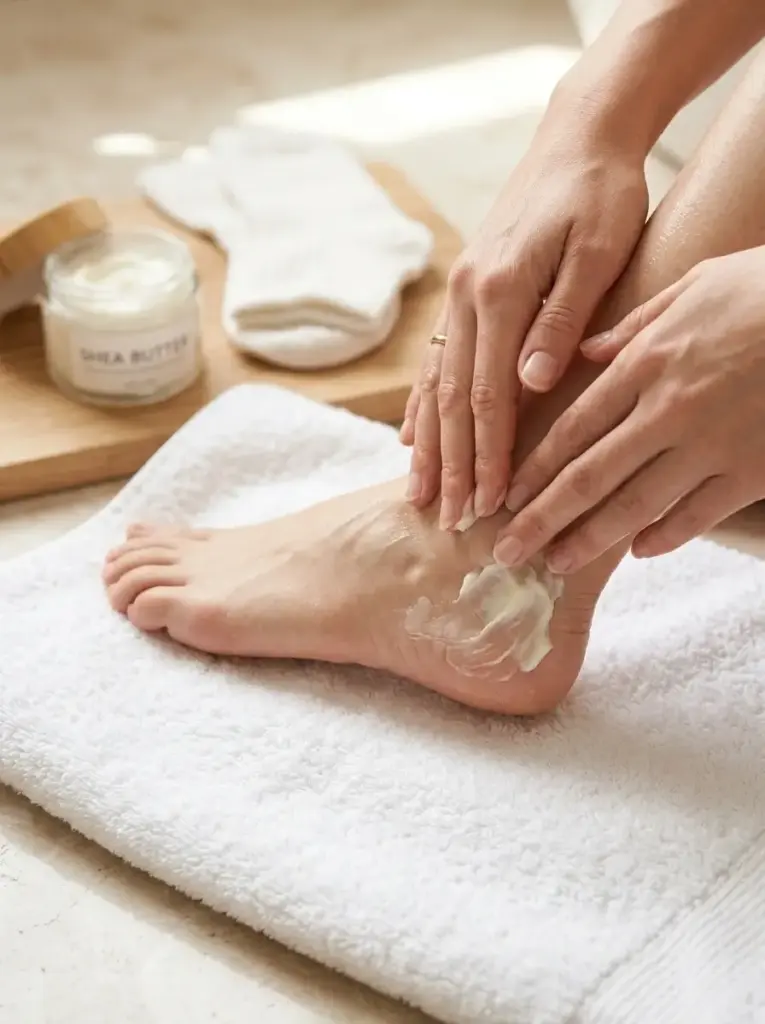
Executing the perfect foot soak recipe is only half the battle. What you do in the three minutes immediately following your foot bath determines whether your skin heals or becomes further damaged. Warm water strips away the skin’s natural sebum, which is the oily barrier that traps moisture inside your cells. If you pull your feet out of the water, dry them off, and simply walk away, the water trapped inside your newly softened skin cells will rapidly evaporate into the dry air.
This process is known in dermatology as Transepidermal Water Loss (TEWL). Ironically, using a foot soak recipe without following up with proper hydration will leave your skin significantly drier and more prone to cracking than if you had never soaked them at all.
To prevent TEWL, you must apply an occlusive moisturizer immediately after patting your feet dry, while the skin is still slightly damp and the pores remain receptive. Look for thick, heavy creams or ointments containing ingredients like shea butter, cocoa butter, or petroleum jelly. These heavy ingredients act like a physical lid, sealing the hydration firmly into the stratum corneum.
For an intensive overnight treatment, apply a generous layer of an occlusive ointment to your freshly soaked heels, then immediately put on a pair of clean, one-hundred-percent cotton socks. The natural cotton fibers allow the skin to breathe while keeping the heavy moisturizer pressed directly against your calluses throughout the night. By morning, the tough, keratinized skin will feel noticeably softer and more pliable.
Elevating Your Daily Self-Care With a Custom Foot Soak Recipe
Your feet are the literal foundation of your mobility. They carry you through stressful workdays, intense workouts, and long family outings without complaint. Giving them twenty minutes of dedicated therapeutic attention is a small investment that yields massive dividends in your overall physical comfort and mental well-being.
Adjusting your foot soak recipe to meet your current physical needs might require a little experimentation. You may discover that a bracing peppermint and Epsom salt bath is exactly what you crave after a Saturday morning run, while a warm milk and honey foot soak recipe becomes your mandatory ritual on freezing winter evenings. By understanding the functional mechanics of temperature, salt, acids, and hydration, you can transform a simple basin of water into a highly effective home spa experience. Take the time to prepare your ingredients, set a calming atmosphere, and use your favorite foot soak recipe to give your feet the restorative relief they have worked so hard to earn.
Enjoying this post? Get weekly family & home ideas in your inbox — free.