You straighten the living room cushions, step back, and see the same blank wall you have meant to deal with for months. Across the hall, the bedroom has a beautiful new lamp but nowhere comfortable to sit. The house is full of good ideas; they just have not quite met one another yet.
Does making it feel pulled together require new flooring or a contractor? Usually, the first useful move is much smaller: finish one space, improve the feature you notice every day, change how you use the light, edit what you own, and spend on the things you actually touch. These five home decorating rules give you a way to decide what matters before you fill another cart or start another project.
The principles draw on advice from Philip Thomas Vanderford, Marie Flanigan, and Julia Marcum in Real Simple’s interviews with the designers. Here is how to put them to work in a lived-in home, whether you own it, rent it, or are decorating a little at a time.
1. Finish one room before starting three more
A room does not need to look like a magazine spread to feel finished. It needs to work for the people who use it, and it needs enough visual attention that nothing essential looks accidental. That distinction matters when you are surrounded by half-started decorating plans. You can spend months buying small items for several rooms and still have no place that feels settled.
Choose a space where completion will change your ordinary day. Maybe it is the living room where everyone gathers after dinner. Maybe it is the bedroom you see first thing in the morning, or a breakfast corner small enough to finish without a long shopping list. Vanderford’s room-by-room idea is useful because it gives you a boundary: this space gets your attention until its main problems are solved.
Decide what “finished” means for your life
Before you shop, stand in the doorway and list what the room must do. In a family living room, that might be comfortable seating, somewhere to set a drink, light for reading, storage for games, and a clear walking path. Art and decorative objects can make it personal, but they cannot fix a sofa that blocks the doorway or a corner where no one can see to read.
Then make two short lists: must finish and would be nice later. A window covering that gives you privacy belongs on the first list. An extra vase probably belongs on the second. Set a realistic limit for your budget and time, and let that limit shape your definition of done. A finished room can include an inherited table, a thrifted frame, and a lamp you already own.
Work in an order that prevents repeat purchases:
- Fix the layout. Move existing pieces until the room supports its main activity and people can circulate easily.
- Address the practical gaps. Check lighting, privacy, seating, reachable surfaces, and storage.
- Add the missing visual layers. Hang the art you have been saving, adjust curtains, and give the room a few personal details.
- Live with it for a week. Notice what you still reach for or avoid. That tells you whether the last purchase is necessary.
For example, a living room may look unfinished because the sofa wall is bare. But after moving the floor lamp beside the reading chair and hanging two pieces of existing art, you may discover the room needs nothing else. The pause is part of the process. It keeps “finish the room” from becoming permission to buy everything at once.
If the living room is your first project, this guide to decorating a living room from start to finish can help you work through the larger layout decisions.
2. Choose one meaningful upgrade by naming the real problem
Sometimes a whole-room plan feels too big. One targeted improvement is enough to make daily life better, especially when it fixes a specific annoyance. The useful question is not “What would make this room look expensive?” It is “What do I notice every time I use this room?”
Walk through the space at the time you normally use it. If the kitchen is unpleasant at night because the counter is dim, a well-placed task light may do more for you than new cabinet pulls. If the dining table wobbles, getting it repaired makes more sense than styling a centerpiece. If a dresser works perfectly but has a worn finish, consider whether a careful refinish would help you enjoy what you already have.
Match the upgrade to the problem
Try writing one sentence: “This room would work better if…” Finish it without naming a product. “I could see what I am doing when I cook” leads toward lighting. “I had a place to put the mail” leads toward an entry organizer. “The room felt calmer when I opened the door” may point to fewer objects or better closed storage.
Small hardware changes can be satisfying when the cabinets are otherwise in good shape. Before ordering, count every pull and knob, measure the distance between screw holes on existing pulls, check the cabinet thickness, and buy one sample to test with your cabinetry. A beautiful new finish is less helpful if the replacement does not fit and leaves visible holes. Renters should check the lease or ask the property manager before changing installed hardware; if approved, store the original pieces and screws together.
A new countertop, wood flooring, or plaster treatment may be the right project for some homes, but each brings much more cost and disruption than a lamp, a repair, or a hardware change. Compare the likely benefit with the actual scope before calling it a “small upgrade.” There is no prize for choosing the most dramatic material if your real complaint is that the room has nowhere to put your keys.
Set one measurable outcome so the purchase has a job. For a bedroom: “I want to be able to read without waking my partner.” For an entry: “I want the floor clear when four people come home.” For a dining area: “I want every chair to pull out comfortably.” These are practical tests you can use after the upgrade, and they keep a decorating plan connected to daily life.
3. Use lighting and a short reset to change how home feels at night
Think about the difference between walking into a room lit by one ceiling fixture and walking into the same room with a shaded lamp near the sofa. The furniture has not moved. The room can still feel very different. Julia Marcum of Chris Loves Julia writes about “lamp o’clock” as part of making evening lighting more intentional.
You can try the idea tonight with the lamps you already own. Before you settle in, turn on the lights near the places you will use. A reading lamp belongs near the chair; a small lamp on a console can brighten a dark corner. If a ceiling light is useful for cleaning or cooking, keep it. Layered lighting gives you choices rather than demanding that every room follow a strict rule about the number of lamps.
Make the light useful as well as inviting
When you do buy a bulb, check the fixture’s requirements and look at the package for brightness and color. The U.S. Department of Energy explains that lumens describe brightness. A warm-looking bulb can still be too dim for reading; brightness and color are separate decisions. Try one bulb in the room before buying a matching set, because shades, wall colors, and daylight affect how it looks at home.
Put light where the activity happens. A table lamp behind a chair may cast a shadow on your book; one beside it can be more useful. A kitchen counter needs adequate task lighting when you prepare food, even if you prefer a softer lamp elsewhere after dinner. If a lamp cord has to cross a walking path to reach an outlet, find another placement rather than making the room harder to navigate.
Pair that lighting ritual with a modest evening reset. Give yourself ten or fifteen minutes, or less on a busy night, to clear the surfaces that greet you in the morning. Put the dishes in the sink or dishwasher, wipe the breakfast counter, return the remote to its usual spot, and leave your bag where you can find it. Choose only the actions that ease tomorrow’s first hour.
This is a decorating rule because how a room is used changes how it looks. The nicest tray cannot make a counter feel welcoming when it is buried under yesterday’s mail. On the other hand, a room with ordinary furniture can feel cared for when you can sit down, see comfortably, and find what you need. Keep the ritual light enough that you will actually want to repeat it.
4. Edit what you own before adding anything new
It is easy to mistake an unsettled room for an under-decorated one. Sometimes the opposite is true. The mantel has several items competing for attention, the side table holds objects that belong elsewhere, and a chair has quietly become a storage shelf. Another basket or throw will not solve that kind of visual crowding.
Editing means looking at a room as a whole and deciding what each piece contributes. It is different from clearing trash or putting things back where they belong. An object can be useful, attractive, and still be in the wrong place. A lovely large vase might hide the lamp you rely on. A spare chair might leave too little space to walk around the table. You can keep both without keeping them in this room.
Try a reversible edit first
Pick one surface rather than emptying the entire room. Remove everything from a bookshelf section, coffee table, or console and clean the surface. Put back the items that serve a purpose or tell a story you want to see. Leave room around them. Move the remaining objects to their proper homes, or place them temporarily in a labeled box if you are unsure.
Then step back from the doorway. What draws your eye first? Can you find the things you use? Does the room feel sparse in an uncomfortable way, or simply easier to understand? You do not have to adopt a minimalist style. A lively room filled with books, family photos, and collected art can still feel considered when those things have a place and you can use the furniture around them.
Give uncertain pieces a little time out of sight before donating them. If you miss an object or realize it solved a practical problem, bring it back. Editing works best when it is reversible and respectful of the way you live. It should not mean removing every trace of children, hobbies, pets, or shared history to imitate a staged photograph.
Only after editing should you write a shopping list. You may find that the entry needs a wall hook, not a new cabinet, or that the bedroom needs an empty nightstand more than another decorative pillow. If two people use the room differently, ask what each needs within reach. The result should make the room easier for both of you to inhabit.
5. Put your budget where you sit, sleep, and walk
Decorative accessories are easy to notice online. The parts of a room that support your body are easier to overlook: a chair you sit in each evening, the sheets you handle every night, or a rug you walk across in bare feet. Vanderford’s advice to pay attention to bedding, upholstery, and rugs offers a useful spending filter. The question is not which item looks most luxurious in a photo; it is which one affects your comfort most often.
Start with the point of discomfort
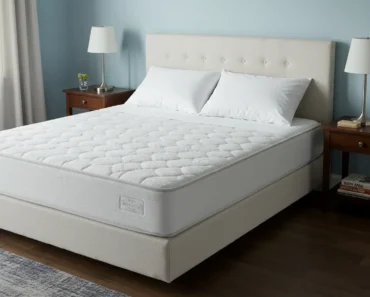
If your bed does not feel comfortable, do not assume the answer is an entirely new bedroom set. Check whether the mattress, pillow, temperature, bedding fabric, or bed frame is the part bothering you. These are different problems with different possible fixes. Choose sheets for how they feel to you and how you are willing to care for them, rather than assuming a particular fabric or price guarantees better sleep.
For seating, sit in the chair or sofa when possible before committing. Notice whether your feet reach the floor comfortably, whether the seat supports the way you actually sit, and whether you can get up easily. Look at the fabric care instructions if the furniture will see snacks, children, or pets. An attractive sofa that you are afraid to use is a poor fit for an active living room.
A rug should suit the traffic, cleaning needs, and scale of the room. Check dimensions with painter’s tape on the floor so you can see where its edges will land in relation to furniture and walkways. If a rug slides or bunches, use a suitable non-slip pad and keep its edges flat. The U.S. Consumer Product Safety Commission advises keeping floors clear and rugs non-skid to reduce fall hazards.
Material choices are trade-offs, not status symbols. A delicate rug that needs careful maintenance may be a poor choice beside a backyard door. A durable, easy-to-clean rug can be the better investment for that spot even if it is less expensive. Similarly, a sturdy secondhand armchair that fits your body and your room may serve you better than a new accent chair chosen only for its shape.
If you have young children, practical comfort includes safety. The CPSC’s Anchor It resources explain why dressers and other storage furniture should be secured against tip-overs. When choosing window treatments in spaces children use, the agency recommends cordless coverings. These decisions belong in the room plan alongside color, texture, and furniture placement.
A practical way to begin this weekend
You do not need to apply all five rules to the whole house. Start with one room and spend half an hour observing it at the time you normally use it. Sit where you sit. Open and close the drawers you rely on. Turn on the lights. Walk the usual route through the space. Write down what interrupts you and what already works.
Next, try the free changes first. Move a lamp, clear one surface, borrow art from another room, or reposition a chair so you can reach a table. Choose one daily reset that helps you keep the improvement. If those moves solve the main complaint, your room may already be closer to finished than you thought.
If a gap remains, choose between completing the room and making one targeted upgrade. A curtain for privacy and a lamp for reading may finish the bedroom; a replacement chair may be the single useful investment for a living room. Make a list of what you need, measure before buying, and give the changed space time to show you what is still missing.
Questions that come up when you start
Which room should I finish first?
Pick a room you use often that has a manageable number of unfinished tasks. If your kitchen needs substantial repairs, a small bedroom or reading corner may be a better first project. Finishing one area teaches you what “done” feels like in your home and gives you a useful model for the next space.
Can these home decorating rules work in a rental?
Yes. Layout, lamps, portable furnishings, art, and editing can make a rental feel personal. Check your lease before painting, drilling, installing window coverings, or replacing fixed hardware, and get any required approval. Save original hardware if you are permitted to swap it. When you move, you can take most of the comfort-focused purchases with you.
What if I cannot buy anything right now?
Focus on the rules that use what you already have. Finish by hanging art that is waiting in a closet, try lamps in different places, and edit crowded surfaces. Repairing a loose knob or giving a table a better location may matter more than adding a new object. Keep a measured wish list for later instead of making a quick purchase to fill an empty-looking corner.
How do I know when a room is finished?
Ask whether the room supports its main activities, feels comfortable to use, and contains the things you most want to see. You should be able to name the next purchase’s purpose; if you cannot, pause. Finished does not mean frozen. Your needs can change, and you can change the room with them.
Tonight, choose the room that makes you sigh when you walk in. Turn on the light you like best, clear one surface, and write down the one thing that would make tomorrow in that room easier. That is a small beginning with a clear direction.