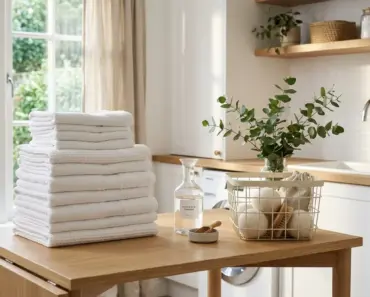
You’ve cleared the countertops, donated the old sweaters, and finally reclaimed the hall closet. Decluttering your home is just the first step — it takes dedication to keep it clutter-free, and one of the most effective ways to do that is to stop bringing in things you don’t truly need. Easier said than done, right? That’s exactly why we checked in with a few home organizing pros. They see the same dust-catching, space-hogging purchases over and over again.

1. Single-Purpose Cleaning Supplies: The First of Many Items to Stop Buying
Walk into most cleaning aisles and you’ll see a spray for glass, a foam for the tub, a wipe for stainless steel, and a separate liquid to degrease the stove. Cathy Orr, cofounder of The Uncluttered Life and the Declutter Deck for Kids & Families, sees this as a classic clutter trap. She often watches people cart home a whole army of bottles, each designed to solve only one tiny problem. Her advice is refreshingly practical: take a hard look at what you’re actually using and then slim down smartly.
Orr points out that many cleaning products can now do double or triple duty. A good all-purpose spray can wipe down countertops, tackle greasy backsplashes, and even clean sealed stone surfaces if the formula is right. A concentrated plant-based soap diluted in water can handle floors, windows, and sticky hands. You don’t need a separate potion for every room. When you stop buying a dozen different single-task cleaners, you free up the cabinet space under the sink and the mental bandwidth of remembering what to use where.
Amazon US Verified
Cascade Platinum Plus ActionPacs
Enzyme-activated pods formulated to break down burnt-on food without pre-rinsing.
What does this look like in practice? Look for a multi-surface concentrate that you can dilute for light daily cleaning and use at full strength on tougher grime. A high-quality microfiber cloth paired with that one solution can replace several disposable wipes. Start by finishing what you already own, then restock with only two or three true workhorse products. The target isn’t a sterile minimalist shelf — it’s a cabinet where you can find everything in two seconds and actually use it up before it expires.
2. Multiple Sets of Dinnerware That Only Collect Dust
Martha Gonzalez, a cleaning expert and professional organizer, has a blunt take on the second set of dishes hiding in the china cabinet. The fancy plates that only emerge for Thanksgiving or a distant cousin’s wedding shower rarely see the light of day. Gonzalez notes that extra sets take up a huge amount of cabinet space and can evoke guilt whenever you open the doors. Every time you see that stack of unused porcelain, a little voice whispers that you should host more or that you spent money on something that never gets touched.
The fix is simpler than it feels. Instead of keeping everyday stoneware and special-occasion fine china, invest in one set of plates you genuinely love using every morning for toast and every evening for company spaghetti. A crisp white ceramic with a subtle rim can dress up with linen napkins and candlelight, and it won’t look out of place on a Tuesday with leftover pizza. Gonzalez encourages people to do the same for their serving pieces — rethinking the large platters that commandeer shelf space.
That same logic extends to oversized serving platters you bought for that one party three years ago. Unless you’re hosting large dinner parties multiple times throughout the course of a year, Gonzalez says, those platters simply become a storage expense. A roomy everyday mixing bowl or a wooden cutting board can present roasted vegetables just as beautifully without demanding a dedicated spot in the cabinet. Freeing up that real estate often makes the whole kitchen feel more open and calm.
3. Large Serving Platters You Use Once a Year at Most
While the dishware advice often focuses on plates and bowls, the serving platter problem deserves its own spotlight. Professional organizer Martha Gonzalez sees these oversized pieces as one of the sneakiest space-wasters in a kitchen. A platter large enough to carry an entire turkey looks impressive in theory, but if it only comes out for a single holiday meal, it’s essentially dead storage the other 364 days.
The trick is to evaluate your platter stash with honest arithmetic. If your household hosts a big sit-down dinner twice a year, one good platter might be worth the real estate. Any more than that, and you’re likely sacrificing room that could hold more frequently-used pans or mixing bowls. Gonzalez recommends borrowing from your own arsenal: a rimmed sheet pan lined with parchment paper can ferry appetizers, and a deep cast-iron skillet can serve roasted potatoes straight from the oven to the table. In most homes, a large but rarely-used platter is an item to stop buying — and one to consider donating if it’s already lurking in a cupboard.
4. Plastic Zip Bags: An Everyday Item to Stop Buying for Good
Single-use plastic sandwich bags have burrowed so deeply into kitchen routines that it’s easy to forget there’s an alternative that works better and lasts longer. Ebony Deloatch, a professional organizer and founder of Humble Enhancement, calls these bags a clear waste of money and resources. They’re bought, filled, tossed, and rebought in a loop that drains your wallet and adds to the landfill without a second thought.
Deloatch suggests replacing them with reusable zip bags that can be washed, dried, and reused multiple times. Many of today’s reusable versions are dishwasher-safe and sturdy enough to hold everything from carrot sticks to marinating chicken. Some even withstand heat, which means you can reheat leftovers directly in the bag with hot water or gentle steaming — no more transferring food just to warm it up. When a family switched from a box-a-month habit to six well-made silicone bags, the annual savings often land around fifty dollars, and the drawer under the sink suddenly looks much less chaotic.
Amazon US Verified
Finish Jet-Dry Rinse Aid
Accelerates drying and eliminates hard water mineral spots on glassware and cutlery.
While you’re rethinking storage, take a quick inventory of your food containers. For a household of two to four members, professional organizers recommend keeping about ten to fifteen pieces of food storage containers. That count includes lids and bases for leftovers, lunch packing, and freezer prep. Anything beyond fifteen tends to breed a disorganized mountain of mismatched plastic that never gets used. Let the container count and the reusable bag shift work together; once you have a tight collection, you won’t feel the urge to buy extra “just in case.”
5. A Tangle of Unused Cables and Cords
If you have a shoebox — or worse, an entire drawer — stuffed with cords you haven’t touched since the last time you rearranged the entertainment center, you’re certainly not alone. Cathy Orr says this is one of the most common clutter quicksands in modern homes. Unused cables and cords breed a special kind of guilt because every time you see them, you think that old charging cable might someday save the day. Spoiler: it rarely does.
Orr’s rule is deceptively simple: look through your electronics and see what goes to each product you actually use, and keep only those cords that have a purpose. That unlabeled USB-A to micro-USB cable humming in a forgotten corner? It probably belongs to a device you recycled three years ago. If you can’t identify what a cord powers within thirty seconds of picking it up, it’s likely safe to recycle. Electronics retailers and community recycling programs often accept old cables free of charge.
Before you buy a new replacement cord, do a quick audit. You might discover you already own two HDMI cables coiled behind the gaming console, or that the universal charger you grabbed during a Black Friday sale actually works with your new tablet. That pause at the point of purchase prevents the drawer from swelling again, ensuring these are items to stop buying the moment you realize you’re just duplicating what you already have.
You may also enjoy reading: Ditch Baskets & Bins: 5 Better Toilet Paper Storage Ideas.
6. Trend-Only Seasonal Decor That Does Nothing Except Sit There
Martha Gonzalez has a clear-eyed philosophy that can transform the way you shop for home accents: only keep items that provide utility or hold true sentimental significance. Trendy and seasonal decor that serves no purpose beyond aesthetics should not be bought. That ceramic pumpkin you grabbed because it matched a fall Instagram post? The “Gather” sign that hangs above the pantry but never inspired an actual gathering? These pieces pile up fast and add a layer of visual noise that undermines the calm you’re trying to create.
Gonzalez applies a deceptively ruthless filter. A beautiful serving bowl you use every week for salads is worth its shelf space. A decorative figurine that neither sparks a happy memory nor makes a task easier is not. It’s not about turning your home into a barren box — it’s about giving every object a reason to remain. When you stop filling carts with purely ornamental items, the rooms you’ve already decorated begin to feel more intentional.
Amazon US Verified
Active Dishwasher Machine Cleaner Tablets
Descales internal spray arms, filters, pumps, and hidden heating elements.
Try walking through your living space with a notepad. Note the pieces that catch your eye for a negative reason — clutter, dust, mismatched style — and those that genuinely lift your mood. The stuff that doesn’t make either list can often go. Going forward, ask one question before you check out: “Does this replace something I already have, or does it add a new, useful function?” If not, it’s a prime item to stop buying.
7. Niche Kitchen Gadgets That Do One Tiny Job
Professional organizers have a soft spot for a well-equipped kitchen, but that doesn’t mean every odd-shaped gadget deserves a drawer. Niche kitchen gadgets like banana peelers or avocado slicers limit use and are unnecessary. The banana peeler does a job your thumbs mastered in childhood, and the avocado slicer takes up space for a task a paring knife handles in five seconds. These single-task tools pile up in drawers, making it harder to find the tools you actually reach for daily.
Here is where it gets interesting: the antidote isn’t to avoid all gadgets but to prioritize items that earn their keep. A sharp chef’s knife, a sturdy vegetable peeler, a microplane, and a pair of kitchen shears can accomplish nearly everything those niche tools promise. An egg slicer can be replaced by a knife and a little patience; a strawberry huller is outdone by a simple paring knife. When you stop buying these hyper-specific trinkets, you reclaim drawer space and save yourself from the frustration of digging through a nest of plastic handles to reach the can opener.
Before you bring home another quirky tool, ask whether two existing items in your kitchen can already do the job in roughly the same time. If the answer is yes, skip it. You’ll soon notice that your countertops and drawers feel less crowded, and meal prep actually gets faster because you’re not rummaging through a dozen rarely-used items. It’s a quiet victory for simplicity, one unused banana peeler at a time.
Frequently Asked Questions
What are the first items a professional organizer suggests you stop buying?
Based on insight from experts like Cathy Orr, Martha Gonzalez, and Ebony Deloatch, the most immediate items to stop buying include single-purpose cleaning sprays, extra sets of dishes that only gather dust, oversized serving platters used once a year, disposable plastic zip bags, unused cords and cables, trend-driven seasonal decor, and any kitchen gadget that performs just one small task. The goal is to stop the inflow before clutter has a chance to settle, and these seven categories cover the most common traps owners of all home sizes fall into.
How can I tell if a cleaning product is truly multipurpose?
Look for a cleaner labeled as “all-purpose” or “multi-surface” that explicitly lists the materials it can handle (stone, stainless steel, sealed wood, glass) without leaving residue or damage. You can also convert a plant-based concentrate into a spray, a floor wash, and a degreaser just by changing the dilution ratio. Cathy Orr recommends testing one bottle on several surfaces in a small area first; if it cleans effectively and doesn’t streak or etch, you’ve found a workhorse that can replace three or four single-task bottles.
Do I really have to give up seasonal decor if it makes me happy?
Not necessarily. Martha Gonzalez draws the line between items that hold deep sentimental meaning and those that are purely trendy. If a particular holiday wreath or ceramic pumpkin genuinely lifts your spirits and you look forward to displaying it every year, it can earn its place. The trouble starts when you buy new pieces every season simply because they’re on-trend, and they end up crammed into a bin for the other eleven months. Rotating a small collection of well-loved seasonal accents is fine; letting them multiply unchecked is what creates the clutter headache.
When you strip away the one-task wonders, the dust-gathering dish sets, and the plastic that drains your budget, what’s left is a home that works for you, not against you. The seven everyday items to stop buying outlined here are just a starting point, but they’ll remove a surprising amount of daily friction from your life. Each time you resist a purchase that would only add static to your space, you reinforce the habit of mindful simplicity — and that’s a home upgrade that never goes out of style.
As an Amazon Associate, azuloz.com earns from qualifying purchases.