Outdoor Jacuzzi Guide: Plan the Space, Installation, and Everyday Care
A good outdoor Jacuzzi setup starts with a suitable base, safe electrical installation, convenient access, and a water-care routine you can maintain. Choose the location and confirm the installation requirements before buying the tub. Privacy screens, lighting, and comfortable seating can follow once those essentials are settled.
Jacuzzi is a brand name, though people often use it to mean any hot tub. Whether you choose a Jacuzzi-branded spa or another outdoor hot tub, plan around the exact model’s installation manual, your climate, and how you expect to use it.
Choose a Hot Tub That Fits Your Routine
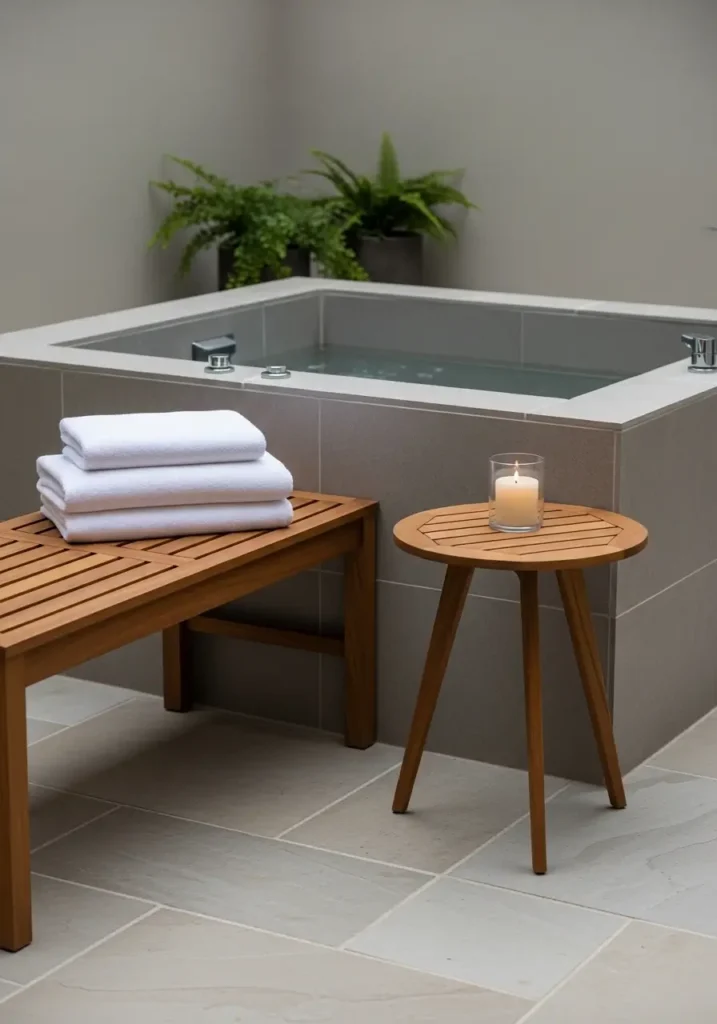
Start with your usual household use, rather than the largest gathering you might host. Ask how many people will soak regularly, whether you want upright seats or a lounger, and how much maintenance you are willing to handle.
- Hard-shell portable spa: Consider this for a permanent outdoor setup. Compare seating comfort, insulation, service access, and local repair support across specific models.
- Inflatable spa: Consider this when portability and a lower initial purchase price are priorities. Check the permitted outdoor operating temperatures, heater capabilities, and storage requirements before planning winter use.
- Built-in spa: Consider this when the tub is part of a larger landscape or pool project. Include construction, equipment access, and future repairs in the design from the start.
Check Seat Fit, Not Just Seat Count
Ask for a wet test if the dealer offers one. Check whether your feet reach a comfortable resting position, whether the seat holds you comfortably with the jets running, and whether you can enter and exit easily. A lounger that suits one person may feel awkward to someone taller or shorter.
For a small patio, mark the tub’s footprint with tape, then add the space required for steps, the opened cover, and maintenance. Try walking through the remaining area while imagining someone getting out. A tub that fits on paper can still crowd everyday movement.
Pick a Location You Will Enjoy Using
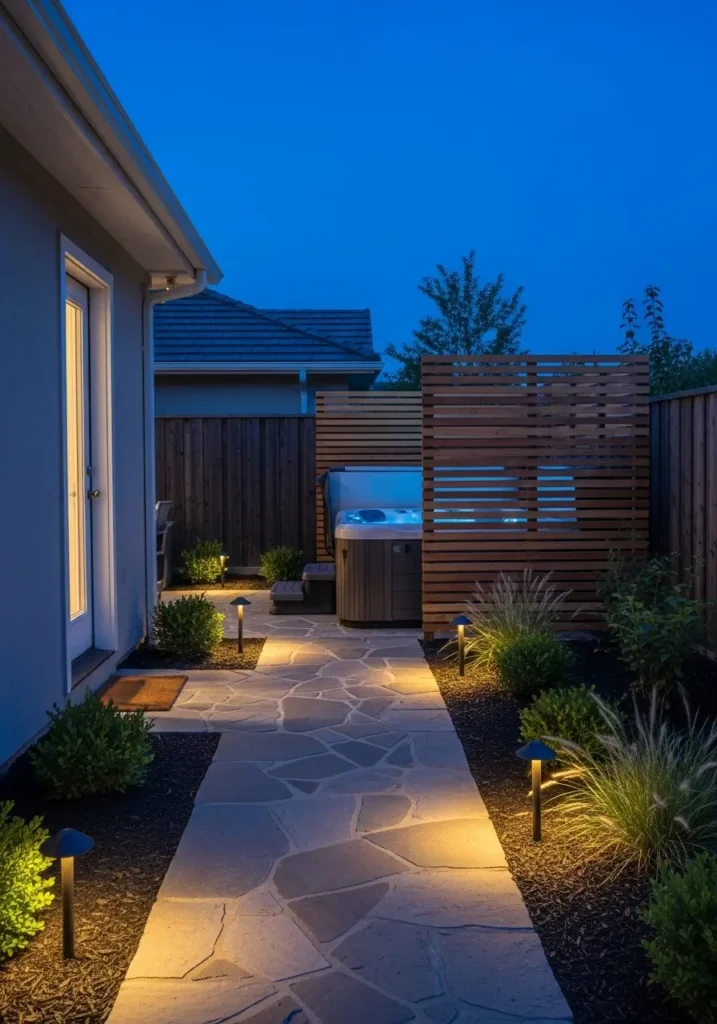
Visit the proposed spot in daylight and after dark. Sit at approximately the height of the spa seating to check views from neighboring windows, passing traffic, and your own house. Privacy at standing height can disappear when you sit down.
Keep the Route Short and Clear
Walk from your back door to the tub with a towel in your hands. Look for awkward steps, doors that swing into the route, low lighting, and surfaces that collect water. Plan a place for shoes and a reachable hook for a robe without narrowing the walkway.
Check Wind, Runoff, and Nearby Structures
A screen or planting arrangement can make an exposed site feel more comfortable. Keep it clear of the equipment panels and any ventilation openings. Avoid positioning the tub beneath roof runoff or where rain collects around its base.
If the proposed spot is beside a house or covered patio with visible leaks or damaged roofing, address those problems first. This guide to roof repair versus replacement can help you plan that part of the project.
Also consider neighboring bedrooms and your own quiet rooms. Ask to hear a demonstration tub running through its different pump settings; a showroom conversation about noise is more useful than assuming every model sounds the same.
Confirm the Base, Delivery Route, and Power Before Ordering
Support the Filled Tub and Its Occupants
The empty shipping weight is only part of the load. The foundation must support the spa, its water, and its occupants. Have a qualified professional assess an existing deck before placing a hot tub on it; appearance alone cannot establish its capacity.
Use the model’s foundation requirements to choose a properly designed concrete pad, approved spa base, or other suitable support. Do not assume an existing patio is suitable simply because it looks solid. Jacuzzi’s installation guide also emphasizes foundation suitability and a professional assessment for deck installations. :contentReference[oaicite:0]{index=0}
Plan Access for Delivery and Future Repairs
Give the delivery team measurements for gates, narrow passages, corners, and overhead obstructions. Confirm whether special lifting equipment is needed before paying a deposit.
For a recessed or partly enclosed installation, agree on maintenance access before building the surround. Ask the dealer to mark the required clearances on your plan. Contact your local building department about permits, inspections, and applicable barriers or setbacks. :contentReference[oaicite:1]{index=1}
Have the Electrical Supply Checked
Have a qualified electrician confirm the supply and protection required by the exact model and applicable local rules. A ground-fault circuit interrupter, or GFCI, helps protect against electric shock. The CPSC advises professional inspection of spa electrical installations and appropriate GFCI protection.
Keep corded appliances away from the water, and make sure household members know how to disconnect power in an emergency. Do not use the tub during thunderstorms. :contentReference[oaicite:2]{index=2}
Budget for the Complete Setup
Compare written, itemized quotes. A lower tub price may leave out work another quote includes, so use the same checklist with each seller:
- Purchase and delivery: Tub, cover, delivery, positioning, and any special lifting arrangements.
- Site preparation: Foundation, structural assessment, drainage, and electrical work.
- Access and safety: Suitable steps, handhold where needed, lighting, and required barriers.
- Recurring care: Electricity, water, testing supplies, treatment products, filters, and service.
- Future replacement: Cover, worn components, and eventual removal or replacement of the spa.
For electricity, multiply estimated monthly use in kilowatt-hours by your applicable rate. For example, a hypothetical 200 kWh at $0.20 per kWh equals $40 in energy charges. That is a calculation example, not a typical bill. Ask what outdoor temperature, water setting, and usage assumptions support any estimate a seller provides.
Make the Surrounding Space Comfortable and Practical

Begin with the things you will touch every time: the step, handhold, cover handle, towel hook, and walking surface. Choose stable access equipment and surfaces intended for wet outdoor use. Avoid loose rugs, trailing cables, or furniture that obstructs the exit.
Place lighting where it reveals changes in level without shining into seated bathers’ eyes. Check the space with the cover fully open; it may block a light, a view, or part of the route.
Keep decoration simple. A slatted screen, one weather-resistant bench, and a consistent color palette can make the area feel finished without creating clutter. Store clean towels somewhere dry, and use a separate place for damp ones.
Privacy screening and child-access protection serve different purposes. Secure the spa with an appropriate locking safety cover when it is unused, maintain required barriers, and supervise children near the water. Never use a tub with missing or damaged suction covers; have it assessed and repaired first. :contentReference[oaicite:3]{index=3}
Reduce Heat Loss and Set Realistic Energy Expectations
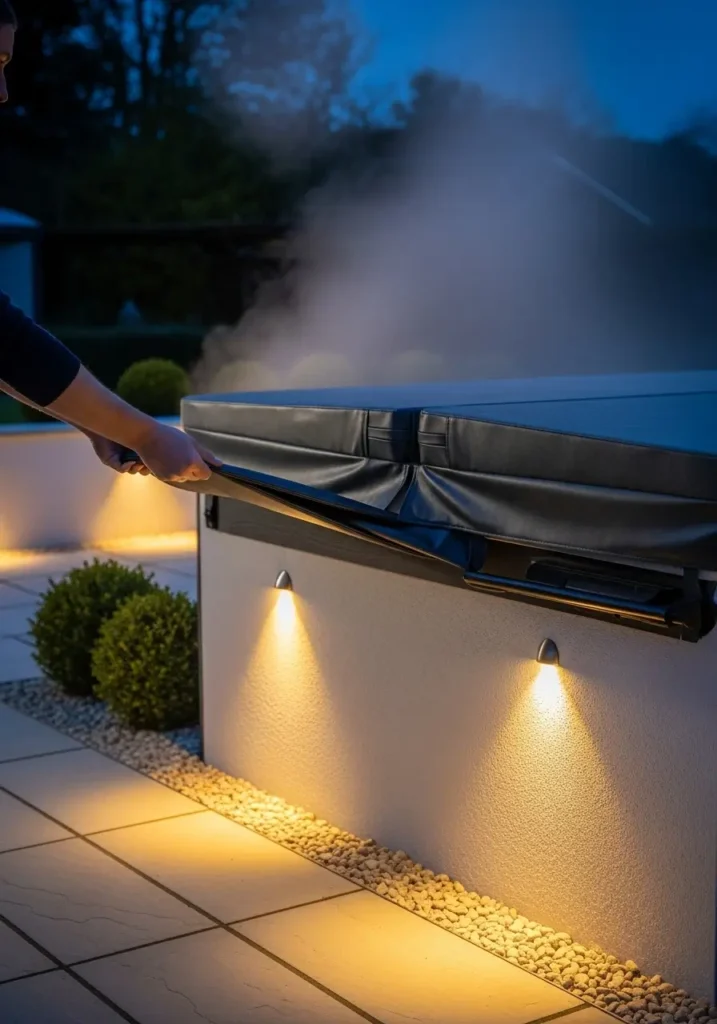
A well-fitting, insulated cover helps retain heat. Close it between uses and inspect its fit and condition. Penn State’s guidance on heating hot tubs and pools identifies a quality cover as an important energy-saving measure. :contentReference[oaicite:4]{index=4}
Before buying, ask how the model manages heating, filtration, and any economy settings. Get a demonstration of the controls and ask how long it takes to return to your preferred temperature under local winter conditions.
Smart controls may make adjustments convenient, but an app is not proof of low running costs. Check whether remote features require a subscription and whether essential controls remain available at the tub. Use operating modes according to the manual, including its requirements for circulation and freeze protection.
Keep Water Care Consistent: Weekly Testing Is Not Enough
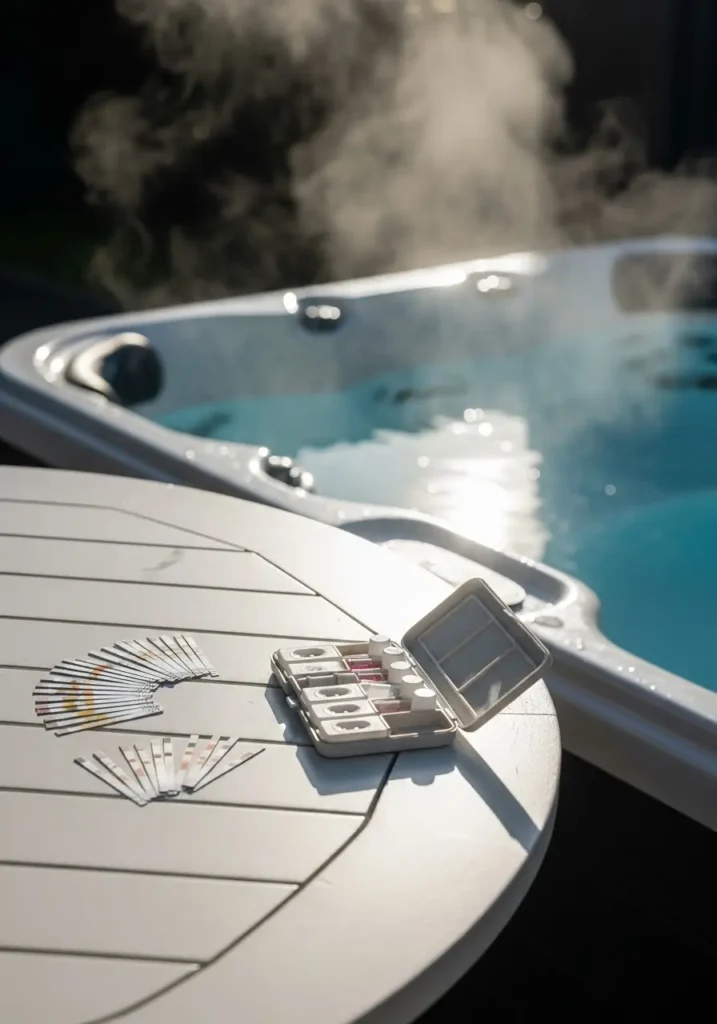
Clear-looking water does not replace testing. The CDC’s home pool and hot tub guidance calls for checking chlorine and pH at least twice daily, and more often with heavy use. It identifies DPD test kits as more accurate than strips for those measurements. Follow the test manufacturer’s instructions. :contentReference[oaicite:5]{index=5}
Know the Basic Water Checks
The CDC gives these hot tub values: chlorine at least 3 parts per million (ppm), bromine 4–8 ppm, and pH 7.0–7.8. Chlorine above 10 ppm or bromine above 8 ppm needs attention. Keep the water at or below 104°F (40°C); that is a ceiling, not a recommended setting for everyone. :contentReference[oaicite:6]{index=6}
Have your dealer explain the correct treatment products, operating range, and dosing instructions for your system. Do not choose products by the word “chlorine” alone: CDC guidance advises against cyanuric acid and stabilized chlorine products containing it in hot tubs. If that differs from your supplied instructions, resolve the discrepancy with the manufacturer and a qualified water-care professional before changing products. :contentReference[oaicite:7]{index=7}
Build a Routine You Can Follow
- At each scheduled check: Record test results and any treatment added. Confirm the water is suitable before anyone enters.
- After treatment: Follow the label’s circulation, waiting, and retesting instructions before use.
- During regular cleaning: Check the waterline, cover, and filter according to the owner’s manual.
- At scheduled service intervals: Carry out filter cleaning, water replacement, and other model-specific maintenance. Keep those dates beside your test log.
Ask for a hands-on water-care demonstration during commissioning. You should know where to take a sample, how to read the test, and whom to contact when a result does not make sense.
Use the Tub With Basic Health Precautions
CDC advice includes showering before entry, avoiding alcohol before or during use, and staying out when you have diarrhea. Children younger than five should not use hot tubs. If you are pregnant, speak with your healthcare provider before using one. :contentReference[oaicite:8]{index=8}
Plan for Winter, Rain, and Time Away
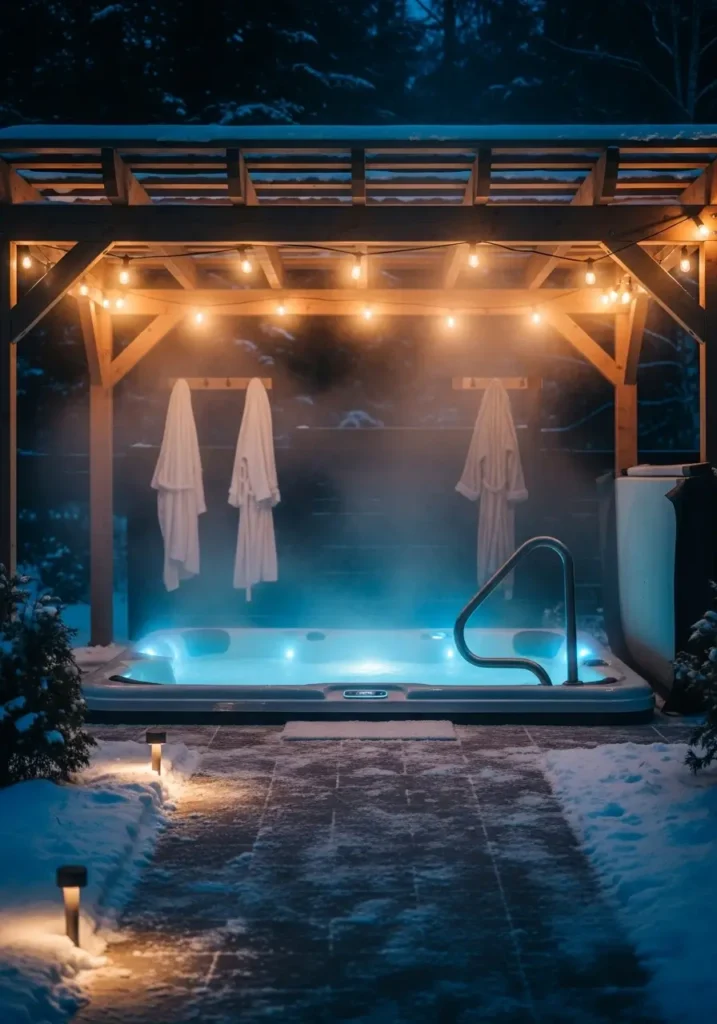
Year-round use depends on the model and its operating limits. Before buying for a cold climate, ask the dealer to explain winter operation, freeze protection, and the response to a power outage.
For a winter shutdown, draining the visible water is not sufficient: water can remain in plumbing and equipment. Follow the model’s winterization instructions or arrange professional service. Jacuzzi’s winterization guidance specifically addresses clearing water from those components. :contentReference[oaicite:9]{index=9}
During a cold-weather outage, keep the cover closed to retain heat and contact your dealer promptly for model-specific advice if freezing is a concern. Avoid improvising a partial drain. :contentReference[oaicite:10]{index=10}
For everyday comfort, keep the route clear of snow, ice, and fallen leaves. In rainy weather, check for puddles around steps and storage. Before a trip away, arrange the water care your system requires rather than assuming the cover or a remote app will handle it.
Troubleshoot Without Guessing
Cloudy Water or an Unexpected Odor
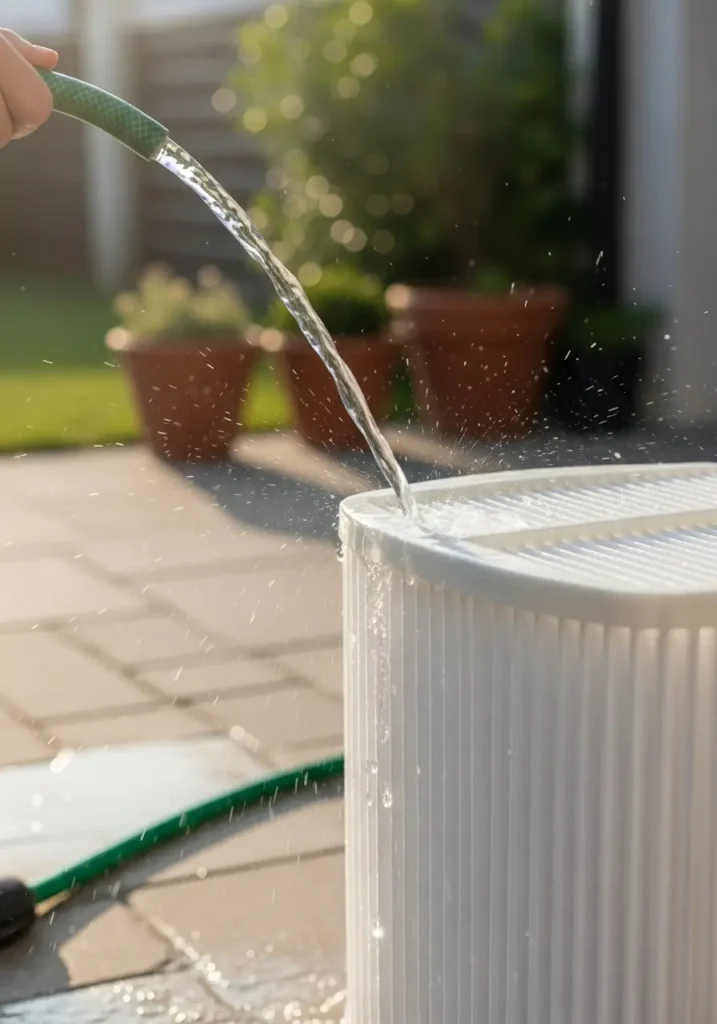
Pause use and check the water measurements and the maintenance record. Follow the manual’s troubleshooting instructions, including filter checks. If treatment does not resolve the issue, get professional help instead of repeatedly adding chemicals without a diagnosis. Jacuzzi’s water-treatment guidance recommends taking a water sample to a dealer when you are unsure about chemical adjustments. :contentReference[oaicite:11]{index=11}
A Sudden Increase in Electricity Use
Compare weather, soaking frequency, water settings, and electricity rates with the previous period. Inspect the cover, note any error messages, and ask a technician to investigate an unexplained change. A higher bill alone cannot identify the cause.
A Tub You Rarely Use
Walk through the whole routine before buying accessories. Is the cover difficult to lift? Are towels out of reach? Does the path feel dark or exposed? Fix the inconvenience you encounter most often, then reassess.
Your Next Step: Make a Site Plan
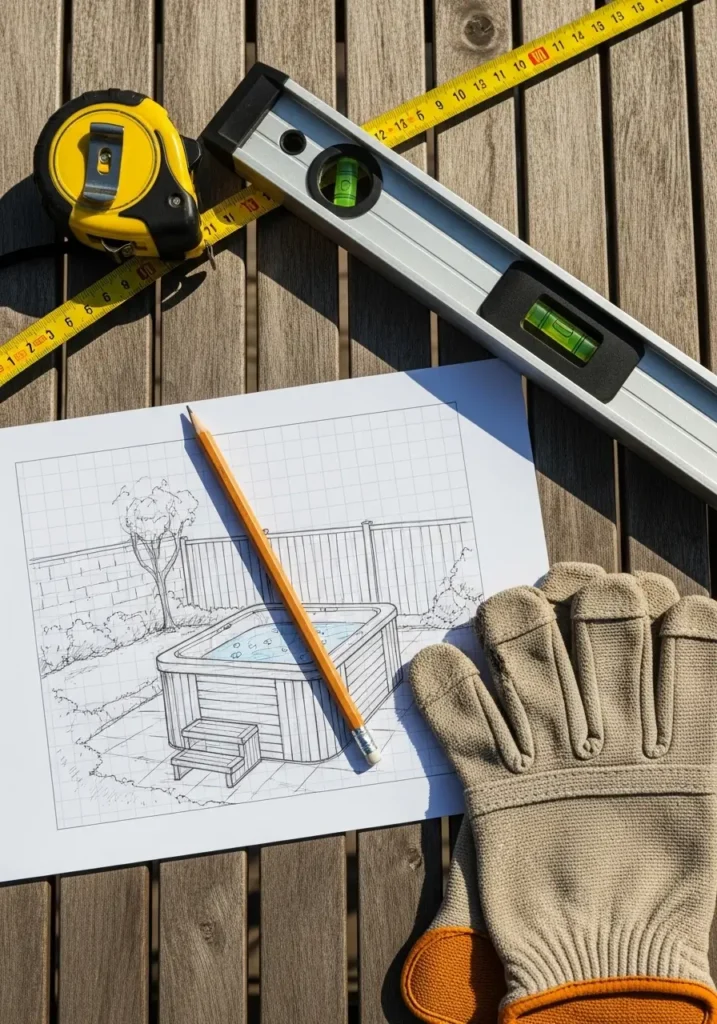
Sketch the proposed location and mark the tub, opened cover, steps, service panels, electrical supply, and route from the house. Take that sketch and the exact model’s specifications to your installer. Once the support, access, power, and care requirements are clear, you can choose privacy and design details with confidence.