The afternoon of 8 September 2022 is one of those rare moments when a whole nation seems to hold the same breath. Television screens across the country and beyond were filled with rolling royal news, as the family gathered at Balmoral. Then came the announcement. And within minutes of that news reaching the streets of London, a spontaneous sound rose from the crowd outside Buckingham Palace — not a planned tribute, not a rehearsed chorus, but a raw, unscripted rendition of “God Save the Queen.” A tour guide named David Harry, who runs his social media under the name The London Spy, rushed to the palace gates and captured that moment on video. That footage, shared online and viewed by thousands, has become a quiet time capsule of a nation’s grief.
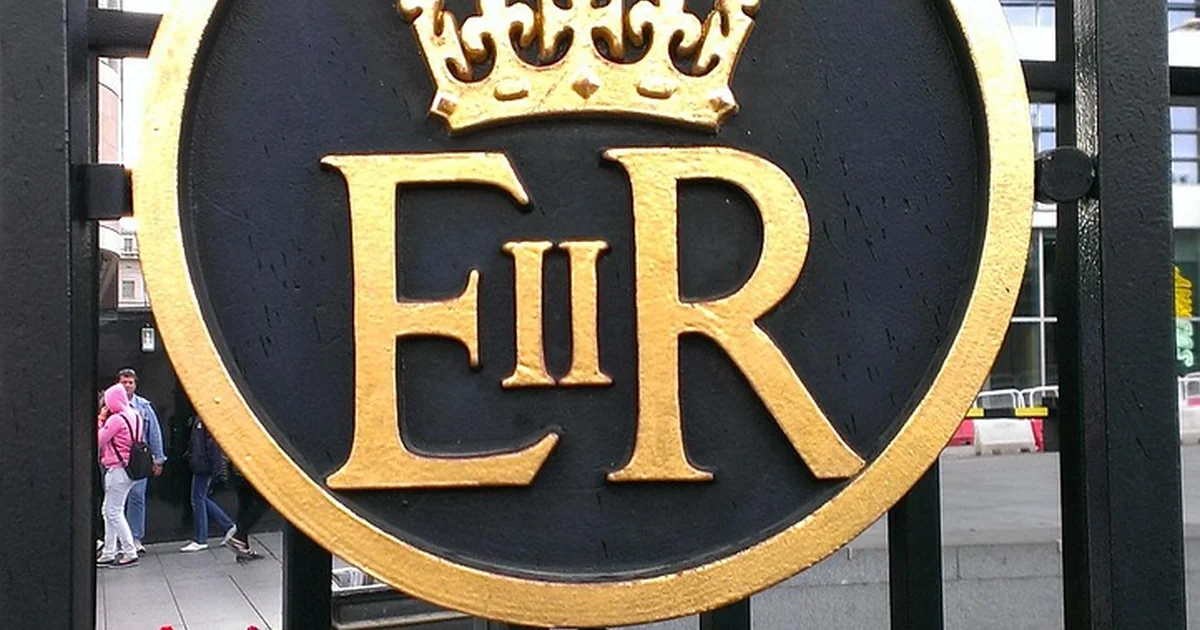
The Scene Outside Buckingham Palace Minutes After the News Broke
London Tour Guide David Harry, who specialises in royal and espionage walking tours, heard the news and made an immediate decision. He packed up his day and headed straight for Buckingham Palace. He wanted to be there, to see it, to feel what the city was feeling. When he arrived, he found the crowd already gathering. People stood in clusters, some with their hands over their mouths, others simply staring at the gates. Nobody was directing them. Nobody had told them to come. They just came.
Harry pulled out his phone and began recording. He panned the camera around to capture the faces, the quiet murmurs, the collective stillness. Then, without any cue, a voice somewhere in the crowd began to sing. Others joined. The song was “God Save the Queen,” the national anthem that had been sung at her coronation, at jubilees, at state openings. But this time, it was different. There was no brass band, no formal choir. Just ordinary people, their voices blending in the open air, singing for a monarch they had just lost.
Harry later shared the footage to his Instagram feed, where many of his 147,000 followers saw it. The comments poured in, each one reflecting a different shade of the same feeling. One follower wrote: “Still as heartbreaking.” Another added: “The longest reigning Monarch! She devoted her life to service!” The video, in its raw authenticity, captured what the official statements and news bulletins could not — the sound of a public, in the very same moment, processing the end of an era.
How Did King Charles React to His Mother’s Death?
Reflecting on the loss, the new King spoke in a deeply personal statement. He called it “a moment of the greatest sadness for me and all members of my family.” In those words, he acknowledged not just the public loss of a sovereign, but the private loss of a mother. He went on to say that the family would be comforted by the knowledge of “the respect and deep affection in which The Queen was so widely held.”
That statement, released through the official channels, became the anchor for much of the coverage that followed. But it was the contrast between that formal, measured language and the raw emotion captured on Harry’s video that truly told the story. The King’s words were carefully chosen, as one would expect. The crowd’s song was not chosen at all — it simply erupted. Together, they form two sides of the same historical moment: one official, one organic.
What Did the Public Say in Response to the Video?
As the video circulated, the comments section became a kind of digital memorial. Follower after follower wrote in with their own memories of that day. One recalled hearing the news on the radio while driving. Another described sitting in a living room, watching the television, and feeling a sudden silence. The common thread was not just sadness, but a sense of shared history. People wrote things like “When I heard the news I did have a tear in my eye. She was our queen and sorely missed.”
Another commenter pointed directly to the weight of the moment: “Charles is trying to be a good king but he has big shoes to fill.” That line captured something many were feeling — not just grief for the past, but quiet concern for the future. The video, by showing the impromptu singing, made that feeling visible. It was not a polished tribute. It was a group of strangers, standing in the same spot, finding the same words to sing at the same time.
How Was the Official Announcement Made?
Buckingham Palace released the news in a statement that read: “The Queen died peacefully at Balmoral this afternoon. The King and The Queen Consort will remain at Balmoral this evening and will return to London tomorrow.” That statement was then posted to the railings outside the palace by aides dressed in black. At the same time, the Union flag was lowered to half-mast. The video that David Harry captured shows that flag, and those railings, and the crowd that had gathered to read the words for themselves.
That moment — the lowering of the flag, the posting of the notice, the spontaneous singing — all happened within the same hour. It was a convergence of official ceremony and raw public emotion. The palace had its procedures. The people had their own. And for a few minutes, they occupied the same space.
How Social Media Reshapes Collective Mourning for Public Figures
Ten or twenty years ago, a moment like the one outside Buckingham Palace might have been captured by a news crew and broadcast once on the evening bulletin. After that, it would have lived in the archives, accessible only to researchers. Today, it works differently. David Harry’s video, shot on a phone and uploaded to Instagram, reached an audience of nearly 150,000 people within hours. It was shared, commented on, and embedded into the timeline of a global event.
This changes how we remember. For the historian, the challenge now is not finding the footage, but sorting through the sheer volume of it. For the reader who was in London that day, the video offers a way to compare their own memory with what was actually happening. For someone who missed the original broadcast, the video becomes a primary source. Social media has turned collective mourning into something more immediate, more democratic, and more permanent.
The Role of Spontaneous Public Rituals in National Grief
Consider what happened that evening. Nobody announced a sing-along. No one printed lyrics sheets. There was no sound system. Yet within minutes of the news breaking, a group of people began to sing the national anthem. It was not a political act. It was not a protest. It was a ritual, born in the moment, performed by people who needed to do something with their grief.
Psychologists and sociologists have long studied these spontaneous public rituals. They appear after natural disasters, after tragedies, after the death of a shared figure. They serve a purpose: they give people a script when no script exists. The song “God Save the Queen” is one of the few pieces of music that almost every British person knows. In that moment, it became a bridge between strangers. It gave them a way to be together without having to explain why.

Amazon US Verified
Amazon Basics Heavy-Duty Fabric Storage Bins
Durable, collapsible organizers for closets, shelving, and living room utility.
David Harry’s video shows that clearly. The camera moves across the crowd, and you can see people who were not planning to sing, but who found themselves singing anyway. Some were crying. Others were simply mouthing the words. It was not a performance. It was a reflex, and that is what made it so moving.
Contrast Between Official Ceremony and Raw Public Emotion
The official announcement from Buckingham Palace was precise. It used the language of protocol: “died peacefully,” “will remain,” “will return.” The King’s statement was formal, measured, and appropriate for a head of state. But the video from the palace gates tells a different story. It shows a crowd that did not know what to do, that did not have a script, that was making one up as they went along.
You may also enjoy reading: Prince William Sports Hoarse Voice After Night Out.
That contrast is not a weakness. It is the truth of how a nation mourns. The institution has its rituals. The public has its own. And sometimes, they meet. The flag went to half-mast. The notice went on the railings. And the people, standing in the same spot where those notices were posted, began to sing. One version of history is written in official statements. The other is recorded on a phone, shared on Instagram, and kept alive in the comments of people who wrote “Still as heartbreaking.”
What If I Missed the Original Broadcast — Where Can I Find Authentic Footage Now?
If you were not watching television on the afternoon of 8 September 2022, or if you simply want to see the raw, unedited version of what happened outside the palace, the best place to start is David Harry’s Instagram feed. He posts under the handle The London Spy. That video, along with several others he recorded that day, remains publicly available. It is authentic in the sense that it was not staged, not produced, and not edited for dramatic effect. It is simply a man with a phone, standing in a crowd, capturing what he saw.
Other news outlets have since used parts of the footage in their own coverage. But the original version — the one with the full pan of the camera, the unfiltered sound, the unscripted singing — is the closest you can get to being there. For anyone studying how public grief looks and sounds, that video is a primary document.
How Do I Verify the Authenticity of Viral Videos from Major News Events?
In an era of deepfakes and manipulated media, it is reasonable to ask whether a video like this is genuine. The short answer is that this particular video has been cross-referenced by multiple news outlets. The date is confirmed by the timestamp on the official announcement. The location is verified by the visible landmarks — the palace gates, the flag, the railings. The voice of David Harry is consistent with his other content. And the comments, which are from real accounts, describe real reactions.
For any viral video from a major news event, a good rule of thumb is to check three things: the source, the context, and the consistency. Does the person who posted it have a history of credible content? David Harry does. Does the video match the reported timeline? It does. Do the details — the flag, the crowd, the announcement — align with what other sources recorded? Yes. When those three checks pass, you can treat the footage as authentic.
Why Does an Impromptu Song Like “God Save the Queen” Become a Focal Point for Mourning?
The song itself is a piece of music that most British people have heard at least once in their lives. It is played at the end of film screenings, at royal events, at state ceremonies. But its power in that moment came from something else. It was the one thing that everyone in that crowd knew. They did not need a lyric sheet. They did not need a leader. They just needed a starting note, and the rest followed.
In the psychology of grief, shared rituals help people feel less alone. When you sing with others, your voice is part of a larger sound. You cannot tell who is crying and who is not. The song becomes a container for emotion that might otherwise feel too big to hold. That is why the video matters. It does not show a perfect performance. It shows a group of people, standing in the cold, doing the only thing that made sense in that moment. And that is exactly why it remains so powerful.
Frequently Asked Questions
Where can I view the original unearthed footage of the Queen’s final day?
The original video was posted by London Tour Guide David Harry, who operates under the Instagram handle The London Spy. It remains publicly accessible on his feed. You can also find it shared by several news outlets that embedded it in their coverage of the day. The footage shows the crowd outside Buckingham Palace singing “God Save the Queen” shortly after the official announcement.
How can I be sure the footage is real and not staged?
Multiple factors confirm its authenticity. The video aligns with the official timeline from Buckingham Palace, shows the correct location with visible landmarks like the palace gates and the lowered Union flag, and was posted by a creator with a known track record of royal and London content. News organisations also verified and used the footage in their own reporting, which adds a layer of editorial confirmation.
Is the footage suitable for use in a classroom or family setting?
Yes. The video contains no graphic or disturbing content. It shows a crowd of people singing, some with tears, but nothing that would be considered inappropriate for a general audience. It is a documentary record of public grief, not a sensationalised clip. For families discussing the end of an era or for educators teaching about modern royal history, it serves as a gentle and accurate primary source.
As an Amazon Associate, azuloz.com earns from qualifying purchases.