Small Bedroom Ideas That Make Limited Space Feel Bigger
A small bedroom can feel spacious, comfortable, and organized when you prioritize clear walking paths, appropriately scaled furniture, layered lighting, and storage that uses walls and overlooked spaces. Start by measuring the room, decide which functions matter most, and choose fewer pieces that do more than one job.
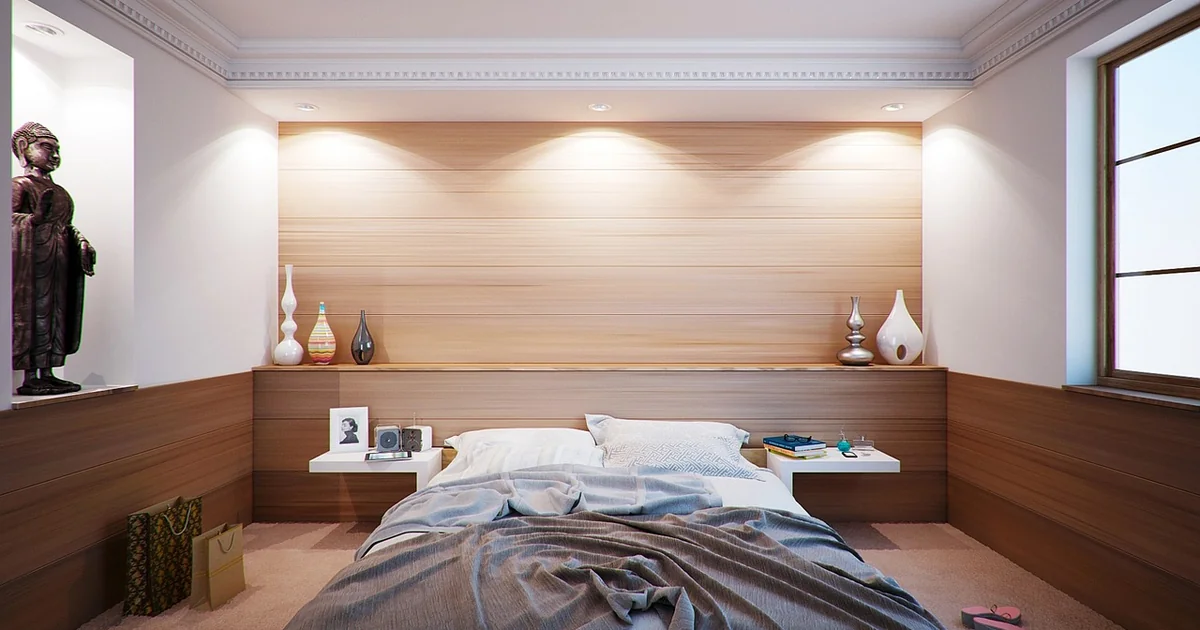
Plan the Layout Before Buying Furniture
Measure the walls, windows, doors, closet openings, and available space beside the bed. Mark the measurements on a simple floor plan before shopping. This prevents an attractive dresser or oversized bed frame from creating an awkward bottleneck.
The best arrangement depends on how you use the room. If uninterrupted sleep is the priority, give the bed the most comfortable position. If the bedroom must also serve as an office, reserve a defined work area near natural light. Maintain enough clearance to open drawers and doors without moving other furniture.
1. Place a Large Mirror Near a Window
A mirror cannot physically enlarge a bedroom, but it can redistribute daylight and extend sightlines. Position one opposite or adjacent to a window where it reflects light rather than an unattractive or cluttered area.
A wall-mounted mirror preserves floor space, while mirrored closet doors can eliminate the need for a separate dressing mirror. If you prefer a leaning floor mirror, secure it according to the manufacturer’s directions—especially in a home with children or pets.
2. Choose a Bed That Fits the Room
The largest bed that fits is not necessarily the most practical one. Consider how much space remains after accounting for the frame, nightstands, closet access, and walking routes. A bulky upholstered frame can consume significantly more room than the mattress itself.
A simple platform bed, storage bed, or frame with exposed legs usually creates a lighter visual effect. If two people share the room, access from both sides is convenient, but placing one side against a wall may be a reasonable compromise in an exceptionally narrow space.
3. Replace Floor Lamps With Wall-Mounted Lighting
Wall sconces, plug-in swing-arm lamps, and pendants free the floor and nightstand surfaces. Adjustable fixtures are particularly useful because they can provide focused reading light without illuminating the entire room.
Layer several modest light sources instead of relying on one harsh ceiling fixture. Combine general room lighting with bedside task lights and, if useful, gentle accent lighting. Choose LED bulbs with compatible fixtures and dimmers. Electrical work and hardwired fittings should be installed in accordance with local requirements, ideally by a qualified professional.
4. Use Vertical Space Without Overcrowding the Walls
When floor area is scarce, look upward. Tall wardrobes, wall-mounted cabinets, hooks, and shelving can increase storage without adding another large footprint. Keep frequently used belongings within comfortable reach and reserve high shelves for lighter, occasional items.
Vertical storage works best when it includes closed compartments. Too many exposed objects can make a compact bedroom feel visually busy. Use open shelves selectively for books or a few decorative pieces, then conceal clothing, cables, paperwork, and everyday clutter behind doors or inside matching containers.
5. Select Furniture That Performs More Than One Function
Every substantial piece should justify the space it occupies. A small chest can replace a bedside table while providing clothing storage. A compact desk with drawers can function as a workspace, vanity, and nightstand. A storage bench can hold spare bedding while providing a place to sit.
- Use a wall-mounted shelf as a slim bedside surface.
- Choose nesting tables that separate only when needed.
- Consider a headboard with integrated shelves.
- Use an ottoman with concealed storage instead of a decorative stool.
- Select a desk that can double as a dressing table.
Avoid collecting several convertible pieces merely because they appear clever. Furniture remains useful only if changing its function is quick and convenient.
6. Make the Most of Under-Bed Storage
The area beneath the bed is ideal for off-season clothing, spare linens, shoes, and luggage. Choose a storage bed with drawers, a lift-up base, or fitted containers that slide out easily. Measure the available height and depth before purchasing organizers.
Closed, labeled containers help protect belongings from dust and prevent the space from becoming a forgotten hiding place. Avoid stuffing unrelated items underneath the bed; organizing by category makes everything easier to retrieve.
7. Build a Calm, Cohesive Color Palette
Light neutrals can reflect daylight and create a quiet backdrop, but they are not the only suitable colors for a small bedroom. Deep blue, muted green, charcoal, and other darker shades can produce an intimate, enveloping effect when used intentionally.
The more important principle is continuity. Repeating a limited palette across the walls, curtains, bedding, and larger furniture reduces abrupt visual breaks. You can introduce contrast through artwork, cushions, a rug, or a single painted surface without making the room feel chaotic.
8. Hang Curtains to Emphasize Height
Mounting curtains above the window frame can draw attention upward and make the wall appear taller. Extend the rod beyond the sides of the window when possible so opened curtains reveal more glass and admit more daylight.
Choose fabric according to the room’s needs. Sheer curtains soften daylight and offer limited privacy, while lined or blackout curtains reduce outside light during sleep. If both benefits matter, layer a sheer panel with a room-darkening treatment.
9. Layer Bedding Without Overloading the Bed
Because the bed dominates a compact room, its appearance shapes the entire space. Combine a fitted sheet, duvet or quilt, and one textured throw for a comfortable layered look. A limited number of supportive and decorative pillows usually feels more polished than a pile that must be moved every night.
Repeating wall or curtain colors in the bedding creates cohesion. Washable fabrics and easy-to-store layers are more practical than delicate textiles that require complicated care.
10. Use Symmetry When It Supports the Layout
A centered bed with matching bedside lights can bring order to a small room. The repeated shapes give the eye a clear focal point and make the arrangement appear intentional.
Perfect symmetry is not mandatory, however. In an awkward room, an offset bed with one small table and one wall shelf may preserve a much better walking route. Functional balance matters more than forcing two identical pieces into insufficient space.
11. Consider a Daybed or Wall Bed for a Multipurpose Room
A daybed is useful when a compact bedroom also serves as a guest room, reading area, or home office. Bolsters and a few cushions allow it to function as seating during the day, while drawers or a trundle can add storage or another sleeping surface.
A wall bed can recover more floor area, but it is a larger investment and requires suitable construction and secure installation. Compare the mechanism’s dimensions, mattress restrictions, daily setup, and installation requirements before choosing one.
12. Add Built-In Storage Where Standard Furniture Will Not Fit
Built-ins can use alcoves, corners, sloping ceilings, and narrow wall sections that freestanding furniture leaves empty. Floor-to-ceiling cabinetry provides substantial storage while producing a cleaner outline than several unrelated pieces.
If custom cabinetry exceeds the budget, create a similar effect with modular units sized to the wall. Matching the units to the wall color helps them recede visually. Include a combination of drawers, hanging space, adjustable shelves, and closed cabinets based on what you actually own.
Small-Bedroom Mistakes to Avoid
Buying Furniture Without Measuring It
Check the complete exterior dimensions, including knobs, open drawers, reclining parts, and the clearance needed for doors. Painter’s tape can help you outline each piece on the floor before committing to it.
Using Only Tiny Furniture
A collection of undersized pieces can make a bedroom feel fragmented. One properly proportioned bed and one tall storage unit may work better than several miniature cabinets, tables, and organizers.
Covering Every Wall With Storage
Storage is helpful, but visual breathing room matters too. Leave some surfaces open and avoid placing shelves directly over the bed unless they are securely installed and suitable for that location.
Ignoring Furniture Safety
Secure dressers, bookcases, wardrobes, and other potentially unstable furniture according to the manufacturer’s instructions. Store heavier belongings in lower sections and do not encourage climbing by placing tempting items out of reach. The U.S. Consumer Product Safety Commission recommends anchoring furniture to help prevent tip-over incidents.
Allowing Surfaces to Become Permanent Storage
Nightstands and dressers quickly accumulate chargers, receipts, toiletries, and clothing. Give everyday items a designated drawer, hook, tray, or container, then reset visible surfaces regularly.
How to Improve a Small Bedroom on a Limited Budget
You do not need custom cabinetry or an extensive renovation. Start with changes that address the room’s biggest problem:
- Remove items that belong elsewhere.
- Rearrange the existing furniture to improve circulation.
- Replace bulky organizers with containers that fit under the bed or inside the closet.
- Mount a mirror and bedside lighting to free useful surfaces.
- Add hooks or one high shelf where installation is safe.
- Shop secondhand for compact solid-wood tables, mirrors, and lighting.
- Upgrade bedding or curtains only after the layout and storage are working.
Inspect secondhand furniture for damage, stability, odors, pests, recalls, and missing hardware before bringing it home. A vintage piece can add character, but it still needs to be safe and appropriately scaled.
Frequently Asked Questions
What bed size is best for a small bedroom?
The best size is the one that meets your sleeping needs while leaving usable circulation and access to storage. A twin bed suits one sleeper and preserves the most floor area. A full bed provides more width for one person or a close fit for two. A queen may work if the room can accommodate the complete frame and the remaining furniture without blocking doors or creating an uncomfortable route.
Should a bed go against the wall in a small room?
It can. Centering the bed provides balanced access, but placing it against a wall may free enough space for a desk, dresser, or wider walkway. Choose the arrangement that supports how the room is used rather than following a fixed design rule.
Can dark colors work in a small bedroom?
Yes. Dark colors can create depth and a restful atmosphere, particularly when the room has good lighting and a controlled palette. Balance them with reflective surfaces, lighter textiles, or contrasting trim if the result feels too heavy.
How can you make a small bedroom feel less cluttered?
Reduce the number of freestanding pieces, use closed vertical storage, keep visible surfaces mostly clear, and assign every frequently used item a convenient home. Matching containers and a consistent color palette also reduce visual noise.
What should you do first when redesigning a small bedroom?
Measure the room and identify the main obstacle. If circulation is poor, change the layout. If belongings lack a home, improve storage. If the space feels dark, address window treatments, mirrors, and layered lighting. Solving the most disruptive problem first will make later decorating decisions much easier.
A successful small bedroom does not depend on squeezing in more furniture. It comes from choosing what the room genuinely needs, protecting clear pathways, and using each available area deliberately. When the layout, lighting, and storage work together, limited square footage can feel calm rather than restrictive.