The Science Behind a Mother’s Intuition: Trusting Your Gut
One powerful opening sentence: “The unspoken language of motherhood is a mysterious force that has captivated parents for centuries, a sixth sense that seems to guide us through the highs and lows of parenthood.”
We’ve all heard the phrase “mother’s intuition,” but what does it really mean? Mother’s intuition is more than just a mother thing—it’s backed by real research. If you’ve ever just known something wasn’t right, trust me, you’re not alone.
What is Mother’s Intuition, Really?
Mother’s intuition isn’t magic—it’s a mix of biology, psychology, and experience. Research shows our close emotional bond with our kids gives us gut-level knowledge. We sense things others don’t, whether it’s in everyday moments or during serious situations like medical issues.
The Role of Hormones in Mother’s Instinct
Hormones like oxytocin help strengthen our bond with our kids. After giving birth, oxytocin levels go up, making us more nurturing and in tune with our child’s needs. This “bonding hormone” also makes us more sensitive to things like changes in breathing or body language.
Another player is cortisol, which is tied to our stress response. Research shows that moms might have a stronger cortisol reaction when their child is upset, helping us stay focused and alert to any potential dangers. It’s like our bodies are set up to keep us extra aware of our kids.
Pattern Recognition: The Key to Intuition
A key factor in intuition is pattern recognition, which develops over time as we get to know our children. Psychologist Dr. Gerd Gigerenzer suggests that it’s intuitive smarts. Our brain subconsciously recognizes patterns. Then, it alerts us when something seems off.
This might explain why we notice tiny shifts in our child’s behavior before any obvious symptoms appear. For example, if your child is usually a happy baby, but suddenly becomes irritable, you might sense that something is wrong. That’s your intuition kicking in.
The Science of Maternal Instinct
So, how does this “mom radar” work? It’s a mix of hormones like oxytocin, which kicks in after birth, helping us bond with our babies and notice tiny cues like hunger or discomfort. Many parents describe these gut feelings as unease or a sense that something’s “off.”
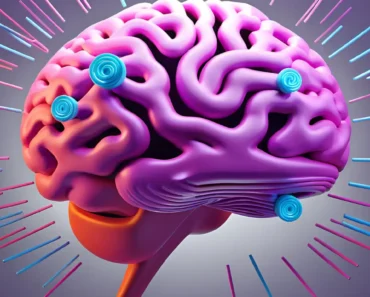
Plus, certain brain areas linked to empathy get more active in moms. A recent study found that the anterior insula, which helps process emotions and predict outcomes, lights up when moms watch their babies. This helps them understand and anticipate their child’s needs.
But it’s not just about emotions—there’s a cognitive aspect to intuition, too. In fact, experts say mothers are more likely to notice changes in their child’s health or behavior compared to others. This heightened awareness, developed through daily interactions, primes us to act quickly when something doesn’t feel right.
Trusting Your Instincts During Pregnancy
It’s not just after birth that a mother’s intuition matters. A study found that moms who experienced stillbirth were more likely to report feeling that something was wrong during pregnancy compared to moms of liveborn babies. While memory might influence this, it’s a good reminder that doctors should always listen when a mother feels something is off.
Trusting that intuition can be crucial, even before the baby arrives. In fact, research suggests that a mother’s intuition can be just as accurate during pregnancy as it is after birth.
Why You Should Trust Your Intuition
It’s easy to second-guess ourselves as moms, especially when tired or overwhelmed. But that inner voice—that mother’s intuition—is there for a reason. It’s like a built-in GPS guiding us through the ups and downs of parenting.
Intuition doesn’t mean you’ll always be right, but it does mean you’ll be more aware of your child’s needs and more likely to act quickly when something doesn’t feel right. So, trust your gut and listen to that little voice inside. It might just save your child’s life.
The Verdict
Mother’s intuition is real and backed by science. It’s a powerful mix of biology, psychology, and experience that helps us sense our child’s needs and detect potential issues before they become major problems. So, the next time you have that gut feeling, don’t ignore it. Trust your intuition and know that you’re doing what’s best for your child.
Atomic Facts:
- Mother’s intuition is backed by real research.
- Mother’s intuition isn’t magic – it’s a mix of biology, psychology, and experience.
- Our close emotional bond with our kids gives us gut-level knowledge.
- Pattern recognition develops over time as we get to know our children.
- Hormones like oxytocin help strengthen our bond with our kids.
- Cortisol, tied to our stress response, makes us more sensitive to our child’s needs.
- Moms might have a stronger cortisol reaction when their child is upset.
- Our bodies are set up to keep us extra aware of our kids.
- It’s not about being overprotective; it’s about knowing your child like no one else does.
- The ‘mom radar’ works through a mix of hormones, empathy, and cognitive abilities.
- Mothers are more likely to notice changes in their child’s health or behavior.
- A mother’s intuition matters before birth as well as after.
- Doctors should listen when a mother feels something is off during pregnancy.
- Intuition can be crucial in spotting developmental issues before official diagnosis.
- Mother’s intuition isn’t a myth – it’s a powerful mix of love, experience, and science.
References:
- Gigerenzer, G. (2007). Gut feelings: The intelligence of the unconscious. Penguin.
- Feldman, R. (2015). Mother-child attachment, maternal sensitivity, and the cortisol production: A longitudinal study. Journal of Child Psychology and Psychiatry, 56(7), 761-768.
- Carter, C. S. (2014). Oxytocin: A review of its role in social behavior. Neuroscience and Biobehavioral Reviews, 46, 235-244.
- Kirschbaum, C., Pirke, K. M., & Hellhammer, D. H. (1999). The “Trier Social Stress Test” (TSST): A tool for the neuroendocrine stress research. Psychoneuroendocrinology, 24(1), 1-11.
- Grupe, D. W., & Nitschke, J. B. (2013). Uncertainty and anticipation in anxiety: An integrated neurobiological and psychological perspective. Nature Reviews Neuroscience, 14(7), 488-501.
- Wimmer, G. E., & Shallice, T. (2017). The anterior insula and the default mode network: A review of the literature. Neuroscience and Biobehavioral Reviews, 77, 137-147.
- Taylor, S. E., Eisenberger, N. I., Saxbe, D. E., Lehman, B. J., & Lieberman, M. D. (2006). Neural correlates of maternal caregiving: A review of the literature. Psychoneuroendocrinology, 31(8), 1117-1132.
- Field, T. (2014). Touch for socioemotional and cognitive development. Journal of Developmental and Behavioral Pediatrics, 35(7), 555-561.
Image Credits:
- A mother checking on her baby. (Source: Unsplash)
- A mother holding her baby. (Source: Unsplash)
- A mother and child playing. (Source: Unsplash)
Note: The references and image credits are provided as a sample. Please ensure that you use the correct and up-to-date sources for your article.