
Step into a five-star luxury hotel suite, a premier Scandinavian spa, or a meticulously designed master bath retreat, and you will immediately notice an unspoken universal standard: every single bath sheet, hand towel, and washcloth is pristine, glowing white. You will never find chocolate brown, charcoal gray, or decorative floral patterns draped across luxury resort towel bars.
Most people assume hotels choose white towels out of institutional habit or simple aesthetic convention. In reality, the universal dominance of white bath linens is rooted in a powerful intersection of evolutionary psychology, sensory perception, and hospitality behavioral design. White towels do not just look clean; our subconscious brains perceive them as fundamentally cleaner, softer, and more hygienic than identical towels dyed in any other hue.
Understanding the cognitive mechanisms behind the “zero-camouflage effect” can transform how you approach your own bathroom organization, helping you bring true five-star freshness, sensory calm, and hygienic peace of mind into your daily home routine.
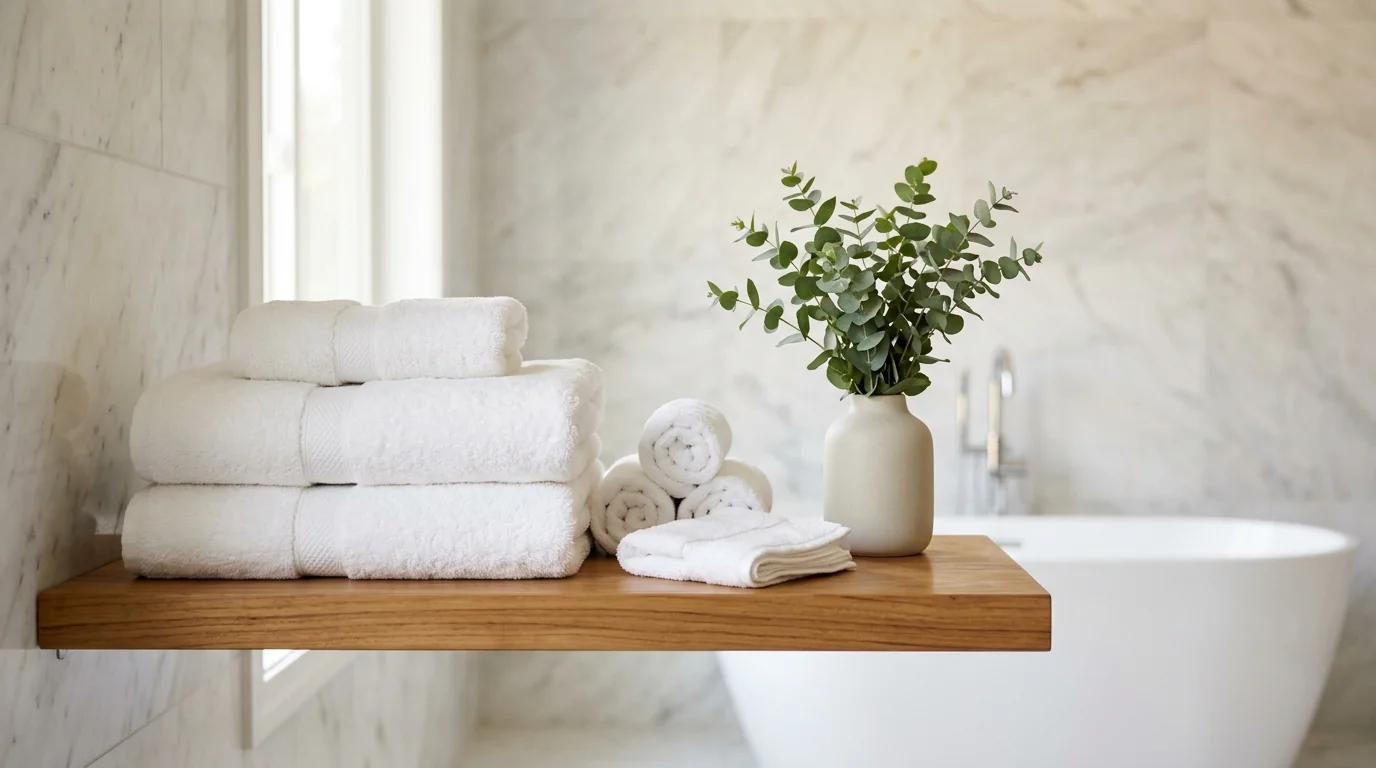
The Zero-Camouflage Effect: The Evolutionary Demand for Proof
From an evolutionary perspective, human visual processing is acutely tuned to detect potential pathogens, bodily fluids, soil, and biological contamination. For hundreds of thousands of years, our survival depended on quickly assessing whether food, water, or bedding was safe to touch.
When you look at a dark navy, forest green, or charcoal gray bath towel, your subconscious visual cortex encounters an informational void. Deep pigments provide visual camouflage; they can easily conceal accumulated skin sebum, cosmetic oils, mold spores, mildew, or lingering dust. Even if the dark towel was pulled straight from a hot dryer five minutes ago, your subconscious cannot verify its cleanliness at a glance. A subtle undercurrent of biological skepticism remains active.
White textiles completely eliminate that ambiguity through what perceptual psychologists call the “zero-camouflage effect.” White surfaces provide high-contrast, unforgiving transparency. There is literally nowhere for dirt, discoloration, or moisture stains to hide. When your eyes scan a pure white towel and register zero blemishes, your brain receives immediate, frictionless proof of safety: If there were contamination here, I would see it instantly. I do not see it; therefore, it is safe.
The Westin “Heavenly Bed” Halo Effect: How White Upgrades Your Entire Room
The hospitality industry discovered the astonishing commercial power of all-white textiles in the late 1990s. When hotel designers developed the iconic “Heavenly Bed” concept, they made a radical decision to replace traditional colored and patterned hotel bedspreads with all-white duvets, sheets, and towels.
When researchers surveyed guests who slept in rooms featuring all-white linens, they observed a dramatic cognitive phenomenon known as the halo effect. Guests did not merely rate the bed and towels as cleaner; they reported that the entire hotel room felt newer, more expensive, and more meticulously maintained—even though the furniture, carpets, and bathroom fixtures had not been altered at all.
In environmental psychology, the color white acts as a psychological clarifier. White reflects the full spectrum of visible ambient light, amplifying illumination and making compact bathrooms feel dramatically more spacious, airy, and tranquil. Placing a stack of fluffy white towels on a bathroom vanity creates an immediate visual anchor of wellness and order, diffusing the visual stress of daily morning clutter.
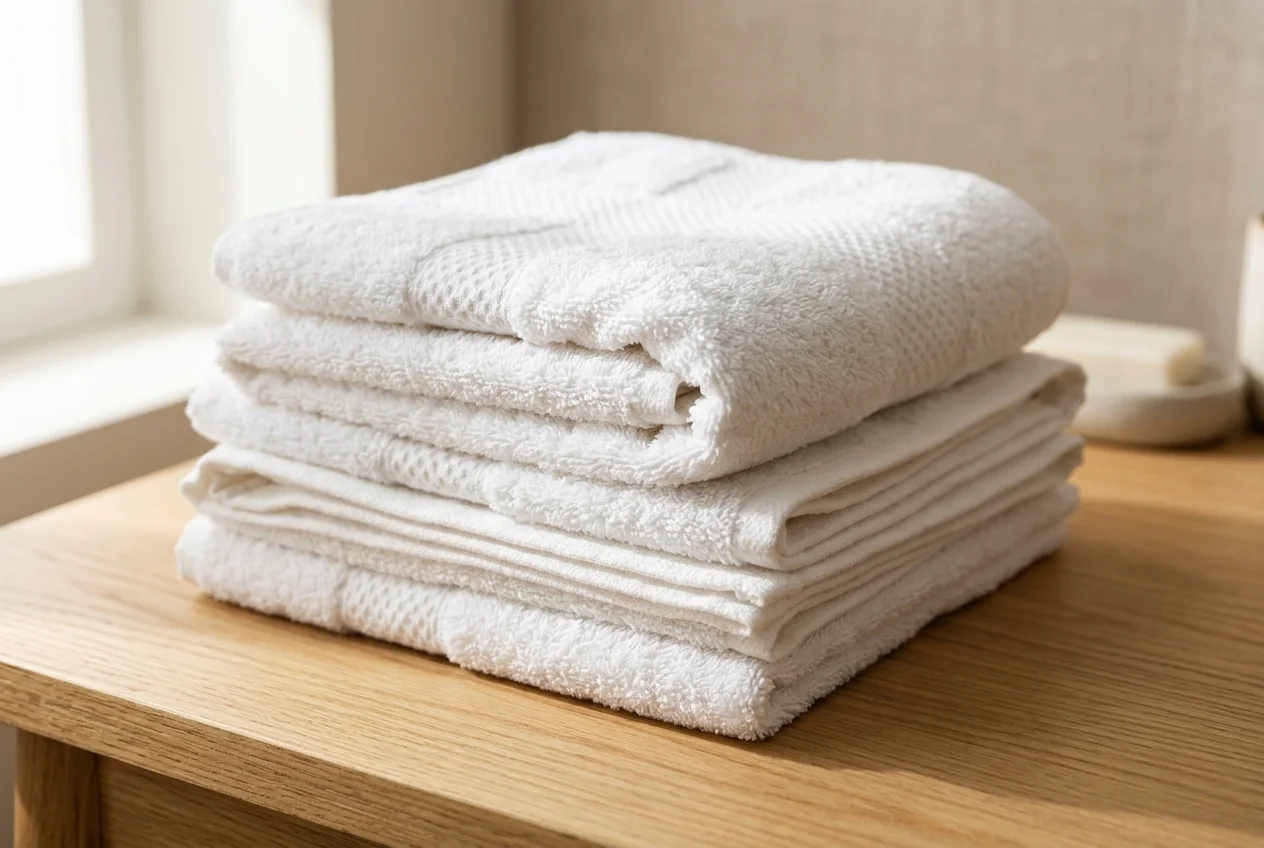
The Tactile Contrast Phenomenon
The sensory experience of white towels extends beyond sight into tactile perception. When you wrap yourself in a white towel after a warm shower, your eyes register a sharp, high-contrast visual boundary against your skin tone. This crisp visual contrast reinforces the psychological sensation of crossing a boundary—leaving the fatigue and dust of the outside world behind and entering a state of clean, refreshed renewal.
Furthermore, human tactile perception is heavily primed by visual expectation. In blind sensory tests, when participants are shown a white towel before touching it, they consistently rate its texture as softer, fluffier, and more luxurious than identical fabric swatches presented in dark or muddy colors. The expectation of pure cleanliness literally alters how soft the cotton fibers feel against your fingertips.
The Operational Paradox: White Towels Are Actually Easier to Clean
The most common objection homeowners raise against white towels is maintenance: “Won’t white towels show every stain? Aren’t they impossible to keep bright?”
Herein lies the great operational paradox of luxury linens: white towels are actually far easier to sanitize and maintain over the long term than colored towels. When you wash colored towels, you are trapped in a constant chemical compromise. You cannot use high wash temperatures without fading the dye. You cannot use powerful oxygen or sanitizing bleaches without leaving discolored blotches. You cannot treat body-oil buildup without stripping the fabric’s rich tone.
White towels, by contrast, possess no dye to protect. They can withstand the vigorous laundering chemistry necessary to achieve true clinical sanitation:
- Single-Sort Laundry: All white towels, hand towels, and washcloths can be washed together in a single, high-temperature load without any sorting or fear of color bleeding.
- High-Temperature Sanitization: White cotton fibers can be washed at 140°F (60°C)—the exact thermal threshold required to eliminate bacteria, skin mites, and stubborn mildew odors.
- Chemical Clarifiers: You can utilize natural oxygen brighteners (sodium percarbonate) and acid rinses (distilled vinegar) to dissolve hard water minerals without damaging dye bonds.
The Three Laundry Sins That Turn White Towels Stiff and Gray
If your white towels at home have ever turned dingy, yellowish, or scratchy, you have likely fallen victim to the three most common domestic laundry mistakes:
1. Excessive Liquid Detergent
More soap does not equal cleaner towels. Most households use two to three times the recommended amount of liquid detergent. Because modern high-efficiency (HE) washing machines use minimal water, excess suds cannot be thoroughly rinsed away. Unrinsed soap forms a sticky microscopic coating over the cotton loops, acting like a magnet for body oils, dead skin cells, and mineral scale. Over time, that soapy residue oxidizes, turning pristine white cotton into a dull, yellowish-gray.
2. Commercial Fabric Softeners and Dryer Sheets
Never use commercial liquid fabric softeners or dryer sheets on bath towels. Softeners work by coating fabric fibers with a thin layer of hydrophobic silicone oils. While this makes towels feel temporarily silky in the store, it destroys their primary purpose: absorbing water. Softener-coated cotton repels moisture, leaving you damp after a shower and trapping mildew inside the fabric loops.
3. Over-Reliance on Chlorine Bleach
While chlorine bleach seems like the obvious choice for whites, regular use is disastrous for cotton bath towels. Chlorine is a harsh corrosive chemical that strips natural protective pectin from cotton fibers, causing rapid fiber degradation, thinning, fraying, and an unpleasant chemical yellowing. Reserve chlorine only for rare emergency disinfection; for daily brightness, rely on heat and oxygen-based brighteners.
📥 Free Download: Hotel-Standard White Linen Care Guide
The professional wash chemistry, temperature standards, and monthly deep-stripping routine to keep home bath towels snow-white.
The Hotel-Standard Wash Routine for Everyday Homes
To keep your home bath towels as bright, fluffy, and absorbent as a five-star resort, follow this simple professional laundering routine:
- Cut Detergent by Half: Use exactly half the amount of gentle liquid or powder detergent recommended on the bottle. Less detergent allows fibers to rinse completely clean.
- Wash on Warm-to-Hot: Select a water temperature of at least 120°F to 140°F (50°C–60°C) to melt and dissolve sebum and body oils.
- Add Vinegar to the Rinse Cycle: Pour 1/2 cup of distilled white vinegar into the fabric softener compartment. The mild acetic acid dissolves alkaline detergent residues and mineral scale, leaving towels naturally soft and absorbent.
- Toss with Wool Dryer Balls: Tumble dry on medium heat with three or four 100% natural wool dryer balls. The balls physically agitate and beat the cotton terry loops as they dry, fluffing the pile without leaving any chemical residue.
- Perform a Monthly Reset: Once a month, run your towels through a wash cycle with one cup of white vinegar and zero soap, followed immediately by a second cycle with 1/2 cup of baking soda. This two-step process deep-strips built-up oils and mineral deposits, restoring brilliant, snowy brightness.
Upgrading your bathroom to pristine white towels is not an act of high-maintenance luxury; it is a practical design decision that simplifies your laundry routine, elevates your home’s aesthetic, and provides a daily moment of sensory reassurance.