
Glasses for Women Over 40: 15 Flattering Styles and a Smarter Fit Guide
Choose frames that feel comfortable, support your vision, and reflect your style without following outdated age rules.
The best glasses for women over 40 are not defined by age. They are the frames that fit your face properly, work with your prescription, suit your daily routine, and make you happy to wear them. Cat-eye, round, rectangular, rimless, colorful, and oversized styles can all look polished when their proportions are right.
Vision needs often change in the 40s because of presbyopia, the gradual loss of the eye’s ability to focus up close. You may notice that menus need to be held farther away, small print looks blurry, or switching between your phone and the distance takes longer. That makes lens choice and professional measurements just as important as frame color or shape.
This guide explains what to check before you buy and compares 15 versatile frame styles. Use face-shape suggestions as inspiration, not as strict rules: two people with the same general face shape can prefer completely different frames because facial width, bridge shape, brow line, prescription, coloring, and personality also matter.
What Changes After 40s and What Does Not
Near Vision Commonly Becomes More Demanding
Presbyopia is a normal age-related focusing change, not an eye disease. It usually becomes noticeable in middle age as the eye’s natural lens grows less flexible. Reading glasses may be enough for some people, while others need prescription single-vision, bifocal, occupational, or progressive lenses. The right option depends on your existing prescription and the distances you use most.
If you develop sudden blurred vision, flashes, a rapid increase in floaters, a dark curtain in your visual field, double vision, significant eye pain, or sudden vision loss, seek prompt medical care. Those symptoms should not be assumed to be ordinary aging or solved by buying stronger readers.
Your Style Does Not Expire
There is no frame shape or color that becomes forbidden at 40. A dramatic geometric pair can look as sophisticated as a thin metal frame; a bright color can be more flattering than a supposedly “safe” neutral. The useful question is not “Am I too old for this?” but “Does this pair fit, support my lenses, and feel like me?”
Start With the Lenses, Then Confirm the Frame
Some attractive frames are poor matches for certain prescriptions. Very shallow lenses may leave limited space for progressive zones. A strong prescription can become thicker or heavier in a large frame. Rimless designs may offer fewer lens-material options. Before committing, ask the optician whether the frame is suitable for your prescription, pupillary distance, fitting height, and preferred lens design.
[hostinger-affiliate-table id=”187667″]
How to Choose Glasses That Genuinely Flatter and Fit
Use Face Shape as a Starting Point
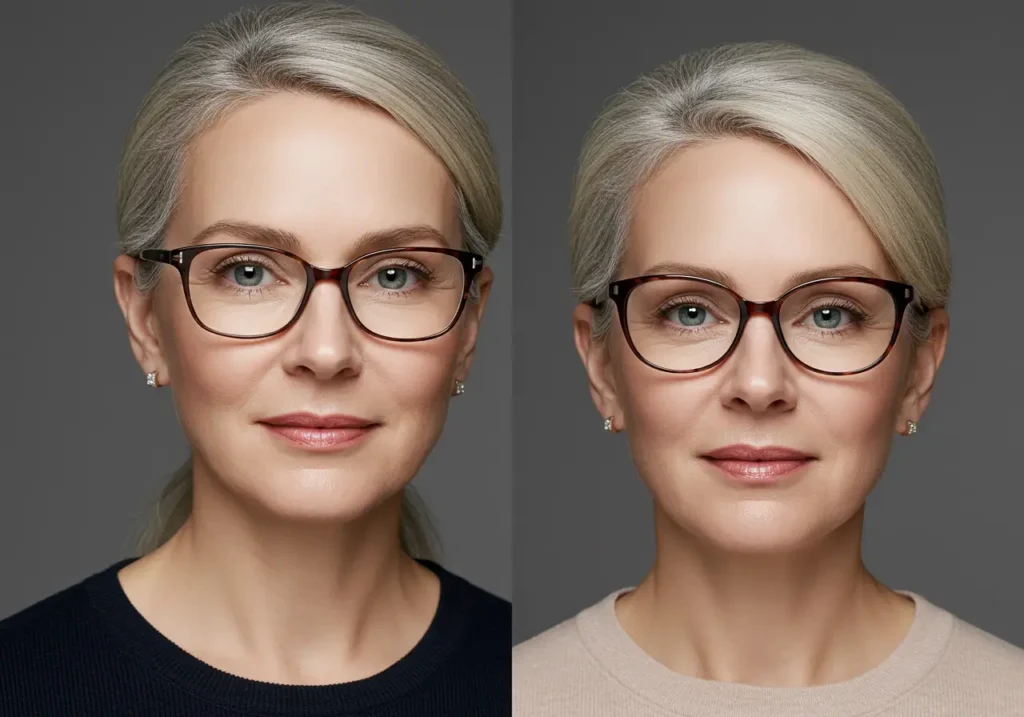
Traditional advice recommends contrast: angular frames for rounder faces and curved frames for angular faces. That can be useful, but it is not a law. Pay more attention to proportion and alignment:
- Frame width: The frame should usually sit near the width of your face without squeezing the temples or extending so far that it slides.
- Brow relationship: A top rim that broadly follows your brow can look harmonious, although expressive shapes may intentionally break that line.
- Eye position: Your eyes should appear well placed within the lenses. Exact optical positioning must be measured for your prescription rather than judged from appearance alone.
- Cheek clearance: The lower rims should not lift, rub, or leave marks when you smile.
- Scale: Larger features often balance stronger frames, while smaller features may suit finer proportions—but intentional contrast can also look excellent.
If you want a quick direction, angular rectangles and geometric shapes can add definition to rounder features; round and oval shapes can soften a pronounced jaw; bottom-light or softly upswept designs can balance a broader forehead; and taller lenses can visually shorten a longer face. Try the opposite as well. The better frame is the one that looks balanced on your actual face.
Choose Color by What Brightens Your Face
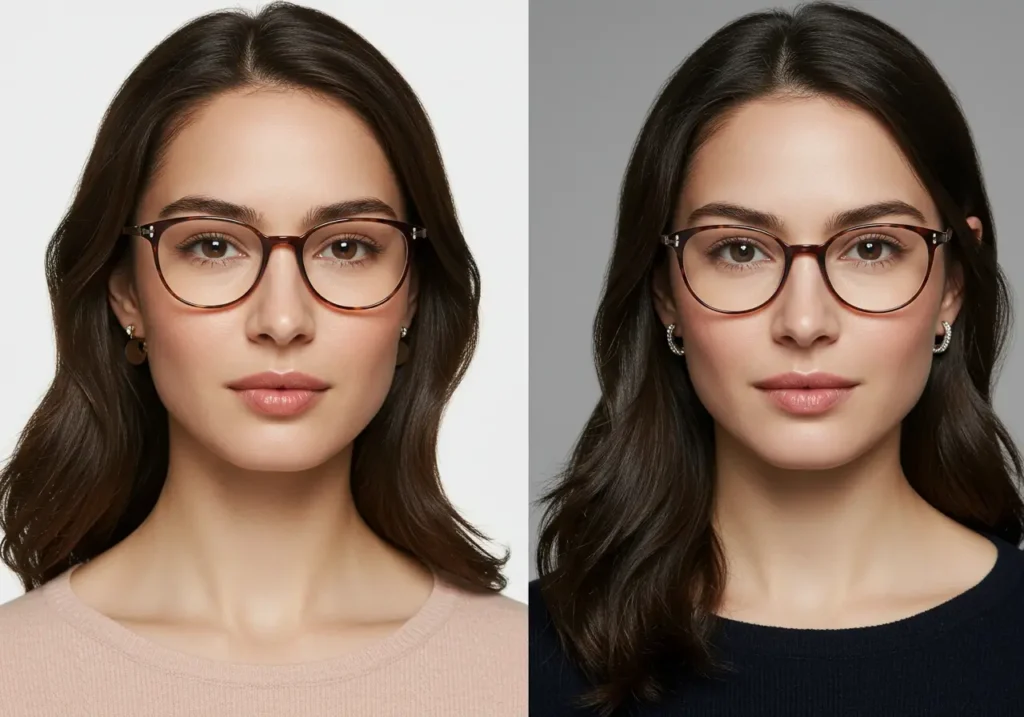
Undertone guides can help you build a shortlist, but wrist-vein tests and rigid warm-versus-cool rules are unreliable for many complexions. The simplest test is visual: compare frames in natural daylight and notice which ones make your eyes and complexion look clear rather than dull or shadowed.
- Warm, earthy options: Honey, caramel, amber, warm tortoiseshell, olive, bronze, and soft gold.
- Cool, crisp options: Navy, plum, burgundy, charcoal, silver, icy translucent colors, and true black.
- Soft neutrals: Champagne, taupe, smoke, clear crystal, blush, and muted tortoiseshell.
- Statement colors: Emerald, cobalt, red, violet, coral, and patterned acetate can energize a simple wardrobe.
Gray, white, or silver hair does not require pale frames. Deep jewel tones and dark tortoiseshell can create beautiful definition, while translucent neutrals offer a quieter effect. If your hair color changes frequently, choose a frame that works with your skin and wardrobe rather than matching one exact shade.
Match the Frame to Your Real Life

A frame that looks beautiful for two minutes may still be wrong for a twelve-hour day. Think about where and how you wear glasses:
- Long workdays: Prioritize low weight, stable temples, comfortable nose support, and an anti-reflective coating if glare bothers you.
- Computer-heavy work: Tell the eye-care professional your screen distance. A dedicated occupational lens may provide a wider intermediate and near area than an all-purpose progressive.
- Active days: Look for secure temples, durable materials, spring hinges where appropriate, and a frame that stays in place when you bend down.
- Frequent driving: Ask about clear distance vision, glare reduction, sunglasses, and whether your chosen photochromic lens will darken adequately inside a vehicle.
- One-pair wardrobe: Choose a comfortable color and silhouette that work with most of your clothing rather than buying only for one outfit.
Understand the Lens Options
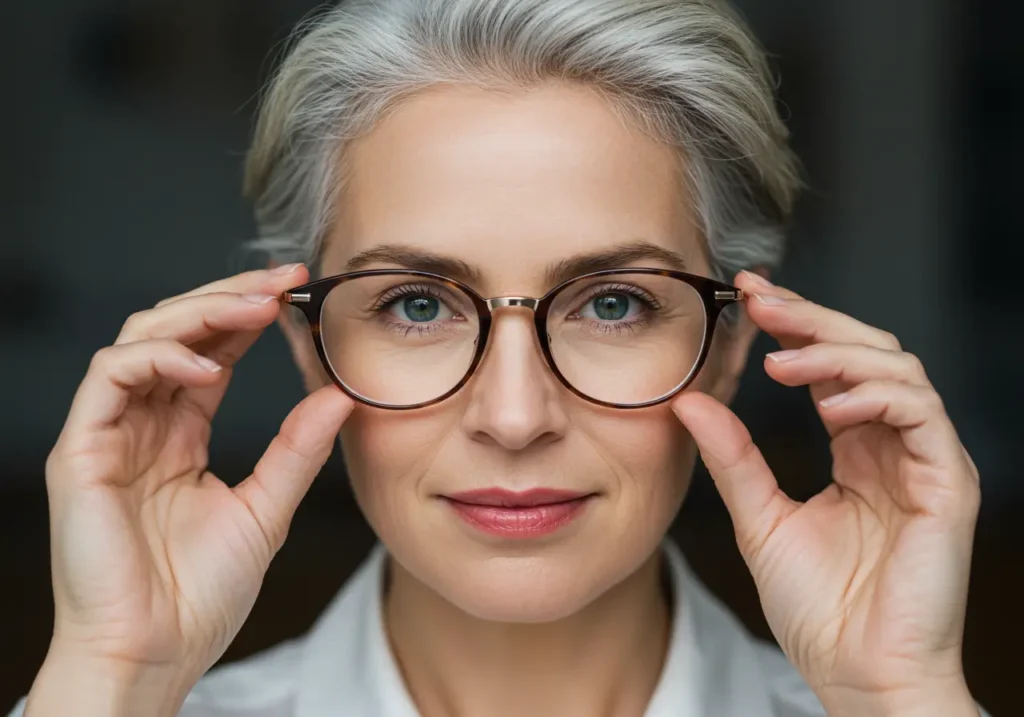
- Reading lenses: Designed for close work. Ready-made readers may help some people, but prescription readers can account for different powers, astigmatism, or alignment needs.
- Progressive lenses: Blend distance, intermediate, and near powers without a visible segment line. Accurate measurements and frame stability are especially important.
- Bifocals: Provide distinct distance and near zones with a visible line. Some wearers prefer their clearly defined reading area.
- Occupational or computer lenses: Optimized for near and intermediate distances. Many are not intended for driving or general distance use.
- Anti-reflective coating: Can reduce distracting reflections and improve lens appearance, especially under artificial light and while driving at night.
- Photochromic lenses: Darken in response to ultraviolet light. Performance varies by product, temperature, and location, and many standard versions darken less inside cars.
- High-index lenses: Can make strong prescriptions thinner, although lens size, shape, centration, and material also affect final thickness.
Blue-light-filtering lenses are often marketed for digital eye strain, but they should not be described as proven protection from screen damage. A Cochrane review of blue-light-filtering spectacle lenses found that they may not reduce short-term computer-related eye strain compared with non-filtering lenses. For screen comfort, an accurate prescription, suitable working distance, larger text, reduced glare, regular breaks, and conscious blinking may matter more.
Ready-Made Reading Glasses to Compare
If an eye-care professional has confirmed that nonprescription readers are appropriate for you, these Amazon options may help you compare frame shapes, lens strengths, and multipurpose features:
- L1.5 Reading Glasses for Women with Blue Light Filter
- Computer Blue Light Blocking Reading Glasses in 2.75 and 3.25 Diopters
Ready-made readers use the same power in both lenses and generally do not correct astigmatism or differences between the eyes. Check the listed strength, dimensions, return policy, and current product details before ordering. A blue-light-filter claim should not be treated as a substitute for an accurate prescription, healthy screen habits, or routine eye care.
15 Stylish Glasses for Women Over 40
These styles are not ranked, and none is limited to a particular age or face shape. Use the “look for” notes to judge proportion and practicality.
1. Classic Cat-Eye Frames
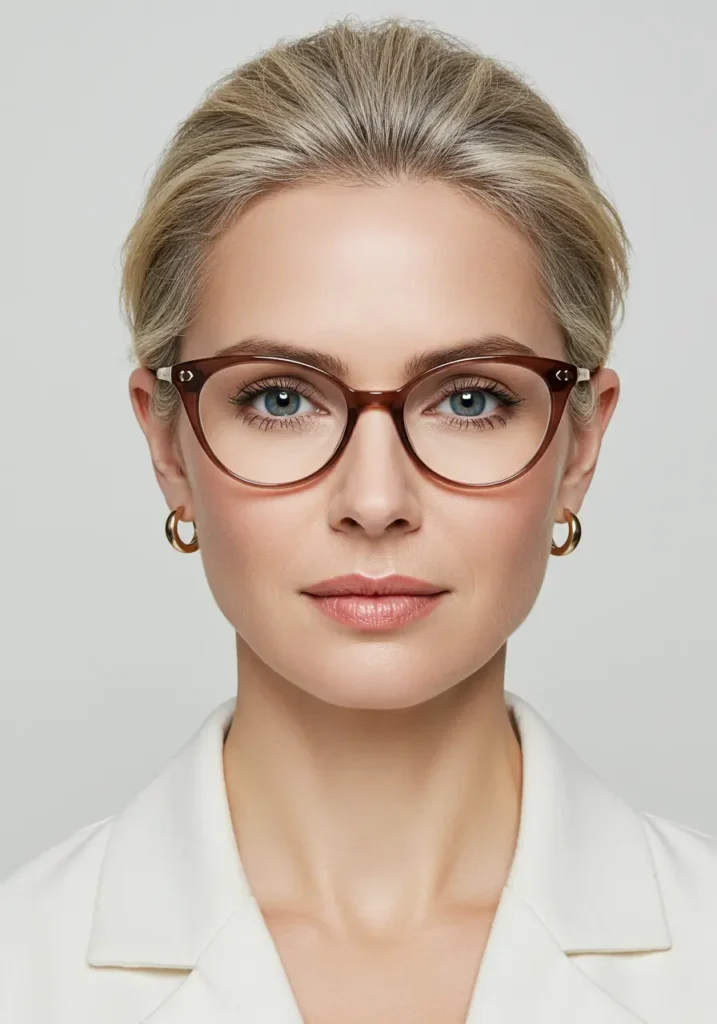
A cat-eye’s raised outer corners create an expressive, polished line. The effect can be subtle in a slim frame or dramatic in thick acetate. Softer cat-eyes are easy to wear at work; bolder versions can function like jewelry.
Look for: An upsweep that sits comfortably below or alongside the brow, with outer corners that do not extend so far that the frame becomes unstable.
2. Soft Round Frames
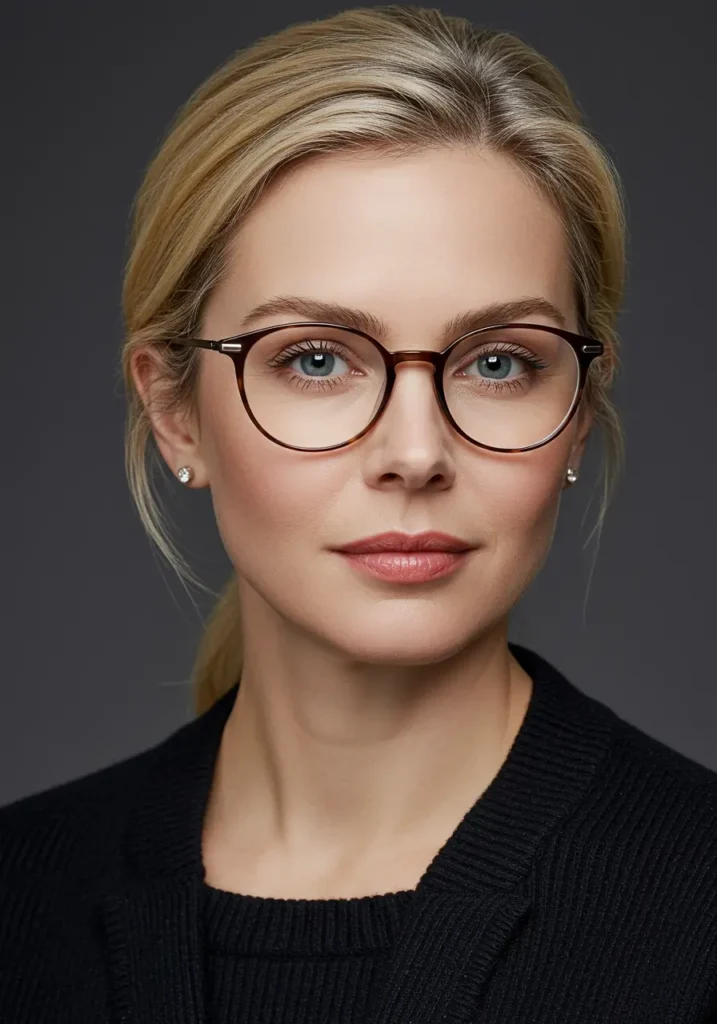
Round frames can feel artistic, intellectual, or quietly retro. Perfect circles make a stronger statement; softened rounds and panto shapes are often easier to balance with everyday clothing.
Look for: A lens width that does not make your eyes appear too close together and enough vertical space for your prescription.
3. Refined Rectangular Frames
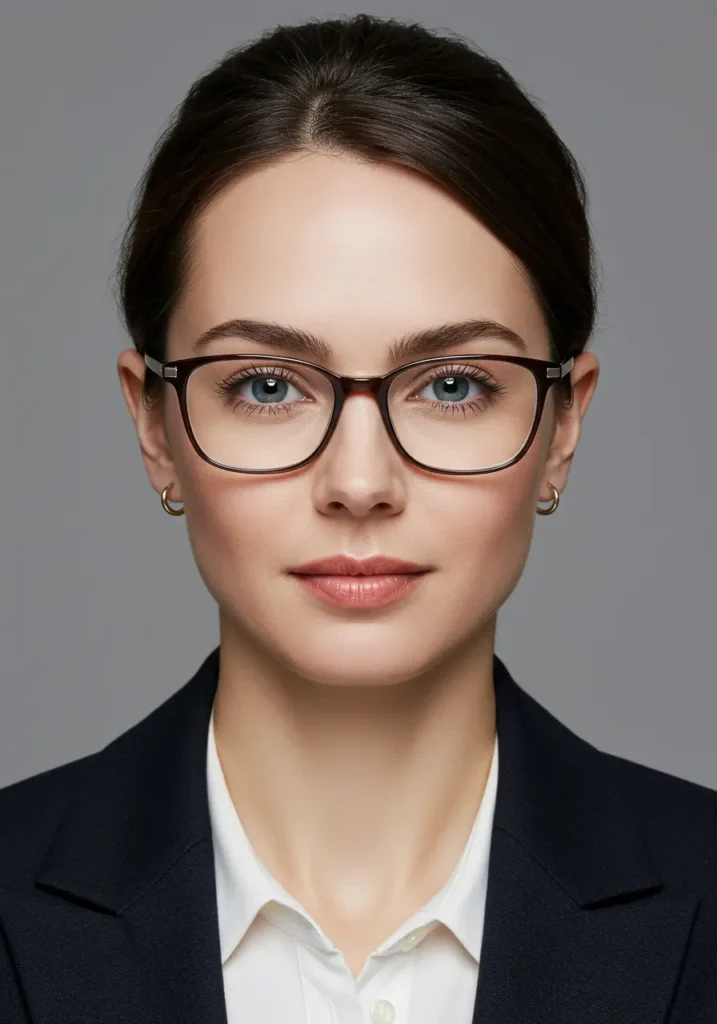
Rectangles add clean structure and transition easily between professional and casual settings. Slightly rounded corners keep the look from feeling severe, while a straighter brow line creates definition.
Look for: Adequate lens height if you wear progressives; extremely shallow rectangles may restrict usable viewing zones.
4. Modern Aviators
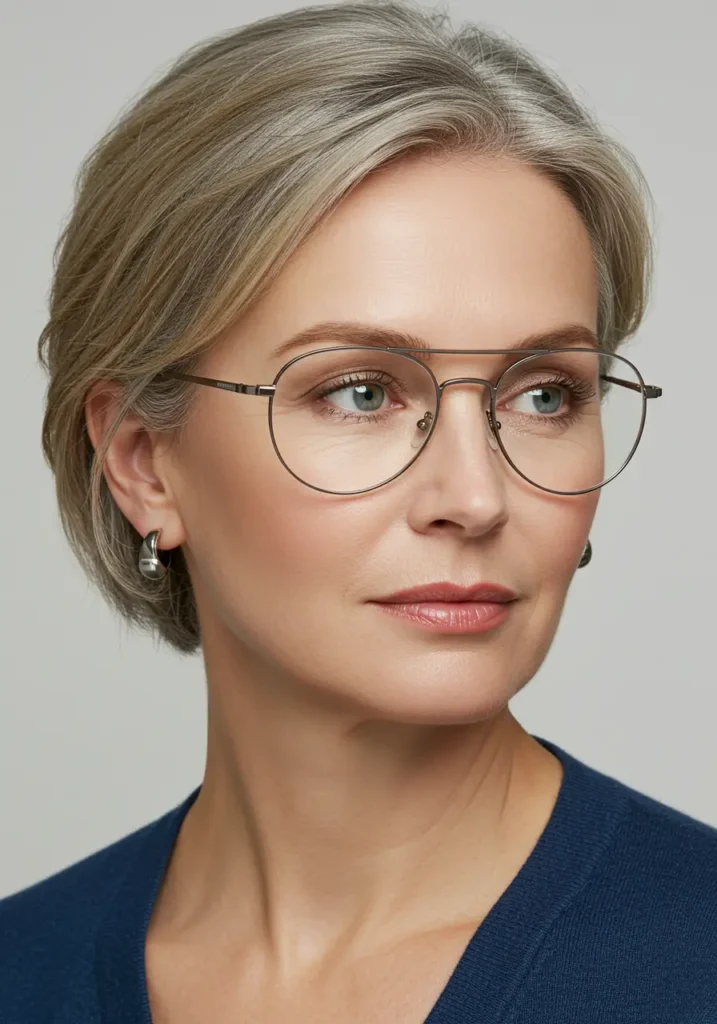
Prescription aviators combine a relaxed shape with a confident presence. Thin metals feel classic, while acetate or mixed-material versions look more fashion-forward.
Look for: A bridge that sits securely and lenses that do not touch your cheeks when you smile. Large aviator lenses can add weight with stronger prescriptions.
5. Well-Proportioned Oversized Frames
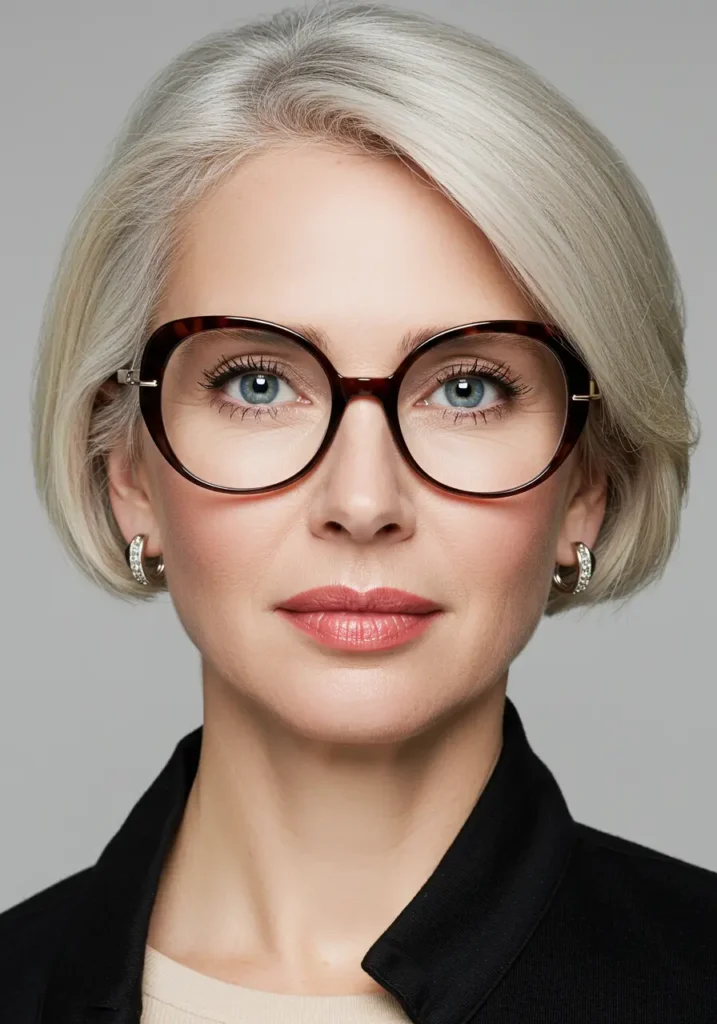
Oversized frames draw attention to the eyes and can give a simple outfit a strong focal point. “Oversized” should still mean wearable: the bridge must remain stable, the temples should not bow outward, and the lower rim should clear the cheeks.
Look for: Lightweight construction and a size that works with lens thickness, weight, and optical measurements.
6. Rimless or Semi-Rimless Frames

Rimless and semi-rimless designs keep attention on your face and often feel visually light. They suit minimal wardrobes but are not automatically weightless or maintenance-free.
Look for: A lens material recommended for the mounting system and careful handling guidance, since drilled or exposed lenses can require extra care.
7. Vibrant Colored Frames
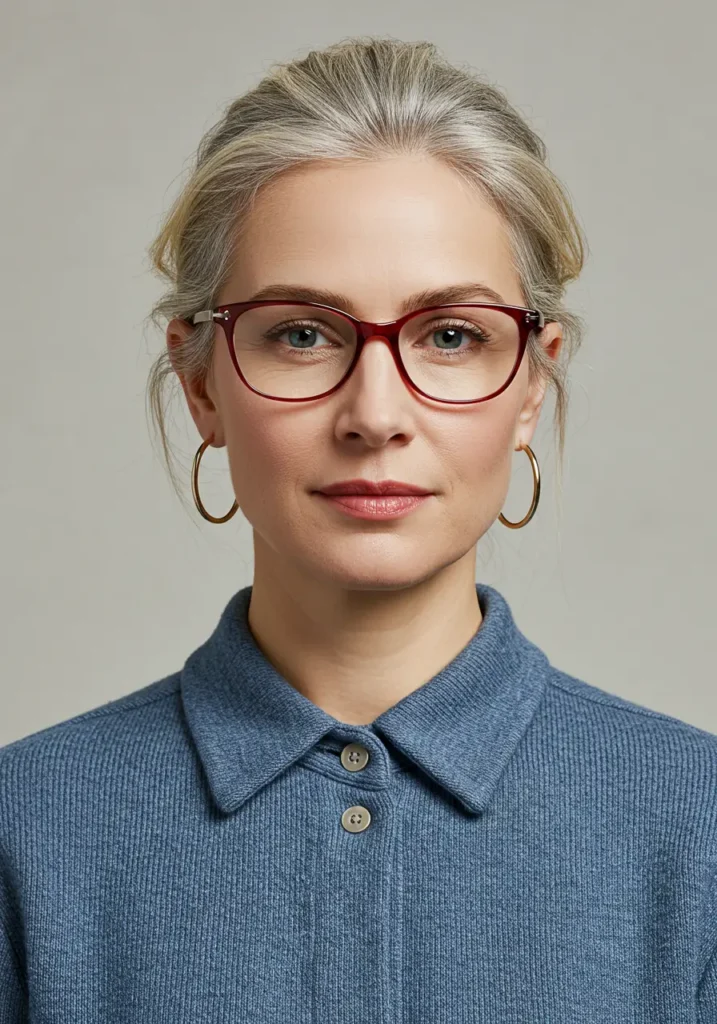
Color can brighten the face and make everyday clothing feel intentional. Cobalt, emerald, berry, coral, and red are expressive without being childish; the exact shade and transparency determine how bold the result feels.
Look for: A color that works with several outfits and remains flattering in daylight, office lighting, and photographs.
8. Tortoiseshell Frames
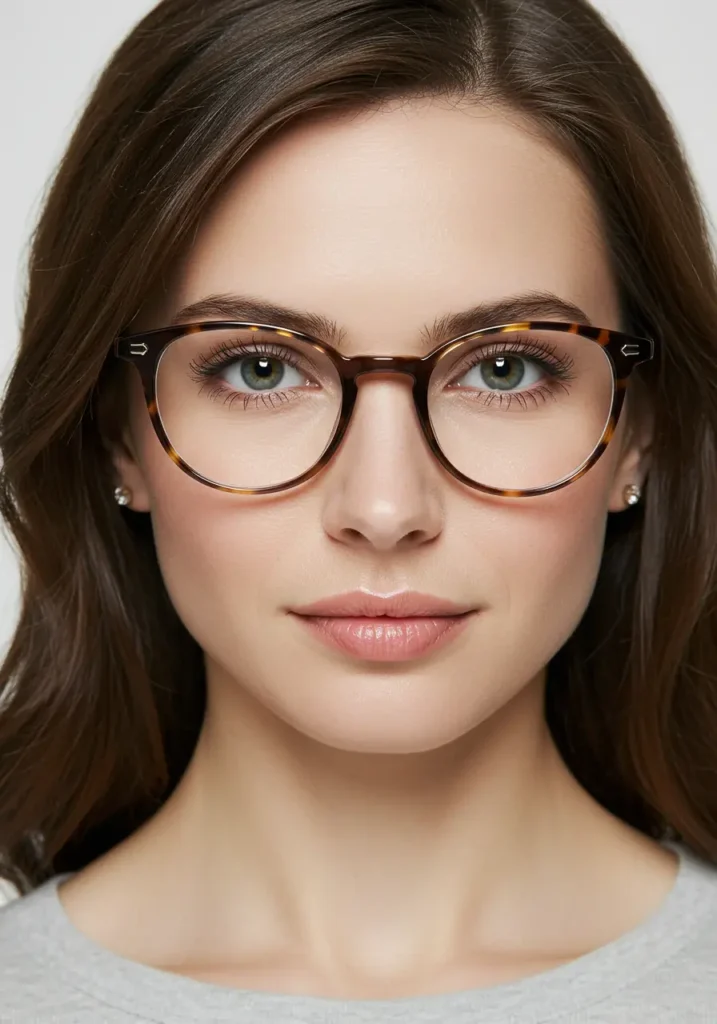
Tortoiseshell offers more depth than a flat neutral and comes in far more than traditional brown. Blonde, gray, amber, blue, blush, and high-contrast patterns create different effects while remaining versatile.
Look for: Pattern placement that complements your eyes and brows; every acetate front can look slightly different.
[hostinger-affiliate-table id=”188262″]
9. Browline Glasses
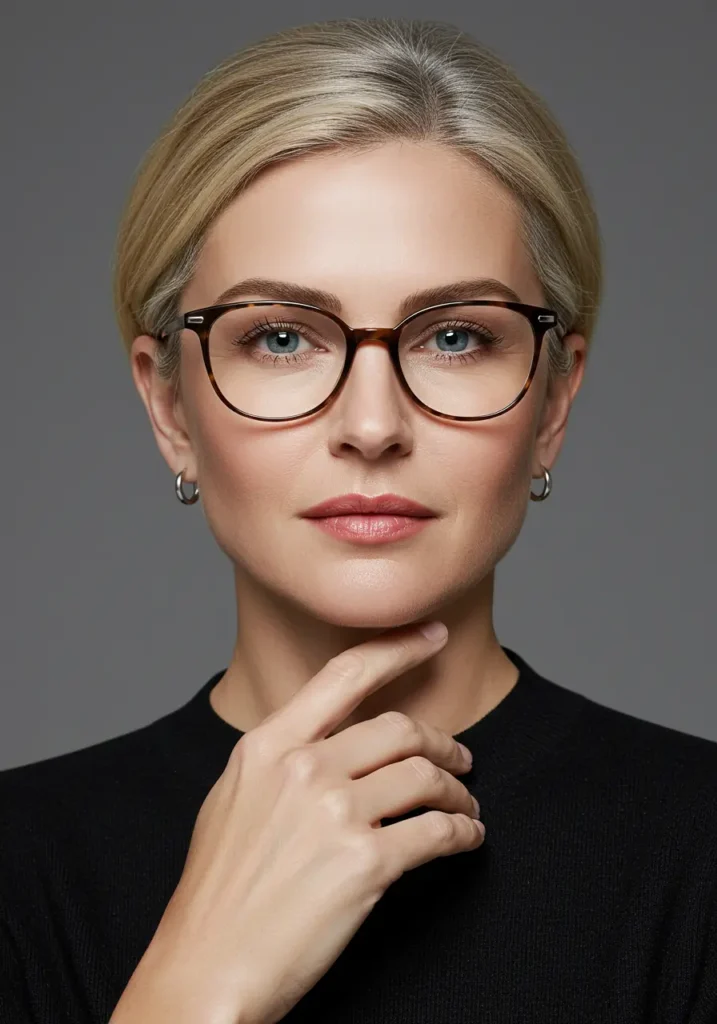
Browline frames place visual weight across the top and keep the lower lens area lighter. The style can look retro, academic, or sharply modern depending on color and materials.
Look for: A top line that works with your natural brows instead of covering them awkwardly or sitting too high.
10. Lightweight Titanium Frames
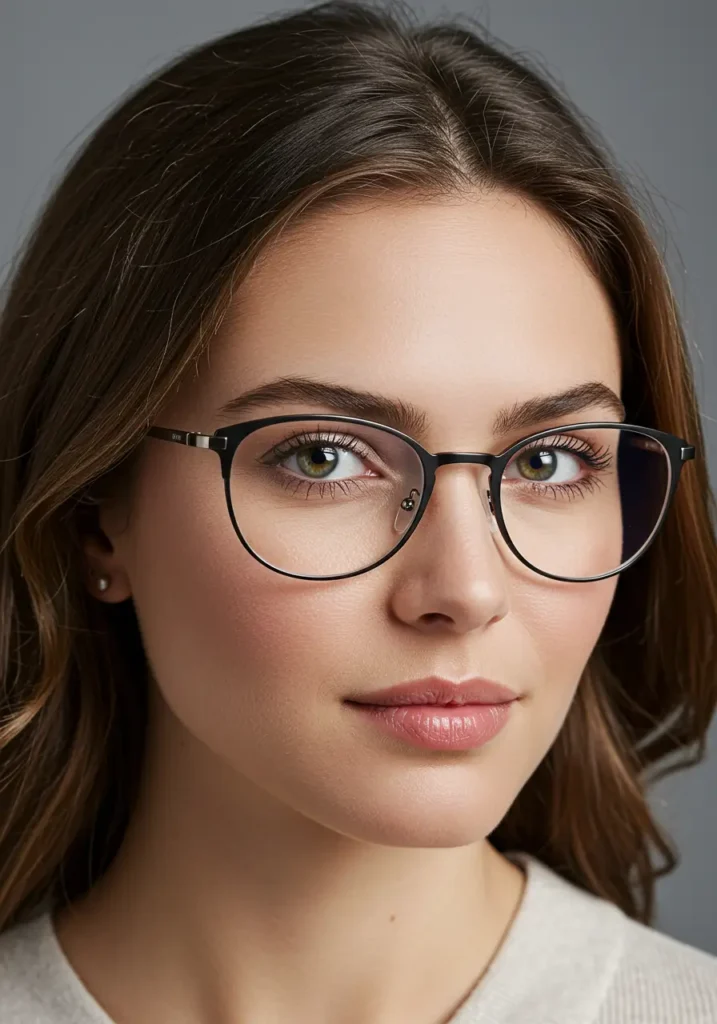
Titanium frames are popular for their strength-to-weight ratio and clean appearance. They can be a practical option for long wear, although comfort still depends on bridge fit, temple adjustment, lens weight, and overall balance.
Look for: Secure hinges, suitable nose pads, and a finish you enjoy. If metal sensitivity is a concern, ask exactly which alloys and components contact the skin.
11. Two-Tone Designs
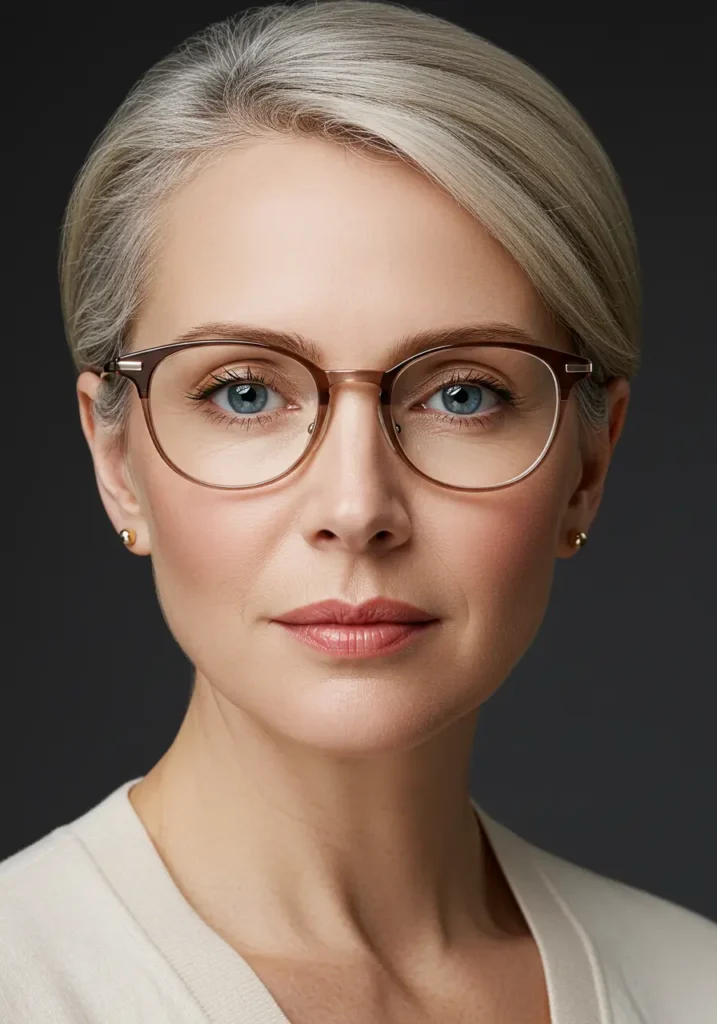
Two-tone frames introduce color without committing to one bold block. A darker upper rim can add definition, a clear lower rim can keep the frame light, and contrasting temples provide personality visible from the side.
Look for: Colors that relate to both your complexion and your most-worn accessories.
[hostinger-affiliate-table id=”188262″]
12. Geometric Frames
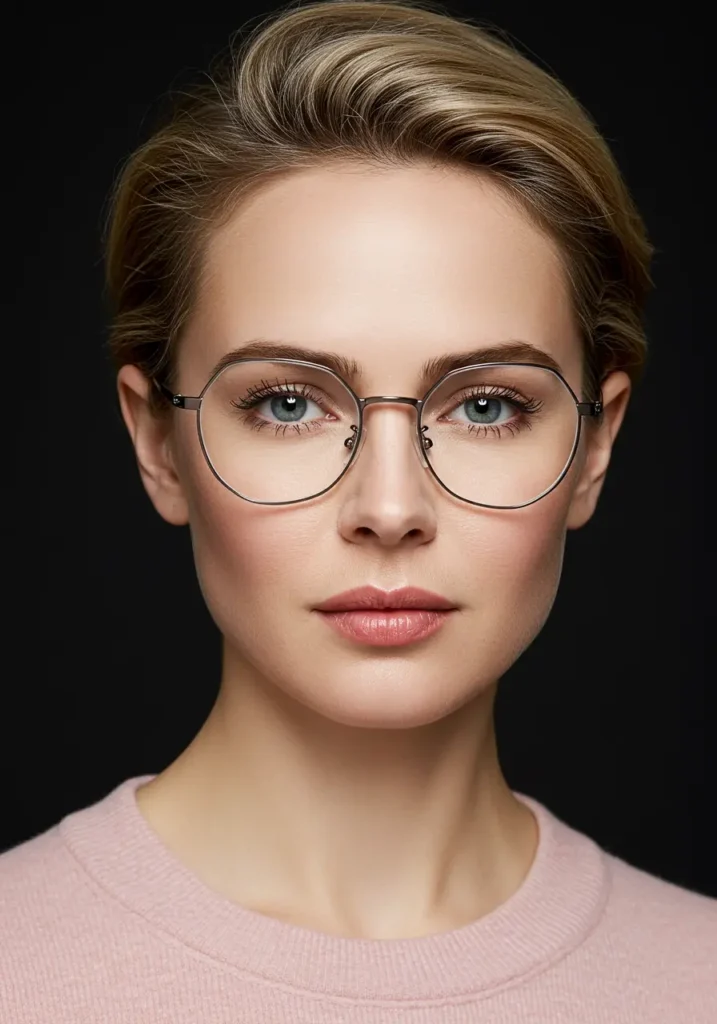
Hexagonal, octagonal, and softly angular frames create interest without requiring bright color. Thin metal geometry feels delicate; thick acetate produces a bolder architectural look.
Look for: A shape whose widest points sit comfortably on your face and do not interfere with your brows or cheeks.
13. Crystal-Clear Frames
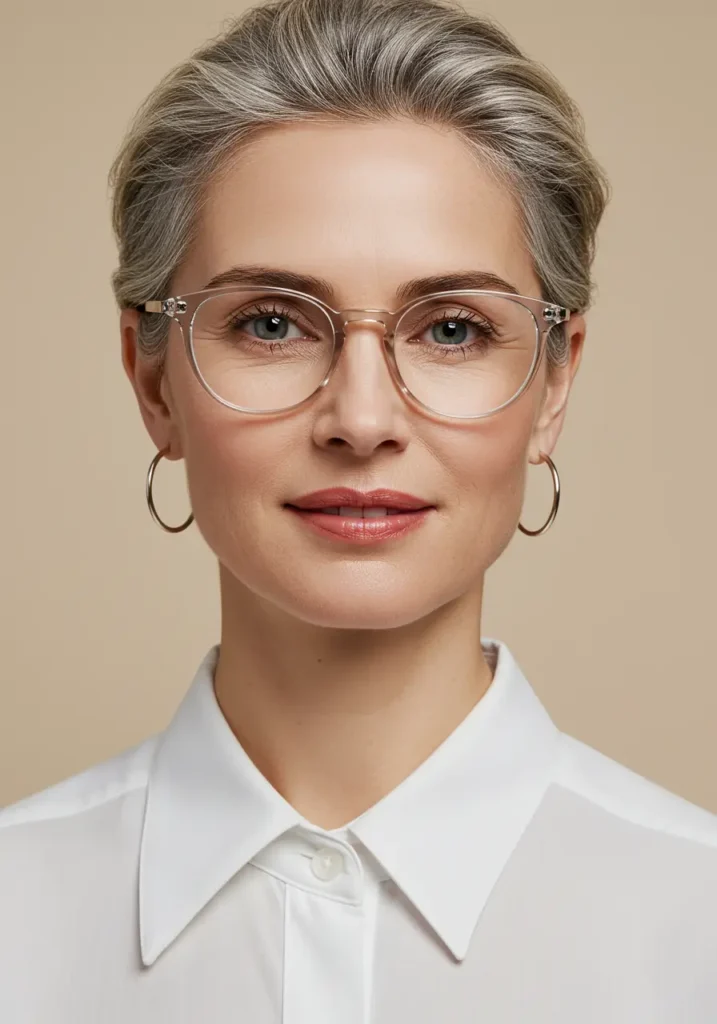
Transparent frames feel modern and adaptable, but clear is not invisible. Crystal acetate catches light, while smoke, champagne, blush, or pale gray versions offer softer definition and may show everyday discoloration less readily.
Look for: A transparent tint that remains flattering under different lighting and a material-care routine recommended by the retailer.
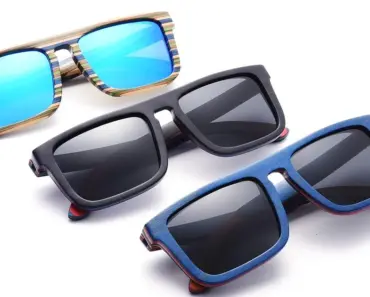
14. Wood-Look or Matte Finishes
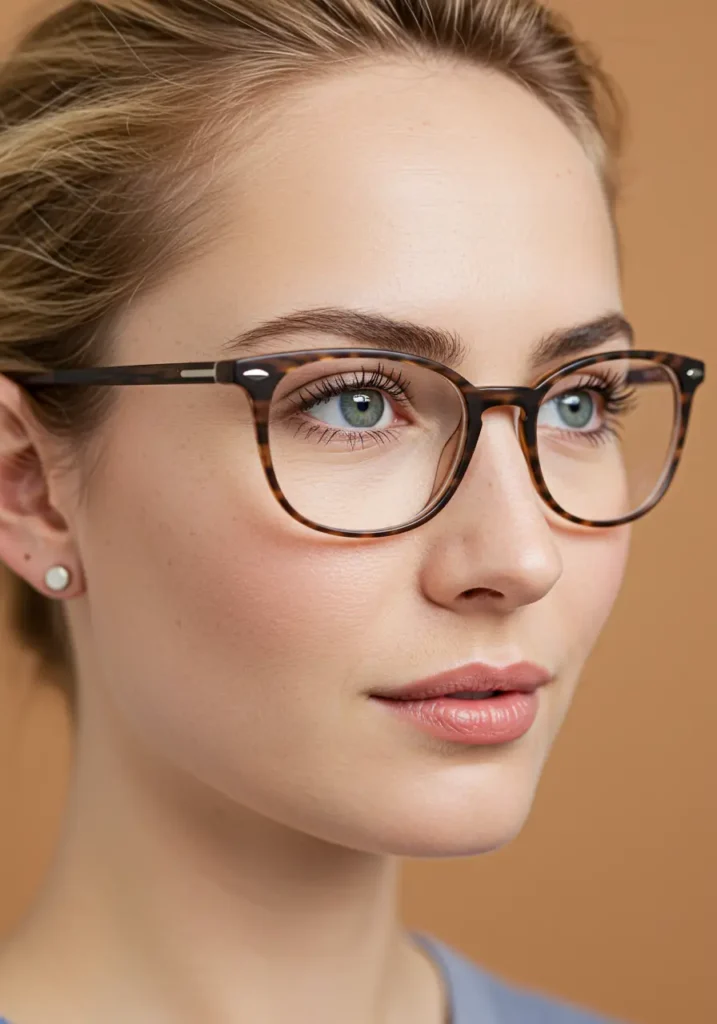
Matte textures reduce shine and give neutral colors extra depth. Wood-look finishes offer warmth, while genuine wood frames vary widely in adjustability, durability, and water resistance.
Look for: Clear information about the material. If the frame is real wood rather than patterned acetate, ask how it can be adjusted and repaired.
15. Vintage-Inspired Silhouettes
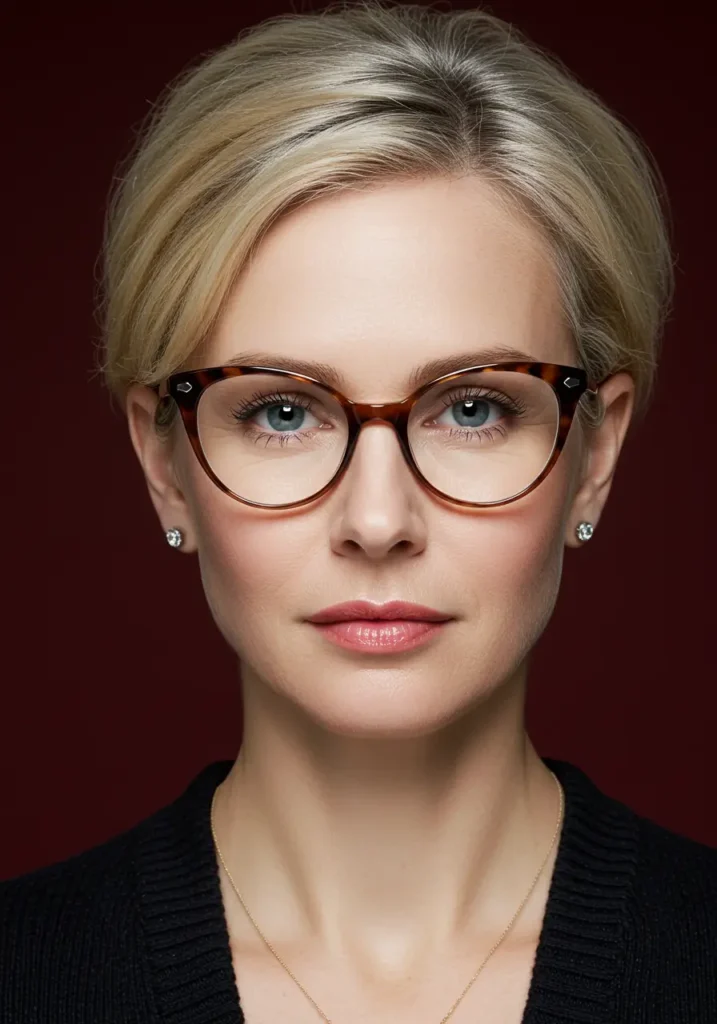
Vintage-inspired eyewear ranges from delicate round metals to 1950s cat-eyes and large 1970s shapes. The easiest way to keep the look intentional is to combine one retro feature with modern proportions or a restrained color.
Look for: A design that complements your current wardrobe rather than feeling like a costume.
Eyeglasses and Sunglasses to Compare
If you want concrete examples of the silhouettes discussed above, these options cover square, oval, rectangular, and cat-eye shapes. Product availability, colors, dimensions, prices, lens features, and included accessories can change, so verify the current listing before purchasing.
- Michael Kors Women’s MK2024 Adrianna I Square Sunglasses — an oversized square style with a strong, polished outline.
- Swarovski Women’s SK6002 Oval Sunglasses — an oval option for comparing softer curves and decorative styling.
- Tory Burch Women’s Miller Rectangle Sunglasses — a rectangular silhouette that can add clean definition.
- QUAY Call The Shots Remixed Non-Polarized Cat-Eye Sunglasses — a bold cat-eye example with an upswept outer edge.
- Carolina Herrera CH 0005 807 55 Women’s Eyeglasses — a full-rim optical frame to compare with your prescription and fitting needs.
For sunglasses, confirm the manufacturer’s ultraviolet-protection information rather than judging protection by lens darkness alone. For optical frames, check the bridge width, lens width, temple length, and compatibility with your prescription before having lenses made.
A Practical Fitting Checklist Before You Buy
Try frames for more than a few seconds. Look straight ahead, smile, bend down, turn your head, and check the view from the front and side. Then ask an optician to assess the fit and lens compatibility.
| Check | What Good Fit Feels Like | Warning Sign |
|---|---|---|
| Bridge | Stable contact without pinching | Sliding, deep marks, or a visible gap that makes the frame unstable |
| Frame width | Comfortable at the temples | Temple arms bow outward or press into the head |
| Cheek clearance | Lower rims stay clear when you smile | Frames lift, rub, or collect makeup on the cheeks |
| Temples | Secure behind the ears without pressure | Soreness, slipping, or arms that are too short |
| Eyes and lenses | Natural-looking placement with professional measurements | A frame that cannot accommodate the required optical centers or fitting height |
| Movement | Stays in place during ordinary motion | Needs constant pushing up or feels unstable |
Questions Worth Asking the Optician
- Is this frame suitable for my prescription and preferred lens type?
- How thick and heavy are the finished lenses likely to be?
- Where will the near and intermediate zones sit in this frame?
- Which coatings solve a real need for me, and what are their limitations?
- What is covered if I struggle to adapt to progressive lenses?
- Are adjustments, nose-pad replacement, and minor repairs included?
- What is the return or remake policy?
[hostinger-affiliate-table id=”188262″]
How to Care for Your Glasses
Good care protects both the lenses and the frame. Follow the instructions supplied with your specific coatings and materials, especially for specialty or wood frames.
- Wash and dry your hands before cleaning the lenses.
- Rinse the glasses with lukewarm water to remove particles that could scratch the surface.
- Use a small amount of lotion-free dishwashing liquid if the lens maker permits it, or use a cleaner specifically approved for coated eyeglass lenses.
- Rinse thoroughly and dry with a clean microfiber lens cloth.
- Wash the cloth regularly without fabric softener and keep it away from grit.
Avoid wiping dry, dusty lenses with clothing, tissues, or paper towels. Do not use household glass cleaner, bleach, ammonia, acetone, or very hot water unless the manufacturer explicitly says the product is safe. Store glasses in a hard case and place them lenses-up when a case is not available. Remove them with both hands to reduce twisting, and ask an optician to correct looseness or misalignment rather than repeatedly bending the frame yourself.
Eye Exams and Prescription Updates After 40
Do not wait for broken glasses to review your vision. A comprehensive examination can update the prescription and check eye health; a quick vision screening is not equivalent. The American Optometric Association’s examination guidance lists at least every two years for asymptomatic, low-risk adults ages 40 to 64 and at least annually for people at risk, while individual clinicians may recommend a different schedule based on symptoms, medical history, contact-lens use, family history, medications, or previous eye problems.
Replace lenses when the prescription changes enough to affect useful vision, when scratches or damaged coatings interfere with clarity, or when the lens design no longer serves your routine. Frames should be repaired or replaced if they remain warped, cracked, unstable, or uncomfortable after professional adjustment. There is no universal rule that every pair must be replaced after a fixed number of years.
Frequently Asked Questions
What Glasses Make a Woman Over 40 Look Younger?
No single frame reliably makes everyone look younger. Frames tend to look fresher when they fit well, keep the eyes visible, complement the wearer’s coloring, and feel current to her personal style. An upswept cat-eye, translucent acetate, a lively color, or a refined browline can all brighten the face, but comfort and confidence matter more than chasing a “younger” look.
Should Eyebrows Show Above Glasses?
They often do, but there is no strict rule. Many frames look balanced when the upper rim follows the brow without fully hiding it. Oversized, browline, and geometric designs may overlap the brows intentionally. Check the result while your face is relaxed and while you smile.
Are Large Glasses Suitable for Progressive Lenses?
They can be. Adequate lens height may provide room for distance, intermediate, and near zones, but larger lenses can also add weight and thickness. The frame must stay stable so the measured fitting position does not shift. Ask the dispenser to assess the exact combination of frame, prescription, and progressive design.
Are Lightweight Frames Always More Comfortable?
No. Low weight helps, but balance and fit matter just as much. A very light frame can still pinch the bridge or ears, while a slightly heavier frame may feel comfortable if its weight is distributed well. Finished lens weight should be considered along with the empty frame.
How Many Pairs of Glasses Do You Need?
One well-made pair can be enough, but a backup is useful if you depend on glasses throughout the day. Some people also benefit from task-specific pairs, such as computer glasses, prescription sunglasses, protective eyewear, or a lighter pair for long workdays. Buy additional pairs to solve genuine needs rather than to follow a rule.
Choose the Pair You Will Actually Enjoy Wearing
Begin with your prescription and daily visual tasks, then shortlist frames that fit your bridge, face width, cheeks, and temples. Compare colors in natural light, confirm that the frame works with the intended lenses, and give yourself permission to choose the style that feels authentic.
Glasses for women over 40 can be understated, bold, classic, playful, or all of those across different pairs. The winning choice is comfortable, optically appropriate, and unmistakably yours.
This Post Contains Affiliate Links


What brands are the frames? And where can you purchase them from?