17 Crochet Handbag Ideas for Stylish, Practical Handmade Bags
A well-designed crochet handbag can be practical, expressive, and surprisingly polished. The key is to match the yarn, stitch density, construction, lining, and hardware to the way you plan to use the bag.
This guide explores 17 crochet handbag ideas, from compact crossbody bags and structured purses to roomy market totes. You will also learn how to choose materials, prevent stretching, reinforce handles, add a lining, and select a project that fits your experience level.
What Makes a Crochet Handbag Functional?
A beautiful stitch pattern is only the beginning. A handbag also needs to hold its shape, protect its contents, and withstand repeated use. Before choosing a design, think about what the bag will carry and where you will use it.
- For everyday handbags: Choose dense stitches, reinforced straps, a secure closure, and a fabric lining.
- For market bags: Prioritize strong handles and washable yarn. Some stretch is useful, but the base should remain stable.
- For evening bags: Focus on compact proportions, decorative stitches, elegant hardware, and a neat lining.
- For beach bags: Look for breathable construction, comfortable handles, and materials that tolerate occasional moisture.
- For small pouches: Drawstrings, zippers, and snap frames help prevent belongings from escaping through the stitches.
How to Choose Yarn for a Crochet Handbag
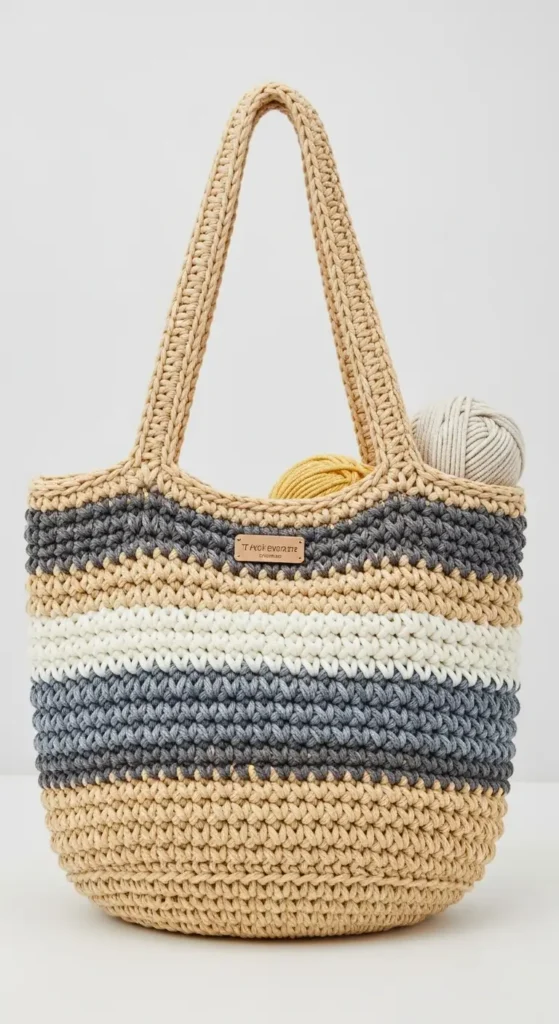
The best yarn depends on the bag’s purpose. Fiber content affects weight, stretch, stitch definition, cleaning, and how well the finished bag maintains its shape.
Cotton
Cotton produces clear stitches and substantial fabric, making it a dependable choice for totes, crossbody bags, and structured purses. It can become heavy in a large bag, however, especially when combined with dense stitches and a lining.
Mercerized cotton has a smooth surface and defined appearance that works particularly well for detailed stitches and colorwork. The Lion Brand 24/7 Cotton Wildflower five-pack provides a coordinated multicolor option for granny squares, striped bags, and decorative panels. For a solid botanical shade, the Lion Brand 24/7 Cotton Yarn Spruce three-pack suits totes, satchels, and structured everyday handbags. Always compare the available yardage with your pattern before ordering.
Cotton Cord or Braided Bag Yarn
Cord-style yarn creates defined shapes and firm edges. It works particularly well for basket-shaped bags, box bags, and designs with wooden handles. Check the pattern carefully because thick cord can be tiring to crochet with for long periods.
T-Shirt Yarn
T-shirt yarn creates thick, modern-looking fabric and allows a project to grow quickly. Some products are made from reclaimed textile material, while others are newly manufactured, so check the label if recycled content matters to you. Because the yarn is heavy, it is usually better for medium-sized bags than oversized totes.
Acrylic and Blended Yarns
Acrylic is affordable, widely available, and useful for experimenting with color. Some acrylic yarns stretch noticeably under weight, so they are often better for small purses, decorative bags, or projects supported by a firm lining. Cotton-acrylic blends can offer a useful balance between structure, softness, and easy care.
Raffia and Paper Yarn
Raffia-style yarn gives summer bags a crisp, woven appearance. It is suitable for clutches and structured handbags, but care instructions vary considerably. Some paper-based fibers should not be soaked, so retain the yarn label for future cleaning guidance.
Wool and Luxury Blends
Wool can create rich texture for autumn and winter handbags, particularly when used for cables or felted designs. Silk and other delicate blends suit small occasion bags but may need gentle handling and careful storage.
Yarn weights are standardized by category, but the suggested hook sizes remain guidelines rather than fixed rules. The Craft Yarn Council yarn-weight system is a useful reference when comparing labels and substituting yarn.
Hook Size, Gauge, and Stitch Density
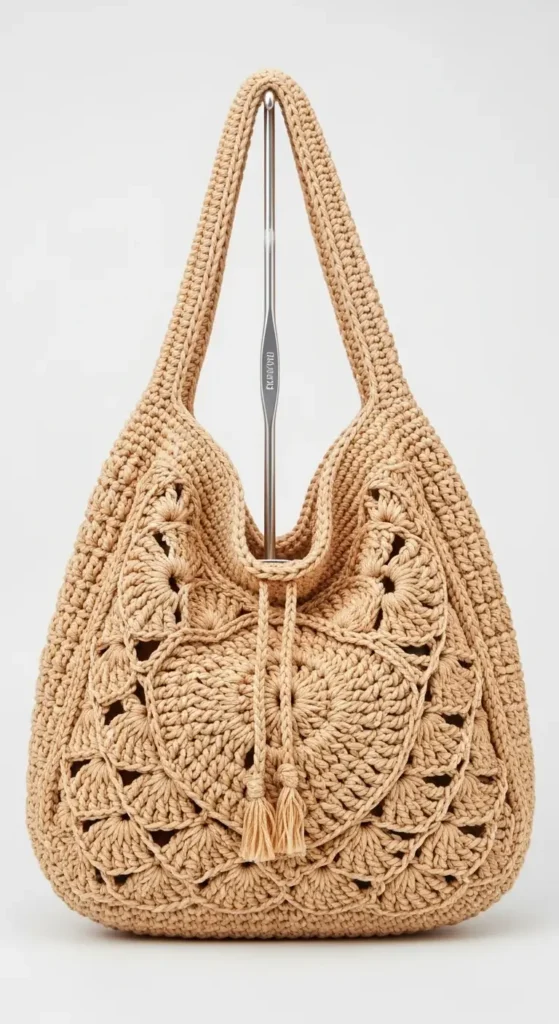
A bag usually benefits from denser fabric than a garment. Loose stitches can look attractive, but they may stretch or allow small belongings to slip through.
Start with the hook size specified in your pattern. If you are designing the bag yourself, make a swatch using the exact yarn and stitch you intend to use. Fill or hang the swatch with a little weight to see how it behaves. If the fabric stretches excessively, try a smaller hook, a firmer stitch, or a stabilizing lining.
The Clover 3674 Amour Crochet Hook Set includes multiple hook sizes for testing different yarn-and-gauge combinations. Its color-coded, nonslip handles may also be useful when working the repeated dense stitches commonly used in handbag bases.
Do not automatically move several hook sizes below the yarn recommendation. An extremely tight gauge can make the fabric stiff, strain your hands, and make the hook difficult to insert. The right gauge is firm enough for the intended bag while remaining comfortable to work.
Linings, Closures, and Hardware
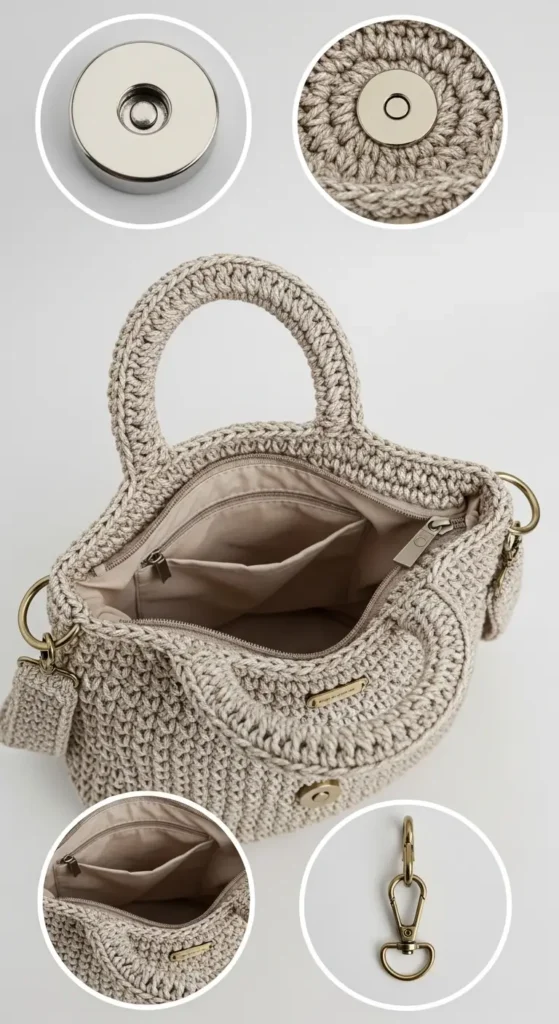
A lining is optional for some simple market bags, but it is one of the most useful additions to an everyday crochet handbag. It prevents small objects from poking through the stitches, reduces distortion, and gives you a place to add interior pockets.
- Quilting cotton: Easy to sew and suitable for small or medium bags.
- Canvas: Adds more support to totes and structured handbags.
- Lightweight satin or similar fabric: Creates a smooth interior for occasion bags, although slippery fabric can be harder to sew.
- Stabilizer or interfacing: Helps box bags and firm purses retain their silhouette.
Choose closures according to the bag’s use. Magnetic snaps are convenient for handbags, zippers provide better security, drawstrings suit casual pouches, and metal frames create a vintage purse shape.
Strap attachments deserve special attention because they carry most of the load. Sew D-rings, handles, and tabs through reinforced areas rather than attaching them to a single row of crochet. If the bag will carry heavier belongings, run the lining or a strong fabric support into the strap attachment area.
Useful Amazon Supplies for Crochet Handbag Projects
You do not need every accessory below for one bag. Select products according to your pattern, preferred construction method, and the size of the finished project. Check dimensions, quantities, colors, materials, and current availability before ordering because listings may change.
Pllieay Mesh Plastic Canvas Kit
Plastic canvas can support a bag’s base or sides when a soft crocheted shell needs more definition. The Pllieay 60-Piece Mesh Plastic Canvas Kit contains small precut shapes, yarn, and basic tools. Because the pieces are approximately three inches across and come in several shapes, this kit is better suited to small purses, decorative panels, reinforcement tests, and craft projects than to stabilizing a large tote.
PH PandaHall Wooden Purse Handles
Rigid handles prevent the progressive lengthening that can occur with crocheted straps. The PH PandaHall six-piece wooden round purse-handle set includes three decorative styles for handmade handbags, macramé bags, and market bags. Confirm that the 5.3-inch size is comfortable for the intended bag before attaching the handles.
PAXCOO Strap Hardware
Removable and adjustable straps require hardware matched to the width of the webbing or fabric strap. The PAXCOO one-inch swivel-hook, D-ring, and slide-buckle set can be used for crossbody straps, shoulder straps, keychains, and other bag-making projects. Reinforce the crochet fabric behind every attachment point.
Coats & Clark All-Purpose Sewing Thread
A strong sewing thread is useful for assembling fabric linings, adding pockets, inserting zipper tabs, and attaching certain types of hardware. The Coats & Clark Dual Duty All Purpose Sewing Thread can be used for hand or machine sewing. Match the thread color to the lining or choose a contrasting color only when you want the stitching to remain visible.
Boye Aluminum Knitting Needles
The Boye 14-inch aluminum single-point knitting needles in size 2 are knitting needles, not crochet hooks. They are not required for the crochet handbag designs in this guide. Consider them only if you plan to combine knitted panels, straps, or decorative details with crochet.
Crochet Handcrafted Handbags Pattern Book
Readers who want complete patterns rather than idea-based inspiration can consider Crochet Handcrafted Handbags: Easy to Complex; 19 Handbag Designs to Compliment Any Look by Amanda Saladin. Its projects progress from easier designs toward more involved bags, including clutches, purses, travel bags, and other handbag styles. Review the required materials and skill level for an individual pattern before buying yarn or hardware.
17 Crochet Handbag Ideas to Inspire Your Next Project
1. Textured Boho Crossbody Bag
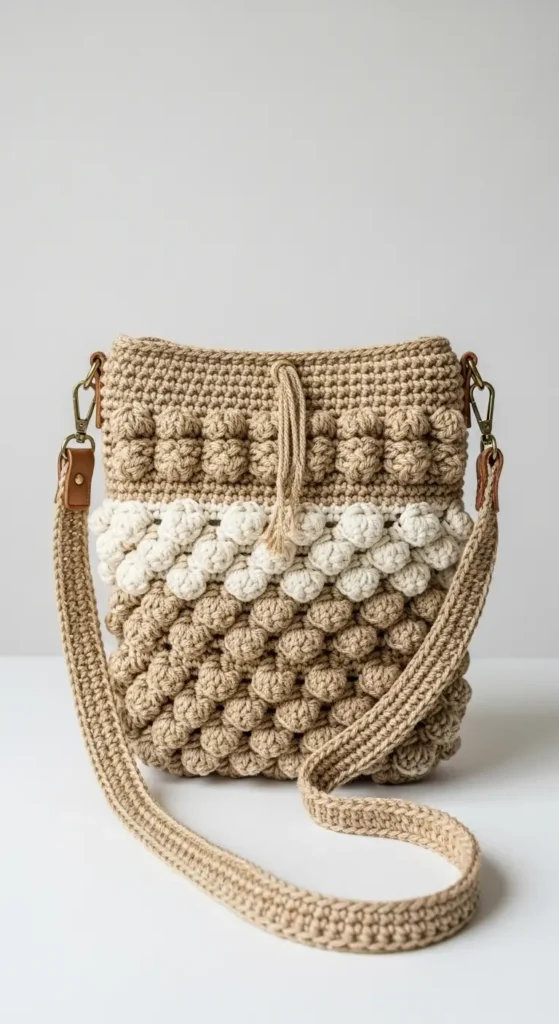
Combine a compact body with bobble, puff, or raised post stitches to create a tactile crossbody bag. Natural shades produce a relaxed look, while jewel tones make the texture more dramatic.
Add a zipper or magnetic snap, a fabric lining, and an adjustable strap. If you crochet the strap, use a dense stitch and reinforce it with cotton webbing or fabric to reduce stretching.
Best for: Casual outings, festivals, sightseeing, and hands-free everyday use.
2. Minimalist Macramé-Style Tote
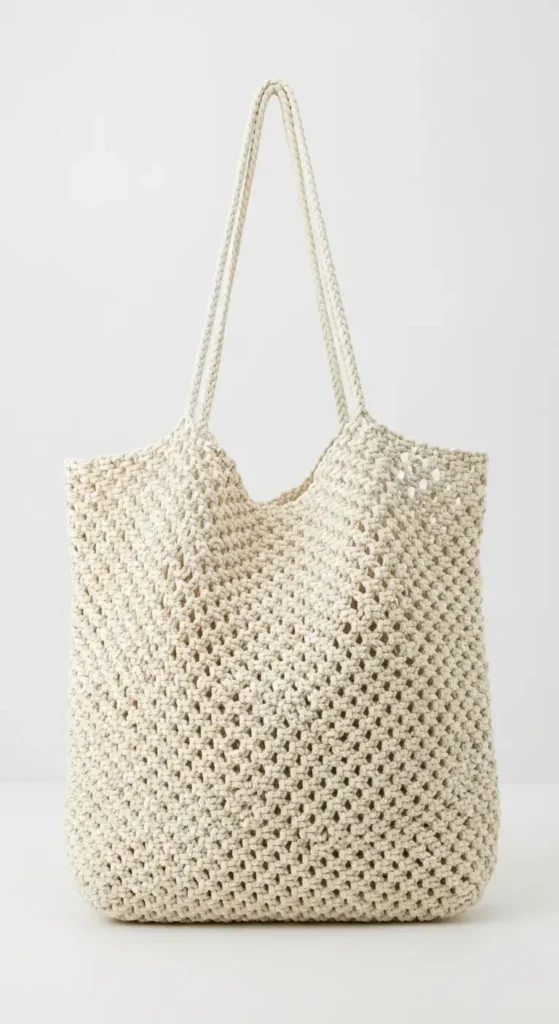
Create the visual rhythm of macramé with simple mesh, crossed stitches, or evenly spaced openwork. A restrained palette such as cream, black, sand, or terracotta keeps the result modern.
Openwork totes expand significantly when filled. Use a solid crocheted base and reinforce the handle joins if you want the bag to carry groceries, books, or beach essentials.
Best for: Markets, beach trips, light errands, and relaxed summer outfits.
3. Granny Square Revival Satchel
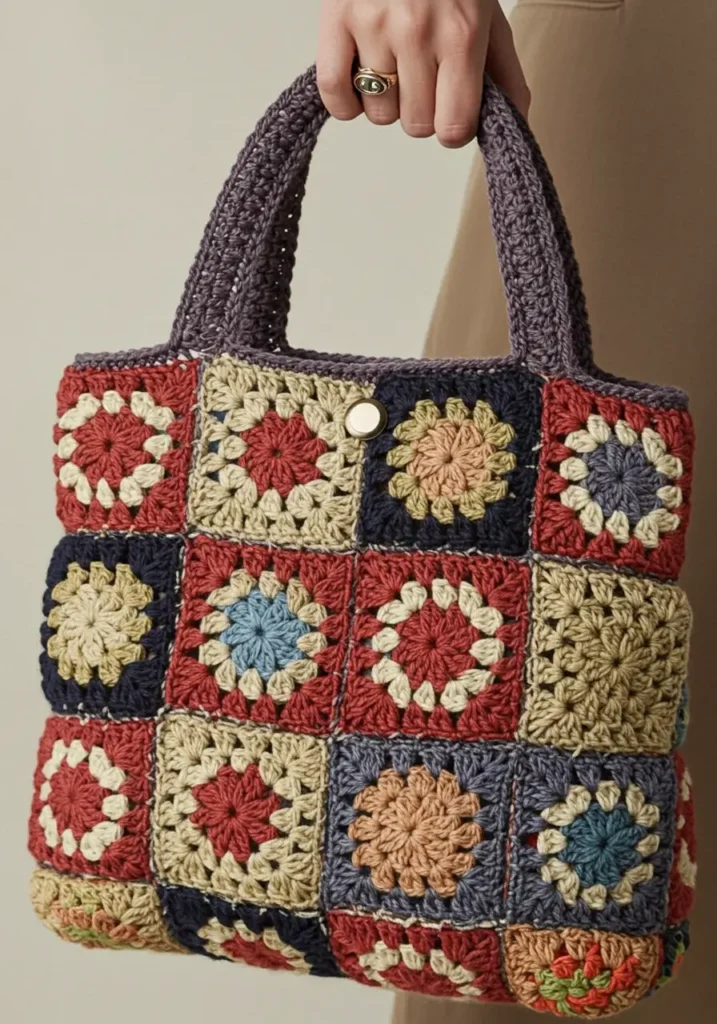
Turn individual granny squares into a practical satchel by arranging them in a controlled color palette. Repeating one background color helps varied motifs look intentional rather than visually crowded.
Block every square to the same measurement before assembly. A lining hides the joined seams, supports the patchwork fabric, and keeps pens or keys from slipping through the openings.
Best for: Using yarn remnants, exploring color combinations, and creating a distinctive everyday accessory.
4. Chunky Chain-Strap Shoulder Bag
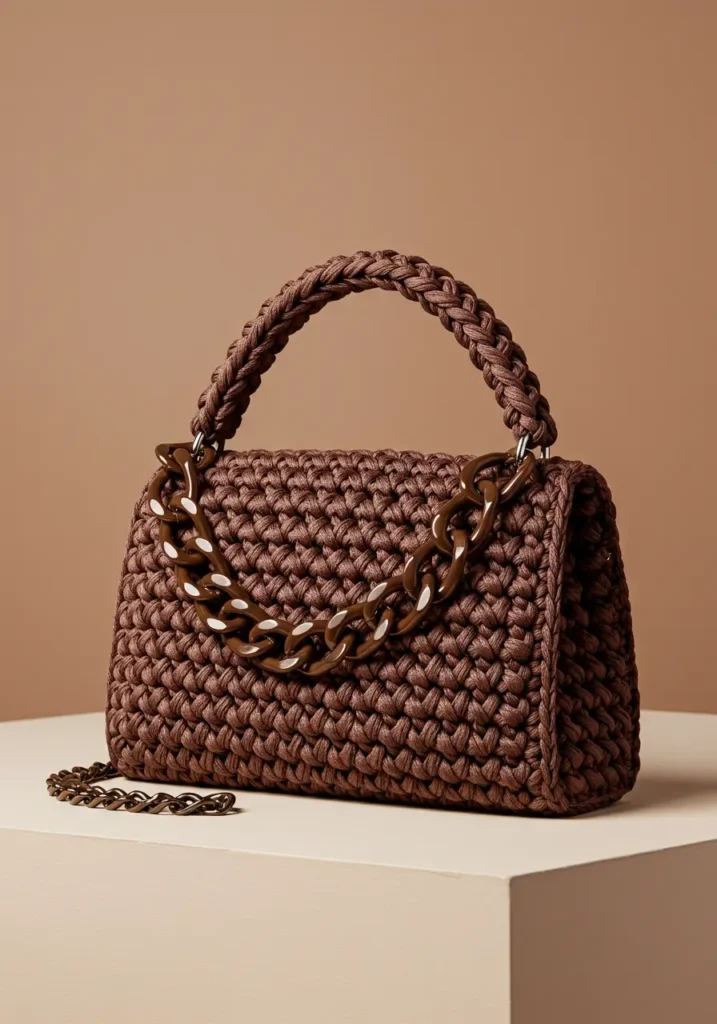
Pair a simple rectangular or half-moon body with an oversized chain strap. Keeping the crochet fabric solid and understated allows the hardware to become the main decorative detail.
Chains can add considerable weight. Attach them to reinforced tabs or D-rings and test the filled bag before regular use. A removable chain also makes cleaning and storage easier.
Best for: Dinner outings, concerts, and modern outfits that benefit from texture.
5. Elegant Shell-Stitch Clutch
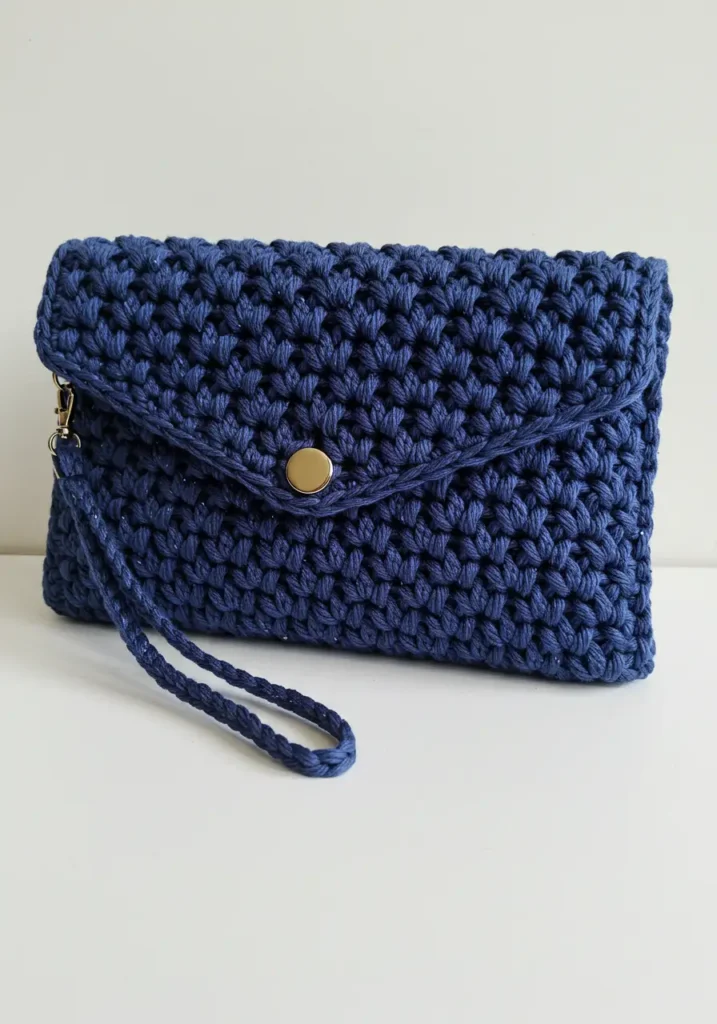
Shell stitch creates a scalloped surface that works beautifully on a compact clutch. Mercerized cotton can provide crisp definition and a subtle sheen without requiring complicated construction.
Choose a lining closely matched to the bag color so it does not distract through the stitch openings. Finish the design with a zipper, magnetic snap, or small metal frame.
Best for: Weddings, dinners, parties, and handmade gifts.
6. Basket-Weave Market Bag

Alternating front-post and back-post stitches can produce a substantial basket-weave texture. Because this stitch consumes more yarn than a simple mesh pattern, calculate your materials carefully before beginning.
A solid base and wide handles improve comfort. If the bag is intended for heavy shopping, consider a fabric lining or use it for lighter, bulky items rather than concentrated loads.
Best for: Farmers markets, craft supplies, picnics, and everyday carrying.
7. Ruffled or Tiered Hobo Bag
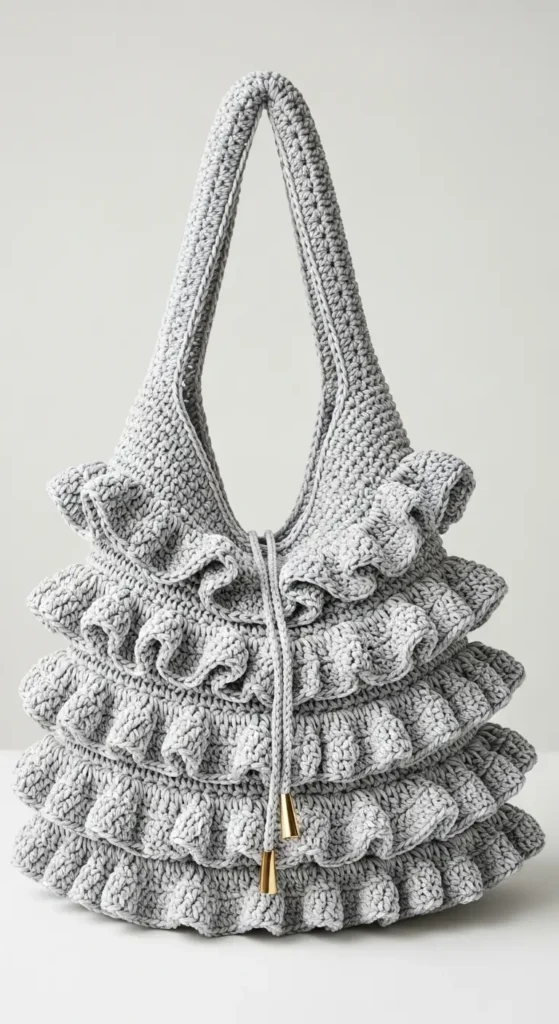
Add ruffles to a simple hobo silhouette for softness and movement. Place the decorative rows strategically rather than covering every surface, which can make the bag bulky and heavy.
A smooth lining prevents the ruffles from being pulled inward by the contents. Keep the strap relatively simple so it balances the volume of the bag.
Best for: Romantic styling, weekend outfits, and lightweight personal belongings.
8. Structured Box Bag with Wooden Handles
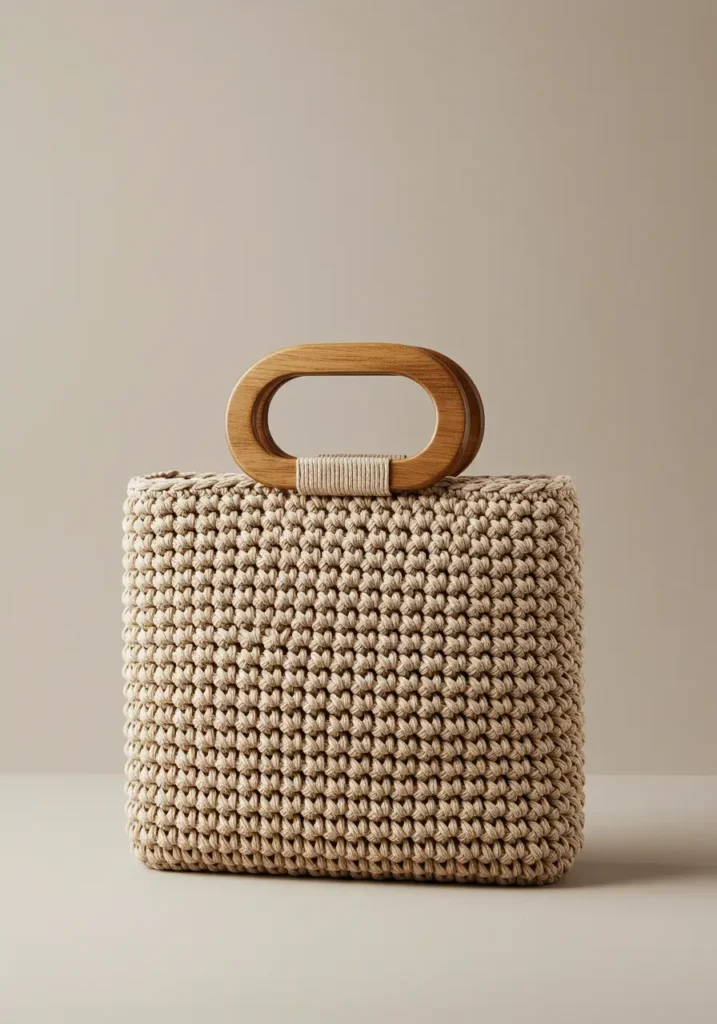
A box bag depends on precise measurements and firm construction. Single crochet, waistcoat stitch, or tightly worked tapestry crochet can produce the dense surface needed for defined sides.
Add interfacing or plastic canvas between the crochet shell and lining when extra structure is required. Cover or round any sharp stabilizer edges so they cannot cut the yarn or lining.
Best for: Polished outfits, architectural silhouettes, and makers ready to practice accurate assembly.
9. Colorful Striped Everyday Tote
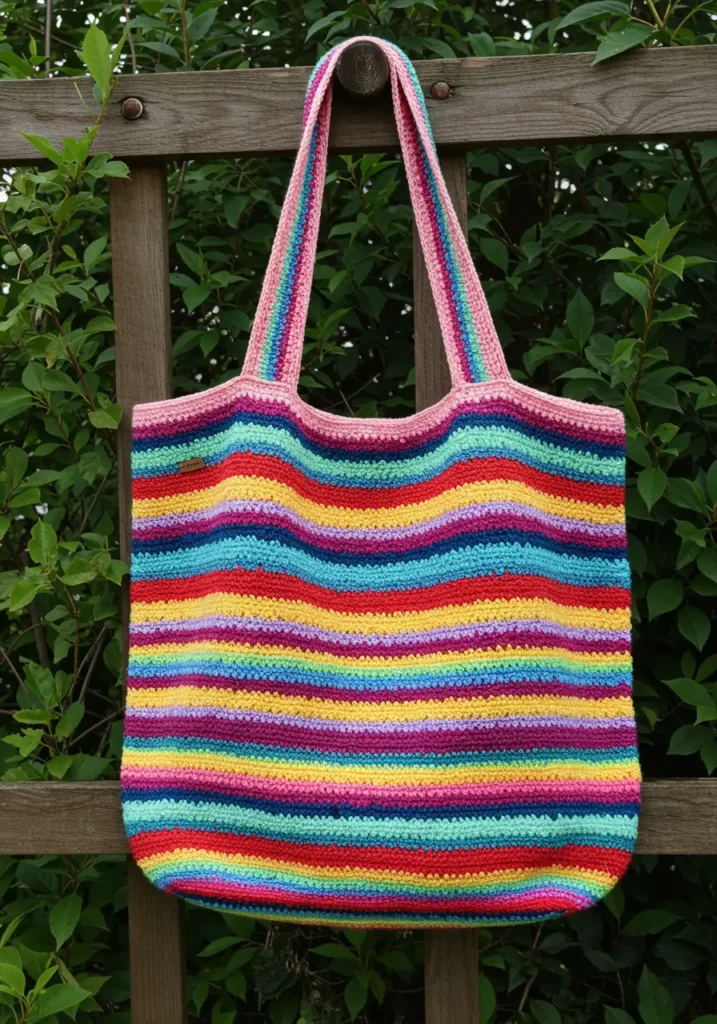
Stripes transform a basic tote pattern and provide an excellent way to use coordinated yarn remnants. Varying stripe widths creates a more considered result than changing colors at identical intervals.
Weave in ends securely as you work, especially near the base and handles. If many color changes create a rough interior, hide them behind a lining.
Best for: Beginners practicing color changes, daily errands, and cheerful casual styling.
10. Delicate Beaded Evening Bag
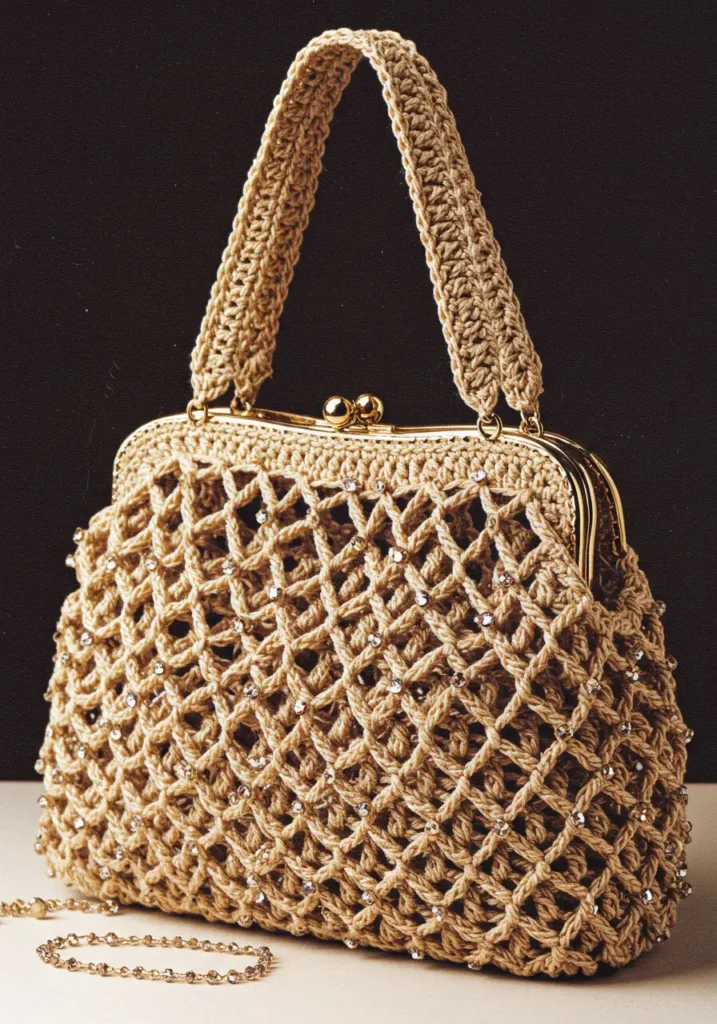
Beads can be threaded onto the yarn before crocheting or attached during finishing, depending on the pattern. A small amount of beadwork along the flap or lower edge can be as effective as an all-over design.
Check that the yarn passes through the bead holes without abrasion. Because beads increase the bag’s weight, reinforce the base, closure, and strap attachments.
Best for: Formal events, special gifts, and detail-oriented crocheters.
11. Textured Faux-Fur Clutch
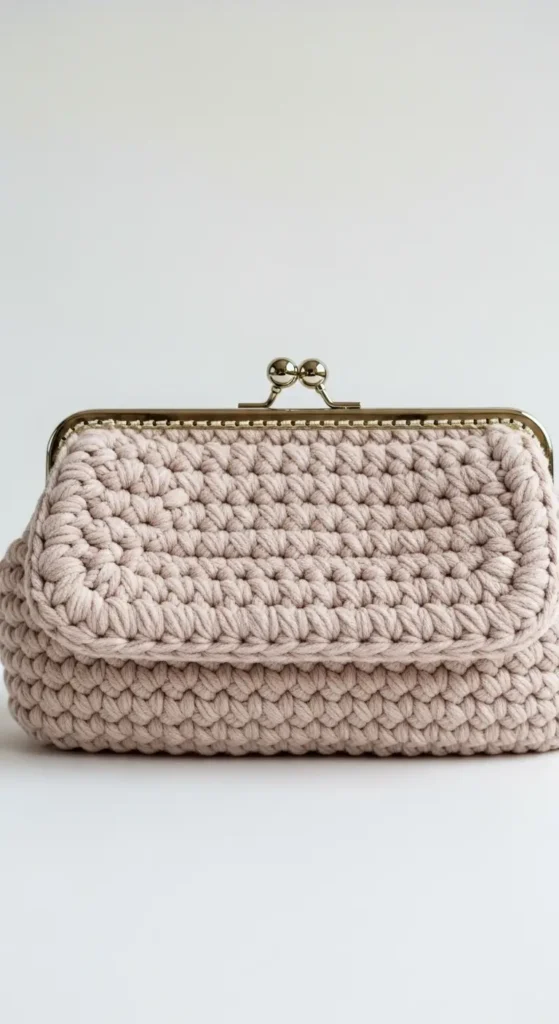
Faux-fur yarn creates a plush surface, but it can make individual stitches difficult to see. Use a simple shape, count carefully, and place stitch markers at the beginning of every row or round.
A firm lining and discreet snap closure help the clutch retain its form. Before committing to the project, make a small swatch to check shedding and determine whether you can comfortably identify the stitches.
Best for: Winter celebrations, evening outfits, and simple patterns with dramatic texture.
12. Cabled Shoulder Bag
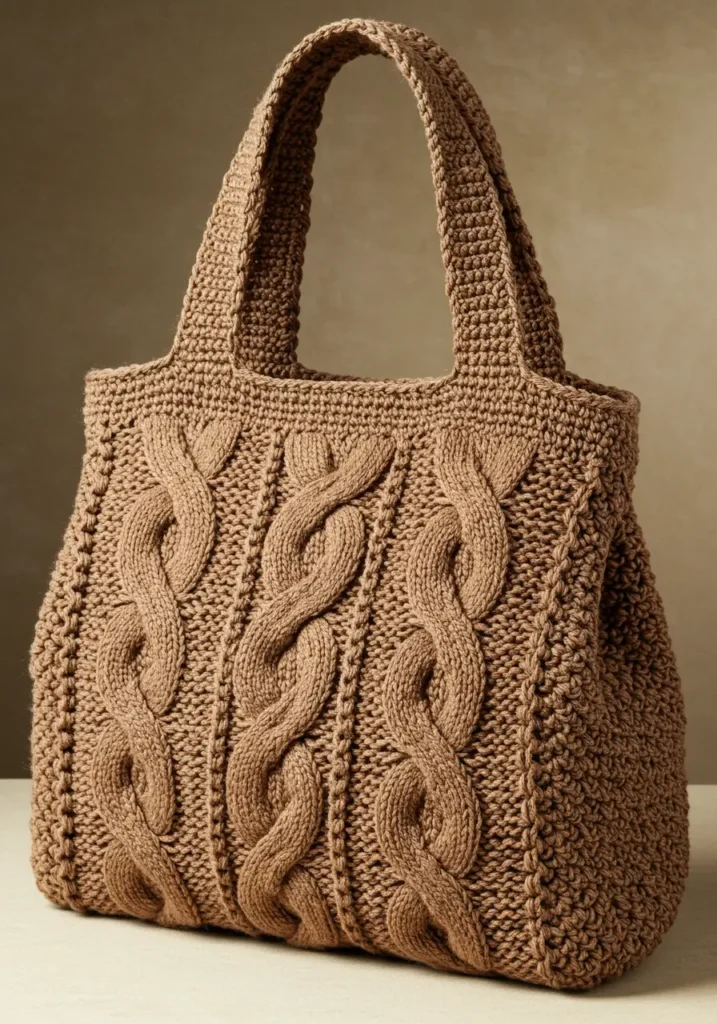
Crochet cables add depth through front-post and back-post stitches. A central cable panel can make a strong focal point without adding unnecessary thickness to the entire bag.
Select a smooth yarn with good stitch definition and use stitch markers to keep the cable section aligned. Blocking can help settle the finished texture, provided the chosen fiber’s care instructions permit it.
Best for: Autumn and winter accessories and intermediate crocheters who enjoy textured stitches.
13. Geometric Tapestry Crochet Pouch
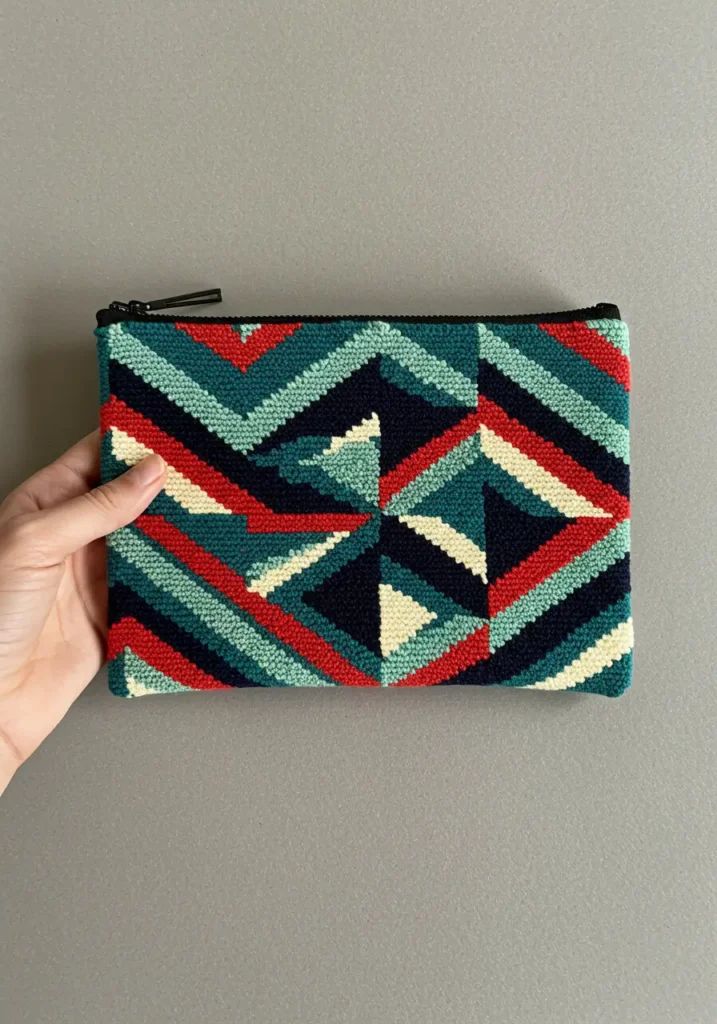
Tapestry crochet allows you to carry unused colors within the stitches while building graphic motifs. Begin with a small pouch before attempting a large bag, because maintaining even tension across color changes takes practice.
Choose yarns of the same fiber and weight so the fabric behaves consistently. A simple cotton lining keeps the carried strands away from keys and other objects that might snag them.
Best for: Makeup pouches, compact clutches, colorwork practice, and personalized gifts.
14. Mesh or Net Shopping Bag
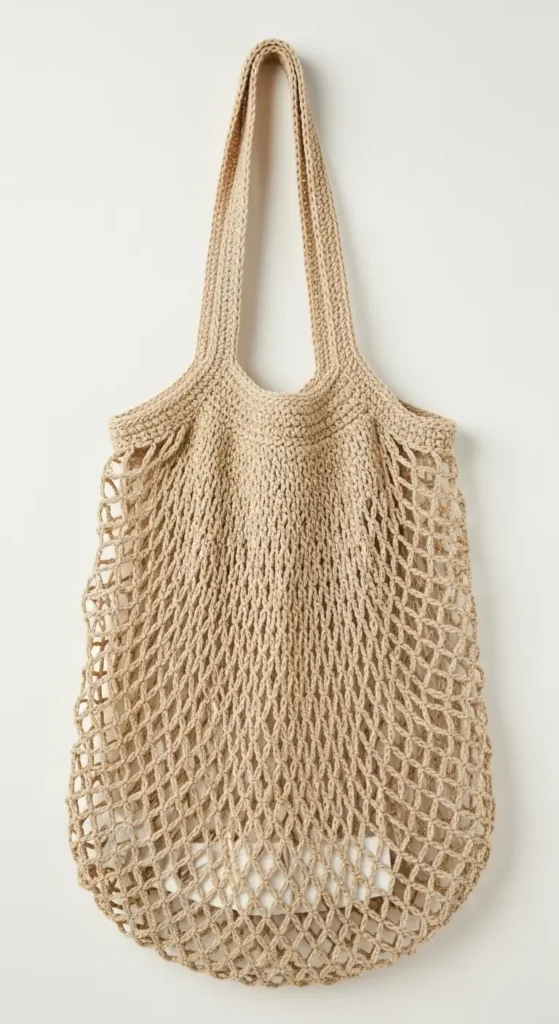
A mesh bag folds into a small space and expands when filled. Crochet a dense base and sturdy upper band so the bag has dependable anchor points despite its open body.
Keep the handles wide enough to distribute pressure comfortably. Test the bag with a moderate load at home before relying on it for shopping, as fiber choice and gauge strongly influence stretching.
Best for: Produce, lightweight groceries, beach towels, and compact reusable storage.
15. Half-Moon Slouchy Bag
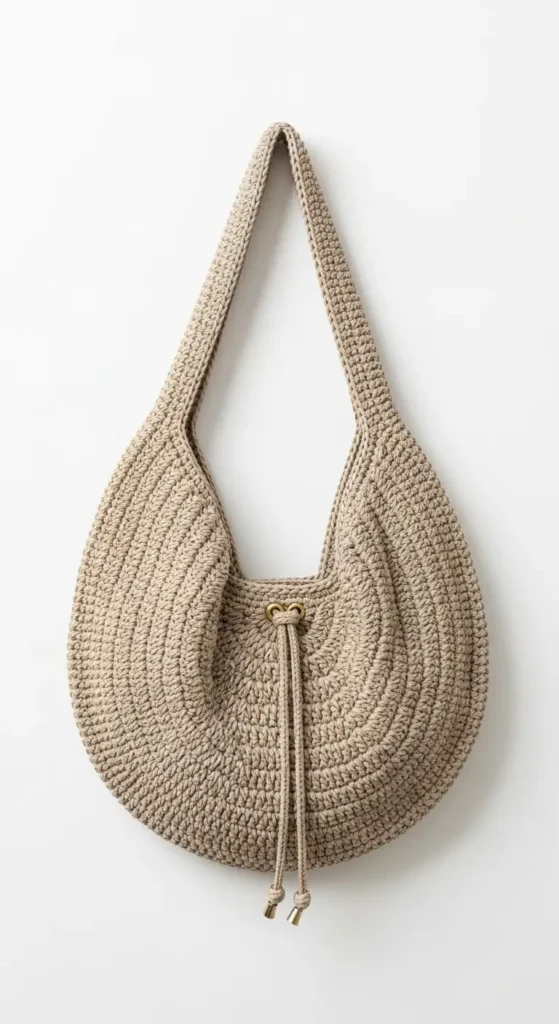
A curved half-moon silhouette offers a softer alternative to rectangular totes. It can be built from shaped panels or worked in rounds, depending on the pattern.
Use a stable upper edge so the opening does not become distorted. A zipper set into fabric tabs provides security without forcing the crochet fabric to support the closure alone.
Best for: Everyday shoulder bags, relaxed outfits, and makers interested in shaping techniques.
16. Vintage-Inspired Clasp Purse
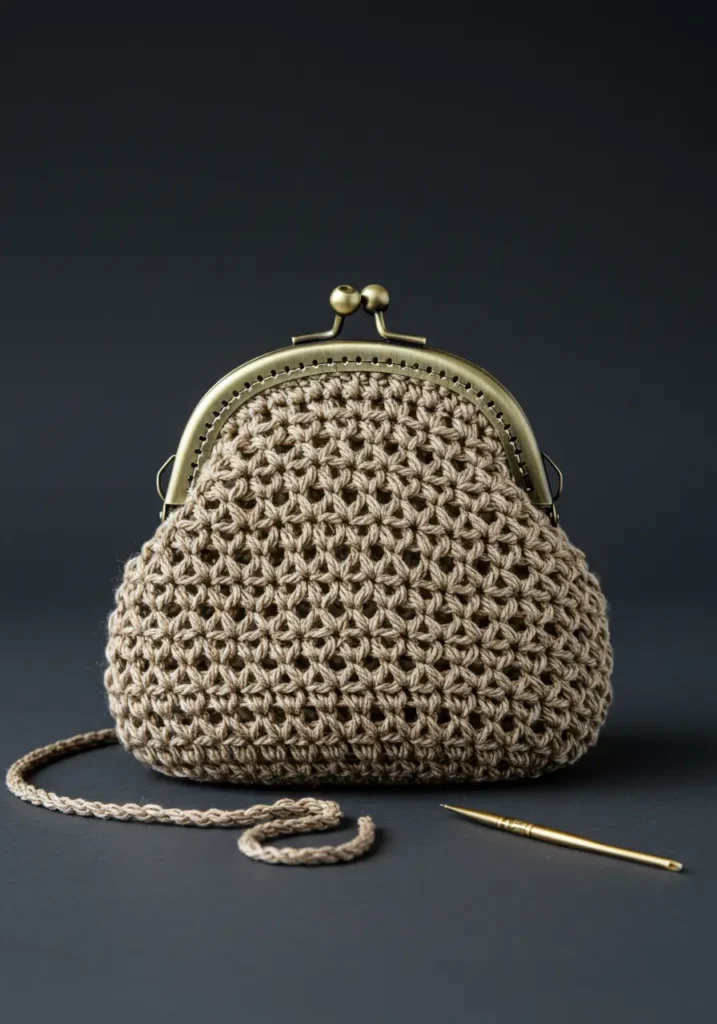
A metal kiss-lock frame immediately gives a small crochet purse a vintage character. Measure the frame precisely and use a pattern designed for the same shape and attachment method.
Some frames are sewn to the bag, while others use glue or screws. Follow the hardware manufacturer’s directions and confirm that the finished purse opens and closes smoothly before trimming any yarn ends.
Best for: Coin purses, formal mini bags, heirloom-style gifts, and vintage wardrobes.
17. Textured Drawstring Pouch
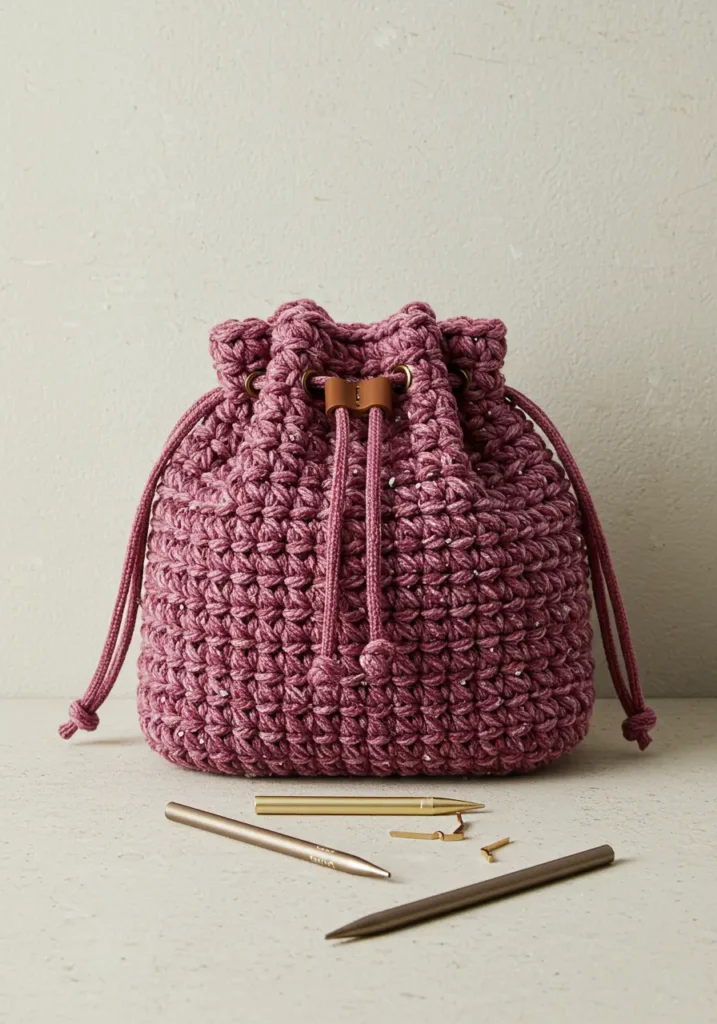
A drawstring pouch is an approachable project that teaches working in rounds, creating eyelets, and finishing cords. Use a textured stitch on the body while keeping the drawstring channel smooth and firm.
For jewelry, cosmetics, or small travel items, add a lining so pointed objects cannot pass through the crochet fabric. Avoid placing beads or bulky decorations where they could interfere with the drawstring.
Best for: Beginners, travel organizers, gift packaging, and small personal accessories.
Related: Which Color Jeans Go With Everything? The Ultimate Guide to Versatile Denim
How to Match a Crochet Handbag to Your Style
Bohemian and Relaxed
Choose earthy colors, granny squares, fringe, openwork, and soft silhouettes. A textured crossbody or slouchy hobo bag pairs naturally with denim, flowing dresses, and layered outfits.
Modern and Minimal
Look for solid colors, restrained hardware, precise edges, and structured shapes. Box bags, half-moon purses, and simple clutches work well when the stitch pattern is subtle and the finishing is clean.
Colorful and Eclectic
Experiment with bold stripes, geometric tapestry patterns, contrasting handles, or carefully arranged granny squares. Limit the palette to a few repeated colors if you want a lively design that still feels cohesive.
Classic and Refined
Consider shell-stitch clutches, framed purses, narrow shoulder bags, and neutral colors such as navy, cream, taupe, burgundy, or black. A smooth lining and understated metal hardware can make the finished piece feel especially polished.
Choosing the Right Project for Your Skill Level
| Experience level | Good first choices | Skills you will practice |
|---|---|---|
| Beginner | Drawstring pouch, striped tote, simple mesh bag | Working in rows or rounds, counting stitches, basic shaping, color changes |
| Confident beginner | Granny square satchel, shell-stitch clutch, boho crossbody | Joining pieces, reading repeats, adding closures, simple lining |
| Intermediate | Half-moon bag, basket-weave tote, cabled shoulder bag | Shaping, post stitches, reinforcement, fitted lining |
| Advanced | Tapestry pouch, beaded bag, structured box purse | Controlled colorwork, bead placement, stabilizers, precision assembly |
Before beginning, confirm whether the pattern uses US or UK crochet terminology because the same stitch name can mean different things. The Craft Yarn Council’s abbreviation guide explains common US terms and their meanings.
Common Crochet Bag Problems and How to Prevent Them
The Bag Stretches When Filled
Use a denser stitch, make a smaller swatch with a different hook, or add a non-stretch lining. Reinforce the base and strap attachment points. A crocheted strap can also be backed with fabric webbing.
The Base Sags
Work the base more tightly than the body or insert an appropriately shaped base support between the crochet shell and lining. Ensure any insert has smooth edges and can be removed if the bag needs washing.
The Handles Become Too Long
Straps worked lengthwise often stretch less than long rows of chain stitches. Thermal stitch, tightly worked single crochet, cord, or fabric-backed straps can provide additional stability.
The Sides Twist or Lean
Check the stitch count at the end of every row or round. Mark the beginning of rounds and follow the pattern’s joining instructions carefully. Blocking may improve minor distortion, but it cannot correct major counting errors.
Small Items Catch in the Stitches
Add a fabric lining and interior pockets. This is especially helpful for bags made with mesh, granny squares, shell stitch, or other open textures.
The Finished Bag Feels Too Heavy
Thick yarn, dense stitches, metal chains, beads, lining, and hardware all add weight. Weigh a finished swatch and the planned hardware before starting an oversized design. A lighter yarn or smaller silhouette may be more comfortable.
How to Care for a Crochet Handbag
Always follow the care information for the yarn and any added materials. The safest cleaning method is determined by the most delicate component, which may be the fiber, lining, wooden handle, metal frame, beads, or adhesive.
- Empty the bag and remove detachable straps or base inserts.
- Test colorfastness and cleaning products on a hidden area.
- Spot-clean when possible, especially if the bag contains cardboard, paper yarn, wood, glued hardware, or non-washable stabilizer.
- If the materials permit hand-washing, use cool water and mild detergent without aggressive rubbing or wringing.
- Support the entire bag when lifting it from the water.
- Press out moisture gently with clean towels.
- Reshape the bag and dry it flat away from direct heat.
Store the bag clean and completely dry. Loosely fill a structured purse with acid-free tissue or clean fabric to support its shape, but avoid overstuffing. Keep it in a breathable dust bag away from direct sunlight.
If a loop is pulled, do not cut it. Use a crochet hook or blunt yarn needle to redistribute the excess yarn through the neighboring stitches. Secure emerging ends by weaving them through the wrong side of the fabric.
Are Crochet Handbags a Sustainable Choice?
A handmade label does not automatically make a bag environmentally preferable. Its impact depends on the fiber, dyes, manufacturing, transport, construction quality, care, and how long the bag remains in use.
If sustainability influences your purchase, look for specific information instead of broad terms such as “green” or “eco-friendly.” Verify the fiber composition, percentage of recycled content, care requirements, and whether replacement straps or repairs are possible. The Federal Trade Commission’s guidance on environmental claims explains why clear, specific claims are more useful than vague green marketing.
Using yarn already in your collection, reclaiming suitable fabric for a lining, repairing worn areas, and making a bag that meets a genuine need can all help you get more value from the materials you use.
Frequently Asked Questions
What is the best stitch for a crochet handbag?
Single crochet is a dependable starting point because it creates relatively dense fabric. Waistcoat stitch, tapestry crochet, thermal stitch, and post-stitch textures can also work well. The best choice depends on the yarn, hook, desired flexibility, and whether the bag will be lined.
Should every crochet handbag have a lining?
No. An open market bag may function perfectly without one. Everyday handbags, purses carrying small objects, and bags that need additional shape usually benefit from a lining.
How can I make crochet handles stronger?
Use a low-stretch stitch, work the strap lengthwise when the pattern allows, and reinforce it with webbing, fabric, cord, or a commercial strap. Secure the ends across a broad area of the bag instead of relying on a few stitches.
Can a beginner crochet a handbag?
Yes. A simple drawstring pouch, rectangular tote, or basic market bag can be an excellent first project. Choose a pattern with clear stitch counts, familiar stitches, and limited shaping. Count every row and use stitch markers generously.
How much yarn does a crochet handbag require?
The amount varies with the bag’s dimensions, yarn weight, stitch density, handle design, and pattern. Textured stitches generally consume more yarn than mesh. Use the pattern’s stated yardage rather than estimating by the number of skeins because skein lengths differ.
Can I substitute a different yarn?
Often, but compare yarn weight, fiber behavior, recommended gauge, and total yardage. Make a swatch and test it with weight before committing to the full project. A substitute that matches the original gauge may still drape or stretch differently.
How do I keep a crochet bag from losing its shape?
Use an appropriate yarn, a firm gauge, reinforced seams, a fitted lining, and stabilizer where necessary. Avoid overloading the bag and store structured designs with light interior support.
Choose a Bag You Will Actually Use
The most successful crochet handbag is not necessarily the most complicated. It is the one whose size, closure, strap, materials, and internal organization fit your routine.
Beginners can start with a drawstring pouch or simple tote. More experienced makers can explore tapestry colorwork, fitted frames, beadwork, cables, or structured construction. Whichever design you choose, make a swatch, test how the fabric behaves under weight, and plan the lining and hardware before completing the outer shell. Those practical decisions will do more for the finished bag than decorative details alone.
This post contains affiliate links.