To style wide-leg pants, start with a comfortable fit, a hem that works with your shoes, and a top whose length complements the wider silhouette. A neat knit and loafers make an easy starting outfit, but loose shirts, sneakers, and longer layers can work just as well.
You do not need a particular body type, high heels, or a fitted top. These 19 practical tips will help you adapt wide-leg pants to your preferences, with outfit ideas you can try using pieces you already own.
Get the Fit and Fabric Right
1. Check the Whole Fit, Not a Finger-Width Rule
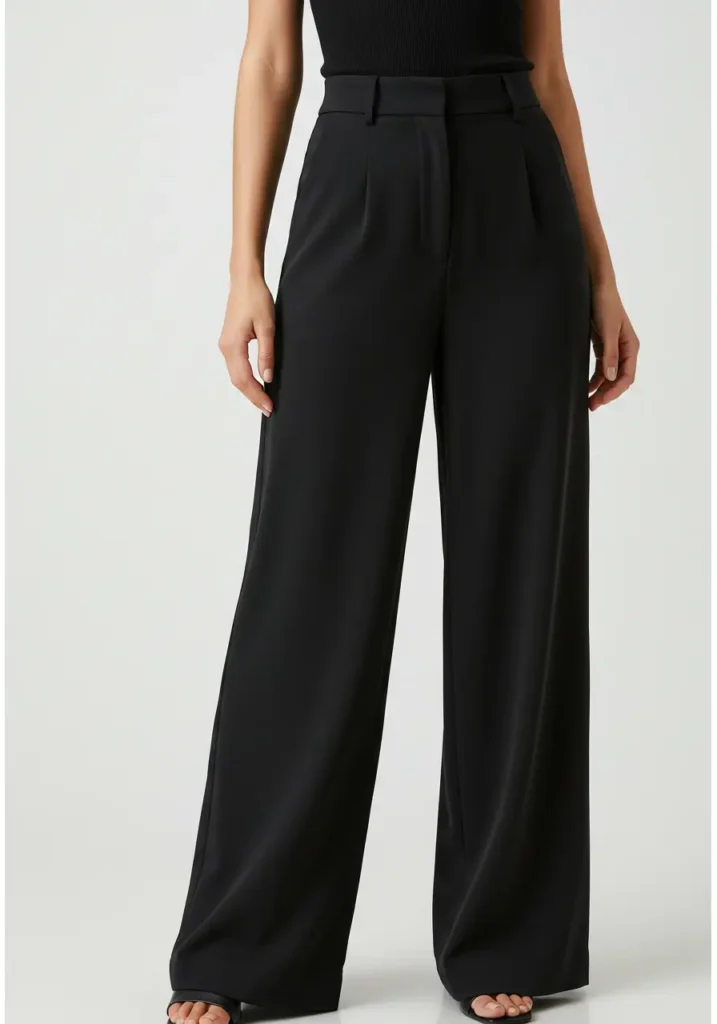
Wide-leg pants should feel comfortable at the waist and have enough room through the hips, seat, and thighs to fall freely. There is no universal two-finger test: rigid waistbands, stretch fabrics, and elastic backs fit differently.
Sit down, walk, and bend before deciding. Look for pockets that pull open, pleats that spread under tension, or a waistband that slides down. If the hips fit but the waist gaps, ask a tailor whether a waistband adjustment is practical instead of sizing down automatically.
2. Set the Hem With Your Actual Shoes
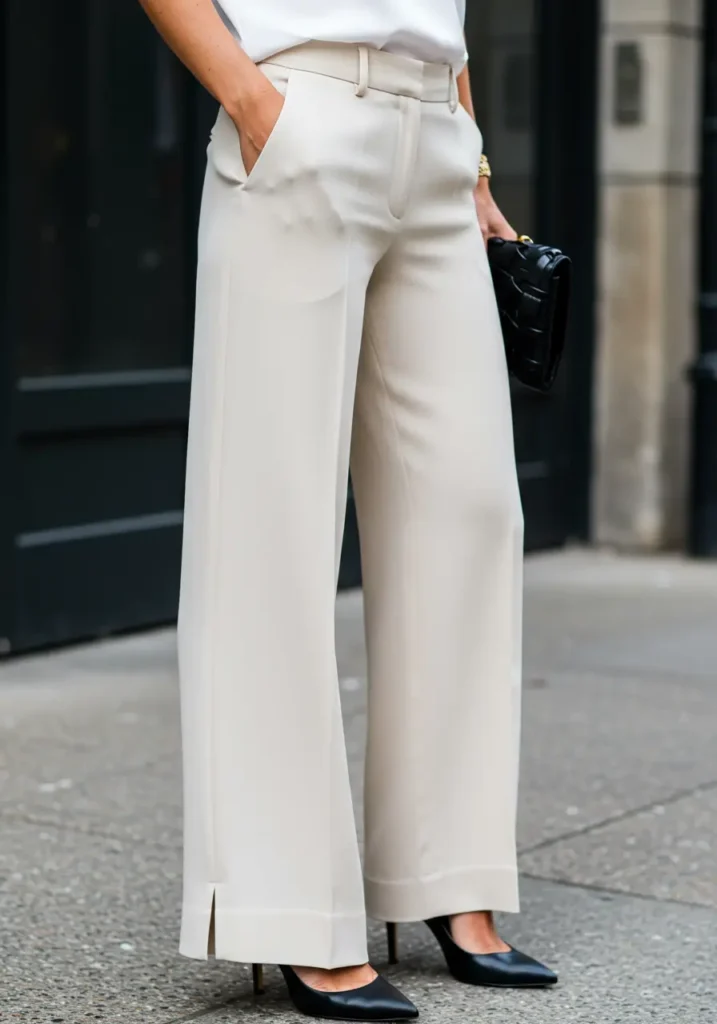
For full-length pants, aim for a hem that clears the floor while you stand and walk in the shoes you intend to wear. A small fold where the front hem meets the shoe, called a break, can look relaxed. Repeated pooling underfoot means the length needs attention.
Bring your usual shoes to an alteration appointment. One length may work with similar-height flats and sneakers, but it may not suit both flats and much higher heels. Cropped wide-leg pants are a separate style, not a hemming mistake.
3. Choose Fabric by Drape as Well as Weight
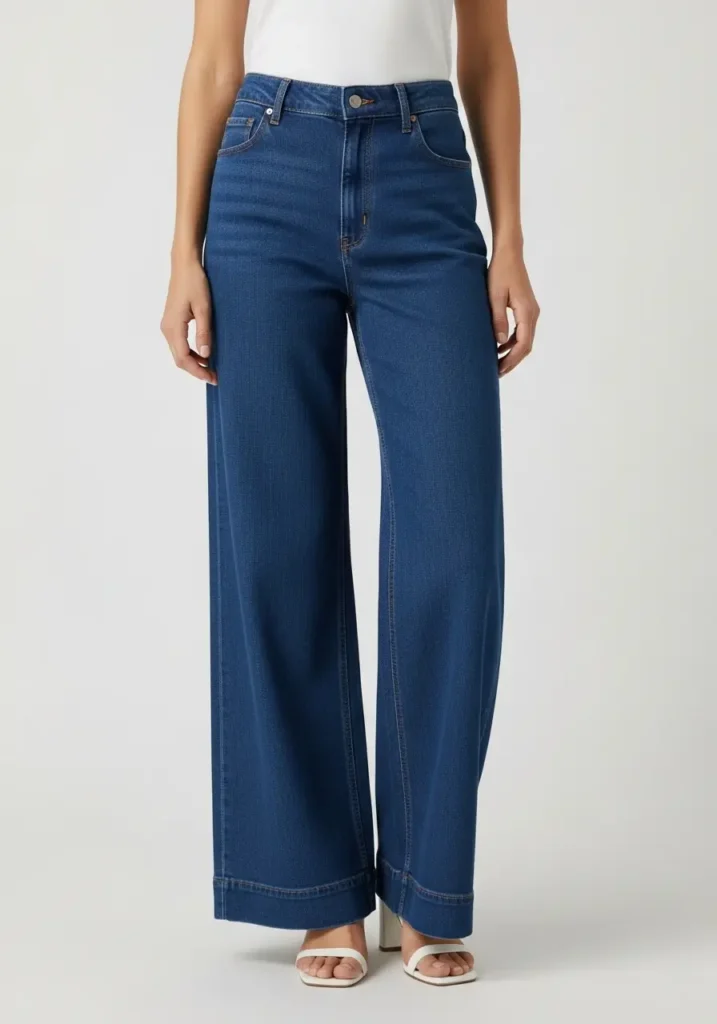
Drape describes how fabric hangs and moves. Crisp denim can hold a broad shape away from your legs, while a fluid woven fabric falls closer to the body. Neither is automatically more polished; choose the effect that suits your outfit.
Check the actual garment rather than relying on the fiber name. Linen, cotton, wool, and blends come in different weights and constructions. In a well-lit fitting area, check opacity, lining, pocket visibility, and how the fabric behaves when you sit.
Find Your Preferred Proportions
4. Add a Jacket Only When It Helps
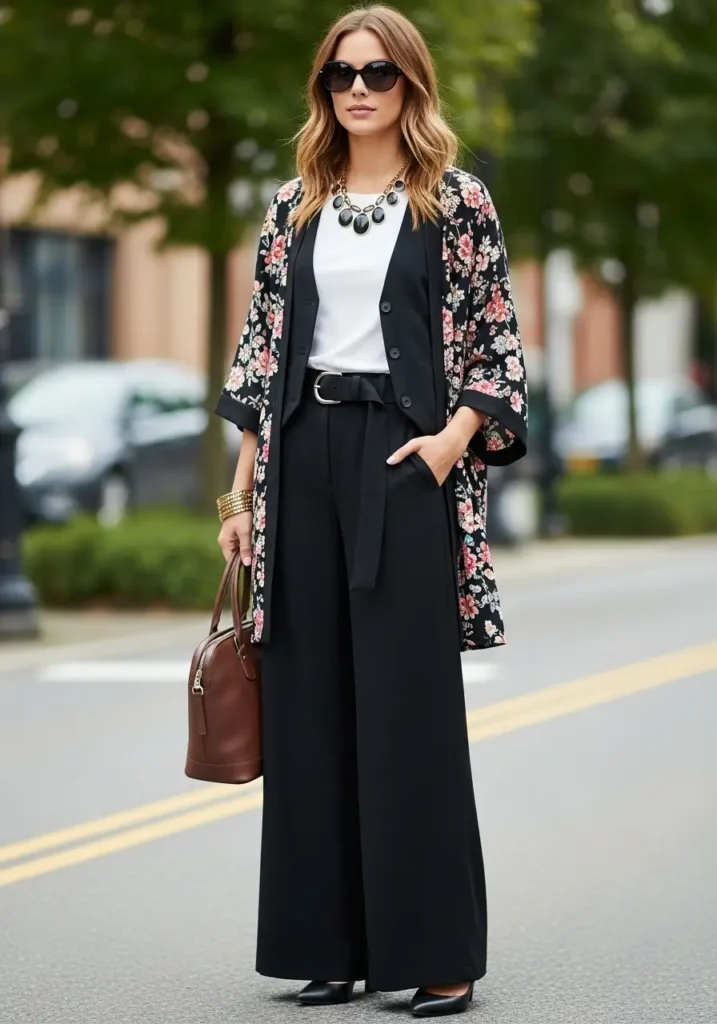
A blazer, cardigan, or vest can introduce structure, warmth, or color, but wide-leg pants do not require a third piece. A simple shirt and trousers can be a complete outfit.
For an easy starting point, try a jacket that ends near the waistband or upper hip. If you prefer a longer layer, wear it open and check whether its hem falls smoothly over the pants. Choose the layer for the weather and setting, not to satisfy a styling formula.
5. Decide How Much Volume You Enjoy
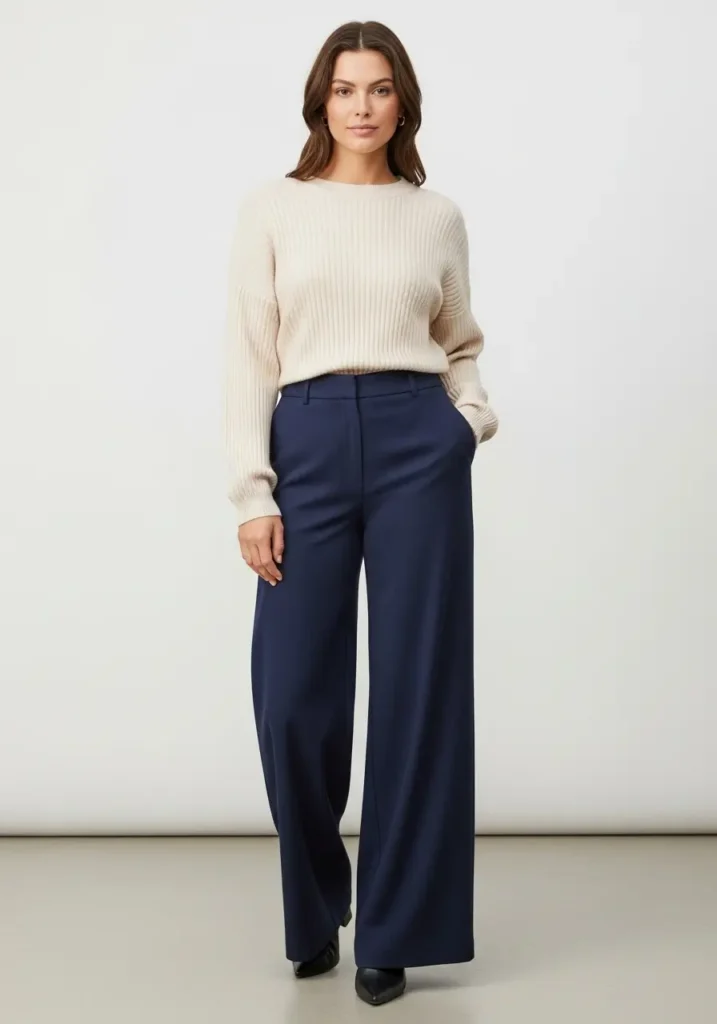
A neat knit or semi-fitted shirt is a straightforward partner for wide-leg pants because it creates a clear contrast in shape. It does not have to be tight, cropped, or revealing.
Loose tops can work too. Try a relaxed shirt with sleeves turned back, a boxy sweater ending near the waistband, or a longer tunic with fluid trousers. If the combination feels too bulky for your taste, change one element: top length, fabric thickness, or leg width.
6. Try a Tuck Without Forcing It
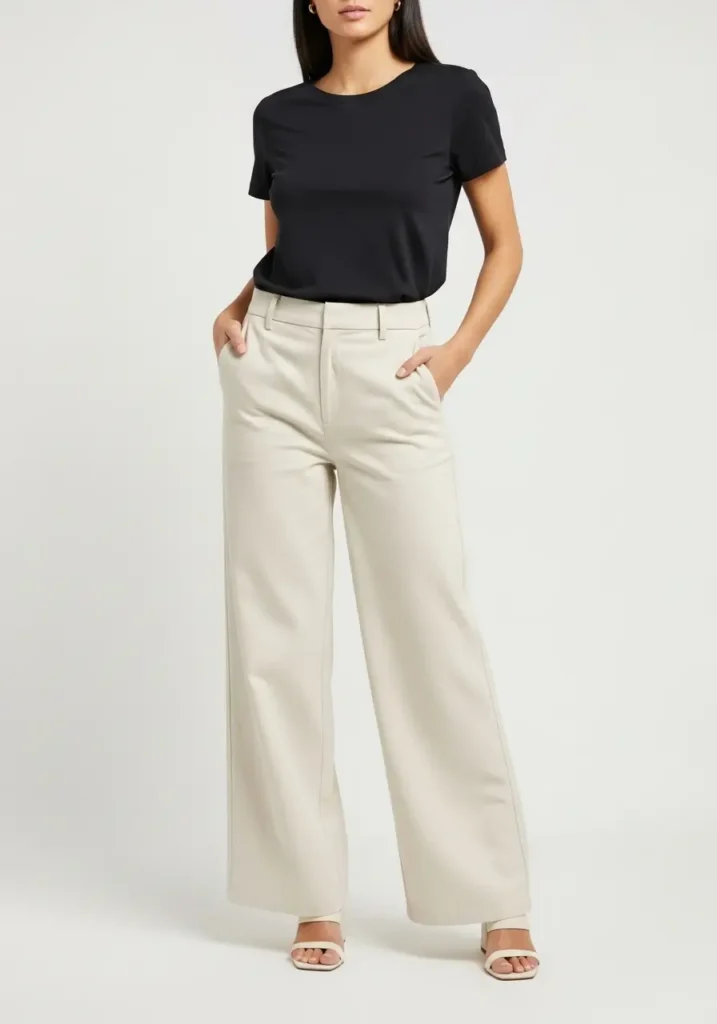
A full tuck makes the waistband visible, while a small front tuck leaves more of the top loose. Neither requires a prescribed measurement. The useful question is whether the fabric lies comfortably and creates the outline you want.
Thin shirts are usually easier to tuck without bunching. With a thick sweater, try a shorter untucked style instead. If you prefer more coverage, choose a top with a straight, curved, or split hem that falls cleanly over the hips. Check the side and back view as well as the front.
Choose Shoes That Work With the Hem
7. Choose Shoes for Comfort Before Height
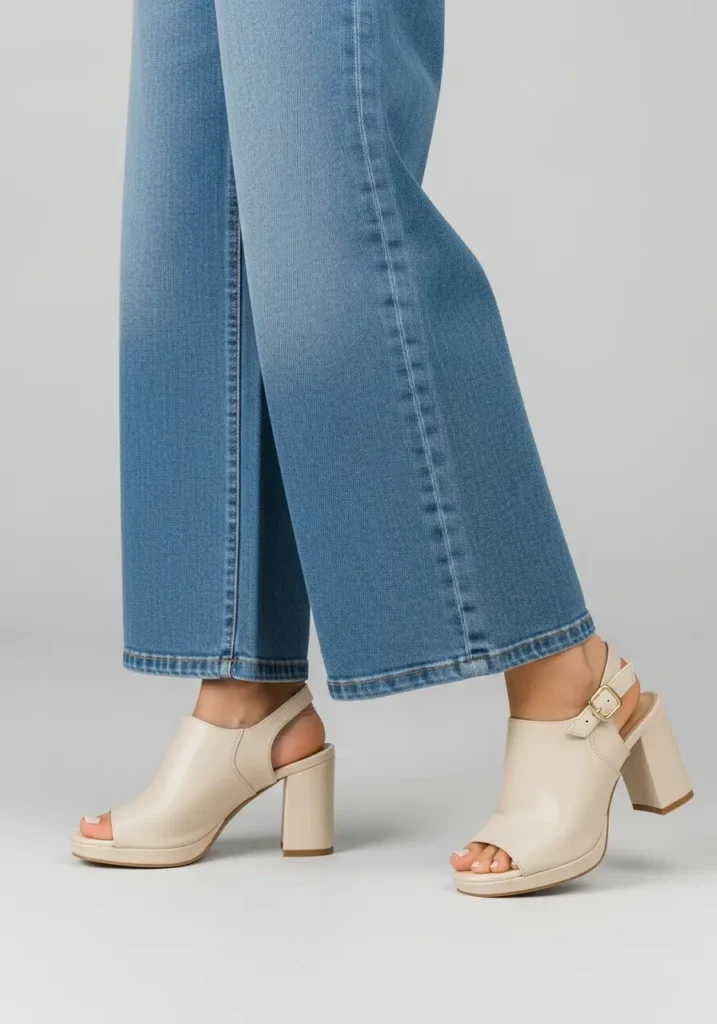
There is no ideal heel height for wide-leg pants. Flats, low heels, and higher heels can all work when the trouser length suits them. You do not need heels to wear this silhouette, whatever your height.
For a dressier outfit, try loafers, almond-toe flats, or a heel you already find comfortable. Walk in the complete outfit and check that the hem stays clear of the floor and does not catch beneath the heel. A shoe shape alone cannot guarantee all-day comfort.
8. Match Sneakers to the Outfit You Want
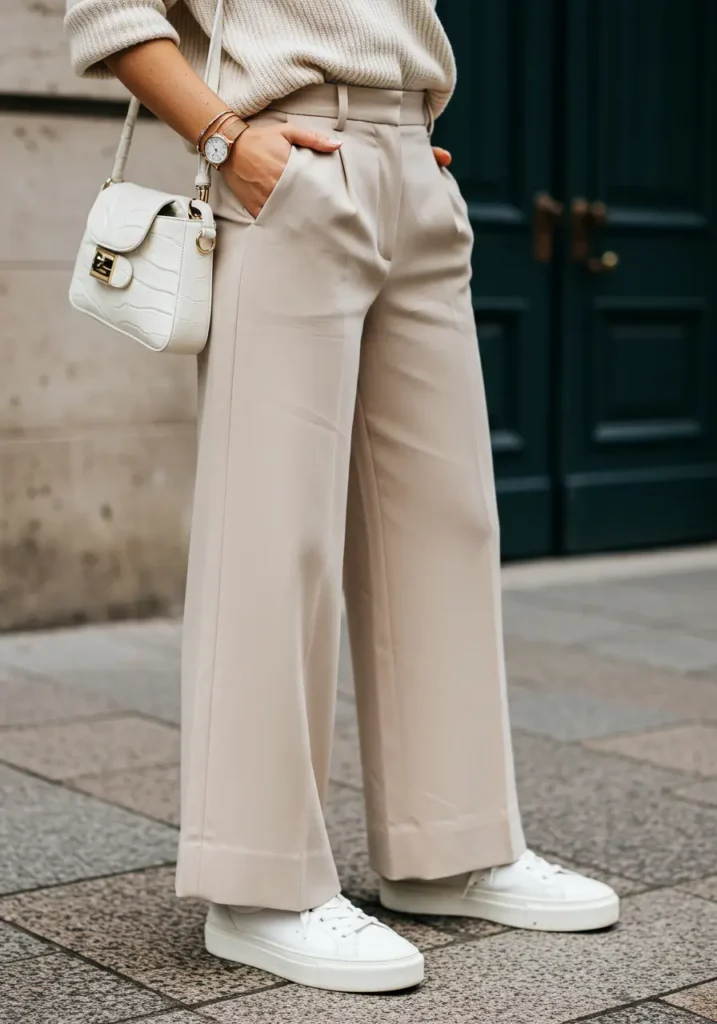
Low-profile sneakers keep the shoe detail subtle; substantial trainers make the outfit feel sportier. Both are options. Choose according to your taste and the width and weight of the pants, rather than treating one sneaker style as correct.
Start with straight-falling trousers, a plain tee, and sneakers in a color already present in the outfit. Check the length again: changing from a thick sole to a thin one can leave the same pants dragging.
9. Let Wide Legs Fall Over Boots
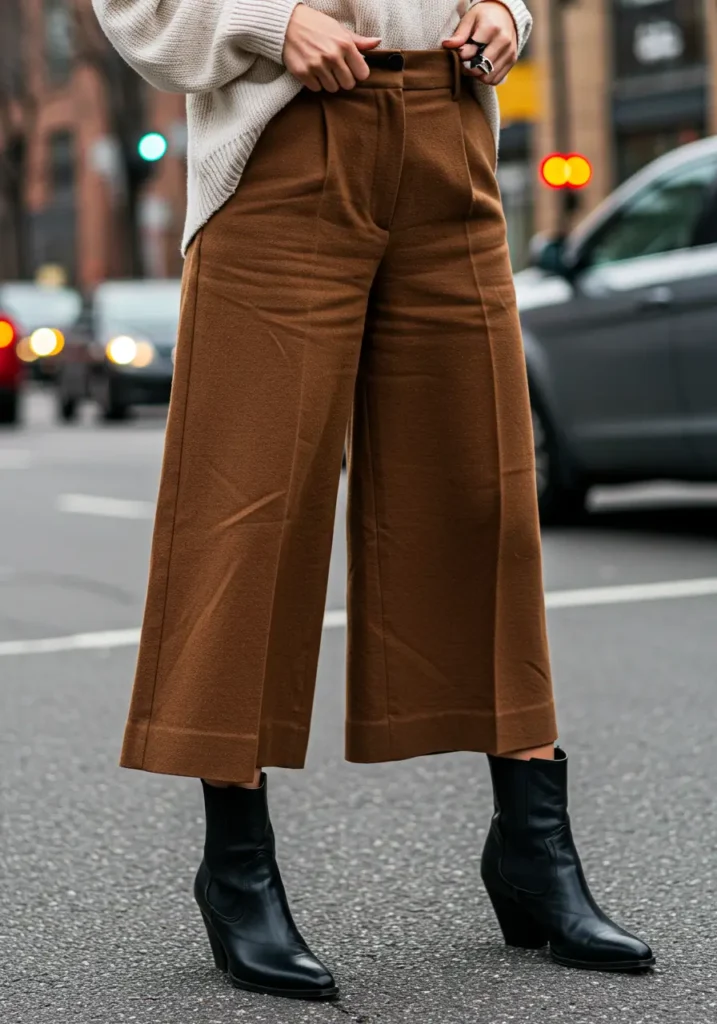
For a straightforward everyday look, wear full-length wide-leg pants over your boots. A shaft that sits comfortably beneath the fabric helps the leg hang without catching. Stuffing a broad trouser leg into a narrow boot can create bulky folds.
With cropped pants, experiment with ankle boots that leave a visible gap or taller shafts that extend under the hem. Both can look intentional. In wet conditions, choose a practical trouser length rather than relying on a floor-skimming hem.
Bring Color, Layers, and Accessories Together
10. Use Tonal Colors for an Easy Combination
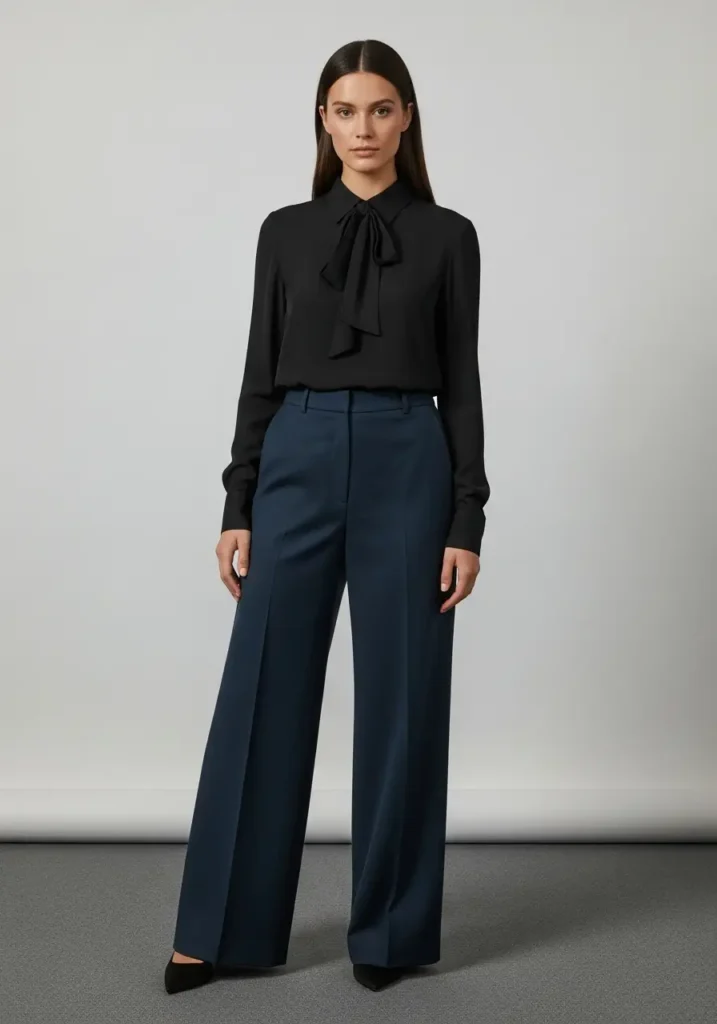
A top and pants in the same color family create visual continuity. Try navy with a slightly lighter blue, cream with oatmeal, or charcoal with black. The shades do not need to match exactly.
Add texture if the outfit feels flat: a ribbed knit with smooth trousers, for example. Contrast is equally valid. A pale shirt with dark pants makes the waistline more noticeable, which you may prefer.
11. Make Longer Layers a Deliberate Choice
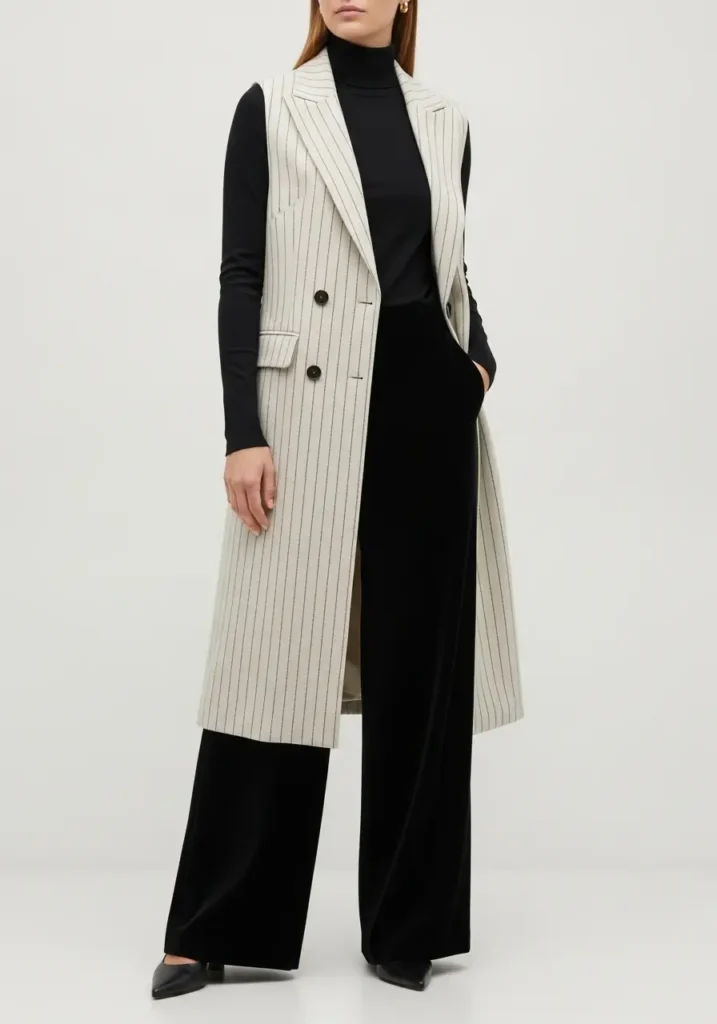
A long cardigan, vest, or coat can work with wide-leg pants when you like a relaxed outline. Start with a simple top underneath so you can see how the outer layer changes the outfit.
Check whether the layer catches on pockets or bunches at the hips. Try it open and closed, and sit down in it. Longer is not automatically better; the most useful length is one that feels comfortable and works with the rest of your clothes.
12. Connect Prints Through Color
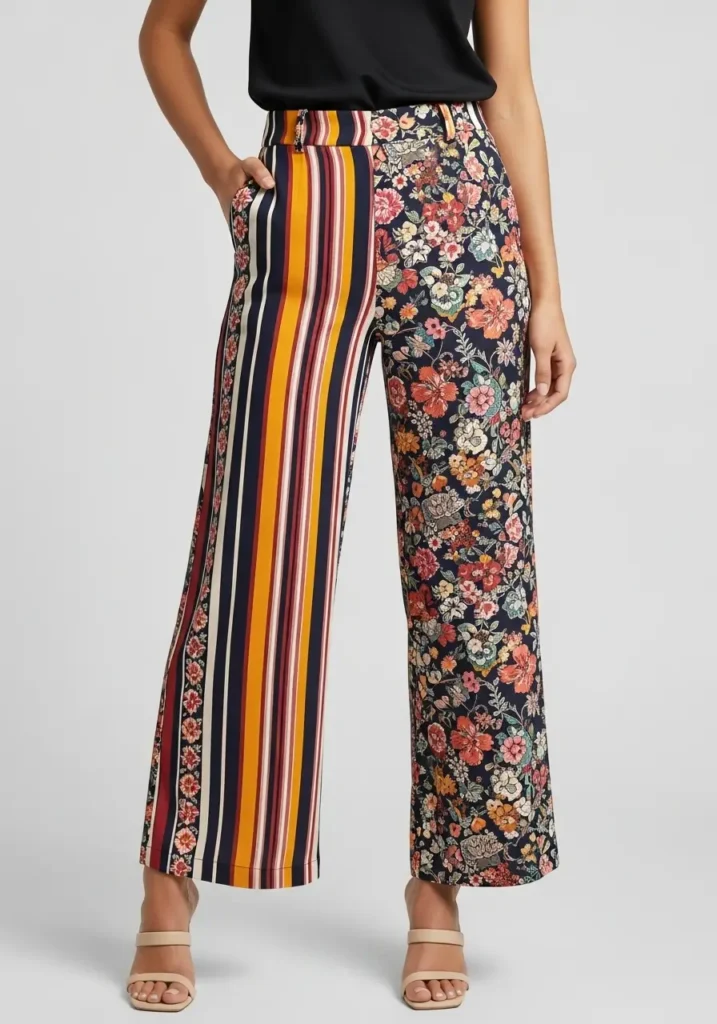
For a simple printed outfit, choose one color from patterned pants and repeat it in a plain top. A navy-and-cream print, for example, gives you two easy starting points without needing new accessories.
If you enjoy mixing patterns, try a small stripe with a larger print that shares a color. Treat this as an experiment, not a rule about which body parts to emphasize or hide. You can choose prints simply because you like them.
13. Use a Belt as a Detail, Not a Fit Repair
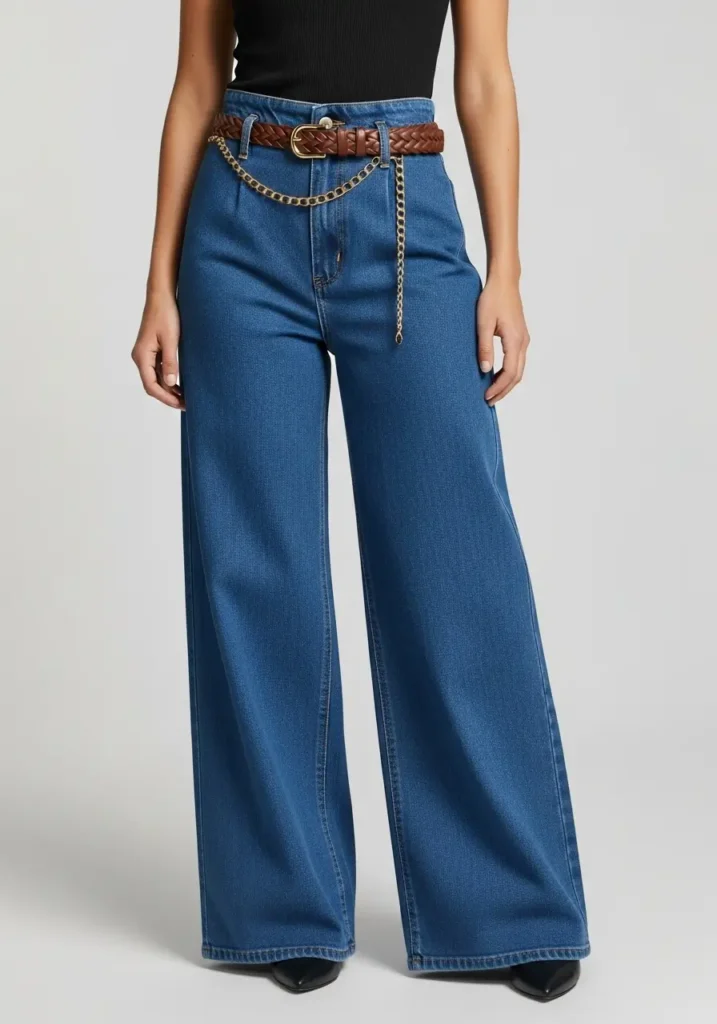
A belt can finish a tucked-in outfit or repeat the color of your shoes or bag. Choose a width that fits comfortably through the belt loops and a buckle that does not dig in when you sit.
Let the belt follow the pants’ intended waistband position. Pulling the waistband much higher or lower can change how the seat and crotch fit. If tightening a belt creates large folds, the pants may need a different size or an alteration.
Adapt Wide-Leg Pants to Your Routine
14. Build Work Outfits Around Your Dress Code
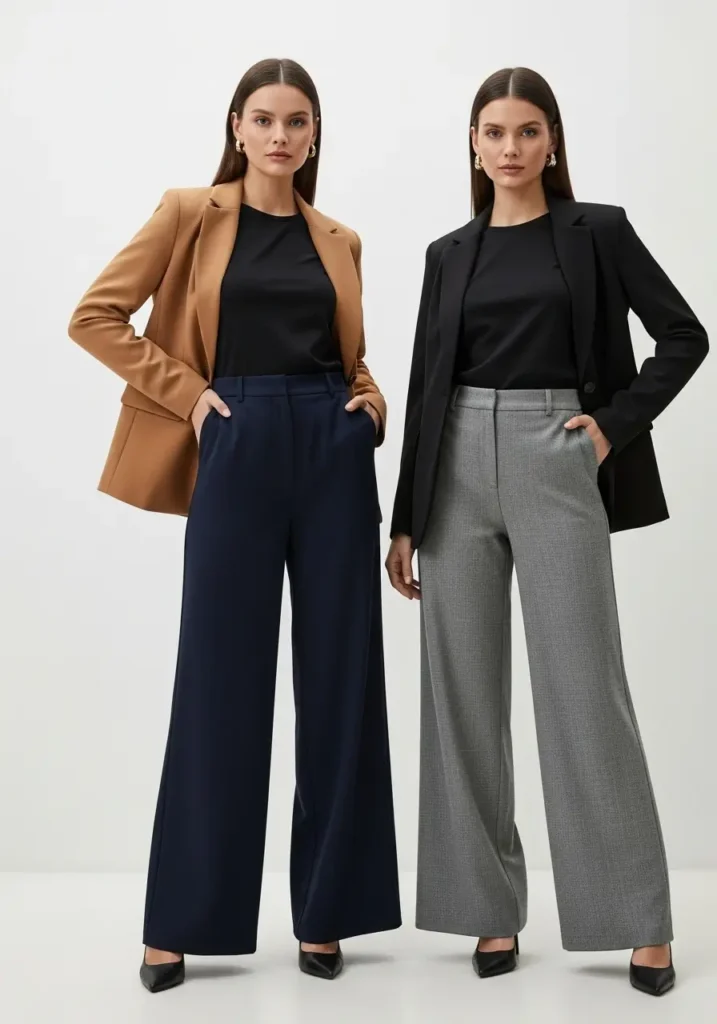
Tailored wide-leg trousers can pair with a matching jacket or contrasting separates. Try gray trousers with a navy blazer, or dark brown pants with a cream shirt and a jacket you already own.
Compare the pieces together in daylight. If two blacks or navies look like an accidental near-match, try a clearer contrast. Mixed metals and different textures are not mistakes; decide whether the overall combination feels right for your workplace.
15. Rehearse an Important Outfit
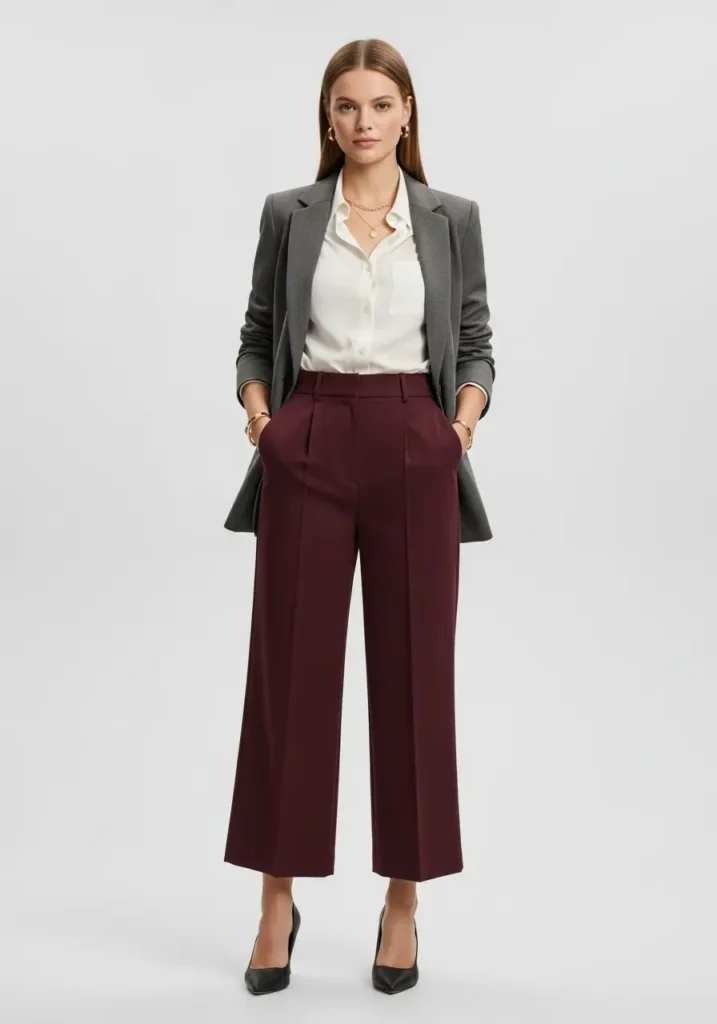
For a meeting or presentation, start with trousers that fit comfortably, a shirt or knit that stays in place, and shoes you can stand and walk in. Add a blazer if it suits the setting.
Try sitting, reaching, and walking with your bag before the day arrives. Check for shirt gaping, a shifting waistband, and hems caught under shoes. These practical details help you focus on the occasion rather than adjusting your clothes.
16. Leave Room for Cold-Weather Layers
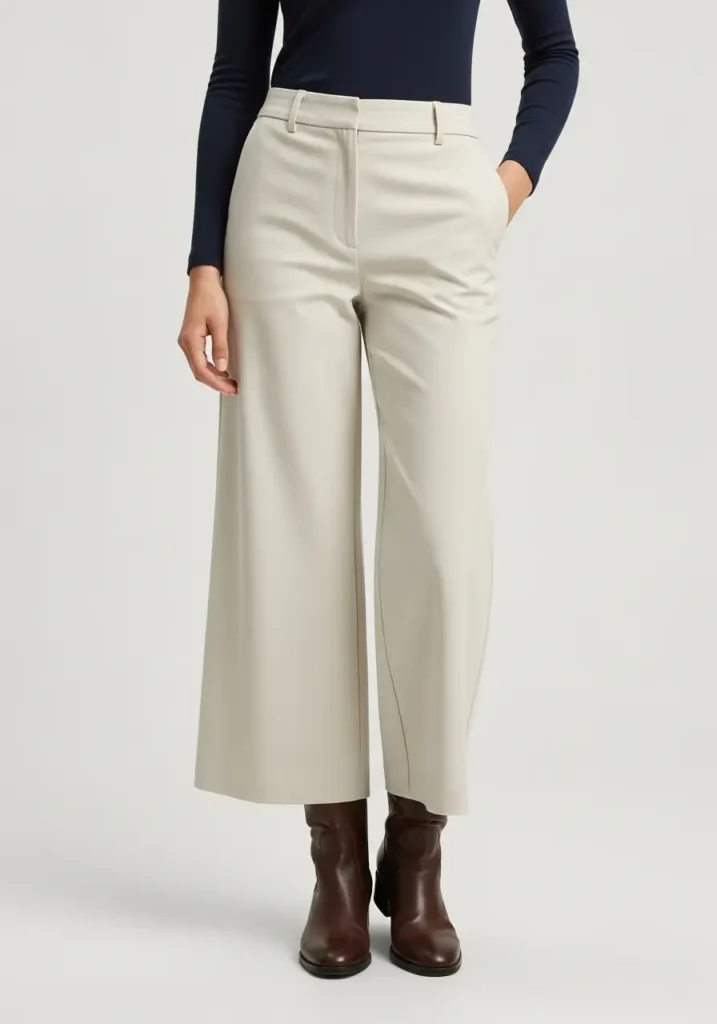
If you plan to wear a thin base layer underneath, try the pants on with it. Added layers can change the fit at the waist and thighs even when the legs look roomy. Check that you can move freely and that the fabrics do not bunch together.
A longer coat and boots may make the outfit more useful in cooler weather. Lightweight summer pants will not suit every winter day, however; choose clothing for the actual conditions rather than trying to make every pair work year-round.
17. Repeat a Useful Outfit Before Buying More
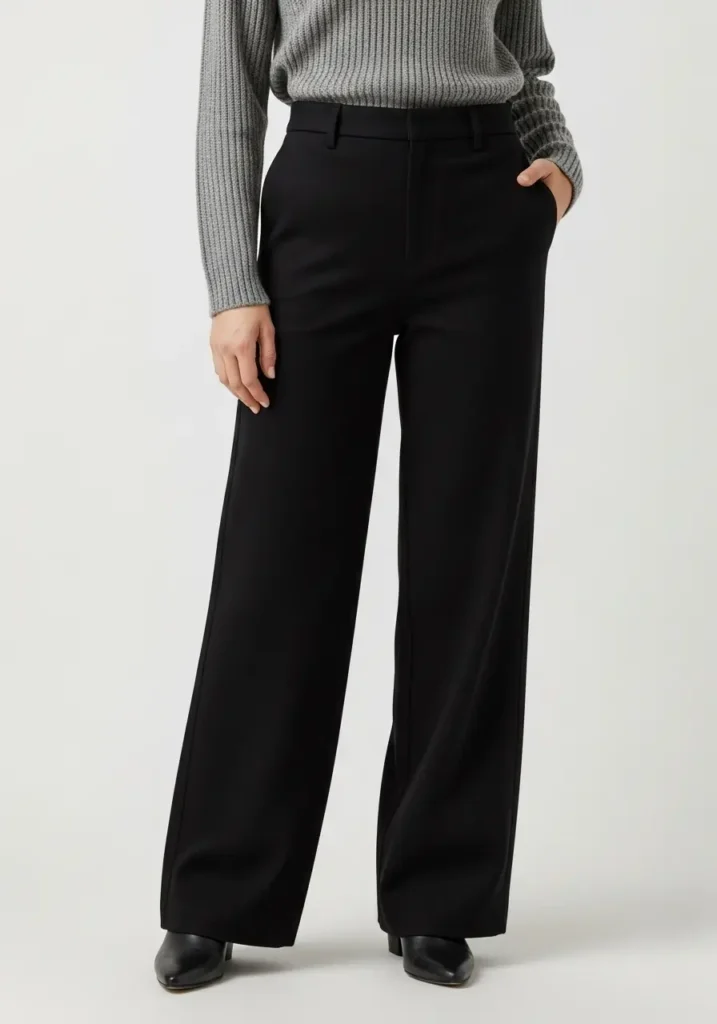
When you find a combination you enjoy, use it as a template. The same shirt-and-trousers idea might work with a lighter pair in warm weather and a heavier pair when temperatures drop.
Do not assume that the same named cut will fit identically in another fabric. Try it on again and compare the rise, inseam, waistband, and drape. Add another pair only if it fills a real gap in how you dress.
18. Test the Pants in Motion
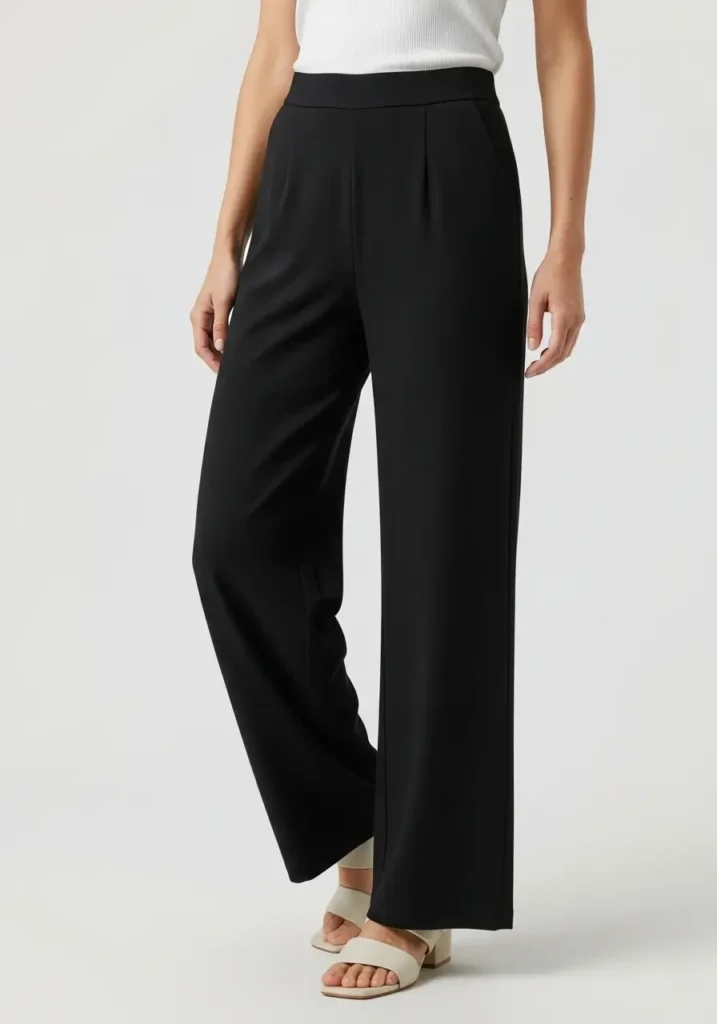
You should not need a special stance or an altered stride to make everyday pants work. Walk naturally, sit, and try a step or two where possible. If you repeatedly step on the fabric, reconsider the length or width.
Pay attention to where loose hems fall during your usual activities. If you need to keep lifting or rearranging the pants to move comfortably, a shorter hem or less expansive cut may be more useful. A good mirror view is only one part of a wearable outfit.
19. Keep the Combinations That Suit Your Life
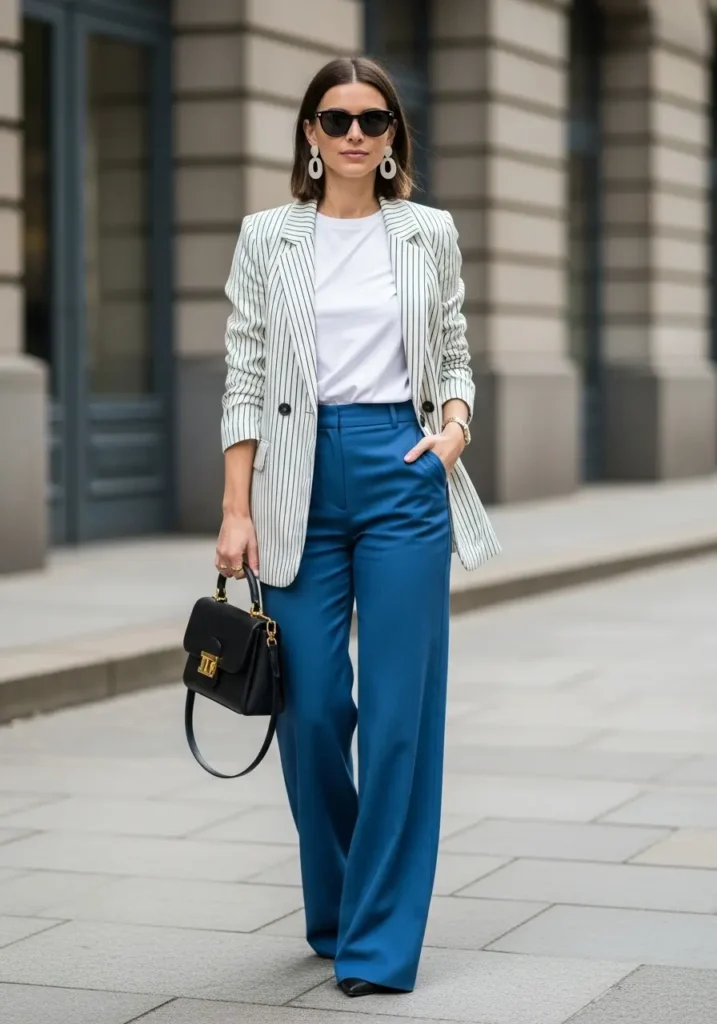
Judge an outfit by whether you like it, can move comfortably, and want to wear it again. Compliments are optional, and looking taller or smaller does not have to be your goal.
Take a quick outfit photo if it helps you remember combinations. Note the shoes that work with each hem and the tops that need little adjustment. Two or three reliable outfits are more useful than a long list of rules you dislike following.
Five Wide-Leg Pants Outfits to Try
- Casual day: Wide-leg jeans, a plain tee, and sneakers. Add a cardigan if you need warmth.
- Office: Tailored trousers, a button-down shirt, and loafers. A blazer can make the outfit more formal where needed.
- Warm weather: Lightweight wide-leg pants, a relaxed cotton shirt, and comfortable sandals, with the hem clear of the ground.
- Evening: Fluid dark trousers, a textured blouse or fine knit, and dressy flats or your preferred heels.
- More coverage: Wide-leg trousers, a longer shirt or tunic, and an optional open cardigan. Check that the layers fall freely and feel comfortable when seated.
If you are also planning your hair for a complete outfit, browse these long hairstyle ideas for inspiration.
Quick Fixes for Common Styling Problems
- The outfit feels too bulky: Try a lighter top, a different top length, or a less dramatically wide trouser leg. Change one thing at a time.
- The pants pull across the front: Check the hip fit and rise, not just the waist size. A different cut may work better than tightening a belt.
- The hem looks untidy: Test it with your everyday shoes before booking alterations. Follow the care label when washing and pressing.
- Pocket bags show through: Check the pants in brighter light. If that bothers you, look for different pocket construction, a lining, or a more opaque fabric.
- A tuck feels uncomfortable: Leave the top out and experiment with its length. Waist definition is a choice.
Do Petite or Tall Women Need Different Styling Rules?
No body type needs a separate set of fashion rules, but garment proportions matter. Petite and tall ranges may change the rise, knee placement, and pocket position as well as the inseam. If a pair feels wrong even at the right length, compare a different cut or size range.
Start with one pair, two tops, and the shoes you wear most. Make the fit comfortable and the hem practical, then keep the combinations that feel like you. Wide-leg pants should make getting dressed easier, without requiring you to follow all 19 tips at once.