How to Style a Buckle Belt: 10 Practical Outfit Ideas
To style a buckle belt, start with where it will sit, check that its width suits the garment, and decide whether you want the buckle to blend in or stand out. A simple belt can finish jeans and trousers; a more decorative one can give a plain dress or blazer a focal point.
You do not need a particular body shape, matching accessories, or a new wardrobe to make it work. The useful test is whether the belt sits comfortably and gives the outfit the effect you want—without pulling, bunching, or needing constant adjustment.
Get the Fit Right Before Choosing an Outfit
A belt worn through trouser loops has a different job from one worn over a dress. The first helps secure a waistband; the second changes how the fabric falls. Choose the size for the position where you will actually wear it.
- Measure over your clothing. Wrap a flexible tape around the intended position, including any layers. Compare that measurement with the brand’s size chart rather than relying on your jeans size.
- Check the loops. Measure their usable opening. A belt should thread through without forcing or folding; a wide strap will not suit every pair of high-rise trousers.
- Allow adjustment. Look for a fastening position that leaves room to loosen or tighten the belt. One belt may not fit both your waist and a lower hip position.
- Try sitting down. Walk, bend, and sit while wearing it. A buckle that presses into your stomach or a strap that digs in needs a different fit, shape, or position.
- Secure the tail. The keeper—the small loop beside the buckle—should hold the loose end neatly. An excessively long tail can be a sign that you need another size.
As a styling starting point, a slim belt around ¾–1 inch wide can work with lightweight clothes, while an everyday belt around 1–1½ inches wide may suit denim and tailored trousers. Wider belts can work over dresses and outerwear. These are options to try, not rules: the garment’s loops, fabric, and your comfort matter more.
1. Finish High-Waisted Jeans with a Visible Buckle
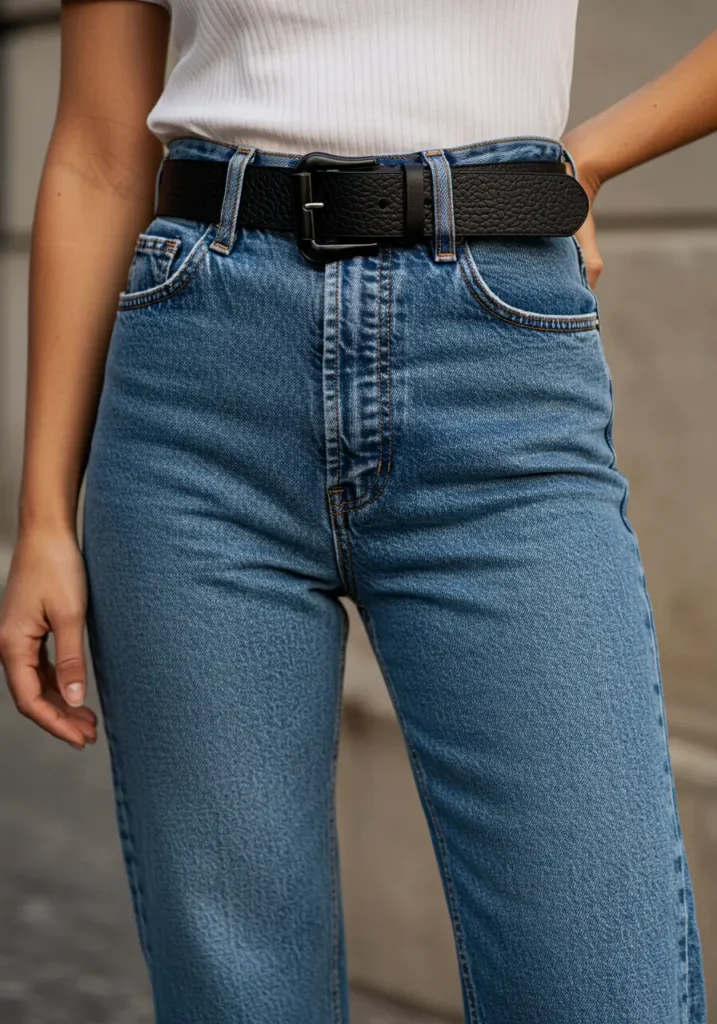
With high-waisted jeans, let the waistband determine the belt’s position. Trying to pull the jeans higher with a tight belt can distort the fit and gather fabric around the fastening.
Choose a strap that fits the loops, then reveal enough of it with a full tuck or a small front tuck. A plain rectangular buckle gives denim a clean finish; a rounded or engraved buckle adds more detail.
Try this outfit: Dark straight-leg jeans, a cream button-up shirt, a brown belt, and loafers or ankle boots. The shoes can echo the belt’s color without being an exact match.
If the waistband folds into deep pleats when you fasten the belt, the jeans may need a different cut or a waistband alteration. A belt can manage a small amount of looseness, but it cannot correct every fit problem.
2. Add Gentle Definition to a Midi Dress
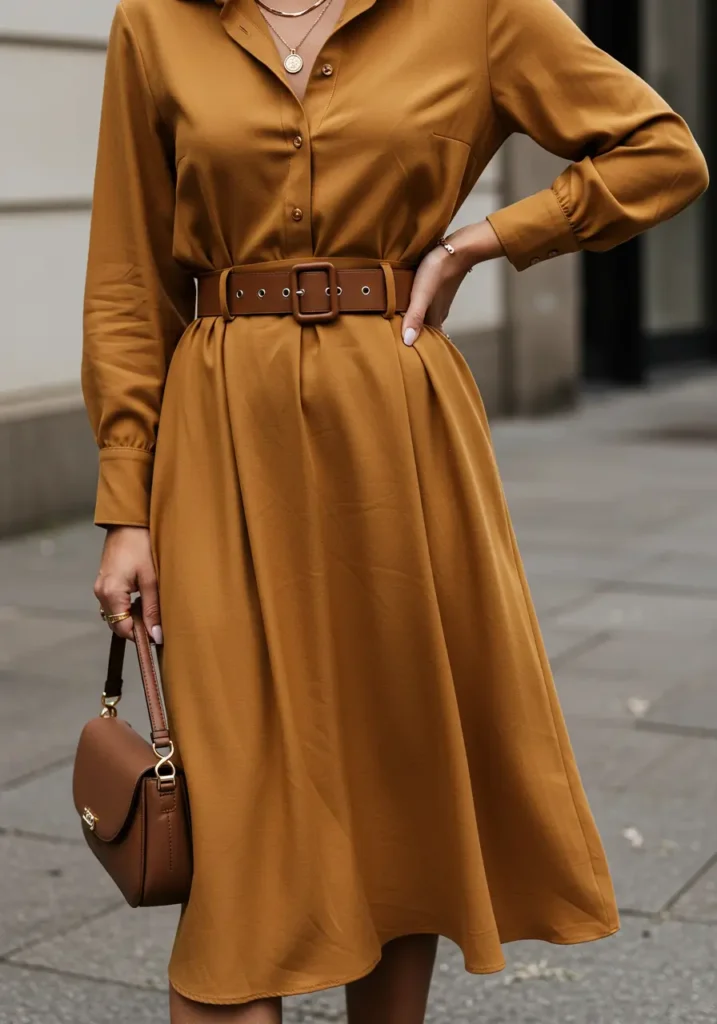
A belt can change the shape of a loose midi dress without permanently altering it. Begin with a lightweight strap and a smooth, modest-sized buckle, especially on fine or delicate fabric.
If the dress has a waist seam, try placing the belt there first. On an unstructured dress, experiment with a few positions and choose the one that feels comfortable. There is no requirement to create an hourglass shape or emphasize your waist at all.
Try this outfit: A navy midi dress, a slim tan belt, a light cardigan, and flat sandals. For a quieter effect, use a navy belt with a small buckle.
After fastening, gently distribute the gathers around your body. Check that the hem hangs evenly and the neckline has not been pulled out of place. If the fabric twists or the belt keeps sliding, the dress may work better with its original fabric tie or without a belt.
3. Keep Workwear Hardware Simple
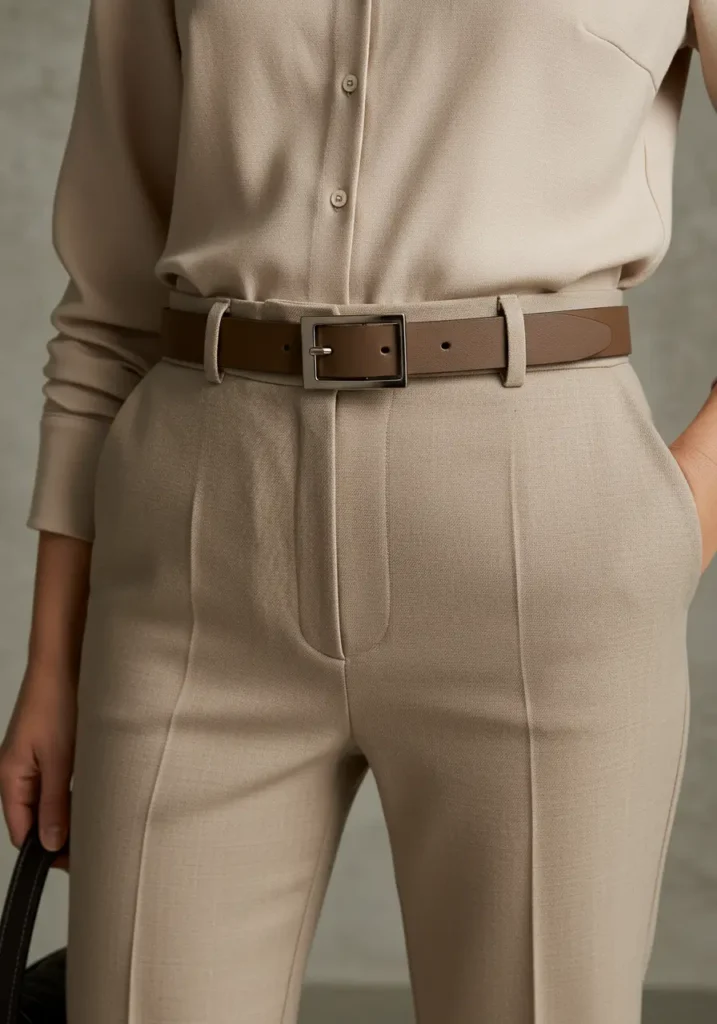
For understated workwear, choose a smooth strap and a buckle that lies fairly flat. A highly polished, oversized buckle will draw more attention than a small brushed-metal one, so choose according to your workplace and personal style.
Try this outfit: Charcoal trousers, a tucked-in blue shirt, a black belt, and loafers. Add a cardigan or blazer if you want another layer.
Matching your buckle to your watch or earrings is an easy way to coordinate, but mixed metals are also an option. You do not need to replace accessories just because their finishes differ.
Some tailored trousers have side adjusters or a clean waistband without loops. Wear them as designed if a belt would interrupt the fit. For a broader approach to simple separates, explore this old money capsule wardrobe guide.
4. Belt a Blazer or Coat Without Compressing the Layers
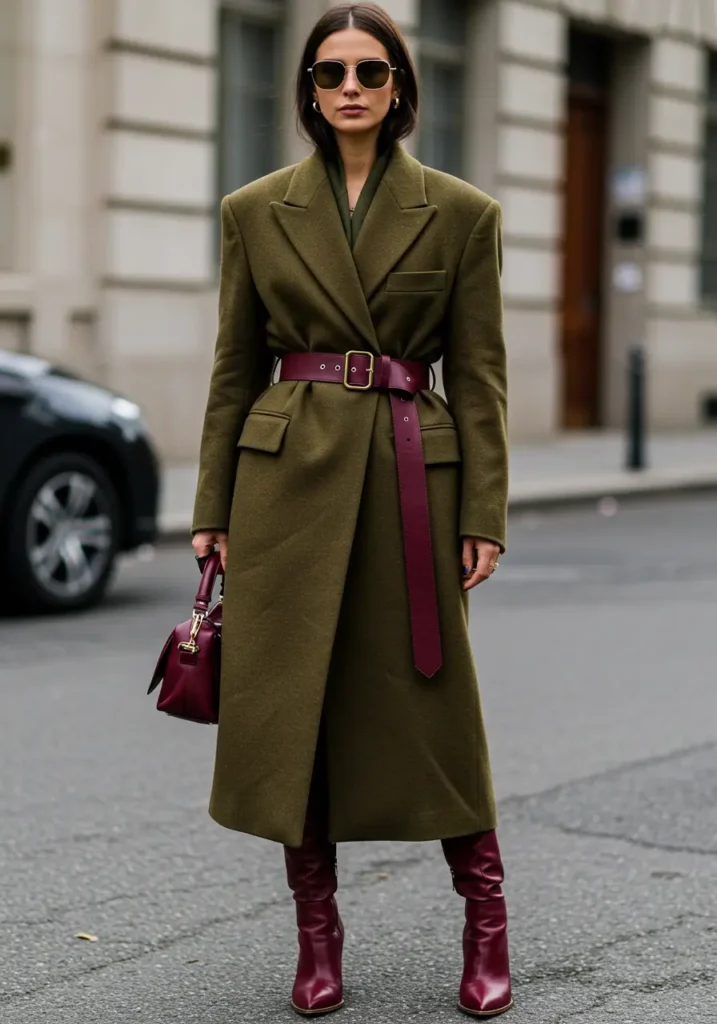
A belt over a blazer, cardigan, or soft coat can bring the layers together and change the outline. Start with outerwear that already closes comfortably; the belt should not have to pull the front edges into place.
Fasten it lightly, then smooth the fabric above and below. Check that the lapels lie naturally, the pockets remain accessible, and you can move your arms. Bulky quilting and very stiff tailoring can be harder to belt neatly.
Try this outfit: A camel blazer over a fine-knit sweater and straight-leg trousers, finished with a medium-width brown belt. Choose a tonal strap for a subtle effect or black for stronger contrast.
Measure over the full outfit before buying. A belt that fits your jeans may be too short over a coat. If you are replacing a trench coat’s fabric tie, keep the original and check that the replacement fits its loops.
5. Use a Colored Belt as a Small Accent
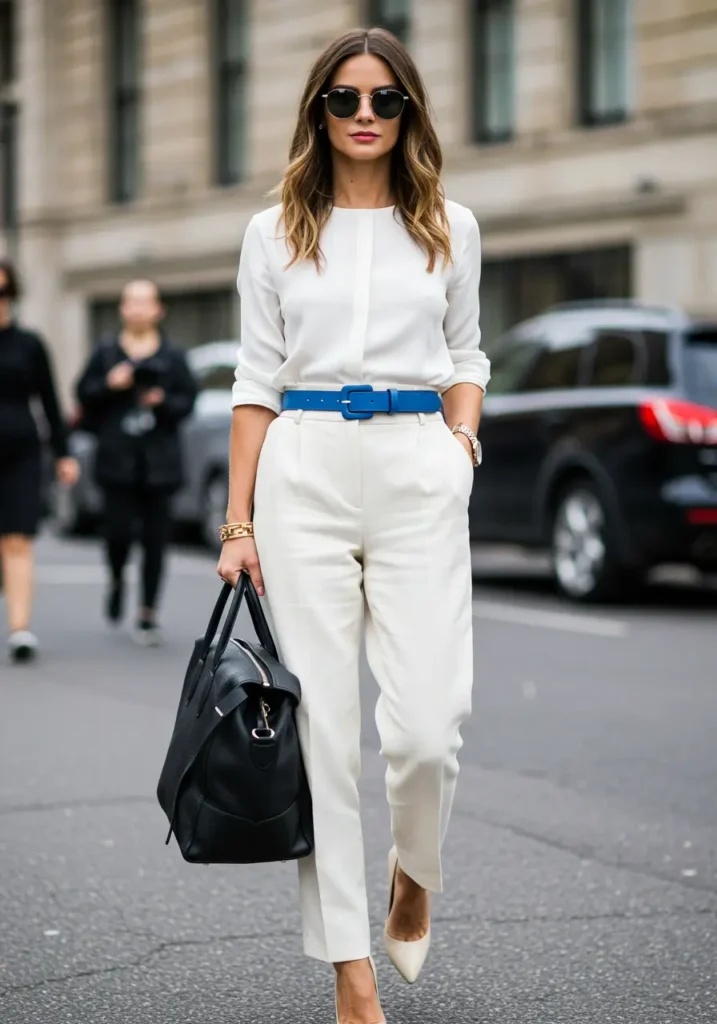
A colorful belt is a manageable way to try a shade you do not want to wear head to toe. Burgundy, green, red, or blue can give familiar neutral clothes a different feel.
For an easy combination, pick up a color already present in a printed scarf, blouse, or skirt. Alternatively, let the belt be the only strong color and keep the buckle simple.
Try this outfit: Navy trousers and a navy sweater with a burgundy belt, or a cream shirt dress with a dark green belt.
Choose the color alongside the clothes you plan to wear. There is no need to follow strict skin-undertone rules for an accessory sitting over fabric. If the contrast feels too strong, try a narrower strap or a deeper shade.
6. Work with a Jumpsuit’s Existing Waistline
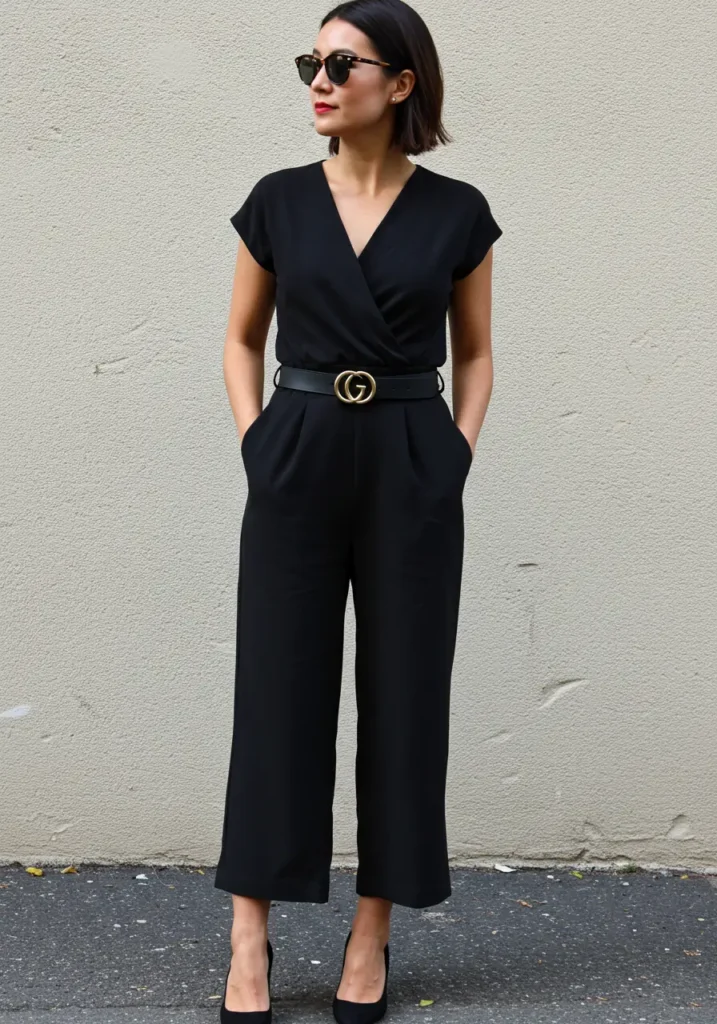
A jumpsuit’s waist seam, elastic, or belt loops are useful placement guides. Start there rather than fastening a belt at a different height and forcing the garment upward.
Choose hardware that suits the fabric’s weight. Sturdy cotton can support a more substantial buckle; a soft, lightweight jumpsuit may sit better with a narrower, lighter belt.
Try this outfit: A navy long-sleeve jumpsuit, a tan belt, and white sneakers for daytime. Swap to a slim tonal belt, earrings, and dressier flats for dinner.
Sit down and reach forward before leaving home. If the neckline, shoulders, or crotch seam pulls, loosen or remove the belt and reassess the jumpsuit’s fit. An easy fastening is also helpful when you need to take the garment off.
7. Choose Materials by Their Details, Not Their Labels Alone
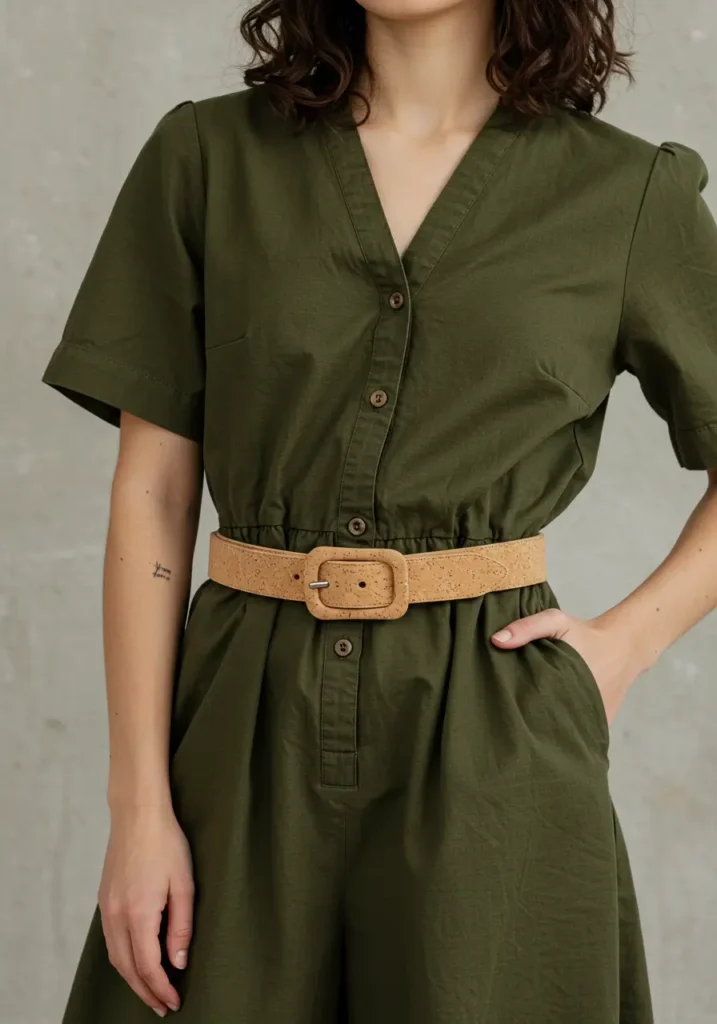
Start with a belt you already own, or consider a secondhand one in good condition. When buying, look for secure stitching, a firm buckle attachment, smooth edges, and holes that are not already stretching or splitting.
A material name alone does not tell you how long a belt will last. Check the full composition, care instructions, and repair options, particularly when a product uses broad terms such as “plant-based,” “recycled,” or “eco.”
The PETA-Approved Vegan label identifies products made without animal-derived materials. Treat it as an animal-material claim, rather than a complete environmental assessment. :contentReference[oaicite:0]{index=0}
For recycled-content claims, Textile Exchange’s RCS and GRS guidance explains how recycled materials are verified and tracked through the supply chain. GRS also includes processing requirements covering social, environmental, and chemical practices. Check the specific product’s claim rather than assuming every item from a brand has the same certification. :contentReference[oaicite:1]{index=1}
Try this outfit: A belt you already wear regularly with a linen shirt dress and comfortable flats. Repeating an accessory across several outfits is a practical reason to choose it.
8. Add Texture to a Tonal Outfit
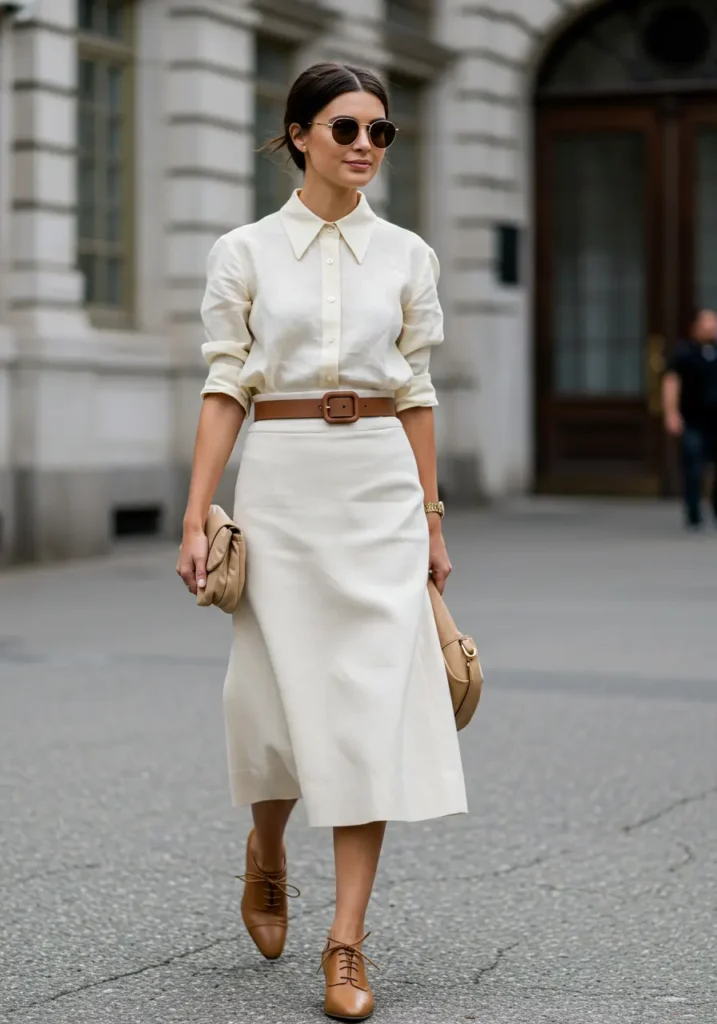
A belt does not have to contrast sharply to be useful. A similar color can keep the outfit visually connected while the buckle or strap texture adds detail.
Try a matte belt against smooth fabric, a woven strap with simple cotton, or a lightly textured belt with plain wool trousers. Look at the whole outfit in daylight: near-matching shades can work well without being identical.
Try this outfit: Cream trousers, an oatmeal sweater, a taupe belt, and beige flats. For an all-black outfit, a black strap with a small silver buckle creates a clear but restrained focal point.
If you want the texture to do most of the work, choose hardware close in color to the strap.
9. Let Wide-Leg Trousers Guide the Proportions
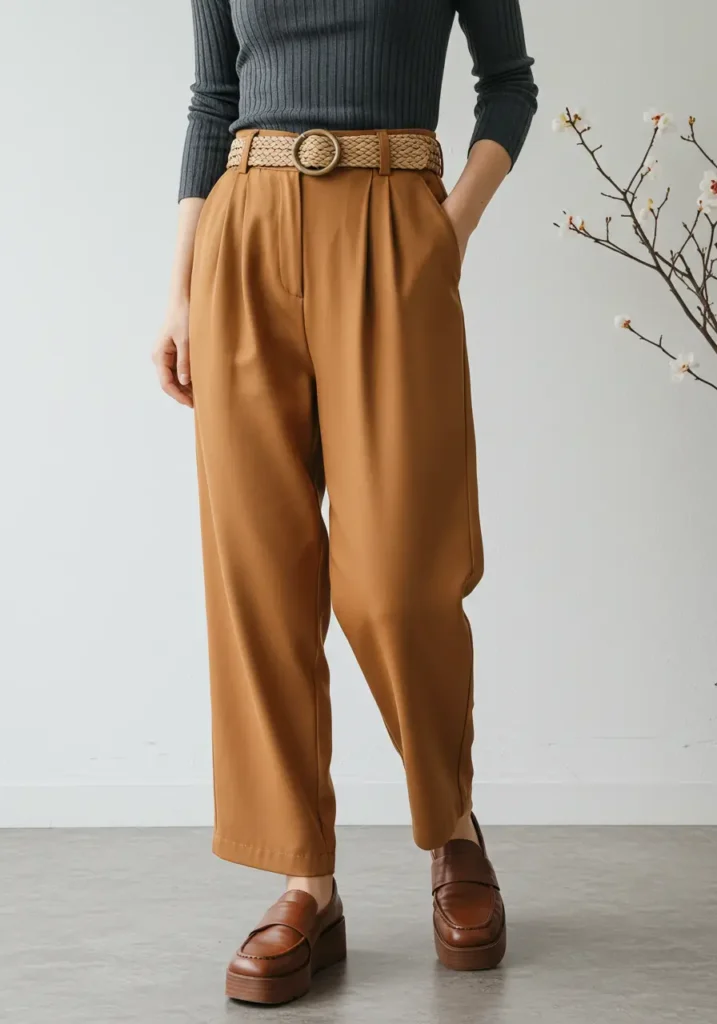
Wide-leg trousers do not automatically need a wide belt. The waistband and loops are better guides than the width of the trouser legs. A slim belt can look deliberate and balanced with a voluminous cut.
Reveal the waistband with a tucked shirt, a shorter sweater, or a partial tuck. A fitted top is one option, but a relaxed blouse can work too if you like a softer silhouette.
Try this outfit: Olive wide-leg trousers, a tucked-in cream long-sleeve top, a black belt with a small brass buckle, and loafers.
Wear the belt at the trousers’ intended rise. Do not pull the waistband above its comfortable position just to change the proportions. Choose shoes with the trouser hem in mind; both simple flats and heavier shoes can work.
10. Make a Western Buckle the Main Detail
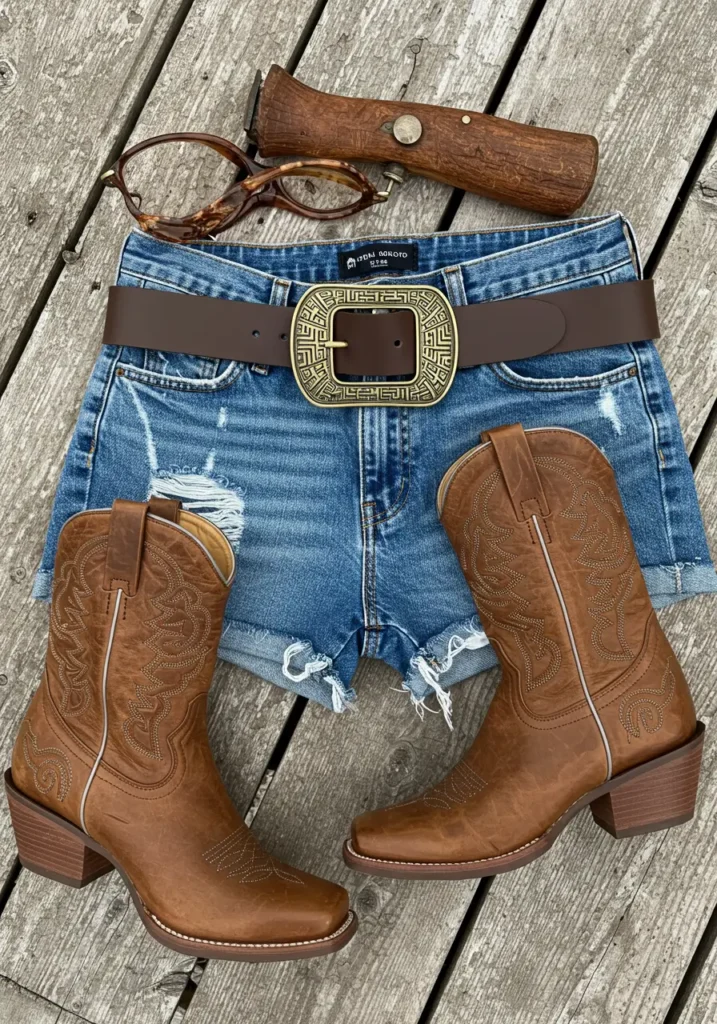
An engraved or oversized Western buckle brings plenty of detail on its own. Pairing it with familiar, simple clothes lets you try the style without buying a coordinated outfit.
Try this outfit: Straight-leg jeans, a plain white button-up shirt, a brown belt with an engraved silver buckle, and loafers. For a softer combination, try a plain midi skirt and a lightweight knit.
Cowboy boots are optional. Add them if you enjoy a stronger Western look, or use sneakers and flats to keep the reference subtle.
Check the buckle’s weight and edges before wearing it over delicate fabric. If you are buying a separate buckle for a belt you own, confirm that the attachment system and strap width are compatible.
Fix Common Belt Styling Problems
The buckle sticks out under a top
Try a flatter buckle or a thinner strap, and smooth the tucked fabric underneath it. If you want the belt hidden, decorative hardware may be working against that goal.
The dress bunches around the belt
Loosen the strap slightly and spread the gathers evenly. If the fabric still balloons more than you like, try a softer belt or leave the dress unbelted.
The belt digs in when you sit
Try a looser setting, a narrower strap, or a smaller buckle. Your height or body shape does not obligate you to wear a particular width. Comfort is a better guide than a body-type chart.
The belt looks too casual for the occasion
Try smoother material, quieter hardware, and a color close to the outfit. For formal clothing with a finished waist detail, removing the belt may be the most effective adjustment.
Keep Your Belt Ready to Wear
Follow the care instructions for the specific material and finish. Avoid applying leather conditioner, saddle soap, or metal polish to every belt by default; a treatment suitable for one surface may not suit another.
Store the belt without sharp folds, keep the buckle from rubbing against delicate items, and check the fastening and holes occasionally. Ask the manufacturer or a leather-repair specialist about loose hardware or sizing changes rather than forcing a new hole or cutting a strap that is not designed to be shortened.
For your next outfit, try the same clothes with a tonal belt and a contrasting one, then compare both while standing and sitting. Keep the version that looks intentional, feels comfortable, and lets you get on with your day.