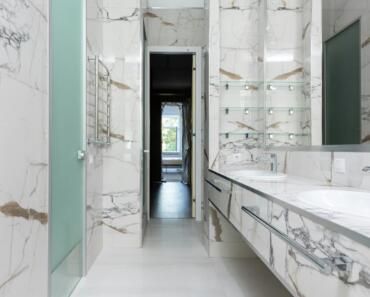
Imagine stepping into a room that instantly lowers your shoulders and slows your breath. This isn’t a fantasy; it’s the achievable reality of a thoughtfully designed bathroom. The colors you choose for this personal sanctuary do more than decorate—they directly influence your nervous system, setting the tone for your morning ritual or evening wind-down. Moving beyond simple aesthetics, a truly calming bathroom color scheme considers light, texture, and the psychological weight of hue to craft a space that feels less like a utility and more like a retreat.

The Science Behind Calming Colors
Why do certain colors make us feel serene while others energize or even agitate? The answer lies at the intersection of biology and psychology. Our brains process color before shape or detail, triggering immediate physiological responses. Soft, cool tones like pale blues and muted greens are processed by the calming parasympathetic nervous system, which can actually lower heart rate and blood pressure. A study published in the journal Color Research and Application found that environments featuring these hues can reduce perceived stress levels by up to 18% compared to spaces with high-contrast or intensely warm palettes.
The common challenge many face is translating a favorite color into a bathroom scheme that feels expansive, not overwhelming. A beloved deep navy can feel cavernous in a windowless powder room, while a stark all-white design might feel sterile and cold. The solution isn’t to abandon your color preferences but to master their application through balance, saturation, and strategic contrast.
5 Calming Bathroom Color Schemes for Your Spa Sanctuary
Creating a serene atmosphere involves curating a palette of two to four harmonious colors. The following schemes move beyond basic suggestions, offering specific combinations, material pairings, and actionable tips to bring each look to life in your home.
1. Coastal Tranquility: Ocean Blue, Charcoal, and Brushed Brass
This scheme captures the timeless serenity of the coastline. Instead of a flat sky blue, think of the deeper, more complex blue of the ocean at dusk. Pair it with charcoal, which provides a softer, warmer anchor than pure black, and accents of brushed brass for a touch of organic warmth. A 2023 survey by the National Kitchen & Bath Association noted that over 67% of homeowners seeking a “spa-like” bathroom requested elements that evoked natural water features.
To implement this, consider using a textured, wave-patterned wallpaper on a single focal wall behind the vanity. Paint the remaining walls in a matte-finish charcoal. Use brushed brass for faucets, shower hardware, and mirror frames. The floor can feature a large-format, light gray slate tile to ground the space. The key is ensuring the blue has enough gray in its base to prevent it from feeling overly vibrant, maintaining that subdued, oceanic depth.
2. Forest Bathing: Sage Green, Warm White, and Natural Wood
Inspired by the Japanese practice of Shinrin-yoku, or “forest bathing,” this palette brings the restorative qualities of nature indoors. Sage green, with its gray undertones, is inherently calming and pairs beautifully with the clean brightness of warm white (avoid clinical cool whites). The introduction of natural wood tones adds essential warmth and texture.
A practical way to execute this is through a sage green subway tile in a vertical stack bond pattern for the shower surround. Keep the walls in a warm white paint with a slight eggshell sheen to reflect light softly. Incorporate wood through a floating vanity with a live-edge slab front or through open shelving made of reclaimed oak. For a touch of specialist detail, consider a “Roman Clay” or plaster finish on one wall in a complementary earthy tone; this textured application adds a tactile, artisanal quality that enhances the organic feel.
3. Dusky Serenity: Deep Periwinkle, Cloud White, and Polished Nickel
Periwinkle sits uniquely between blue and violet, offering the calm of blue with the subtle creative spirit of lavender. In its deeper, duskier shades, it feels sophisticated and enveloping rather than childish. Pair it with a clean, bright cloud white and the cool gleam of polished nickel for a balanced, elegant look.
This scheme works beautifully in bathrooms with good natural light. Paint the walls in a matte periwinkle, and use high-gloss cloud white for all trim, cabinetry, and the ceiling to reflect light and create contrast. Choose polished nickel for fixtures and hardware—its slightly warmer tone than chrome pairs better with the periwinkle. For the floor, a classic black and white hexagonal mosaic tile adds timeless pattern without competing with the wall color. This combination proves that calming bathroom color schemes can be both deeply soothing and distinctly stylish.
4. Earthy Embrace: Taupe, Ivory, and Textured Stone
For those who find ultimate calm in neutral, grounded environments, this scheme is a masterclass in tonal variation. Taupe provides a warm, enveloping base, while ivory offers light and lift. The crucial third element is textured stone, like honed marble or travertine, which introduces visual interest through natural veining and tactile surfaces.
Use a warm taupe paint on the walls, perhaps in a finish like velvet or suede for added depth. An ivory freestanding tub becomes a sculptural focal point. Install a honed marble slab for the vanity top and a matching niche in the shower. To avoid a flat look, incorporate different textures within the neutral palette: a nubby ivory linen shower curtain, smooth ceramic vessels, and woven seagrass baskets. This approach creates a serene, layered look that feels collected and cozy.
5. Sunset Glow: Buttercream, Powder Blue, and Matte Black
This unexpected combination channels the gentle warmth of a fading sunset. Buttercream yellow provides a soft, radiant base that is far from harsh, while powder blue offers a cool counterpoint. Matte black grounds the scheme with modern, graphic definition, preventing it from feeling too soft or overly sweet.
You may also enjoy reading: Drywall Finishes Explained: Level Up Your Walls!.
Apply buttercream yellow to the walls, choosing a shade with a hint of brown or gray in its base to keep it sophisticated. Use powder blue for towels, a plush bath mat, and perhaps a painted vanity cabinet. Introduce matte black in deliberate, functional pieces: the faucet, shower frame, cabinet pulls, and a statement mirror frame. A terrazzo floor tile containing flecks of both warm and cool tones can beautifully unite the entire palette. This scheme demonstrates how warm and cool elements can coexist to create a uniquely inviting and calm atmosphere.
Implementing Your Chosen Calming Color Scheme
Selecting a palette is only the first step. Successful execution hinges on understanding balance, light, and finish. A monochromatic scheme, using varying shades of one color, is inherently harmonious but requires texture to add depth. A complementary scheme, using colors opposite each other on the color wheel (like blue and buttercream), is dynamic but must be handled with care—using one color as a dominant hue and the other as an accent is often the most calming approach.
Always test paint colors in the actual bathroom at different times of day. Artificial lighting, especially common in bathrooms, can dramatically alter how a color appears. A soft green might look drab under cool LED lights but perfectly serene under warm, dimmable sconces. Finally, remember that color isn’t just paint. It lives in your tiles, your linens, your accessories, and even the natural materials you choose. View these elements as integral parts of your chosen calming bathroom color schemes, not as afterthoughts.
Frequently Asked Questions
What is the most psychologically calming color for a bathroom?
Soft, muted blues and greens are consistently shown to have the most calming effect, as they are associated with nature, water, and the sky, triggering our parasympathetic nervous system. However, the “most calming” color is highly personal; some find deep, enveloping neutrals like charcoal or taupe more soothing than pastels.
Can dark colors be used in a small bathroom to create a calm feel?
Absolutely. Dark colors like charcoal, navy, or deep green can make a small bathroom feel cozy, intimate, and anchored rather than cramped. The key is to use high-gloss or reflective finishes on fixtures and mirrors to bounce light, and to keep ceilings and trim a light color to maintain a sense of spatial definition.
How do I choose a calming color scheme if my bathroom has no natural light?
In windowless bathrooms, lean towards lighter, warmer versions of cool colors. A pale, warm gray-blue will feel more inviting than a cold steel blue. Prioritize layered artificial lighting: overhead for general light, sconces or LEDs around the mirror for task lighting, and perhaps a dimmable feature light to set a relaxing mood for baths.
What are the best paint finishes for a calming bathroom?
Matte or eggshell finishes are ideal for walls as they absorb light, reducing glare and creating a soft, serene appearance. Use semi-gloss or high-gloss on trim, ceilings, and cabinetry to reflect light and create contrast, which helps define the space and prevents it from feeling flat.
How many colors should be in a calming bathroom palette?
Stick to a curated palette of two to four colors for a cohesive, restful look. This typically includes one main wall color, one secondary color for cabinetry or large fixtures, one or two accent colors for textiles and accessories, and a consistent metal finish for hardware. Too many competing hues can create visual chaos instead of calm.
Transforming your bathroom into a personal retreat is an investment in your daily well-being. By choosing one of these calming bathroom color schemes and applying it with intention, you create more than just a room—you create a sensory experience that welcomes you to pause, breathe, and recharge. The perfect palette is the one that feels like a deep sigh of relief the moment you walk through the door.