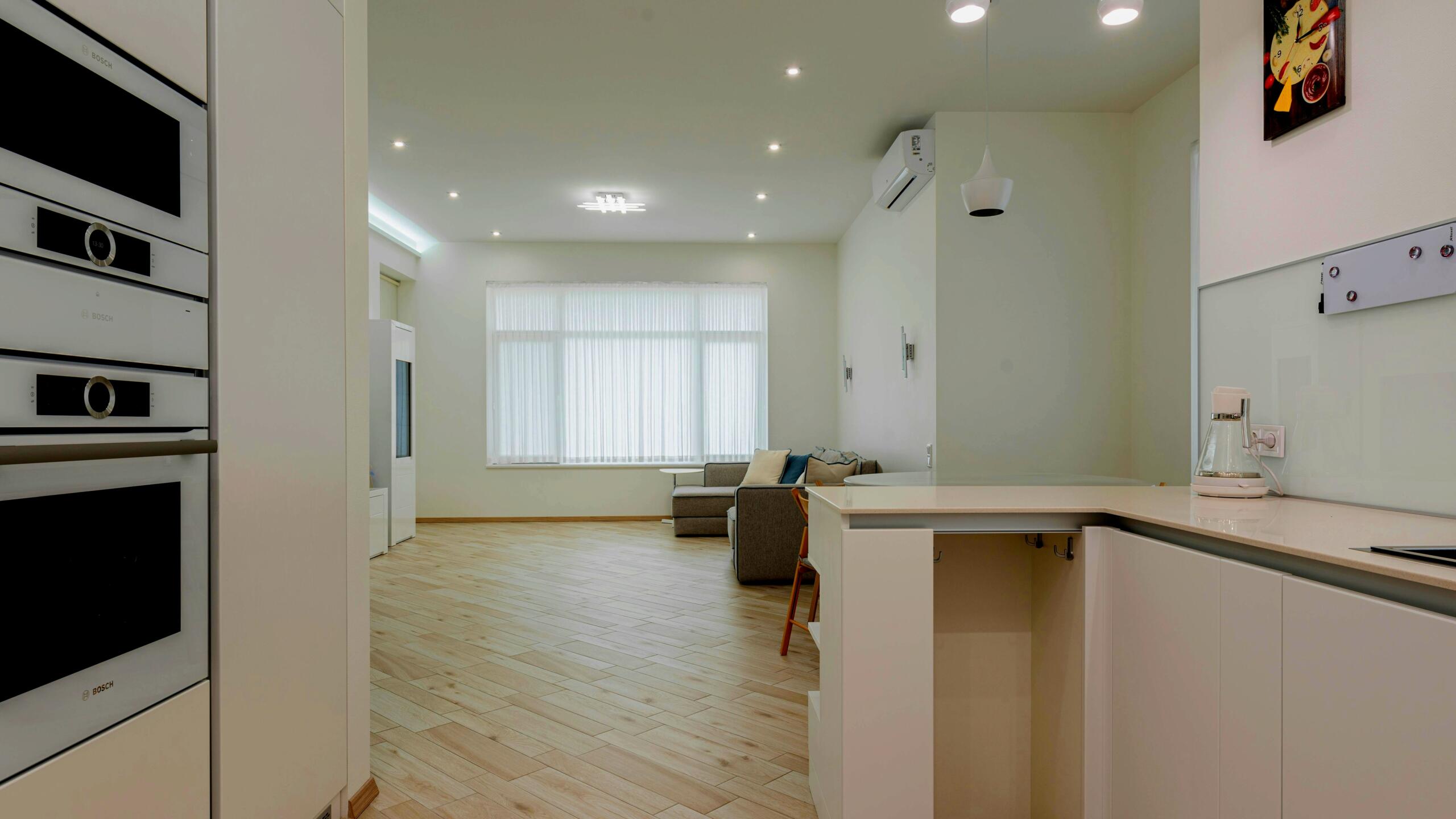
To estimate how much it costs to replace a kitchen floor with tile, use the Homewyse Calculator. As of May 2026, basic tile installation costs $16.38 to $20.21 per square foot. The calculator accounts for your specifics but excludes markup, tax, permits, and hazardous testing. Get professional quotes for final costs.
Cost to replace kitchen floor is the estimated expense to install new flooring, calculated using the Homewyse Calculator based on current material and labor rates.
What You Need to Use the Homewyse Calculator
- Project Dimensions: A precise measurement of your kitchen’s square footage.
- Space Details: Specific characteristics of your kitchen, such as layout and the condition of the existing subfloor.
- Material Preferences: Your desired tile material, size, and style to set an accurate baseline for material costs.
- Local Awareness: Understanding that the estimate will be based on average regional costs for materials and labor.
Step 1: Access the Homewyse Calculator for Tile Flooring
- Navigate to the Homewyse website using your web browser.
- Use the site’s search function to find the “Tile Flooring Installation Cost Calculator.” You can typically search for terms like “install tile floor cost” or “tile installation estimator.”
- Select the calculator result that specifically mentions tile flooring installation to ensure you are using the correct tool.
Step 2: Enter Your Kitchen Dimensions and Room Details
- Enter the total square footage of your kitchen floor area to be tiled. For accuracy, multiply the room’s length by its width.
- Specify any room details the calculator requests, such as the number of corners or the general condition of the existing floor.
- Acknowledge that the calculator uses a baseline cost per square foot for basic tile installation, updated regularly. This baseline is for basic, mid-range work under readily serviceable conditions.
- Your entered dimensions will scale this per-square-foot cost to generate your initial project range.
Step 3: Select Tile Material and Grade
- Choose your desired tile material from the calculator’s options, such as ceramic, porcelain, or natural stone.
- Select the tile grade; for a standard kitchen, “residential grade” is a common choice.
- Be aware that the calculator’s non-discounted retail pricing is often based on common sizes like 12″ x 12″ glazed ceramic tile.
- For real-world price checks, you can cross-reference material costs at retailers like Menards, The Home Depot, Floor & Decor, or Build.com.
Step 4: Review Included Cost Items in the Estimate
- Review that the estimate includes material and delivery costs for the tile, mortar, grout, underlayment, and local material and equipment delivery.
- Confirm that labor costs are derived from credible wage data from sources like the Journal of Light Construction and the U.S. Bureau of Labor Statistics.
- Check that job supplies expenses, such as blades, sponges, and plastic sheeting, are included.
- Note that equipment costs for tools like cutters and setters are included.
- Reference project spending data from the Harvard University Joint Center for Housing Studies (JCHS) for broader context.
Step 5: Understand What the Estimate Excludes
- Recognize that structural and surface preparation costs, such as removal of existing framing, wall surfaces, or plumbing/electrical fixtures, are not included in the estimate.
Step 6: Interpret and Use Your Estimate Result
- Review the final estimate range presented. Understand it is a calculated projection, not a fixed bid.
- Add buffer percentages for the common exclusions: contractor markup (13‑22%) and local sales tax.
- Remember the estimate is for educational purposes and not a substitute for written quotes. Per its guidelines, Homewyse strongly recommends contacting reputable professionals for itemized assessments.
- Use your adjusted estimate as a powerful budgeting tool and a baseline for comparison when soliciting actual quotes from local installers.
Common Mistakes When Using the Homewyse Calculator
- Inaccurate Measurements: Guessing your kitchen’s square footage instead of measuring it precisely.
- Ignoring Site Conditions: Failing to account for a severely uneven subfloor or the need to move appliances, which adds labor.
- Overlooking Exclusions: Using the raw calculator number as your total budget without adding for markup, tax, and permits.
- Selecting Wrong Materials: Choosing a high-end natural stone in the calculator when planning to use standard ceramic tile, which skews the estimate significantly.
- Ignoring Local Variance: Treating the estimate as a fixed price without accounting for local labor rate differences and material availability.
Conclusion: Verify Your Kitchen Floor Replacement Cost Estimate
The Homewyse Calculator provides an excellent starting point for understanding the potential cost to replace your kitchen floor with tile. Its data-driven approach offers a realistic range based on current material and labor rates. However, its true value is as a planning and negotiation aid. Always verify your final budget by obtaining detailed, written quotes from at least three licensed and insured local flooring contractors, as this due diligence ensures your project’s financial plan is sound and achievable.
FAQ
Q: Is the Homewyse Calculator free to use?
A: Yes, the Homewyse Calculator is free to use. You can enter your kitchen dimensions and select materials to get a cost estimate without any charge.
Q: Can I get a precise cost for my kitchen floor replacement from Homewyse?
A: No, the Homewyse estimate is for educational purposes and not a substitute for written quotes. It provides a general range; for precise costs, contact local professionals.