The Mosaic Toolbox: What You Need to Begin
Before you start cutting and placing, gathering the right supplies makes all the difference. The beauty of diy mosaic projects is that the tools are straightforward and the materials are widely available. Here is what you will need to build a solid foundation for your craft.

Essential Tools for Cutting and Shaping
Tile nippers are your primary cutting tool. They look like pliers but have a sharp carbide edge designed to score and break glass or ceramic. Always wear safety glasses when using them. Tiny shards can fly off at surprising angles. For smoothing the rough edges left after cutting, keep a piece of fine-grit sandpaper (around 120-grit) handy. A quick sanding makes handling the tiles much safer and gives your piece a polished look.
Adhesives and Mesh: The Bonding Agents
Adhesive fiberglass mesh is a secret weapon for beginners. It allows you to lay out your entire design on a flat surface before moving it to its final home. The mesh is slightly sticky, holding tiles in place while still allowing adjustments. For the adhesive itself, choose one that matches your surface. Weldbond works beautifully for porous surfaces like wood and concrete. For metal or plastic, a tubed construction adhesive is often a better choice. A notched spreader helps you apply a consistent layer of adhesive, about half the thickness of your tiles.
Grout: The Unsung Hero
Grout fills the gaps between tiles and provides structural integrity. Sanded grout is the standard choice for mosaics because it fills larger gaps (1/8 inch or wider) without cracking. It also comes in a wide array of colors, allowing you to either blend the design or make the individual tiles pop. You can buy premixed grout for small projects or dry powder for larger ones. A 5-pound box of powdered grout costs around $6 and covers approximately 27 square feet, making it a very economical choice for ambitious creators.
The Core Technique: 4 Steps to Mosaic Mastery
Every mosaic follows the same basic workflow. Understanding these steps will give you the confidence to tackle any surface. Most diy mosaic projects can be completed in a few hours of active work, though you must allow 24 hours for the adhesive and grout to dry properly.
Step 1: Prepare Your Tiles
Start by calculating how many tiles you need. You can use online estimators or simply lay out your design on a piece of paper cut to the size of your surface. When you are ready to begin, use your tile nippers to cut tiles into the shapes your design requires. Remember to smooth any sharp edges with sandpaper. This step is crucial for safety and for achieving a professional finish.
Step 2: Lay Out Your Design on Mesh
Place your adhesive fiberglass mesh on top of your paper layout. Begin arranging your tiles on the mesh. Leave consistent gaps between each piece for the grout. The mesh holds everything together, allowing you to transfer the entire design as a single unit. This method is much easier than placing individual tiles directly onto a sticky surface.
Step 3: Apply Adhesive and Transfer
Once the tiles are fully laid out, prepare your surface. Roughen it with sandpaper and wipe it clean. Apply your chosen adhesive using the notched spreader. Carefully pick up the mesh with the tiles and place it onto the adhesive. Press gently but firmly to ensure good contact. Allow the adhesive to dry for 24 hours before trimming the excess mesh around the edges.
Step 4: Grouting and Finishing
Once the grout is ready to use, put on disposable gloves. Spread the grout over the surface, forcing it into all the gaps between tiles. Use a damp sponge to wipe away the excess grout from the tile surfaces. Rinse the sponge frequently to avoid spreading a haze over your tiles. Allow the project to dry for 24 hours. After drying, buff away any remaining film with a soft, dry cloth.
3 Pretty diy mosaic projects to Brighten Your Home
Now that you understand the fundamentals, it is time to apply them. These three projects are designed for indoor use, but you can easily transform them for outdoor spaces with a topcoat of weather-resistant sealer. Each project builds on the basic technique while introducing a unique challenge.
Project 1: The Geometric Table Top
A metal or plastic table with a raised edge is an ideal canvas for your first mosaic. The raised lip hides the outer edge of your tiles, giving the piece a built-in frame. We used a simple tray table for this project.
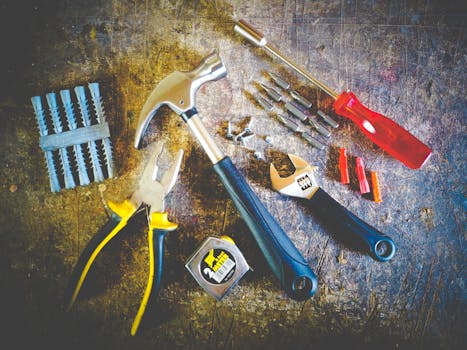
Amazon US Verified
Hang-O-Matic All-in-One Picture Hanging Tool
Tape measure, sliding level, and markers in one tool for flawless gallery walls.
The Challenge: Ensuring the tiles sit flat and create an even surface for practical use.
The Solution: Choose tiles of similar thickness, such as vitreous glass tiles. Plan a geometric pattern on paper first. Roughen the tabletop with coarse sandpaper and wipe it with rubbing alcohol. Apply your adhesive, transfer the mesh-mounted design, and press gently. Use a rubber mallet to tap down any high spots. Grout with a contrasting color to make your geometric lines sharp and defined.
Project 2: The Charming Curved Planter
A plain concrete or ceramic planter becomes a sculptural work of art with a mosaic skin. This project is perfect for adding a pop of color to a windowsill or porch.
The Challenge: Curved surfaces make it difficult to use the mesh transfer method. The mesh does not bend easily around tight curves without lifting.
The Solution: Apply the tiles directly to the planter, one by one. Use Weldbond adhesive, which grabs quickly and dries clear. Work in small sections so the adhesive does not dry out before you place the tiles. Once the adhesive has cured for 24 hours, apply sanded grout. Use a damp sponge to sculpt the grout lines smoothly around the curve. The result is a seamless, organic look that follows the shape of the pot.
You may also enjoy reading: 7 Secrets of Bauhaus Design History.
Project 3: The Keepsake Picture Frame
A simple wooden picture frame becomes a cherished heirloom with a mosaic border. This project is small, quick, and makes a wonderful gift.
The Challenge: Keeping grout and adhesive off the inner lip of the frame where the photo and glass sit.
The Solution: Apply painter’s tape to the inner lip of the frame before you begin. Cut your tiles into small, uniform pieces known as tesserae. Arrange them on the frame surface in a pattern or randomly for a more eclectic look. After grouting, remove the painter’s tape before the grout fully dries. This leaves a beautifully clean edge and saves you from hours of tedious scraping.
Troubleshooting Common Hiccups in diy mosaic projects
Even experienced crafters run into small problems. Knowing how to fix them keeps your project moving forward smoothly.
Dealing with Uneven Tiles
If your tiles are different thicknesses, the final surface will be bumpy. To fix this, use a rubber mallet to gently tap high spots into the adhesive after placing them. Alternatively, apply a thicker layer of adhesive underneath thinner tiles to bring them up to level. For tabletops, using tiles from the same batch or manufacturer ensures consistent thickness.
Removing Grout Haze
A white, filmy residue left on tiles after grouting is called grout haze. It is very common. Buff it off with a dry microfiber cloth. If the haze persists, you can use a specialized grout haze remover, which is available at most hardware stores. The key is to wipe your tiles thoroughly with a damp sponge during the grouting process and rinse the sponge frequently.
Preventing Cracked Grout
Cracked grout usually happens when the gaps are too wide for the type of grout used. Unsanded grout is only suitable for very narrow gaps (less than 1/16 inch). For standard mosaic work, always use sanded grout. The sand particles provide strength and prevent shrinkage as the grout dries. If you are working on a flexible surface, consider adding a grout additive to increase flexibility.
Taking Your Mosaics Outdoors
If you want to move beyond indoor decor, mosaics can thrive outside with a few adjustments. The principles remain the same, but the materials need to withstand weather and temperature changes.

Amazon US Verified
Ceramic Fluted Decorative Vase Set
Modern minimalist ceramic vases perfect for shelves, consoles, and dried florals.
First, ensure your base surface is weather-resistant. Concrete, stone, or weather-treated wood are good choices. Use a waterproof adhesive designed for outdoor use. Once your mosaic is complete and the grout has dried, apply a penetrating sealant over the entire surface. This protects the grout from moisture and prevents freeze-thaw damage. A top coat of sealant is the single most important step for outdoor longevity.
Mosaic art is an ancient practice that remains deeply satisfying today. The Romans used tiny tesserae to create intricate scenes, a technique called opus vermiculatum. You can use the same principles on a much smaller scale to bring texture and personal artistry into your living space. Gather your materials, pick a project, and enjoy the meditative process of placing one small piece at a time. Whether you are decorating a table, a planter, or a frame, these diy mosaic projects offer a rewarding creative outlet that produces stunning, lasting results.
Amazon US Verified
Peel and Stick Textured Linen Wallpaper
Removable neutral wall covering providing architectural warmth and tactile depth.
As an Amazon Associate, azuloz.com earns from qualifying purchases.