Most people who give up on bonsai within the first six months do not fail because they lack patience. They fail because they picked a species that was never going to survive their living room light, their watering habits, or their local climate. Choosing the right tree from the start makes more difference than any fancy tool or advanced technique.
What Are the Basic Techniques for Creating Bonsai?
Bonsai is not about growing dwarf trees from special dwarf seeds. It is about taking a perfectly ordinary woody-stemmed perennial and keeping it small through deliberate, ongoing intervention. The tree stays miniature because the grower applies a set of techniques that constrain its size while preserving its proportions.
The core methods boil down to three practices. Crown pruning involves cutting back the canopy — the branches and foliage — to maintain a compact silhouette that mimics a full-sized tree in nature. Root pruning happens less frequently but is just as critical. By trimming the root mass and repotting the tree into the same small container, you prevent it from becoming root-bound while also slowing its top growth. The third piece of the puzzle is the shallow pot itself. A container with limited depth naturally restricts how far the roots can stretch, which signals the tree to stay small. Together, these three practices — crown pruning, root pruning, and growing in shallow pots — form the backbone of every bonsai training regimen, regardless of species.
Why Are Some Species Preferred Over Others?
Theoretically, almost any woody-stemmed perennial with branches can be coaxed into a bonsai form. In practice, some trees respond to the training process with grace, while others fight you every step of the way. The species that show up most often in bonsai nurseries and guides earn their place because they bring three traits to the table.
First, they look the part. Species with naturally small leaves, interesting bark textures, or elegant branch structures produce convincing miniatures without requiring you to battle genetics. Second, they tolerate the routine stresses of bonsai life — root confinement, regular pruning, wiring, and repotting — without sulking for months or dying outright. Third, they adapt to a range of environments, meaning a grower in a dry apartment and a grower on a humid porch can both find success with the same tree. It is not garden snobbery that narrows the field to a handful of reliable candidates. It is thousands of hours of collective trial and error across generations of enthusiasts who learned which trees reward effort and which ones punish it.
The 13 Best Bonsai Tree Species to Start Growing Today
Below are thirteen species that deserve a spot on any new grower’s shortlist. Some are famous for their forgiving nature. Others bring spectacular flowers or unusual foliage to the table. All of them have proven themselves in the hands of beginners who were willing to pay attention and learn as they went.
1. Juniper
If there is a default beginner bonsai, juniper is it. Walk into any garden center that carries bonsai and the odds are high that the first tree you see will be some variety of Juniperus. Juniper tolerates heavy pruning without complaint, which matters because new growers tend to cut more than they should while they are still developing an eye for branch structure. The tree also takes well to wiring. You can wrap copper or aluminum wire around its branches, bend them into dramatic shapes, and the juniper will hold those positions as the wood sets. That makes it ideal for learning wiring techniques without worrying that every mistake will kill the branch. Keep juniper outdoors in full sun and let the soil dry slightly between waterings, and it will reward you with years of steady growth.
2. Ficus
For someone who lives in a dim apartment and knows they will occasionally forget to water their plants, ficus is a gift. Ficus retusa and Ficus microcarpa are two of the most common indoor bonsai tree types in the world, and their popularity stems from sheer toughness. A ficus can go longer without water than most other bonsai species and will not collapse if the light coming through the window is less than ideal. The trunk develops a thick, buttressed base that gives even a young tree an aged, substantial appearance. Aerial roots sometimes descend from the branches, adding another layer of visual interest. Indoors, place ficus near a bright window but do not panic if it gets some shade. Outdoors in warm months, it thrives in partial sun. Just bring it inside before temperatures drop below 50 degrees Fahrenheit.
3. Japanese Red Maple
Japanese red maple is an affordable tree that will tolerate the pruning mistakes of novice bonsai artists, but you will need to remember to water it. The delicate, hand-shaped leaves turn brilliant crimson in autumn, and even a young specimen can deliver a display that stops people mid-conversation. New growers appreciate the tree’s willingness to bounce back from aggressive cuts. If you remove a branch and later realize it was the wrong one, the maple will usually push new growth elsewhere and give you another chance. The trade-off is that Japanese red maple is thirsty. Its fine leaves lose moisture quickly, especially in warm weather or direct afternoon sun. A single day of dry soil can scorch the foliage and set the tree back weeks. Water it faithfully, give it dappled shade during the hottest part of the day, and you will have a bonsai that looks like a tiny piece of a Kyoto garden.
4. Chinese Elm
Chinese elm is great for learning pruning techniques and thrives indoors or outdoors. That dual adaptability is rare in the bonsai world and extremely useful for someone who is not yet sure where their tree will live long-term. The leaves are naturally small, the bark develops a mottled, peeling texture with age, and the branch structure takes well to both clip-and-grow methods and wiring. If you make a pruning error, the Chinese elm responds with vigorous back-budding, sending out fresh shoots from old wood that let you correct your mistakes within a single growing season. Indoors, it needs as much light as you can give it. Outdoors, it handles a range of conditions as long as the soil drains well. For a first bonsai that bridges the indoor-outdoor divide, Chinese elm is hard to beat.
5. Cotoneaster
Cotoneaster earns its place on this list through sheer ornamental generosity. In spring, the branches cover themselves with tiny white or pale pink flowers that attract bees even on a balcony several stories up. By late summer and autumn, those flowers have transformed into bright red berries that cling to the branches well into winter. The leaves are small and glossy, which gives the tree a tidy, refined silhouette without requiring constant trimming. Cotoneaster also develops a gnarled, twisting trunk fairly quickly, so a three-year-old specimen can already look like it has been growing in a pot for decades. It prefers full sun and well-draining soil. A light frost does not faze it, making it suitable for outdoor growers in temperate regions.
6. Japanese Black Pine
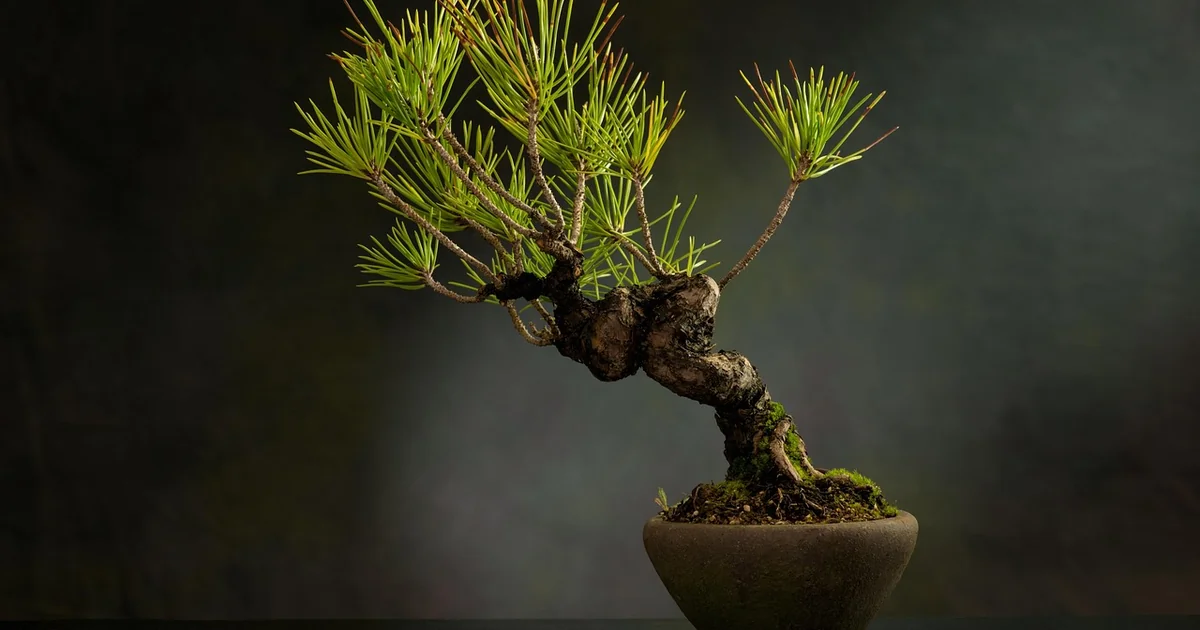
Japanese black pine is the species you graduate to when you want to understand bonsai as a lifelong practice rather than a weekend project. It is not the easiest tree on this list, but it is one of the most rewarding. The long, dark green needles grow in pairs and can be reduced in size through a technique called candle pruning, where you snap off the new growth candles in early summer to force shorter, denser needles. The bark turns rough and deeply fissured with age, giving even a modest tree the gravitas of a centuries-old forest giant. Japanese black pine demands full sun and excellent drainage. Overwatering is its biggest enemy. If you are willing to learn its rhythms — and accept that mastery takes years, not weeks — this species will teach you more about bonsai than any book ever could.
7. Jade Plant
For someone who has never kept any plant alive for more than a month, the jade plant offers a forgiving entry point. Crassula ovata is technically a succulent rather than a woody tree, but it develops a thick trunk and branching structure that reads as a credible miniature tree. Its fleshy, oval leaves store water, which means it can survive prolonged dry spells that would kill a maple or elm within days. Jade plants thrive in bright light and prefer to dry out completely between waterings. They also root easily from cuttings, so a single plant can produce material for multiple bonsai experiments over the years. The main limitation is that jade does not tolerate freezing temperatures, so it must live indoors during winter in most climates. Keep it near a south-facing window and resist the urge to water it too often, and it will outlast nearly every other plant in your collection.
8. Bougainvillea
If your idea of a beautiful bonsai involves explosive color, bougainvillea delivers. The papery bracts — often mistaken for flowers — come in shades of magenta, orange, red, purple, and white, and they can cover the entire canopy during a bloom cycle. The actual flowers are small and white, tucked inside those vivid bracts. Bougainvillea grows rapidly in warm weather and tolerates aggressive pruning, which makes it suitable for bonsai training despite its natural tendency to sprawl. It needs full sun and relatively dry conditions to bloom well. Overwatering or overfertilizing will produce lots of green growth and very few bracts. In cold climates, bougainvillea must overwinter indoors. Give it the sunniest spot you have and cut back on water during the dormant period, and it will burst into color again when warm weather returns.
9. Azalea
Azalea bonsai commands attention when it blooms. The flowers — which can be white, pink, red, or purple depending on the cultivar — smother the branches so completely that the foliage nearly disappears. The most commonly used species for bonsai is the Satsuki azalea, a group of Japanese cultivars bred specifically for their compact growth and prolific flowering. Azaleas prefer acidic soil and consistent moisture. They do not like to dry out completely, which means they demand more attentive watering than a juniper or jade plant. After flowering, the spent blooms should be removed promptly to prevent the tree from wasting energy on seed production. With proper care, an azalea bonsai can live for decades and produce a more spectacular show each spring.
10. Serissa
Serissa, sometimes called the tree of a thousand stars, produces tiny white flowers nearly year-round in the right conditions. The blooms are small — rarely more than half an inch across — but they appear in such profusion that the tree looks dusted with snow. Serissa has a reputation for being temperamental. It dislikes being moved and will sometimes drop its leaves in protest if you shift it from one window to another. But the payoff for that sensitivity is a bonsai that blooms more continuously than almost any other species on this list. Give it bright, indirect light and consistent moisture, and resist the urge to relocate it frequently. Once it settles into a spot it likes, serissa rewards you with a steady stream of flowers and a sweet, faint fragrance.
11. Dwarf Pomegranate
Dwarf pomegranate brings something most bonsai species cannot offer: actual edible fruit, scaled down to match the miniature tree. The cultivar Punica granatum ‘Nana’ produces trumpet-shaped orange-red flowers in summer, followed by small pomegranates that are perfectly real even if they are only an inch or two across. The bark turns a warm gray-brown and develops interesting texture early in the tree’s life. The leaves are narrow and glossy, and they flush with a reddish tint in spring before maturing to green. Dwarf pomegranate needs full sun and warm temperatures to fruit well. In cold climates, it must spend winter indoors or in a protected greenhouse. The combination of flowers, fruit, and year-round visual interest makes it one of the most conversation-starting species you can grow.
12. Ginkgo Biloba
Ginkgo biloba is a living fossil, a tree species that has existed essentially unchanged for over 200 million years. Its fan-shaped leaves are unlike those of any other tree on this list, and in autumn they turn a luminous butter-yellow before dropping all at once, often within a single day. Ginkgo grows slowly and develops a tall, upright form that works well for formal upright and broom-style bonsai. It is remarkably pest-resistant and tolerant of urban air pollution, which makes it a good choice for city dwellers. The main thing to know is that ginkgo is dioecious, meaning individual trees are either male or female. For bonsai purposes, you want a male tree. Female ginkgos produce fruit that smells intensely unpleasant as it decomposes. Most bonsai nurseries sell grafted male specimens, so this is rarely an issue, but it is worth confirming before you buy.
13. Bald Cypress
Bald cypress breaks the rules in an interesting way. It is a conifer, like juniper and pine, but unlike most conifers, it drops its needles in autumn and grows fresh ones in spring. The feathery, bright green foliage turns rusty orange before falling, giving you a seasonal display that rivals any maple. In the wild, bald cypress grows in swamps and along riverbanks, which means it tolerates wet soil far better than most bonsai species. Some growers even submerge the pot in a shallow tray of water during the hottest summer weeks. The trunk develops a fluted, buttressed base that adds visual weight to the composition. Outdoors in full sun with plenty of water, bald cypress grows vigorously and responds well to pruning. It is an excellent choice for someone who wants a conifer but is tired of seeing junipers everywhere.
You may also enjoy reading: Freeze Sperm at Home: Comparing Legacy, FCC Kits vs Clinic Banking.
What Soil Mix Is Best for Bonsai?
Most trees grown as a bonsai will grow best in a bonsai soil mix. Standard potting soil is too dense, holds too much water, and compacts over time, which suffocates the roots and leads to rot. The classic bonsai substrate is a mixture of hard Japanese akadama, pumice, and black lava, with some horticultural additives included. Akadama is a claylike mineral mined in Japan that absorbs water and releases it slowly while also breaking down just enough over time to signal when repotting is needed. Pumice provides aeration and holds moisture without becoming waterlogged. Black lava adds drainage and structural stability, preventing the mix from collapsing into a dense mass.
A typical ratio for deciduous trees is roughly two parts akadama to one part each of pumice and lava. Conifers often do better with a slightly leaner mix, perhaps equal parts of all three components. The exact proportions matter less than the principle: bonsai roots need air as much as they need water, and a granular, free-draining substrate delivers both. Do not be tempted to save money by substituting garden soil or cheap potting mix. The soil is the foundation of your tree’s health, and skimping here guarantees problems later.
The Role of Bonsai Soil Mix in Species Success Beyond the Basics
Once you move past the standard three-component mix, you start encountering variations that can improve results for specific species. Tropical trees like ficus and serissa appreciate a slightly higher proportion of akadama to hold more moisture between waterings, especially when grown indoors where humidity tends to be low. Succulent bonsai like jade plants want the opposite — more pumice and lava, less akadama, to ensure the soil dries quickly and the roots never sit in dampness.
The particle size also matters. A tree in a tiny mame bonsai pot, which might hold only a few tablespoons of soil, needs finer particles to prevent the roots from drying out too fast. A large specimen in a deep training pot can handle coarser particles that maximize drainage. Understanding these nuances transforms soil from a background detail into an active tool for keeping each species in its ideal growing conditions. The same akadama-pumice-lava framework applies to almost everything, but fine-tuning the ratios and particle sizes is what separates a tree that merely survives from one that thrives.
Can Bonsai Be Grown Indoors or Outdoors?
The short answer is yes, but the species determines the setting, not the other way around. Trees are outdoor organisms by nature. They evolved to feel the wind, track seasonal temperature shifts, and photosynthesize under full-spectrum sunlight. An indoor environment is always a compromise, and some species handle that compromise far better than others.
Ficus is the standout indoor performer. It copes with lower light and drier air and does not require a winter dormancy period. Chinese elm straddles the line, thriving outdoors during the growing season and tolerating a bright indoor spot during winter. Juniper, Japanese red maple, Japanese black pine, and bald cypress must live outdoors year-round. They need cold winters to trigger dormancy, and without that rest period, they weaken and eventually die. If you have no outdoor space at all, limit yourself to ficus, jade, and perhaps a Chinese elm or serissa, and invest in a good grow light to supplement what your windows provide.
Why Indoor vs. Outdoor Species Selection Matters for Bonsai Beginners
New growers often assume that indoor bonsai must be easier because the environment seems more controlled. The opposite is usually true. Indoor conditions are stable in ways that can paradoxically stress a tree. Central heating dries the air to levels that would never occur in nature. Windows filter out significant portions of the light spectrum. Day length stays constant, depriving the tree of seasonal cues that regulate its growth cycles. An outdoor tree, by contrast, enjoys natural humidity fluctuations, full sunlight, and the gradual temperature shifts that signal when to push new leaves and when to rest.
For a beginner, starting with an outdoor species often leads to faster learning and fewer mysterious failures. A juniper on a sunny balcony is in its element. The same juniper on a desk six feet from a north-facing window is slowly starving. Some species like Chinese elm thrive both indoors and outdoors, while ficus is best indoors — and knowing which category your chosen tree falls into is the single most important decision you make after buying it.
Cost and Availability as a Hidden Factor in Species Choice for New Growers
Beginners rarely think about cost as a factor in species selection, but it shapes the early bonsai journey more than most realize. A pre-bonsai juniper in a nursery pot can cost less than twenty dollars. A well-developed Japanese black pine with five years of training behind it can run into the hundreds. When you are still learning how to water correctly — and when the statistical likelihood of killing your first tree is non-trivial — starting with an affordable species makes practical sense.
Japanese red maple is an affordable tree that will tolerate the pruning mistakes of novice bonsai artists, which makes it a particularly cost-effective choice. Chinese elm and juniper are also widely available and competitively priced. At the other end of the spectrum, rare cultivars of azalea or imported specimen pines represent a significant investment that is better made after you have kept several easier trees alive for a year or two. Availability also varies by region. A nursery in the Pacific Northwest might carry twenty varieties of conifer pre-bonsai, while a shop in Florida might specialize in tropical species. Let your local market guide your early choices. The best bonsai species for you is often the healthy, affordable one sitting on the shelf at a nursery within driving distance.
Frequently Asked Questions
How do I know if a bonsai species will thrive indoors or outdoors in my climate?
Check the tree’s native habitat. Tropical and subtropical species like ficus and jade plant evolved in warm, stable environments and can handle indoor conditions year-round. Temperate species like juniper, maple, and pine need a cold winter dormancy period and must live outdoors. For outdoor trees, compare your local USDA hardiness zone to the species’ cold tolerance range. If your winters drop below the tree’s minimum temperature, you will need to provide winter protection such as an unheated garage or a cold frame.
What is the easiest bonsai species to keep alive for someone with no prior plant experience?
Ficus is the most forgiving indoor bonsai for absolute beginners because it tolerates inconsistent watering and moderate light levels without collapsing. For outdoor growers, juniper offers the same combination of resilience and low maintenance. Both species bounce back well from pruning mistakes and do not require specialized feeding schedules. Start with one of these two, keep it alive for a full year, and you will have the confidence to branch out into more demanding species.
Can I grow a bonsai tree from seed or should I start with a pre-grown plant?
Growing bonsai from seed is a multi-year project that requires patience and a willingness to wait five to ten years before the tree is ready for serious training. Beginners are better served by purchasing a young pre-grown tree from a nursery or bonsai specialist. A pre-grown plant already has an established trunk and root system, which lets you start practicing pruning, wiring, and repotting immediately. Once you have gained experience with mature material, growing from seed becomes a rewarding long-term experiment rather than a frustrating first step.