The idea of staying in the home you love as the years go by is a comforting thought. You know every creak in the floorboards, every angle of the morning light, and the layout that fits your daily rhythm. But as mobility, vision, and strength shift over time, that same house can begin to feel less like a sanctuary and more like an obstacle course. The good news is that you do not need to wait for a crisis to make changes. Thoughtful aging in place renovations can transform your home into a space that works with you, not against you, for decades to come. We spoke with design professionals who specialize in this exact challenge to identify the seven upgrades that offer the most value for your investment.

Why Plan for Aging in Place Renovations Now
Waiting until you absolutely need a modification often means making rushed decisions under stress. A broken hip or sudden diagnosis can force a family into expensive, hurried remodels. Professionals like Kyla MacGinnis, an RN and co-founder of BuildABLE Accessible Design & Renovations, see this scenario play out often. By planning ahead, you spread out the cost, avoid disruption, and can choose materials you actually enjoy instead of settling for whatever is available in an emergency. A gradual approach also means you can enjoy the improvements immediately, not just when they become necessary.
1. Install a Curbless Shower
The traditional bathtub is one of the most dangerous spots in any home. Lifting a leg over a high tub wall while balancing on a slippery, wet surface is a recipe for a fall, especially as muscle strength and coordination naturally decline. Kyla MacGinnis recommends removing the tub entirely and replacing it with a curbless shower—a shower with zero barrier at the entry point. This design allows anyone using a walker, a wheelchair, or simply unsteady legs to walk straight in without stepping over anything.
Beyond safety, curbless showers look modern and sleek. They do not carry the sterile, clinical appearance that many people associate with medical equipment. You can choose beautiful tile, a bench seat, and a rainfall showerhead to create a spa-like atmosphere. The main technical consideration is the floor slope. To drain properly, the shower floor must be angled toward the drain, which is straightforward in new construction but can require raising the subfloor in a renovation. Budget for this extra labor if you are retrofitting an existing bathroom. The payoff is a dramatic reduction in fall risk and a bathroom that feels open and spacious.
2. Upgrade Your Lighting Significantly
Many homeowners underestimate just how much their vision changes after age 50. Natalia Pierce, a designer and owner of Detail by Design, points out a startling fact: after turning 50, the average person requires about 50 percent more light to see as clearly as they did in their thirties. Standard lighting plans that worked for decades suddenly leave rooms feeling dim and shadowy. Those shadows can hide tripping hazards like a stray shoe, a rug edge, or a pet toy.
Pierce cautions against relying solely on flat recessed pot lights, which are popular because they are inexpensive and unobtrusive. However, these fixtures can lose between 50 and 70 percent of their light output before it reaches your countertops or floors. The light gets trapped inside the ceiling cavity. A better approach is to use LED bulbs or compact fluorescent (CFL) bulbs that direct light downward. For example, a 10-watt LED or a 15-watt CFL provides the same brightness as a 60-watt incandescent bulb but with better efficiency and direction. Layer your lighting with under-cabinet strips, wall sconces, and floor lamps to eliminate dark corners entirely. Good lighting is one of the most cost-effective aging in place renovations you can make.
3. Choose Slip-Resistant Flooring Throughout
Falls are the leading cause of injury among older adults, and the floor you walk on every day plays a massive role in preventing them. Sean MacGinnis, president and co-founder of BuildABLE, advises installing slip-resistant flooring not just in the bathroom but throughout the entire home. A fall can happen in the kitchen, hallway, or living room just as easily as in the shower.
Several materials offer excellent traction without sacrificing style. Luxury vinyl tile (LVT) performs well whether it is wet or dry, feels comfortable underfoot, and comes in designs that mimic wood or stone. Engineered wood provides a classic look with better stability than solid hardwood, which can warp. Cork and rubber are two standout choices that also provide cushioning. If a fall does occur, these softer materials reduce the impact, potentially preventing a fracture. Cork is naturally antimicrobial and warm to the touch, while rubber is incredibly durable and easy to clean. Linoleum, made from natural materials, is another resilient option. Avoid high-gloss finishes and large-format tiles that become slippery when wet. Look for a coefficient of friction rating of 0.6 or higher for safety.
4. Create High Color Contrast for Better Navigation
As vision changes, distinguishing between similar colors becomes difficult. A white wall meeting a white door frame can look like one seamless surface, making it easy to misjudge distances or bump into things. This is where the concept of light reflectance value (LRV) becomes useful. LRV measures how much light a color reflects on a scale from 0 (absolute black) to 100 (pure white).
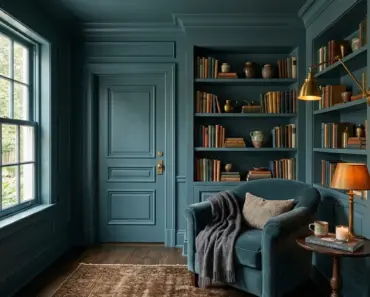
Designers recommend a difference of 30 to 40 LRV points between adjacent surfaces. For example, your door trim should be 30 to 40 points lighter or darker than the wall color. Darker trim is often easier to see because it creates a clear frame around the opening. The same principle applies to walls and floors. If your floor is a medium brown, your baseboards and walls should be noticeably lighter or darker. This contrast helps your brain process depth and boundaries, reducing the risk of walking into a wall or missing a step. You can achieve this with paint, tile, or even furniture placement. It is a low-cost change that pays off in daily confidence.
You may also enjoy reading: 7 Vital Needs for Hostas in May: Complete Checklist.
5. Swap Out Round Knobs for Lever Handles
Round doorknobs require a tight grip and a twisting motion that can be painful or impossible for hands affected by arthritis, reduced strength, or nerve damage. Lever handles, on the other hand, only require a downward push with the palm, wrist, or even an elbow. This small swap makes every door in your home easier to operate, from the bathroom to the bedroom to the front entrance.
Consider extending this logic to faucets as well. Single-lever kitchen and bathroom faucets allow you to adjust temperature and flow with one hand. Touchless faucets, which turn on with a wave, add another layer of convenience and hygiene. Cabinet pulls should also be D-shaped or bar-style rather than small knobs, giving fingers more room to grip. These changes are inexpensive and can be completed in a single afternoon with just a screwdriver. They are among the simplest aging in place renovations that deliver immediate results.
6. Widen Doorways and Hallways
Standard interior doorways are typically 30 to 32 inches wide. This width is fine for walking through, but it becomes a tight squeeze for a walker and is often impossible for a wheelchair. Widening doorways to at least 36 inches, and preferably 38 inches, makes the entire home accessible. Hallways should be at least 42 inches wide to allow comfortable passage and turning space.
This renovation is more involved than swapping hardware or adding lights. It often requires removing and reframing the doorway, which can impact the surrounding wall and flooring. However, doing this work before it is an emergency gives you control over the timeline and budget. You can coordinate it with other renovations, such as flooring replacement, to minimize disruption. If a full doorway widening is not feasible right now, consider offset hinges. These hinges allow the door to swing completely out of the opening, gaining you an extra inch or two of clearance without moving the frame.
7. Install Grab Bars That Look Like Accessories
Many people resist grab bars because they look institutional—cold metal rails that scream “hospital.” Modern designs have solved this problem. You can now find grab bars that resemble towel racks, toilet paper holders, or decorative shelves. These multifunctional fixtures blend into your decor while providing critical support near the toilet, in the shower, and next to the bed.
Installation is key. Grab bars must be anchored into wall studs or reinforced blocking to support up to 250 pounds or more. Do not rely on suction cups alone; they can fail without warning. A professional installer can add blocking behind the drywall during a bathroom renovation, ensuring the bars are secure and hidden. Place one near the entry of the shower, one near the toilet, and one inside the shower for stability while washing. The peace of mind that comes from having something steady to hold onto is invaluable, especially during nighttime trips to the bathroom when grogginess increases fall risk.
Bringing It All Together
You do not have to tackle every renovation at once. Start with the changes that address your biggest current concerns or the areas where you spend the most time. Perhaps that means upgrading the bathroom lighting this month and swapping out doorknobs next month. Each improvement builds on the last, creating a home that supports your independence and comfort. By investing in these aging in place renovations gradually, you protect both your safety and your enjoyment of the home you have worked so hard to create.