The Surprising History of Summer Vacation
It might feel like summer break has been a part of American life forever. Movies, television shows, and nostalgic songs paint it as a timeless tradition. Kids pour out of school in June and return in September. But this schedule is not ancient. In the 1800s, schools operated year-round. The break emerged because wealthy families fled hot, crowded cities for cooler countryside homes. Schools sat nearly empty during those months. In the late 1800s, reformers standardized the academic calendar for both urban and rural areas. The result was the summer vacation we know today. It was never designed for farm work — that is a common myth.

What Is the Summer Slide?
Today, parents worry about the so-called summer slide. This term describes the learning loss children may experience during the long break. Studies show that test scores in math and reading often flatten or drop over the summer months. The average decline is modest but measurable. Some researchers question how precisely we can measure this loss. Still, most educators agree that time away from structured learning can erode skills. The good news? Parents can prevent this slide with engaging, hands-on experiences. You do not need a classroom. You just need the right activities to beat summer learning loss. These activities weave education into play and exploration.
Below are seven creative ideas. Each one blends fun with real learning. They require your active participation and a willingness to be a little silly. The payoff is huge: your child stays sharp, and you bond in memorable ways. Let us dive in.
1. Go Birding (or Create a Backyard Scavenger Hunt)
What birds live in your neighborhood? Most people see only pigeons and crows. Help your child discover the variety of avian life around you. Together, research common local species. Make a simple checklist of birds you might spot on a short walk. Then grab a pencil, head outside, and tick off each one you see. This activity teaches observation, patience, and basic biology.
For younger children, adapt it into a backyard scavenger hunt. Write down items like a smooth rock, a dandelion, an ant, or a yellow flower. Walk around and check them off. This builds vocabulary and attention to detail. Both versions get your family moving and talking about nature. It is a fun activity to beat summer boredom while encouraging curiosity.
2. Plan a Dream Getaway
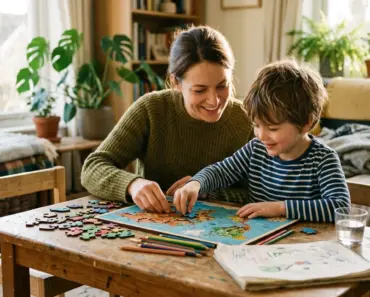
Your child likely has a dream destination you cannot visit this year. That is fine. Ask them to plan the trip anyway. They should research the location, learn about its history, and create a full itinerary. What will you do each day? Where will you eat? How much will it cost? Older kids can present their plan using a poster board or a simple slideshow. Younger kids can draw a picture of their ideal place and look at a map of the world.
This project covers research, writing, budgeting, and public speaking. It turns a wish into a rich learning experience. Your child practices planning and persuasion — skills that serve them well in school and life. Plus, you might discover a place worth visiting someday. This kind of imaginative work is one of the most effective activities to beat summer slide because it keeps the brain fully engaged.
3. Get Gardening Together
If you have a garden, give your child a dedicated plot. It does not need to be large. Take a trip to a local nursery together. Let them choose vegetables, flowers, or herbs. Discuss what grows best in your climate and season. Then plant, water, and tend the garden over the summer. They will learn about life cycles, responsibility, and basic botany.
Younger children can still participate. They can dig in the dirt, search for worms, and help water plants. Even playing with soil provides sensory stimulation and fine motor practice. Gardening also teaches delayed gratification — waiting for seeds to sprout. It connects children to where food comes from. This hands-on science is a perfect activity to beat summer learning loss.
4. Open a Home Restaurant
Hand over the kitchen (with supervision) and let your child run a restaurant for a day. Older kids can plan a menu, create a shopping list, go grocery shopping (with you), prepare simple dishes, set the table, and even design a menu card. Younger children can help choose ingredients, wash vegetables, stir, or set napkins. This activity combines math (measuring, budgeting), reading (recipes), creativity (decorating), and social skills (serving food).
You can add a mock currency system for extra math practice. Charge family members for their meals and make change. It feels like play but reinforces essential academic concepts. Make it a weekly tradition and watch your child’s confidence grow. This kind of project-based learning is a standout among activities to beat summer slide.
You may also enjoy reading: 5 Normal Parenting Rules Parents Are Calling Out as Toxic.
5. Put on a Talent Show
Gather everyone in the house — siblings, cousins, neighbors, adults. Announce a family talent show. Let your child take charge of whatever interests them most. They can design sets, manage lighting, create a program, or prepare their own act. They might write a short play, invent a dance, perform a song, or operate homemade puppets. This project builds organization, teamwork, creativity, and performance skills.
A talent show also teaches perseverance. Rehearsing a song or memorizing lines takes practice. The final performance provides a huge confidence boost. Parents should participate too — be silly, sing off-key, or tell a joke. When you model playful learning, your child feels safe to take risks. The shared laughter strengthens your bond. This is one of the most joyful activities to beat summer boredom and learning loss.
6. Design a Board Game
Challenge your child to invent their own board game. Provide cardboard, markers, dice, and small objects for game pieces. They must decide on rules, a theme (space, jungle, fantasy), and a way to win. This exercise involves logical thinking, writing, and artistic design. They might incorporate math by adding spaces that require counting or simple arithmetic. They can test the game with family, then refine it based on feedback.
This process mirrors real-world product development. Children learn to plan, iterate, and collaborate. They experience failure as part of the creative process. When the game finally works, they feel immense pride. It is a low-cost, high-engagement activity that keeps young minds active. Consider it a powerful weapon in your toolkit of activities to beat summer slide.
7. Start a Mini Science Notebook
Encourage your child to become a scientist for the summer. Give them a blank notebook. Each day or week, they can pick a simple question to investigate. Examples: “Does a plant grow taller if we play music?” or “How many different types of clouds can I spot?” or “Which brand of bubble gum blows the biggest bubbles?” They write down their hypothesis, conduct the experiment, record observations, and draw conclusions. This teaches the scientific method in a natural, enjoyable way.
Younger kids can draw pictures or dictate observations to you. Older kids can write paragraphs and take measurements. The notebook becomes a treasured record of summer curiosity. It builds literacy, math, and critical thinking. It also nurtures a lifelong love of inquiry. This self-directed project is an ideal activity to beat summer learning loss because it places the child in charge of their own exploration.
These seven ideas prove that summer does not have to mean a mental vacation. Play and learning can coexist beautifully. The key is your enthusiastic participation. When you engage with your child in birdwatching, garden planting, or designing a board game, you send a clear message: learning is fun. That mindset lasts far beyond one season. So grab a bird guide, a seed packet, or a piece of cardboard. Beat the summer slide together, and make memories that stick long after the last day of break.