What cosmetic procedure did Barry Manilow admit to?
Barry Manilow has never been shy about his drive to look his best. The singer recently revealed that plain old vanity prompted him to go under the knife. In a candid interview, he confirmed that he has had cosmetic work done. Specifically, he admitted to having one facelift while living in Los Angeles. He did not say exactly when the surgery took place or name a specific surgeon.

He also hinted at other minor touch-ups along the way. “After that, it’s just been a little here, a little there,” he explained. He described the difference between major work and small adjustments. A facelift, in his view, qualifies as real work. The smaller things are just routine maintenance. This openness stands out in an industry where many celebrities prefer to stay vague about their procedures.
The admission came during a broader conversation about aging and appearance. He was direct about his reasons. He simply wanted to look better and felt no shame in saying so. For a public figure who spent decades in the spotlight, that level of honesty is refreshing.
Why does Barry Manilow say he doesn’t use Botox?
Botox has become a household name in cosmetic upkeep. Many performers rely on it to smooth lines and maintain a fresh expression. Barry Manilow takes a different path. He said he does not get Botox at all. He does not need it because he has already had a facelift.
His reasoning makes practical sense. A facelift lifts and tightens the underlying structure of the face. That removes the need for injectables that temporarily relax muscles. “I look fantastic, but I’m a hundred years old, right? I don’t get Botox or anything,” he joked. His tone was light, but his point was clear: one major procedure replaced the need for regular injections.
Some people prefer the results of a facelift because it addresses sagging skin rather than just wrinkles. Botox targets expression lines. A facelift lifts the entire lower face and jawline. For Manilow, that one-time approach suited his goals better than ongoing appointments.
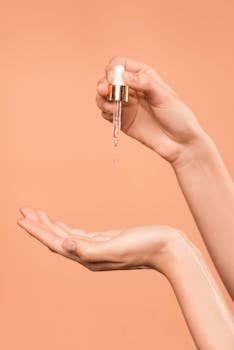
Amazon US Verified
CeraVe Hydrating Facial Cleanser
Non-foaming lotion with hyaluronic acid and ceramides that cleanses without stripping.
How did early career criticism affect Barry Manilow?
Long before he considered any cosmetic work, Barry Manilow faced harsh remarks about his appearance. He faced criticism about his looks early in his career. Reviewers and comedians used his name to get an easy laugh. He was mocked not only for his music but also for how he looked.
“It lasted for so long – from putting me down for the songs, and then putting me down for what I looked like. If you wanted to get a big laugh, you would mention my name,” he recalled. The experience took a real emotional toll. He admitted that it sent him into deep self-pity. There were days when he would pull the covers over his head and hide from the world.
That kind of relentless negativity leaves a mark. Even though he disagreed with the criticism, it still hurt. He said the criticism about his looks lasted 15 years. Fifteen years of reading cruel comments and seeing his name used as a punchline. That is enough to shape anyone’s relationship with their own reflection.
What role does early career criticism play in later cosmetic decisions?
It is easy to assume that famous people get cosmetic work purely out of competitive vanity. For Barry Manilow, the motivation runs deeper. The years of mockery likely planted a seed. When you are told for a decade and a half that your face does not measure up, the idea of changing it starts to feel normal.
He said he is as vain as anybody else. That is a fair and honest admission. But vanity alone does not explain the decision to undergo surgery. The context of those early years matters. Public ridicule can make a person hyper-aware of every perceived flaw. Later in life, when the means and opportunity arise, correcting those flaws becomes an option.
He told a story about an old friend whose mother once said, “I always knew he was talented, but when did he get so handsome?” That comment clearly stayed with him. It suggests that approval of his looks, finally arriving later in life, carried real weight. The facelift may have been partly about reclaiming a narrative that others had written for him years ago.
What health scare did Barry Manilow recently face?
Alongside his cosmetic revelations, Barry Manilow shared a much more serious piece of news. He was diagnosed with stage 1 lung cancer in December 2025. The discovery came after he spent six weeks battling bronchitis followed by a relapse of another five weeks. Even after he returned to the stage at the Westgate Las Vegas, his doctor ordered an MRI to make sure everything was fine.
That scan found a cancerous spot on his left lung. He had surgery to remove it. The doctors caught it early, which he called good news. They did not believe it had spread. He spent seven days in the hospital after the operation. The surgery removed one of the two lobes from his left lung.
The timing was difficult. He had to reschedule a string of arena concerts while he recovered. For any performer, cancelling shows is a painful decision. For a singer who feeds on live audiences, it was especially hard. His voice had been affected by both the illness and the surgery.
How did Barry Manilow’s lung cancer surgery impact him physically?
The physical toll of the cancer and surgery was severe. His weight fell to under 130 pounds. For someone of his build, that is a dramatic drop. He described using the treadmill three times a day during recovery, trying to regain strength. But his doctor advised that his body was not ready to perform a 90-minute set yet.
The impact on his voice was a particular concern. A lung surgery of that magnitude affects breath support. Singers rely on controlled airflow, and losing a lobe of the lung changes the mechanics of breathing. He acknowledged that the surgery had taken a toll on his vocal abilities. The fact that he has been open about this struggle is another sign of his straightforward approach to his own story.
Recovery at his age is not a quick process. He had to be patient with himself. He remained determined to return to the stage, but he also accepted the reality of what his body needed.
You may also enjoy reading: Salma Hayek Radiates Goddess Aura in Cannes Beach Photo.
How does celebrity aging set unrealistic expectations for fans?
Barry Manilow is 82 years old. When he says he looks fantastic after a facelift, it raises a broader question. What should aging look like for the rest of us? Celebrities have access to the best surgeons, the most expensive skincare, and unlimited recovery time. Their results are not a realistic benchmark for most people.
The gap between celebrity aging and normal aging creates silent pressure. A 60-year-old grandmother looking in the mirror might feel disappointed that she does not resemble a 82-year-old singer who has had surgical help. That comparison is unfair, yet it happens all the time. Manilow’s honesty about his facelift actually helps. It removes the mystery. When fans know what went into the result, they can calibrate their own expectations.
Aging is not a contest. No amount of surgery stops the clock entirely. It only changes the frame around the picture. The healthiest approach is to appreciate the craft of cosmetic work when it is done well, without treating it as a mandatory standard for everyone.
Why do some public figures admit to cosmetic work while others deny it?
Barry Manilow took the honest route. He alluded to other unspecified cosmetic procedures in addition to his facelift. He did not list them out, but he did not deny them either. That puts him in a minority among celebrities. Many public figures insist they have never had any work done, even when the evidence suggests otherwise.
The reasons for denial are complicated. Some fear it will damage their brand. Others worry that admitting to surgery invites scrutiny of every other aspect of their appearance. There is also a persistent myth that cosmetic procedures are a sign of weakness or insecurity. Manilow rejected that idea by simply stating his motive: vanity. He owns it.
When a well-known figure admits to a facelift, it normalises the conversation. It helps reduce the stigma around cosmetic surgery. Other people considering similar procedures can make choices based on real information rather than secrecy and rumour. That is a genuine service to the public.
What if I want cosmetic work but am afraid of looking unnatural?
A common fear is ending up with a result that looks obvious or stretched. Barry Manilow’s facelift appears to have been subtle enough that many people might not have guessed he had one. That is usually the goal. A good facelift should make someone look rested and refreshed, not like a different person.
The key is choosing a qualified surgeon who specialises in natural results. Look at before-and-after photos of their previous patients. Ask about their approach to preserving facial expression. A facelift does not have to pull everything tight. Modern techniques focus on lifting deeper layers rather than just stretching skin.
Recovery time matters too. Swelling takes weeks to subside. The final result may not be visible for several months. Patience is part of the process. If you are considering a facelift, do your research, ask honest questions, and choose a surgeon whose aesthetic matches your own.
Frequently Asked Questions
What is the difference between a facelift and Botox?
A facelift is a surgical procedure that lifts and tightens the underlying muscles and skin of the face and neck. It addresses sagging, jowls, and deep creases. Botox is a non-surgical injectable that temporarily relaxes facial muscles to soften expression lines like crow’s feet and forehead wrinkles. A facelift offers longer-lasting structural change, while Botox requires repeat treatments every few months.
Is 82 too old to have a facelift?
Age alone is not the deciding factor for cosmetic surgery. Overall health, skin elasticity, and realistic expectations matter more. Many older adults undergo facelifts successfully. Barry Manilow is 82 and publicised his positive outcome. A thorough medical evaluation with a board-certified surgeon is essential to determine individual suitability at any age.
How long does recovery from a facelift typically take?
Most people need about two to three weeks before they feel comfortable appearing in public. Bruising and swelling peak in the first week and then gradually subside. Full healing, including the settling of tissues into their final position, can take several months. The surgeon will provide specific aftercare instructions based on the technique used and the patient’s health.
As an Amazon Associate, azuloz.com earns from qualifying purchases.