The best glasses for your face shape combine a look you enjoy with a frame that fits comfortably and works with your prescription. Angular frames can add definition to rounded features, while curved frames can soften an angular outline. These are styling options, not rules: you can also choose frames that echo your features.
Start with two or three shapes you like, then compare their width, bridge fit, and lens depth. A promising shape in the wrong size can feel disappointing; the same shape in a better fit may be exactly right.
For more visual inspiration, explore these glasses ideas for women over 40. Use the styles to build a shortlist, then apply the fit checks below.
How to Identify Your Face Shape Without Overthinking It
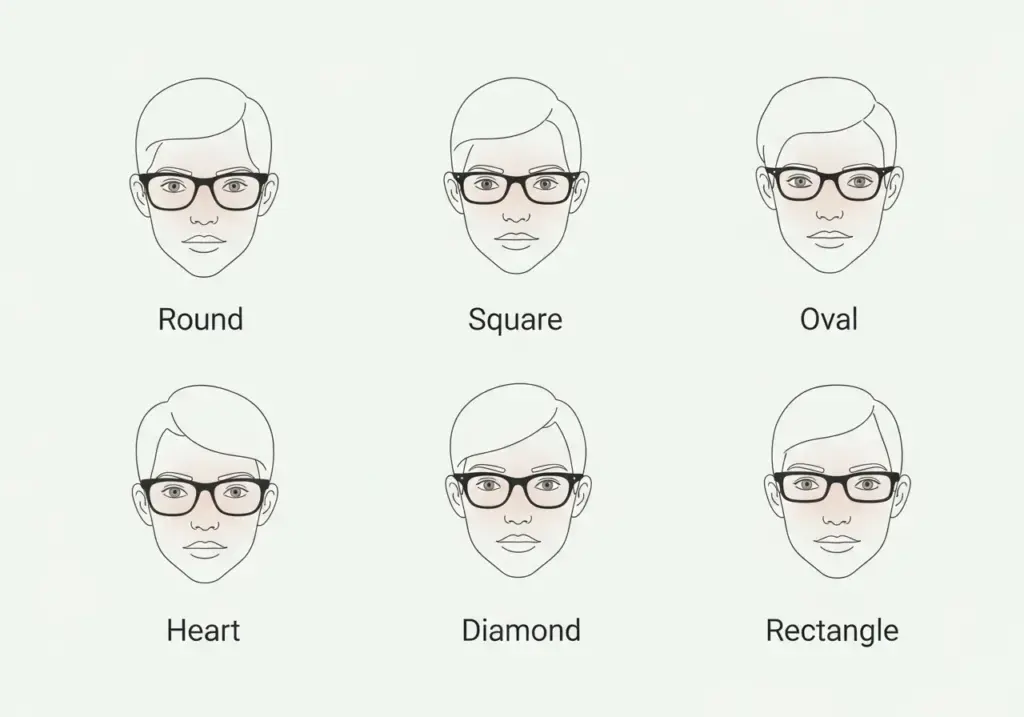
Face-shape categories describe broad outlines. You may recognize yourself in more than one, and you do not need an exact label to choose glasses. Notice three things: where your face is widest, how angular your jaw looks, and whether your face appears relatively long or compact.
Start With an Unobstructed View

Move your hair away from your face and look straight ahead in a mirror. If you need your current glasses to see clearly, take a photo without them and review it while wearing them. Use a straight-on photo taken from a comfortable distance; a close selfie can make proportions harder to judge.
Compare Your Forehead, Cheekbones, and Jaw

Look at your outline without trying to measure every curve. A broad forehead with a narrower chin suggests a heart shape; prominent cheekbones with a narrower forehead and jaw suggest a diamond shape. Similar overall width and length may look round or square, depending on the jawline.
| Face shape | Typical outline | Frames to compare first |
|---|---|---|
| Round | Rounded jaw and relatively similar width and length | Soft rectangles, geometric frames, upswept shapes |
| Square | Broad forehead and jaw with noticeable angles | Oval, round, rounded-square frames |
| Oval | Longer than wide with a gently tapering jaw | Rectangular, round, cat-eye frames |
| Heart | Wider forehead and a narrower chin | Light oval, rounded rectangle, delicate metal frames |
| Diamond | Cheekbones wider than the forehead and jaw | Oval, softly upswept, browline frames |
| Oblong or rectangular | Noticeably longer outline, sometimes with straighter sides | Deeper rectangles, rounded squares, taller ovals |
Separate shape from size. A round face can be narrow, and an oval face can be wide. Body size does not reliably tell you which frame width, bridge, or temple length you need.
Glasses to Try for Each Face Shape
Think about the effect you want before rejecting a shape. Do you prefer contrast, a softer outline, or a bold frame that repeats your features? None requires changing or disguising your face.
Round Faces: Compare Angles and Curves

Rectangular and geometric frames introduce straighter lines against rounded cheeks. A gently upswept cat-eye is another option if you like attention at the outer corners.
Round frames remain an option, too. Compare a thin round frame with a bolder, slightly flattened round shape to see how the outline changes. If the lenses rise when you smile, check cheek clearance and bridge fit; simply choosing a wider frame may not solve the problem.
Square Faces: Try Curves or Softer Corners

Oval and round frames provide contrast to an angular jaw. A rounded rectangle offers a middle ground if perfectly circular lenses feel unfamiliar.
You can also wear square frames to emphasize your natural structure. Compare rim thickness and color before dismissing them: a fine metal square and a thick black square create very different looks. Your jawline does not need softening unless that is the effect you want.
Oval Faces: Focus on Scale and Lens Depth

Oval outlines offer room to experiment with round, rectangular, geometric, and cat-eye frames. Narrow your choices by deciding whether you want the glasses to blend in or become a focal point.
Compare lens depth as well as width. Two frames can span the same distance across your face but look very different if one extends much farther down your cheeks. Check that the deeper option leaves comfortable clearance when you smile.
Heart-Shaped Faces: Adjust the Visual Weight

If you want less emphasis across a broader forehead, start with thin metal, light-colored oval, or gently rounded rectangular frames. These can keep the upper part of the frame relatively understated.
A cat-eye or strong browline can also work if you enjoy emphasizing the upper face. There is no need to choose frames wider than your forehead to achieve balance. Bridge comfort depends on your nose and the frame design, not on having a heart-shaped face.
Diamond Faces: Check Clearance at the Cheekbones

Oval frames, soft cat-eyes, and browline details are useful starting points if your cheekbones form the widest part of your face. Compare where the outer corners sit and whether you like the emphasis they create around your eyes.
Rimless designs are worth trying if you prefer a subtle look. Whatever the shape, check the lower rim while smiling and speaking. A low bridge or prominent cheeks may call for a different bridge design or adjustable nose pads.
Oblong or Rectangular Faces: Compare Deeper Lenses

A deeper lens occupies more vertical space on a longer face. Try a rounded square, taller oval, or deeper rectangle alongside a shallow frame and compare the overall proportions.
This is a visual preference, not a reason to buy oversized glasses. A deeper frame should still fit at the bridge, avoid your cheeks, and suit your lenses.
Wider and Petite Faces: Find the Right Size Within the Shape

For a wider head, look for adequate total frame width and sides that do not press into your temples. For a petite face, look for a frame that stays secure without overtightened arms or a bridge that keeps slipping.
Oversized describes a look; wide describes a fit. Large lenses can come with a narrow bridge or short arms. Equally, a wide frame does not have to have deep lenses. Ask about individual measurements instead of relying only on labels such as small, medium, or large.
Once you have a likely size and shape, compare the silhouettes in these 15 glasses styles for women over 40. Age does not restrict you to discreet frames or neutral colors.
How Glasses Should Fit Your Nose, Face, and Ears
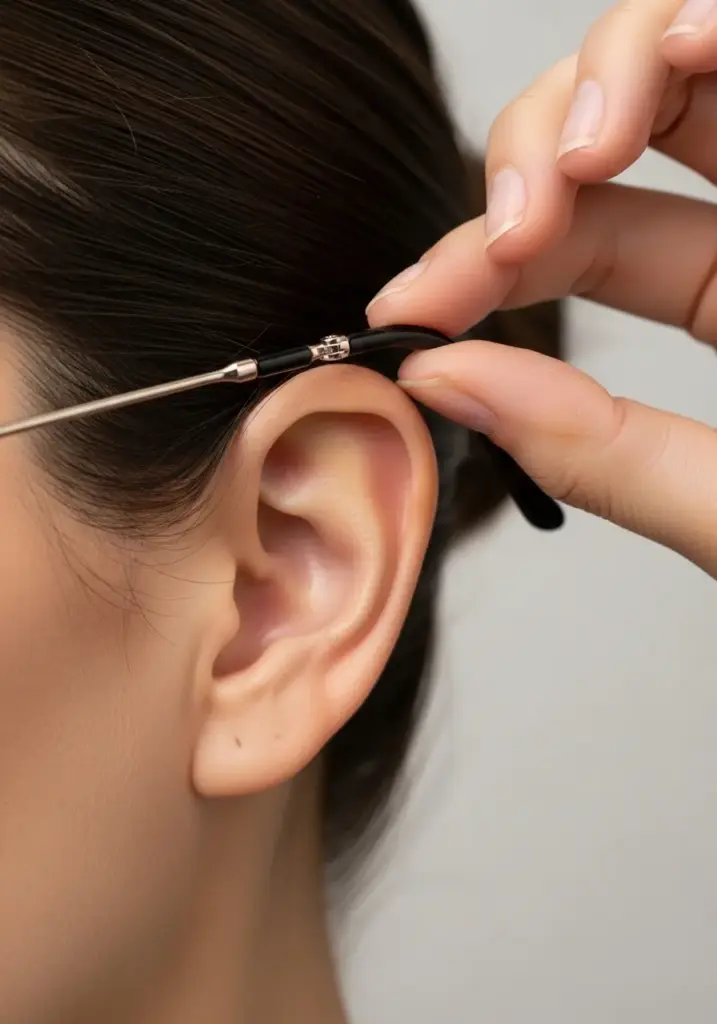
A flattering frame should remain comfortable during ordinary movement. Pressure, repeated slipping, or cheek contact are reasons to ask for a fit assessment before buying.
Understand the Numbers Inside the Arm
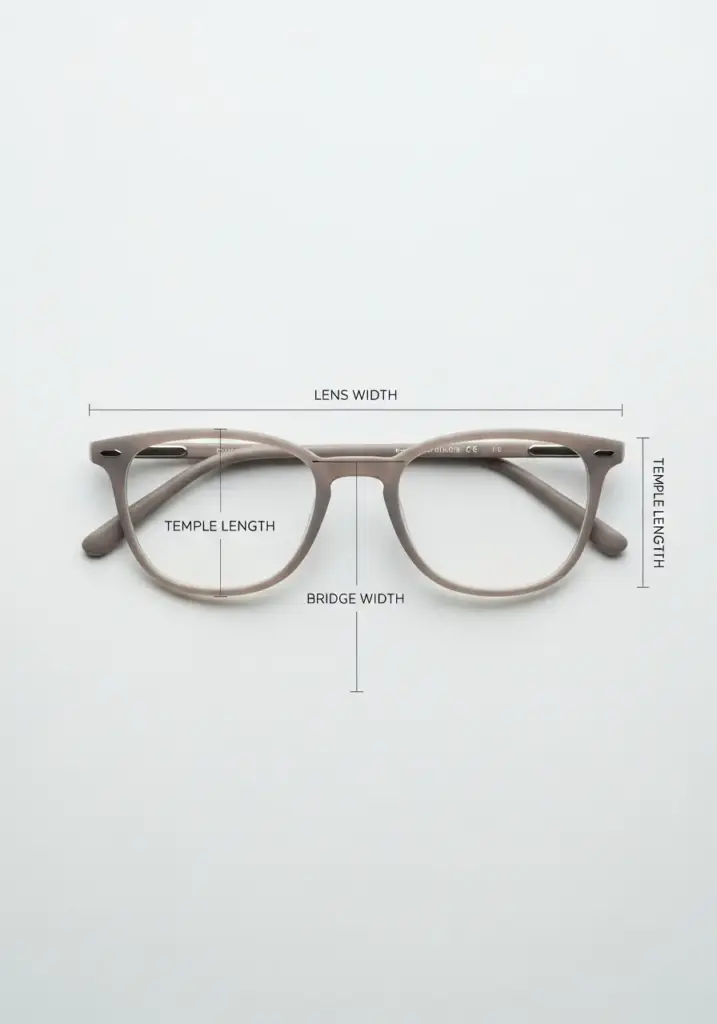
Many frames display three measurements, such as 52–18–140. They usually describe lens width, bridge width, and temple length in millimeters. The temples are the arms extending toward your ears.
- 52: the width of one lens, not the entire frame.
- 18: the bridge measurement between the lenses.
- 140: the length of the temple arm.
The Specsavers frame size guide explains how these measurements relate to comfort and lens choice. Use a comfortable existing pair as a reference, while remembering that bridge shape, rim thickness, and hinge design can make similarly numbered frames fit differently. :contentReference[oaicite:0]{index=0}
Test the Frame While Moving
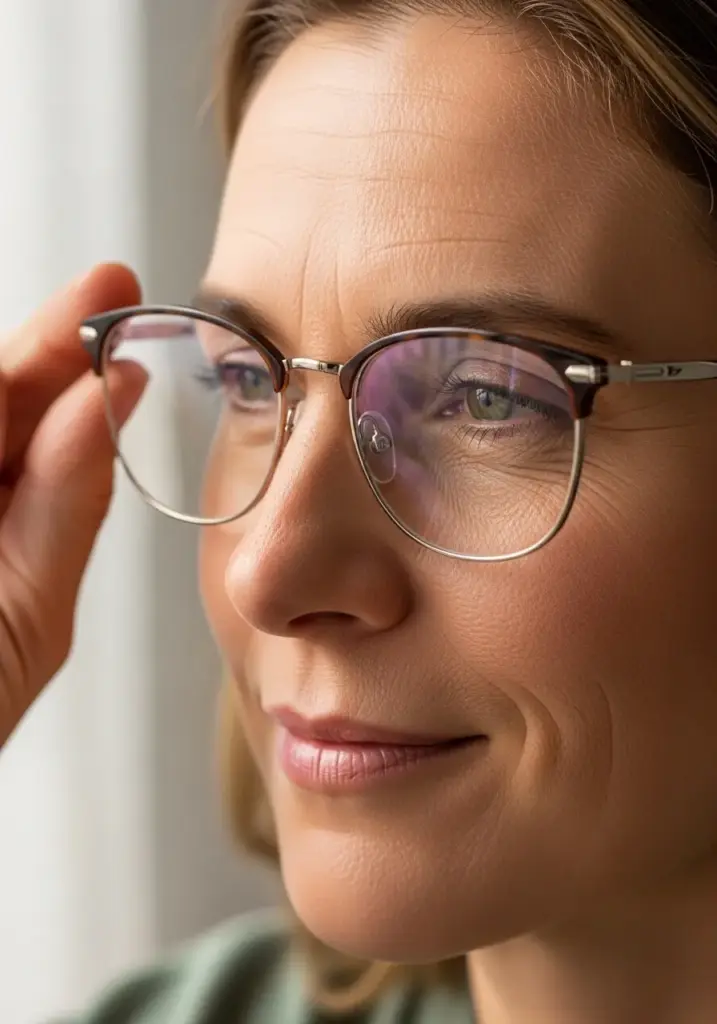
Wear each shortlisted frame for several minutes. Look down, turn your head, smile, and speak. Check the following points:
- Nose: the bridge or pads support the frame without painful pressure or frequent sliding.
- Cheeks and lashes: neither repeatedly touches the frame or lenses.
- Temples: the arms do not squeeze the sides of your head.
- Ears: there is no concentrated pressure behind them.
- Stability: the frame stays reasonably level during normal movement.
If you have a lower nose bridge, ask to compare low-bridge-fit designs and adjustable nose pads. These are options to try, not guaranteed fixes. Bring any hearing aids, headphones, or headwear you regularly use so you can check them together.
An optician may be able to improve pad position or temple adjustment. A frame with fundamentally unsuitable dimensions may need replacing rather than tighter adjustments.
Check Your Prescription Before Choosing the Final Frame
Frames affect more than appearance. Before paying, ask whether your prescription and intended lens design work well with the size, shape, and construction you have selected.
- Stronger prescriptions: ask how frame size and the position of your eyes within the lenses affect finished thickness and weight.
- Progressive lenses: these combine distance, intermediate, and near vision. Ask the optician to confirm sufficient fitting height for the chosen design; a shallow frame is not automatically suitable or unsuitable.
- Rimless or highly curved frames: confirm compatibility with your prescription and lens material before ordering.
ZEISS explains the relationship between frame choice and lens requirements. The practical step is to have the frame and lenses assessed together. :contentReference[oaicite:1]{index=1}
Frame measurements do not replace pupillary distance or other fitting measurements. Virtual try-on can help you compare appearance, but it cannot confirm pressure on your nose, physical stability, or the finished optical fit.
Choose Color and Material for the Look You Want
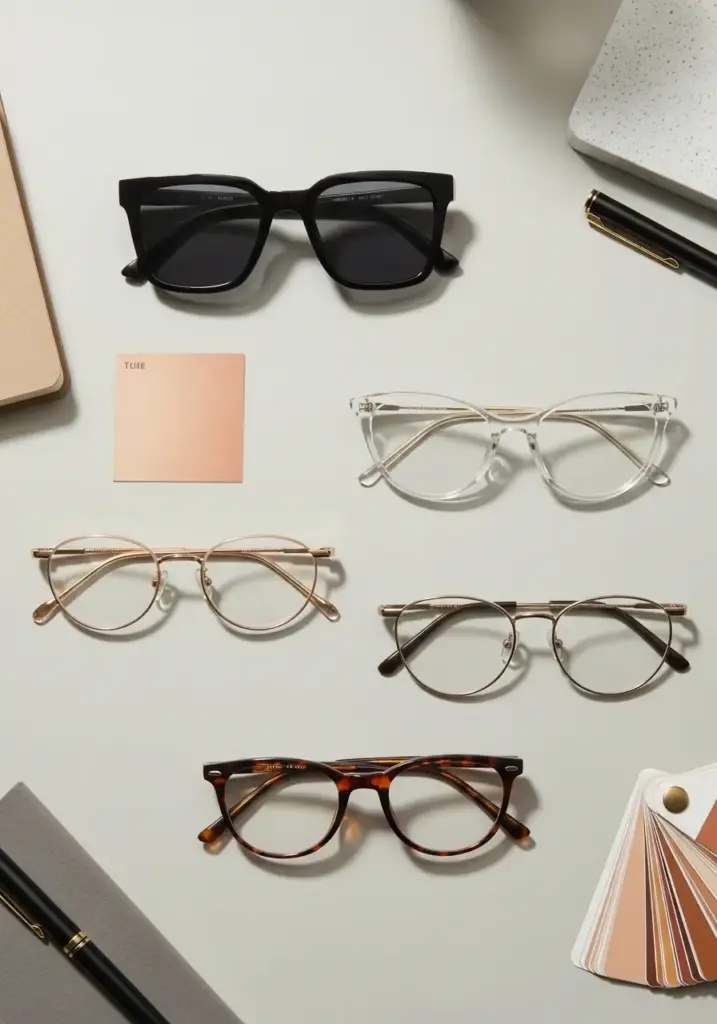
After narrowing the fit, compare colors within similar shapes. This makes it easier to see whether your preference comes from the outline or from how strongly the frame stands out.
Dark, thick rims create a stronger outline. Thin metal, pale colors, and translucent finishes can look subtler, although a large clear frame still has a visible presence. Try the options in daylight and with clothing you wear often.
Compare Construction and Total Cost
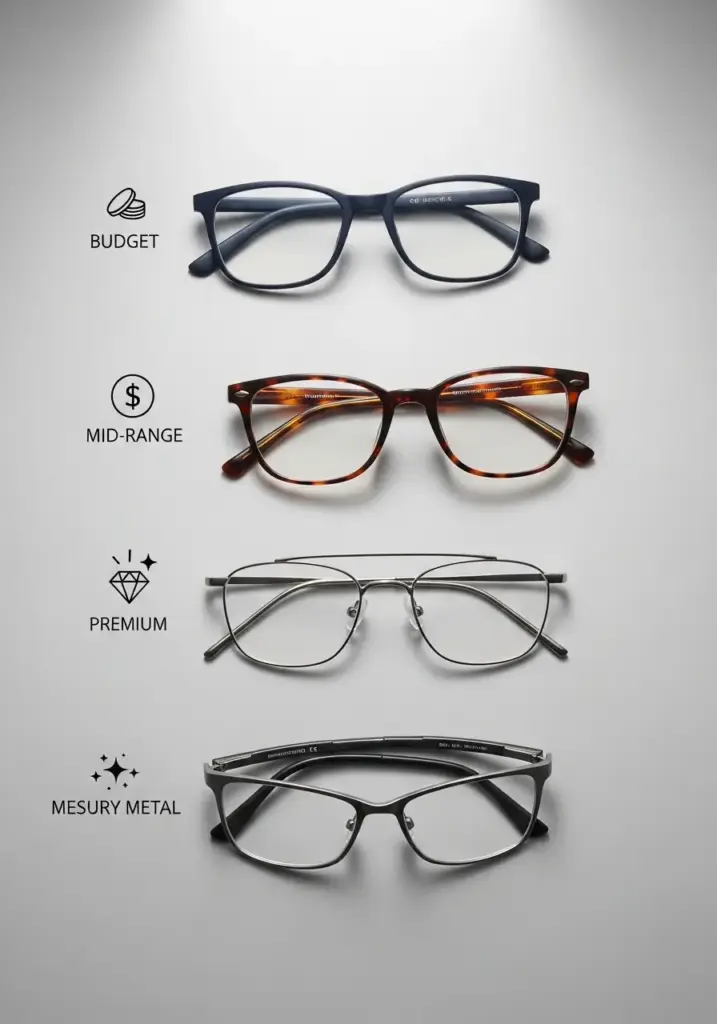
Compare acetate or other plastic frames with metal options in person. Assess the actual weight, hinge movement, bridge contact, and how securely each sits. A material name or designer label alone does not establish comfort or durability.
Ask for the complete price with your lenses and selected extras. Also check adjustment services, replacement-part availability, and warranty terms. If you have a known material allergy, ask about the specific components that will touch your skin.
You do not need several pairs for different outfits. Put your budget toward a dependable everyday pair first; a backup or activity-specific pair can follow if it meets a real need.
Match Your Glasses to Everyday Activities
Work and Long Periods of Wear

Choose a style that feels appropriate for your workplace, whether understated or expressive. Test comfort with your headset and look at the frame from your usual video-call angle. If you need glasses for particular working distances, discuss that with your eye care professional when choosing lenses.
Casual Wear and Travel

A frame you like with both everyday clothes and workwear may serve you well throughout the week. To introduce a change without losing a familiar fit, try a new color in a similar size and shape.

For travel, prioritize a secure fit and a protective case. If you rely on prescription glasses and already have a usable spare, packing it is more practical than buying an extra pair solely for a holiday outfit.
Formal Events

Try your glasses with the hairstyle, earrings, and neckline you plan to wear. Fine metal can feel understated, while a bold frame can be an intentional accessory. Keep your familiar pair if it already works with the outfit and feels comfortable.
Sport and Outdoor Time

For activities with a risk of eye impact, ordinary prescription glasses and fashion sunglasses are not substitutes for sport-specific protective eyewear. The National Eye Institute’s sports eye-safety guidance explains why the protection must match the activity. Ask an eye care professional about suitable prescription options. :contentReference[oaicite:2]{index=2}
For sunglasses, look for an explicit label stating that they block 100% of UVA and UVB radiation, as advised by the American Optometric Association. Choose the appearance after confirming that protection; dark lenses alone are not proof of UV filtering. :contentReference[oaicite:3]{index=3}
A Simple Try-On Method Before You Buy
Limit your first comparison to three frames: a familiar shape, one with a different outline, and one you like despite what a face-shape chart suggests. Keep the sizes reasonably comparable so you can judge shape without a poor fit dominating the result.
- Check comfort first. Set aside frames that pinch, slide repeatedly, or touch your cheeks unless an optician confirms a suitable adjustment.
- Compare from the same distance. Take front and side photos in similar light, with your usual hairstyle.
- Identify what you prefer. Notice the width, rim thickness, color, and lens depth instead of asking only whether a pair “suits” you.
- Confirm lens suitability and total cost. Have the frame assessed with your actual prescription.
- Read the buying terms. Check return deadlines, prescription-lens exclusions, remake policies, and access to adjustments before ordering.
If you want more shapes to compare, browse these 15 frame ideas and round glasses styles. Pick the details you enjoy rather than treating a trend as a requirement.
The most useful shortlist contains frames you like, that fit, and that support your vision needs. Start with your face shape for inspiration, then let a careful try-on and a professional fitting help you make the final choice.