The easiest way to style a satin scarf is to add it to an outfit you already enjoy wearing: a plain top and jeans, a shirt and trousers, or a simple dress. Fold the scarf into a narrow band, tie a comfortable knot, and adjust the ends so they sit neatly against your clothes. If you dislike fabric around your neck, try it on a bag or over a ponytail instead.
For women over 40, there is no special set of scarf rules to follow. Your preferred neckline, comfort, and daily routine matter more than your age. A bold print, a small neckerchief, and a generous shoulder wrap can all work; the useful question is which one suits the outfit and how you want to wear it.
Choose a Satin Scarf You Will Actually Wear
Start With the Styling Job, Then Choose the Size
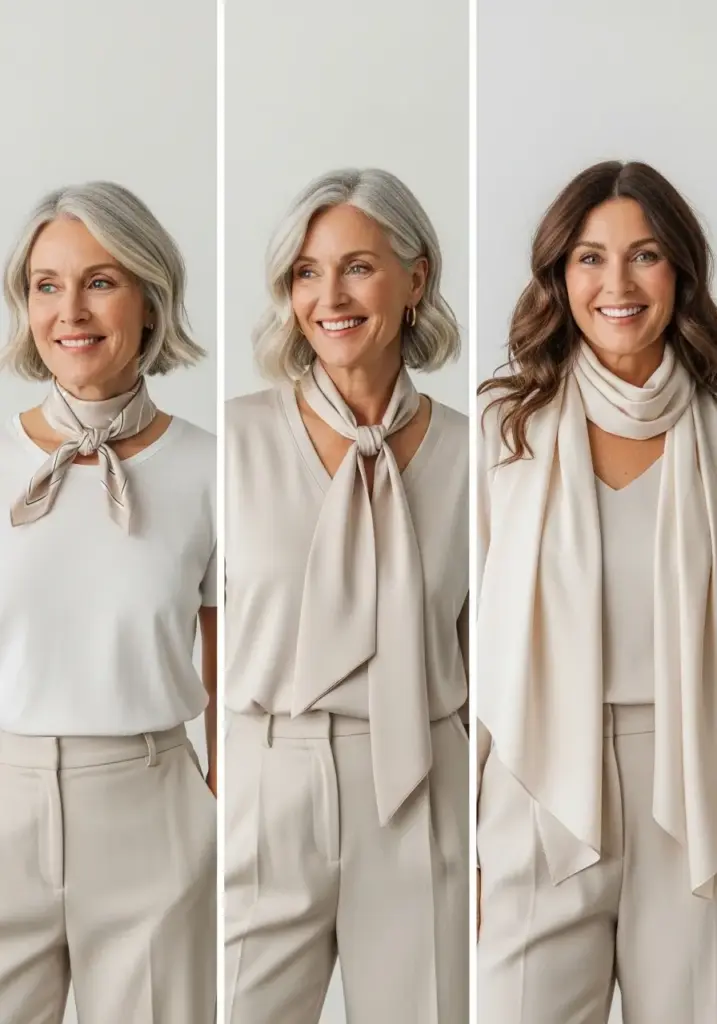
A small square is convenient for a short neck tie or bag accent. A larger square gives you more fabric for long ends, a head wrap, or shoulder coverage. A long, narrow rectangle is useful when you want a sash or a loose drape without folding a large square repeatedly.
Use these approximate sizes as starting points, not fit guarantees. The length you need also depends on your neck or waist measurement, the fold, and the knot.
| Scarf shape and size | Useful starting styles | Check before buying |
|---|---|---|
| Small square, about 20–22 inches per side | Short neck tie, ponytail accent, bag knot | Enough length to tie comfortably without pulling |
| Medium square, about 27–28 inches per side | Neck band with longer ends, headband | How much fabric remains after folding |
| Large square, about 35–36 inches per side | Shoulder drape, fuller neck styling, head wrap | Coverage and the size of the finished knot |
| Long rectangle | Loose drape, sash, decorative belt | Actual length around the intended placement, plus room for a knot |
Your height or dress size does not dictate your scarf size. If a scarf feels bulky, first try a narrower fold or fewer wraps. If a small square barely ties, choose a larger one rather than tightening it.
Try Color Against Your Actual Clothes
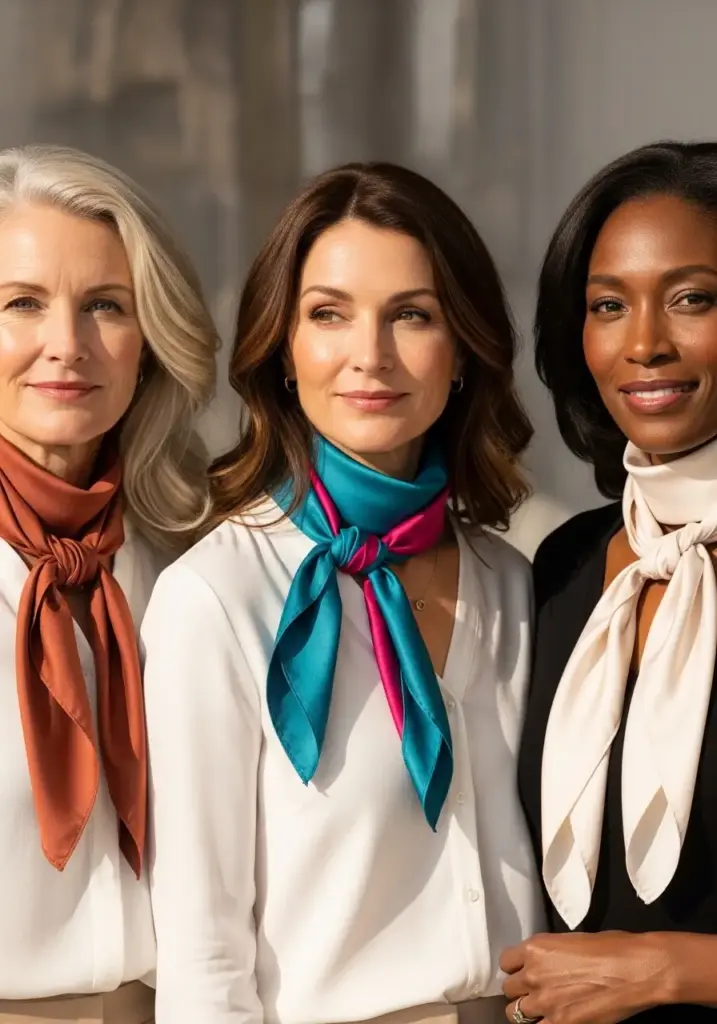
Hold the scarf near your face in daylight while wearing a familiar top. Compare two options and notice which combination you prefer. You do not need to identify a warm or cool undertone before choosing a color you enjoy.
For an easy first purchase, look for a print containing a color you wear regularly, such as navy, cream, olive, or burgundy. It gives you a ready connection to your wardrobe without requiring matching shoes, lipstick, and a bag.
Check the Print After Folding
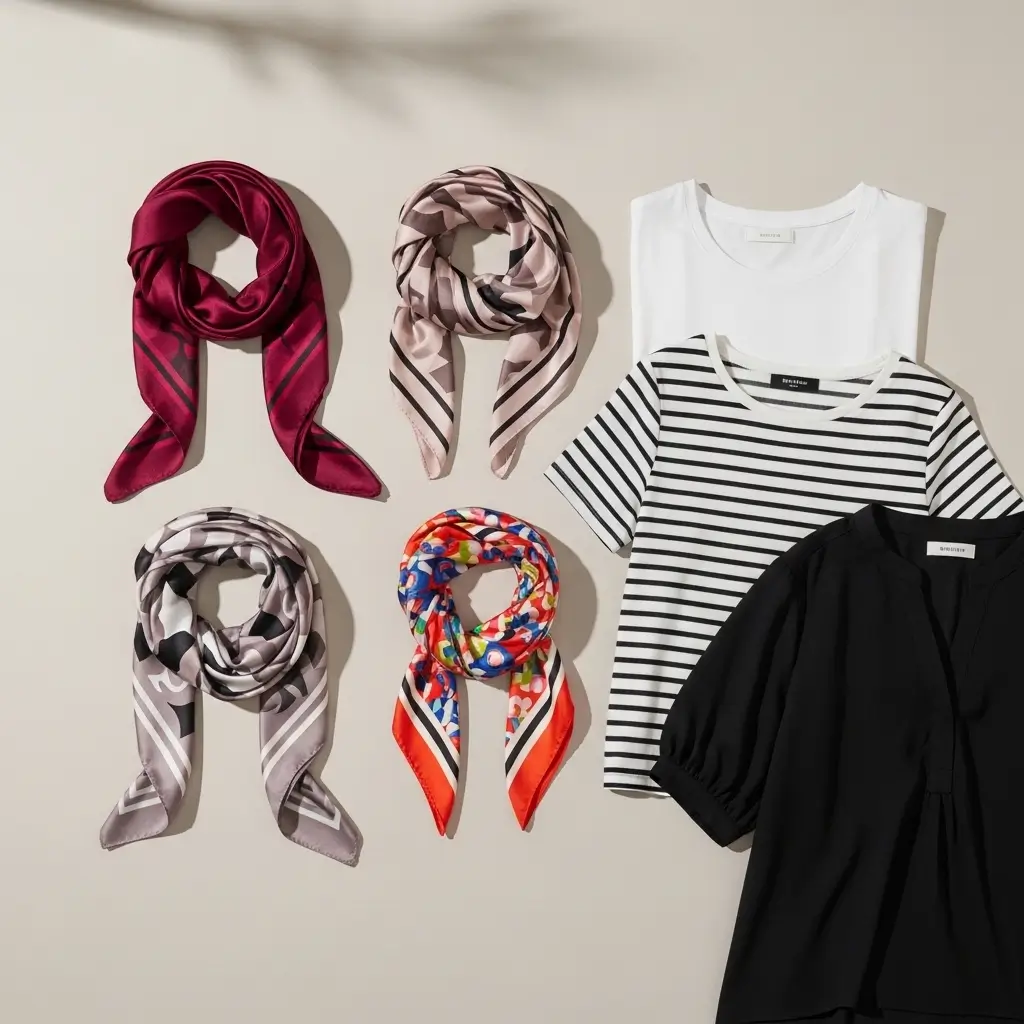
A scarf can look very different folded than it does laid flat. A large central motif may disappear inside the fold, while a contrasting border becomes the main feature. Try folding from different corners to reveal another color or section of the design.
If you prefer a quiet accent, use a solid scarf or a print with similar shades. If you enjoy pattern mixing, pair a printed scarf with stripes and repeat one color between them. Neither approach has an age limit.
Understand Satin, Silk, and the Care Label
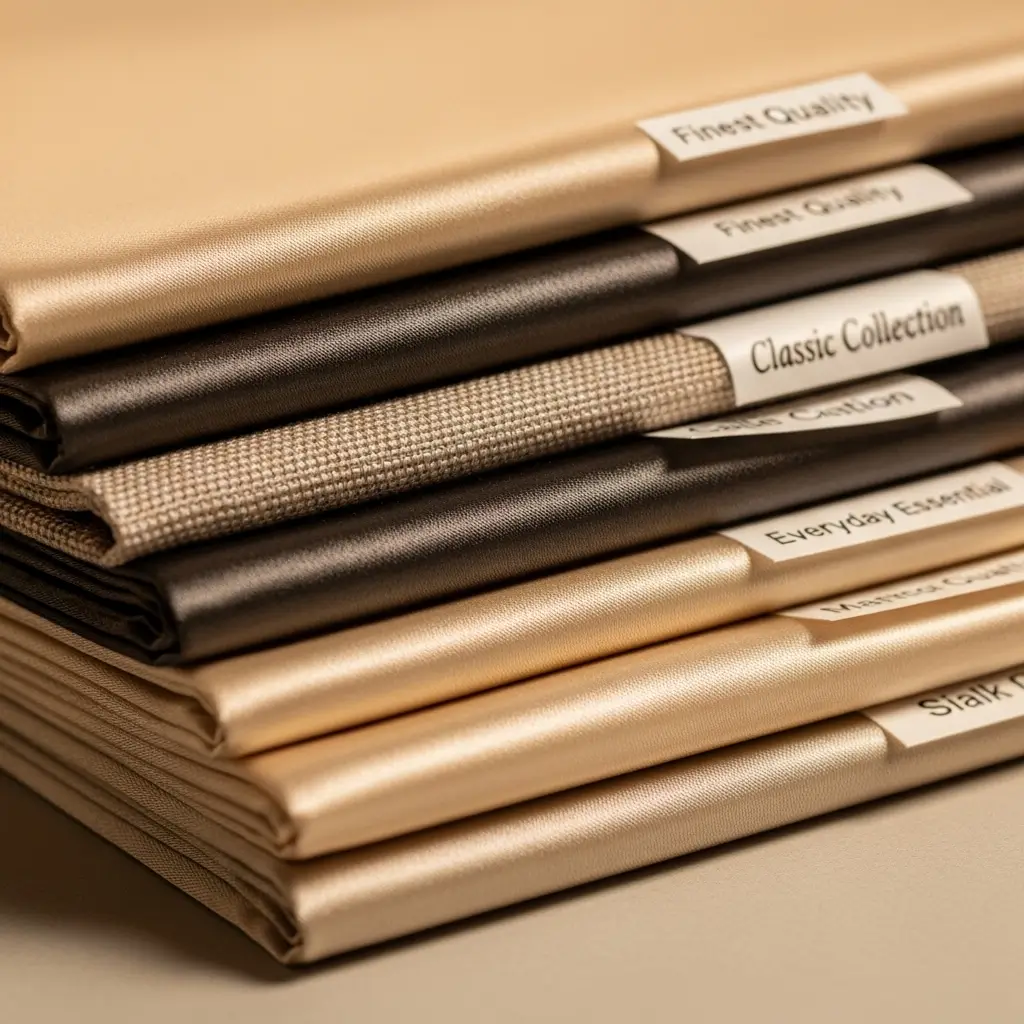
Satin describes a weave; silk describes a fiber. A satin scarf may be made from silk, polyester, or another suitable filament fiber. A listing that says “silky” or “silk-look” does not establish its fiber content. Check the composition label before comparing prices. :contentReference[oaicite:0]{index=0}
When shopping, inspect the hems, feel the fabric, and tie the knot you expect to use. Does it fall softly or stand away from your clothing? Do the edges feel rough? Does it need constant adjustment? These checks tell you more about everyday suitability than shine alone.
Start with one scarf that works with several outfits. There is little value in paying more for a fabric whose care requirements do not fit your routine.
Learn One Simple Fold and Knot
A diagonal band fold is a useful starting point for neck ties, hair accents, and bag styling.
- Lay a square scarf flat and bring opposite corners together to form a triangle.
- Starting at the pointed tip, fold toward the long edge in even sections until you have a band of your preferred width.
- Place the band around your neck with the ends hanging in front.
- Cross one end over the other and bring it through the opening to make a loose overhand knot.
- If it slips, add a second crossing in the opposite direction. Settle the knot without pulling it tight against your neck.
Move your head, sit down, and check the scarf before leaving home. The knot should feel comfortable throughout those movements. A larger scarf or a different placement is a better solution than a tight knot that keeps bothering you.
Casual Satin Scarf Outfits
Jeans, a Plain Tee, and a Small Neck Tie
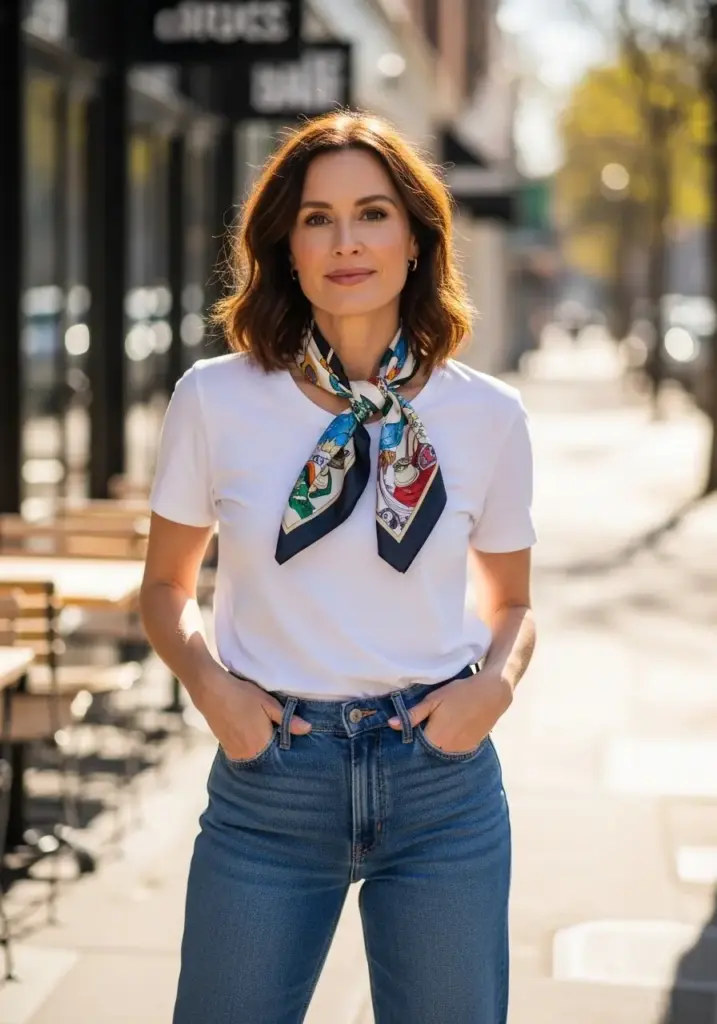
Try straight-leg jeans, a cotton tee, and your usual flats or sneakers. Fold the scarf into a band and place the knot slightly off-center, leaving the ends short enough to sit comfortably above the neckline or against the top.
If the combination feels more dressed up than you intended, loosen the arrangement or move the scarf to your bag. You can also turn the band to show less of a bright border.
Joggers, a Light Jacket, and a Hair or Bag Accent
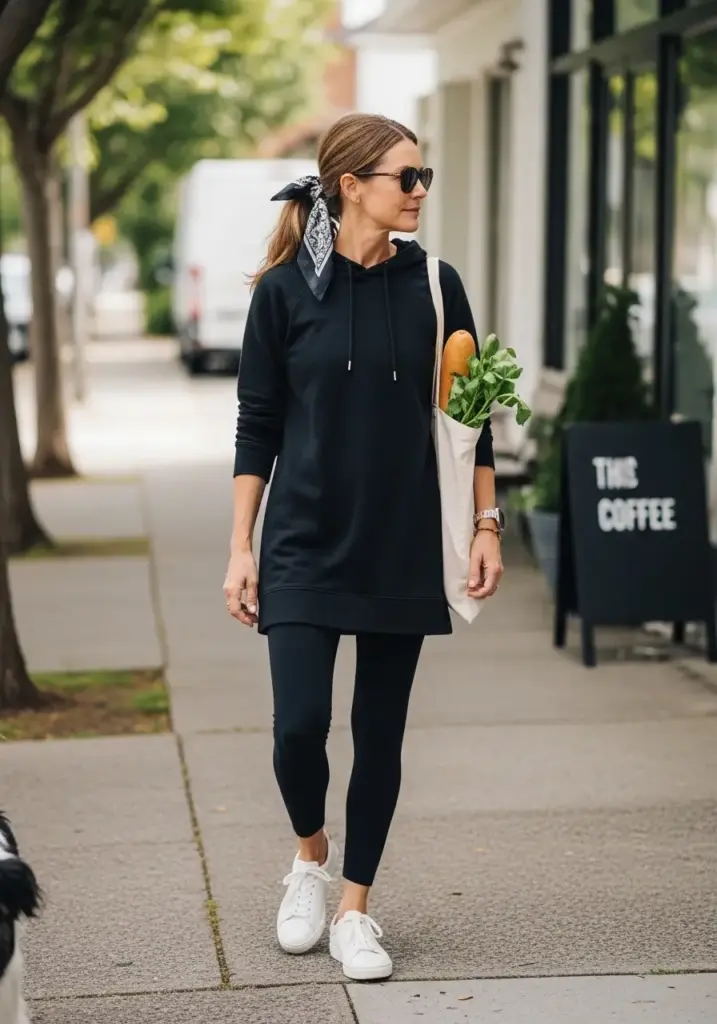
With joggers or wide-leg knit pants, a tee, and a denim jacket, try the scarf over a ponytail elastic or around one bag handle. This adds a little color while keeping your neckline free.
For a bag accent, use a simple knot near the base of a handle. Keep the tails clear of the zipper and ground. A scarf tied there is decoration; keep using the bag’s own handles or strap to carry it.
Lightweight Knitwear With a Loose Drape
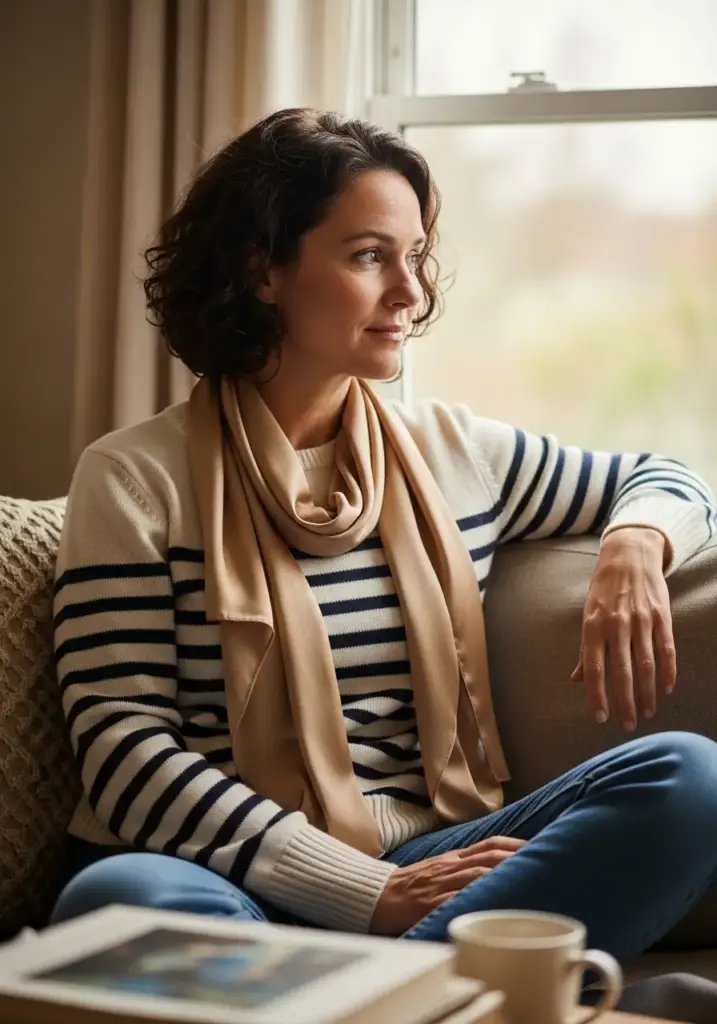
A smooth scarf introduces a different texture beside a matte sweater or cardigan. Try a long rectangle draped inside an open cardigan, or a folded square tied once over a crewneck.
If the scarf covers a detail you like, such as a collar or buttons, shorten the ends or shift the knot. You do not have to change the whole outfit to make the accessory fit.
How to Wear a Satin Scarf to Work
Keep the Fabric Flat Inside a Blazer
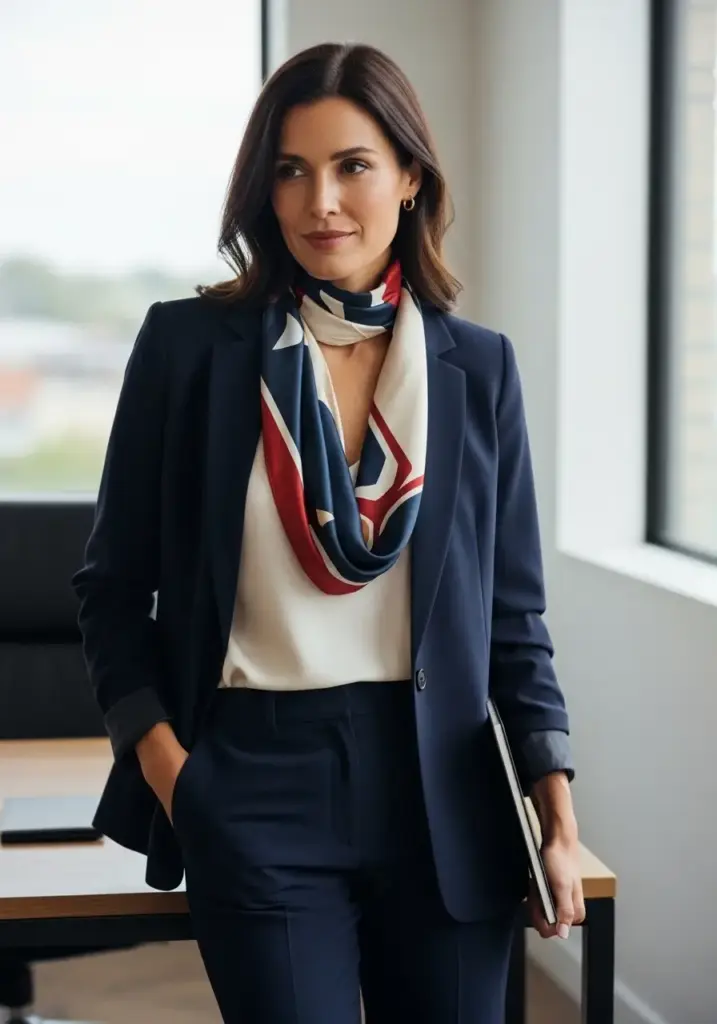
Start with a blazer and a plain top. Fold the scarf into a narrow band, tie it loosely, and tuck the ends inside the jacket if you want a contained finish. Alternatively, use a longer scarf with the ends hanging inside the lapels.
Check the outfit seated as well as standing. If the knot bunches beneath your chin or pushes the lapels outward, reduce the fold width, move the knot, or use a lighter scarf.
Choose One Clear Placement With a Button-Down
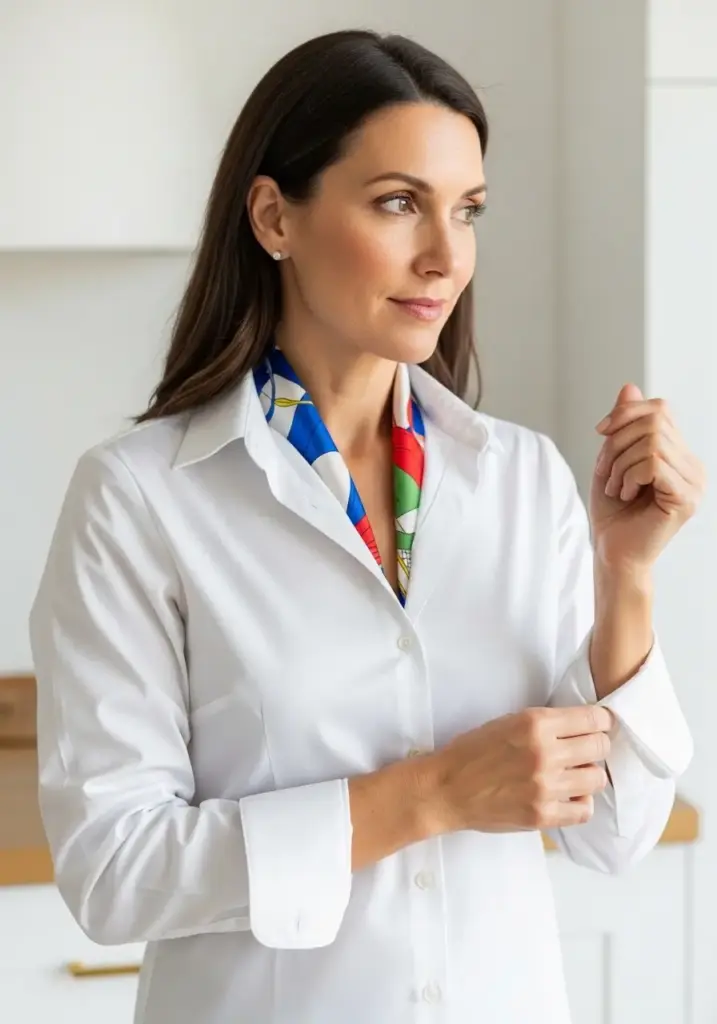
You can wear a slim band beneath the collar with the knot visible at the front, or place a small neck tie inside an open collar. Choose whichever button position feels comfortable and provides your preferred coverage.
If the collar, necklace, and scarf keep catching on each other, remove the necklace or wear the scarf elsewhere. The goal is an arrangement you can leave alone during the day.
Add Color to a Simple Dress
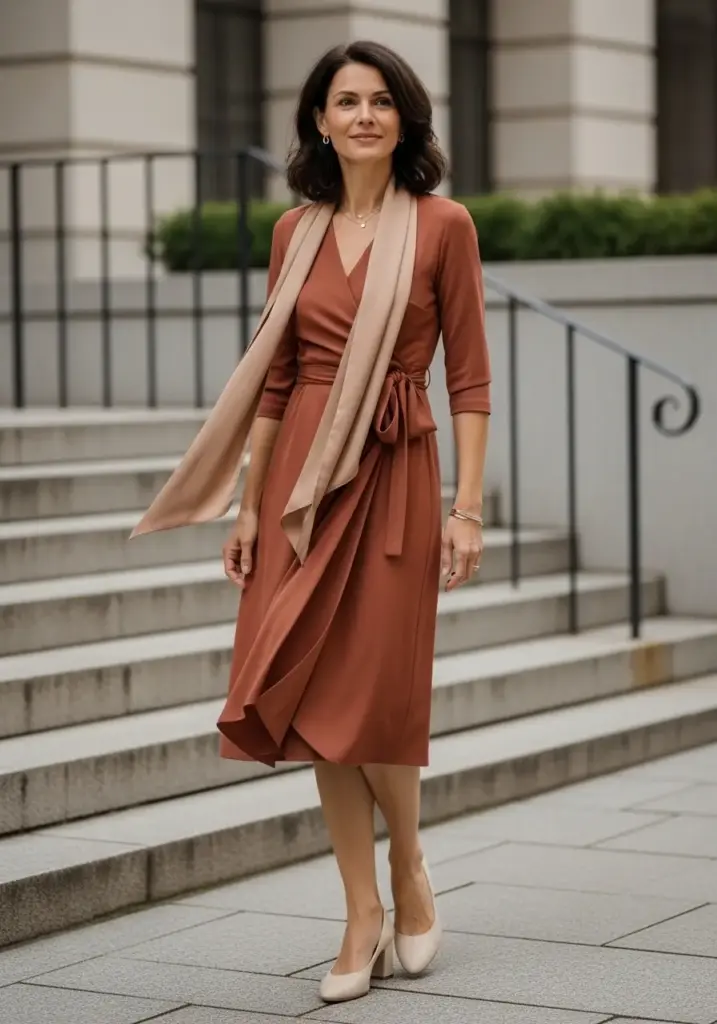
A plain shirt dress, shift, or knit midi dress gives a patterned scarf room to stand out. Try a short neck tie if the dress has a simple neckline, or a bag accent if the collar already has detail.
A scarf sash is another option when the dress has room for one. Test it while sitting and walking; it should stay comfortable without repeatedly needing to be retied.
For more ways to match scarf shapes and fabrics to your wardrobe, explore this guide to choosing and styling a scarf.
Evening and Occasion Styling
Use a Large Scarf as a Light Shoulder Wrap
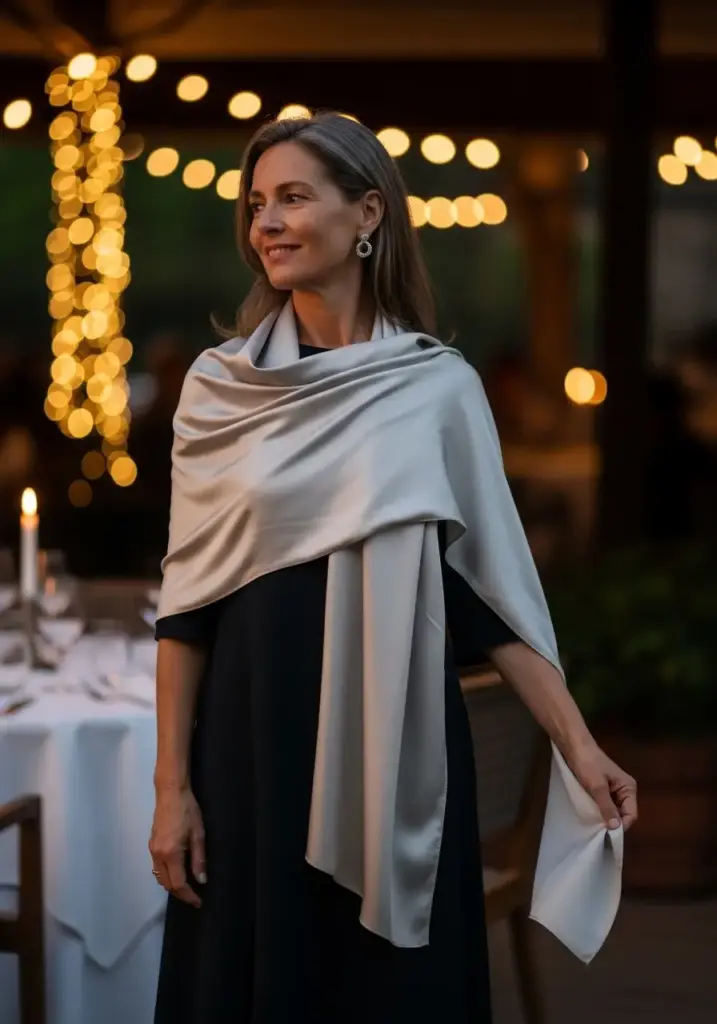
Drape a large square folded diagonally, or a wide rectangle, across your shoulders over a dress or matching separates. Bring the ends forward and check whether you can comfortably reach, sit, and carry your bag.
A satin wrap provides light coverage, but it is not a substitute for a warm layer in cold weather. If reliable shoulder or arm coverage matters to you, choose sleeves or a jacket underneath rather than depending on a drape that can shift.
Tie a Soft Sash at the Waist
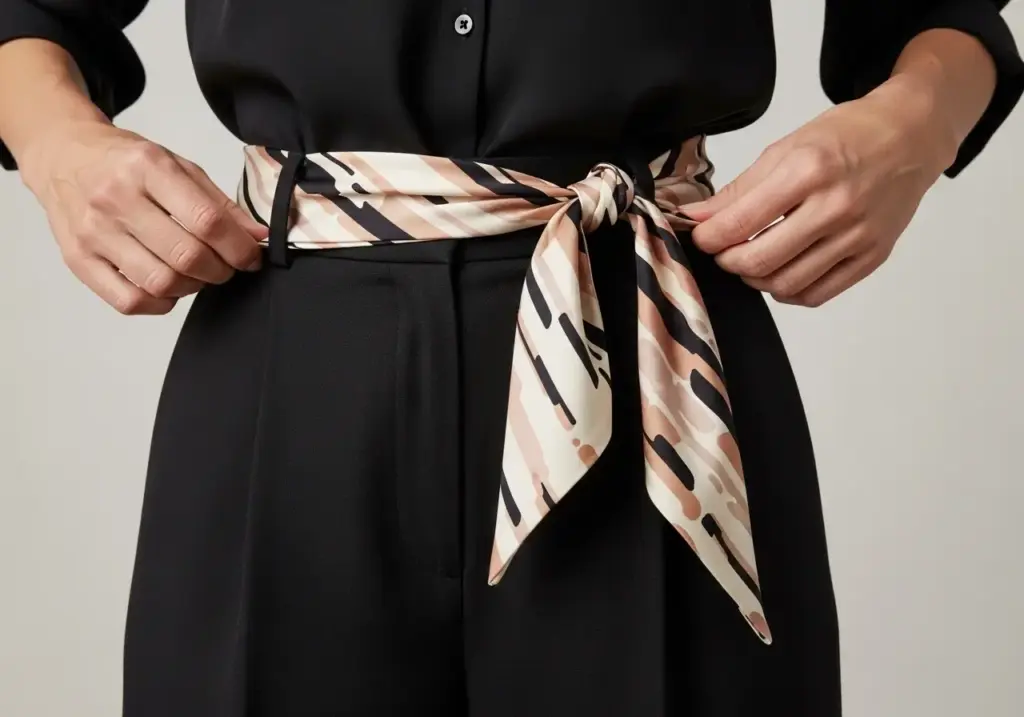
Use a long scarf over a plain dress or thread a narrow one gently through roomy trouser loops. Tie it at the front or side and adjust the tails so they do not interfere with pockets or movement.
Measure around the place you intend to wear it and allow extra length for the knot. If the scarf must stretch or be pulled hard to meet, it is too short for that style. Treat it as a decorative sash rather than relying on slippery fabric to hold up loose trousers.
Finish a Ponytail or Bun
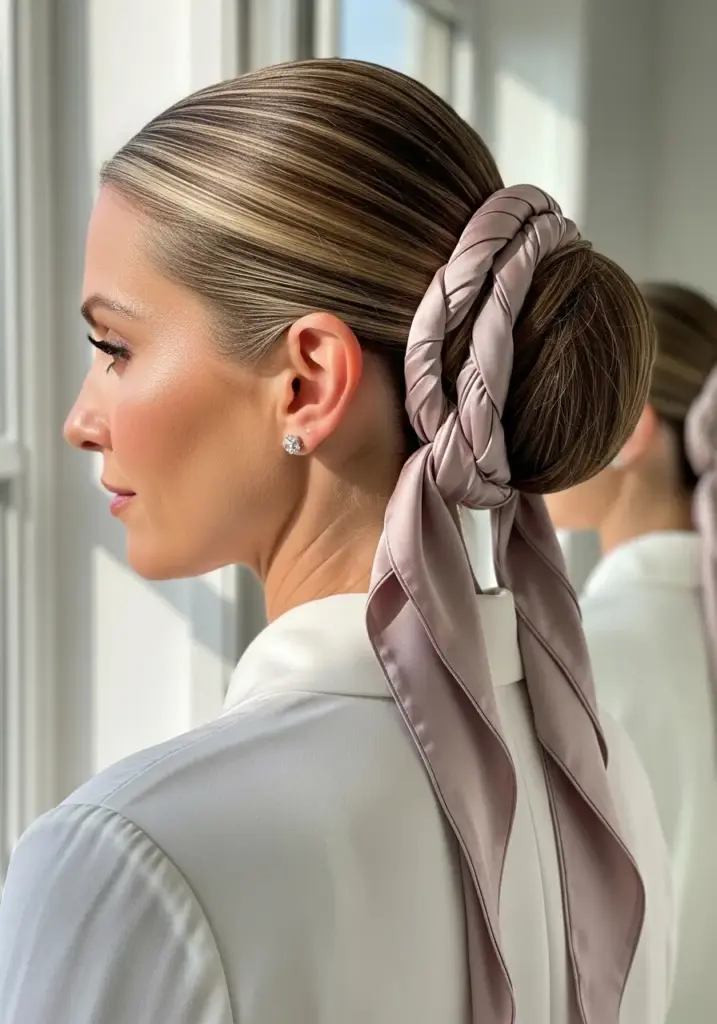
Secure your hair with an elastic first, then tie a folded scarf over it. For a bun, wrap the band around the base and tuck or tie the ends where they feel secure.
Start with a small, light scarf if a larger one pulls your hairstyle down. For shorter hair, try a folded headband with the knot placed where it will not press behind your ears. If it slides continually, a bag accent may be easier to wear.
Adapt the Placement to the Season
Spring: Pair a Neck Tie With a Trench
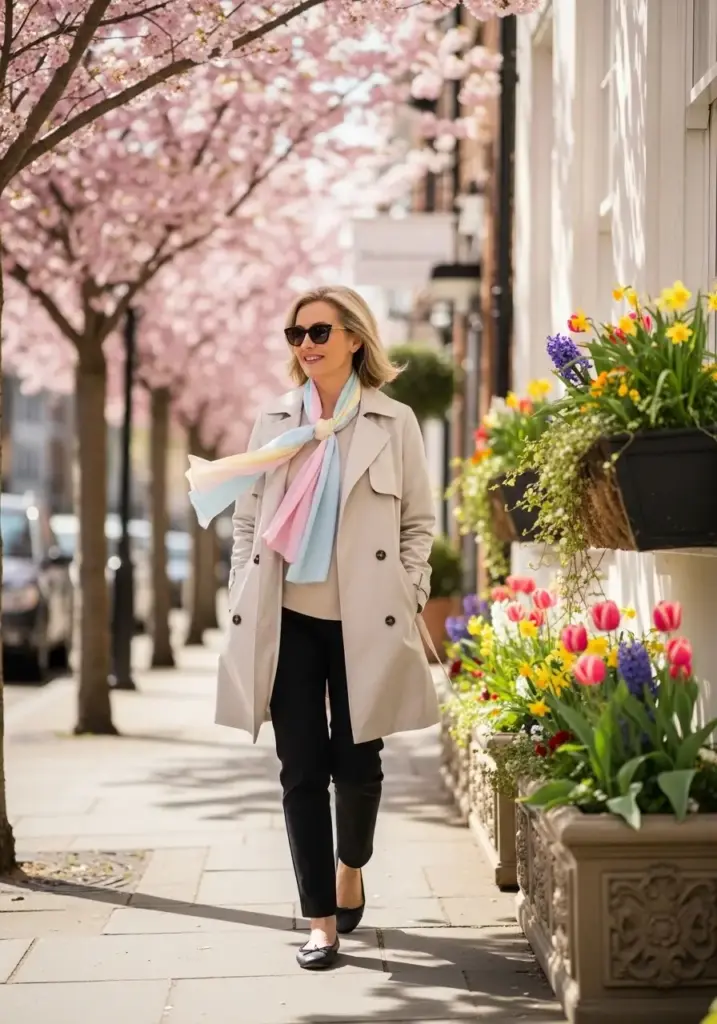
Choose a scarf that works with the top beneath your coat so the outfit still feels complete when you remove a layer. A small knot can sit inside a trench neckline without competing with its lapels.
Summer: Move the Scarf Away From Your Neck
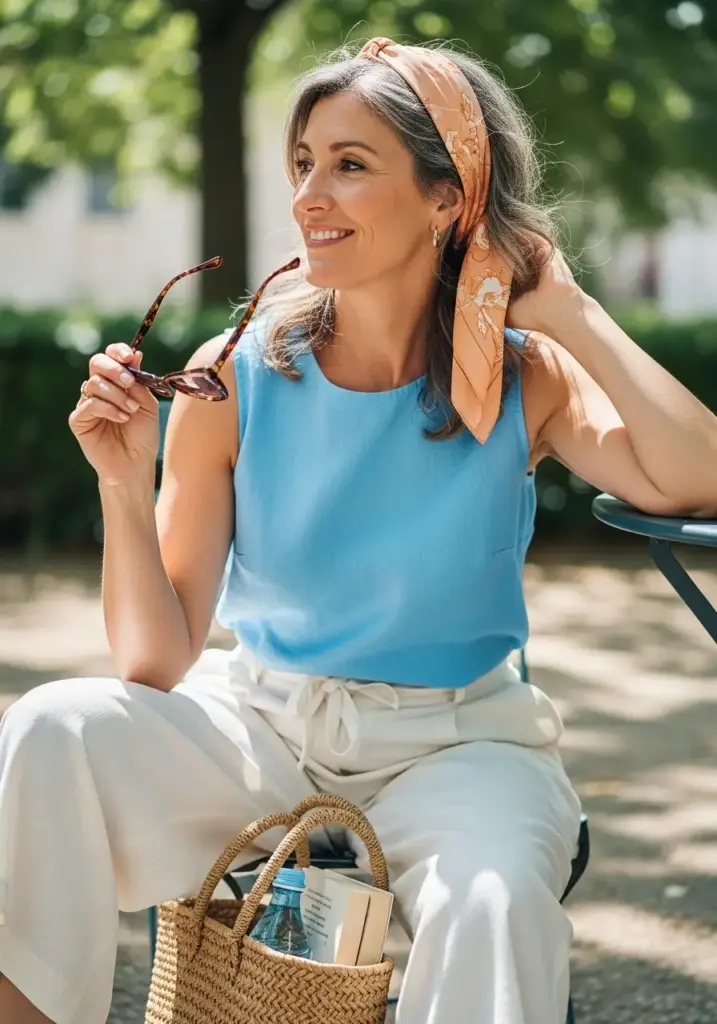
If a neck scarf feels warm, tie it in your hair or onto your bag. The satin label alone does not tell you how comfortable a scarf will feel in heat; consider the fabric, weight, and amount of material against your skin.
Fall: Combine Satin With Matte Textures
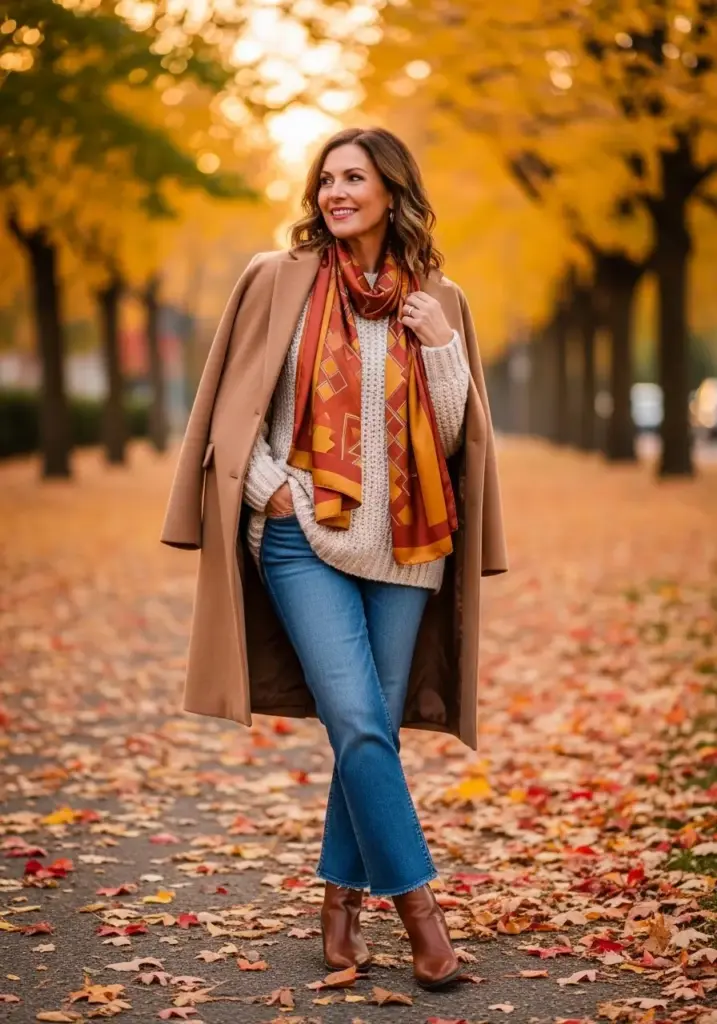
Try a printed scarf with denim, corduroy, or a plain knit. Burgundy with gray, olive with cream, or blue with camel are combinations to experiment with, not colors you need to buy each season. Start with what is already in your wardrobe.
Winter: Keep Warmth in the Main Layers
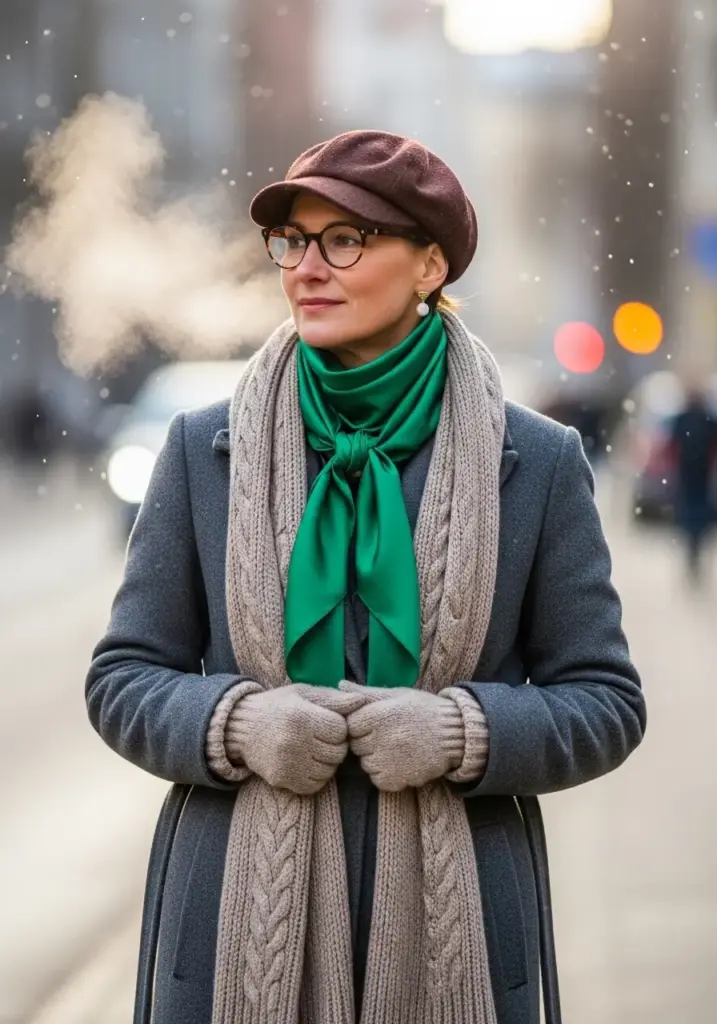
A small satin scarf can remain part of your indoor outfit beneath a coat. Add your usual warm outer scarf when needed, checking that the combined layers leave your neck comfortable. If two scarves feel cumbersome, keep the satin one in your bag until you reach your destination.
Fix Common Scarf Styling Problems
- The knot keeps sliding: Try a second crossing in the opposite direction, shorter tails, or a smooth scarf ring designed for delicate fabric. Avoid solving the problem by tightening the scarf against your neck.
- There is too much fabric under your chin: Fold the band narrower, remove an extra wrap, or switch to a smaller or lighter scarf.
- The outfit feels busier than you want: Turn the fold to show a quieter part of the print, or simplify one nearby accessory.
- The scarf will not stay on your shoulders: Try a different size or a smooth scarf ring, testing it gently. Avoid piercing a delicate scarf with a brooch you have not checked for suitability.
- You keep adjusting it: Change the placement. A scarf on your bag can provide the same color accent without the feel of fabric around your neck.
Care for the Scarf According to Its Label
Do not assume all satin scarves can be washed the same way. Follow the care instructions for the particular item, including washing, drying, and ironing limits. If the label is missing, seek advice before treating a stain or applying heat.
For example, Hermès advises professional dry cleaning for its scarves and notes that rain can damage printed silk. That is a useful reminder to check the maker’s instructions rather than apply a general home-washing method to every scarf. :contentReference[oaicite:1]{index=1}
Untie the scarf after wearing it and check it for marks before putting it away. Handle it away from rough jewelry and bag hardware, and avoid pulling a tight knot apart by its narrow ends.
Start With One Outfit and One Comfortable Tie
Choose a scarf you already own and try it with a plain top, your favorite trousers or jeans, and familiar shoes. Test a short neck tie, then a hair or bag accent. Keep the version that feels comfortable and suits your day. That small experiment will tell you more about your preferences than a long list of age or body-shape rules.