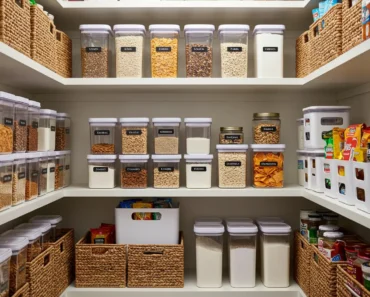
A closet can be full of clothes that fit, a kitchen can hold working appliances, and a garage can contain useful supplies—yet all three can still be overwhelmed by clutter. Dana K. White’s most helpful insight is that decluttering is not limited to removing broken or worthless objects. Sometimes you have to let go of perfectly good things so your home can function.

This does not mean throwing away everything you like or trying to become a minimalist. It means recognizing that your home has a fixed capacity. When possessions exceed that capacity, even useful objects can become difficult to find, use, clean, and put away.
Why Perfectly Good Things Can Still Be Clutter
The question “Is this still useful?” sounds sensible, but it rarely creates enough separation between what stays and what leaves. Almost any object can be useful under the right circumstances. An extra saucepan could help during a large gathering. A stack of old towels could handle a future spill. A shirt you never wear could become useful if your style changes.
The problem is that hypothetical usefulness has no natural limit. If every possible future use earns an item permanent storage, cupboards fill up and closets stop working. You then spend more time moving, searching for, washing, and reorganizing possessions than using them.
White’s mindset shift separates an item’s value from its right to occupy your space. A blender can work perfectly and still be the wrong blender for your kitchen. A sweater can be attractive and still be one sweater too many for your closet. Letting it go does not require declaring it bad; it only requires admitting that keeping it has a cost.
What Dana K. White Means by a Functional Home
White describes herself as a “functionalist,” rather than defining success by owning the fewest or the most things. The practical goal is a home in which ordinary routines work: you can prepare food on the counter, put clean laundry away, find what you need, and reset a room without a major project.
In this framework, clutter is personal. Twenty mugs might be manageable in one home and overwhelming in another. The deciding factors are the space available, the habits of the people who live there, and whether the collection stays under control.
This approach also explains why clothing can become clutter even though everyone needs clothes. If the volume exceeds what you can wash, dry, fold, hang, and store, the surplus makes the laundry system harder. More clothing may postpone wash day, but it can also produce larger piles and make putting everything away impossible.
The Container Concept: Let the Space Set the Limit
One of White’s best-known ideas is the Container Concept. A drawer, shelf, cabinet, closet, room, and even the house itself are containers. Each has a physical limit. Your task is not to force everything you own into the container; it is to choose what deserves the available space.
For example, if you have one shelf for drinking glasses, that shelf determines how many glasses you can comfortably keep. Place your favorites on it first. Continue until the shelf is usable and full—not packed so tightly that taking out one glass causes others to fall. The glasses that do not fit are the ones to release.
This changes the question from “Which of these good things should I get rid of?” to “Which of these do I most want to keep?” The second question is often easier because it directs attention toward priorities instead of loss.
What “Fits” Actually Means
An item technically fitting behind a closed door is not enough. A functional fit means you can reach it, remove it, and return it without emptying the surrounding area. Drawers should open without catching, hangers should slide, and shelves should not require unstable stacks.
Use the No-Mess Decluttering Process
If you are already overwhelmed, avoid pulling everything out of a closet or dumping an entire drawer on the floor. That familiar organizing technique creates a second problem: you must finish before the room is usable again. White’s No Mess Decluttering Process is designed to create visible progress without leaving a larger mess behind.
Work in a small, visible area and deal with items one at a time:
- Remove obvious trash. Collect empty packaging, expired papers, damaged objects that cannot be repaired, and anything else that is clearly rubbish or recycling. Do not turn this pass into a series of difficult decisions.
- Put away easy items. If you immediately know where something belongs, take it there now. Do not create a “put away later” pile.
- Collect obvious donations. Place items you are already willing to release in a donation box. Skip emotionally difficult objects for the moment.
- Give undecided items a real home. Ask where you would look first if you needed the object. Take it to that location. If it would never occur to you that you owned it, keeping it may not prevent a future duplicate purchase.
- Respect the container. When the designated space is full, keep your favorites and remove the excess. Do not solve overflow by quietly expanding the category into another room.
You can stop at any time because you have not created a floor full of displaced belongings. Even a brief session leaves the area better than it was.
How to Decide What Leaves When Everything Is Good
Categories become difficult when every item is serviceable. Instead of debating whether each object has value, compare it with the other objects competing for the same space.
- Keep favorites first. Choose the clothes you reach for, the pans you enjoy using, and the linens that fit your current beds.
- Prefer present needs over imagined ones. A realistic near-term use deserves more weight than a vague “someday.”
- Count the maintenance cost. Every item requires space and may also require cleaning, charging, repairing, folding, or tracking.
- Notice duplicates. Keep the best version and enough backups for your actual routine, rather than every version that still works.
- Use the boundary you already have. Buying another organizer may rearrange excess without reducing it. Declutter first; add storage only if the remaining items genuinely need it.
Common Thoughts That Keep Clutter in Place
“I Paid Good Money for It”
The purchase price is already spent whether the object remains in your home or leaves. Keeping it does not recover the money. If the item has meaningful resale value and you are willing to list it promptly, set a short, specific deadline. If it remains unsold, donation may be the more realistic exit.
“I Might Need It Someday”
Replace the vague possibility with concrete questions: What situation would require it? How likely is that situation? Would I remember I own this? Could I borrow, rent, or replace it reasonably if the need arose? The answers help distinguish sensible preparedness from automatic saving.
“Getting Rid of It Would Be Wasteful”
Waste is not reversed by storing an unused object indefinitely. Give usable items the best chance of being used: offer them to someone specific, donate according to a charity’s current acceptance rules, or use a local reuse group. Recycle electronics, batteries, chemicals, and other regulated materials through an appropriate local program rather than placing them in a donation bin.
“Someone Gave It to Me”
A gift has completed its purpose when it has been received and appreciated. You can value the person or the memory without storing every associated object. For sentimental categories, set a smaller container and choose the pieces that represent the memory best.
A Practical 20-Minute Decluttering Session
Choose one visible, contained spot such as a bathroom counter, one pantry shelf, or the section of clothing you wear most often. Bring a trash bag, recycling container, and donation box. Then:
- Spend five minutes removing trash and recycling.
- Spend five minutes returning easy items to their established homes.
- Spend five minutes identifying obvious donations.
- Use the final five minutes to choose favorites until the space functions comfortably.
Stop when the timer ends, take the donation box to its next destination, and remove the rubbish. Finishing the exit step matters; bags left in a hallway are simply clutter in a new form.
Signs That the Method Is Working
A successful decluttering session is not measured by a dramatic before-and-after photo or a particular number of bags. Look for improvements in daily life:
- You can put an item away without rearranging the entire shelf.
- Laundry fits in its designated storage when clean.
- Counters can be cleared with a quick reset.
- You can see and reach the items you use most.
- New purchases have an obvious place—or prompt a decision about what they replace.
If a space repeatedly becomes unmanageable, treat that as useful information rather than personal failure. The category may still exceed its container, or the chosen storage location may not match where you naturally look for and use the items.
You may also enjoy reading: Sort Your Life Out: Fix 4 Common Cluttering Mistakes.
The Most Useful Decluttering Question
You do not have to prove that an object is worthless before letting it go. Ask whether it earns space in your present home and whether keeping it supports the routines you actually live. Choose your favorites, respect the limits of the container, and release what does not fit. That is the practical heart of White’s advice: a good item can still be clutter, and letting it go can make room for a home that works.