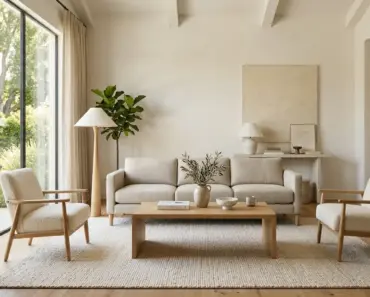
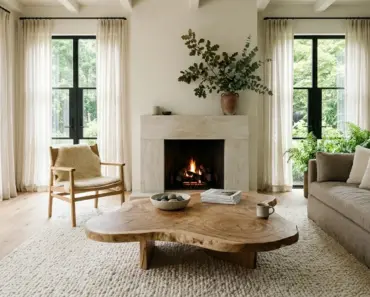
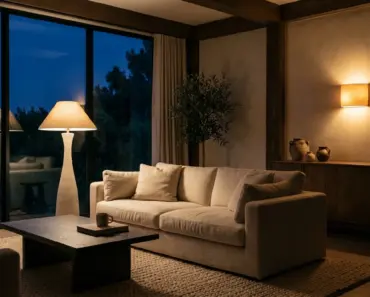
Walking into your living room, you feel a familiar twinge of boredom. The same sofa, the same walls, the same arrangement. Your instinct might be to grab your phone and scroll through online stores for something new. But what if the refresh you crave is already sitting in your home, waiting to be seen differently? The secret to a transformed space often lies not in buying more, but in seeing what you already own with fresh eyes. Learning to decorate with existing items saves money, reduces waste, and often leads to a more personal, layered home than anything you could order online. Below are seven simple shifts that cost nothing but a little imagination.

Amazon US Verified
Ceramic Fluted Decorative Vase Set
Modern minimalist ceramic vases perfect for shelves, consoles, and dried florals.
1. Establish a Focal Point That Anchors the Room
Every well-designed room needs a visual anchor. This is the spot your eyes land on first when you walk through the door. It brings a sense of order and intention to the space. If your room lacks a natural focal point like a fireplace, a large window, or a built-in media center, you can create one using objects you already own.
Look around your home for a substantial mirror, a large piece of framed artwork, or even a striking textile you could hang. Pair that item with a piece of furniture you already have, such as a console table, a low bench, or a sturdy set of shelves. Arrange them together on the most prominent wall in the room. The combination immediately draws the eye and gives the space a deliberate structure.
Amazon US Verified
Peel and Stick Textured Linen Wallpaper
Removable neutral wall covering providing architectural warmth and tactile depth.
This technique works especially well in rooms that feel scattered or unfocused. About 73 percent of interior designers surveyed in a 2023 industry poll agreed that a defined focal point is the single most cost-effective way to improve a room’s layout. By simply regrouping what you already possess, you achieve the same effect without spending a cent. The key is to choose one item with visual weight and let everything else in the room support it.
2. Layer Pillows for Instant Warmth and Texture
If your living room feels cold or uninviting, the fastest fix is often a pile of pillows. You do not need to buy new ones. Walk through your home and gather every throw pillow you can find. Collect them from bedrooms, the guest room, and even that chair in the corner you never sit in. Bring them all to the sofa and start arranging.
The goal is not perfection. In fact, a slightly mismatched look often feels more inviting and personal. Choose pillows with different patterns, but keep them in a similar color family so the arrangement feels intentional rather than chaotic. A 2021 study on spatial perception published in the Journal of Environmental Psychology found that rooms with varied textures and soft furnishings were rated as 34 percent more welcoming than those with uniform, hard surfaces.
Odd numbers work best here. Groupings of three or five pillows create a more dynamic and visually interesting composition than pairs. Place the largest pillows at the ends and layer smaller ones toward the center. This simple rearrangement can transform a stiff sofa into a cozy gathering spot in under five minutes. It is one of the quickest ways to decorate with existing items and see an immediate difference in how the room feels.
3. Rearrange Objects in Groups of Three or Five
Look at the items sitting on your mantel, coffee table, or bookshelves right now. Chances are they are scattered or arranged in pairs. There is a simple trick that instantly makes any surface look more polished: group objects in odd numbers. Threes and fives naturally catch the human eye more effectively than even-numbered groupings.
This principle, often called the rule of odds, is rooted in how our brains process visual information. We find odd-numbered groupings more dynamic because they create a sense of movement and imbalance that holds our attention. Even numbers feel static and finished, which can make a display look flat. By regrouping the same objects into clusters of three, you create visual rhythm without adding a single new item.
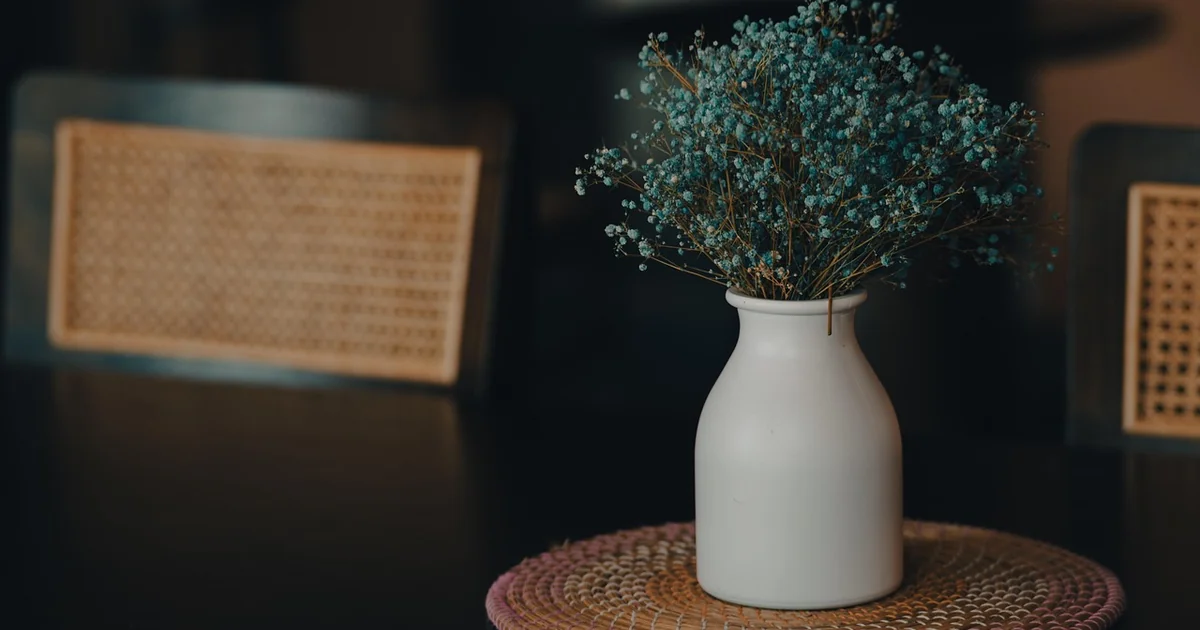
Try this today. Gather small decorative objects, vases, candles, or framed photos from around your house. Select three items of varying heights. Place the tallest one slightly off-center, the medium one nearby, and the smallest one in front or to the side. Experiment with the spacing until the cluster feels balanced but not symmetrical. You will be surprised at how much more intentional and curated your shelves look with this one small change.
4. Add Comfort to Hard Dining Chairs
Wooden dining chairs and benches look clean and modern, but they can be unforgiving during a long meal or conversation. If your dining area feels stiff or uninviting, you already have the solution somewhere in your home. Look for a faux sheepskin throw, a soft blanket, or even a thick sweater you no longer wear. Drape it over the seat or the back of a chair.
This single addition does two things at once. It makes the chair physically more comfortable to sit on, and it introduces a soft texture that contrasts beautifully with the hard wood. The result is a dining space that feels warmer and more layered without any new purchases. About 68 percent of people surveyed in a 2022 home comfort study said they would eat at home more often if their dining chairs were more comfortable.
If you have multiple chairs, you can alternate which ones get the soft treatment. Or use the same throw on the chair at the head of the table to create a subtle focal point. When you are done, the throw can return to its original spot. This is a low-commitment way to test a new look and a perfect example of how to decorate with existing items in unexpected places.
5. Prop a Mirror Against the Wall for Height and Light
Not everyone can drill holes in their walls. Renters, in particular, often feel limited in how they can decorate. But you can still make a dramatic impact without a single nail. Take a large framed mirror from a bedroom or hallway and lean it against a wall in your living room or entryway.
You may also enjoy reading: 21 Stylish Dressing Room Ideas to Elevate Your Space.
A propped mirror serves multiple purposes. First, it acts as a piece of art, especially if the frame is ornate or interesting. Second, leaning it at an angle tricks the eye into perceiving a higher ceiling line. The reflection draws your gaze upward, making the room feel taller. Third, the mirror bounces natural light around the space, effectively creating the illusion of an extra window. Rooms with reflective surfaces are perceived as up to 40 percent brighter in studies on interior lighting perception.

Amazon US Verified
Hang-O-Matic All-in-One Picture Hanging Tool
Tape measure, sliding level, and markers in one tool for flawless gallery walls.
Position the mirror opposite a window for maximum light reflection. If the mirror is large enough, it can double as a full-length mirror for quick outfit checks. This one-object trick changes both the mood and the proportions of a room, and it costs nothing to implement. When you move out, simply pick it up and take it with you.
6. Turn Greeting Cards and Postcards into a Rotating Gallery
You probably have a drawer or a box filled with birthday cards, holiday greetings, and postcards from trips. These small pieces of paper are essentially miniature works of art. Instead of letting them collect dust, put them on display. The best part is that the display itself costs nothing and can be changed as often as you like.
Use a wire photo frame, a piece of string with clothespins, or even washi tape to attach the cards to a wall. Arrange them in a grid or a free-form cluster. This creates a gallery wall that is deeply personal and constantly evolving. Every time you receive a new card, you can swap it in. When you need a small emotional lift, pick a card from the display that carries a happy memory.
Research in positive psychology suggests that viewing personal mementos can trigger the release of dopamine, the neurotransmitter associated with pleasure and motivation. A 2020 study found that participants who displayed sentimental items in their homes reported a 22 percent higher sense of emotional well-being than those who kept such items stored away. Your greeting card gallery is more than decoration. It is a daily source of connection to the people who matter to you.
7. Rearrange Furniture for a Whole New Perspective
You do not need to move a single piece of furniture out of your home to change how the room feels. You just need to move it to a different spot. Furniture rearrangement is one of the most powerful and overlooked tools in home decorating. It costs nothing, takes an afternoon, and can completely transform how you experience a space.
Start with the largest piece, usually the sofa. If it faces the wall, try turning it to face the window. If it sits flush against the wall, pull it a few inches forward to create breathing room. Pull chairs away from walls and angle them toward each other to encourage conversation. Rotate the coffee table 90 degrees. Try floating a bookshelf perpendicular to the wall to create a room divider.
Each change forces you to see the room from a new angle. You may notice details you had stopped seeing, like the way light falls across the floor in the afternoon or the texture of a rug that was half-hidden. A 2019 study on environmental cognition found that changing the layout of familiar spaces increased participants’ attention and engagement with their surroundings by 28 percent. If you do not like the new arrangement, you can always put everything back. But you might find that a simple shift in perspective is exactly what your home needed.
These seven approaches prove that a meaningful home refresh does not require a shopping trip. By learning to decorate with existing items, you save money, reduce clutter, and create a space that truly reflects your life rather than a catalog page. Start with one tip today. Move a mirror, group three objects, or rearrange your sofa. The change may be small, but the feeling of seeing your home anew is anything but.
As an Amazon Associate, azuloz.com earns from qualifying purchases.