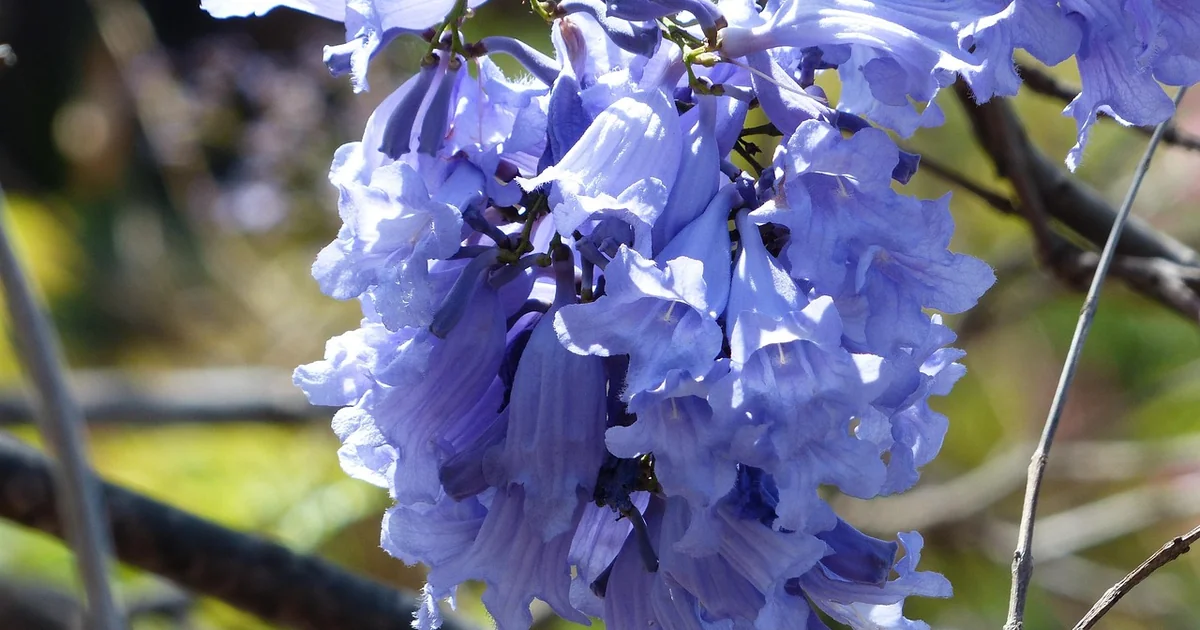
Driving down a suburban street in late spring, you might spot a tree that looks like it is covered in purple clouds. That spectacle is the jacaranda tree ( Jacaranda mimosifolia ), a fast-growing beauty that can turn any yard into a showstopper. Successful jacaranda tree care requires understanding a few key principles about sunlight, soil, and space.
7 Easy Steps for a Thriving Jacaranda Tree
Step 1: Choose a Sunny, Spacious Location
Sunlight is the primary fuel for those iconic purple blooms. Your jacaranda needs a minimum of six to eight hours of direct sun every day. A spot with less light will produce a healthy tree, but the floral display will be far less dramatic. Space is equally critical. These trees reach a mature height of 25 to 50 feet with a spread of 15 to 30 feet. Plant it at least 15 feet from your house, driveway, or sidewalk. The wood is surprisingly brittle, and surface roots have a habit of lifting concrete. The tree also drops tens of thousands of flowers and seed pods each year, creating a beautiful but slippery “purple carpet” that requires regular cleanup. In tropical climates like Hawaii, parts of Australia, and South Africa, the jacarada is classified as an invasive species, so check local regulations before planting.
Step 2: Prepare Well-Draining, Slightly Acidic Soil
The most common mistake in jacaranda tree care is planting in soil that stays wet. Soggy conditions lead to root rot, a fungal disease that can kill a young tree within weeks. Aim for sandy, loamy soil with a pH between 5.5 and 6.5. You can test your soil with an inexpensive at-home kit or send a sample to your local extension office for around $20. If you have heavy clay, do not just dig a hole and fill it. Instead, build a raised bed or amend the entire planting area with 50% coarse sand and 50% organic compost. This extra effort creates an environment where roots can breathe and spread easily.
Step 3: Master a Watering Routine for Optimal Jacaranda Tree Care
Consistent moisture is crucial during the first two years. Water your jacaranda when the top 3 to 4 inches of soil feels dry to the touch. Focus the water at the drip line, which is the area directly beneath the outer edge of the branches. This encourages roots to grow outward and anchor the tree well. A deep soak once a week is usually enough during the summer. During intense heat waves, a mature tree can transpire over 100 gallons of water per week, so increase frequency if needed. Reduce watering to once a month during the winter dormant period. Overwatering is just as dangerous as neglect, so always check the soil moisture first.
Step 4: Protect Your Tree from Temperature Extremes
Jacaranda trees thrive in the warmth of USDA hardiness zones 10 and 11. They can handle a rare dip to 20 degrees Fahrenheit, but prolonged freezing will kill them. If you live in a borderline zone, plant the tree near a south-facing wall for added warmth. Interestingly, while they love heat, constant direct sun on the trunk can cause sunscald, which is essentially a sunburn on the bark that leads to cracking and pest infestations. You can prevent this on young trees by painting the trunk with a 50/50 mix of water and white latex paint, which reflects harsh rays. This simple trick helps maintain healthy bark for decades.
Step 5: Apply the Right Fertilizer for Jacaranda Tree Care
Feed your jacaranda once a year in early spring with a balanced fertilizer like a 10-10-10 NPK formula. Too much nitrogen encourages lush leafy growth at the expense of flowers. If your tree is planted in a lawn that gets regular fertilizer, skip the extra feeding entirely, as the grass is already providing enough nitrogen. Look for a fertilizer that also contains micronutrients like iron and magnesium. These trace minerals prevent yellowing leaves and support vibrant blooms. Apply the fertilizer around the drip line and water it in deeply.
You may also enjoy reading: 7 Best Cutting Garden Roses.
Step 6: Prune Strategically for a Strong Structure
Young jacarandas need structural pruning to build a strong framework. Choose one central leader to be the main trunk and prune away competing branches. This creates a sturdy tree that can resist wind and heavy rain. Without this early training, the tree can develop weak crotches that split easily. Once mature, pruning is mostly for maintenance. Remove dead, diseased, or crossing branches in late winter. Avoid heavy pruning in summer, as it stimulates vertical suckers that are weakly attached and ruin the tree’s natural umbrella shape.
Step 7: Consider Dwarf Varieties or Propagate Correctly
If you love the look of a jacaranda but have a small yard, dwarf varieties are a wonderful solution. The ‘Bonsai Blue’ cultivar reaches only 10 to 12 feet tall and produces deep purple blooms. The Jacaranda jasminoides grows 10 to 25 feet tall with lilac tubular flowers. For propagation, skip the seeds if you want fast results and a true copy of the parent plant. Instead, take a softwood stem cutting about half an inch thick in late spring. Root it in a moist, sandy mix. Stem cuttings bloom years sooner than seedlings and guarantee the same flower color.
With these seven steps, your jacaranda tree will grow strong and reward you with spectacular purple blooms for decades. Choose the right spot, prepare the soil, and water wisely. The rest is patience and a little seasonal care.