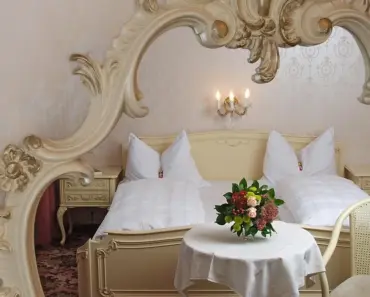
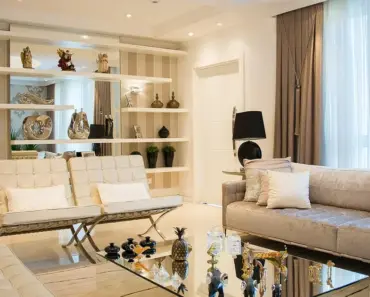
A luxury living room is not defined by a designer label or a room full of expensive furniture. It feels luxurious because the layout works, the materials reward close attention, the lighting is flattering, and every object appears to have earned its place. The strongest current interiors also feel personal rather than staged: they combine comfort, craftsmanship, useful storage, and a few memorable details.
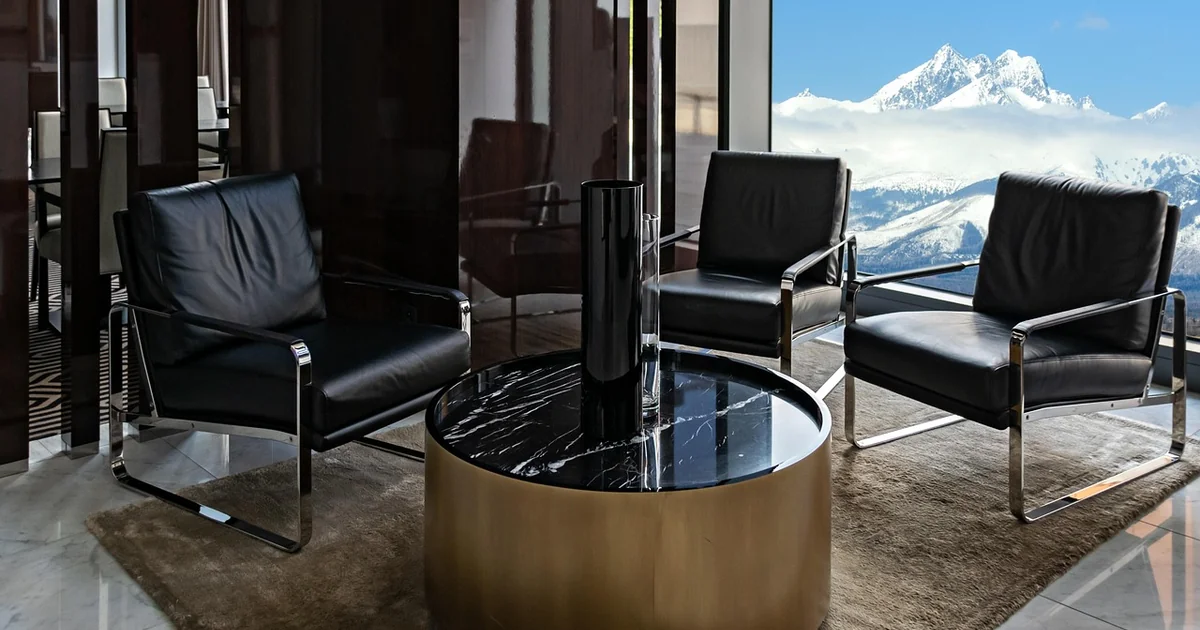
Many of today’s luxury living room trends favour warm colours, expressive natural materials, gentle curves, detailed millwork, and rooms that look collected over time. The aim is not to use every idea at once. Choose the elements that suit your architecture, daily routines, and budget, then repeat them with restraint.
What Makes a Living Room Look and Feel Luxurious?
Luxury comes from coherence. The furniture should be correctly scaled, the circulation paths should remain clear, and the materials should relate to one another without looking like a matching set. Comfort matters just as much as appearance. A beautiful sofa that is unpleasant to sit on, or dramatic lighting that makes reading difficult, undermines the room.
Before buying anything, decide how the living room needs to function. Will it host conversations, family film nights, reading, entertaining, or several of these activities? That answer should shape the seating depth, table placement, lighting, storage, and durability of every finish.
16 Luxury Living Room Trends Worth Adapting
1. Statement Seating With a Purpose
A distinctive armchair, chaise, or sofa can anchor the room, but presence should never come at the expense of comfort. Look for a strong silhouette, supportive proportions, and upholstery that suits the household. A pale bouclé chair may work beautifully in an occasional sitting room, while a busy family space may be better served by a tightly woven performance fabric or removable covers.
Let one seating piece lead and keep the others quieter. If every chair has an unusual shape, bold pattern, or oversized scale, the room loses its focal point.
2. Curves Balanced by Clean Lines
Rounded sofas, oval tables, barrel chairs, and softly arched details continue to bring ease to living rooms. Curves can improve circulation around a coffee table and soften a room dominated by square windows, straight walls, and rectangular rugs. However, an entirely curved scheme may feel overworked. Pair an organic coffee table with a tailored sofa, or place a rounded chair beside a rectilinear fireplace, to create a more enduring balance.
3. Sculptural Coffee Tables
The coffee table often sits at the visual centre of the seating arrangement, making it an ideal place for a sculptural form or characterful material. Honed stone, textured plaster, solid timber, aged metal, and lacquer can all add substance. The best choice still has to function: allow enough surface for drinks, leave comfortable clearance around the table, and avoid sharp corners where children frequently play.
In a compact room, two smaller nesting tables can offer more flexibility than one heavy block. In a large room, a low, generous table helps connect seating that might otherwise feel scattered.
4. Layered, Tactile Surfaces
A single-colour room can feel rich when its textures vary. Combine smooth with nubby, matte with reflective, and crisp with softly draped. Linen curtains, a wool rug, timber grain, velvet cushions, leather, handmade ceramics, and a subtly textured wall finish create depth without relying on loud colour.
Repeat each important texture or tone at least once elsewhere in the room. A warm wood side table might echo the frame of an artwork, while the colour of a stone fireplace can reappear in the rug. These quiet repetitions make a mixed scheme feel intentional.
5. Mixed Materials and Finishes
Luxury living rooms rarely rely on one finish throughout. A considered mix of wood, stone, glass, textile, and metal creates contrast and prevents the room from resembling a furniture showroom. The key is to establish a hierarchy: choose one dominant timber or metal, then add one or two supporting finishes in smaller amounts.
You do not need every metal to match. Aged brass can coexist with blackened steel or polished nickel when the finishes are repeated and share a similar visual weight. Avoid scattering many unrelated finishes across small accessories, which can make the room feel fragmented.
6. Natural Stone Used Selectively
Marble, travertine, limestone, slate, and quartzite introduce pattern and variation that manufactured surfaces often imitate. They work especially well on fireplace surrounds, side tables, consoles, and architectural ledges. Because natural stone varies in porosity, hardness, and sensitivity to acids, ask about sealing and maintenance before choosing a slab. A beautiful material is only luxurious if its upkeep fits your life.
Use stone where it will have impact instead of repeating it everywhere. One veined fireplace or substantial table can carry more visual authority than several small stone accessories.
7. Warm Neutrals With Earthy Accent Colours
Cool grey and stark white schemes are giving way to warmer foundations such as ivory, mushroom, clay, taupe, sand, camel, and soft brown. These colours flatter timber, natural stone, and warm lighting. They also create a calm backdrop for olive, burgundy, rust, muted blue, or deep green.
A neutral room still needs contrast. Vary the lightness of adjoining surfaces, introduce dark outlines through frames or furniture legs, and add at least one richer colour. Test large paint samples at different times of day because daylight direction and artificial lighting can change how undertones appear.
8. Deep Wood Tones and Visible Grain
Walnut, oak, mahogany-toned finishes, and other expressive woods bring warmth that highly polished monochrome rooms often lack. Visible grain makes even a simple cabinet or side table feel individual. Mixing wood tones is possible when one tone dominates and the others share a warm or cool undertone.
There is no need to replace everything. A vintage cabinet, timber lamp base, or framed artwork can introduce depth to a room furnished mainly with pale wood. Slight age and variation can make the space feel collected rather than newly installed.
9. A Sofa Chosen for Real Life
The sofa establishes the scale and comfort of the room, so it deserves more planning than a trend-led impulse purchase. Measure the room, doorways, stair turns, and lift access before ordering. Mark the sofa’s footprint on the floor with painter’s tape, including the depth, and check that doors, drawers, and circulation routes still work.
Seat depth should match the people who use it. Deep, soft seating encourages lounging, while a shallower seat and firmer cushion make upright conversation and standing easier. In a multi-use family room, modular seating can adapt to gatherings and future homes, but inspect how securely its sections connect.
10. Construction Quality Over Brand Recognition
Look beyond upholstery and ask what is inside the sofa. A robust frame, reinforced joints, suitable suspension, resilient cushioning, neatly matched seams, and a clear warranty are more meaningful than a prestigious logo. Sit in the floor model for several minutes, test the arms and edges for movement, and ask whether cushion inserts, covers, or individual modules can be replaced.
No single frame, spring, or cushion material is automatically best for every buyer. The right construction depends on the desired firmness, maintenance tolerance, climate, and expected use. Obtain the care instructions before purchasing and keep them with the warranty.
11. Timeless Foundations With Changeable Accents
Large, costly pieces tend to age better when their proportions and silhouettes suit the room rather than a short-lived microtrend. A well-scaled sofa, plain rug, and balanced window treatment can form a lasting base. Bring current colour, pattern, or novelty through cushions, throws, lampshades, art, and smaller tables that are easier to move or replace.
Timeless does not mean anonymous. A room gains personality through art, inherited objects, travel finds, books, and furniture from different periods. The goal is a clear relationship between the pieces, not perfect uniformity.
12. Layered Lighting at Different Heights
A single ceiling fixture cannot provide every kind of light a living room needs. Combine ambient light for general visibility, task light for reading or hobbies, and accent light for artwork, shelves, or architectural texture. Table lamps and floor lamps bring illumination closer to eye level, while wall lights and concealed lighting can add depth around the room’s perimeter.
Plan switching as carefully as the fixtures. Separate circuits or smart controls allow you to adjust layers independently, while dimmers help the room transition from daytime activity to evening relaxation. Check that the selected LED lamps and dimmers are compatible to reduce flicker or an inadequate dimming range.
You may also enjoy reading: Designers Say These 5 Living Room Trends Are Out.
13. Statement Lighting That Suits the Architecture
A chandelier, pendant, or sculptural floor lamp can function like artwork, drawing the eye upward and adding another material to the scheme. Scale is crucial. A small fixture may disappear in a generous room, while an oversized pendant can obstruct sightlines or hang uncomfortably low.
Before installation, view a cardboard template or temporary outline from the main entrance and seating positions. Consider ceiling height, nearby doors, and the fixture’s appearance when switched off. A statement light occupies the room all day, not only when illuminated.
14. Warm, Consistent Light Colour
For a relaxed living room, LEDs around 2700K to 3000K generally produce a warm appearance. Kelvin describes the colour appearance of the light rather than brightness; lumens indicate light output. Keeping visible lamps within a similar colour-temperature range helps the room feel coherent, although artwork, finishes, and personal preference should guide the final choice.
Colour rendering matters too. A lamp with strong colour-rendering performance helps textiles, timber, skin tones, and artwork look more natural. If possible, test one bulb in the room before replacing every lamp.
15. Architectural Storage and Detailed Millwork
Built-in shelving, wall panelling, concealed cupboards, and a well-proportioned fireplace surround can give a plain room architectural character. The most useful designs combine open display space with closed storage, preventing everyday objects from overwhelming the shelves.
Plan around actual belongings rather than generic shelf spacing. Measure books, speakers, games, and decorative pieces; provide cable routes and ventilation for media equipment; and include integrated lighting only where it serves a clear purpose. Built-ins are a major commitment, so preserve flexibility with adjustable shelves or removable internal components.
16. Tailored Window Treatments and Made-to-Measure Details
Full-length curtains, Roman blinds, and layered sheers can improve privacy, light control, acoustics, and the apparent proportions of the room. Hanging curtains above the window and extending the track beyond the frame can make glazing appear larger and allow more daylight in when the curtains are open.
Custom work is most valuable where standard dimensions create awkward gaps or poor function. That might mean curtains cut to the exact drop, a console sized for a narrow wall, or a sectional configured around a bay window. Bespoke does not need to describe every piece; using it selectively solves difficult dimensions while keeping the budget focused.
How to Apply Luxury Living Room Trends Without Overspending
Start with the changes that affect the whole room. Correcting the furniture layout, removing visual clutter, and improving the lighting often makes a larger difference than buying more décor. Then identify one permanent investment and one affordable update.
- Rearrange first: centre the seating on conversation, a view, a fireplace, or another genuine focal point rather than automatically pushing every piece against a wall.
- Upgrade scale: a properly sized rug and curtains hung with intention can make existing furniture look more resolved.
- Use one hero material: introduce stone, figured wood, velvet, or aged metal through a single focal piece instead of many small imitations.
- Shop across periods: vintage and second-hand furniture can add craftsmanship and individuality, but inspect structure, odour, pests, and upholstery condition before buying.
- Improve the light: add a floor lamp beside the reading chair, use dimmers where suitable, and keep visible bulbs reasonably consistent.
- Edit accessories: display fewer, larger objects with personal meaning and leave some open space around them.
Common Mistakes That Make a Luxury Scheme Feel Flat
The most common problem is treating luxury as a shopping list. Curved furniture, stone tables, warm beige, and brass lighting will not create a refined room if their proportions conflict. Other frequent mistakes include buying a complete matching suite, choosing a rug that is too small for the seating group, relying only on ceiling downlights, and styling every shelf until no visual breathing room remains.
Be equally careful with practicality. Highly porous stone near drinks, delicate fabric in a pet-friendly household, or a low table in a narrow circulation path can turn an attractive feature into a daily frustration. Luxury should reduce friction, not add to it.
How to Build a Cohesive Luxury Living Room
- Define the room’s uses. List the activities, number of regular users, and storage needs.
- Measure and map. Record walls, windows, doors, radiators, outlets, and main walking routes before choosing furniture.
- Select the anchor pieces. Usually these are the sofa, rug, coffee table, and principal light fixture.
- Create a restrained palette. Choose a small family of colours and materials, then vary their texture and depth.
- Layer the lighting. Provide ambient, task, and accent sources on controls that match how the room is used.
- Add personal character. Introduce art, books, vintage pieces, and meaningful objects gradually.
- Review before adding more. Live with the arrangement, note what is missing, and avoid filling empty space simply because it exists.
What Is the Best Investment for a Luxury Living Room?
The best investment is the element you use most and would find most disruptive to replace. For many households, that is the sofa; for others, it may be custom storage, high-quality curtains, a durable rug, or a well-designed lighting plan. Prioritise fit, comfort, repairability, and material quality over trend status.
In a small living room, spend on proportion rather than quantity. A correctly sized sofa, one comfortable chair, flexible tables, and layered lighting can feel more generous than a crowded collection of impressive pieces. In a family room, washable or replaceable components may be more valuable than fragile finishes. A successful luxury living room ultimately feels effortless because it supports the people who live there while expressing something distinctive about them.