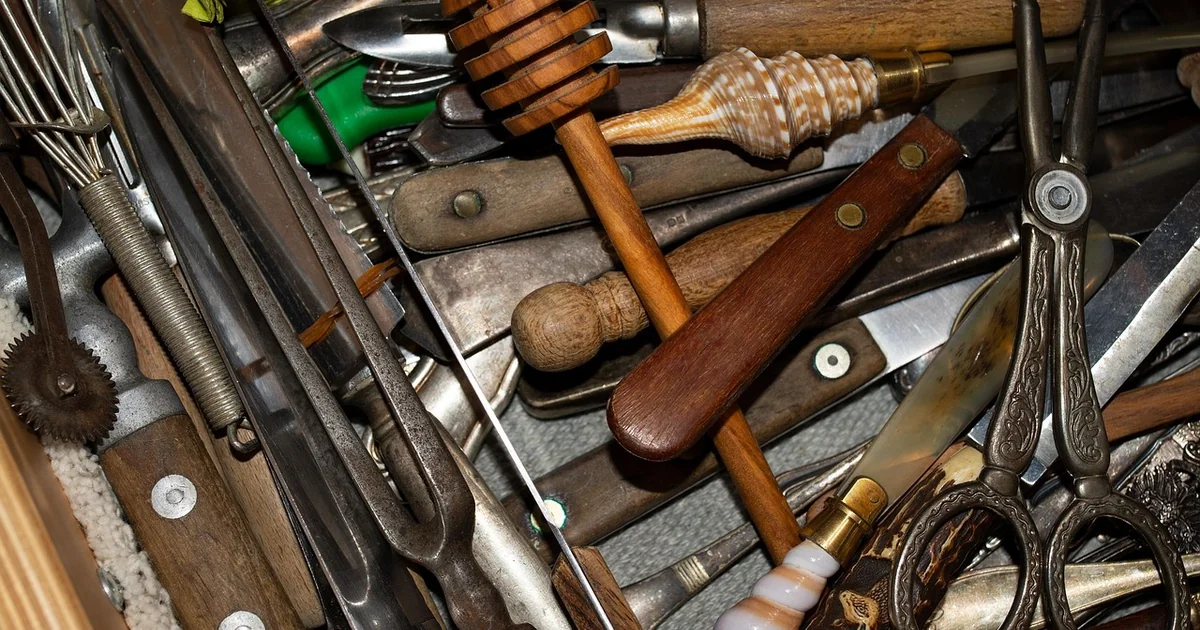
You pull open the drawer nearest the stove, hunting for a spatula. Instead, your fingers locate a dried-out glue stick, a single chopstick, a takeout menu from 2019, and a battery that might be leaking. This is the universal reality of most kitchen drawers. We spend time searching, sifting, and sighing.
The natural instinct is to shop for a solution. We browse bamboo dividers and acrylic bins online, convinced that the right container will fix everything. But buying organizers before you remove the clutter is like putting a decorative frame around a messy pile. The real transformation happens through editing, repositioning, and repurposing.
Learning how to organize kitchen drawers effectively does not require a trip to the store. It requires about an hour of your time, a bit of honesty, and a willingness to reuse what you already own. Here are five clever ways to do it.
Why Most Kitchen Drawers Fall Into Chaos Quickly
Kitchen drawers suffer from a specific problem: they are a convenient dumping ground. When you walk in the door with mail, keys, and a random screwdriver from a recent repair, the nearest drawer swallows them up. Over time, the functional items get buried under the misfits.
Research from the National Association of Productivity and Organizing Professionals suggests the average person can lose up to 55 minutes per day searching for misplaced belongings. The kitchen drawer is ground zero for this lost time. Without a logical home for each object, everything migrates. The scissors vanish under a pile of dish towels. The tongs end up with the measuring spoons. The whole system collapses into entropy.
The good news is that reversing this trend is fast. You do not need new furniture or a contractor. You need a strategy and a recycling bin.
5 Ways to Organize Kitchen Drawers Without Buying Anything New
Each of these methods focuses on using items you already own, combined with sharp decision-making. Start with one drawer, finish it completely, and then move to the next one.
1. The Complete Drawer Audit and Relocation Blitz
This is the single most effective step. You cannot organize a space you have not fully assessed. Pull the drawer out entirely if it slides out easily. Dump the entire contents onto a clean counter or a towel spread on the floor.
Wipe down the inside of the drawer. You will be amazed by the collection of crumbs, dust, and mystery grit that accumulates in a month. Now you have a blank canvas.
Next, sort the pile into three distinct categories:
- Keep: Tools and items you actually use in the kitchen. The spatula that feels good in your hand. The peeler that actually works.
- Toss: Broken tools, dried-out pens, dead batteries, expired coupons, and duplicates. If you own four vegetable peelers and only reach for one, the other three are blocking your path.
- Relocate: Items that belong somewhere else in the house. The stray screwdriver should be in a toolbox. The nail clippers belong in the bathroom. The birthday candles need to go back with the party supplies.
Be ruthless during this phase. Hold every item in your hand. If you have not touched it since before the last two seasons changed, it is clutter. A surprising number of kitchen utensils are used exactly once and then become permanent residents. Let them go. This process alone will clear 30 to 50 percent of the volume from your drawer.
2. Repurpose Household Packaging Into Custom Dividers
Dividers are non-negotiable if you want your drawers to stay organized longer than a week. Without physical barriers, objects slide together and create chaos. Fortunately, you have excellent raw materials sitting in your recycling bin right now.
Cardboard boxes are the unsung heroes of drawer organization. Cereal boxes, cracker boxes, and shipping cartons provide sturdy, lightweight walls. Cut them into strips that fit the width or depth of your drawer. Score the cardboard along the bottom edge so it stands upright. Arrange these strips in a grid pattern to create custom compartments for utensils, pens, and tools.
Takeout containers often have clear plastic lids and sturdy bases. The bases work perfectly as small bins for twist ties, bands, and tea packets. The lids can be placed flat on the bottom of the drawer to protect the surface from spills.
Cardboard tubes from wrapping paper or paper towels are useful for deep drawers. Tape several tubes together vertically to create a honeycomb structure. This is ideal for separating items like skewers, straws, and meat tenderizers that are awkward to store flat.
Measure the inside of your drawer before you cut your cardboard. A snug fit prevents the dividers from shifting. This entire project costs nothing and can be replaced easily when it eventually wears out.
3. The Junk Drawer Rescue System
Let us address the elephant in the kitchen: the junk drawer. There is no shame in having one. Every home needs a catch-all space for the random items that keep the household running. The problem is not the concept of the junk drawer. The problem is the lack of boundaries inside it.
Small boxes from the pantry or bathroom are perfect for taming this space. A tea box can hold paper clips and bandages. An empty phone or electronics box can store batteries. A small plastic container from yogurt or deli meat can hold a few working pens, a sharpie, and a roll of tape.
Here is what actually works in a junk drawer:
- Batteries (sorted by size into small compartments)
- Scissors that still cut
- A few pens that write consistently
- A notepad or a small stack of sticky notes
- A small flashlight
- A handful of bandages
Here is what does not belong:
- Anything broken
- Items you have not touched in six months
- Objects with a clear home elsewhere
Use the small containers you find in your house to build a home for each category. When everything has a designated spot, the chaos transforms into convenience. You open the drawer, see the container you need, and grab it without digging.
You may also enjoy reading: 11 Sweet Weekend Hacks for Blissful Days.
4. Zone Your Drawers by Cooking Frequency
Once you know what you are keeping, the placement of those items determines whether your system holds up. The drawers closest to your main prep area and stove should hold the tools you touch most often. This sounds obvious, but most kitchens are not set up this way.
Walk through your kitchen right now. Is your primary spatula in the drawer farthest from the stove? Are your measuring spoons in the drawer next to the sink while you always mix ingredients on the island? These mismatches create friction. Friction leads to clutter because putting things away becomes a small chore.
Use this simple framework:
- Zone 1 (Prime real estate): The drawer right next to the stove. Store everyday utensils here: spatulas, wooden spoons, tongs, slotted spoons, and a garlic press if you use it weekly.
- Zone 2 (Secondary access): A nearby drawer, perhaps next to the prep sink. Store measuring cups and spoons, kitchen scissors, a vegetable peeler, and a can opener here.
- Zone 3 (Storage): Drawers farther from the cooking action. Store specialty tools here: holiday cookie cutters, skewers, pastry bags, and gadgets you use a few times a month.
This relocation costs zero dollars and thirty minutes of your time. When everything is within arm’s reach of where you actually use it, cooking becomes noticeably less annoying. You also reduce the likelihood of buying duplicates because you can see exactly what you own.
5. The One-Touch Out Rule
The final trick requires no physical materials at all. It is a simple mental framework that prevents the slow slide back into entropy.
The rule is this: every time you open a drawer, look for one item that does not belong there. It might be a rubber band that escaped its box. It might be a stray pen cap. It might be a takeout menu for a restaurant that closed last year. Remove that item immediately. Put it in the trash or walk it to its correct home.
This takes less than ten seconds. Over the course of a week, this habit removes dozens of misplaced objects from your drawers. It keeps the system clean without demanding a full reorganizing session every month.
Teach this rule to your family members. When everyone participates, the drawer maintains its shape naturally. The goal is not perfection. The goal is to make the drawer functional enough that you never dread opening it.
Frequently Asked Questions About Organizing Kitchen Drawers
How can I organize my kitchen drawers without spending money on organizers?
Focus on the audit and repurposing strategies outlined above. Empty every drawer completely. Remove everything that is broken, duplicated, or misplaced. Then use sturdy cardboard boxes, paper towel tubes, and clean takeout containers as free dividers. The act of editing your belongings has a much larger impact than buying bins ever will.
What is the fastest way to declutter a kitchen drawer?
Pull the drawer completely out and dump everything on the counter. Set a timer for five minutes. Sort into three piles: keep, toss, and relocate. Do not pick up an item and reminisce. Make a snap decision. You will be surprised by how much you can clear in a single timed session.
How do I keep my kitchen drawers organized long term?
Install the One-Touch Out rule as a daily habit. Additionally, schedule a five-minute reset at the end of each week. Walk through your kitchen drawers and correct any item that has migrated. Consistent small maintenance prevents the need for another deep reorganization later.
What household items can I use instead of buying drawer dividers?
Cardboard boxes cut to size are the most versatile option. Cereal boxes, cracker boxes, and shipping cartons provide structure. Plastic clamshell containers from produce work well for small parts. Empty tea boxes or altoid tins are excellent for paper clips, bands, and batteries.
How do I organize a deep kitchen drawer without it becoming a mess?
Deep drawers encourage stacking, which leads to digging. Use vertical dividers made from tall cardboard boxes (like granola bar boxes cut down to height) to create standing slots for cutting boards, baking sheets, and lids. Tubes from paper towels can be bundled together to hold skewers and chopsticks upright. When everything has a vertical home, you can see the entire contents at a glance.
A well-organized kitchen drawer does not require a receipt. It requires a clear mind, a little time, and the courage to throw away the thing you might need someday. Pick one drawer. Start there. The small win will give you the momentum to keep going.