Are you currently looking at your sketchbook and feeling completely frustrated by flat, lifeless drawings that never seem to match the vision in your head? You have probably spent hours trying to capture a portrait or a landscape, only to feel disappointed when the final result looks stiff and amateur. It is incredibly discouraging to put your heart into a piece of art and feel like you simply lack the natural talent to make it look realistic.
Have you ever watched other artists effortlessly create stunning, three-dimensional sketches and assumed they were simply born with a magical gift? This is a massive misconception that holds countless beginners back. The truth is that pencil drawing is not a genetic lottery ticket. It is a highly structured collection of learnable, repeatable skills. Anyone can learn how to observe proportions, simplify complex subjects, control pencil pressure, and accurately understand how light interacts with form.
What if the only thing standing between you and incredible pencil sketches is a basic understanding of a few fundamental techniques? You absolutely do not need an expensive, professional art kit to begin creating beautiful work today. A simple HB pencil, a softer pencil like a 2B or 4B, an eraser, and a stack of ordinary sketch paper are more than enough to get started. Let us break down the exact principles, practical tips, and common mistakes you need to know to build a rock-solid foundation and create sketches with incredible depth and confidence.
Four Fundamental Principles Behind Better Pencil Drawings
Before diving into specific techniques, you must understand the core principles that govern all realistic art. Mastering these four concepts will instantly elevate everything you draw.
1. Light and Shadow Create Believable Form
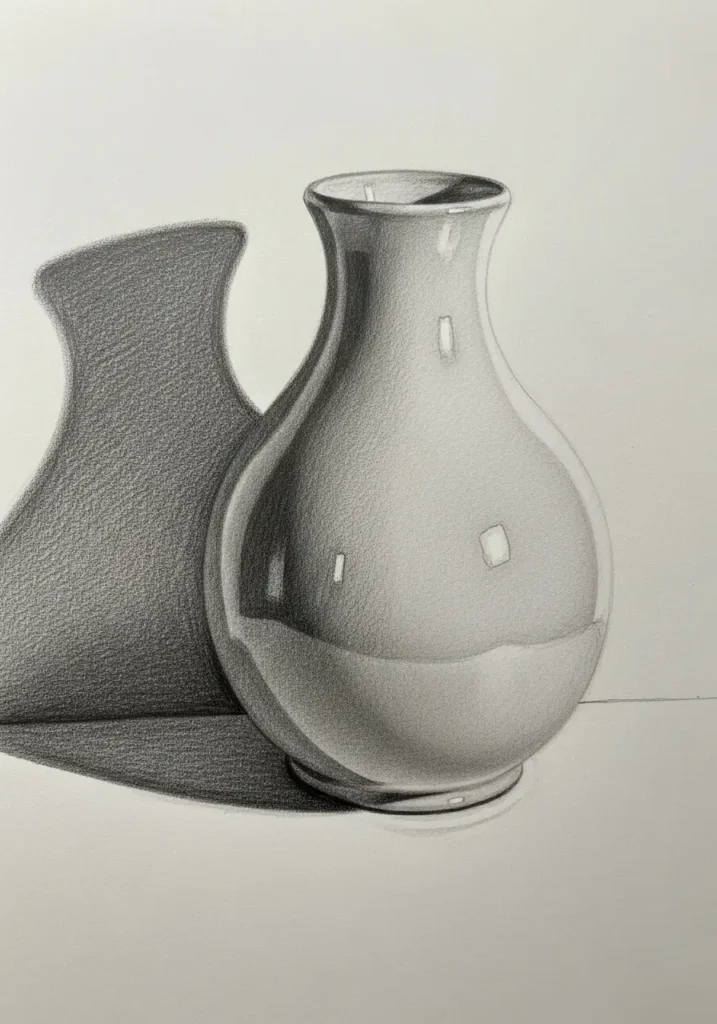
A simple outline successfully identifies the basic shape of an object, but it is the values that make it look truly three-dimensional. Values refer to the different degrees of light and dark present in a drawing. A convincing, realistic object usually includes a bright highlight, a general light area, a midtone, a dark core shadow, reflected light bouncing off the table, and a cast shadow.
Before you even think about shading, you must explicitly identify the exact direction of your light source. Ask yourself which specific surfaces face the light directly and which turn away from it into darkness. Keeping that lighting logic completely consistent across your entire drawing is vastly more important than adding lots of tiny, intricate details.
2. Line Quality Communicates Depth and Structure
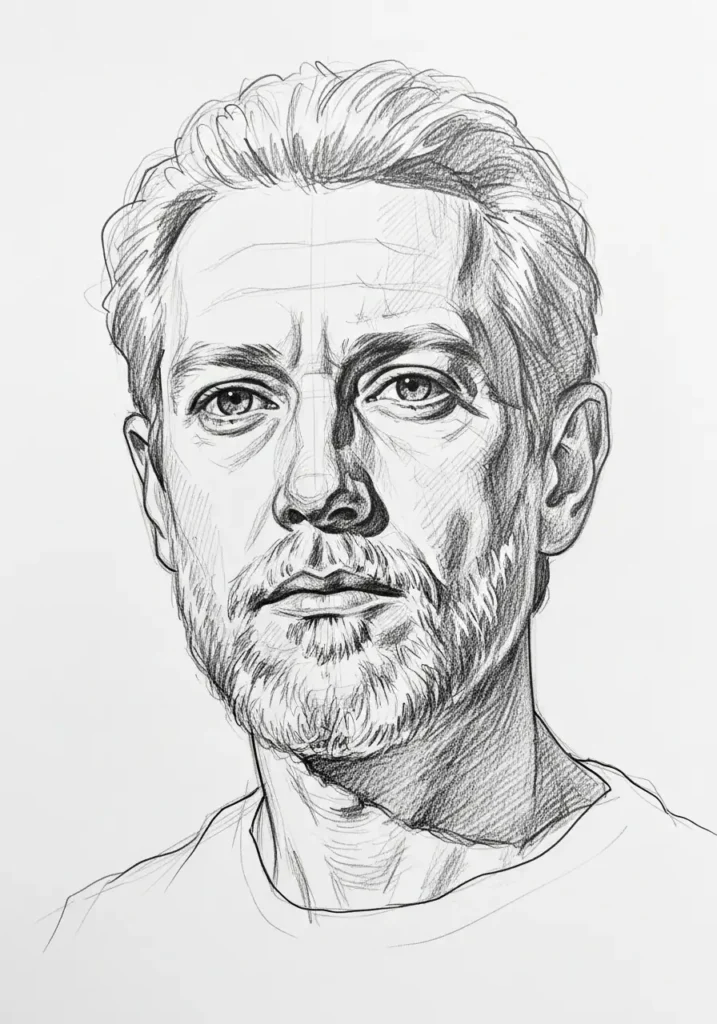
Lines do not have to be boring. They can be light, incredibly dark, thick, razor thin, continuous, broken, soft, or sharply defined. Each distinct variation communicates something entirely different to the viewer. Darker or thicker marks can aggressively bring an edge forward in space, while much lighter lines can gently suggest distance, reflected light, or a less important background boundary.
You can practice this by beginning a single stroke very lightly, gradually increasing the physical pressure through the middle of the line, and lifting the pencil smoothly at the end. This remarkably simple exercise produces highly expressive marks and massively improves your overall pressure control.
3. Perspective Organizes Visual Space
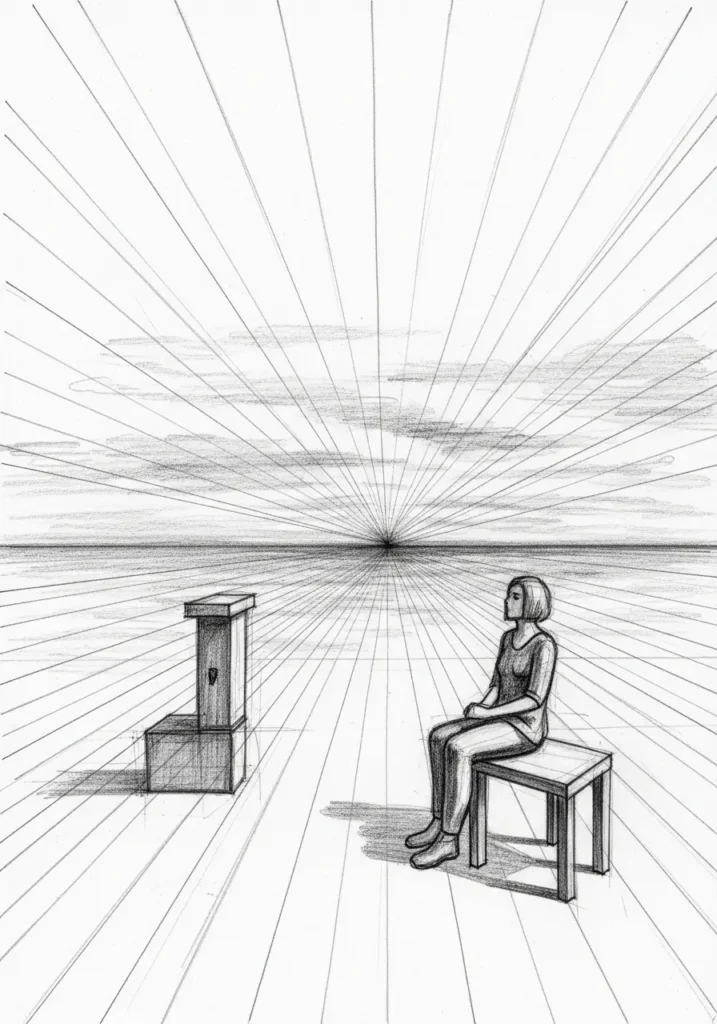
Perspective mathematically explains exactly why objects appear significantly smaller as they move further away from you, and why parallel edges seem to converge into a single point in the far distance. Even a very basic, fundamental understanding of horizon lines and vanishing points helps you draw interior rooms, city streets, wooden furniture, large buildings, and everyday household objects much more accurately.
You absolutely do not need to construct every single sketch with a rigid ruler. Perspective knowledge acts as a mental guide. It actively helps you recognize when the angles or the scale of an object simply feel wrong or inconsistent.
4. Patience Is a Required Technique
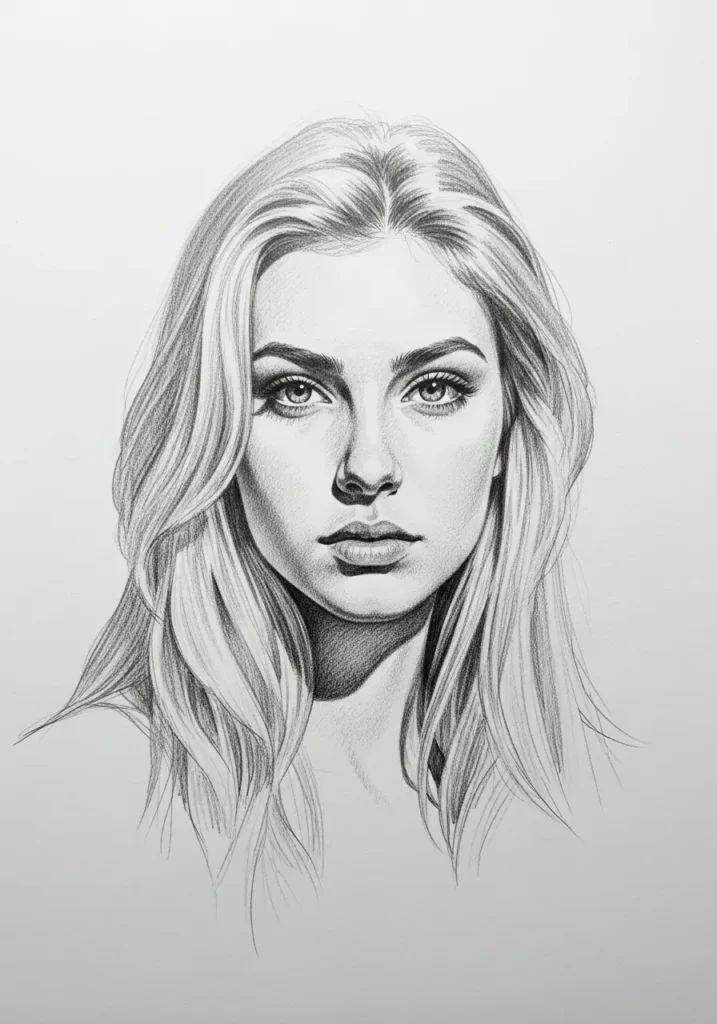
Progress in art is rarely a smooth, upward line. One drawing may feel incredibly successful and rewarding, while the very next sketch cruelly exposes a brand new weakness. That is completely normal. An inaccurate proportion or a muddy, overworked shadow is actually highly useful information because it clearly shows you exactly what you need to practice next.
Always keep your early drawings instead of throwing them away in frustration. Comparing your current work over several weeks or months provides a significantly more reliable measure of your true improvement than judging yourself harshly on a single, frustrating practice session.
19 Practical Pencil Drawing Tips to Elevate Your Art
Now that you understand the core principles, let us explore nineteen highly actionable tips that you can apply to your sketchbook right now.
1. Build a Small, Highly Useful Drawing Kit
A limited set of highly familiar tools is vastly more useful than a massive, expensive collection of supplies you do not fully understand how to use.
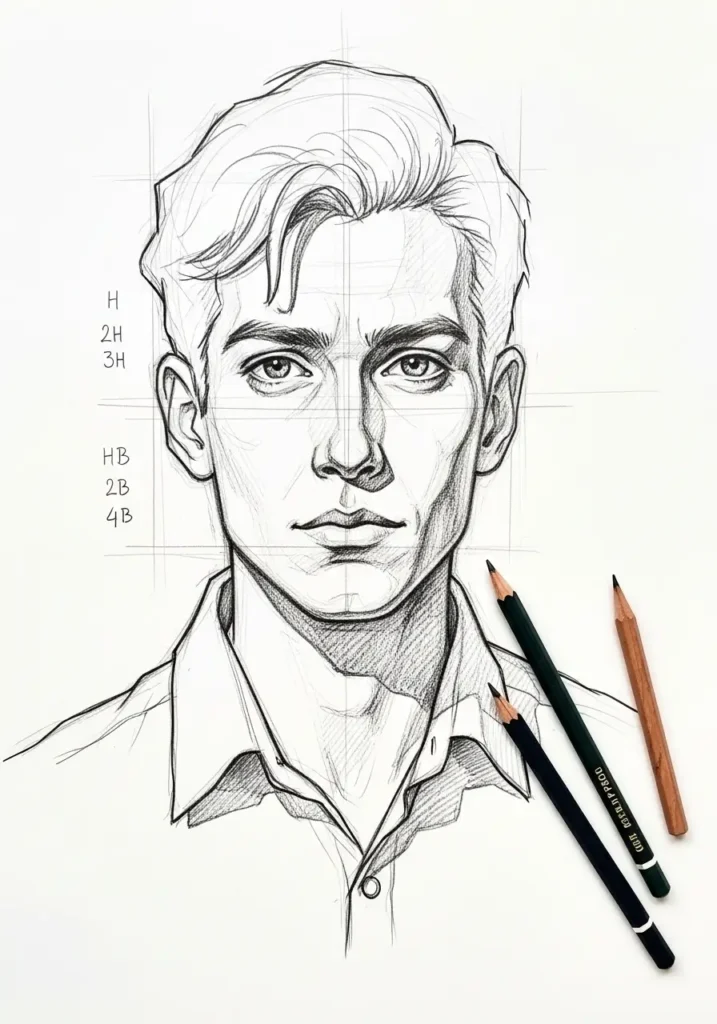
- H and 2H pencils: These feature hard graphite that produces very light, faint marks. They are absolutely perfect for initial construction lines and highly precise, tiny details.
- HB pencil: This is a highly versatile, everyday choice for general sketching, establishing outlines, and laying down moderate shading.
- 2B and 4B pencils: These are much softer pencils that lay down rich, dark values and highly expressive lines. They are essential for deep shadow areas.
- 6B pencil: This is incredibly useful when you need especially rich, pitch black darks, although you must be careful because it smudges very easily on the page.
A highly practical beginner set simply includes a 2H, HB, 2B, 4B, and 6B. Remember that the grade printed on the side of the pencil is only a general guide, as darkness and physical softness can vary significantly between different manufacturers.
Choose Paper That Perfectly Matches Your Drawing Style
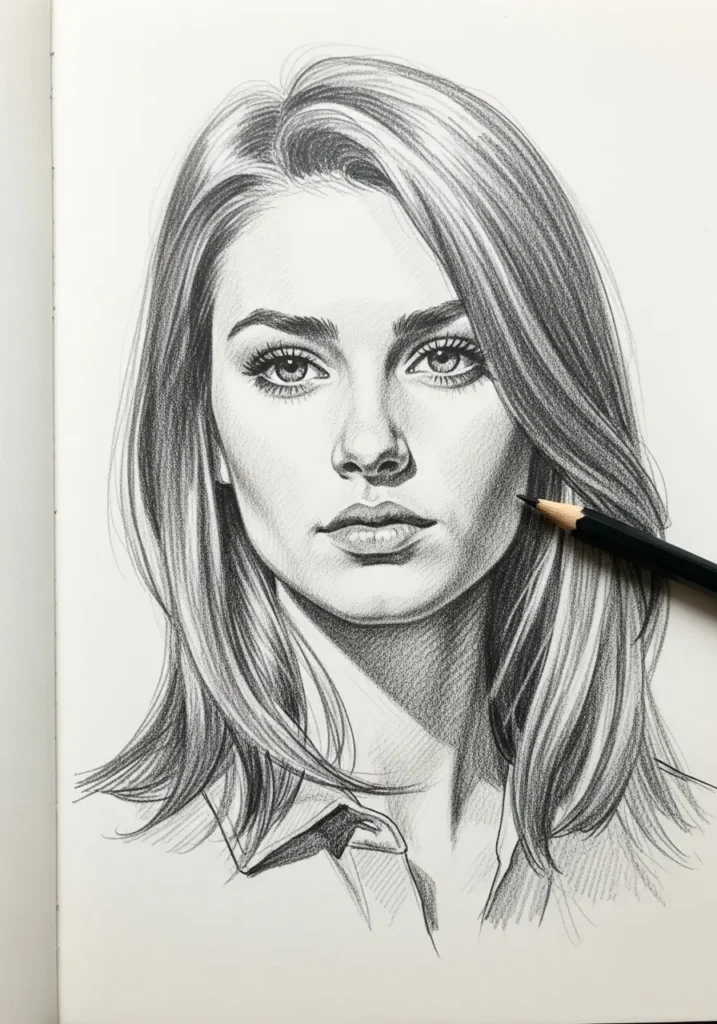
The physical surface texture of paper is commonly referred to by artists as its tooth. Highly smooth paper beautifully supports fine, realistic details and incredibly clean, seamless gradients. Conversely, heavily textured paper physically catches much more graphite off the pencil tip and can give atmospheric portraits, moody landscapes, and expressive sketches a highly visible, artistic grain.
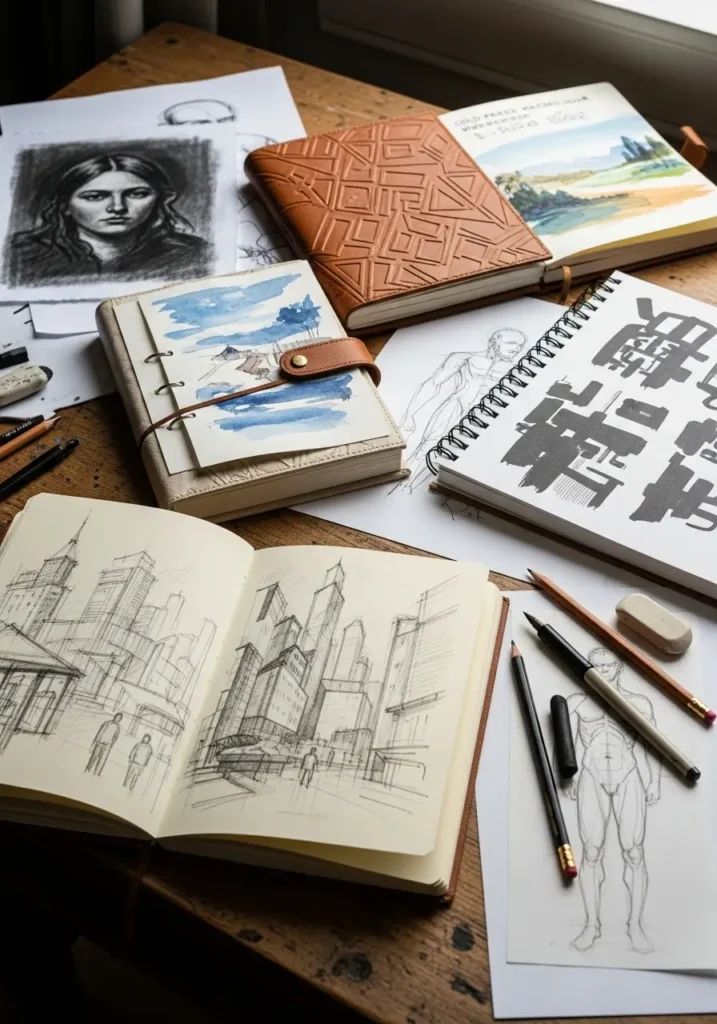
Use a highly affordable, basic sketchbook for your daily exercises, messy doodles, and quick experiments. For a final, highly polished finished piece, you should strongly consider heavier, acid-free drawing paper that willingly tolerates repeated layering and aggressive erasing without tearing.
Add a Few Essential, Helpful Accessories
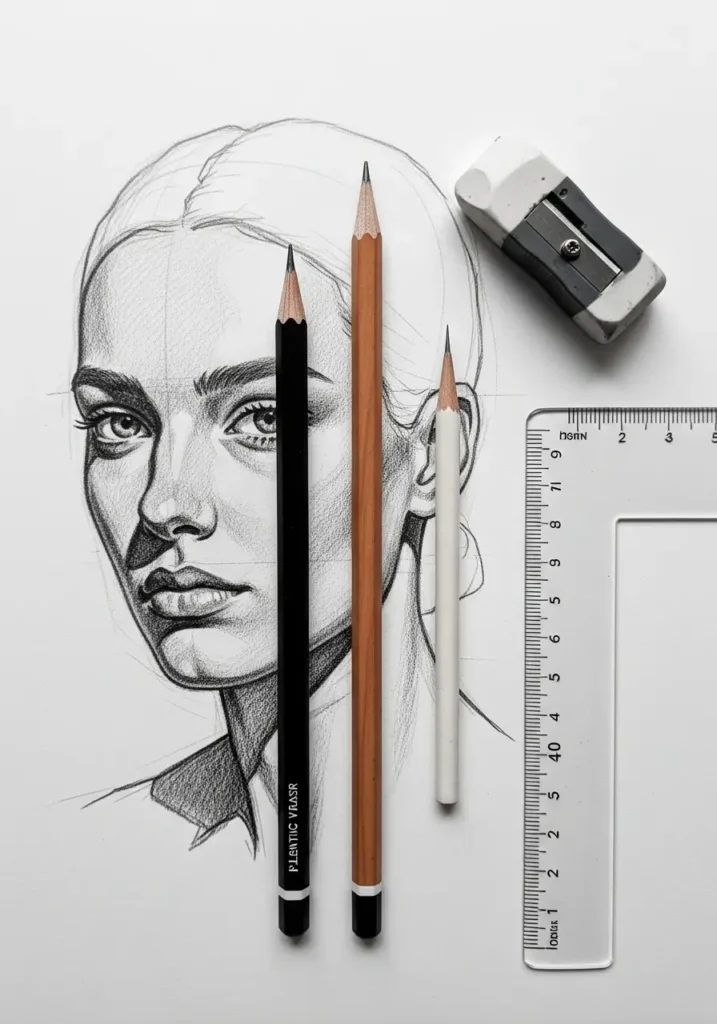
- Kneaded eraser: This putty-like tool lifts graphite incredibly gently without damaging the paper and can be pinched and shaped into a fine point for picking out tiny, bright highlights.
- Vinyl eraser: This firm tool removes much stronger, darker marks and cleans up your outside edges far more decisively.
- Sharpener or sandpaper block: This is absolutely crucial for maintaining the razor sharp point needed for highly controlled, delicate lines.
- Blending stump: This tightly rolled paper tool softens graphite smoothly without accidentally transferring damaging skin oils from your fingers to the paper.
- Ruler: This is incredibly useful for strict perspective construction and drawing geometric, architectural subjects.
- Scrap paper: Placed carefully beneath your drawing hand, this simple trick prevents your palm from smudging your hard work.
2. Practice the Four Basic Mark-Making Techniques
Most graphite textures and complex values can be successfully produced through just a few fundamental, highly repeatable techniques.
Line Weight

You must actively vary your physical pressure and the specific angle of your pencil instead of heavily outlining absolutely everything with the exact same dark, flat line. Use very light lines during your initial construction phase, apply firmer marks around highly important overlapping edges, and utilize softer transitions where a rounded form turns gently away from the viewer.
Hatching and Cross-Hatching

Hatching creates optical tone by utilizing a series of parallel lines. Cross-hatching goes a step further by adding intersecting, overlapping layers of lines. You can easily reduce the physical spacing between the marks or add more overlapping layers to darken a specific area. Curving your hatch marks directly around the physical form of your subject can make a round sphere, a human face, or an arm appear significantly more solid and three-dimensional.
Stippling
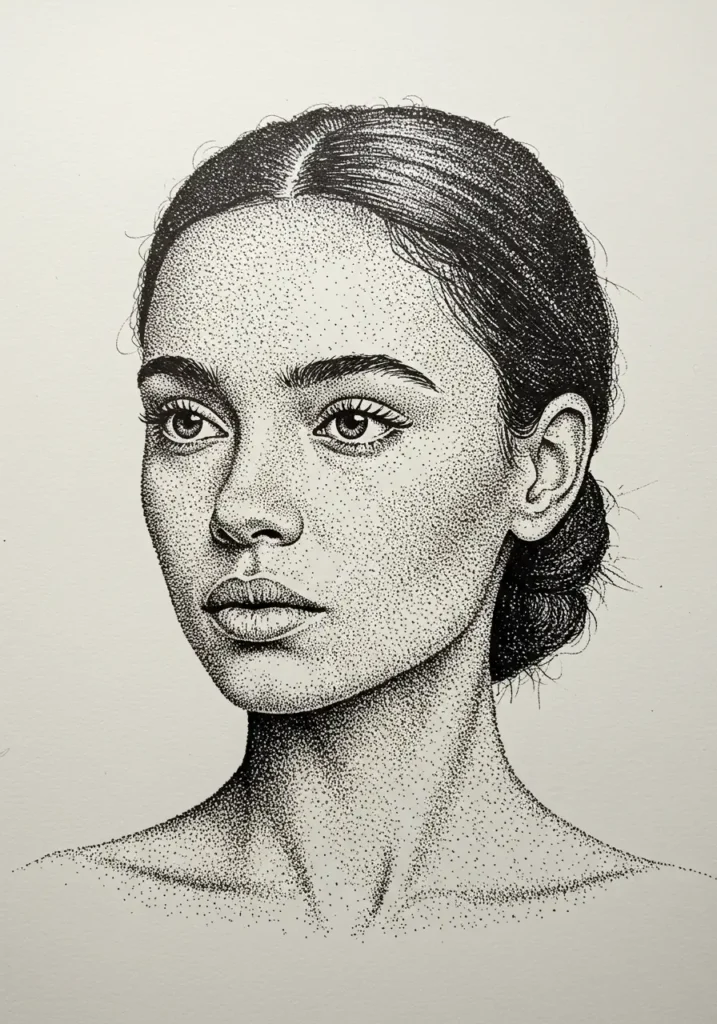
Stippling uses hundreds of tiny individual dots instead of long continuous strokes. Closely grouped, dense dots create much darker shadow values, while wider spacing naturally produces much lighter areas. It is an incredibly slow, tedious process, but it is highly effective for replicating the texture of rough stone, grainy sand, skin pores, and other heavily granular surfaces.
Blending
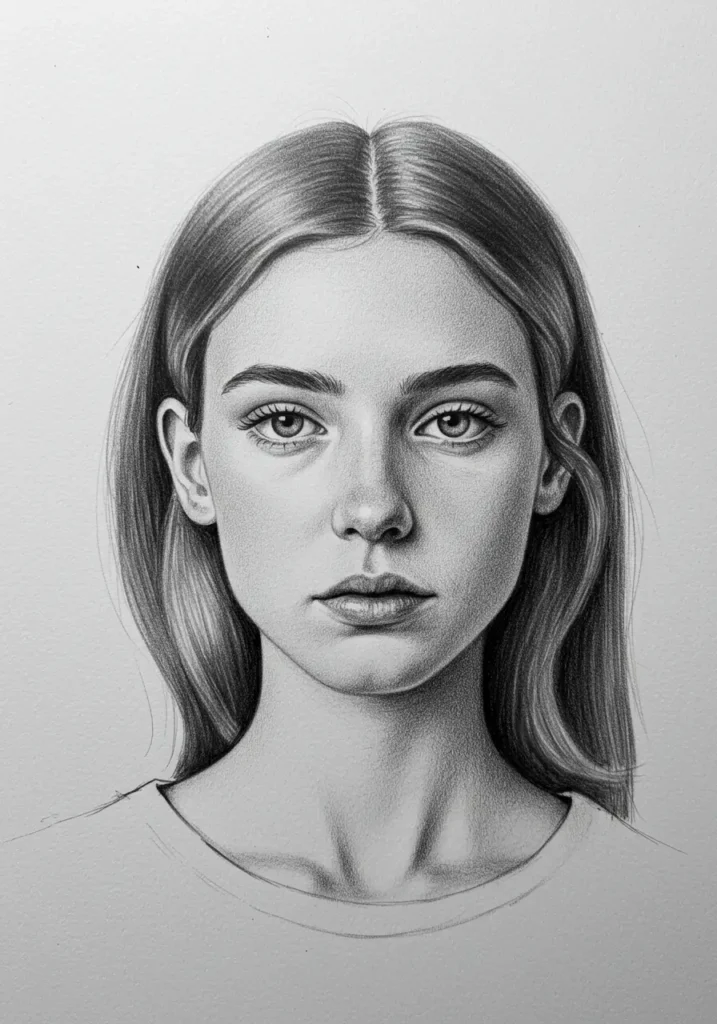
Blending can beautifully create completely smooth, photorealistic transitions, but it should strictly support your controlled shading rather than serve as a lazy way to hide messy, uneven pencil marks. Apply your graphite in very light, even layers first, then soften those layers gently with a clean blending stump or a soft piece of facial tissue. You must avoid relying heavily on your bare finger because natural skin oils can permanently affect the paper grain and make any later layers of graphite incredibly hard to control.
Practice exercise: Take a blank page and create four distinct value scales. Make one utilizing pencil pressure alone, one using only parallel hatching, one using cross-hatching, and one utilizing smooth blending.
3. Establish the Light Source Before You Shade Anything
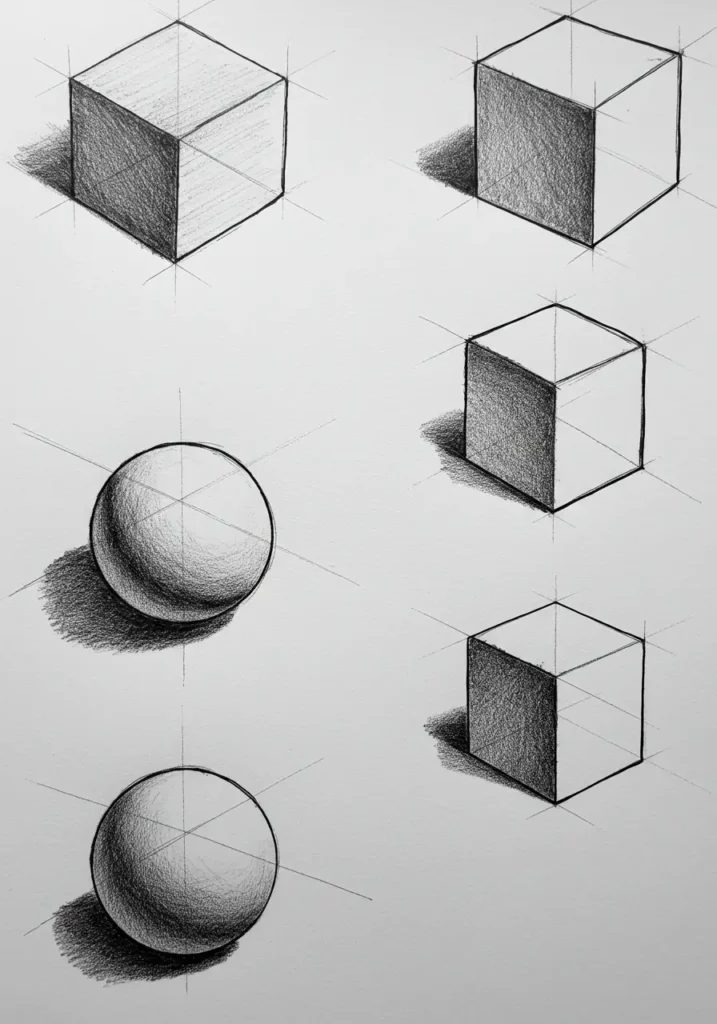
Before you add a single drop of shadow to your drawing, draw a small, faint arrow in the outside margin to permanently record exactly where the light is coming from. This simple step completely prevents your highlights and cast shadows from physically contradicting one another later in the drawing process.
- Highlight: This is the absolute brightest area receiving direct, intense light.
- Midtone: This is the gradual transition area between the light family and the shadow family.
- Core shadow: This is the darkest region on the object itself where a curved form turns completely away from the light source.
- Reflected light: This is ambient light bouncing off the table or nearby surfaces and illuminating the shadow side slightly.
- Cast shadow: This is the dark shadow projected outward onto another surface by the object blocking the light.
Always preserve the brightest white of the paper early on rather than shading everywhere and desperately trying to erase the highlights back out later. For excellent daily practice, place a small ball or a piece of round fruit beside a desk lamp and draw it using those five clearly separated value groups.
4. Plan the Composition Before Adding Tiny Details
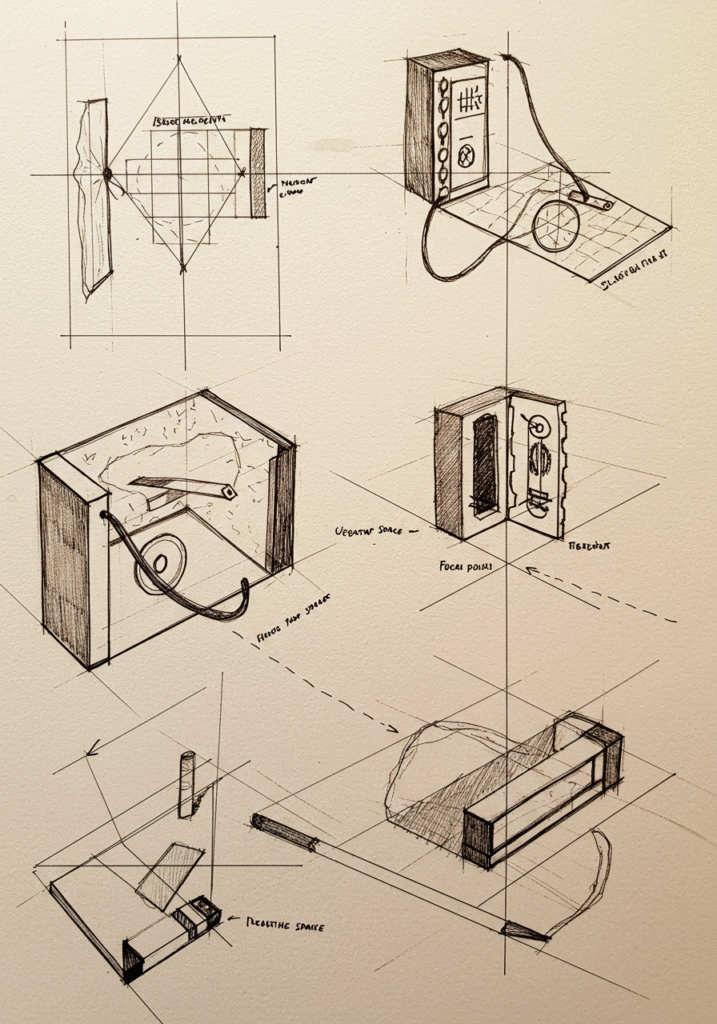
Composition entirely determines exactly how the subject sits on the page and how the viewer’s eye naturally moves through the finished drawing. Make several very small, rough thumbnail sketches before beginning a large finished piece. These fast, rough plans let you test object placements very quickly without becoming emotionally attached to time-consuming details.
- Always leave enough empty space around the main subject so it does not feel suffocated or cramped on the page.
- Use physical overlap between objects to firmly establish a sense of depth.
- Place the absolute strongest light and dark contrast directly near your main focal point to draw the eye.
- Carefully check the negative spaces, which are the empty shapes between and around your objects.
- Avoid giving every single part of the drawing equal detail and equal contrast, as this creates visual fatigue.
The classic rule of thirds can definitely help with initial placement, but it is a flexible guide rather than a strict requirement. A perfectly centered composition may work incredibly well when symmetry or a feeling of absolute stillness supports your core idea.
5. Learn One-Point and Two-Point Perspective
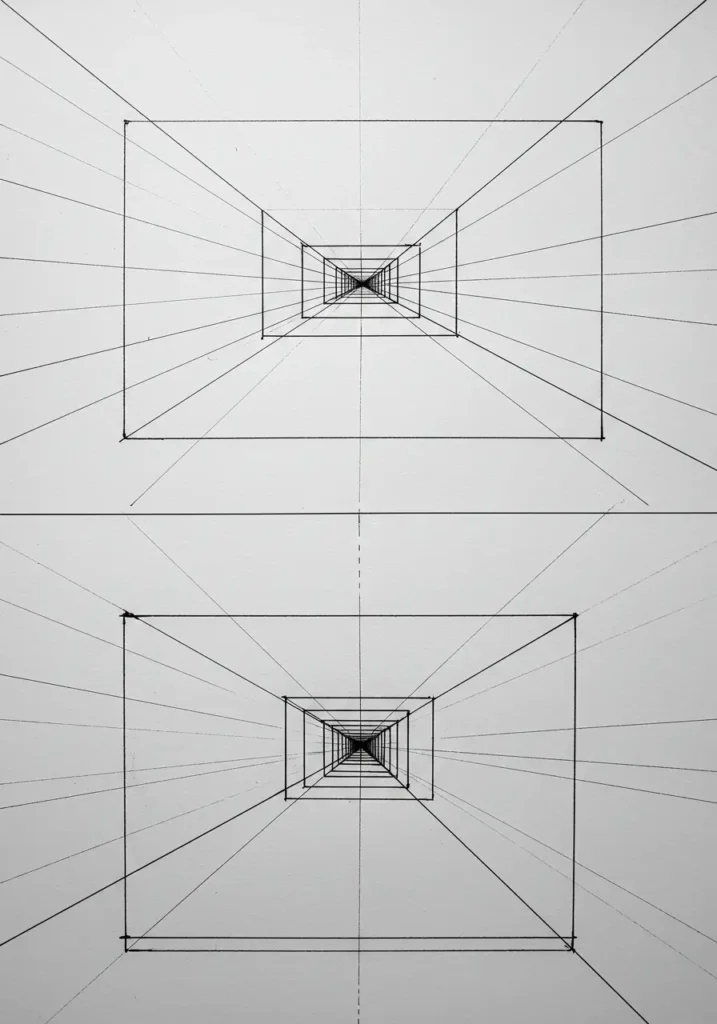
In basic one-point perspective, all receding parallel edges meet directly at one single vanishing point on the horizon line. This specific approach perfectly suits long hallways, straight roads, railway tracks, and interior rooms viewed straight ahead.
Two-point perspective uses two completely separate vanishing points for two sets of receding edges. It is highly useful for drawing boxes, tables, furniture, and large buildings seen from a corner angle. Three-point perspective adds a third vertical vanishing point and is generally reserved for highly dramatic, cinematic views looking sharply upward at a skyscraper or downward from a high balcony.
Practice exercise: Take a ruler and draw transparent, see-through boxes above, below, and directly across the horizon line. Because you can see all of their hidden back edges, perspective errors become significantly easier to identify and fix.
6. Draw What You Actually See, Not What You Assume
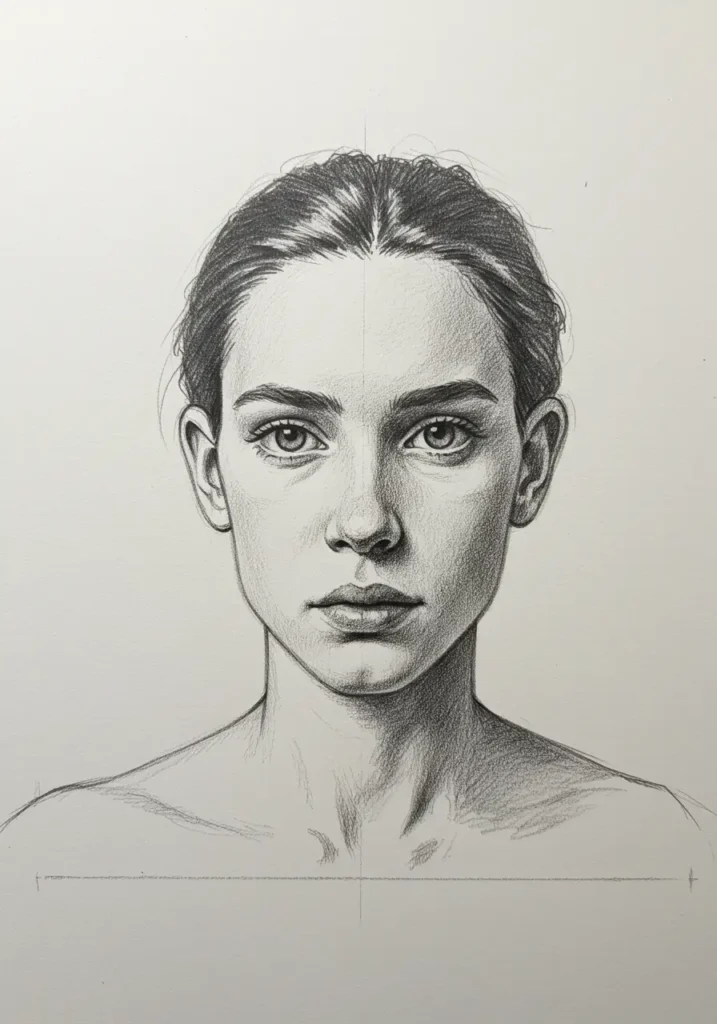
Beginners very often draw mental symbols stored in their memory rather than reality. They draw an almond shape for an eye, a sharp triangle for a nose, or five perfectly equal cylinders for fingers. True observation completely replaces those false symbols with the actual shapes, specific angles, and true proportions present in front of you.
Begin by ruthlessly simplifying the complex subject into basic spheres, boxes, long cylinders, wedges, and large flat shapes. Compare the relationships between these shapes before measuring isolated, tiny parts. Ask yourself: Is the object visibly wider than it is tall? Where does its absolute highest point sit in relation to the bottom? Which specific angle is steeper?
You can also easily use your pencil as a physical measuring tool. Hold it perfectly vertically at arm’s length, close one eye, and use your sliding thumb to compare relative dimensions. You must keep your arm completely extended consistently so the scale of the measurement does not accidentally change.
7. Suggest Texture Through Light and Specific Marks
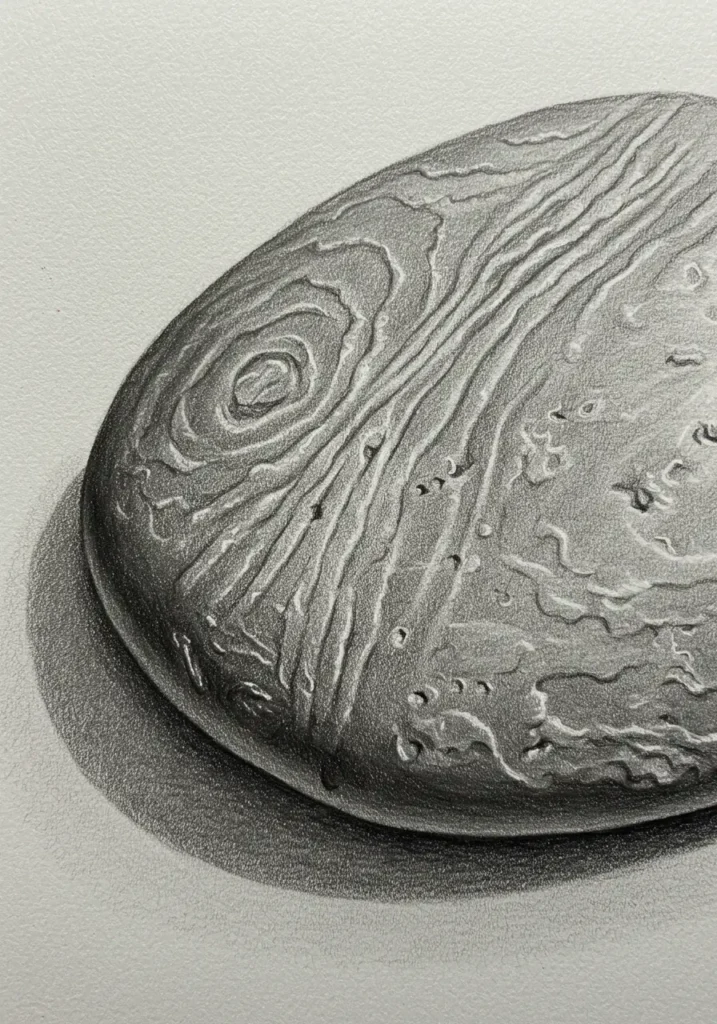
Texture is not simply a flat, wallpaper pattern placed blindly over an object. It must absolutely follow the three-dimensional form and respond accurately to the light source.
- Metal: Use very sharp, sudden value changes, highly controlled dark reflections, and incredibly clean, bright highlights.
- Glass: Focus intensely on distorted edges looking through the glass, bright reflected window shapes, and a few very strong dark-to-light transitions.
- Fabric: Follow the exact direction and the physical tension of the wrinkles and folds.
- Wood: Vary the thickness of the grain lines and physically wrap them around the curved form of the wood.
- Stone: Combine highly irregular, broken, jagged marks with very subtle, soft value changes.
- Skin: Build incredibly soft, smooth tonal transitions first before adding highly selective, tiny pores, fine lines, or scattered freckles.
Do not cover the entire drawing with completely equal, heavy texture. Detail is vastly more effective when concentrated near the main focal point, while quieter, less detailed areas give the viewer’s eye a much needed place to rest.
8. Draw Hair as Large, Solid Masses First
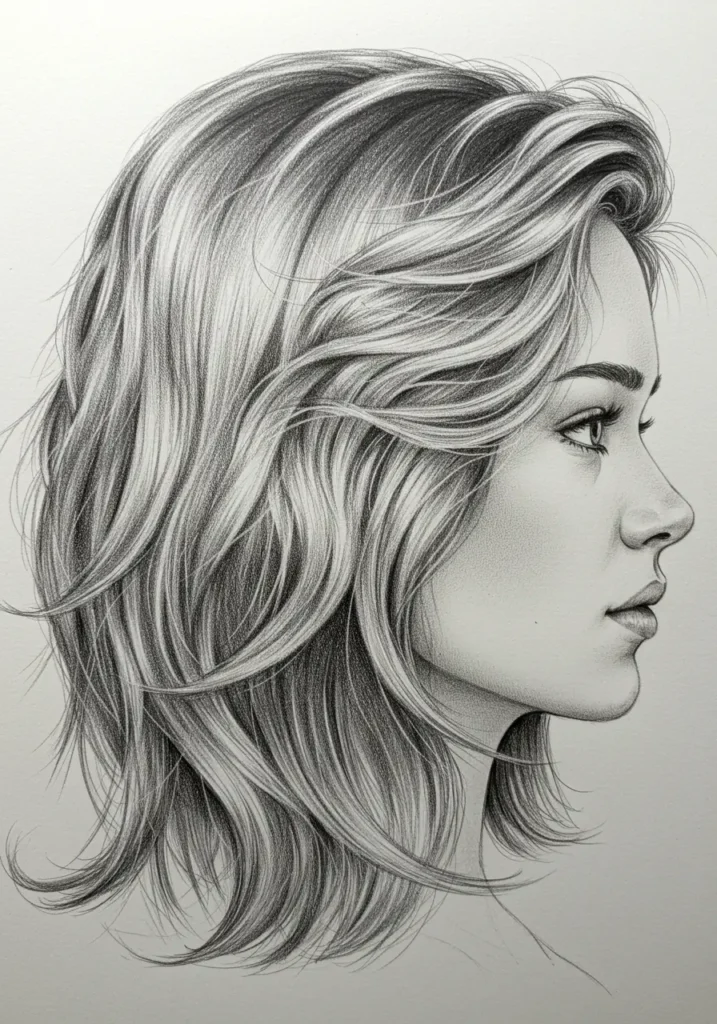
A massive mistake is drawing hair as hundreds of individual, stringy spaghetti strands. Hair should always first be treated as a large, solid three-dimensional mass sitting around the skull. Identify the overall silhouette, the major bulky sections, the broad light areas, and the deep, dark shadows long before drawing a single individual strand.
- Sketch the underlying round skull and the hairline very lightly.
- Block in the absolute largest overall hair shape.
- Visually separate that large shape into major overlapping locks or heavy curl groups.
- Shade the very dark, deep gaps between the overlapping sections to create depth.
- Add a highly limited number of fine, tapered strands that strictly follow the natural growth direction.
- Lift out narrow, bright highlights with a sharply shaped kneaded eraser when needed.
Straight, wavy, bouncy curly, and tightly coiled hair certainly require different mark patterns, but this exact same large-to-small process applies perfectly to all of them.
9. Remember That the Eyeball Is a Physical Sphere
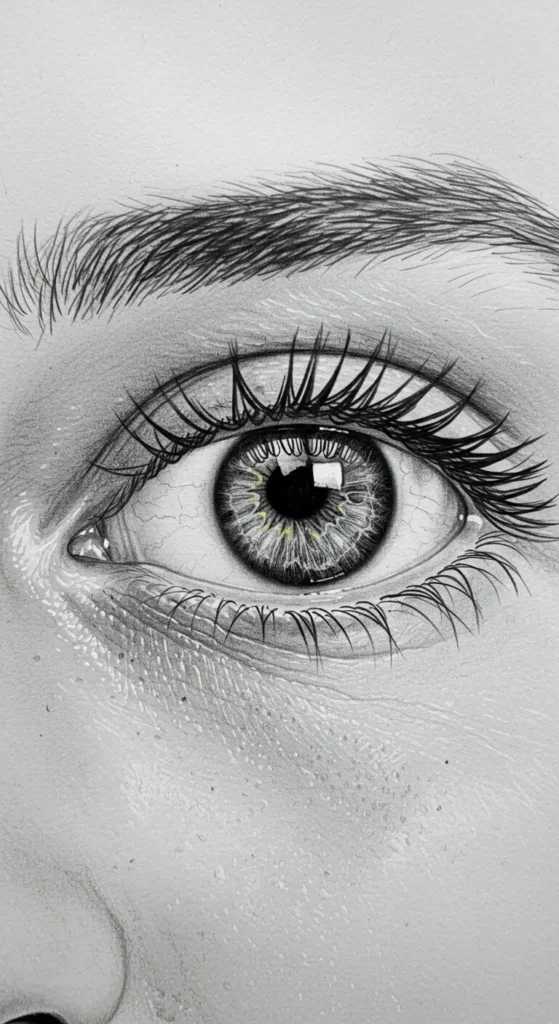
The fleshy eyelids physically wrap around a hard, spherical eyeball. Showing that specific curvature completely prevents the eye from looking like a flat, lifeless symbol pasted on a face. The visible eye opening also changes drastically with the viewing angle and the subject’s expression, so you must avoid forcing every single eye into the exact same symmetrical almond shape.
Shade the upper portion of the white eyeball slightly darker where the thick upper lid physically blocks the light. Draw eyelashes starting from the actual lid edge in uneven, overlapping clusters rather than as perfectly identical, straight, spider-leg lines. Keep the bright white catchlight consistent with your established light source and always remember that both eyes in a portrait must align convincingly in perspective.
The heavy brow bone, the crease of the upper lid, and the surrounding facial muscles very often communicate significantly more human emotion than the colored iris itself.
10. Describe the Nose with Structured Planes and Values
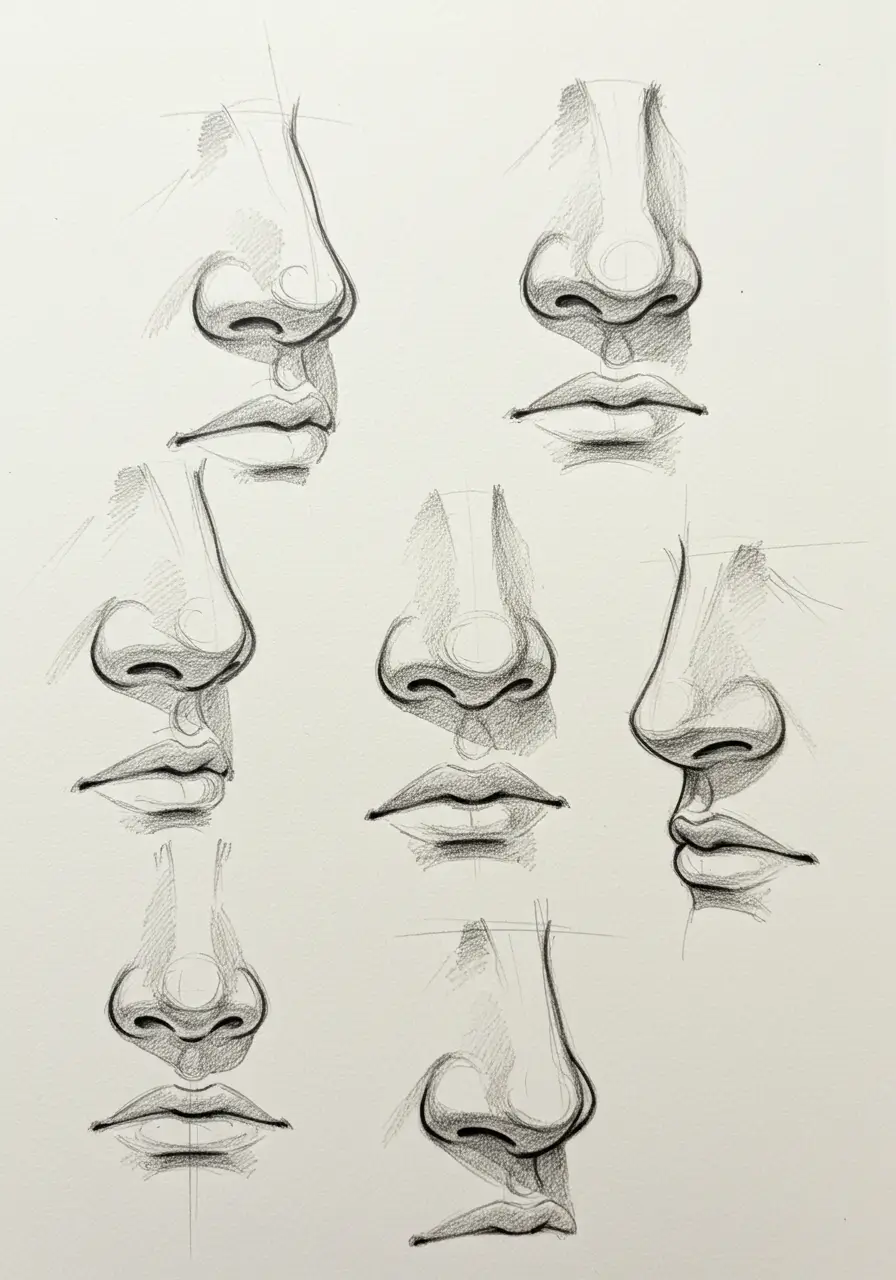
A realistic nose rarely needs a harsh, complete outline. You should think of it as a series of connected geometric planes: the front bridge, the sloping side walls, the bulbous tip, the flaring wings, and the flat underside. Their completely different physical orientations toward the light source create all the visible changes in value.
Place the main proportions down very lightly, then use the dark cast shadow directly beneath the nose, the very dark hollow nostrils, and the incredibly subtle side-plane transitions to slowly reveal its shape. Keep the dark nostrils proportionate and gently soften the outer edges where the nose merges seamlessly into the cheeks. Always study the specific subject in front of you instead of relying on a generic, memorized nose formula.
11. Build Lips Around the Central Meeting Line

Always start with the dark, wavy center line exactly where the two lips meet. Its specific curves completely reveal the mouth’s emotion, expression, and structural perspective. Then lightly place the upper and lower boundaries, remembering that the fleshy lips physically wrap around the curved, hard dental arch of the teeth beneath them.
The upper lip very often appears much darker when the main light comes from above, while the fuller, protruding lower lip may catch a much broader, brighter highlight. These specific relationships can change dramatically with the lighting, so you must observe carefully rather than applying them mechanically every time. Avoid outlining the entire perimeter of the lips heavily; allow some of the soft edges to disappear smoothly into the surrounding skin.
12. Simplify Hands into a Palm Box and Finger Cylinders
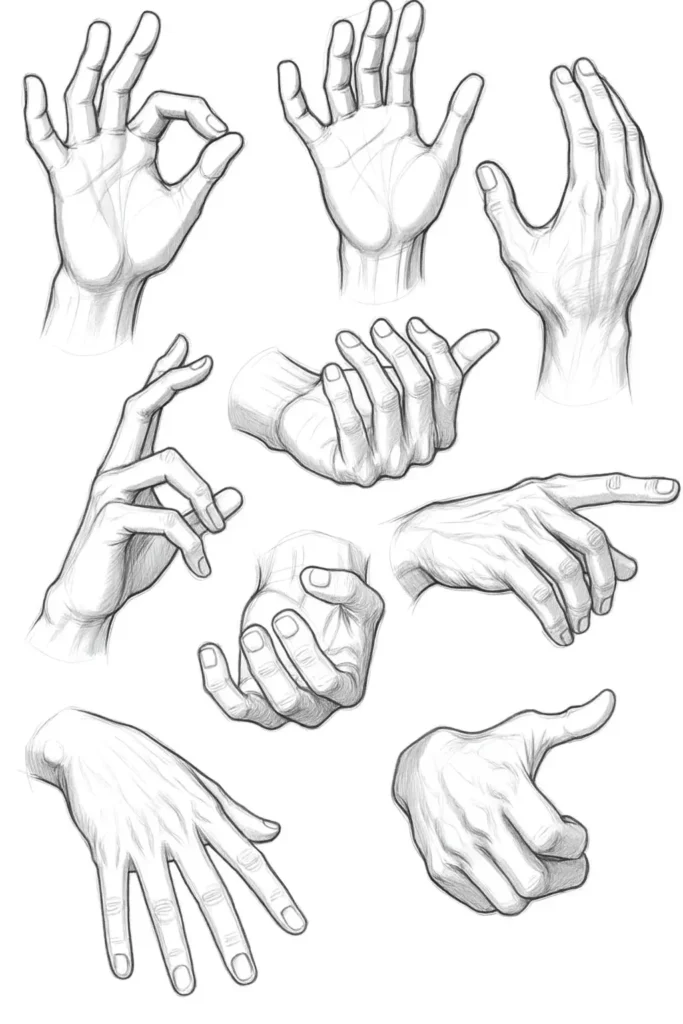
Hands are notoriously difficult, but they become entirely manageable when you begin with solid geometric structure. Treat the main palm as a thick, box-like mass, the individual fingers as tapered, segmented cylinders, and the thumb as a completely separate triangular form moving on its own independent axis.
The knuckles physically form a curved arc rather than a perfectly straight row. Fingers differ significantly in length and very often overlap in perspective, so you must draw their sweeping gesture and basic direction before adding tiny fingernails or wrinkly joint creases. When a hand firmly grips an object, clearly show how the fleshy fingers physically wrap around it instead of lazily placing them flat against its surface.
Practice exercise: Draw your non-dominant hand in five completely different poses. Strictly limit each sketch to exactly five minutes so you are forced to concentrate entirely on the blocky structure rather than getting lost in tiny details.
13. Study Feet as Heavy, Weight-Bearing Forms
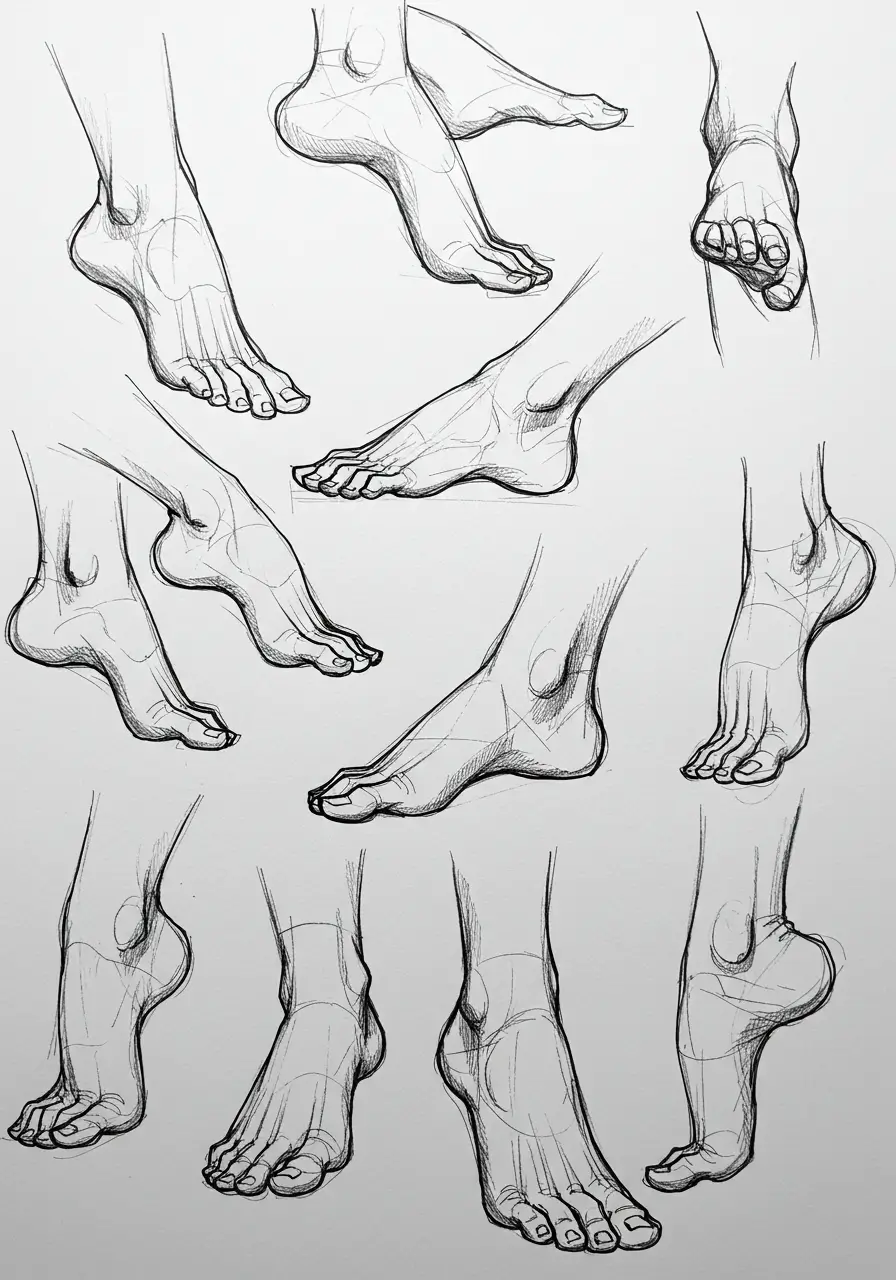
Simplify the complex foot into a solid, geometric wedge that is broad and thick at the heel and narrows gently toward the toes. Lightly mark the protruding ankle bone, the back heel, the lifted arch, the wide ball of the foot, and the general toe direction long before drawing small, anatomical details like toenails.
A foot heavily bearing the body’s weight physically spreads out and compresses onto the floor very differently from a relaxed, lifted foot. Pay close attention to exactly where it contacts the solid ground and how the heavy leg’s weight passes vertically through the ankle joint. These structural relationships make standing and walking figures feel incredibly stable and grounded.
14. Capture an Animal’s Fluid Gesture Before Its Details
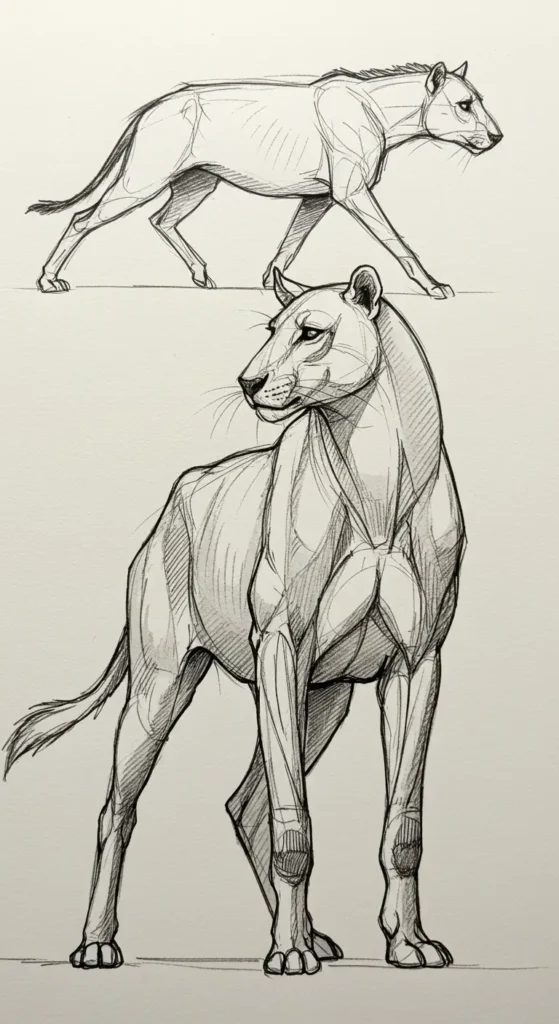
Animals rarely remain perfectly still for long, so you must begin with a fast, sweeping gesture line clearly describing the main direction of the spine and the energy of the movement. Add the large rib cage, the bony pelvis, the skull, and the long limbs as very simple, blocky forms. Only after the structure is solid should you even consider adding soft fur, facial features, or specific coat markings.
Watch the specific positions of the ears, the flicking tail, the arched back, and the head tilt because they communicate massive amounts of animal behavior and mood. A rapid series of short, two-minute sketches is very often far more educational than one highly detailed drawing made slowly from a single, frozen pose.
15. Use Atmospheric Perspective in Sweeping Landscapes

Distant landscape elements like mountains or forests usually appear significantly lighter, much less detailed, and incredibly low in contrast compared to nearby foreground objects. This is due entirely to the dense atmosphere, dust, and moisture suspended in the air between the viewer and the subject. You can actively use this optical effect even when drawing from a flat photograph that has lost its natural value range.
Always organize the outdoor scene strictly into a foreground, a middle ground, and a background. Reserve the absolute strongest darks, the sharpest, crispest edges, and the richest, heaviest textures entirely for the focal area or the immediate foreground. Ruthlessly simplify distant trees and rolling hills into soft, flat shapes instead of trying to draw every single branch or tiny leaf miles away.
16. Use Still Life Setups to Practice Several Skills at Once
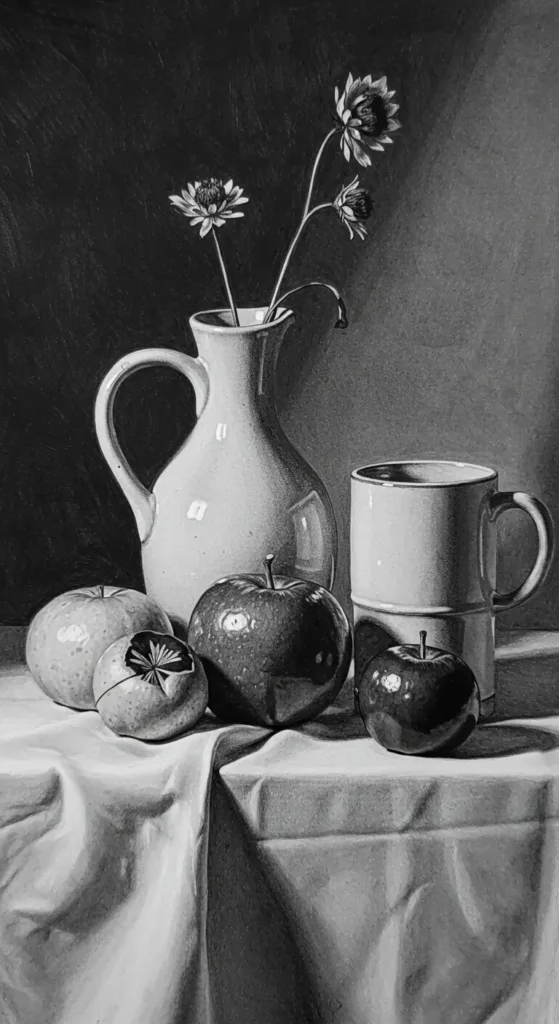
A tabletop still life gives you absolute, total control over the objects, the lighting, the viewpoint, and the overall composition. Choose three to five distinct items featuring highly contrasting shapes and materials, such as a piece of organic fruit, a hard ceramic cup, a piece of draped soft fabric, and a reflective glass bottle.
Use one single, clear directional desk lamp to produce highly readable, sharp shadows. Start with a tiny thumbnail composition, carefully measure the major proportions using your pencil, block in the absolute largest value shapes, and add the specific surface texture last. Drawing the exact same arrangement under very hard, harsh lighting and then again under very soft, diffused lighting is an excellent, proven way to study exactly how edges and shadows change.
17. Use Visual References as Powerful Learning Tools
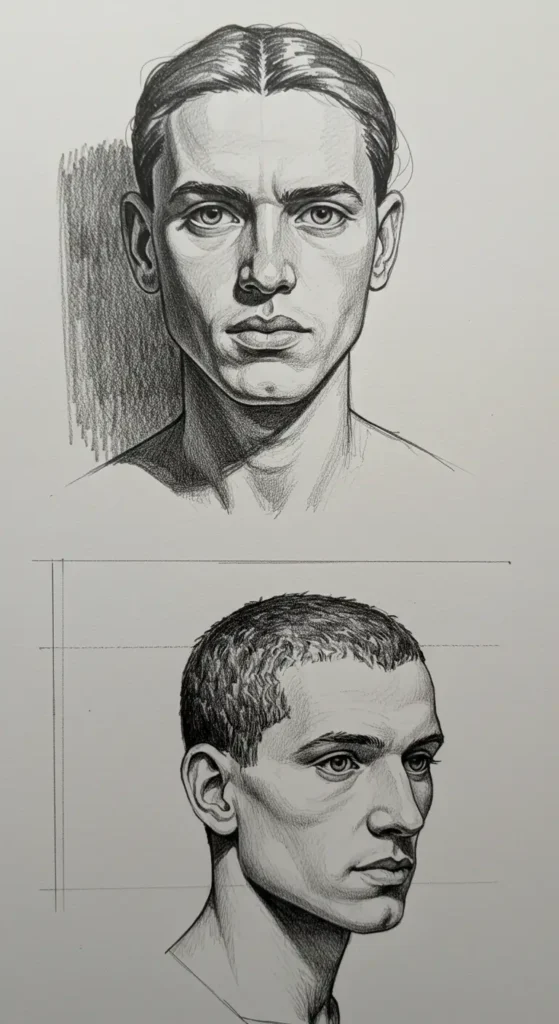
According to fundamental drawing principles taught by prestigious institutions, visual references are absolutely vital for understanding complex subjects that are unavailable, constantly moving, or simply too complex to draw accurately from pure memory. Use highly clear photographs, your own personal snapshots, live models, or classic artworks that are legally available for educational study.
However, you must remember that camera photographs can easily flatten out values, heavily distort lens proportions, and freeze dynamic movement unnaturally. Whenever physically possible, compare several different views or actively combine your photographic study with drawing real objects from life.
Meticulously copying a master drawing for your own private study can brilliantly reveal exactly how an experienced artist organized their values, manipulated their edges, and placed their detail. Analyze their specific choices deeply instead of just tracing the outer contour mechanically. If you ever publish work closely based on someone else’s image, always respect the original creator’s copyright and credit them properly or obtain permission when legally required.
18. Practice Frequently with a Highly Specific Goal

A short, highly focused twenty-minute session can be vastly more useful than three hours of lazy, unfocused sketching while watching television. Always decide exactly what each practice session is specifically meant to improve. You might decide to study drawing ellipses in perspective, hand proportions, rendering soft edges, tight cross-hatching, or strict five-value shading.
A highly effective, simple weekly routine could look like this:
- Day 1: Focus on straight lines, perfect ellipses, boxes, and cylinders in perspective.
- Day 2: Create smooth value scales and practice shaded 3D forms.
- Day 3: Do strict observation drawing directly from household objects.
- Day 4: Focus entirely on portrait features or human anatomy.
- Day 5: Study perspective rules or draw interior environments.
- Day 6: Commit to a longer, sustained drawing combining the week’s lessons.
- Day 7: Honestly review your work and identify one clear priority for the next week.
When requesting online or peer feedback, always ask a highly focused question such as, “Do the facial proportions and the head angle feel physically consistent?” Highly specific questions tend to produce significantly more useful, actionable responses than simply asking whether a drawing looks good.
19. Let Your Personal Style Develop Through Natural Repetition
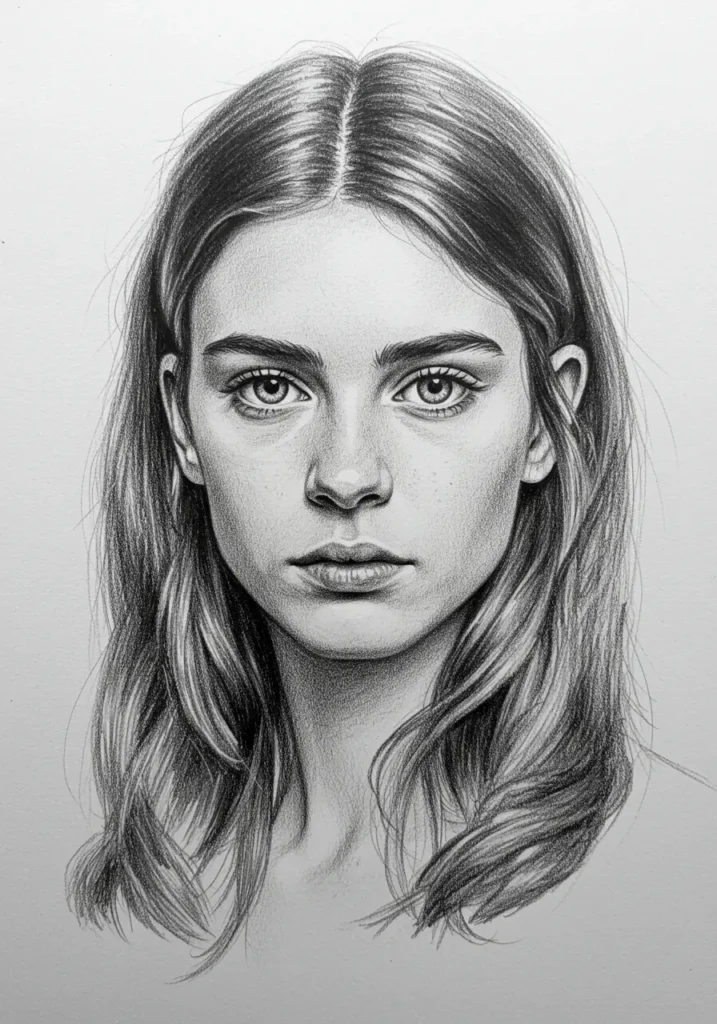
An authentic artistic style grows naturally from repeated, subconscious choices. It emerges from the specific subjects you select, the particular edges you choose to emphasize, the exact amount of detail you prefer, and the specific pencil marks that eventually feel most natural in your hand. It is completely difficult and frustrating to force these qualities before you have built enough baseline technical control.
Study several different master artists instead of obsessively imitating only one. Willingly experiment with highly realistic shading, loose chaotic gesture, bold graphic cross-hatching, incredibly delicate linework, and highly simplified shapes. Keep the specific approaches that best support exactly what you want to communicate visually.
A themed drawing series is especially helpful for this. Create five distinct drawings based entirely on one subject you genuinely care about and use a strictly consistent format or material. This repetition strongly encourages your visual decisions to become significantly more intentional.
Also read: Drawing Ideas: Easy Doodles to Spark Your Creativity
Common Pencil Drawing Mistakes and Exactly How to Correct Them
Pressing Too Hard at the Very Beginning
Dark, heavy construction lines are incredibly difficult to erase cleanly and can leave permanent, deep grooves in the paper. Always begin with a very light grip and incredibly faint marks. Increase your physical pressure only after carefully checking and confirming the basic proportions.
Adding Tiny Details Before Checking Proportions
A beautifully, carefully rendered eye simply cannot rescue a portrait if the overall eye placement on the skull is completely incorrect. Always work sequentially from large shapes down to small details: capture the gesture, check the proportions, build the structure, lay in the values, refine the edges, and add the texture last.
Using the Exact Same Edge Everywhere
Drawing hard, wiry outlines around every single object can instantly flatten a realistic drawing. Compare your visual edges very carefully. Some boundaries are razor sharp, some are incredibly soft, and others disappear completely because the neighboring areas share the exact same value.
Making Every Single Shadow Equally Dark
Shadows are not black holes; they contain massive variation. Bouncing reflected light, changing surface orientation, distance from the physical object, and the softness of the light source all heavily affect their appearance. Group your shadows clearly into one family, then add highly restrained, subtle variation within them.
Over-Blending the Graphite into Mud
Excessive, heavy blending can quickly create incredibly dull, muddy, lifeless surfaces. Intentionally retain visible pencil marks exactly where they strengthen the material texture, and clean your blending stump regularly so it does not accidentally spread unwanted dark graphite into your pristine highlights.
Comparing Beginner Work with Finished Professional Art
You must only compare your current work with your own previous drawings. A polished professional image usually represents decades of intense training, multiple failed studies, and a carefully selected, highly edited final piece. Your sketchbook should proudly include messy experiments and ugly mistakes because that is exactly where the actual improvement happens.
How to Build a Pencil Drawing From Start to Finish
- Choose a clear subject and a single light source. Avoid tackling an overly complex, chaotic scene for your very first studies.
- Create small, fast thumbnails. Test several different placements and lighting value patterns on scrap paper.
- Draw the absolute largest shapes lightly. Carefully check the overall height, total width, specific angles, and the negative spaces.
- Refine the physical structure. Use simple geometric forms and basic perspective rules to make the subject feel believable and solid.
- Block in the major values. Strictly separate the light family and the shadow family before adding any subtle midtone transitions.
- Develop the main focal point. Add the absolute strongest contrast and the most highly useful, communicative details directly there.
- Vary the physical edges. Sharpen the highly important boundaries and gently soften the less important background ones.
- Review the drawing from a distance. Turn the page completely upside down or view it in a mirror to instantly expose hidden proportion errors.
- Make highly selective corrections. Avoid repeatedly polishing and overworking an area that already looks great.
Choosing Art Supplies Without Overspending
You can effectively learn all the core fundamentals with a highly modest, cheap sketchbook, two or three basic graphite pencils, a standard sharpener, and an eraser. Buy additional, expensive tools only when you completely understand exactly what specific problem they will solve for you.
A broader pencil range can certainly make extreme value control much more convenient, while exploring different papers helps you successfully achieve smooth detail or highly expressive texture. However, more expensive supplies absolutely never replace the need for careful observation and daily practice. Always test individual pencils or very small paper pads before heavily investing in a massive, expensive set.
If you genuinely plan to keep, frame, or display your finished drawings, prioritize buying good, archival paper before buying many expensive specialty accessories. Acid-free drawing paper is specifically designed to resist yellowing and deterioration far better than low-quality practice paper, although your storage conditions also heavily affect longevity.
How to Care for Your Graphite Drawings and Tools
- Store all your pencils safely in a padded case so their fragile internal graphite cores are significantly less likely to break from accidental impacts or drops.
- Always keep a clean sheet of scrap paper directly beneath your drawing hand to severely limit accidental smudging.
- Clean your dirty blending stumps by rubbing them gently on fine sandpaper or rough scrap paper.
- Refresh a dirty kneaded eraser by repeatedly stretching and folding it until a completely clean surface appears.
- Separate your finished, loose drawings with glassine or another suitable, smooth protective sheet to prevent graphite transfer.
- Store your finished artwork completely flat, entirely dry, and safely away from prolonged, direct sunlight.
- If you choose to use a spray fixative, strictly follow the manufacturer’s ventilation, spraying distance, and drying instructions. Always test it on scrap paper first because the harsh chemicals may permanently alter the visual appearance of the graphite or the paper.
A Simple Next Step for Your Practice
Choose one completely ordinary, simple object from your home. Place it directly beside a single, bright desk lamp, and commit to drawing it using only five distinct values. Begin by capturing its largest overall shapes, carefully check the proportions, preserve the bright white highlight, and add tiny details only after the 3D form reads completely clearly.
Repeat this exact same exercise several days later. The second drawing will clearly show you exactly what you noticed, what you successfully practiced, and what specific areas still need your attention. That continuous, honest cycle of drawing, reviewing, and trying again is the absolute most dependable, guaranteed path to massive improvement.
Unlock Your True Drawing Potential Today
Learning to draw is an incredibly rewarding, lifelong journey. Once you deeply understand the fundamental rules of light, shadow, and proportion, the overwhelming frustration completely disappears. You can finally focus all your valuable energy on capturing the world exactly as you see it and bringing your unique imagination to life on the page.
Your artistic skills absolutely deserve to be developed and celebrated. By consistently practicing these nineteen practical tips, avoiding common beginner mistakes, and dedicating a little bit of time each week to focused observation, you will guarantee your sketches look incredibly professional and command immediate respect.
Are you ready to stop feeling frustrated by flat sketches and start drawing with complete confidence?
What is the absolute most frustrating part of learning to draw for you? Share your artistic struggles in the comments below, and click to Read the Full Guide! Be sure to pin this comprehensive drawing tutorial to your favorite Pinterest art board so you always have these vital techniques ready for your next sketchbook session!