7 Smart Rules to Master Stack Rings By Style
Learning how to wear Stack Rings By Style this year is less about following one rigid formula and more about building a look that feels balanced, personal, and easy to live with. Modern ring styling is more thoughtful than it used to be. People are no longer buying one matching set and calling it done. They are mixing slim bands, heirloom pieces, textured rings, and small statement designs to create combinations that feel like an extension of their own taste.
That freedom is part of the appeal, but it also explains why many ring stacks miss the mark. A stack can look crowded instead of polished. It can feel tight by midday. Softer stones can get scratched. A pretty collection in a jewelry box does not automatically turn into a great stack on the hand. The good news is that a few practical styling rules can help you build combinations that look current, feel comfortable, and still leave room for personality.
Why Ring Stacking Feels New Again
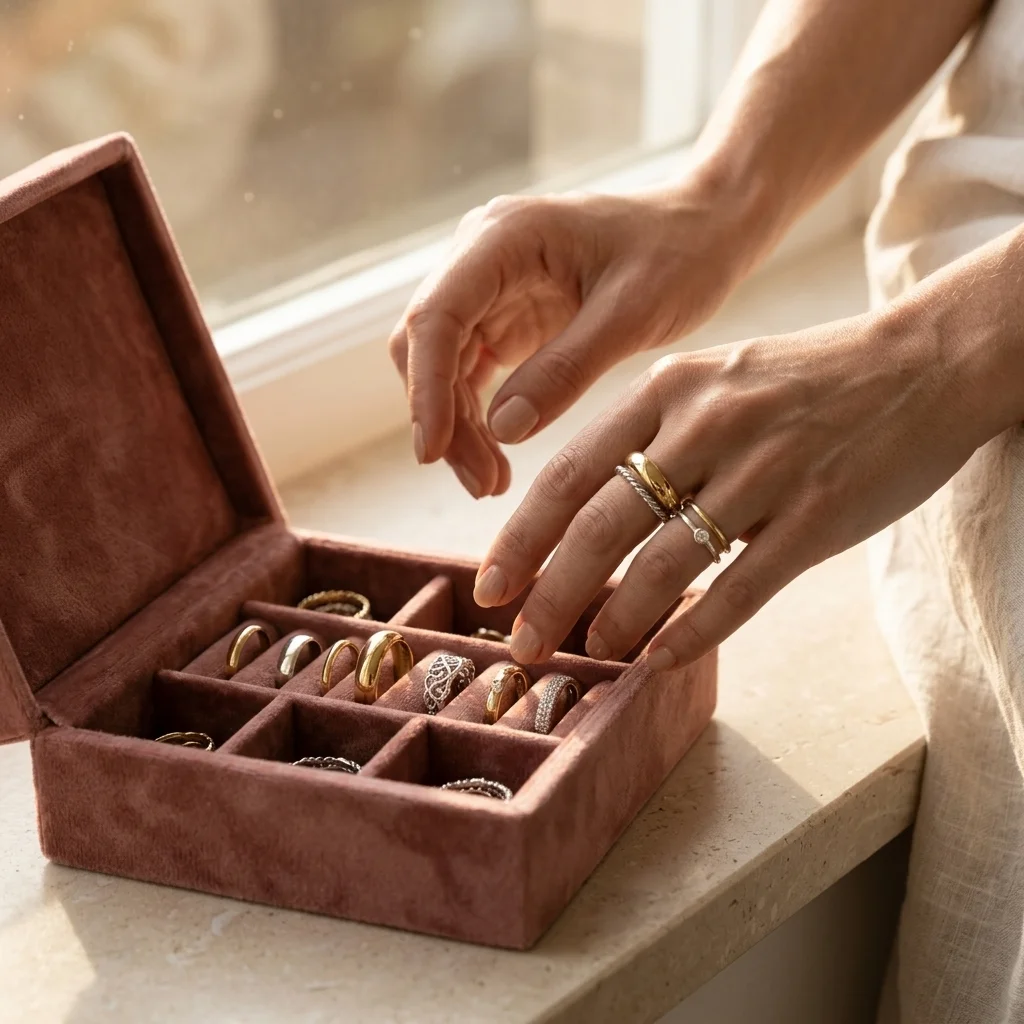
Ring stacking is not a brand-new idea, but it feels especially relevant now because personal style has become more modular. People want jewelry that can change with the day. A simple morning stack might work for errands, a meeting, and dinner, then shift slightly with one extra band or a bolder piece. That flexibility makes stacking feel modern in a way that a fixed matching set often does not.
There is also a practical reason the trend keeps growing. Smaller rings are easier to combine over time than one large statement purchase. Someone might start with a plain gold band, add a textured ring for contrast, then bring in a vintage ring from a family member. The result feels collected rather than purchased all at once, and that often makes it more interesting to wear.
How to Read the Style of a Ring Before You Stack It
One of the easiest mistakes is treating every ring as if it plays the same role. In reality, rings behave differently on the hand depending on width, height, shine, texture, stone size, and shape. Before building a stack, it helps to sort your rings into three simple categories: anchors, supporters, and separators.
An anchor ring is the piece that naturally draws attention first. It might be your engagement ring, a thick cigar band, a signet, or a gemstone ring with noticeable height. Supporters are the quieter bands that make the anchor look better. These are usually thinner, simpler, and lower on the finger. Separators are useful rings that create breathing room, either visually or physically. A smooth slim band between two more detailed rings can keep a stack from looking busy and can also reduce rubbing.
Anchor Pieces Set the Mood
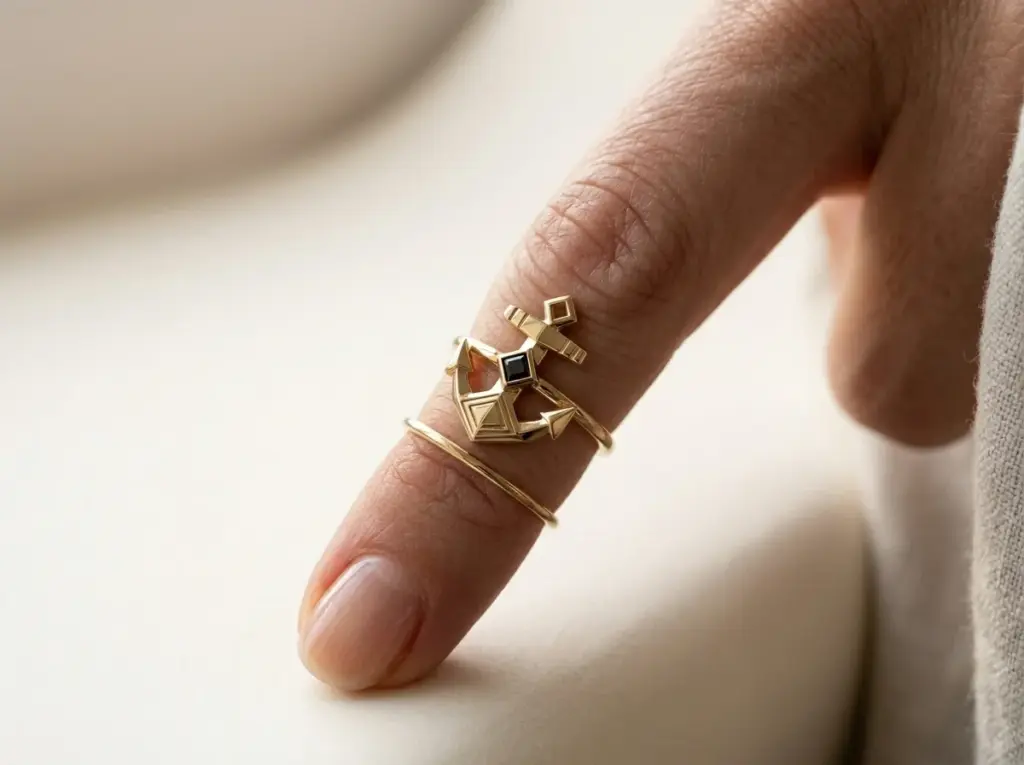
If your anchor is sleek and architectural, the whole stack tends to read as modern. If your anchor has engraving, milgrain, or a cluster setting, the stack leans more romantic or vintage. If your anchor has color, the stack feels more expressive right away. That is why it is smart to choose the anchor first instead of adding rings at random and hoping they somehow work together in the end.
A useful trick is to ask one simple question: what do I want people to notice first? When you know the answer, the rest of the stack becomes much easier to shape around it. Everything else can either echo that mood or calm it down.
How to Build Stack Rings By Style this year
The most polished stacks usually start with proportion, not trend chasing. If you build around shape and scale, even affordable or mixed-origin pieces can look refined. If you ignore proportion, even expensive jewelry can look awkward. The aim is to create a visual rhythm from the base of the finger upward.
Start with one anchor ring near the base of the finger. Then add one or two quieter bands that either frame it or extend its line. If your anchor is wide, choose slimmer companion bands. If your anchor is delicate, you can bring in one band with more texture or a slightly stronger profile. This keeps the stack from feeling either too heavy or too faint.
Use Contrast Carefully
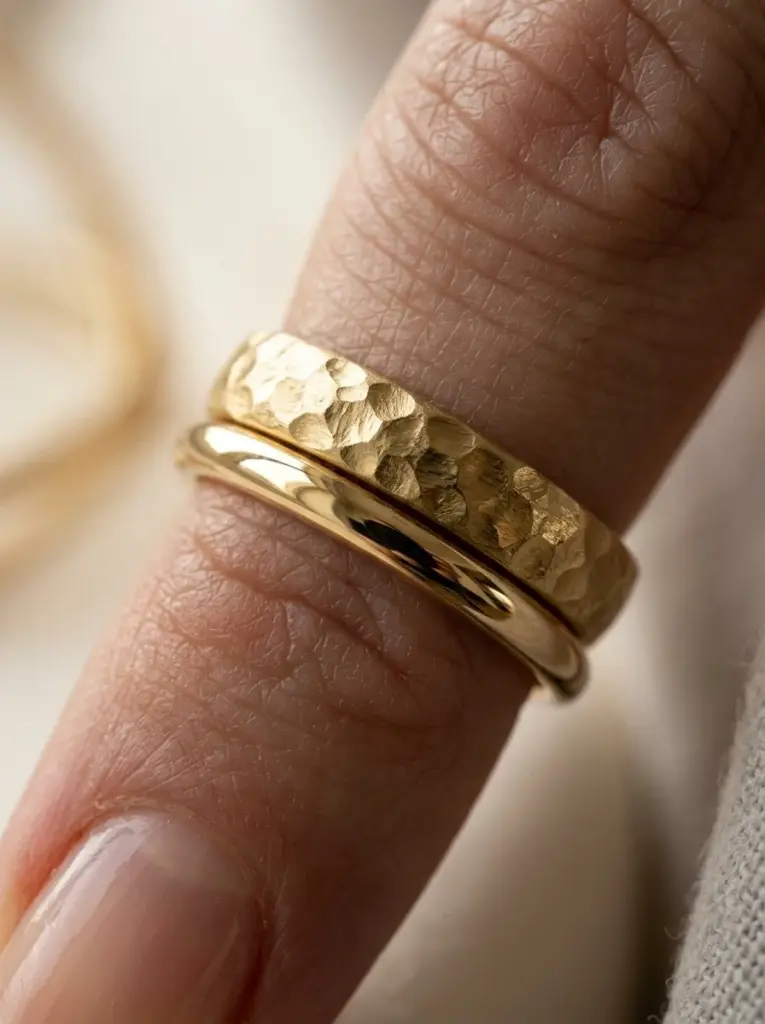
Contrast is what makes a stack interesting. A polished band next to a matte one creates depth. A plain ring next to pavé stones creates sparkle without overload. A rounded band beside a sharper, flatter shape adds structure. The key is using contrast with purpose, not throwing in every difference at once.
Think of it like decorating a shelf. If every object is tall, dark, and dramatic, the shelf feels dense. If every object is tiny and pale, nothing stands out. A successful ring stack works the same way. It needs a mix of calm and detail, weight and lightness, shine and quiet space.
Leave a Little Breathing Room
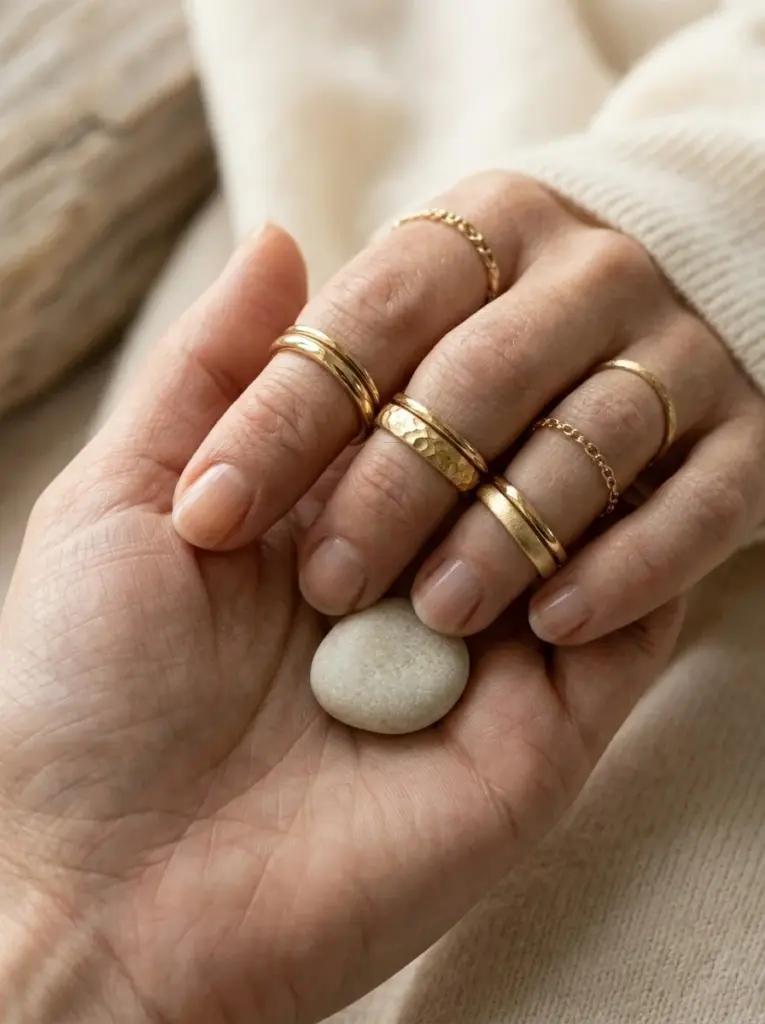
Not every finger needs to be filled, and not every stack needs to be tight. Some of the most elegant looks rely on small gaps, slimmer bands, or an offset ring on another finger. This is especially helpful if your stack starts to feel crowded. Leaving a touch of visible skin between rings can make the whole arrangement look more intentional.
This idea matters even more if you wear multiple rings across one hand. A dramatic stack on one finger often looks better when the neighboring fingers stay simpler. Balance across the hand is just as important as balance within one stack.
Fit Matters More Than Most People Expect
A ring that fits perfectly on its own may feel completely different in a stack. Once several bands sit together, they cover more of the finger and give the skin less room to move. That is why a stack can feel fine in the morning and suddenly feel tight in the afternoon, especially in warm weather or after walking, travel, or salty meals.
This is one of the least glamorous parts of ring styling, but it is one of the most important. A beautiful stack that feels uncomfortable will not become a signature look. It will become something you remove halfway through the day. Comfort is not separate from style here. It is part of the styling decision.
What Width Changes in Real Life
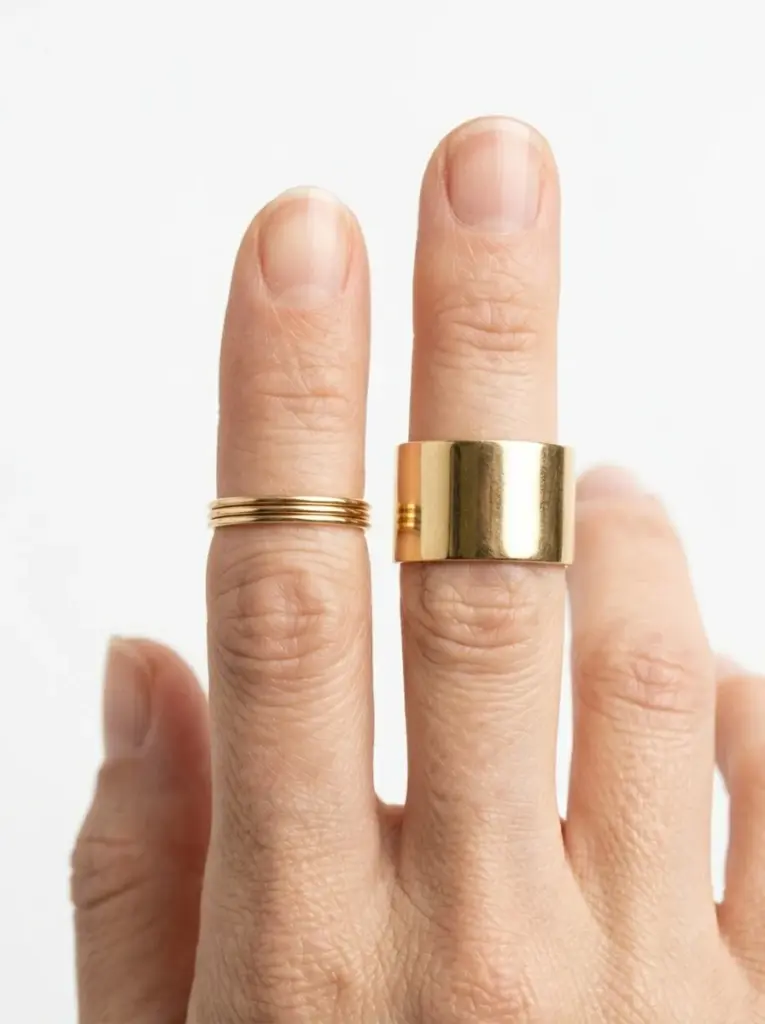
Three very thin bands and three medium-width bands create totally different wearing experiences. Width changes how much space the stack occupies, how the rings press against neighboring fingers, and how easily they spin. A wider stack can also make fingers look shorter if all the visual weight sits too high or too close to the knuckle.
If you like the look of a fuller stack, try building it gradually. Wear two rings for a few days. Then add the third. This lets you notice whether the issue is size, width, height, or simple visual overload. It is easier to edit a stack step by step than to diagnose four problems at once.
Easy Ways to Improve Comfort
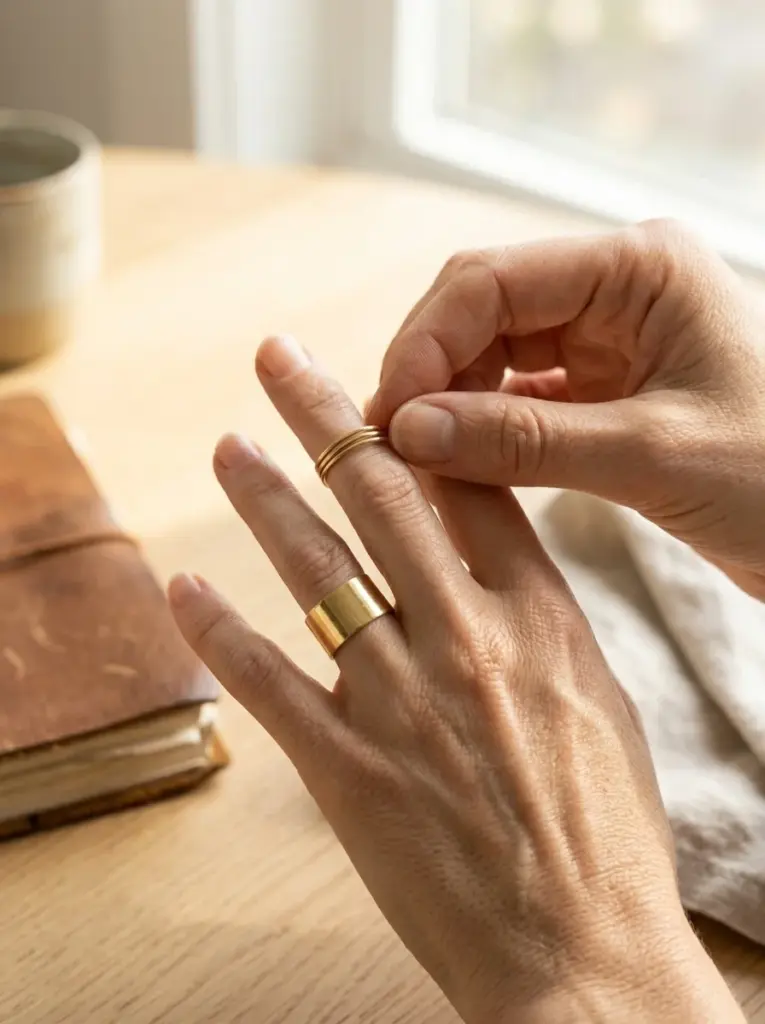
- Place the heaviest ring at the base of the finger instead of near the knuckle.
- Use one very slim band between two larger rings if they rub or feel crowded.
- Move a thicker ring to the middle or index finger if the ring finger stack feels too tight.
- Save very tall or bulky stacks for shorter wear instead of daily use.
- Try your stack at different times of day before deciding it truly fits.
Mixing Metals Without Making the Stack Look Random
For years, many people were told to choose one metal and stay loyal to it. That rule now feels too limiting for the way most people actually wear jewelry. Mixing metals can look sophisticated, relaxed, and current. The problem is not the mix itself. The problem is when there is no visual plan.
The simplest way to mix metals is to repeat each one at least once. If you wear one yellow gold ring and one silver ring, the contrast can feel accidental. But if you add another ring that echoes one of those tones, or choose a two-tone piece that visually connects them, the stack immediately feels more deliberate. Repetition creates logic.
Choose a Dominant Metal First
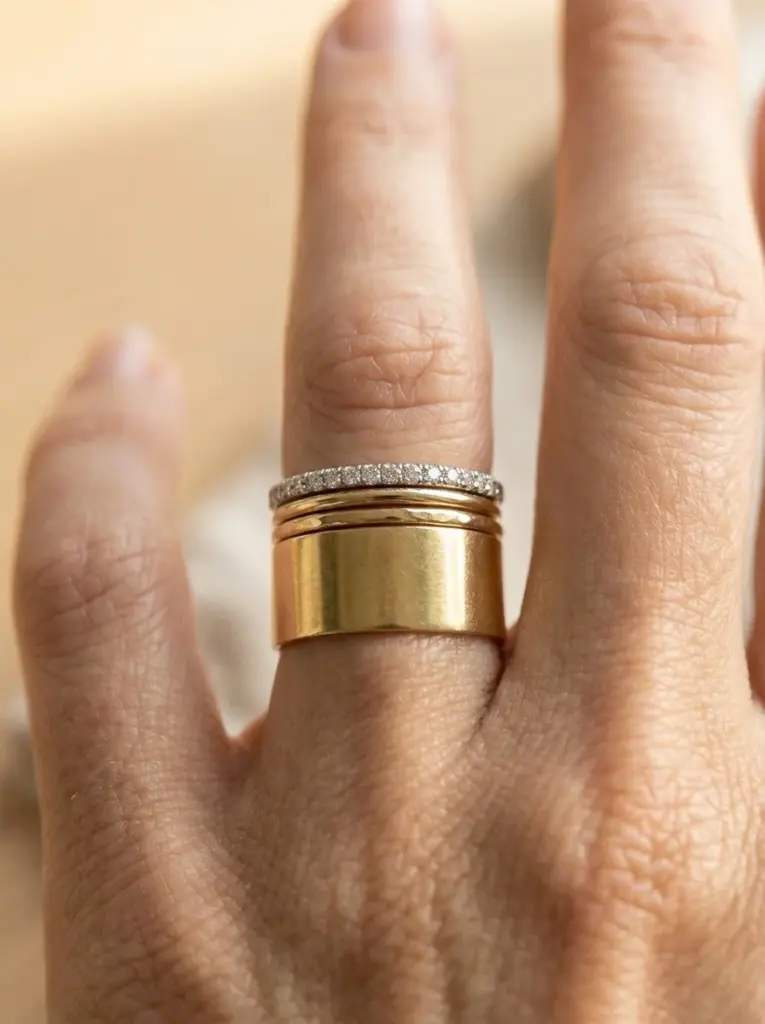
A mixed-metal stack usually looks better when one tone leads and the others support it. For example, yellow gold can be the main metal while white metal appears in a thin accent band or a ring with small cool-toned details. This gives the eye a clear starting point.
If everything carries equal weight, the stack can lose focus. Think of a room with five loud paint colors and no neutral wall. Even beautiful colors need a home base. Your dominant metal acts as that base.
Texture Can Connect Different Metals
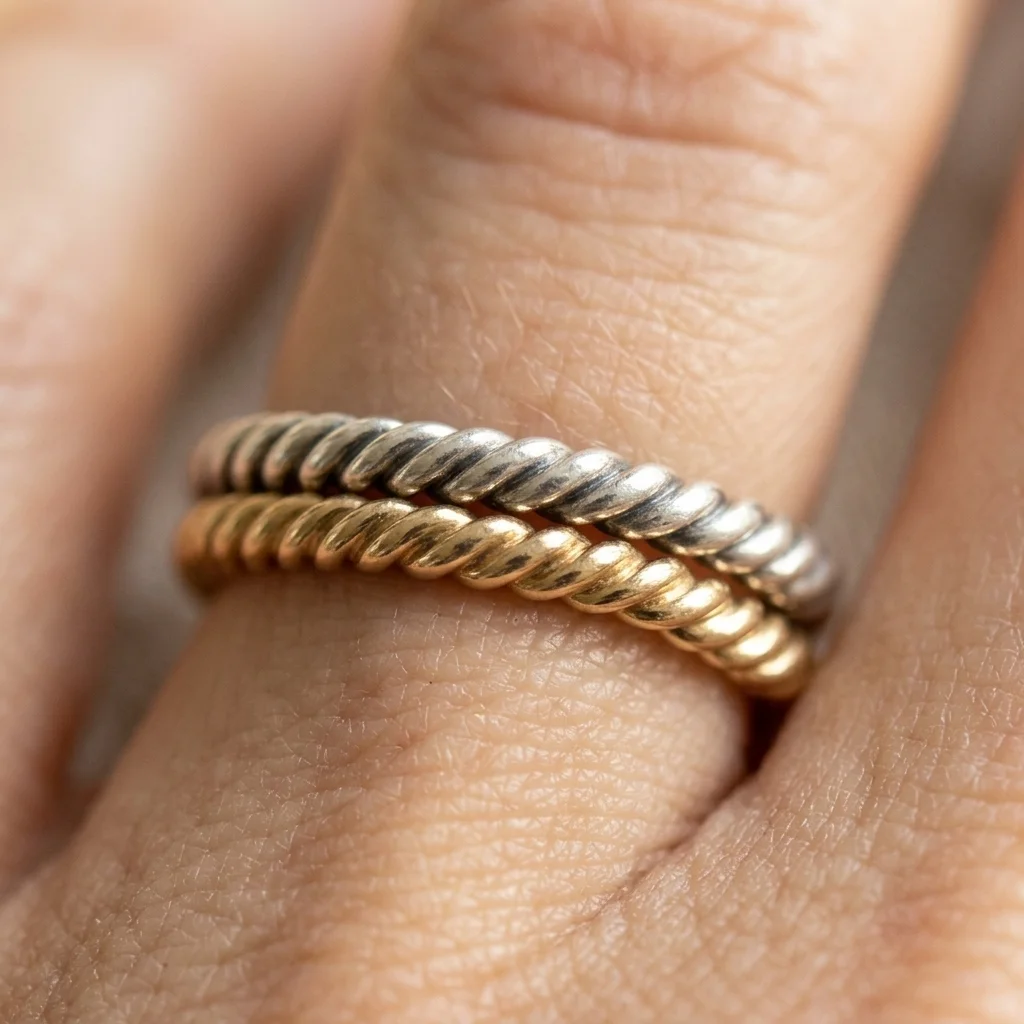
If you are unsure about color mixing, lean on texture. A brushed band, rope detail, hammered finish, or softly engraved surface can tie rings together even when the metal tones are different. Shared finish often creates more harmony than exact color matching.
This is especially useful if your collection grew over time and was not bought as a set. A vintage yellow gold ring, a newer white metal band, and a textured rose-toned accent can absolutely work together when they share a similar visual softness or handcrafted feel.
Gemstones Need Strategy, Not Just Style
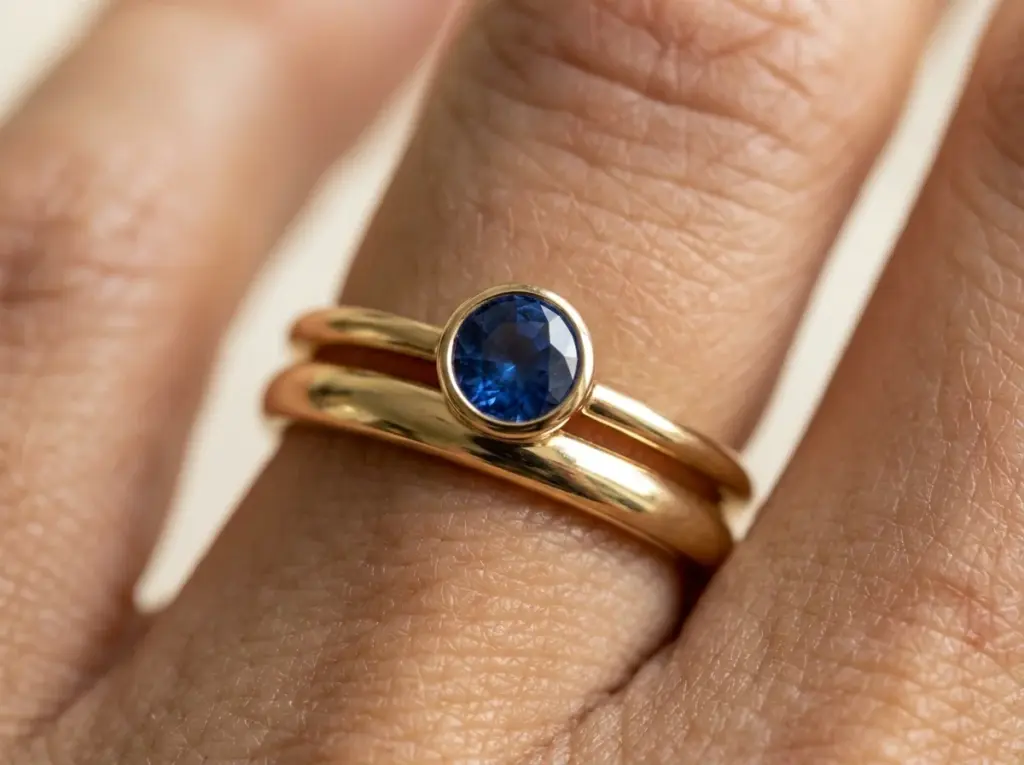
Many people think about color first when choosing gemstone rings, but durability deserves equal attention. Rings live a harder life than earrings or necklaces. They tap on tables, brush against keys, touch handles, and rub against each other all day. In a stack, that friction increases.
That matters because not all stones respond the same way to daily wear. Harder stones can scratch softer ones. Raised settings can hit neighboring rings. Delicate surfaces can become dull if they sit too close to sharper edges. A stack should look pretty, but it should also respect the materials involved.
Quick Gemstone Planning Guide
| Ring Type | Best Use in a Stack | What to Watch For |
|---|---|---|
| Diamond band | Great as an accent or frame ring | Sharp edges can scratch softer stones nearby |
| Sapphire or ruby ring | Good for regular wear and color contrast | Check prongs if worn daily beside other rings |
| Opal or pearl ring | Better as a stand-alone feature | Surface can scratch easily in tight stacks |
| Low bezel-set stone ring | Excellent for close stacking | Can still rub if paired with very textured bands |
| High prong-set gemstone ring | Best with space around it | Prongs may catch and scrape neighboring pieces |
A helpful rule is to keep softer stones away from the sharpest, hardest neighbors. Another is to treat low-profile settings as daily stacking allies. A bezel-set ring often behaves better in a close stack than a high-set stone with exposed edges. That is not because one is prettier than the other. It is because one is better built for contact.
You may also enjoy reading: Sea Glass Jewelry: Unearthing Treasures from the Tides
Style Directions That Work Especially Well Right Now
Trends change, but a few ring-stacking directions feel especially relevant because they are flexible enough to suit different wardrobes and ages. You do not need to copy them exactly. Think of them as starting points you can adapt.
Minimal and Architectural
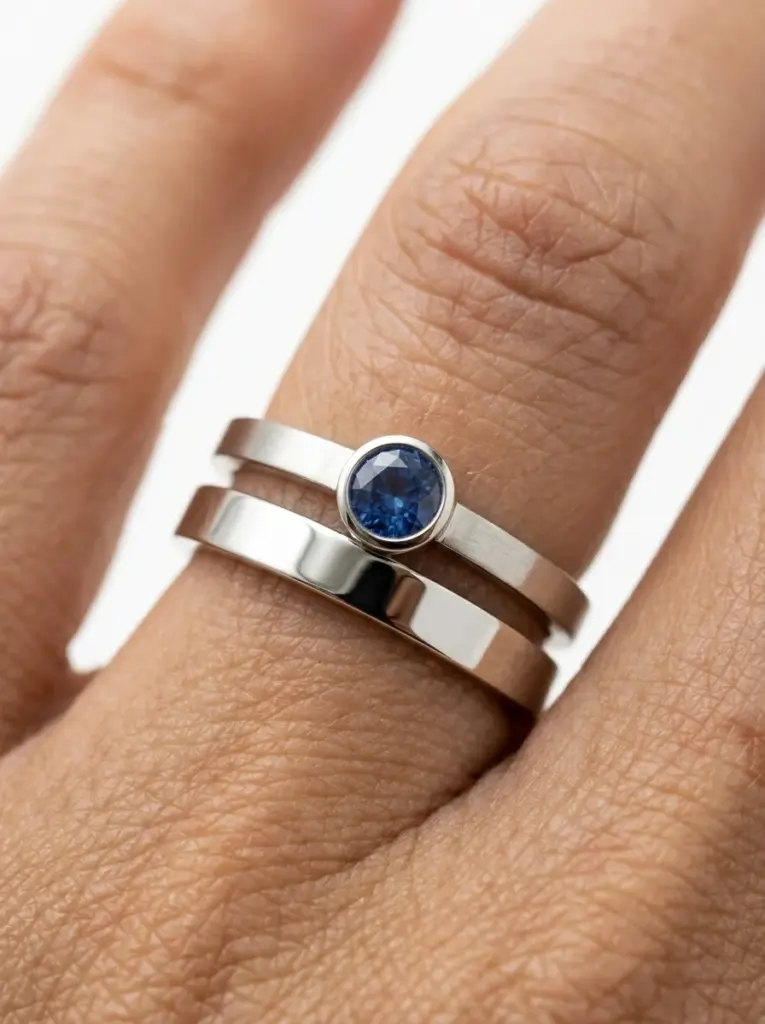
This approach relies on clean lines, crisp shapes, and fewer decorative details. Flat bands, slim polished rings, negative space, and a small amount of texture do most of the work. It suits people who like modern clothing, simple tailoring, or a less-is-more jewelry wardrobe.
The easiest way to build this look is to stay within one or two metals and focus on shape variation. Pair one medium flat band with one thin rounded band and one subtle textured ring. The result feels refined without trying too hard.
Soft Vintage Mix
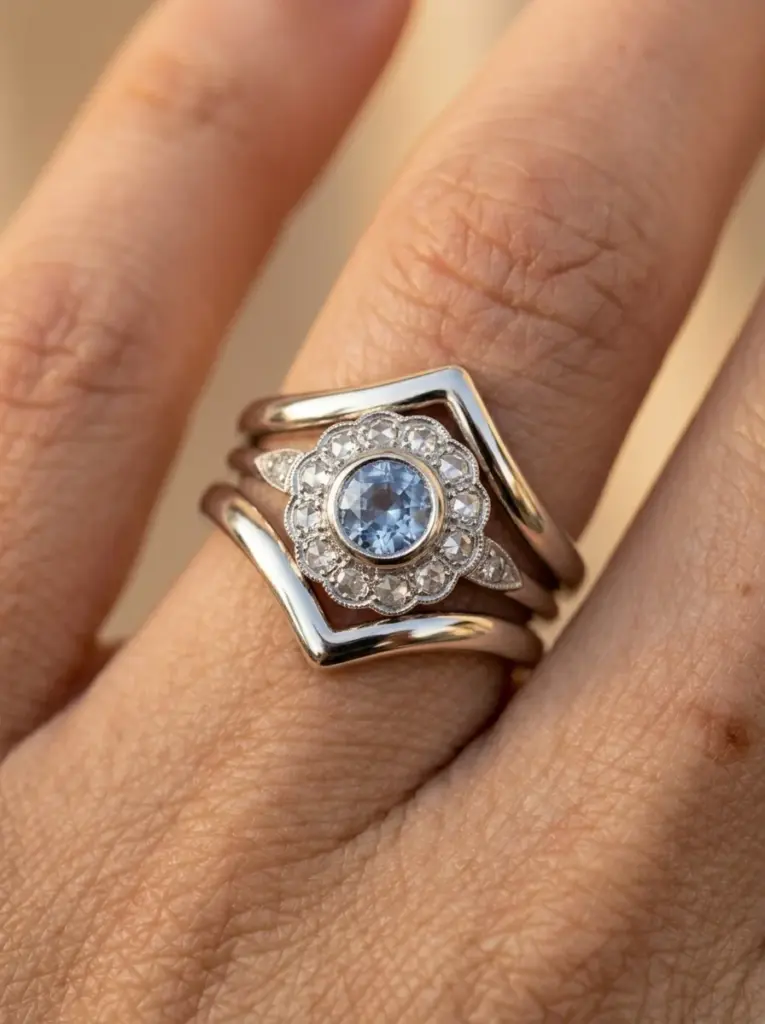
This style works beautifully if you already own an heirloom ring, an engraved band, or a piece with antique character. The secret is not to surround it with equally busy companions. Give the vintage piece room to lead, then frame it with smoother rings that support its detail rather than compete with it.
Curved or contour bands can help older shapes feel easier to wear. So can a slim plain band that calms the overall look. The combination feels thoughtful, not costume-like, which is often the difference between charming and overdone.
Color-Focused but Controlled
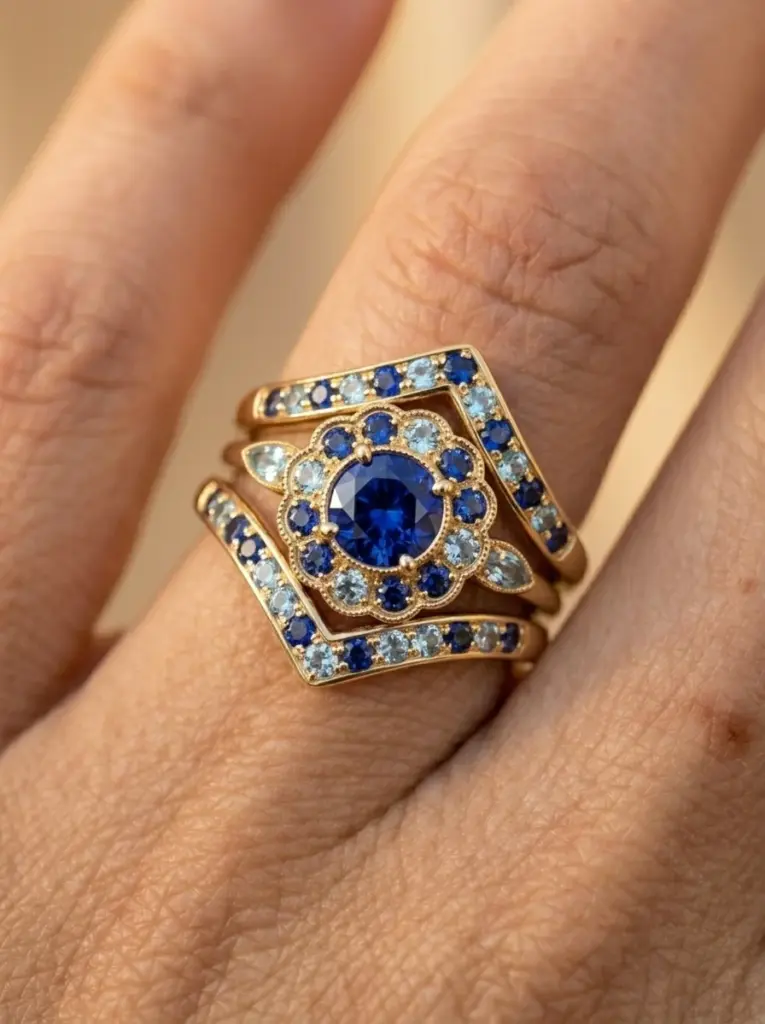
If you love gemstone color, build around one main palette rather than every shade you own. For example, blues and greens can feel calm and collected, while warm pinks, champagne tones, and clear stones can feel softer and more romantic. Limiting the palette gives your eye a path to follow.
It also helps to repeat one design cue. Maybe every ring uses bezel settings. Maybe each one includes elongated stones. Maybe all the bands are slim even though the colors vary. Repetition is what keeps playful from becoming messy.
Common Mistakes That Ruin a Good Ring Stack
- Using too many focal points at once. If every ring demands attention, none of them truly gets it.
- Ignoring height as well as width. Rings can clash vertically, not just side to side.
- Copying a photo exactly without considering your own finger shape, ring size, or daily routine.
- Forcing sentimental rings together even when they physically do not sit well beside each other.
- Choosing style first and comfort last. A stack you cannot wear is not a successful stack.
One overlooked mistake is assuming a stack has to stay fixed forever. It does not. The best stacks often evolve seasonally or with lifestyle changes. A teacher, nurse, designer, or parent may each need something different from daily jewelry. Real life should shape the stack, not the other way around.
Daily Habits That Keep Rings Looking Better Longer
Even a well-designed stack needs care. Multiple bands trap more soap, lotion, sunscreen, and dust than a single ring. Over time, that buildup can dull sparkle, make metal look cloudy, and sometimes irritate the skin. Gentle maintenance makes a noticeable difference.
Remove rings before messy tasks, gardening, swimming, heavy cleaning, or applying thick products. Dry your hands well before putting stacked rings back on. Every so often, clean them with warm water, a small amount of mild soap, and a soft brush. Pay attention to the sides of the bands, because that is where residue and friction tend to hide.
It is also wise to inspect your rings regularly. Look for prongs that seem lifted, stones that wobble, or bands that are thinning where they touch other rings. Small issues are much easier to fix early. Maintenance may not be the exciting part of ring styling, but it protects the pieces that matter most.
Making Stack Rings By Style this year Feel Like Your Own
The goal is not to build the most dramatic stack in the room. It is to build one that feels believable on your hand and in your life. Stack Rings By Style this year works best when it reflects both taste and routine. Maybe that means three slim rings you barely notice while working. Maybe it means one heirloom ring paired with two modern bands that make it feel current again. Maybe it changes depending on the day.
A strong ring stack has personality, but it also has discipline. It knows when to stop, when to soften, and when to let one ring lead. If you pay attention to fit, material, balance, and visual rhythm, you do not need a huge collection to make your jewelry feel special. You only need pieces that work together with intention.