Banquette Bench Ideas That Make a Dining Nook Work Harder
The breakfast corner looks promising until you pull out a chair and block the path to the kitchen. Or maybe the table fits, but nobody wants the seat against the wall because getting in and out feels like a puzzle. A banquette bench can solve those everyday annoyances, provided you plan the table, seating, and walking space together.
A banquette is an upholstered or cushioned bench arranged along a wall, often around a dining table. It can be built in or freestanding, straight or wrapped around a corner. The best design gives people a comfortable place to sit without requiring chair clearance behind every seat. Before choosing a beautiful fabric or a dramatic backrest, though, ask a less glamorous question: Will everyone be able to sit down, eat, and get up easily? That answer should guide the whole project.
Start With the Way You Actually Use the Space
Picture an ordinary weekday rather than a styled photograph. Does one person linger with coffee while another needs to pass through? Do kids climb in and out during dinner? Will the table double as a laptop station, homework spot, or place to spread out a weekend project? A banquette that looks perfect for a quick breakfast may feel cramped during a long meal if the seat is too deep or the table sits too far away.
Sketch the room from above. Mark doors, drawers, appliance swings, windows, outlets, heating equipment, and the path people take through the space. Then draw the tabletop at its intended size, not just the bench. If there will be chairs opposite the banquette, leave enough room to pull them out and walk around them. A bench can reduce the clearance needed on its wall side, but it does not make the rest of the circulation disappear.
For a small kitchen, a straight bench may be the most useful move. It can replace two chairs along a wall while leaving the other side of the table flexible. An L-shaped arrangement can turn an awkward corner into a dining nook, but its inside corner is less useful for sitting than it appears on a floor plan. A U-shaped setup creates a snug booth feeling; it also makes the middle diner ask others to move. Choose the shape around your daily routine rather than the maximum number of people you could squeeze in for one holiday meal.
Built-In, Freestanding, or Modular?
A built-in banquette can follow uneven walls and incorporate a storage base, making it appealing when you know the layout will stay put. It needs careful construction and secure installation. A freestanding bench is easier to move, replace, or take with you, which can suit a rental or a room that changes often. Modular pieces offer another middle ground: separate sections can form a corner now and move apart later, if their connectors and dimensions allow it.
Do not assume that every piece marketed as a banquette is attached to the wall. Likewise, a simple bedroom accent bench is not automatically comfortable for dining. Look at the seat height, back support, cushion firmness, and the relationship to your table. The label matters less than the way the piece works when someone is actually sitting on it.
A transitional banquette for a flexible dining room
Soft upholstery, restrained trim, and a wood base can bridge a modern kitchen and a more traditional dining table. If your room already has several finishes, repeat one color or wood tone in the bench so the nook feels connected. Keep the silhouette simple enough that you can change pillows or table linens without reworking the whole room.
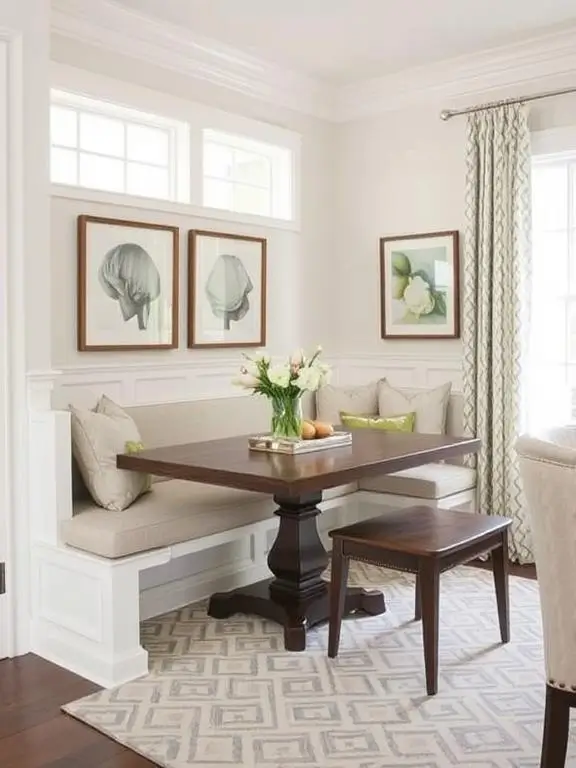
If the room has a narrow footprint, a slim back and tailored seat can preserve precious inches. A thick, overstuffed back may look inviting but push diners farther from the table. Compare the full depth of the finished piece, including cushions, with your floor plan.
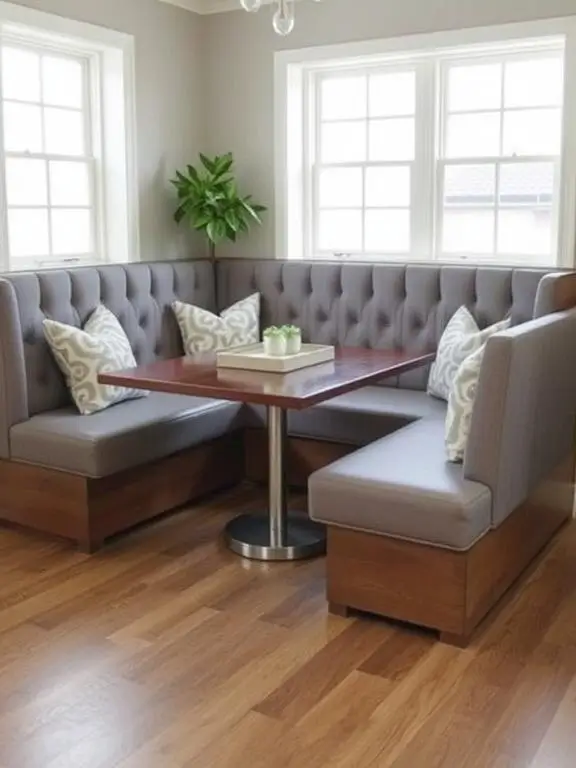
Modular seating when the layout may change
Separate upholstered sections can be useful in a breakfast room that also hosts game nights or extra guests. Check how the units join, whether each piece remains stable when separated, and whether the upholstery or cushions can be replaced. Measure the assembled corner as well as each module; small gaps between pieces can catch crumbs or make the seat feel uneven.

Freestanding modules also let you test the layout before committing to carpentry. Sit at the table for several meals. Notice whether the corner position is comfortable, whether someone bumps a knee on a table leg, and whether the seat slides when people get up. Those observations can save a costly redesign.
A minimalist bench beyond the breakfast nook
An accent bench at the foot of a bed or under a window can echo the clean lines of a dining banquette, but it serves a different purpose. A low bench may be a lovely place to set a bag or put on shoes; it may be awkward at a dining table. Choose the dimensions for the activity, and resist buying a low-profile piece simply because the photo looks calm and uncluttered.
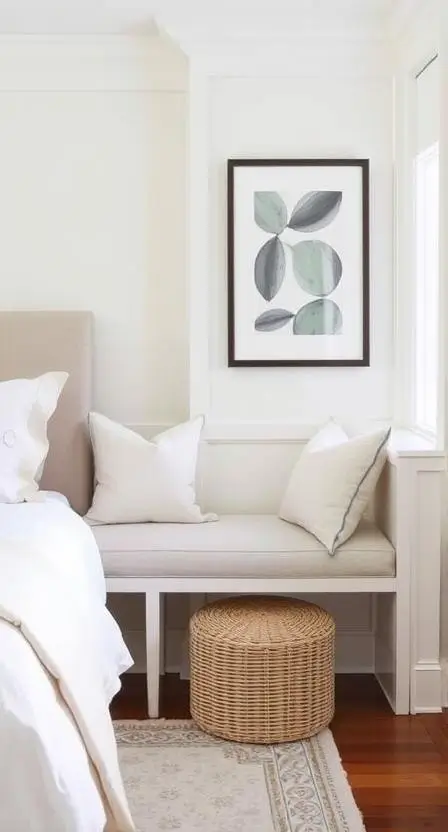
For an entryway, prioritize a stable seat and room for shoes or bags. For a window seat, consider glare, drafts, and the ability to open the window. The same visual idea can work in many rooms, but its construction and height should follow its job.
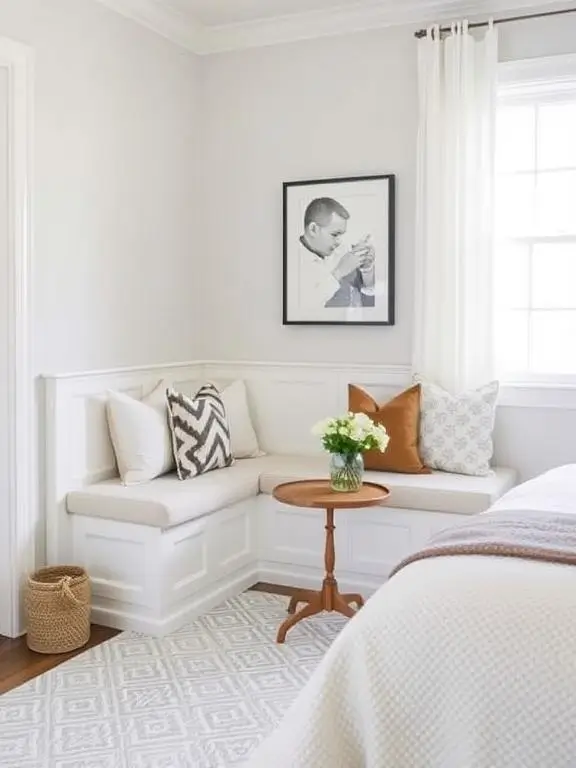
A bench with charging or lighting features
A nearby outlet can make a nook convenient for homework or occasional work, but built-in electronics are optional. If a product includes charging, lighting, or other powered features, examine how cords route, how components are serviced, and whether you can clean around them. Keep electrical work and cords away from spills, and use a qualified professional when a project requires new wiring. A simple bench with a well-placed outlet nearby may age more gracefully than complicated electronics embedded in upholstery.
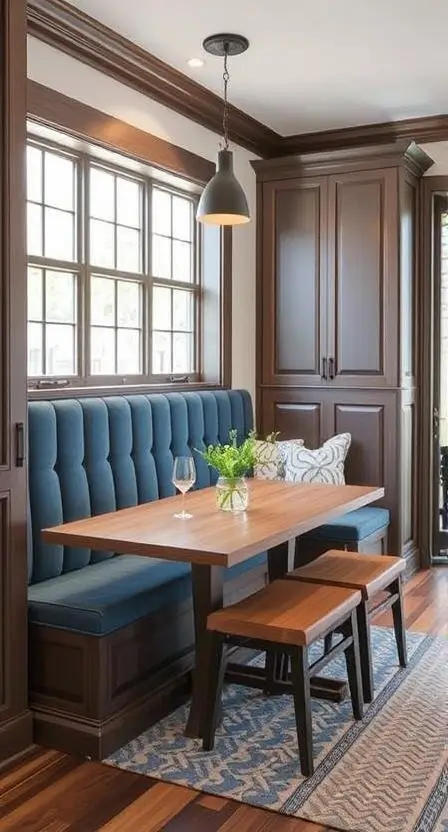
If the nook is part of an open-plan room, repeat the bench’s material elsewhere rather than matching every finish exactly. A wood base might relate to nearby cabinets; a neutral fabric can pick up a color from the living area. For more ideas on carrying a consistent look across a home, see these classic exterior design examples.

Measure the Table and Bench as One System
There is no single dimension that suits every diner and every table. Start with the table you own or the table you plan to buy. Measure from the floor to the underside of its apron, the structural rim below the top, then compare that with the finished seat height including the cushion when compressed. This tells you more than measuring the tabletop alone. A deep apron can crowd thighs even when the table looks like a normal height.
Next, check how close someone can sit to the table edge. A bulky bench back and a deep seat can leave a shorter person reaching forward to eat. A removable back cushion can help you fine-tune the sitting depth. If you are building from scratch, mock up the seat with sturdy furniture and cushions before ordering upholstery. Try the setup with adults and children who will use it most often.
Think about the table base. A pedestal or trestle may leave more useful legroom along a bench than four legs near its corners, but a wide pedestal can still obstruct the person seated in the middle. Test where knees and feet naturally land. If the table extends for guests, make sure the longer configuration does not block a doorway or leave the end diners trapped.
Measure the usable length of the seat, not just the wall. Account for the thickness of side panels and back cushions. At a corner, two nominal seat lengths overlap; that does not mean two full rows of diners fit independently. Allow people enough elbow room for the meals you serve instead of relying on a seating-capacity claim from a product listing.
Plan an easy route in and out
Walk the route while the table is temporarily marked on the floor with painter’s tape. Open the refrigerator, dishwasher, cabinet drawers, and nearby doors. Pull out the chairs on the open side. Can someone carry a plate past a seated diner? Can a person at the far end leave without everyone standing up? The answers may point toward a shorter bench, a narrower table, or a straight layout instead of a wraparound one.
If someone in the household uses a wheelchair or other mobility aid, plan an appropriate approach and table position from the beginning rather than assuming the bench will meet everyone’s needs. For context on accessible dining surfaces and clearances, consult the 2010 ADA Standards for Accessible Design. Those standards apply to covered settings; a private home has different obligations, but the guidance can prompt more thoughtful conversations about usable space.
Choose Upholstery for the Messes You Actually Have
At a dining table, appearance is only part of the fabric decision. Coffee drips, crumbs, pet hair, and repeated sliding against the seat can make a delicate textile frustrating. Request a sample and look at it in your room’s daylight and evening light. Feel how it wears under a hand. If a seller describes a fabric as stain resistant, ask for its care instructions and the limits of that treatment rather than assuming every spill will wipe away.
A tightly woven fabric in a midtone or small pattern may disguise everyday marks better than a very pale solid. Leather or a wipeable material can be convenient in some households, but check the manufacturer’s directions before using cleaners. Removable, washable covers can make a family nook easier to live with if they can truly be removed without dismantling the bench. Verify whether replacement covers are available; a one-off custom fabric may be difficult to match later.
For cushions, comfort depends on the entire construction: foam firmness, thickness, support underneath, and the way the back meets the seat. A soft cushion that collapses too much can put diners uncomfortably low. A firm one without a supportive back can feel like a waiting room. Sit for the length of a normal meal, not merely a few seconds in a showroom.
Pay attention to the base
Painted wood can make a nook feel like part of the kitchen cabinetry. A stained base adds warmth, while a simple upholstered base can soften a formal dining room. Whichever finish you choose, consider shoe scuffs, cleaning around the floor, and how the base handles moisture. A closed toe-kick can hide the space beneath the seat; raised legs let you clean underneath, but they change the look and may collect visible clutter.
Ask a builder or seller what supports the seat, how the frame is joined, and what load the finished product is designed to carry. Material names alone do not establish strength. A well-made engineered-wood component can be appropriate for a particular design, while a poorly assembled solid-wood frame can still wobble. The construction and installation matter together.
Decide Whether Storage Is Worth the Trade-Off
Hidden storage is appealing in a small home, especially for placemats, games, or seasonal linens. But a lift-up lid means removing cushions and asking the seated person to move every time you need something. Drawers can be easier to reach if there is enough clear floor space to open them. A hinged front panel may work where a nearby table would block a drawer.
Reserve awkward storage for things you reach for rarely. Put everyday supplies in a cabinet that opens without disrupting breakfast. If children will use a lift-up seat, discuss hinge hardware and finger-pinch risks with the maker. Check how the compartment will be cleaned and whether anything placed there needs ventilation. A simpler closed base can be a better choice if storage adds expense but little real convenience.
Build a Budget Around the Whole Nook
It is easy to price the bench and forget the table, upholstery, delivery, installation, wall repairs, and possible electrical work. Request an itemized quote that spells out the frame, cushions, fabric quantity, finish, hardware, and labor. If you are comparing a custom built-in with a stock bench, include the cost of making each one fit the room and the ease of replacing worn parts later.
A practical middle path is to start with a movable bench and table. You can learn where people prefer to sit before paying for a permanent installation. If the room is small, the right table shape or a slimmer chair opposite the bench may improve it more than adding elaborate millwork. Spend where you will feel the benefit every day: a stable frame, comfortable seat, cleanable upholstery, and a layout with room to move.
DIY work can be sensible for someone with the necessary skills and tools, but a built-in must be appropriately supported and secured for its design. Check for outlets, plumbing, heating, and other services before fastening into walls or making alterations. Where the project affects wiring or structural elements, hire the relevant professional. Follow the bench and hardware manufacturers’ installation instructions.
Make the Nook Feel Finished Without Crowding It
Once the basic geometry works, a few details can make the seating feel intentional. A wall sconce or pendant can define the table, provided it does not obstruct views or create glare. A washable runner or placemats can add color without covering the entire seat in pillows. One or two back cushions are often enough; too many decorative pillows steal the depth you measured so carefully.
Use art or a small shelf to draw the eye upward if the bench has a low back. Keep anything above diners securely mounted and positioned so people do not bump it when standing. In a corner with windows, choose a back height that respects the sill and lets the windows operate. A nook should feel pleasant at breakfast and still function at dinner after the styling has been lived in.
Consider lighting at several times of day. Strong morning sun may fade some textiles or make one seat uncomfortably bright. A window shade can be more useful than a different cushion color. At night, warm, well-placed light helps the area feel inviting without requiring a complicated built-in feature.
Keep the Bench Comfortable Over Time
Vacuum crumbs from seams and under loose cushions regularly. For spills, follow the upholstery maker’s cleaning instructions and test any permitted product in an inconspicuous area. Avoid saturating a cushion or using a cleaner intended for a different material. If covers are removable, wash or dry-clean them only as directed; even a fabric that seems sturdy can shrink or change shape.
Inspect the bench periodically for loose fasteners, shifting modules, worn hinges, or a cushion that no longer provides support. Address a wobble before it becomes a larger problem. In a built-in nook, also watch for water from a nearby sink or window and keep the surrounding surfaces dry. A seat that can be reupholstered or fitted with new cushions may remain useful long after the first fabric has worn out.
A Simple Way to Choose Your Banquette
First decide how many people need a comfortable daily seat. Then tape out the table and the full bench footprint, including cushions. Test entry, exits, doors, drawers, and chairs. Choose built-in, freestanding, or modular construction based on how long you expect the layout to stay. Finally, select a fabric and base you can realistically maintain.
That sequence may lead you to a tailored corner banquette, a modest straight bench, or an ordinary dining chair in the spot where access matters most. The goal is a nook people actually choose to use. Before ordering anything permanent, spend an evening around a temporary version of the layout. The small inconveniences you notice then are the most useful design notes you can collect.