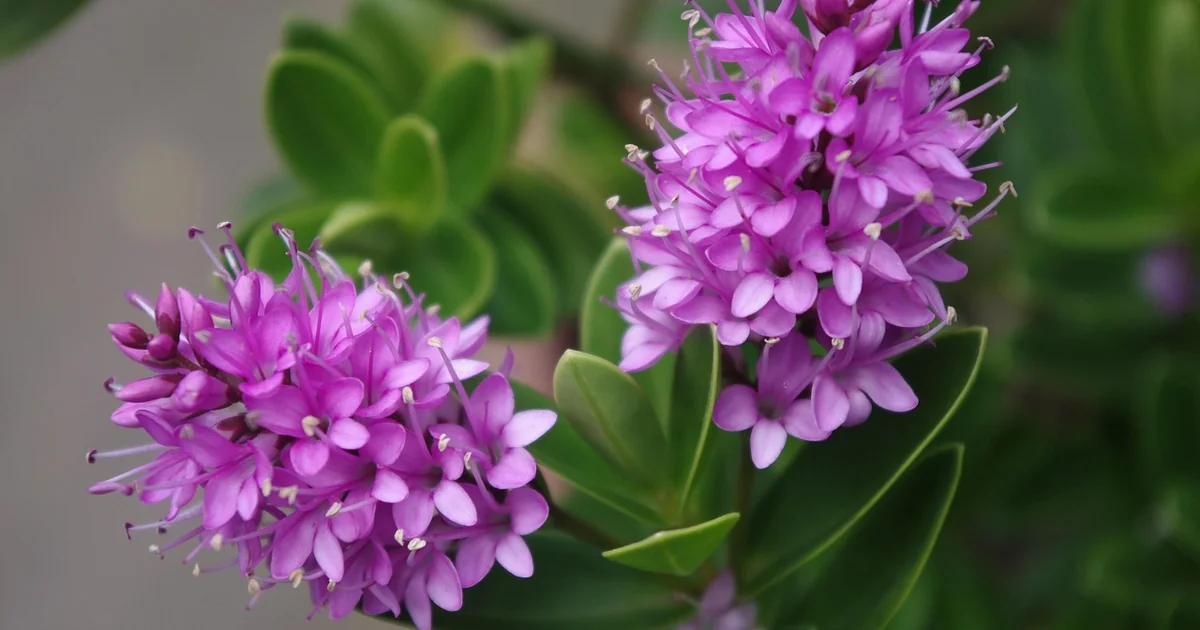
When you first encounter a hebe shrub, its tidy dome shape and bold flower spikes might remind you of a miniature lilac. But this New Zealand native brings something different to the garden. It stays green all year, blooms from summer into fall, and asks for surprisingly little effort. Yet many gardeners struggle to grow hebe well because they treat it like any other flowering shrub. The truth is, hebe has specific needs. Let us walk through seven expert-backed strategies to help your hebe thrive.
1. Choose the Right Site and Sunlight Conditions
Hebe demands a sunny spot. It needs six to eight hours of direct sunlight each day. Without that light, the shrub turns leggy. The stems stretch out awkwardly, and you will see far fewer blooms. A common mistake is planting hebe in partial shade because it looks tidy there at first. But within one season, the plant loses its compact form.
Full sun also helps the foliage hold its color. Varieties with variegated leaves, such as Hebe speciosa ‘Variegata’, show richer cream and green tones when they receive ample light. If you live in a very hot climate like inland California or Arizona, a spot with morning sun and afternoon dappled shade can prevent leaf scorch while still keeping the plant dense.
Sheltered locations matter too, especially if you are in zones 7 or 8. Plant hebe near a south-facing wall or next to a building that blocks winter winds. The structure absorbs heat during the day and releases it slowly at night, creating a microclimate that reduces frost damage. Compact, small-leaved varieties tolerate cold better than large-leaved types, so check the label before buying.
2. Prepare the Soil with Proper pH and Drainage
Hebe is picky about soil. It needs well-drained, sandy ground with a pH between 7.0 and 8.5. That range is neutral to alkaline. Most garden soils are slightly acidic, so you may need to adjust. Before planting, test your soil. A simple home kit tells you the pH. If it falls below 7.0, sprinkle garden lime into the planting area and mix it thoroughly. Aim for about 2 pounds of lime per 100 square feet to raise the pH by one point, but follow the test instructions.
Drainage is just as critical. Hebe roots rot quickly in heavy clay or waterlogged spots. To improve drainage, dig a hole twice the width of the nursery pot and mix coarse sand or fine gravel into the removed soil. If your yard stays wet after rain, consider raising the planting bed by 6 to 12 inches. This simple mound keeps the root crown dry. Another option: plant hebe in a container where you can control the soil mix perfectly. Use a blend of one part potting soil, one part coarse sand, and one part perlite.
A surprising fact most home gardeners overlook: hebe actually performs well in poor, lean soil. Rich, heavily fertilized ground encourages soft, floppy growth that attracts pests. So skip the compost for now. Wait until spring to add a thin layer of well-aged compost around the base.
3. Water Correctly: Balance Between Drought Tolerance and Summer Needs
Once established, hebe shows solid drought tolerance. But during its first year and throughout hot summer weeks, it needs about an inch of water per week. That is roughly 0.6 gallons per square foot. In practice, water deeply once every five to seven days during dry spells. Check the soil three inches down. If it feels dry, it is time to water.
Overwatering is more dangerous than underwatering. Hebe leaves wilt when thirsty, and the plant recovers quickly after a drink. But soggy soil leads to root rot, which turns leaves yellow and eventually kills the plant. To avoid this, always water at the base, not overhead. Wet foliage encourages fungal spots and mildew, especially in humid regions like the Southeast.
In coastal areas where humidity is higher but summer rain is scarce, use drip irrigation or a soaker hose. This keeps the leaves dry and delivers moisture right to the roots. Mulch with a 2-inch layer of bark chips or gravel to conserve moisture and keep the roots cool. Do not pile mulch against the stem leave a 2-inch gap to prevent collar rot.
4. Prune Strategically to Maintain Shape and Encourage Blooms
Hebe naturally forms a neat dome, but without pruning it becomes open and woody in the center. The trick is to prune right after the main bloom period ends, usually in late summer or early fall. Cut back the flowering stems by about one-third of their length. This stimulates bushier growth and more flower buds for the next season.
Deadheading spent flower spikes is also worthwhile. Snip off each faded spike just above the top pair of leaves. This redirects energy into new shoots instead of seed production. A friend of mine deadheads her hebe every two weeks from July through September, and her shrub stays dense and colorful.
Do not prune in autumn if you live in a colder zone. Late pruning encourages tender new growth that cannot survive frost. Instead, wait until early spring when the risk of hard freeze has passed. At that point, remove any winter-damaged or broken branches. Take the stems back to a healthy outward-facing bud. Over time, this keeps the plant from becoming leggy.
5. Protect from Winter Chill in Marginal Zones
Hebe is hardy in zones 7 through 11, but in zones 7 and 8, winter damage is common. The small-leaved varieties survive better because they lose less moisture through their leaves. If you live in the lower end of the zone range, choose cultivars like Hebe pinguifolia ‘Pagei’ or Hebe ‘Green Globe’, which have tiny leaves and compact shapes.
When a hard freeze is forecast, take simple precautions. Cover the shrub with a frost cloth or an old bedsheet, draping it loosely over the plant and securing it at the base. Remove the cover in the morning when temperatures rise above freezing. Do not use plastic sheets they trap moisture and cause freezing on the leaves.
Container-grown hebe is especially vulnerable. In zones 7 and below, move pots into an unheated garage or a sheltered porch before the first freeze. If the pot is too large to move, wrap the container in bubble wrap or burlap and place it against a warm wall. Water sparingly during winter dormancy, only when the soil is completely dry to the touch.
You may also enjoy reading: 7 Best Tomato Fertilizers The Spruce Ever Tested.
One often overlooked detail: hebe dislikes high humidity as much as it dislikes extreme cold. This explains why it performs better in the Pacific Northwest than in the Gulf Coast. If your summers are humid, ensure good air circulation around the plant by spacing shrubs at least 3 feet apart and avoiding overhead watering.
6. Propagate from Stem Cuttings for Free Plants
Instead of buying new hebe shrubs, take cuttings in mid to late summer. This method has a high success rate if you follow the right steps. Find a stem that is woody at the base but still has soft green growth at the tip, and no flowers. Cut a piece 4 to 6 inches long just below a leaf node. Strip off the lower leaves, leaving only the top two or three pairs.
Dip the cut end in rooting hormone powder it speeds root formation. Insert the cutting into a pot filled with a moist mix of half perlite and half peat moss. Make a hole with a pencil first so the hormone does not rub off. Place the pot inside a clear plastic bag or under a humidity dome to trap moisture. Keep it in a warm, bright spot out of direct sun.
Roots appear in about four weeks. You can check by gently tugging the stem if you feel resistance, roots have formed. Harden off the cutting by opening the bag slightly each day for a week. Then pot it up individually. In about two months, you will have a new hebe ready for the garden. This method works on almost every hebe variety, including the variegated types.
If you want to propagate a particular cultivar like Hebe ‘Grace Kelly’, which has royal purple flowers and white and green variegated leaves, take cuttings in early August. This variety is slightly slower to root, so be patient and maintain even moisture.
7. Manage Pests and Common Problems Organically
Hebe has few serious enemies, but two pests appear regularly: aphids and spider mites. Aphids cluster on new growth and under leaves, sucking sap and excreting sticky honeydew. Spider mites leave fine webbing and cause leaves to look speckled and pale. Both thrive in hot, dry conditions or when the plant is stressed from improper watering.
The best first response is a strong blast of water from the hose. Aim at the affected areas, spraying once a day for three days. This knocks off aphids and disrupts mite colonies. If the problem persists, apply horticultural oil, which smothers pests without harsh chemicals. Mix 2 tablespoons of oil per gallon of water and spray every 7 to 10 days until the infestation disappears.
For heavier outbreaks, use an organic insecticidal soap. Test it on a small leaf first, because some hebe varieties are sensitive to soap. Avoid spraying during the heat of the day or when temperatures exceed 85°F, as this can burn foliage. Always spray in the early morning or evening.
Another issue is root rot, which shows up as yellowing lower leaves and a general decline. This almost always comes from overwatering or poor drainage. If you catch it early, reduce watering and improve air circulation around the roots. Remove any affected branches and let the soil dry out completely before watering again. In severe cases, dig up the plant, trim away rotted roots, and replant in fresh, well-draining soil. Adding a handful of coarse sand around the root ball helps prevent recurrence.
Deer and rabbits rarely bother hebe, which makes it a good choice for rural gardens. Birds sometimes visit the flowers for nectar, which is a welcome bonus.
Once you understand these seven principles, grow hebe with confidence. Give it sun, alkaline soil, and careful pruning, and your shrub will reward you with year-round structure and vivid summer blooms. Whether you plant it in a border, a container on your patio, or a low hedge along a walkway, hebe adds a reliable touch of evergreen grace that asks surprisingly little in return.