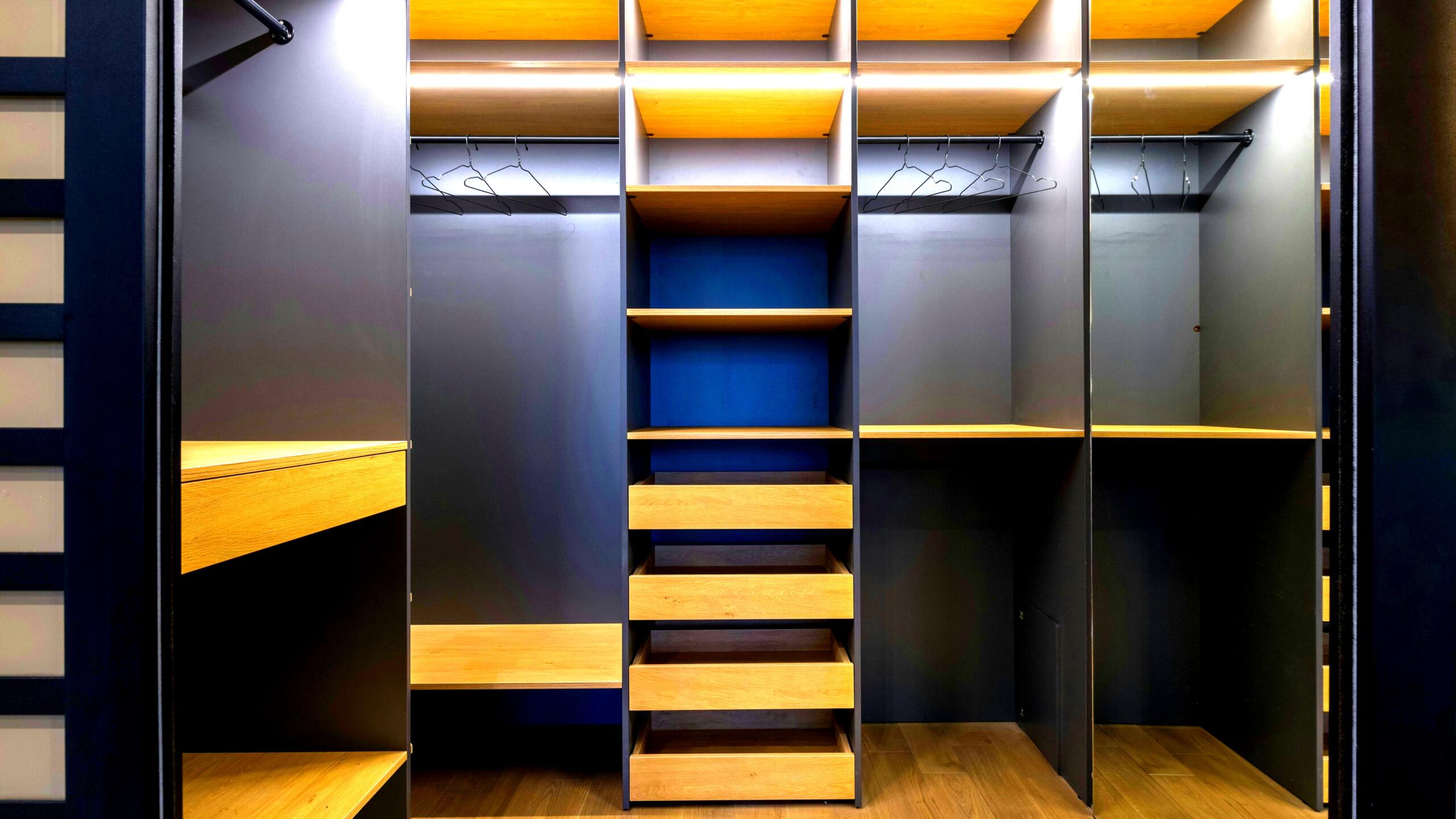
Home organization systems often fail for four reasons: they are not convenient, are too complicated, are used differently than planned, or there is too much stuff. To build lasting systems, diagnose which failure point applies if your system breaks down, then adjust accordingly. The Container Store offers sales to help acquire solutions. Home organization systems are structured methods for storing and managing household items that rely on convenient access, simplicity, consistent use, and controlled volume to remain effective.
Is Your Home Organization System Convenient?
Organizational systems fail because they are not convenient. A system becomes convenient when frequently used items are immediately accessible without opening multiple containers, bending deeply, or moving other things out of the way. Kelley Nan demonstrates this principle throughout her home, starting under the kitchen sink.
Even though her sink sits in a deep corner position with pipes and a large disposal, she keeps daily cleaning essentials at her fingertips using clear bins from The Home Edit Cube, a 12-inch turntable found on Amazon for under $10, and chrome risers. Within that cabinet, a clear handled bin with dividers holds tools, a narrow bin with a handle cutout stores scrubbers, and an OXO Pop canister encloses sponges. She also deploys amber glass spray bottles (set of 2), a bamboo handle scrub brush (set of 2), a dye-free Scrub Daddy, gloves, and magnetic child locks for safety. The bins are stacked so daily towels rest on top and less used items below.
In the pantry, Kelley Nan’s design has remained virtually untouched for years because it prioritizes ease. Water hyacinth bins in various sizes corral loose items; expand-a-shelf can risers, used since her last home a decade ago, create tiered visibility; OXO slant pop jars seal dry goods; and turntables spin in corners. A label maker and velcro cable wrap ties keep everything identifiable and tidy.
For spices, an expandable spice jar riser elevates jars at the back, while a 10-inch lazy susan dedicated to steak seasonings ensures quick access. The refrigerator follows the same logic: a 10-inch lazy susan, a reversible beverage mat, a handle bin, a lidded egg crate, a salad spinner, a stackable wine holder, and narrow bins assign every item a designated, easy-to-reach spot. In the bathroom vanity, a 9-inch turntable (set of 2) brings toiletries forward without rummaging.
Have You Made Your System Too Complicated?
Maintaining organization requires a few minutes each day, and that is only possible when the system is simple enough to reset quickly. Kelley Nan notes that none of her systems are difficult to maintain. She relies on modular, adjustable products that eliminate fumbling.
In drawers throughout her home, adjustable bamboo drawer dividers (set of 4) create flexible compartments for flatware, while a 7-slot and 14-slot in-drawer knife storage secures blades safely. Bamboo kitchen dividers (4 pieces) and bamboo plastic bag organizers (4 pc set) tame kitchen drawers, and reusable silicone Stasher bags replace bulky boxes. Pot holders (set of 2) and a potato masher nest neatly within the same dividers.
A label maker is used consistently to eliminate guesswork, and labels are made in Canva, Microsoft Word, Cricut, or Silhouette, ensuring every family member knows where items belong. The Home Edit Six-Piece Kitchen Drawer Organization System corrals utensils, while The Home Edit 10-pc Plastic Modular Storage System—often available on sale—organizes bathroom vanities, the office, and the kitchen baking drawer. In that baking drawer, a silicone spatula set (3 pcs), measuring cups (4 pc set), magnetic measuring spoons (8 pc set), and small shape cutters (9 pc set) stay sorted. Glass Food Container Storage Sets (18 pieces), which are microwavable, freezable, and oven-safe with interchangeable lids, live on a double decker slide-out drawer for easy retrieval.
For non-kitchen areas, an Expandable Bamboo Drawer Organizer and Shallow Drawer Organizers manage flatware; a Divided Bin with Handle appears in the office, guest bathroom, and under the kitchen sink. The handle version has been out of stock, so the divided version without handle is a current alternative. Puzzles stay contained in a rattan basket with zipper pouches (pack of 24), a bin label clip, and the label maker.
In the office cabinets, storage bins (pack of 12), a document storage box, a teardrop vase, and updated cabinet pulls maintain a clutter-free workspace. A battery storage case and pouch for spare batteries (21-piece set) prevent chaotic drawers, and a facial steamer has a designated spot in the bathroom vanity. By selecting easy-to-reset products and labeling everything, complexity dissolves into a five-minute daily tidy.
Does Your System Match How You Actually Use It?
Aligning a home organization system with daily habits begins by observing how your household naturally moves through spaces. The author, who lives in Pittsburgh, Pennsylvania, prioritizes placement based on use frequency. After decluttering kitchen supplies—removing multiples, unused items, and gadgets with alternatives—items used most often are placed within easy reach; sporadic-use pieces go higher. The refrigerator is counter-depth, and its shelves are adjusted based on contents, so bins for specific food types never force awkward stacking.
For the pantry, ALGOT shelving (now BOAXEL) from IKEA supports baskets, risers, and labeled storage containers so that no item hides behind another. The author, sharing one closet in the primary bedroom with their partner Donnie, applied the KonMari method to clothes, decluttering everything not loved and organizing the remainder by type using a filing method for folded items. Hand-me-downs for their two boys are organized using plastic drawers with a labeling system.
A mini-mudroom on the main level holds go-to coats, while other coats live in a basement nook beside the family’s most-used door; a bin for gloves and hats sits in that same nook. In the office, open shelving and storage baskets corral craft and office supplies, drawers hold small items like paper clips, hole punches, and sticky notes, and the closet stores craft supplies and extra pillows. Under the primary bathroom sink, small plastic drawers hold toiletries; under the guest bathroom sink, various bins keep toiletries accessible. By placing items where they are naturally used, the system bends to behavior instead of demanding behavior change.
Is Too Much Stuff Sabotaging Your Efforts?
If there is too much stuff, no organizer can help maintain organization. This is the hardest failure point to accept because it requires editing, not purchasing. Before organizing paperwork, declutter first; sort piles before buying folders, storage containers, or labels. Kelley Nan emphasizes that editing down items and being mindful of what is brought in helps maintain organization.
The author’s household tackles volume aggressively: Donnie is in charge of scanning incoming paperwork, digital filing is done using Evernote, and paper originals are discarded after scanning. Their children bring home a lot of paper from school, so a dedicated system minimizes clutter by displaying proud pieces temporarily and saving only absolute favorites. A shared Google calendar organizes the schedule, with both Donnie and the author adding appointments from phones and computers. For receipts, an accordion file is used, with a new one bought at the start of each year.
Seasonal decor lives in labeled bins in the basement and is decluttered regularly. Toys are organized with frequent decluttering; labeled bins hold smaller toys, and large toys must fit on open shelves. When new toys arrive, old ones leave.
Before buying organizational systems, the author shops their own house first, and dollar stores often have inexpensive containers and bins. Money from selling decluttered items can be reinvested in smart organization. The author’s library of printables for lists and projects further reduces physical clutter by keeping plans digital. This approach proves that controlling inflow is the true foundation of long-term order.
How Do You Diagnose and Fix Your Home Organization System?
Being intentional frequently prevents clutter buildup. Diagnose the failure by asking four questions: Is the system convenient? Is it simple?
Does it match your usage? Is there too much stuff? Once you identify the root cause, apply targeted fixes.
For convenience, reposition everyday items within arm’s reach and use turntables and risers. For complexity, replace intricate layouts with modular, labeled bins and simple drawer dividers. For mismatch, rezone based on where you naturally drop and use items—not where they “should” go. For volume, declutter ruthlessly and digitize what you can before adding storage.
When it’s time to invest in tools, The Container Store offers frequent sales that make solutions affordable. Its Memorial Day Sale runs May 15 to May 25, 2026, giving 30% off regular-priced items (exclusions apply for Bed Bath & Beyond, Avera, gift cards, services, and brands listed at www.containerstore.com/exclusions2; the offer cannot be combined with other discounts and has no cash value). On select items, discounts reach up to 70% off while supplies last.
The sale includes 30% off all Elfa products, including Elfa Garage+ for garage organization, and 30% off new Preston finishes and hardware, with free design consultations available. The Container Store offers four ways to work with a closet expert: in-store, appointment, virtual, and in-home design. It is also clearing shelves of Bed Bath & Beyond products with great deals, so early shopping yields the best selection.
Strong systems, like the one Kelley Nan maintains with Cutco Super Shears and her specific knife set—a Tomato Knife, 7″ Slim Chef’s Knife, 4″ Paring Knife, 8″ Chef’s Knife, and Steak Knives—last only if you spend a few minutes each day resetting. Diagnose often, resist accumulating excess, and your clutter-free home will endure.
FAQ
Q: What are the four common reasons home organization systems fail?
A: According to Kelley Nan, systems fail because they are not convenient, are too complicated, are used differently than planned, or there is too much stuff. Q: How can I make my home organization system more convenient?
A: Place frequently used items within easy reach, use turntables and risers to access back-of-shelf items, and store daily-use tools (like cleaning supplies under the sink) in clear, accessible bins.
Q: What is the best way to declutter before organizing?
A: Start by editing down items you no longer need, then sort and categorize before buying any containers. Shop your own house first, and be mindful of what you bring in.
Q: Does The Container Store have sales on organization products?
A: Yes, The Container Store holds annual sales like Memorial Day (30% off regular prices) and clearance events up to 70% off. They also offer free design consultations.