May is the decisive month for clematis vines. Miss the window for key care tasks and the season slips away before you catch up. The decisions you make in these few weeks set the stage for everything that follows. Good clematis care may seem like a long list, but most of these small jobs take under an hour and deliver results that last for months. The vine moves fast during this period, sometimes extending several inches each week under favorable conditions. Paying attention now prevents minor issues from becoming major frustrations later.
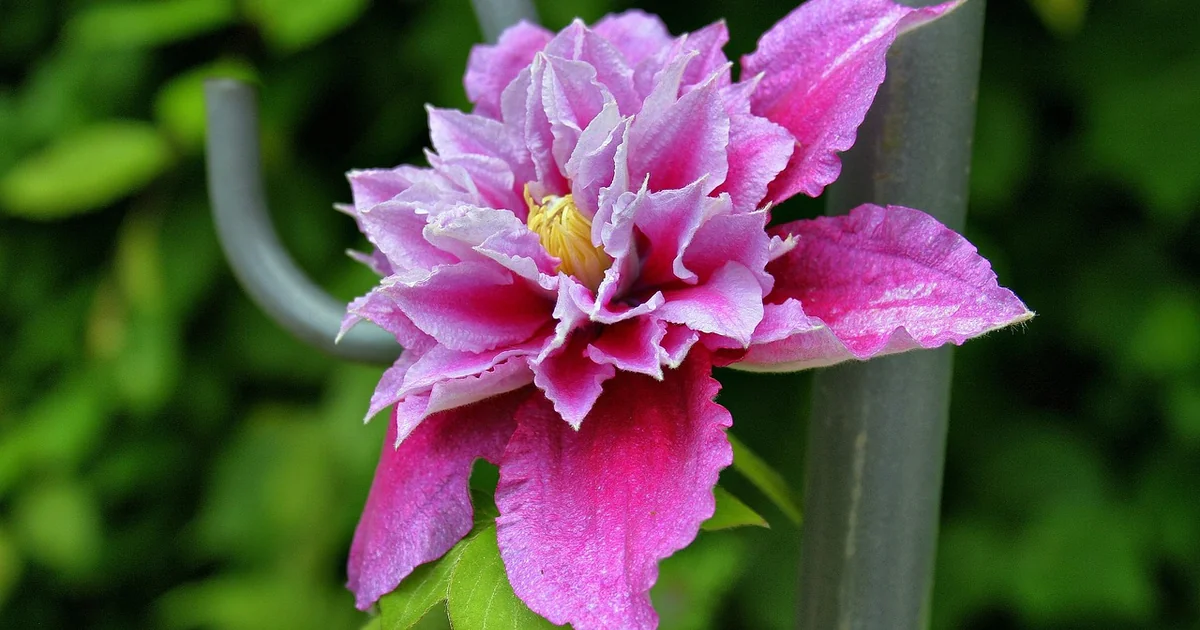
Why Pruning Clematis at the Wrong Time Costs You Blooms
Clematis has a reputation for being temperamental, but most of the difficulty comes down to timing. Pruning is where timing matters most. Cut at the wrong moment and you remove the stems that carried your flowers. The plant survives, but the display vanishes for the rest of the year.
Check Your Pruning Group First
Not all clematis get pruned the same way. Some varieties bloom on last year’s wood, meaning the buds formed the previous summer and survived through winter. Cut those stems in spring and you cut away every potential flower. Other types bloom on new growth produced during the current season. Those vines want a hard cut in late winter or early spring to encourage strong new stems. A third group does a bit of both, producing an early flush on old wood and a later round on new shoots.
By May the vine usually makes its habit obvious. Stems already loaded with fat buds tell you to keep your hands off. New growth pushing straight up from the base, with no old stems showing signs of life, points toward a harder cut. If you do not know your pruning group, wait and watch. Let the plant reveal its pattern before you touch anything. A single season spent observing is better than a season of missed blooms from guesswork.
For gardeners who inherited a clematis from a previous homeowner or lost the plant tag, this can feel frustrating. The vine might be tangled and overgrown. Resist the urge to clean it up in May. Let it flower first. After the blooms fade, you can trace the stems and figure out what type you have. Next year you will know exactly when and where to cut.
What a Clematis Needs for Peak May Growth
May growth is hungry growth. A clematis pushing out new vines and building toward bloom draws heavily on whatever is available in the soil. A garden bed that has been planted in the same spot for a few years may not have much left to offer. Without the right fuel, the vine produces thin stems and sparse flowers.
Feed with a Balanced Fertilizer
A slow-release granular fertilizer worked into the soil around the base, kept about six inches away from the main stem, feeds the plant steadily over several weeks. This approach mimics how clematis takes up nutrients in nature, drawing from a consistent supply rather than sudden spikes. The slow-release format reduces the chance of burning sensitive surface roots.
Amazon US Verified
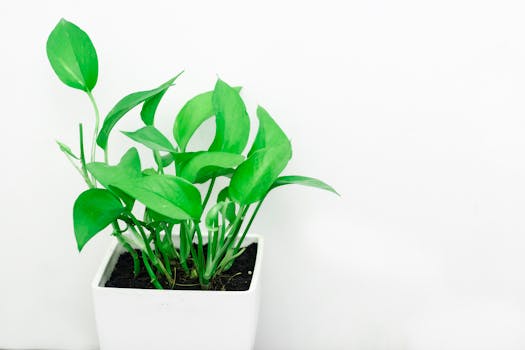
Organic Perlite Horticultural Soil Conditioner
Lightweight volcanic mineral that improves root aeration and prevents compaction.
Gardeners who prefer a more hands-on schedule can use a balanced liquid fertilizer instead. Applied every two to three weeks through the growing season, liquid feeding fills gaps without overwhelming the root zone in a single dose. The key is consistency. A single feeding in May and then nothing until August produces a weak midsummer flush. Regular small meals work better than one large feast.
Pay attention to the soil condition as well. If the ground around your clematis stays soggy or forms a crust after rain, nutrients cannot reach the roots effectively. Loosen the top layer gently with a hand fork before applying fertilizer. Take care not to disturb the shallow roots underneath. A light scratch across the surface is enough to break any crust and let water and nutrients move down.
What about organic options? Compost worked into the top inch of soil in early May adds both structure and nutrients. Worm castings mixed into the mulch layer also provide a gentle release over time. Whatever you choose, apply it before the vine puts out its full canopy of leaves. Once the foliage thickens, reaching the base becomes awkward and you risk snapping stems.
Amazon US Verified
Self-Watering Planters with Drainage Aerators
Elevated reservoir design that prevents soggy roots and ensures steady hydration.
How to Prevent Clematis Stems from Tangling
Unlike some vines that grip surfaces directly with adhesive pads or aerial roots, clematis climbs by wrapping its leaf stalks around whatever is close by. This mechanical grip works well on thin supports like twine, wire, or narrow trellis slats. Anything too thick to wrap simply gets ignored, and the stem falls away or wanders sideways into neighboring plants.
Train and Tie New Growth Weekly
New stems left to wander in May tend to tangle badly by June. Untangling them without snapping anything becomes a real project that often ends with broken growth. The better approach is a few minutes each week during peak growth season to redirect young stems where you want them to go.
Soft garden twine works well for this job. Plant ties that come in a range of widths also hold stems without cutting into them as they thicken. Check the ties every couple of weeks and loosen any that feel tight. A stem that doubles in diameter over a month can strangle itself against a fixed knot.
Start at the base and work upward. Gently coil each new stem around the support in a spiral pattern. Clematis vines climb naturally this way, so you are simply guiding what the plant already wants to do. If a stem resists bending, do not force it. Leave it for a few days and try again when the tissue has softened slightly with growth.
For clematis grown on a trellis against a wall or fence, fan the stems outward to cover the structure evenly. A single vine left to bundle in one spot produces a dense tangle on that side and bare patches everywhere else. Spreading the stems each week during May creates a fuller, more balanced display by mid-summer.
One practical tip: carry a small ball of twine in your pocket when you walk the garden. Spot a wandering stem, tie it in ten seconds, and move on. The job becomes a habit rather than a chore when the tools are always in hand.
Why Clematis Roots Need Mulch in May
Clematis roots sit close to the surface and have very little tolerance for heat or extended dry spells. The plant wants cool, moist feet even while its head basks in full sun. May is when ground temperatures start climbing, and shallow roots feel the difference quickly.
Protect the Root Zone with a Thick Layer
A two to three inch layer of mulch applied around the base in early May does several jobs at once. It keeps soil moisture more even between waterings, preventing the rapid drying that stresses shallow roots. It shades the ground, keeping the root zone cooler during warm afternoons. And it still allows air movement around the crown, reducing the risk of rot at the soil line.
Shredded bark or wood chips both work fine for this purpose. Pull the mulch back three or four inches from the main stem itself to avoid trapping moisture against the bark. The crown needs airflow. Piling mulch right against it invites fungal issues that no amount of spraying can fix.
You may also enjoy reading: Quince Best-Selling Linen Duvet Cover Back in Stock.
Watering young clematis in their first or second year requires special attention in May. Consistent moisture makes all the difference for a developing root system. Roughly an inch of water per week is a solid starting point. A soaker hose or drip line placed along the base of the plant delivers water directly to the root zone without wetting the foliage. Wet leaves in warm weather create ideal conditions for disease. Keeping the leaves dry while the roots get what they need is the best approach.
Amazon US Verified
Digital 3-in-1 Soil Moisture & pH Meter
Accurate probe to test deep root zone moisture and prevent accidental overwatering.
Check the moisture level under the mulch by pushing a finger into the soil. If it feels dry an inch down, it is time to water. If it feels damp, wait another day or two. Overwatering in clay soil can drown the shallow roots just as surely as drought in sandy soil. Adjust frequency based on your local weather and soil type rather than a fixed calendar schedule.
Is Clematis Wilt a Death Sentence?
Clematis wilt, caused by the fungus Ascochyta clematidina, can shock even experienced gardeners. A stem that looks completely healthy in the morning may collapse and turn black by late afternoon. The speed of the damage makes it feel catastrophic. But the plant itself is almost never doomed.
Scout for Clematis Wilt Early and Act Quickly
The fungal infection thrives in the conditions that May often delivers: mild days paired with cool nights and lingering moisture on leaves. The fungus enters through small wounds or natural openings in the stem and spreads rapidly up the vascular tissue. That is why one stem can collapse while the rest of the vine looks fine.
If you spot a stem that has wilted suddenly, acting fast limits the damage. Cut the affected stem back to healthy tissue, ideally at a point where you see green pith inside the stem rather than brown or black discoloration. Dispose of the removed material in the trash, not the compost pile, so the fungus does not spread through your garden.
Wilt almost never kills the plant. The roots survive, and new shoots push up from below the damage within weeks. Many gardeners who panic and dig up a wilted clematis find that they threw away a perfectly healthy root system. Patience matters here. Remove the damaged growth, keep watering consistently, and wait. New shoots usually appear before you expect them.
To reduce the risk of wilt in future seasons, plant clematis deep. Bury the crown two to three inches below the soil surface. This encourages the plant to produce multiple shoots from below ground, so even if one stem succumbs to wilt, others emerge independently. Deep planting is the single most effective preventative measure against clematis wilt.
Good airflow around the base and lower stems also helps. If your clematis grows in a crowded bed with dense perennials packed around its feet, consider thinning those neighbors in spring to let air move freely. Fungus struggles to establish when surfaces dry quickly after rain.
Frequently Asked Questions
How do I figure out which pruning group my clematis belongs to?
The simplest method is to observe when it flowers. If it blooms before midsummer on stems that look woody and older, it likely belongs to Group 1 or Group 2 and blooms on old wood. If it flowers from midsummer onward on fresh green stems, it belongs to Group 3 and blooms on new growth. A garden center or reputable plant database can confirm once you know the variety name or flower timing.
Can I use grass clippings as mulch for clematis in May?
Fresh grass clippings are not ideal because they mat down, trap moisture against the crown, and generate heat as they decompose. If you have only grass clippings available, dry them out for a few days first and apply a thin layer no deeper than one inch. Shredded bark or wood chips remain better choices for consistent moisture control and airflow.
How long does it take for a new clematis vine to produce a full display?
Most clematis varieties take two to three years to establish a root system large enough to support a substantial show of flowers. The first year the vine puts energy into roots and basic structure. The second year you may see a handful of blooms. By the third year, with consistent May care including feeding, training, mulching, and monitoring for wilt, the plant usually reaches its mature potential.
May gives you a small window to shape the entire clematis season. A few focused tasks, done at the right moment, reward you with strong vines and generous flowers. The work is not complicated. It just needs to happen now.
As an Amazon Associate, azuloz.com earns from qualifying purchases.