
If you are raising more than one child, you have almost certainly experienced the exhausting background soundtrack of modern family life: the sudden shriek from the playroom, the furious accusations over who touched whose Lego creation, the tears over the green cereal bowl, and the desperate plea for you to intervene as supreme judge and jury.
For generations, parenting culture has treated sibling conflict as an unfortunate failure of harmony—a stressful behavioral flaw that parents must police, referee, and eliminate at all costs. Parents worry that frequent bickering signals deep-seated resentment or predicts strained adult relationships.
Yet over four decades of groundbreaking developmental psychology, led by pioneering Cambridge University researcher Professor Judy Dunn, reveals a startling, counter-intuitive truth: everyday sibling conflict is not a domestic dysfunction. It is “the first society”—a high-intensity cognitive and emotional training ground that accelerates a child’s social intelligence, builds Theory of Mind (ToM), and equips them with the exact negotiation skills required for lifelong adult success.
The Pioneer Behind the Science: Judy Dunn and “The First Society”
Until the late 1980s, developmental psychology focused almost exclusively on the vertical parent-child relationship. Theorists assumed that children learned empathy, moral reasoning, and communication primarily by observing and interacting with adults.
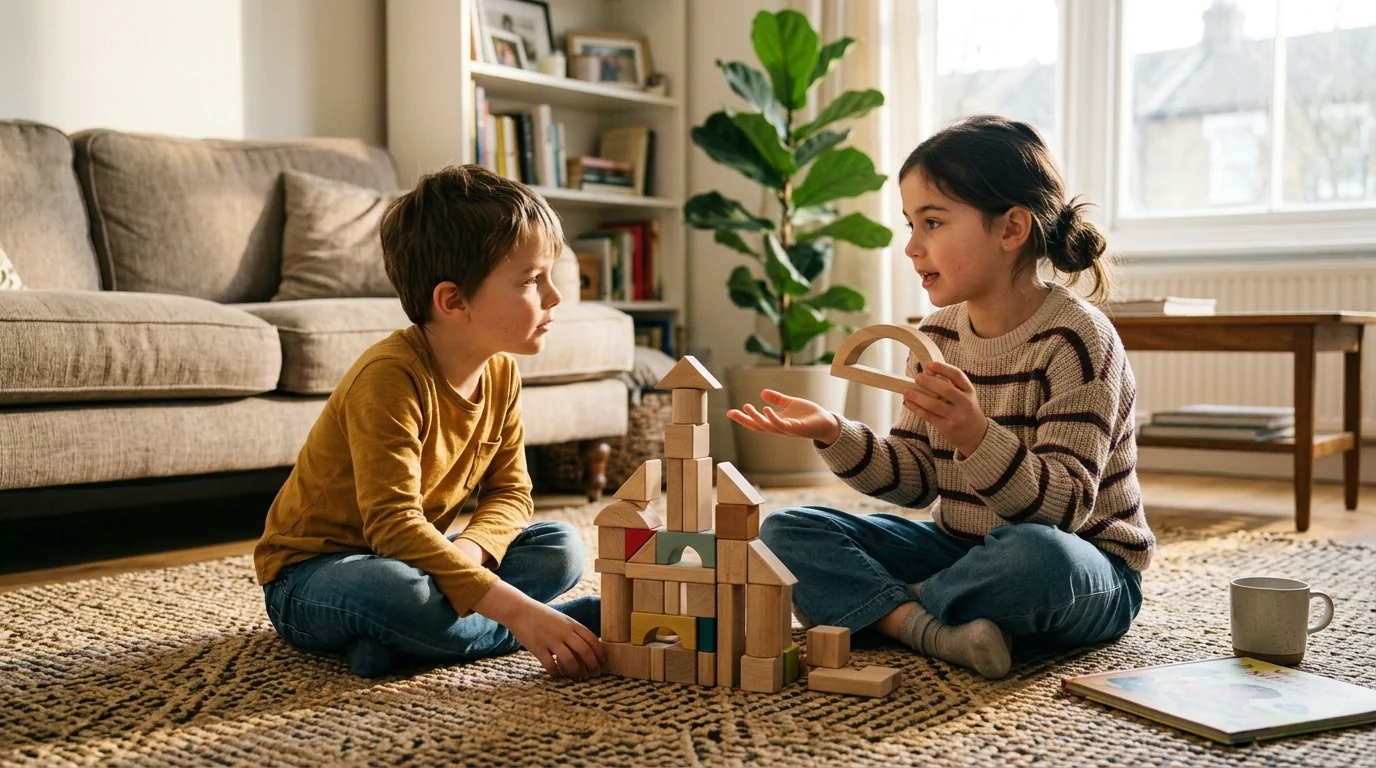
Dr. Judy Dunn revolutionized this framework by placing naturalistic recording equipment inside ordinary family homes, observing how young siblings interacted when parents were out of earshot. What she observed was an astonishing density of social friction: toddlers and preschoolers engage in uninhibited conflicts an average of six to eight times every single hour.
Crucially, Dunn observed that sibling relationships possess a unique structural dynamic found nowhere else in human life: **unconditional continuity**. When children argue with school peers on the playground, the peer can walk away or dissolve the friendship. But a sibling cannot walk away. They will share the dinner table that evening, ride in the same backseat tomorrow, and wake up under the same roof for eighteen years.
Because the relationship is permanent, children feel uniquely safe to express raw, unfiltered emotion without fearing complete social abandonment. This emotional security transforms daily friction from a destructive event into a dynamic laboratory where children test social boundaries, experiment with power dynamics, and learn the physics of human relationships.
Theory of Mind: How Sibling Arguments Build Brain Architecture
In developmental neuroscience, one of the most critical developmental milestones is the acquisition of **Theory of Mind (ToM)**—the cognitive ability to understand that other people possess private thoughts, desires, beliefs, perspectives, and emotional states that are entirely different from one’s own.
A child without Theory of Mind assumes that if they love strawberries, everyone loves strawberries; if they are angry, the other person is objectively bad. Children who develop advanced Theory of Mind score significantly higher on measures of social competence, make friends more easily, excel in reading comprehension, and show superior conflict resolution skills in adulthood.
Dunn’s research, alongside landmark studies from the University of Toronto, discovered that children with siblings develop Theory of Mind significantly earlier than singletons. The engine driving this accelerated development is not peaceful cooperation—it is **active, verbal conflict**.
Consider what a child must mentally execute during a sibling dispute over a toy:
- Mental State Decoding: To deceive, tease, negotiate, or outsmart a brother or sister, a child must accurately gauge what the sibling is thinking and planning: “If I hide the blue car behind the pillow, he won’t see it, but if I offer him the red truck, he might take the trade.”
- Internal State Language: During arguments, siblings use sophisticated “other-oriented” psychological vocabulary at rates four times higher than during play with parents: “You did that on purpose!” or “She is only crying to get you mad at me!” They are actively analyzing intentionality and emotional causality.
- Perspective-Taking Under Pressure: Children learn that physical aggression rarely works long-term because it invites retaliation or parental intervention. To get what they want, they are forced to invent rhetorical justifications, appeal to universal household rules, and offer diplomatic compromises.
The Hidden Hazard of the Parental Referee
Here is where well-meaning modern parents unintentionally sabotage their children’s social development: **over-refereeing**.
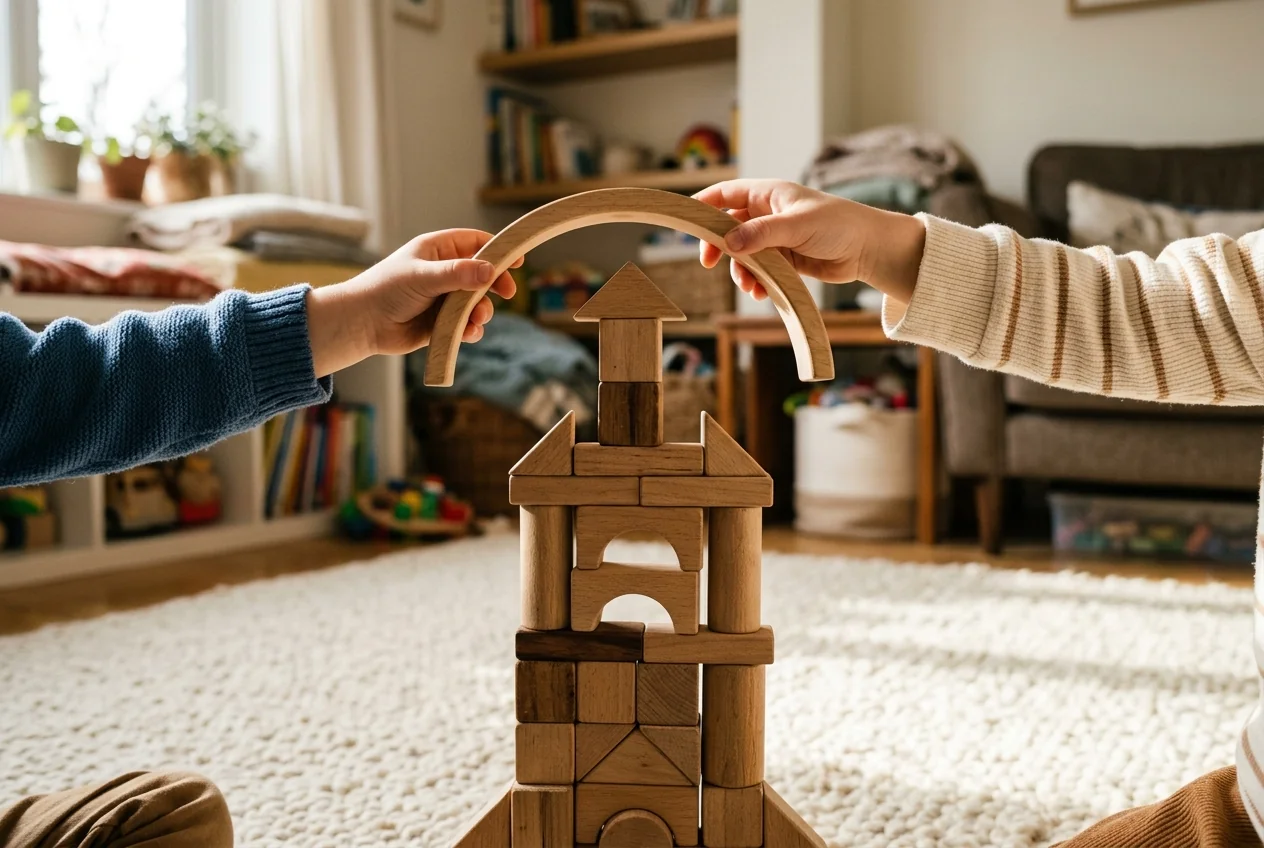
When an argument breaks out and an adult rushes in like a whistle-blowing referee to determine who had the toy first, assign blame, and hand down a verdict, the learning process instantly short-circuits. The children stop looking at each other and turn their faces toward the parent, competing for victim status and parental validation. The cognitive challenge of reading a peer’s mind, managing uncomfortable tension, and forging a mutual compromise is completely outsourced to the adult.
Children who grow up with constant parental adjudication miss out on hundreds of hours of organic negotiation practice. When they encounter workplace friction or marital disagreements in adulthood, they struggle because there is no authority figure to step in and fix the problem for them.
The 3-Tier Parental Intervention Protocol
Stepping back does not mean ignoring bullying or allowing violence. It means adopting a structured, three-tier framework that knows when to stay silent, when to coach, and when to intervene:
Level 1: Low-Heat Bickering (Action: Complete Inaction)
If children are grumbling, trading verbal barbs, negotiating trades, or engaging in minor bickering without physical danger or cruel humiliation, **do not say a word**. Stay in the adjacent room and listen. Give them the space and silence required to work through the friction on their own. In over 70 percent of cases, children will find a clumsy, self-generated solution within two minutes.
Level 2: The Heated Deadlock (Action: Coach the Process, Not the Outcome)
When voices escalate to shouting, tears flow, and both children are locked in stubborn refusal, step into the room as a calm mediator rather than a judge. Follow this three-step coaching script:
- Narrate the Facts Neutrally: “I see two very frustrated kids who both want to use the magnet tiles right now.” (Do not ask “Who started it?”—that only fuels defensiveness).
- Reflect Both Perspectives: Turn to Child A: “You were building a garage and needed the square pieces.” Turn to Child B: “And you wanted to make a castle wall.” (This models Theory of Mind aloud).
- Throw the Problem Back to Them: “This is a tough problem. What can the two of you do so you can both keep playing? I’ll be in the kitchen when you have an idea.”
Level 3: Physical Harm or Chronic Contempt (Action: Immediate Safety Separation)
If a child hits, kicks, bites, or uses abusive, degrading language, intervene instantly. Separate the children physically to ensure safety. Address the behavior firmly without shaming: “Hands are not for hitting. My job is to keep everyone in this house safe. We are taking a five-minute body break until everyone is calm.” Debrief the conflict only after adrenaline has cleared their bloodstreams.
📥 Free Download: Sibling Conflict Parental Intervention Guide
Judy Dunn’s Theory of Mind coaching protocol: when to step back, what to say, and how to build lifelong conflict skills.
The Lifelong Gift of Sibling Friction
The next time you hear an argument brewing in the living room, resist the instinctive urge to despair. Take a slow, grounding breath and remind yourself of the neuroscience at play.
Your children are not failing at family life; they are actively attending the most rigorous, hands-on social intelligence masterclass on the planet. By stepping out of the referee’s chair and giving them the space to negotiate, you give them the confidence, empathy, and diplomatic grit they will carry into every relationship for the rest of their lives.