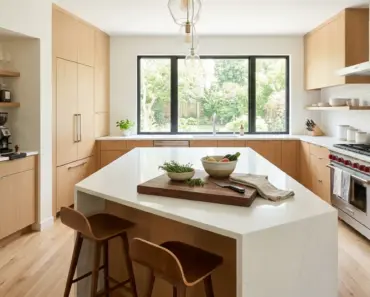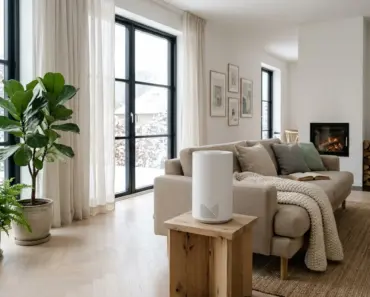

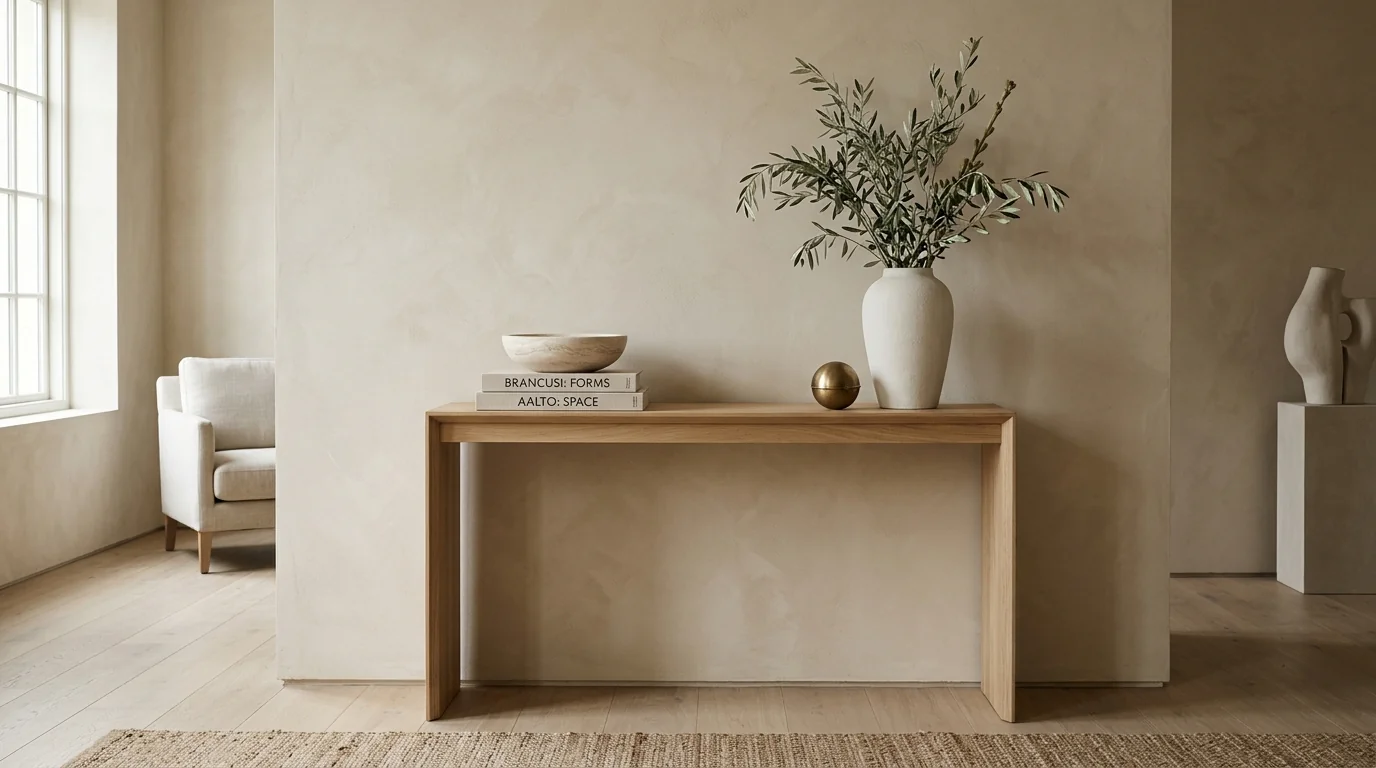
Walk into almost any well-meaning homeowner’s living room, and you will encounter a curious visual paralysis: three identical white ceramic vases marched in a straight, equidistant row across an oak console table; three matching green throw pillows propped stiffly in a row across a neutral sofa; or three framed photographic prints spaced exactly two inches apart on an accent wall. The homeowner has dutifully followed the design world’s most ubiquitous soundbite—”The Rule of Threes”—yet the space feels static, corporate, and oddly uninviting.
The problem is not the number three; the problem is how the rule has been misunderstood and reduced to mere counting. In high-end architectural styling and perceptual cognitive psychology, true visual harmony is never achieved by assembling a trio of matching clones. It is achieved through asymmetrical ocular triangulation—a subtle manipulation of human saccadic eye movement that balances contrasting volumes, varying elevations, and tactile material weights to create a dynamic, living spatial rhythm.
The Neuroscience of Saccadic Vision: Why Even Numbers Create Visual Boredom
To understand why odd-number groupings captivate the human brain while even-number groupings breed restlessness, you must examine how your visual cortex decodes an environment. When you glance at a vignette—whether a styled credenza, an open kitchen shelf, or a mantelpiece—your eyes do not glide smoothly like a cinema camera. They make rapid, unconscious ballistic jumps known as saccades, darting from one visual anchor to another in fractions of a second.
When your gaze encounters a pair of identical candleholders or an even group of four matched books, your brain’s pattern-recognition network immediately seeks symmetry. Symmetrical pairings divide the visual field in half, encouraging the mind to quickly “solve” the equation, register the objects as duplicate data, and move on. The visual journey terminates in less than two seconds, leaving the vignette feeling cold and institutional.
An odd grouping—specifically three elements—forces the visual cortex into active, prolonged cognitive engagement. Because three objects cannot be split evenly into mirrored halves, the brain cannot immediately resolve the arrangement into bilateral symmetry. Instead, your gaze is drawn into a continuous triangular journey, bouncing naturally between the dominant apex, the anchoring sub-dominant base, and the delicate counterweight. This perceptual loop keeps the eye moving gracefully through the vignette, generating a palpable sensation of visual energy, depth, and organic calm.
“Symmetry is static; it tells the human brain that the puzzle is already solved. Asymmetry in odd numbers creates dynamic equilibrium—an ongoing ocular conversation that makes a room feel effortlessly alive.”
The Triangular Anatomy: Apex, Anchor, and Counterweight
The fatal mistake of amateur decor styling is treating the three items as equals in height, girth, or material. When three objects share identical vertical scale, they form an aggressive horizontal bar that acts as a visual roadblock, cutting the room’s sightlines in half.
To execute professional asymmetrical grouping, you must structure your trio around the classical Scalene Triangle—where no two sides and no two angles are identical. Every successful three-part vignette relies on three distinct structural roles:
1. The Apex (The Dominant Height)
This is your vertical anchor—the tallest element in the composition that commands immediate visual hierarchy. It should establish between 55% and 65% of the total vertical height of the vignette. Exemplary apex elements include a tall, sculpted ceramic vessel holding architectural branches (such as dried olive stems or Japanese quince), a slender cast-iron table lamp with an unbleached linen shade, or a vertically oriented piece of framed abstract canvas leaning casually against the plaster wall.
2. The Anchor (The Sub-Dominant Mass)
Positioned to one side of the apex, the anchor provides grounding volume and horizontal breadth. It should stand at approximately half to two-thirds the height of the apex, but with greater physical or visual weight. Ideal anchors include a stack of two or three oversized linen-bound art monographs, an organic hand-turned bowl of travertine marble, or a low, textured terracotta vessel. The anchor stabilizes the composition, ensuring that the apex does not look precariously isolated.
3. The Counterweight (The Delicate Accent)
Placed opposite the anchor or slightly forward in the foreground plane, the counterweight completes the scalene triangle. It is the smallest element—measuring roughly one-third the height of the apex—yet it carries high tactile or reflective intrigue. This could be a solid brass sphere, a smooth river stone, a sculptural candle in an artisanal holder, or a small glass specimen dome. The counterweight introduces intimate human scale and pulls the viewer’s gaze into the third dimension.
The Materiality Triad: Balancing Gloss, Grain, and Plaster
Scale and height alone do not guarantee a compelling vignette. The second dimension of the ‘Rhythm of Threes’ is material textural tension. A composition built from three objects of varying height will still fall completely flat if all three objects share the exact same glossy white ceramic finish.
Master stylists utilize a three-part material formula that engages different tactile responses across the surface of the console or mantel:
- The Matte Absorbent (The Earth): Raw unglazed terracotta, limewashed ceramic, porous travertine, or chalky cast stone. This material swallows light, providing quiet depth and visual grounding.
- The Organic Fibrous (The Warmth): Natural weathered oak, solid walnut with exposed end-grain, hand-woven rattan, or thick raw linen book covers. This element introduces organic irregularities and natural warmth that humanize the vignette.
- The Specular Reflective (The Light): Brushed aged brass, blackened cold-rolled steel, smoked glass, or subtle mirror polish. This component catches ambient daylight and indoor lamp glow, introducing crisp sparkle and spatial liveliness.
By curating your trio with one Matte, one Fibrous, and one Reflective element, you ensure that the vignette catches the shifting light throughout the day, creating rich contrast that flat, monochrome styling can never achieve.
The Depth Plane: Moving Beyond the Flat 2D Horizon
Another classic symptom of the ‘Rhythm of Threes’ fallacy is the two-dimensional line. Many people arrange their three items in a straight row along the centerline of the table, as if staging objects on a grocery store shelf.
A sophisticated interior space exists in three dimensions; your styling must reflect this spatial depth through foreground-background overlap. When grouping your trio, stagger the objects on different depth planes:
- Background Layer (Z-Depth 1): Place your Apex slightly behind the visual center, leaning toward the back wall or mirror.
- Midground Layer (Z-Depth 2): Position your Anchor slightly forward and to the left or right, overlapping the visual edge of the Apex by 1 to 2 inches. This subtle visual overlap links the two elements into a cohesive perceptual unit rather than isolated islands.
- Foreground Layer (Z-Depth 3): Place your Counterweight toward the front edge of the surface, creating an asymmetrical diagonal path that leads the viewer’s eye inward from the room.
“When objects physically overlap in your field of view, the brain interprets them as an integrated narrative rather than a collection of random purchases. Overlap creates intimacy and architectural intention.”
📥 Free Download: Asymmetric Spatial Composition & Triangular Staging Worksheet
Visual neuroscience of saccadic scanning, scalene triangle ratios (Apex, Anchor, Counterweight), and tactile contrast rules for console and mantel staging.
Practical Staging Blueprints: Applying the Triad Room by Room
To translate these optical principles into everyday practice, explore how the asymmetrical triad functions across the most common styling challenges in your home:
1. The Living Room Credenza / Console Table
- Apex: A 24-inch tall textured matte stoneware vase filled with fresh, sprawling branches positioned off-center at the left third of the console.
- Anchor: Two heavy linen-bound architectural monographs laid flat at the right third, topped with a broad, shallow solid walnut tray.
- Counterweight: A small aged brass dome-shaped paperweight resting slightly forward and beside the book stack, bridging the center gap.
2. The Coffee Table Centerpiece
- Apex: A medium-height fluted glass vessel with a single sculptural stem.
- Anchor: A stacked pair of hardcover photography volumes creating a rectangular podium.
- Counterweight: A small ceramic dish holding fragrant Palo Santo wood or artisanal matches, nestled on the corner of the books.
3. The Open Kitchen Floating Shelf
- Apex: A tall, narrow vintage cutting board of oiled reclaimed French oak leaned vertically against the backsplash tile.
- Anchor: A sturdy stack of three matte white stoneware bowls placed in front of the board’s base.
- Counterweight: A small, hand-hammered copper salt cellar resting just to the side of the bowls.
The True Secret: Intentional Restraint
The ultimate power of the asymmetrical triad lies in its negative space. In design, the air surrounding an arrangement is just as critical as the objects themselves. When you master the scalene triangle of scale, material, and depth, you no longer feel the urge to clutter every square inch of your surfaces with knick-knacks.
Three thoughtfully curated, intentionally proportioned pieces can anchor an entire room, establishing a serene, sophisticated visual cadence that feels effortless, timeless, and authentically lived-in.