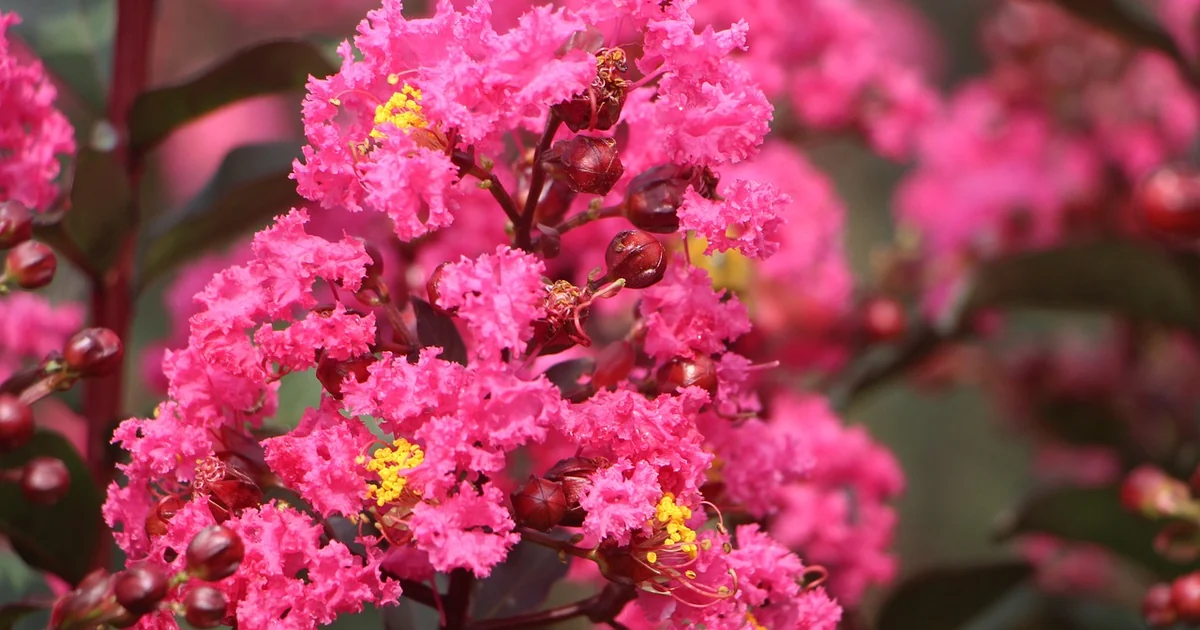
If you have ever driven through the southern United States in July, you have likely seen streets lined with clouds of pink, red, and white blossoms. That spectacle comes from the crape myrtle, a plant so beloved in warm climates that it earned the nickname “Lilac of the South.” While these trees look like they belong in a professional botanical garden, the truth is that anyone with a sunny spot and a bit of patience can succeed at growing crape myrtle. The key lies in understanding a few specific techniques that go beyond simply digging a hole and hoping for the best.
1. Choose the Right Cultivar for Your Space and Climate
One of the biggest mistakes new growers make is picking a crape myrtle based solely on flower color. A tree that reaches 25 feet tall will quickly overwhelm a small front yard. Conversely, a dwarf variety might look lost in a large, open lawn.
Match the mature size to your planting area
Crape myrtles come in three general size categories. Dwarf varieties stay under 4 feet tall. Semi-dwarf types reach between 4 and 10 feet. Standard trees can grow anywhere from 10 to 25 feet. In colder climates, such as zone 6, winter dieback naturally keeps the plant smaller, often around 6 to 10 feet. In warmer zones, like 8 or 9, the same tree can double in size. Always check the tag for the expected mature height in your specific hardiness zone.
Select powdery mildew-resistant hybrids
Humid summer air creates the perfect environment for powdery mildew, a fungal disease that coats leaves in a white, dusty film. Older varieties are highly susceptible. Modern hybrids offer strong resistance. Look for names like ‘Natchez’, which produces white flowers and grows about 20 feet tall. ‘Cherokee’ offers bright red blooms on a 10-foot frame. ‘Wichita’ delivers deep rose flowers and stays compact. These selections dramatically reduce the need for chemical sprays.

Amazon US Verified
Self-Watering Planters with Drainage Aerators
Elevated reservoir design that prevents soggy roots and ensures steady hydration.
Consider the bark and fall color
Many people focus only on the summer flowers. Yet a well-chosen crape myrtle provides interest across three seasons. The smooth, pinkish-gray bark peels in winter, creating a sculptural effect against snow or bare ground. The fall foliage turns shades of yellow, orange, and red. If you plant near a window or walkway, choose a variety with striking bark and autumn color to extend the visual payoff well beyond September.
2. Plant in Full Sun for Maximum Blooms
The single most important factor in growing crape myrtle successfully is sunlight. These plants are solar-powered machines. Without enough direct rays, they will produce more leaves than flowers.
Aim for at least six hours of direct sun
Crape myrtles can technically survive in partial shade. They will not, however, thrive there. A location that receives fewer than six hours of full, unfiltered sun each day will result in sparse blooms and a leggy, stretched appearance. The ideal spot offers eight or more hours of direct sunlight, especially during the morning and early afternoon.
Place in a south- or west-facing garden
Take advantage of your home’s microclimates. A south-facing wall absorbs heat during the day and releases it at night. This extra warmth encourages stronger growth and earlier blooming. In colder zones, this reflected heat can make the difference between a plant that survives winter and one that dies back to the ground. West-facing gardens also work well, as they capture the intense afternoon sun that crape myrtles crave.
Avoid shady corners near buildings or large trees
New gardeners often tuck a crape myrtle into a narrow side yard or under the canopy of a mature oak. This almost always leads to disappointment. The tree will stretch toward the light, becoming lopsided and weak. If your yard has limited sun, consider a dwarf variety that you can move in a large container to chase the sunlight across the patio.
3. Prepare the Soil and Water Correctly
Crape myrtles are remarkably adaptable to different soil types, but they have clear preferences. Getting the soil right at planting time sets the stage for a decade of healthy growth.
Test and adjust the pH
These plants perform best in slightly acidic soil, with a pH range between 5.0 and 6.5. Soil that is too alkaline can cause yellowing leaves and poor nutrient uptake. A simple home test kit costs about ten dollars. If your soil reads above 7.0, mix in granular sulfur or peat moss before planting. If it reads below 5.0, add garden lime to raise the pH.
Dig a wide hole, not a deep one
A common planting error is digging a hole that is too deep. Crape myrtle roots spread outward, not straight down. Dig a hole at least three times the width of the root ball. Keep the depth equal to the height of the root ball or slightly shallower. The crown of the root ball should sit even with or just above the surrounding soil level. Planting too deep invites root rot and suffocation.
Water deeply during the first season
During the first growing season, the root system is shallow and limited. Water deeply two to three times per week, depending on rainfall. A soaker hose works well. Run it for 60 to 200 minutes per week, adjusting for plant size and weather. The goal is to moisten the soil to a depth of at least 12 inches. Shallow, frequent sprinkling encourages roots to stay near the surface, which makes the plant vulnerable to drought.
Reduce watering once established
After the first year, crape myrtles become surprisingly drought-tolerant. Established trees need about one inch of water per week, either from rainfall or irrigation. Overwatering in subsequent years can lead to root problems and lush foliage at the expense of flowers. Let the top few inches of soil dry out between waterings.
Amazon US Verified
Digital 3-in-1 Soil Moisture & pH Meter
Accurate probe to test deep root zone moisture and prevent accidental overwatering.
4. Prune with Purpose (and Restraint)
Pruning crape myrtles has become a controversial topic among gardeners. The practice known as “crape murder” involves chopping the tree down to stubby trunks each winter. This weakens the plant over time and ruins its natural shape. Proper pruning is minimal and strategic.
Prune in late winter while the plant is dormant
The best time to prune is late winter, typically February or early March, before new growth begins. At this point, the branch structure is fully visible, and the tree is not actively bleeding sap. Avoid fall pruning, as it can stimulate new growth that will be killed by frost.
Remove the four Ds: dead, diseased, damaged, and crossing branches
Start by cutting out any branches that are clearly dead or diseased. Next, remove branches that rub against each other. The friction creates wounds that invite pests and disease. Finally, take out any suckers growing from the base of the trunk. These suckers drain energy from the main plant and rarely produce flowers.
Thin the canopy for air circulation
Good airflow is essential for preventing powdery mildew. Remove some of the smaller interior branches to open up the canopy. Aim for a vase-like shape, with several main trunks rising from the base and branching outward. Do not cut the top of the tree flat. This destroys the natural arching form and stimulates weak, spindly regrowth.
Avoid topping the tree
Topping, or cutting the main trunks back to the same height every year, creates a knobby, unnatural appearance. The new shoots that emerge are weakly attached and prone to breaking in wind. If your crape myrtle has outgrown its space, consider transplanting it or replacing it with a smaller cultivar rather than resorting to annual topping.
5. Fertilize Lightly and at the Right Time
Crape myrtles are not heavy feeders. In fact, overfertilizing can backfire spectacularly, producing a bushy plant with few flowers.
Use a balanced, slow-release fertilizer in early spring
Apply a fertilizer with an N-P-K ratio of 8-8-8 or 10-10-10 once in early spring, just as new leaves begin to emerge. Sprinkle the granules around the drip line of the tree, not against the trunk. Water it in thoroughly. This single application provides enough nutrients for the entire growing season.
Avoid high-nitrogen formulas
Fertilizers with high nitrogen content, such as those designed for lawn grass, push leaf growth at the expense of flowers. If your crape myrtle is producing abundant dark green leaves but few blooms, nitrogen overload is the likely culprit. Switch to a bloom-boosting formula with a lower first number, such as 5-10-10.
You may also enjoy reading: 5 Ways: Remove Stains from Quartz Countertops Without Damage.
Do not fertilize after mid-summer
Late-season fertilization encourages tender new growth that will not harden off before winter. This growth is easily killed by frost and can damage the entire tree. Stop all fertilization by July 1 in most climates.
6. Manage Pests and Diseases Before They Take Hold
Even the healthiest crape myrtles face occasional challenges. Powdery mildew and aphids are the two most common problems. Early detection makes treatment much simpler.
Prevent powdery mildew with spacing and airflow
Powdery mildew appears as a white, powdery coating on leaves and flower buds. It thrives in humid conditions with poor air circulation. Space your crape myrtles 6 to 12 feet apart for standard varieties, and 4 to 6 feet for dwarfs. Prune to open the canopy. If mildew appears despite these measures, apply a fungicide labeled for powdery mildew, following the instructions exactly. Baking soda sprays (1 teaspoon per quart of water) can also help in mild cases.
Control aphids with water or insecticidal soap
Aphids are small, soft-bodied insects that cluster on new growth and undersides of leaves. They excrete a sticky substance called honeydew, which attracts black sooty mold. A strong blast of water from a garden hose knocks aphids off effectively. For heavier infestations, spray with insecticidal soap or neem oil. Avoid broad-spectrum insecticides that kill beneficial insects like ladybugs and lacewings.
Watch for bark scale in recent years
Crape myrtle bark scale is a relatively new pest in the United States, first reported in Texas around 2004. It appears as white, waxy patches on the bark, resembling cottony masses. This scale insect weakens the tree by sucking sap. Horticultural oil applied during the dormant season can smother the eggs. Systemic insecticides are also effective but should be used sparingly to protect pollinators.
7. Plant in Containers for Flexibility
Not everyone has a spacious yard. Crape myrtles adapt surprisingly well to container life, especially the dwarf and semi-dwarf varieties. This opens up possibilities for patios, balconies, and small urban gardens.
Choose a large, heavy pot
Crape myrtles grow quickly and can become top-heavy. Select a container that holds at least 10 to 15 gallons of soil. Terracotta, ceramic, or thick plastic pots provide stability. Make sure the pot has drainage holes. Elevate it on pot feet to allow water to escape freely.
Use a high-quality potting mix
Garden soil is too heavy for containers. It compacts easily and suffocates roots. Use a well-draining potting mix designed for shrubs or trees. Mix in a slow-release fertilizer at planting time. Container plants need more frequent watering than in-ground plants, especially during hot summer months. Check the soil moisture daily by sticking your finger two inches into the mix.
Amazon US Verified
Organic Perlite Horticultural Soil Conditioner
Lightweight volcanic mineral that improves root aeration and prevents compaction.
Move containers to a sheltered spot in winter
In zones 6 and 7, container-grown crape myrtles need winter protection. The roots are less cold-hardy when exposed to freezing air on all sides. Move the pot to an unheated garage, basement, or against a south-facing wall. Wrap the pot in bubble wrap or burlap for extra insulation. Water sparingly during dormancy, just enough to keep the soil from drying out completely.
Frequently Asked Questions About Growing Crape Myrtle
When is the best time to plant crape myrtle?
Fall is the ideal planting time in most regions. The soil is still warm, which encourages root growth before winter. Spring planting also works well, especially in colder zones where fall-planted trees might heave out of the ground during freeze-thaw cycles.
Why is my crape myrtle not blooming?
The most common reason is insufficient sunlight. The tree needs at least six hours of direct sun daily. Other causes include overfertilizing with nitrogen, pruning too late in the season (which removes flower buds), or an unusually cold winter that killed the flower buds.
How fast does a crape myrtle grow?
Crape myrtles are fast growers. Under ideal conditions, they can add 2 to 3 feet of height per year. Dwarf varieties grow more slowly. The growth rate slows as the tree matures.
Can I grow crape myrtle in a cold climate like zone 5?
Zone 5 is marginal for most crape myrtles. The top growth will likely die back to the ground each winter. The roots, however, may survive if mulched heavily. The plant will regrow from the base each spring but will stay small and may not bloom until late summer. Planting against a warm, sunny wall improves the odds.
Should I remove the seed pods in winter?
Removing old seed pods is optional. It tidies the appearance and may encourage a second, lighter bloom in late summer. Many gardeners leave the pods for winter interest and bird food. The decision is purely aesthetic and does not affect the health of the tree.
Success with growing crape myrtle comes down to matching the right plant to the right place and then stepping back to let nature do most of the work. These trees reward patience with decades of reliable color, fascinating bark, and a graceful form that improves with age.
As an Amazon Associate, azuloz.com earns from qualifying purchases.