Why Hydroponic Gardening Works So Well
Growing plants without soil might sound like science fiction, but it is a practical and increasingly popular method for home gardeners. Hydroponic gardening delivers nutrients directly to plant roots through water, which speeds up growth and often produces healthier plants. The absence of soil also means fewer pest problems and no weeding. However, this approach requires careful attention to water quality, nutrient levels, and lighting. Many beginners find success with compact, fast-growing crops that adapt well to soilless systems. Below is a detailed hydroponic plants list featuring 21 excellent choices for indoor cultivation.
Understanding Hydroponic Systems
Before selecting plants, it helps to know the basic types of hydroponic setups. The most common systems include water culture, wick systems, ebb-and-flow, nutrient film technique (NFT), and aeroponics. Water culture systems suspend plant roots directly in nutrient solution, making them ideal for leafy greens. Wick systems use a passive wick to draw nutrients upward, which works well for smaller plants. Ebb-and-flow systems periodically flood and drain the growing tray, providing oxygen to roots. Each system has strengths, but most of the plants on this list thrive in water culture or wick setups.
Lighting is another critical factor. Most hydroponic systems include LED grow lights, but if you build your own, invest in full-spectrum lights that mimic natural sunlight. Plants need between 12 and 16 hours of light daily, depending on the species. Without adequate light, even the best nutrient solution will not produce vigorous growth.
21 Plants Perfect for Hydroponic Indoor Gardens
Unless noted otherwise, every crop on this hydroponic plants list is self-pollinating, meaning it will produce fruit indoors without hand-pollination. This makes them ideal for indoor setups where bees and wind are absent.
1. Lettuce
Lettuce is the undisputed champion of hydroponic gardening. It grows quickly, requires minimal space, and adapts to nearly any system. Butterhead varieties such as Bibb and Boston become especially tender when raised in water culture. For a continuous harvest, plant small amounts every two weeks. Lettuce matures in 25 to 60 days, depending on the type, and thrives under full to partial sun.
2. Spinach
Spinach prefers cooler conditions and struggles when temperatures exceed 75°F. It pairs well with other cool-season crops like kale. Use a water culture system for best results. Spinach reaches maturity in 28 to 55 days and grows 6 to 12 inches tall. Keep the nutrient solution cool to prevent bolting, which causes the leaves to turn bitter.
3. Kale
Kale has a large root system, which makes growing full-size plants in hydroponic systems challenging. A better approach is to grow kale as microgreens or harvest individual leaves as they mature. This way, you enjoy fresh greens without overwhelming your setup. Kale does best in water culture systems with full to partial sun and matures in 50 to 55 days.
4. Swiss Chard
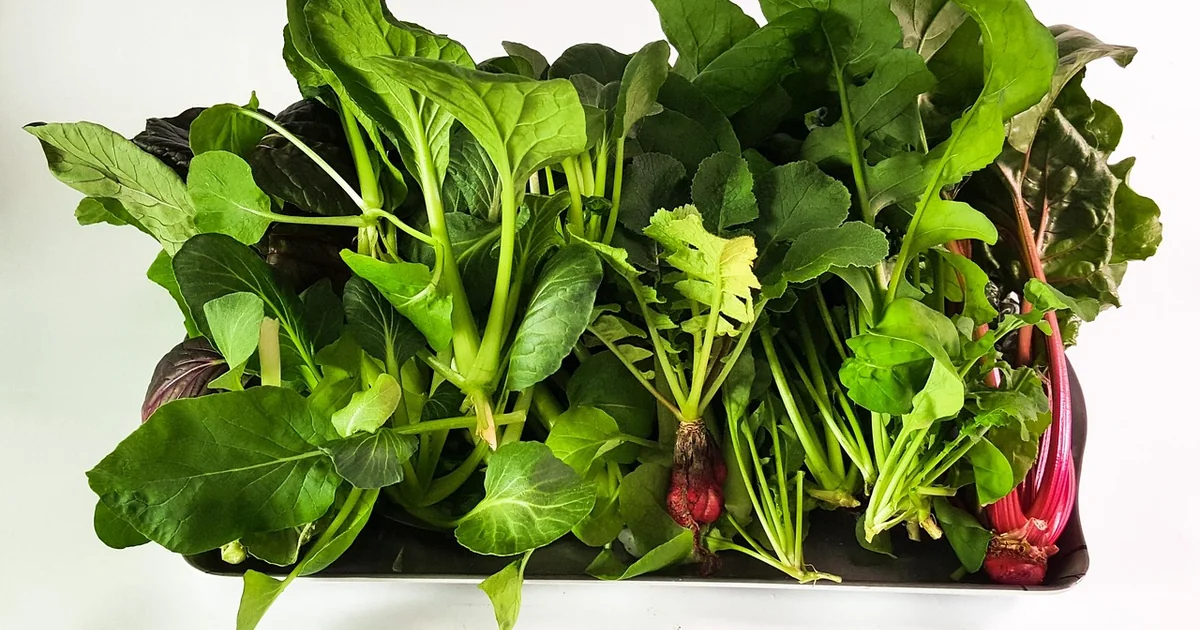
Swiss chard is a cut-and-come-again crop, meaning you can harvest outer leaves while the plant keeps producing. It prefers temperatures below 75°F, making it a good companion for spinach. Use a wick system or ebb-and-flow setup. Swiss chard reaches 18 to 24 inches tall and matures in 60 to 65 days.
5. Arugula
Arugula plants stay small and compact, which makes them perfect for hydroponic gardens. Harvest leaves as they grow and replant at regular intervals for a steady supply. Arugula matures in 40 to 45 days and thrives in water culture systems with full to partial sun.
6. Basil
From classic Genovese basil to Thai basil, all varieties perform well hydroponically. Basil demands lots of light, and you must adjust the height of grow lights as plants grow taller. It matures in 50 to 75 days, depending on the variety. Pinch off flower buds to encourage bushier growth and prolong the harvest.
7. Parsley
Parsley germinates slowly, often taking three to four weeks to sprout. Once established, it provides a constant supply of fresh leaves. Starting a new plant at least three times per year yields the best results. Parsley grows well in wick systems or water culture and matures in 70 to 90 days.
8. Cilantro
Cilantro grows quickly but has a short lifespan. You will need to replant every three to four weeks for an uninterrupted harvest. It prefers cooler temperatures and does well alongside spinach and Swiss chard. Cilantro matures in 50 to 55 days and thrives in water culture systems.
9. Mint
Mint is vigorous and can quickly take over a hydroponic system if not contained. Grow it in a separate container or use a wick system to control its spread. Mint prefers partial shade and matures in 60 to 90 days. Harvest leaves regularly to encourage new growth.
10. Chives
Chives are compact, perennial herbs that produce well in hydroponic gardens. They require full sun and mature in 60 to 80 days. Use a water culture system and harvest by cutting leaves at the base. Chives regrow quickly, providing multiple harvests from a single planting.
11. Oregano
Oregano is a low-growing herb that adapts well to hydroponic systems. It needs full sun and matures in 80 to 90 days. Use a wick system or ebb-and-flow setup. Oregano’s flavor intensifies after harvest, making it a favorite for dried herb storage.
12. Thyme
Thyme is another compact herb that thrives hydroponically. It prefers full sun and well-drained growing media like perlite or coconut coir. Thyme matures in 70 to 90 days. Harvest sprigs as needed, and the plant will continue producing for months.
13. Strawberries
Strawberries are one of the few fruiting plants that grow well in hydroponic systems. They require full sun and a nutrient film technique or ebb-and-flow system. Strawberries are self-pollinating, but gently shaking the flowers can improve fruit set. They mature in 60 to 90 days after transplanting.
14. Cherry Tomatoes
Cherry tomatoes are compact and produce abundant fruit in hydroponic gardens. They need strong grow lights and a support structure for vines. Use an ebb-and-flow or drip system. Cherry tomatoes mature in 60 to 80 days and require hand-pollination if grown indoors without airflow.
15. Bell Peppers
Bell peppers are larger plants that need ample space and light. They perform best in ebb-and-flow or drip systems with full-spectrum lights. Peppers mature in 70 to 90 days. Choose compact varieties like ‘Mini Bell’ or ‘Baby Bell’ for indoor hydroponic setups.
16. Cucumbers
Cucumbers are vining plants that require trellising and plenty of light. Use a drip system or nutrient film technique for best results. Cucumbers mature in 55 to 70 days. Choose bush or compact varieties to save space. Hand-pollination is necessary for fruit production indoors.
17. Green Beans
Bush beans are more suitable for hydroponics than pole beans because they stay compact. They need full sun and a water culture or ebb-and-flow system. Green beans mature in 50 to 65 days. They are self-pollinating, so no hand-pollination is required.
18. Kale (Microgreens)
Growing kale as microgreens is an excellent way to enjoy this nutritious green without dealing with its large root system. Microgreens mature in 10 to 14 days and can be harvested with scissors. Use a shallow tray with a wick system or simply mist the seeds daily.
You may also enjoy reading: 5 Tips: Grow Watermelons from Seed for Successful Summer.
19. Swiss Chard (Microgreens)
Like kale, Swiss chard microgreens are quick and easy to grow. They add color and nutrients to salads and sandwiches. Harvest in 10 to 14 days. Use the same shallow tray method as for kale microgreens.
20. Watercress
Watercress is a natural fit for hydroponics because it grows in water. It prefers cool temperatures and partial shade. Use a water culture system and harvest leaves regularly. Watercress matures in 50 to 60 days and adds a peppery flavor to dishes.
21. Bok Choy
Bok choy is a fast-growing Asian green that thrives in hydroponic systems. It prefers cooler temperatures and full to partial sun. Use a water culture system and harvest whole heads or individual leaves. Bok choy matures in 45 to 60 days.
Common Challenges in Hydroponic Gardening
Even with the best hydroponic plants list, problems can arise. One frequent issue is nutrient imbalance. Plants may show yellowing leaves or stunted growth if the nutrient solution lacks essential elements like nitrogen, phosphorus, or potassium. Testing the solution weekly and adjusting as needed prevents most deficiencies.
Waterborne diseases are another concern. Without soil, pathogens like Pythium can spread quickly through the water. Maintaining clean equipment, using sterile growing media, and monitoring water temperature below 75°F reduces disease risk. Adding beneficial bacteria or hydrogen peroxide to the reservoir can also help.
Lighting problems often stem from incorrect placement. Lights too far from plants cause leggy growth, while lights too close can burn leaves. Most LED grow lights should hang 6 to 12 inches above the canopy. Adjust the height as plants grow.
Setting Up Your First Hydroponic System
Beginners often start with a simple water culture system. You need a reservoir, a net pot, growing media (like clay pebbles or coconut coir), an air pump with an air stone, and a nutrient solution. Fill the reservoir with water, add nutrients according to the package instructions, and place the plant in the net pot so roots touch the water. The air pump keeps oxygen flowing to the roots.
For leafy greens, a wick system is even simpler. Fill a container with nutrient solution, place a wick (like a cotton rope) through a hole in the lid, and set the plant in a net pot above the solution. The wick draws nutrients upward. This system requires no pumps or electricity.
Whichever system you choose, start with easy crops like lettuce, basil, or arugula. Once you gain confidence, expand to more demanding plants like tomatoes or strawberries.
Frequently Asked Questions
What is the easiest plant to grow hydroponically?
Lettuce is widely considered the easiest hydroponic crop. It grows quickly, requires minimal space, and adapts to most systems. Butterhead varieties like Bibb are especially tender and reliable.
Can I grow root vegetables hydroponically?
Root vegetables like carrots and potatoes are challenging in hydroponic systems because they need deep space for root development. Most home hydroponic setups work better for leafy greens, herbs, and compact fruiting plants.
How often should I change the nutrient solution?
Change the nutrient solution every two to three weeks. Top off the reservoir with fresh water between changes to maintain water levels. Monitor pH and nutrient concentration weekly for best results.
Do hydroponic plants need special lighting?
Yes, hydroponic plants require strong light for photosynthesis. Full-spectrum LED grow lights are the most efficient option. Provide 12 to 16 hours of light daily, depending on the plant species.
Can I grow multiple plants in one hydroponic system?
Yes, but choose plants with similar light, temperature, and nutrient needs. For example, lettuce, spinach, and Swiss chard grow well together. Avoid mixing cool-season crops with heat-loving plants like tomatoes in the same reservoir.
Hydroponic gardening opens up a world of possibilities for indoor food production. With the right hydroponic plants list and a bit of patience, you can enjoy fresh greens, herbs, and even fruits year-round. Start small, monitor your system closely, and expand as you learn what works best in your space.