10 Best Indoor Hanging Plants for Beautiful, Easy-Care Greenery
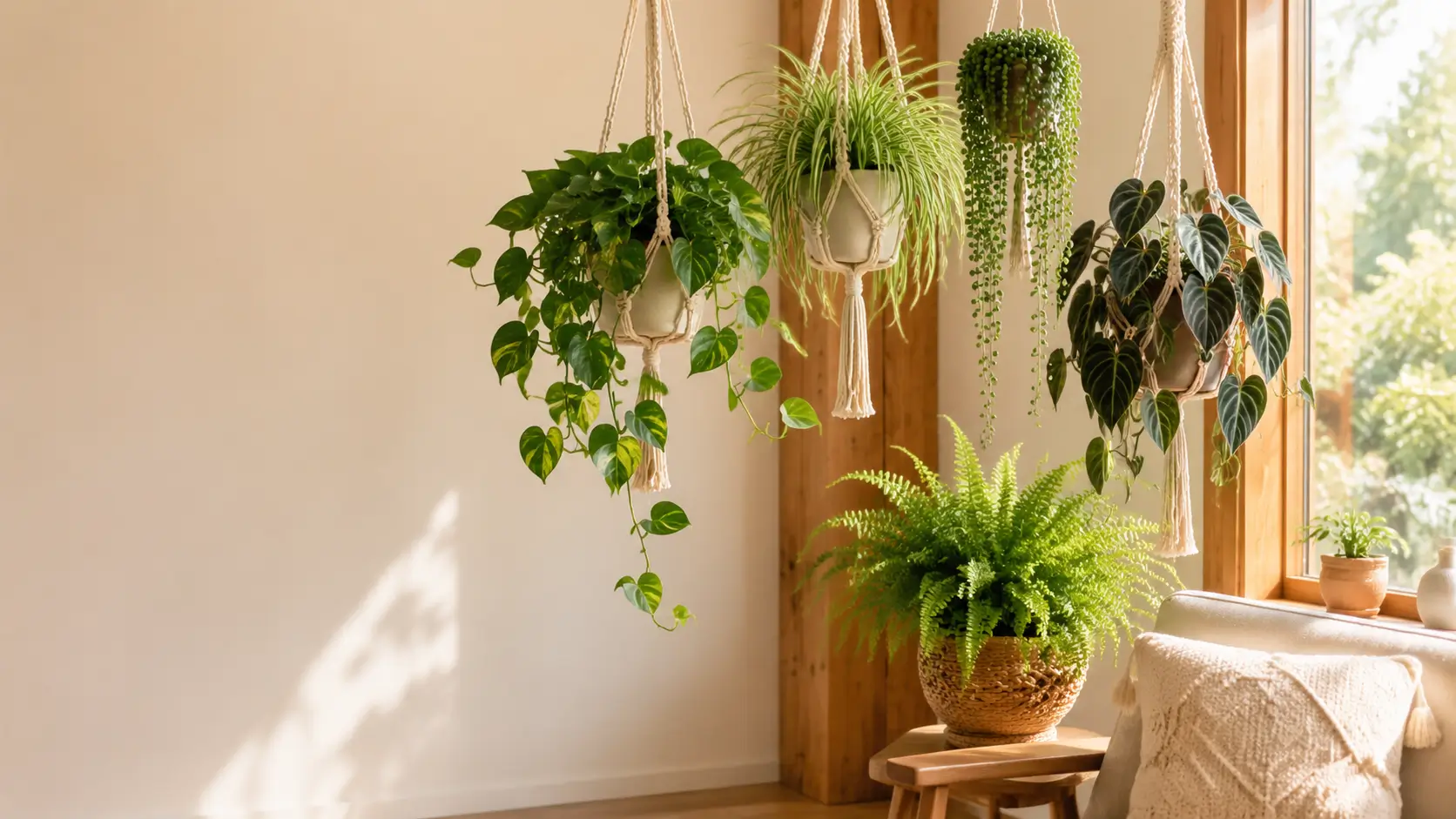
Indoor hanging plants turn bare corners, empty walls, and unused space near windows into living displays. They are especially useful in small rooms because they add greenery without occupying a table or valuable floor space.
The best choice depends on the light available, how often you want to water, and whether children or pets share your home. Pothos and spider plants are forgiving options for beginners, while string of pearls and tropical pitcher plants need more specific conditions.
Indoor Hanging Plants at a Glance
| Plant | Best light | Watering preference | Difficulty | Pet consideration |
|---|---|---|---|---|
| Pothos | Low to bright indirect light | Let the upper soil dry | Easy | Toxic if chewed |
| Spider plant | Medium to bright indirect light | Water after the surface begins drying | Easy | Non-toxic to cats and dogs |
| Inch plant | Bright indirect light | Let the upper soil partially dry | Easy | Keep away from pets |
| String of pearls | Very bright light with gentle sun | Allow the mix to dry thoroughly | Moderate | Keep away from pets and children |
| Purple heart | Bright light | Water after partial drying | Easy | Sap may irritate skin |
| Heartleaf philodendron | Medium to bright indirect light | Let the upper soil dry | Easy | Toxic if chewed |
| Philodendron micans | Bright indirect light | Let the upper soil dry slightly | Easy to moderate | Toxic if chewed |
| Monstera adansonii | Medium to bright indirect light | Water after partial drying | Moderate | Toxic if chewed |
| Boston fern | Medium indirect light | Keep evenly moist, not soggy | Moderate | Non-toxic to cats and dogs |
| Tropical pitcher plant | Bright filtered light | Keep its special growing medium moist | Advanced | Place where pitchers can hang freely |
Best Low-Maintenance Hanging Plants for Beginners
Pothos (Epipremnum aureum)
Pothos is one of the most adaptable trailing houseplants. It grows fastest in bright, indirect light but tolerates lower light better than many variegated plants. In a darker location, growth may slow and patterned varieties may produce greener leaves.
Water when the upper inch or two of potting mix feels dry. Soak the soil thoroughly, allow excess water to escape, and empty any water collected in the outer pot. Limp leaves accompanied by dry soil usually indicate thirst, while persistent yellowing in wet soil can point to overwatering or poor drainage.
Amazon US Verified
Digital 3-in-1 Soil Moisture & pH Meter
Accurate probe to test deep root zone moisture and prevent accidental overwatering.
Long, bare vines can be trimmed just above a leaf node. Pruning encourages branching, and healthy stem cuttings can be rooted in water or moist potting mix.
Pet warning: Golden pothos contains insoluble calcium oxalates and is classified by the ASPCA as toxic to cats and dogs. Chewing it may cause mouth irritation, drooling, vomiting, or difficulty swallowing.
Spider Plant (Chlorophytum comosum)
Spider plants have arching, striped leaves that spill naturally over a basket. Mature plants may produce long stems carrying small white flowers and plantlets, often called spiderettes. Once a plantlet develops roots, it can be separated and planted in its own container.
Place the plant in medium or bright filtered light. It tolerates shade, but stronger indirect light usually produces denser growth. Water once the soil surface begins to dry, reducing the frequency when growth slows during winter.
Brown leaf tips can result from dry conditions, excess fertilizer, or minerals in the water. If tip burn persists, flush the potting mix occasionally and try filtered, distilled, or rainwater.
Spider plants are among the better choices for homes with animals because the ASPCA lists them as non-toxic to cats and dogs. However, eating any large amount of plant material can still upset an animal’s stomach.
Inch Plant (Tradescantia zebrina)
Inch plant creates a full hanging display quickly. Its pointed leaves combine green, silver, and purple, while its stems root readily at the nodes. Bright, indirect light helps maintain the strongest color; insufficient light often produces pale, widely spaced growth.
Allow the upper portion of the mix to dry before watering. Consistently saturated soil can damage the roots, but leaving the plant dry for prolonged periods may cause crispy leaves. Pinch the growing tips regularly to encourage a bushier basket rather than a few long, bare stems.
The sap can irritate some people and animals, so wear gloves if you have sensitive skin and position the plant where pets cannot chew or rub against it.
Best Trailing Succulent: String of Pearls
String of Pearls (Curio rowleyanus)
String of pearls, formerly classified as Senecio rowleyanus, produces slender stems covered with round, water-storing leaves. Its roots are vulnerable to rot, making drainage and watering technique particularly important.
- Use a container with an unobstructed drainage hole.
- Choose a gritty, fast-draining succulent mix.
- Place the crown where it receives very bright light.
- Gentle morning sun is usually easier for the plant to tolerate than sudden, intense afternoon sun.
- Water thoroughly only after the growing medium has dried substantially.
Do not judge its light only by how bright the hanging stems appear. The top of the pot also needs light, or growth around the crown may thin out. Rotate the container periodically so all sides receive similar exposure.
Soft, translucent pearls and wet soil commonly suggest excess moisture. Flat or slightly wrinkled pearls in dry soil can indicate that the plant is ready for water. Keep fallen beads and trimmed stems away from children and animals.
Can Hanging Plants Grow in Low Light?
Pothos, solid-green heartleaf philodendron, and spider plant tolerate lower light, but “low light” does not mean complete darkness. A windowless bathroom or hallway cannot support healthy plant growth indefinitely without an appropriate grow light.
Use this simple test during the day: if the location is too dark to read comfortably without turning on a lamp, most houseplants will struggle there. Move the basket closer to a window or install a plant light above it.
Pothos for Dimmer Rooms
A green pothos generally performs better in limited light than a heavily variegated cultivar. Expect slower growth and longer spaces between leaves. If new leaves become progressively smaller or the vines turn sparse, the plant needs a brighter position.
Heartleaf Philodendron (Philodendron hederaceum)
Heartleaf philodendron has soft, heart-shaped leaves and a relaxed trailing habit. It accepts medium light and can tolerate a somewhat dimmer room, although bright indirect light supports fuller growth.
Let the upper layer of soil dry before watering. If the vines become bare, prune them and root a few cuttings back into the same pot to restore fullness. Like other philodendrons, this plant contains irritating calcium oxalate crystals and should not be accessible to pets or small children.
Purple Heart (Tradescantia pallida)
Purple heart can survive in reduced light, but it is not the best plant for a truly dark corner. Its foliage develops the richest purple color in strong light, while shade may produce greener, weaker growth. Give it bright light and introduce direct sun gradually to avoid scorching leaves that developed indoors.
Best Hanging Plants for Texture and Statement Foliage
Velvet-Leaf Philodendron (Philodendron micans)
Philodendron micans has velvety, heart-shaped leaves with bronze or reddish tones on new growth. It looks especially attractive when placed where soft side lighting can reveal the leaves’ subtle sheen.
Provide bright, indirect light and an airy potting mix. Water after the upper layer begins to dry, rather than keeping the container constantly wet. For a fuller display, prune long vines and return rooted cuttings to the basket.
Swiss Cheese Vine (Monstera adansonii)
Monstera adansonii is recognized by the natural openings, or fenestrations, in its leaves. It can trail from a basket, although it may produce larger leaves when allowed to climb a support.
Place it in medium to bright indirect light and protect it from abrupt exposure to intense sun. Water after the upper portion of the mix begins to dry. Sparse growth or small leaves without many openings can result from insufficient light, immaturity, or unsuitable growing conditions.
Monstera species should be treated as toxic to cats and dogs if chewed. Hanging the plant helps, but long vines and dropped leaves may eventually become accessible.
Boston Fern (Nephrolepis exaltata)
A Boston fern creates a softer, feathery display than a trailing vine. It prefers medium indirect light, evenly moist soil, and more humidity than pothos or spider plant. It is therefore better suited to an attentive grower or a naturally humid room.
Water thoroughly when the soil surface begins to feel dry, and do not leave the roots standing in drainage water. Crisp leaflets often appear when the plant becomes too dry or sits near heating and cooling vents. Boston fern is generally considered non-toxic to cats and dogs, making it a useful alternative to pothos and philodendron.
Amazon US Verified
Organic Perlite Horticultural Soil Conditioner
Lightweight volcanic mineral that improves root aeration and prevents compaction.
An Unusual Choice: Tropical Pitcher Plant
Tropical Pitcher Plant (Nepenthes Species and Hybrids)
Nepenthes plants form hanging, cup-shaped traps at the ends of their leaves. A suspended basket gives the pitchers room to develop without being crushed against a shelf.
These tropical carnivorous plants require conditions different from ordinary houseplants. They need a specialist, low-nutrient growing medium, filtered light, warmth, humidity, and low-mineral water. Rainwater or distilled water is generally preferable because minerals can accumulate in the growing medium. Do not plant them in ordinary garden soil or apply standard houseplant fertilizer without species-specific guidance.
Nepenthes requirements vary among species and hybrids, so retain the plant label and follow the grower’s instructions. The Royal Horticultural Society’s carnivorous plant guide provides additional guidance on suitable water, growing media, and indoor conditions.
A pitcher plant may catch occasional small insects, but it is not a substitute for sanitation or professional pest control. Persistent fungus gnats usually indicate overly wet potting mix or decaying organic matter elsewhere in the home.
How to Hang Plants Safely
A hanging planter becomes considerably heavier after watering. The hook, bracket, ceiling material, planter, and hanger must all support the combined wet weight.
- Choose an appropriate anchor. Fasten the hook into a ceiling joist where possible, or use hardware specifically rated for the ceiling material and expected load.
- Check the hanger. Inspect macramé cords, chains, plastic hangers, and connection points for wear.
- Use a draining inner pot. Place the nursery pot inside a decorative cachepot, then remove it for watering and allow it to drain before rehanging.
- Protect the floor and furniture. Never rely on a shallow saucer to catch a large volume of drainage water overhead.
- Keep vines away from hazards. Do not let stems reach heaters, ceiling fans, electrical equipment, candles, or frequently opened doors.
Are Hanging Plants Really Safe Around Pets?
Elevation can reduce access, but it does not make a toxic plant pet-safe. Cats may climb furniture or jump toward a basket, vines can lengthen, and leaves may fall to the floor. Curious pets may also pull on dangling macramé or cords.
Amazon US Verified
Self-Watering Planters with Drainage Aerators
Elevated reservoir design that prevents soggy roots and ensures steady hydration.
For the safest arrangement, select non-toxic plants such as spider plant or Boston fern and position them where animals cannot climb to them. Regularly prune accessible stems and collect fallen leaves immediately. Before buying any plant, check its exact botanical name in a veterinary toxicity database because common names can refer to different species.
If a pet chews an unidentified or potentially toxic plant, remove remaining material from its reach and contact a veterinarian or animal poison-control service promptly. Do not induce vomiting unless a veterinary professional directs you to do so.
You may also enjoy reading: 7 Timeless Garden Design Features That Never Fade.
How to Water a Hanging Plant Without Making a Mess
A fixed weekly schedule is rarely reliable. Temperature, season, light, pot size, root development, and growing medium all influence how quickly a basket dries.
- Feel the soil at the depth appropriate for the plant.
- Lift the pot and notice whether it feels unusually light.
- Take the inner pot to a sink, bathtub, or waterproof tray.
- Water the entire surface until excess water exits the drainage holes.
- Let the pot drain completely before placing it back in the hanger.
Hanging baskets can dry faster than pots on a table because warmer air collects near the ceiling and air circulates around the container. Check them regularly, but water only when the plant and soil indicate that moisture is needed.
Common Hanging Plant Problems
Long Vines With Widely Spaced Leaves
This leggy growth usually indicates inadequate light. Move the plant gradually to a brighter location, then prune bare sections to encourage branching.
Yellow Leaves and Constantly Wet Soil
Check whether drainage holes are blocked or water is trapped inside the decorative pot. Let the mix drain, improve airflow around the roots, and adjust future watering to the plant rather than the calendar.
Brown, Crispy Edges
Possible causes include underwatering, dry air, excess fertilizer salts, mineral-sensitive foliage, or exposure to heating and cooling vents. Examine the soil and location before increasing watering automatically.
A Plant That Leans Toward the Window
Rotate the basket by a quarter turn every week or two. If the plant continues stretching sharply, it likely needs more usable light rather than more frequent rotation.
Choosing the Right Hanging Plant for Your Home
Start with the conditions you can provide. Choose pothos or heartleaf philodendron for adaptable trailing growth, spider plant for an easy pet-conscious option, and Boston fern when you can maintain more consistent moisture. Select string of pearls only for a very bright location with excellent drainage, and reserve Nepenthes for a warm, humid space where you can supply low-mineral water and specialist care.
One healthy plant suited to its location will create a better display than several struggling plants chosen only for appearance. Measure the light, verify pet safety, install reliable hanging hardware, and make sure you can reach the basket comfortably for routine watering and inspection.
As an Amazon Associate, azuloz.com earns from qualifying purchases.