When Jill Biden sat down to write her memoir, she likely expected to reflect on decades of public service, political campaigns, and life in the White House. What she probably did not anticipate was that one of the most revealing passages would involve a shared moment with rabbits in a Cornish primary school. That single interaction, recounted in an excerpt from View from the East Wing, offers the clearest window yet into the kate middleton personality that operates behind the palace gates. It is a portrait of someone who is deliberately, almost stubbornly, ordinary in the most extraordinary circumstances.

What Did Jill Biden and Kate Middleton Bond Over?
The friendship between the former First Lady of the United States and the Princess of Wales did not begin with formal state dinners or diplomatic receptions. It started in 2021 during a G7 leaders meeting in the United Kingdom. Jill Biden joined her husband, then-President Joe Biden, for the summit. During a joint outing, the two women visited a primary school in Hayle, Cornwall. That is where the rabbits entered the story.
Jill and Kate found themselves crouched beside a group of children, cooing over the animals. In that unguarded moment, the American educator and the British royal discovered something they shared. It was not just a fondness for fluffy creatures. It was a genuine, professional passion for early years education. Both women had spent years thinking about how young children learn, grow, and develop. Both understood that the first five years of life shape everything that follows. That common ground turned a polite diplomatic engagement into the start of a real connection.
For anyone who has ever struggled to make small talk at a work event, this story feels familiar. The best bonds often form over shared interests, not forced conversation. Jill and Kate found their rabbit moment, and it worked.
What Advice Did Jill Give Kate?
Beyond the royal friendship, Jill offered Kate something more personal than a shared article or a photo opportunity. She gave her a practical tool for emotional survival. In her memoir, Jill reveals that she encouraged Kate to keep a journal about her experiences. The Princess of Wales mentioned that she already enjoyed drawing and painting. Jill responded by saying that you can never have too many ways to privately express your feelings.

Amazon US Verified
Little Spot of Emotion 8-Book Box Set
Engaging visual books and plushies that help children identify and regulate feelings.
This advice carries weight because it comes from someone who understands the pressure of living in a public fishbowl. Jill spent eight years as Second Lady and four years as First Lady. She knows what it feels like to have every outfit, every expression, every gesture analyzed by strangers. Journaling offered Kate a private space where no one else could look. It gave her a method to process emotions without performing for an audience.
For readers who feel similarly overwhelmed by public scrutiny or just daily stress, this piece of advice is remarkably accessible. You do not need a royal budget or a palace staff to keep a journal. A notebook and a pen are enough. The act of writing down what you feel, without editing or judging, can clear mental clutter. It is a practice that costs nothing but pays dividends in clarity and calm.
Did Jill Only Bond with Kate Among Royals?
The answer is no. Jill Biden also shares a strong bond with Prince Harry. Their connection predates her friendship with Kate by several years. Jill first met Harry in 2013 during his tour of the United States. At that time, Joe Biden was serving as Vice President under President Obama, and Jill was the Second Lady. Harry attended a reception for British and American wounded warriors in Washington, D.C. That event planted the seed for a lasting relationship.
In 2021, the same year Jill met Kate, she and Harry teamed up for the Department of Defense Warrior Games. This annual event celebrates the resilience and dedication of wounded, ill, and injured active duty and veteran U.S. military service members. Their collaboration shows that Jill has built genuine cross-Atlantic friendships with multiple members of the royal family, not just one.
What connects these relationships is not royal status. It is shared values. Both Kate and Harry have demonstrated a commitment to causes that matter to Jill: early childhood development, mental health, and support for military families. When you focus on what you care about, you find allies in unexpected places.
What Did Jill and Kate Advocate Together?
Their shared interest in early years education moved from private conversation to public advocacy. Jill and Kate co-authored a CNN article calling for a fundamental shift in early childhood care and education. They argued that how a society treats its youngest citizens determines the health of its future. They wrote about following the science of early childhood development and focusing on the things that make the biggest difference for children and the adults who guide them.
Their joint piece made a bold claim. They stated that early childhood care and education should be seen as among the defining, strategic issues of our time. That is not a small statement. It reframes childcare from a private family concern to a public priority. It suggests that governments, communities, and individuals all have a role to play in supporting the earliest years of life.
For parents reading this, the takeaway is practical. You do not need to write a CNN article to make a difference. You can advocate for better early years policies in your local school district. You can donate to organizations that support early childhood development. You can simply talk to other parents about why those first five years matter so much. Small actions add up.
How Did Jill Describe Kate in Her Memoir?
Jill’s description of Kate in View from the East Wing is striking in its simplicity. She writes that she found Kate instantly likable, very unassuming. She says Kate made her feel at ease. She adds that Kate seemed so grounded. These are not the words you usually hear about a future queen. They are the words you use to describe a friend who does not try to impress you.
That quality of being unassuming is rare in any context. It is almost unheard of in someone who has been photographed, written about, and speculated upon for nearly two decades. Kate has been in the public eye since her university days. She has faced relentless scrutiny about her appearance, her family, her parenting, and her marriage. Yet Jill’s account suggests that beneath all that attention, there is a person who remains steady.
What does it mean to be grounded in high-pressure settings? It means you do not let the noise change who you are. You remember that the people you meet are human beings, not photo opportunities. You listen more than you talk. You show up as yourself, not as a polished version of what others expect. Kate, by Jill’s account, does exactly that.
How Kate Middleton’s Down-to-Earth Demeanor Helped Her Connect with World Leaders
Diplomacy often gets described in terms of strategy and negotiation. But at its core, diplomacy is about human connection. A leader who can make another person feel comfortable is a leader who can build trust. Kate’s unassuming personality gives her a distinct advantage in this arena. She does not arrive with an agenda that feels aggressive. She arrives with curiosity.
When she met Jill Biden, she did not try to impress the First Lady with royal protocol. She engaged with the moment, with the children, with the rabbits. That authentic presence disarmed Jill and created space for a genuine exchange. The same quality likely helps Kate connect with other world leaders, charity partners, and members of the public. People sense when someone is genuinely interested in them. Kate, by all accounts, is.
For anyone in a leadership role, this is a valuable lesson. You do not have to be the loudest person in the room to be the most effective. Sometimes the quietest person, the one who listens and observes, leaves the strongest impression. Kate’s approach suggests that humility is not weakness. It is a form of strength that invites collaboration rather than resistance.
The Royal’s Hidden Hobby: Journaling as a Stress-Relief Tool for Modern Parents
Jill’s advice to Kate about journaling points to a practice that many busy parents already use. Writing down thoughts, feelings, and experiences can serve as a release valve for pressure that builds up during the day. For a working parent, the demands never stop. There is always another email, another school form, another meal to prepare. Journaling offers a few minutes of quiet ownership over your own mind.
Kate already enjoyed drawing and painting, which are visual forms of expression. Journaling adds a verbal layer. It allows you to name what you are feeling, which is the first step toward understanding it. You do not need to write beautifully or every day. Even a few lines, a few times a week, can shift your perspective.
Amazon US Verified
Daily Visual Routine Chart for Toddlers
Interactive morning/bedtime chore chart that empowers independence and calm transitions.
You may also enjoy reading: 7 Updated Conflict Resolution Tips for Couples.
For parents who feel they have no time for self-care, journaling is one of the most efficient options. It requires no equipment, no travel, and no appointment. You can do it at the kitchen table while the kids watch a show. You can do it on your phone during a lunch break. The barrier to entry is almost zero, and the potential benefit is significant.
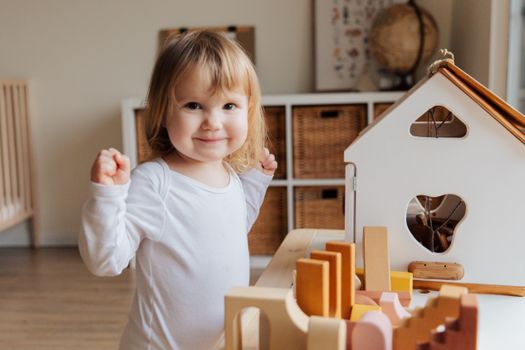
Amazon US Verified
Montessori Wooden Step Stool & Kitchen Helper
Safe enclosed toddler tower allowing young children to participate at counter height.
Why the Princess of Wales’s Focus on Early Years Education Crosses Political Divides
Early childhood development is a rare issue that unites people across ideological lines. Conservatives and progressives alike can agree that giving children a strong start in life is a good thing. Kate has leaned into this consensus. Her work on early years education, including the Royal Foundation Centre for Early Childhood, positions her as a advocate for science-based policy rather than partisan politics.
Jill and Kate’s joint CNN article emphasized that early childhood care and education should be a defining strategic issue. They pointed to the science showing that brain development in the first five years lays the foundation for lifelong mental and physical health. That is not a political claim. It is a scientific one. By framing the conversation around evidence, Kate has made her advocacy difficult to oppose.
For readers who work in education, childcare, or social services, this approach offers a model. When you want to build broad support for a cause, start with the facts that everyone can agree on. Leave the partisan language out. Focus on the children. That is what Kate does, and it works.
What Jill Biden’s Memoir Reveals About Kate’s Private Personality vs Public Image
The public image of Kate Middleton is polished, poised, and often described as reserved. She smiles, she waves, she wears beautiful clothes. But that image is a performance, as all public roles are. Jill’s memoir pulls back the curtain on what lies underneath. The woman behind the wave is someone who coos over rabbits, takes advice about journaling, and makes other people feel at ease.
That private personality does not contradict the public image. It completes it. The poise we see on camera is not a mask. It is the natural result of someone who is genuinely grounded. Kate does not have to pretend to be calm because she actually is calm. She does not have to fake interest because she is actually interested. The consistency between her private and public self is what makes her so effective in her role.
For anyone who struggles with the gap between how they feel inside and how they appear to the world, Kate’s example is encouraging. You do not have to choose between being authentic and being professional. You can be both. The key is to know yourself well enough that your public actions flow naturally from your private values.
The Role of Unassuming Charm in Kate Middleton’s Diplomatic Success
Charm often gets a bad reputation. People associate it with manipulation or superficiality. But genuine charm is something different. It is the ability to make another person feel seen and valued. Kate possesses that kind of charm in abundance. She does not need to dominate a conversation to leave an impression. She simply needs to be present.
Jill’s memoir describes exactly this quality. She says Kate made her feel at ease. That is the hallmark of a skilled diplomat. When you feel at ease, you drop your guard. You speak more honestly. You build trust faster. Kate’s unassuming personality creates the conditions for real connection, whether she is meeting a world leader or a primary school student.
This is a skill that can be cultivated. You do not have to be born with it. You can practice active listening. You can ask questions instead of making statements. You can resist the urge to fill every silence with words. Over time, these habits become natural. They become part of your personality, just as they have become part of Kate’s.
Frequently Asked Questions
How does Kate Middleton’s unassuming personality influence her parenting style?
Based on the insights from Jill Biden’s memoir, Kate’s grounded nature likely shapes how she raises her three children. She prioritizes normalcy and emotional well-being over royal formality. Her focus on early years education suggests she applies the same science-backed principles at home that she advocates for publicly. This means creating a stable, nurturing environment where her children feel safe to express themselves.
What practical steps can I take to start journaling like Jill Biden advised Kate?
Begin with a simple notebook and a pen. Set a timer for five minutes and write whatever comes to mind without editing. Do not worry about grammar, spelling, or making sense. The goal is private expression, not public performance. You can write in the morning to clear your head or at night to process the day. Consistency matters more than length, so aim for a few sentences daily rather than pages once a month.
Why does early years education matter for lifelong mental health according to Kate and Jill?
Kate and Jill have publicly stated that the first five years of life lay the foundation for lifelong mental and physical health. During early childhood, the brain develops rapidly, forming connections that shape how a person learns, relates to others, and handles stress. By focusing on nurturing relationships and enriching experiences during this period, societies can prevent many problems that emerge later in life. This is why they called for a fundamental shift in how countries approach early childhood care and education.
As an Amazon Associate, azuloz.com earns from qualifying purchases.