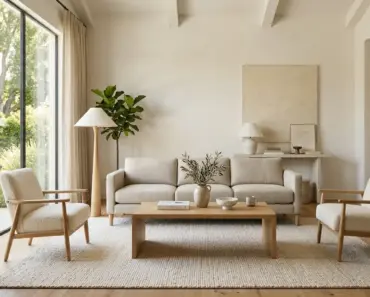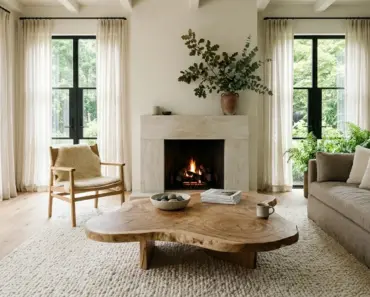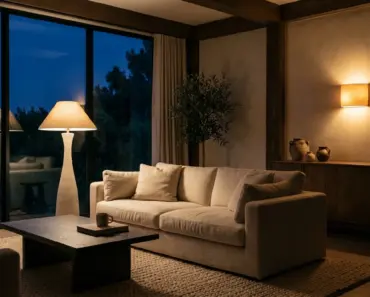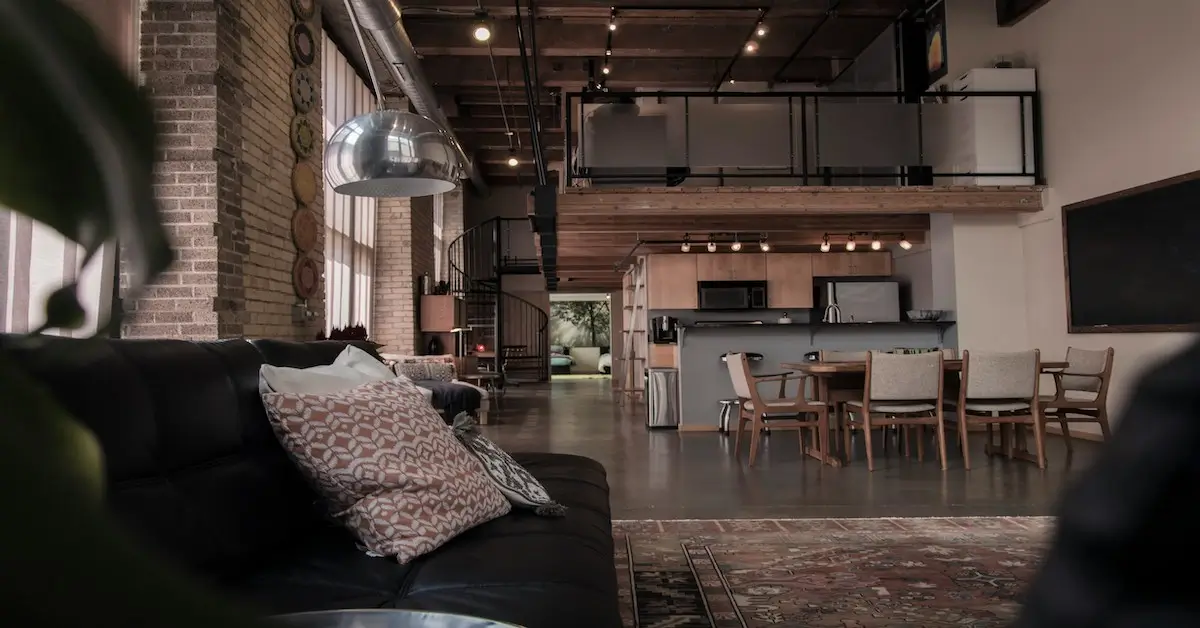
There is a quiet shift happening in how people think about their homes. Organic modern decorating sits right at the center of it — a design philosophy that refuses to choose between sleek contemporary living and the warmth of the natural world. Instead, it merges both. The result is a space that feels intentional without feeling cold, and earthy without feeling rustic. If you have ever walked into a room and felt immediately at ease without knowing exactly why, there is a good chance biophilic thinking and natural materials were doing the quiet work.
What Organic Modern Decorating Actually Means
The term gets used loosely online, so it is worth being precise. Organic modern decorating is not simply placing a plant next to a gray sofa. It is a cohesive design approach that draws on three converging ideas: the clean geometry of modernism, the sensory richness of natural materials, and a genuine commitment to sustainability.
Modernism, as a design movement, prizes function, simplicity, and the elimination of unnecessary ornament. Organic design, meanwhile, takes cues from natural forms — curved lines, imperfect textures, materials that age gracefully. When these two sensibilities meet, you get spaces with structure and softness in equal measure.
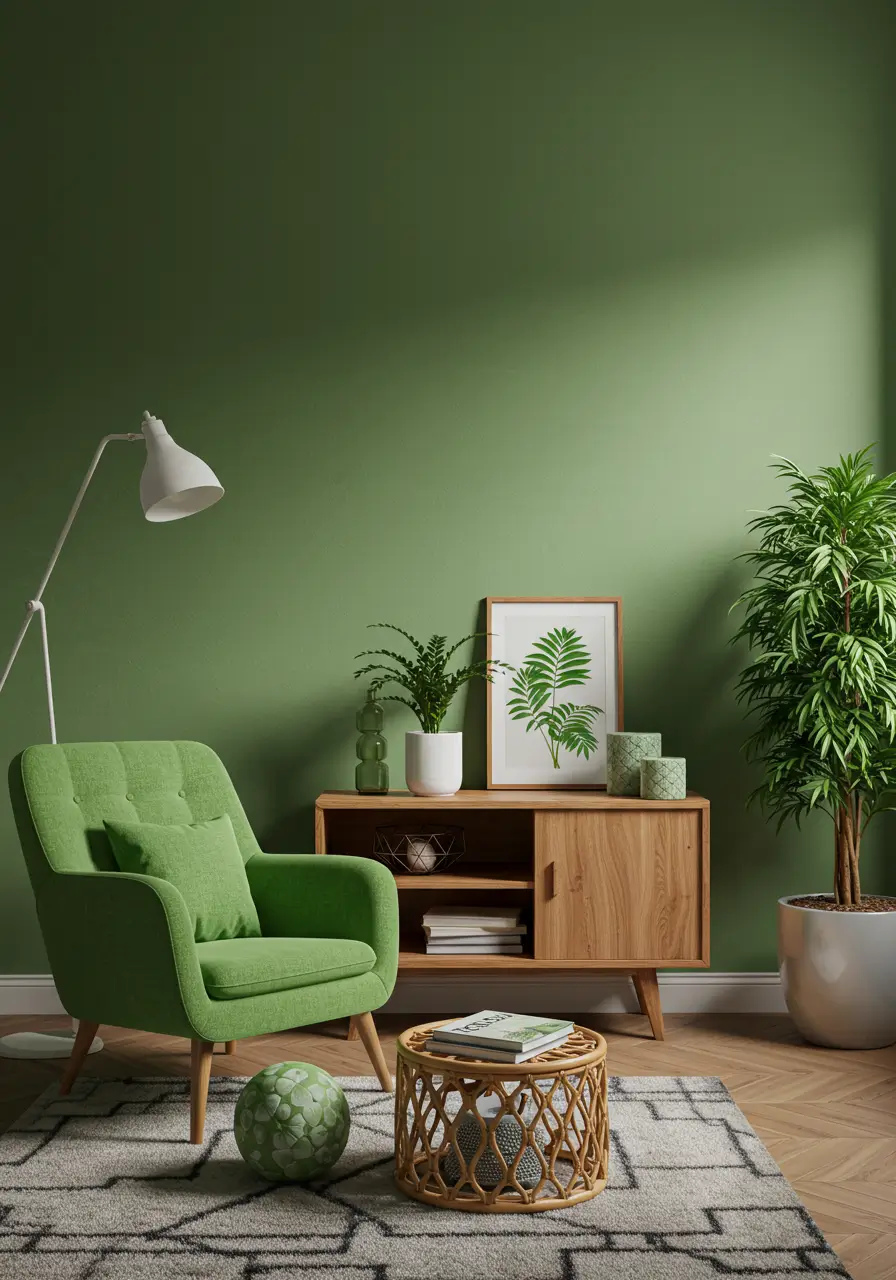
The sustainability layer is not decorative. Choosing materials like reclaimed timber, FSC-certified wood, or low-VOC paints has measurable environmental value. It also shapes how the home feels to live in day to day — less synthetic, more grounded.
Key Takeaway: Organic modern decorating is the intersection of clean design, natural materials, and conscious material choices — not a trend, but a durable living philosophy.
The Essential Elements of the Organic Modern Look
Getting this aesthetic right comes down to understanding its building blocks. These are not rules to follow rigidly — they are ingredients to combine with intention.
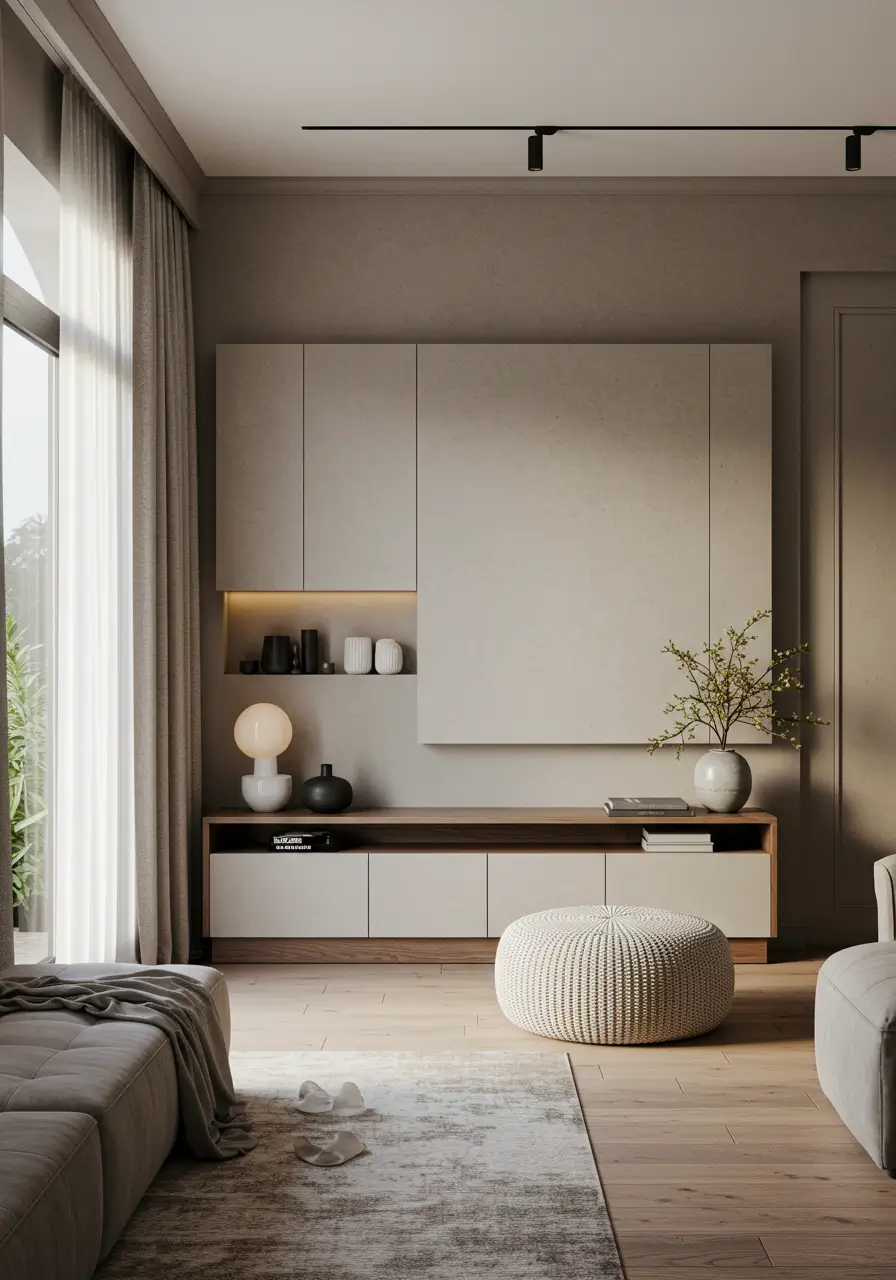
Natural Materials as the Foundation
Wood, stone, clay, linen, jute, rattan — these are the vocabulary of organic modern spaces. Each brings something distinct. Raw-edge timber introduces organic unpredictability into an otherwise structured room. Honed limestone on a countertop offers subtle variation in tone that no synthetic surface can replicate.
What makes these materials work in a modern context is restraint. You are not trying to recreate a cabin or a farmhouse. You are introducing enough tactile complexity to prevent a space from feeling sterile.
A Grounded Color Palette
The color story in organic modern decorating is rooted in the earth. Think warm whites, soft greiges, stone grays, terracotta, aged brass, and muted sage. These are not boring neutrals — they are colors with mineral depth that shift subtly under different light conditions.
- Warm white walls create a canvas that reads differently at dawn versus dusk
- Terracotta and clay tones add warmth without competing with natural textures
- Muted sage or eucalyptus hues bring the outdoors in without the boldness of a full green wall
- Greige — the hybrid of gray and beige — works as a unifying neutral across materials
Biophilic Design Principles
Biophilia refers to the innate human tendency to seek connection with nature. When translated into interior design, it means more than adding houseplants. It encompasses natural light optimization, views to the outdoors, organic forms in furniture, the sound of water, and even the use of materials that continue to change over time — like wood that deepens in color or brass that develops a patina.
Tip: A single large-leafed indoor plant — such as a Monstera deliciosa or a Fiddle Leaf Fig — does more for a space visually than a cluster of small plants scattered around the room.
Natural Materials in Organic Modern Design
Choosing materials thoughtfully is where organic modern decorating diverges most sharply from conventional interior design. It is not enough for something to look natural. How it was sourced, processed, and finished matters too.
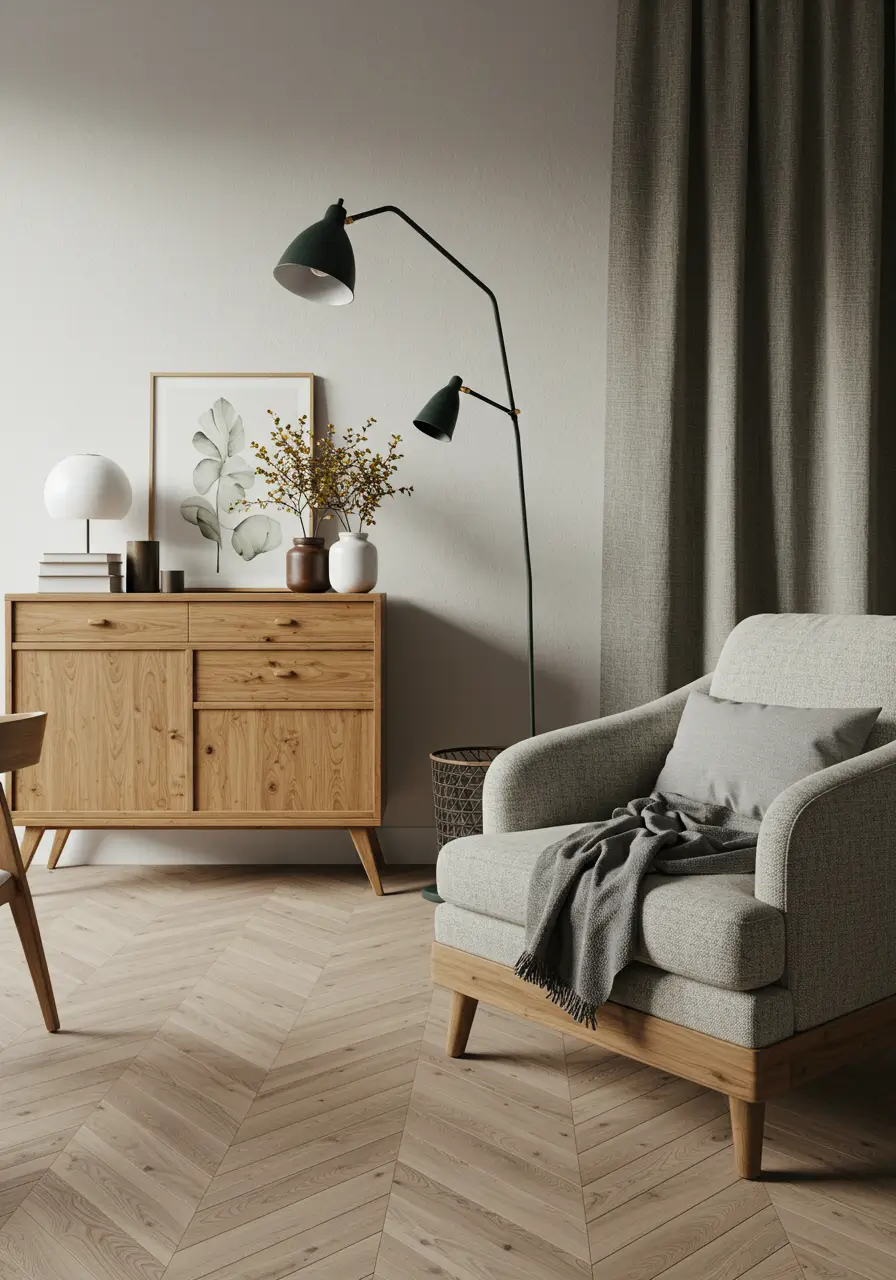
| Material | Best Use | Sustainability Note |
|---|---|---|
| Reclaimed wood | Flooring, shelving, accent walls | Diverts timber from landfill; no new tree felling required |
| Rattan and bamboo | Furniture, light fixtures, accessories | Fast-growing; low environmental cost |
| Natural stone | Countertops, flooring, feature walls | Durable and long-lasting; no synthetic off-gassing |
| Organic linen and cotton | Upholstery, curtains, bed textiles | Grown without synthetic pesticides when certified organic |
| Jute and wool | Rugs, wall hangings, cushion covers | Biodegradable and naturally renewable |
One often overlooked detail: finishes matter as much as materials. An oak floor sealed with a water-based, low-VOC finish will contribute to better indoor air quality than the same wood sealed with a solvent-based product. Volatile organic compounds off-gas into the indoor environment for months after application — a practical reason to choose carefully, not just an aesthetic one.
Note: “Natural-looking” is not the same as natural. Many synthetic materials are designed to mimic stone or wood but lack the tactile variation and aging qualities that make the real thing so effective in organic modern spaces.
Furniture Selection and Placement
Furniture is where many organic modern spaces either come together or fall apart. The wrong choices — too glossy, too uniform, too trendy — can undermine the warmth that natural materials establish elsewhere in the room.
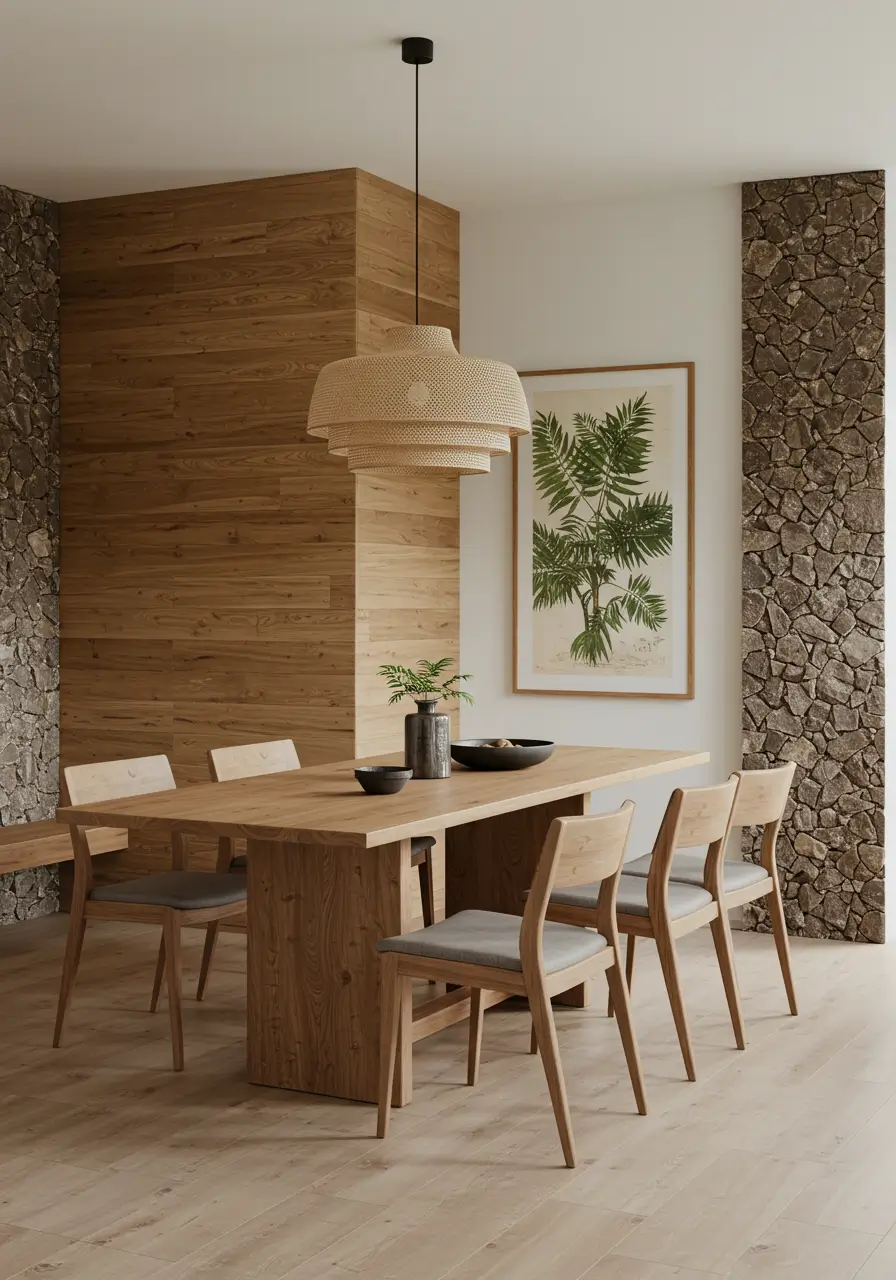
Solid wood construction is the benchmark for organic modern furniture. Not veneer over particleboard — solid timber that will last decades and can be refinished rather than replaced. Pair it with upholstery in natural fabrics: undyed wool boucle, oatmeal linen, or textured cotton canvas.
Forms should lean curved. The hard angularity of mid-century modernism works less well here than softer, more rounded silhouettes. A sofa with a low, gentle arch at the back. A dining table with slightly tapered legs rather than sharp rectangular ones. A coffee table in live-edge wood that echoes the irregular beauty of the natural world.
Furniture Placement for Flow and Conversation
Beyond aesthetics, placement shapes how a space is actually used. In organic modern interiors, furniture arrangements typically prioritize conversation and ease of movement rather than television-centric layouts.
- Position seating to face inward toward each other, not uniformly toward a screen
- Leave at least 90 centimeters of clear walkway in main circulation paths
- Pull furniture away from walls slightly — floating furniture tends to feel more considered than pieces pushed against perimeters
- Allow one clear sightline to a window or plant from the primary seating position
Key Takeaway: Furniture in organic modern spaces should be built to last, soft in form, natural in material, and arranged to encourage connection rather than passive consumption.
Lighting Choices for Organic Modern Interiors
Lighting is the invisible material of interior design — it determines how every other element in the room reads. Get it wrong, and even beautiful materials look flat. Get it right, and a simple space becomes atmospheric.
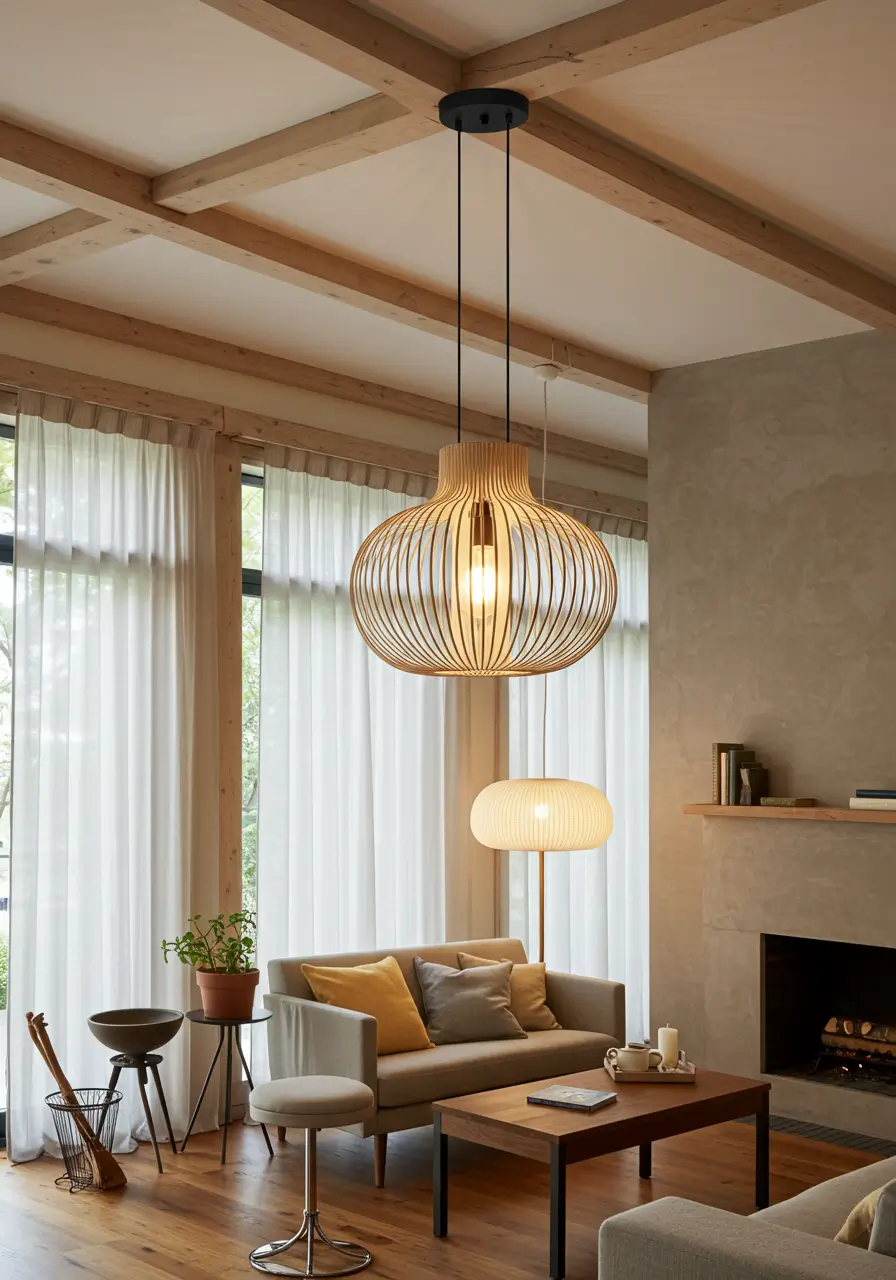
For organic modern decorating, the goal is warmth and layering. A single overhead light fixture, however beautiful, is rarely sufficient. The most successful rooms use three layers: ambient light for general illumination, task lighting for functional areas, and accent lighting to highlight textures and materials.
- Pendant lights in woven rattan or spun clay add texture overhead without visual weight
- Wall sconces in aged brass or matte black frame a space without competing with natural materials
- Floor lamps with linen shades diffuse light softly and add a vertical organic element
- LED bulbs with a color temperature between 2700K and 3000K produce the warm, golden tone that suits this aesthetic best
Natural light, of course, is the gold standard. Wherever possible, maximize it. Sheer linen curtains filter direct sun without blocking it entirely. Mirrors placed opposite windows amplify daylight and make smaller rooms feel genuinely larger.
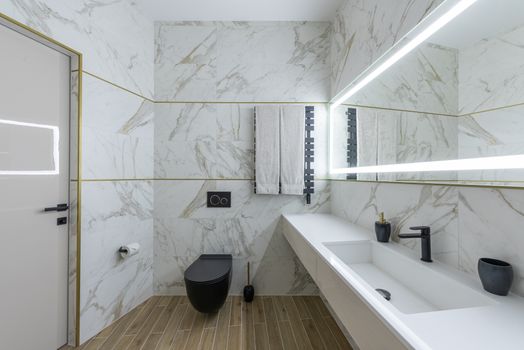
Amazon US Verified
Peel and Stick Textured Linen Wallpaper
Removable neutral wall covering providing architectural warmth and tactile depth.
Tip: Avoid cool white or daylight-spectrum bulbs (above 4000K) in living spaces — they flatten warm tones in wood and stone and work against the grounded atmosphere organic modern design is trying to create.
Incorporating Biophilic Elements
This is the heart of organic modern design. Biophilic thinking recognizes that human beings evolved in natural environments, and that exposure to nature — even simulated or indirect — reduces cortisol levels, improves cognitive function, and increases overall sense of wellbeing. These are not soft claims; they are supported by a substantial body of environmental psychology research.
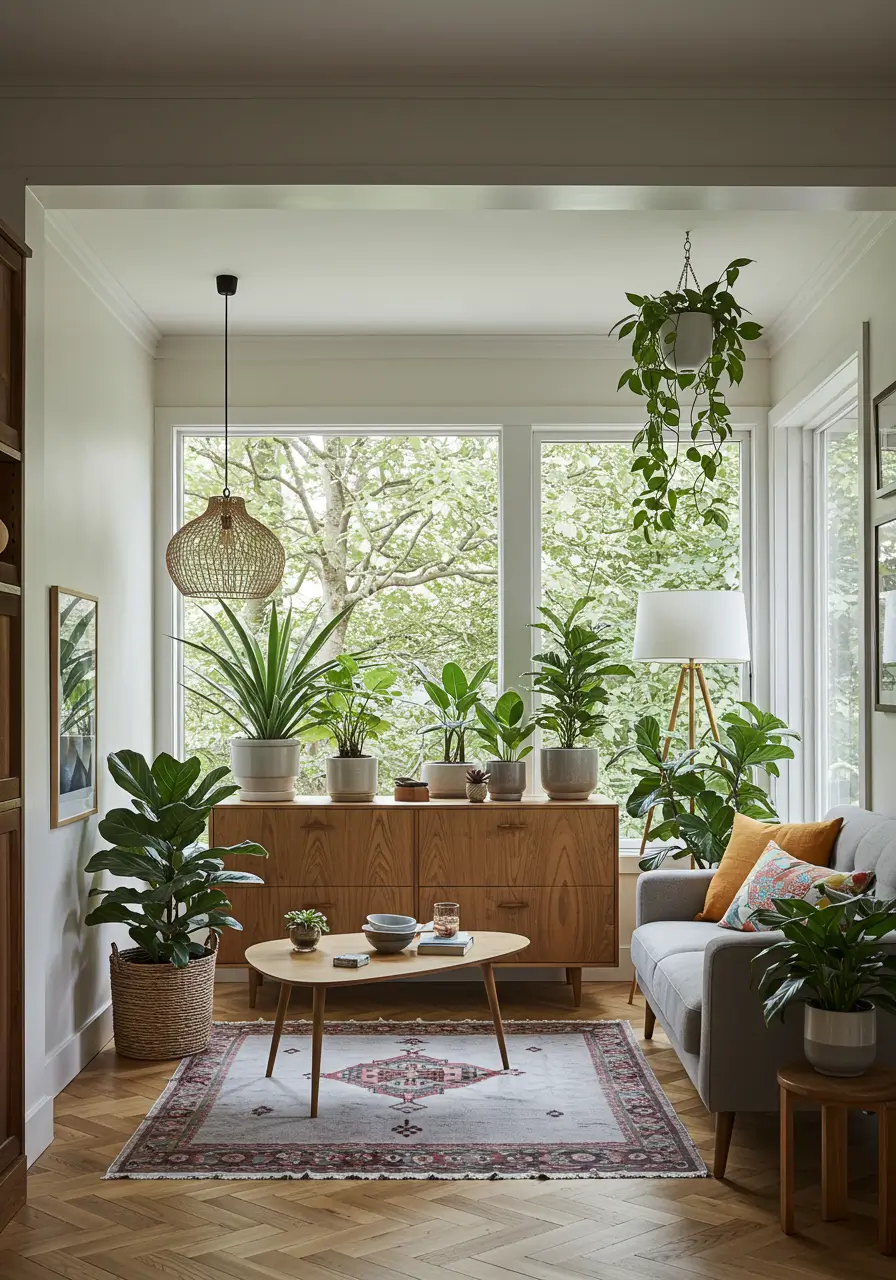
Practically, biophilic elements in an organic modern interior might include:
- A living wall or vertical garden along a staircase or in a bathroom
- Large-format windows or sliding glass doors that extend the visual field into an outdoor space
- Stone or wood feature walls that introduce geological timescale into a domestic room
- Water features — even a small indoor fountain — that introduce the sound of moving water
- Indoor plants chosen for air-filtering properties: Chlorophytum comosum (spider plant), pothos, and peace lilies are all effective and low-maintenance
Key Takeaway: Biophilic design is not decoration — it is an evidence-based approach to creating environments that actively support human health and calm.
Textural Layering and Building Depth
Flat spaces feel incomplete. Texture is what gives a room its tactile richness — the sense that it would feel as interesting with your eyes closed as it looks with them open.
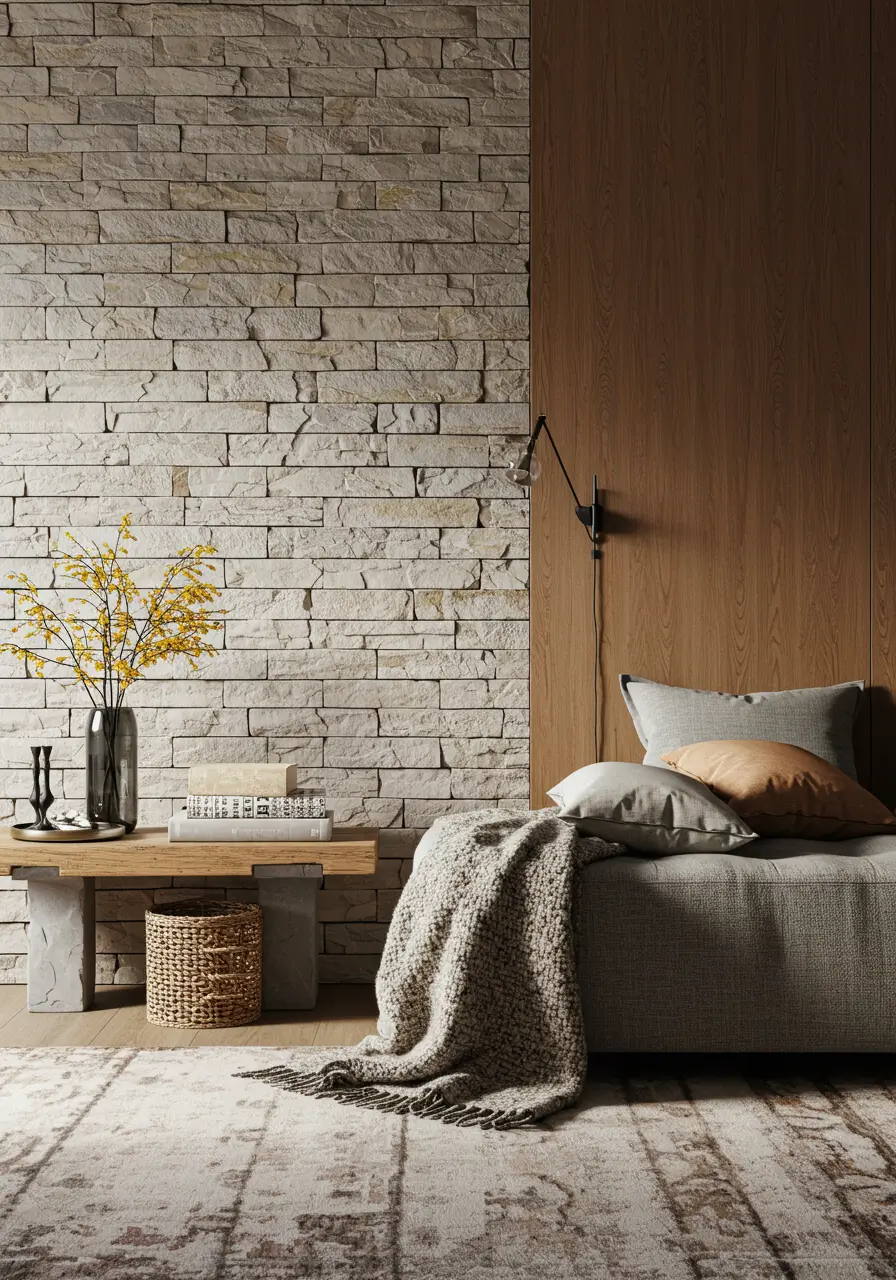
In organic modern spaces, textures are layered deliberately. Contrast is the engine of good layering — smooth stone against rough linen, polished metal against raw timber, tight-woven upholstery against a loosely knitted throw.
- Start with the largest surfaces: flooring and walls establish the base texture of the room
- Add furniture with a contrasting surface quality — if floors are smooth, choose upholstery with visible weave or nap
- Layer soft goods: a wool rug over timber, linen cushions over a boucle sofa, a chunky cotton throw over a linen armchair
- Finish with small-scale textural objects: a ceramic vase, a woven basket, a stack of books with matte covers
Also Read: WALL DECOR IDEAS: 20 CREATIVE AND CUTE

Amazon US Verified
Ceramic Fluted Decorative Vase Set
Modern minimalist ceramic vases perfect for shelves, consoles, and dried florals.
Note: Avoid layering too many patterns simultaneously. In organic modern design, texture carries most of the visual interest — pattern should play a supporting role, not compete with natural materials for attention.
Space Planning in Organic Modern Design
A beautiful material palette and thoughtful furniture selection cannot save a poorly planned room. Space planning — the allocation of area to function, movement, and rest — determines whether a room works in daily life.
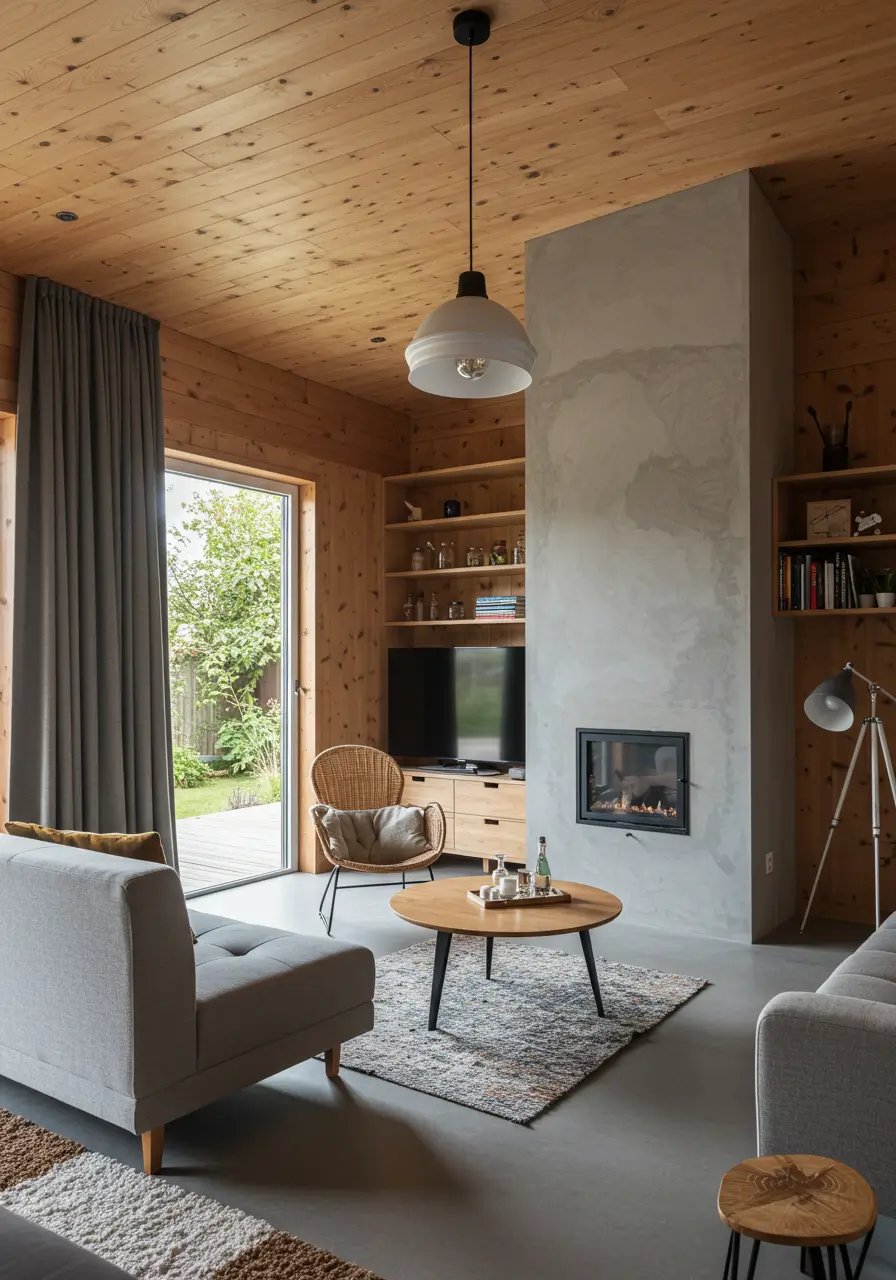
Optimizing Room Flow
Good room flow means moving through a space without obstruction or confusion. In organic modern interiors, this often means editing ruthlessly. Fewer pieces of furniture, placed with clear intention, almost always outperform a room crowded with interesting objects.
Consider the primary and secondary pathways through each room. Primary paths — the routes people use most often — should be wide and unobstructed. Secondary paths, between seating areas for example, can be narrower but should still feel comfortable.
Furniture Placement Tips
Scaled furniture is a common mistake in organic modern spaces. A sofa that is too large for a room does not feel generous — it feels oppressive. Measure your space and calculate a rough floor plan before committing to any significant purchase.
Think also about the conversation radius — the distance at which two seated people can speak comfortably without raising their voices. Interior designers typically put this at around 2.5 to 3.5 meters between facing seats. Arrange primary seating within this range and the room will naturally feel more connected and inviting.
Key Takeaway: Space planning is the invisible foundation of organic modern design — the right layout makes materials and furniture work harder, and the wrong one undermines even the most beautiful room.
Accessories, Accents, and the Art of Restraint
Less is genuinely more in organic modern decorating. This is not a cliché here — it is a structural principle. Every object on a surface either contributes to the room’s atmosphere or competes with it. The discipline is in knowing which is which.

Amazon US Verified
Hang-O-Matic All-in-One Picture Hanging Tool
Tape measure, sliding level, and markers in one tool for flawless gallery walls.
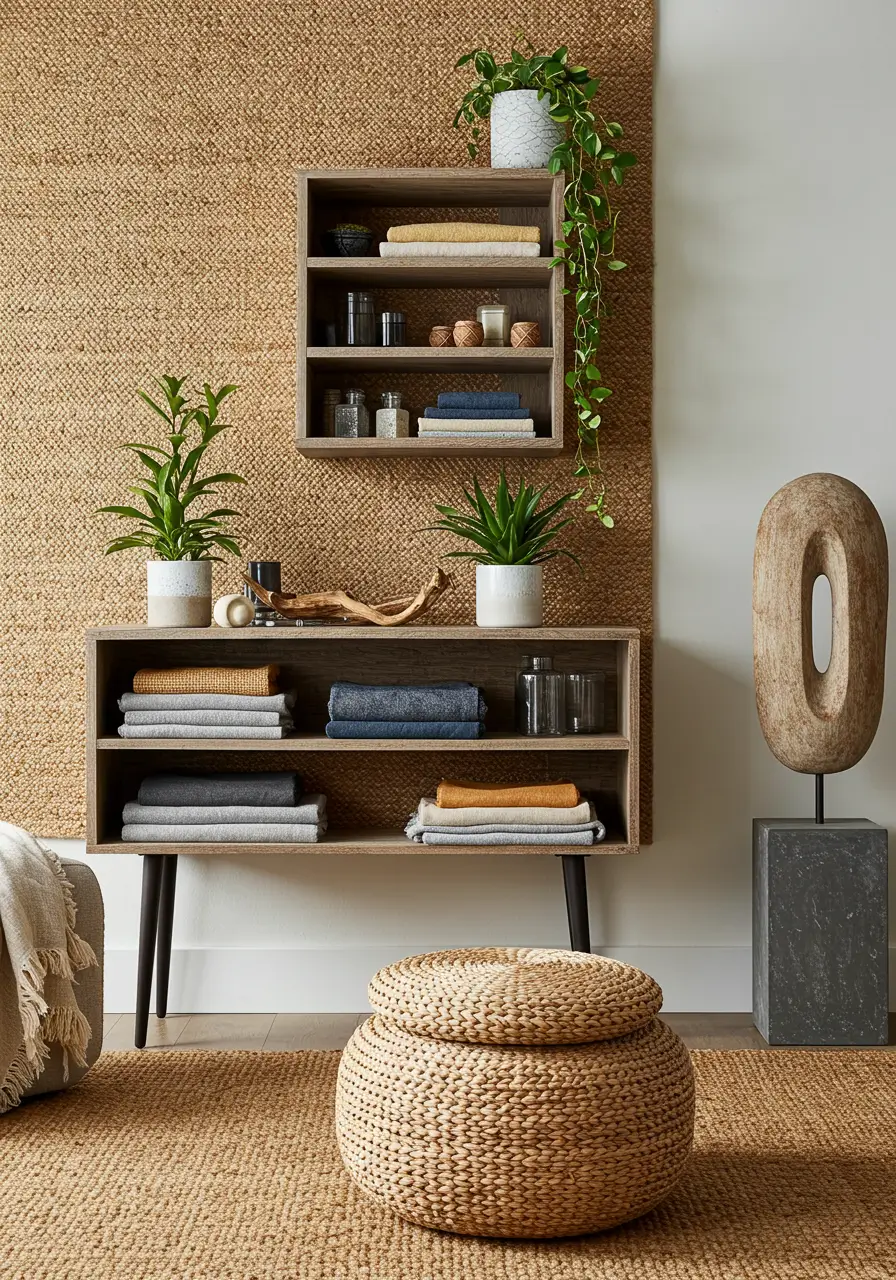
Effective organic modern accessories tend to be objects with a clear material story: a hand-thrown ceramic bowl, a sculptural branch in a tall vessel, a basket woven from seagrass, a linen-wrapped candle. These items reward close attention without demanding it from across the room.
- Group objects in odd numbers — three or five creates more visual interest than two or four
- Vary height within a grouping to create movement and draw the eye upward
- Choose pieces with a shared material story even if they differ in form — a ceramic vase, a stone coaster, and a wooden bowl all speak the same language
- Rotate seasonally rather than accumulating — this keeps the space feeling curated rather than crowded
Tip: Before adding a new decorative object to a surface, remove one existing item first. This practice of selective addition prevents gradual accumulation and maintains the edited quality that makes organic modern spaces feel intentional.
Creating Balance Between Modern and Natural
The tension between the clean lines of modernism and the irregular richness of natural materials is not a problem to be solved. It is the point. That productive tension is what makes organic modern spaces feel dynamic rather than static.
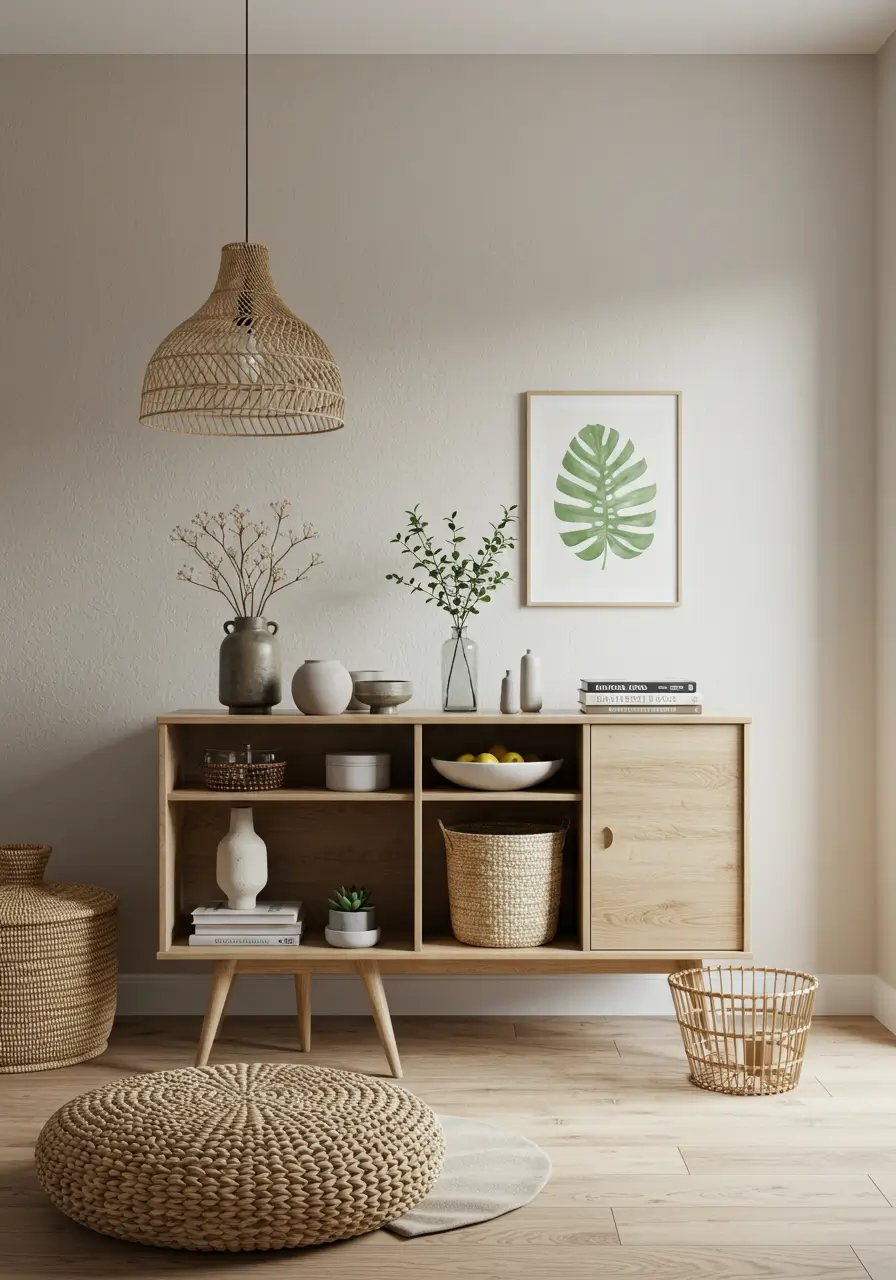
Achieving this balance consistently comes down to managing ratios. A room that is overwhelmingly natural — driftwood everywhere, rough plaster walls, raw-edge everything — tips into rustic. A room that is overwhelmingly modern — polished concrete, chrome fixtures, minimal upholstery — tips into clinical. The sweet spot is roughly two-thirds natural warmth to one-third modern structure, though this is a guide rather than a formula.
Practical Tips for Achieving Balance
- Anchor each room with one clearly modern structural element — a low-profile sofa, a geometric light fixture, a clean-lined shelf system
- Counter it with at least two natural material elements in the same visual zone
- Use a consistent neutral color palette to prevent the two sensibilities from clashing
- Allow imperfection: handmade ceramics, uneven stone edges, and visible wood grain are not flaws — they are the organic modern aesthetic in action
Key Takeaway: Balance in organic modern design is not about equal parts — it is about enough natural warmth to prevent coldness and enough modern structure to prevent chaos.
Room-by-Room Implementation Guide
Theory is useful. Room-specific application is where organic modern decorating becomes real.
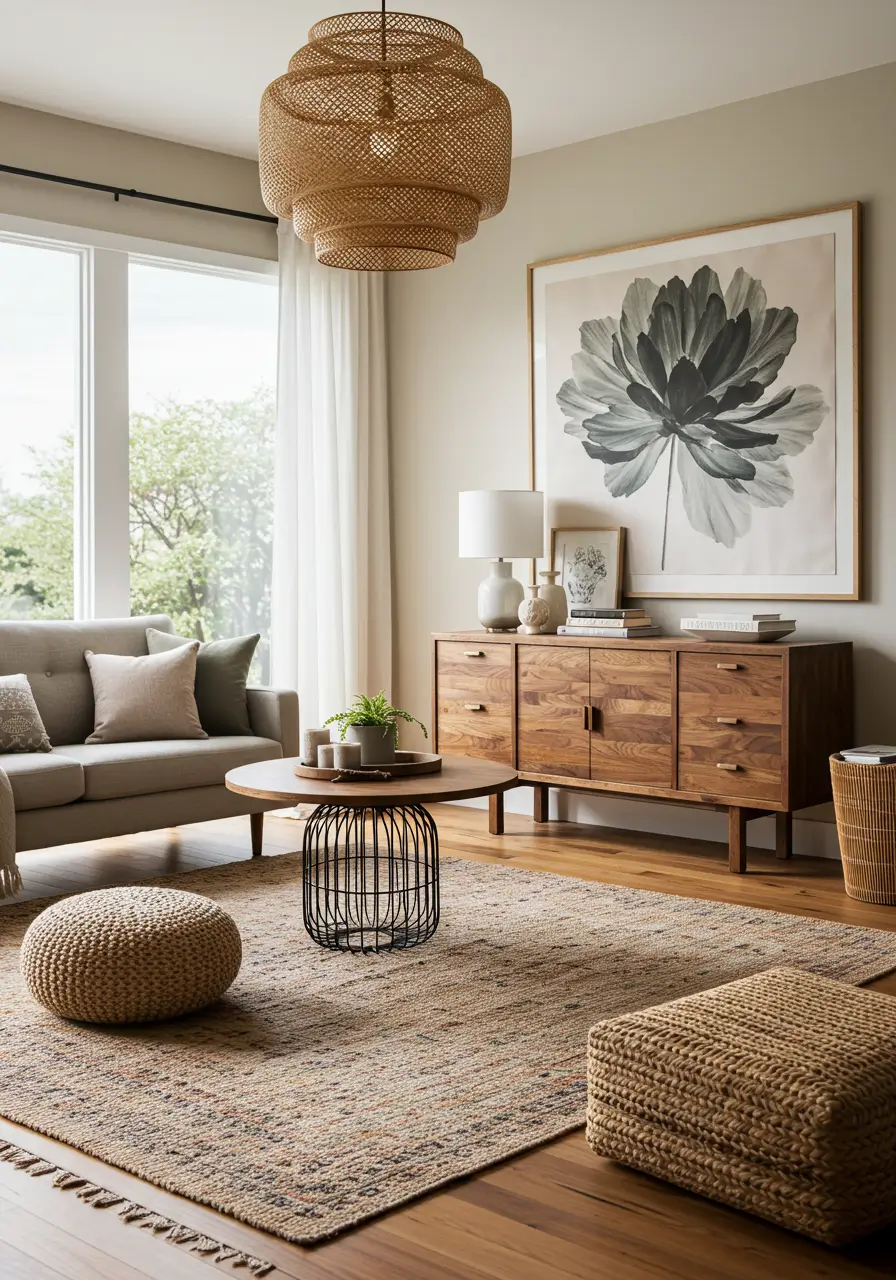
In the living room, focus on the sofa as the anchor. Choose a low-profile silhouette in natural fabric, pair it with a live-edge or solid-wood coffee table, and layer a jute or wool rug beneath. A single large plant and a rattan or ceramic pendant light above the seating area completes the core composition.
In the bedroom, prioritize sensory calm. A platform bed in solid timber, linen bedding in warm white or oat, blackout curtains in undyed cotton, and a bedside lamp with a warm-toned bulb create an environment conducive to rest. Limit decorative objects on bedside surfaces to one or two meaningful items.
In the kitchen, organic modern design shows up in material choices: honed stone countertops rather than high-gloss surfaces, open shelving in timber, ceramic or enamel cookware displayed rather than hidden, and a herb garden on the windowsill that is both decorative and functional.
In the bathroom, natural stone tiles, wooden bath accessories, and large-format mirrors create a spa-like quality. A single trailing plant — pothos works well in lower-light bathrooms — adds a biophilic note without overwhelming the space.
Key Takeaway: Each room has its own functional logic, but organic modern design principles — natural materials, restrained palette, biophilic elements — translate consistently across every space in the home.
Budget-Friendly Organic Modern Tips
Organic modern decorating has an unfortunate reputation for expense. Some of it is earned — solid timber furniture and natural stone do cost more than their synthetic counterparts. But the philosophy is inherently about longevity over trend-chasing, which means a smaller number of well-chosen pieces outperforms a room full of inexpensive imitations every time.
Getting Started with DIY and Secondhand
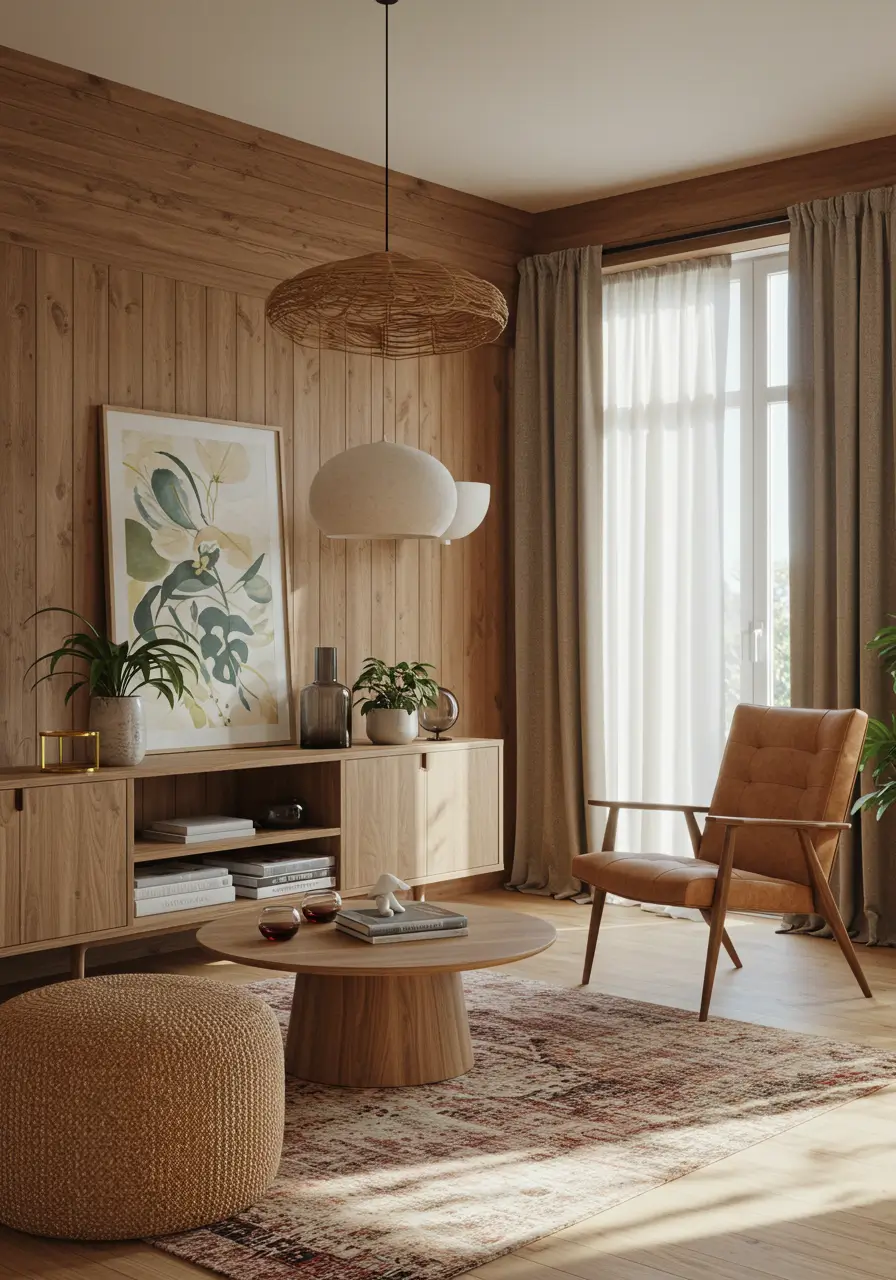
Secondhand furniture is one of the most aligned choices you can make within this aesthetic. A solid wood dining table from a thrift store or estate sale, refinished with a natural oil, will outperform a new flat-pack equivalent in both appearance and longevity. Look for pieces with good bones rather than surfaces in perfect condition — surfaces can always be restored.
Affordable Material Alternatives
- Reclaimed wood offcuts from timber yards are inexpensive and can be used for shelving, picture frames, or decorative accents
- Organic cotton cushion covers are widely available at accessible price points and make an immediate visual difference
- Propagating houseplants from cuttings — pothos, spider plants, and tradescantia all propagate easily in water — builds a plant collection at almost no cost
- Natural fiber baskets from homeware stores or market stalls provide storage that doubles as texture and warmth
Tip: Prioritize spending on the elements you touch most — flooring, upholstery, bedding. These have the greatest sensory impact and benefit most from natural materials. Save budget on decorative accessories, which can be sourced secondhand or made simply at home.
Common Mistakes to Avoid
Even with a clear vision, certain missteps consistently appear in organic modern spaces. Knowing what they are makes them easier to sidestep.
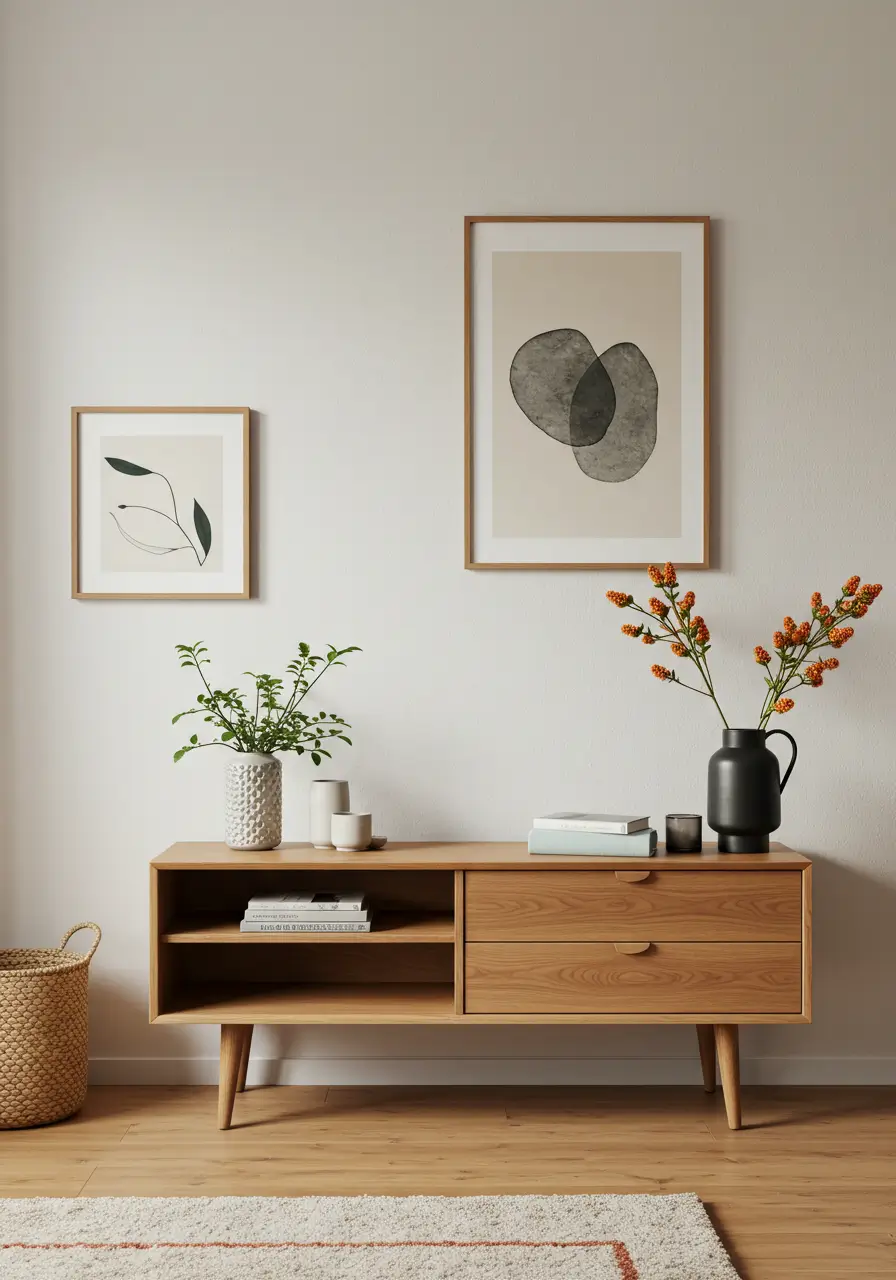
Over-accessorizing is the most common. The visual language of organic modern decorating depends on breathing room — negative space is as important as what fills it. When every surface is covered, the eye has nowhere to rest and the natural beauty of individual materials gets lost in the noise.
Ignoring natural light is the second major error. No amount of warm-toned lighting or carefully chosen materials compensates for a room that is fundamentally dark. If your space lacks natural light, address it structurally where possible — larger windows, skylights, or at minimum, strategic mirror placement — before investing heavily in decoration.
A third mistake is buying natural-looking rather than genuinely natural. Faux-wood vinyl flooring, plastic rattan furniture, and polyester linen-effect upholstery all undermine the sensory authenticity that makes organic modern spaces feel different from conventional interiors. Where budget is a constraint, choose fewer real things over more imitations.
Note: The goal is not perfection — it is coherence. A space with three genuinely natural materials used consistently throughout will always feel more resolved than one with twelve different materials fighting for attention.
Maintaining Your Organic Modern Space
Natural materials require a different maintenance approach than synthetic ones — not more effort, but more appropriate effort. The right care preserves their beauty and prevents premature deterioration.
Timber floors and furniture benefit from periodic treatment with a natural oil or wax — this feeds the wood and maintains its water resistance without building up a thick surface film. Stone countertops should be sealed annually in high-use areas and cleaned with pH-neutral products rather than acidic or alkaline cleaners that can etch the surface over time.
- Use plant-based or natural cleaning products to avoid introducing synthetic chemicals into a space built around natural materials
- Dust natural fiber textiles regularly — wool and jute trap dust more readily than synthetics, but release it just as easily with a light shake or vacuum
- Rotate plants seasonally to give them adequate light and to refresh the visual arrangement of the space
- Polish metal fixtures with appropriate natural agents — lemon juice and salt for copper, beeswax for brass — to maintain their warm patina
Seasonal updates are one of the quiet pleasures of organic modern living. Switching linen cushion covers from warm oat tones in winter to cooler sage or linen-white in summer, bringing in seasonal foliage, or adjusting the layering of throws and rugs keeps the space feeling alive without requiring significant investment or redesign.
Key Takeaway: Maintaining an organic modern space is about working with natural materials on their own terms — feeding, protecting, and gently refreshing rather than trying to keep everything looking artificially pristine.
Frequently Asked Questions
What is Organic Modern Decorating?
Organic modern decorating is a design approach that combines the clean lines and functional simplicity of modern design with the warmth, texture, and sustainability of natural materials. It creates spaces that feel both contemporary and deeply connected to the natural world.
What are the key design principles of Organic Modern Decorating?
The core principles include the use of natural and sustainable materials, a grounded neutral color palette, biophilic elements that bring nature indoors, restrained accessorizing, and a balance between modern geometric structure and organic form and texture.
Why is Organic Modern Decorating trending now?
Growing awareness of environmental impact, combined with a post-pandemic reassessment of how homes should feel, has driven strong interest in design that is both aesthetically calm and materially responsible. People increasingly want spaces that feel restorative, not performative.
What are the essential elements of the Organic Modern look?
Natural materials like timber, stone, and linen; a warm neutral color palette with earthy accents; biophilic elements including plants and maximized natural light; layered textures; and furniture with soft, rounded forms in solid natural materials.
What are some examples of natural materials used in Organic Modern design?
Reclaimed and solid wood, honed stone, rattan, bamboo, organic cotton, linen, jute, wool, and unglazed ceramics are among the most commonly used. The key is choosing materials that are genuinely natural rather than synthetic imitations.
How can I incorporate biophilic elements into my Organic Modern space?
Maximize natural light with sheer curtains and strategic mirror placement, introduce indoor plants chosen for air quality and visual impact, use natural materials with visible grain and variation, and consider a living wall or water feature if the space allows.
How do I achieve balance between modern and natural elements?
Anchor each room with one clearly modern structural element, then counter it with at least two natural material elements in the same visual zone. A consistent neutral palette acts as a bridge between the two sensibilities.
What are some budget-friendly tips for achieving the Organic Modern look?
Source solid wood furniture secondhand and refinish it, prioritize natural materials in high-touch areas like flooring and upholstery, propagate houseplants from cuttings, and use natural fiber baskets and ceramics from accessible homeware stores.
What are some common mistakes to avoid when implementing Organic Modern design?
The three most common are over-accessorizing and crowding surfaces, neglecting natural light as the foundational element of the space, and substituting natural-looking synthetic materials for genuinely natural ones.
How do I maintain my Organic Modern space?
Use natural cleaning products, treat timber and stone with appropriate natural agents on a regular schedule, rotate plants and textiles seasonally, and practice selective editing — removing items periodically rather than only adding new ones.
As an Amazon Associate, azuloz.com earns from qualifying purchases.