14 Home Coffee Bar Ideas for Small Spaces, Busy Kitchens, and Relaxed Mornings
A useful home coffee bar brings your brewer, cups, and everyday supplies together on a sturdy surface with room to prepare a drink. It can be as simple as one end of your kitchen counter or as substantial as a dedicated cabinet. The best layout fits how you make coffee and makes refilling, serving, and cleaning easy.
Before buying furniture or matching canisters, choose your brewing spot and try it with the equipment you already own. A beautiful station quickly becomes frustrating if you cannot open the water tank, reach the outlet, or set down a full mug.
These 14 home coffee bar ideas offer different ways to organize your space, with practical details to help you choose a setup you will enjoy using.
This post contains affiliate links. As an Amazon Associate, we earn from qualifying purchases.
Plan Your Coffee Bar Around Your Daily Routine
Choose your main brewing method
Start with the drinks you actually make. A household that shares a pot of drip coffee needs space for the brewer, filters, and several mugs. An espresso setup also needs room for grinding, preparing the portafilter, and handling a milk pitcher. A simple instant-coffee or tea station may need little more than a kettle and dry storage.
Keep your daily equipment accessible and store occasional-use tools elsewhere. You do not need to display every brewing method you own.
Measure the equipment while you use it
Width and depth are only part of the picture. Open the machine’s lid, remove its water reservoir, and pull out the drip tray before deciding where it belongs.
- Check overhead space: Allow for opening lids, adding beans, and the clearances specified in the appliance manual.
- Check the full footprint: Include plugs, handles, and any space needed behind the machine.
- Leave a landing area: You should be able to set down a mug and prepare your drink without balancing items on the edge.
- Test the surrounding room: Doors, drawers, chairs, and walking routes should remain usable.
- Consider cleanup: Carrying a dripping filter basket across a carpeted room may outweigh the appeal of a dining-room station.
Use paper templates or painter’s tape to mark out the proposed arrangement. Then walk through making a drink before ordering furniture.
Make power access part of the layout
Choose a spot where appliances can reach suitable wall outlets without cords crossing walkways or hanging over the edge. The Electrical Safety Foundation International advises against using extension cords for appliances in its kitchen fire-safety guidance. If the location needs a new outlet, have a qualified electrician assess it.
Set a budget for the complete setup
Include furniture, any installation work, surface protection, and supplies not just the coffee machine. Start by solving a specific problem: awkward storage, inconsistent grinding, too little preparation space, or difficult cleanup.
If your current brewer makes coffee you enjoy, keep it. Reorganizing a drawer and clearing a section of counter may give you the improvement you need without a new appliance.
14 Home Coffee Bar Ideas to Adapt to Your Space
1. Built-In Kitchen Nook
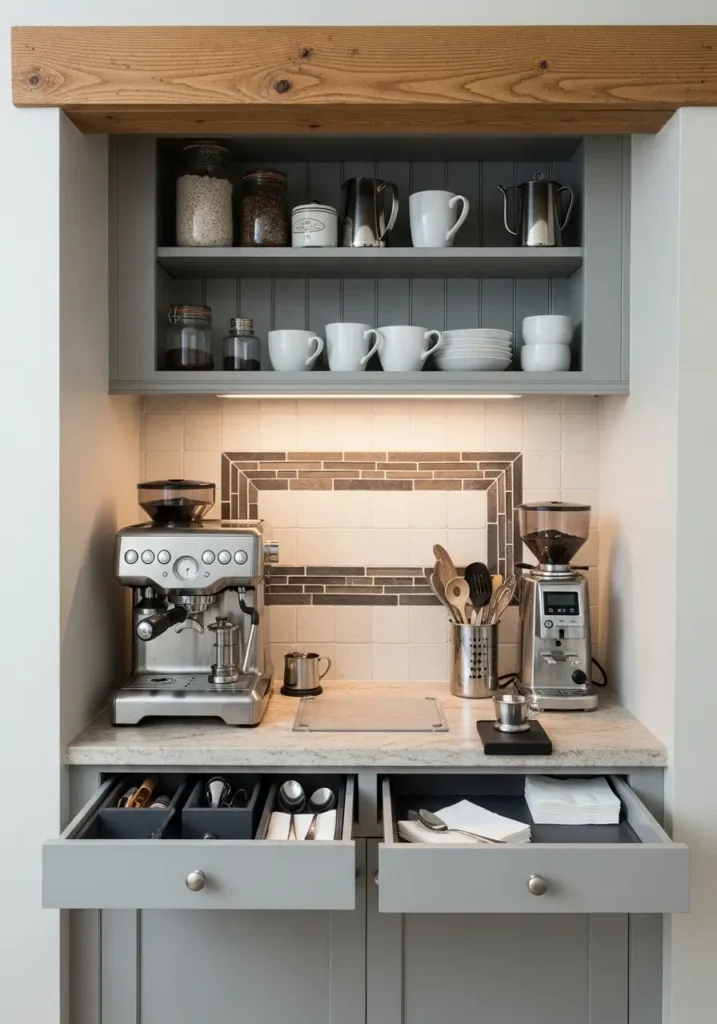
Best for: A kitchen renovation or an existing counter recess near everyday supplies.
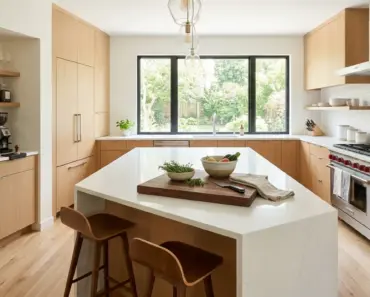
A built-in nook keeps coffee preparation close to the sink, refrigerator, and dishwasher. Match the cabinet fronts to the kitchen for a quiet look, or give the recess a different backsplash to make it feel distinct.
Place the machine toward one side and preserve a clear work area beside it. Use a shallow drawer for filters, scoops, and teaspoons, with larger supplies below.
Make it work: Set shelf heights around the actual appliance and its required clearances. A shelf that looks balanced but blocks the water reservoir will become a daily nuisance.
2. Floating Shelves Above a Freestanding Coffee Station
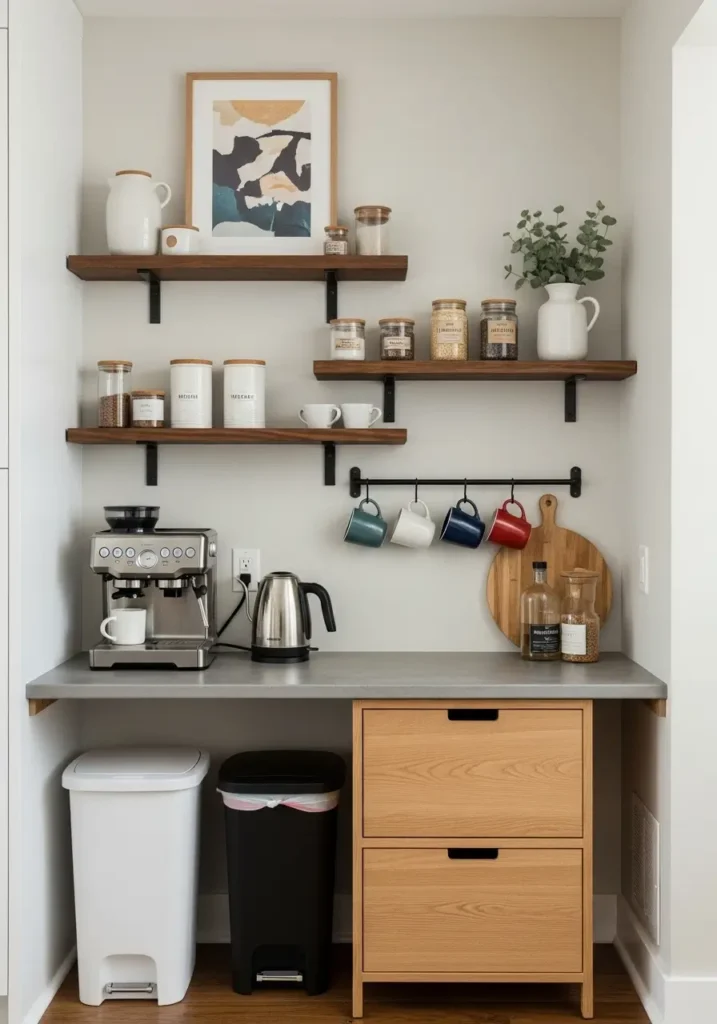
Best for: Small rooms where wall storage can free up the brewing surface.
Keep the brewer on a stable counter or cabinet and use floating shelves for mugs and lightweight accessories. This gives you the open, airy look without relying on a decorative shelf to support a heavy appliance.
For renters, check the lease and obtain permission where required before drilling. If wall mounting is not an option, choose a freestanding cabinet with an upper shelf or keep everything within a compact countertop arrangement.
For a freestanding alternative, consider the VASAGLE 35.4-inch baker’s rack with a wire basket and six hooks. Its storage areas can help separate cups and supplies from the preparation surface. Check shelf clearances and load limits against your equipment before deciding where the brewer will sit.
Make it work: Match wall fixings to the wall construction and respect each shelf’s load rating, including the weight of everything you plan to store. Our guide to DIY floating shelves for a small home offers additional project ideas.
3. Hidden Pantry or Cabinet Coffee Station
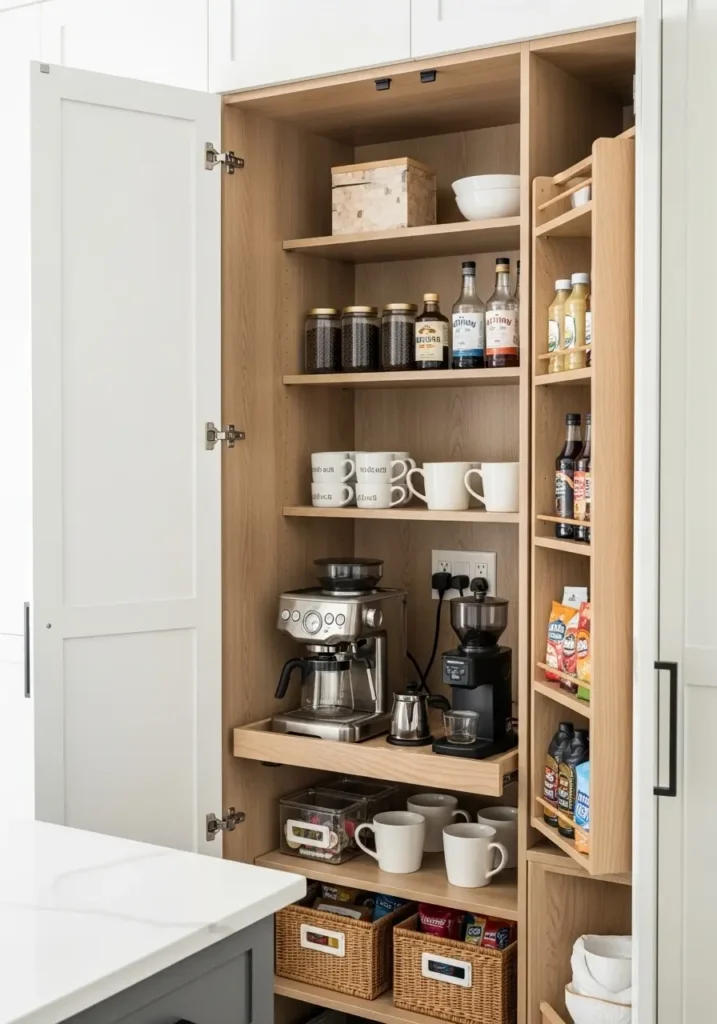
Best for: Keeping equipment and supplies out of sight between uses.
A cabinet can hold mugs, beans, filters, and a stored brewer behind closed doors. Drawers or shallow bins make supplies easier to find than deep shelves.
The VASAGLE buffet cabinet with three drawers and an adjustable shelf is an option for organizing small tools and larger supplies separately. Use the drawers for teaspoons and filters, and arrange the interior shelf around the mugs or containers you already own.
However, a cabinet suitable for storage is not automatically suitable for brewing. Some manufacturers explicitly prohibit operating their machines inside cabinets. Opening the doors does not override the appliance instructions.
Make it work: Plan an approved operating location before building the enclosure. If the brewer must move to an open counter for use, choose equipment you can comfortably relocate when cool. A pull-out tray alone does not establish that the installation is suitable.
4. Rolling Cart Coffee Bar
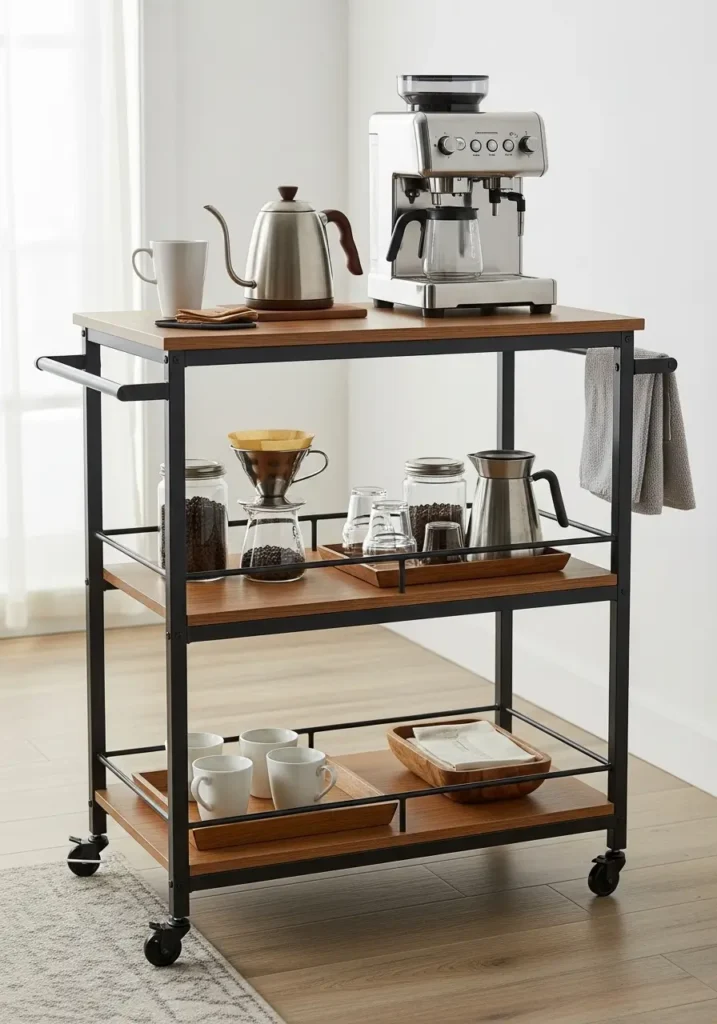
Best for: Flexible storage in a small home or a movable serving station.
A cart can hold mugs, coffee supplies, and equipment without becoming a permanent part of the kitchen. Choose a sturdy model with locking casters, an appropriate load rating, and a top large enough to support every appliance fully.
Use the upper surface for preparation, the middle shelf for daily supplies, and the bottom shelf for heavier backup items. Raised edges help contain small items but should not interfere with the machine’s feet.
Make it work: Park and lock the cart before brewing. Unplug equipment and let it cool before moving; carry hot drinks separately rather than rolling an open pot through the house.
5. Slim Console Along a Dining-Room Wall
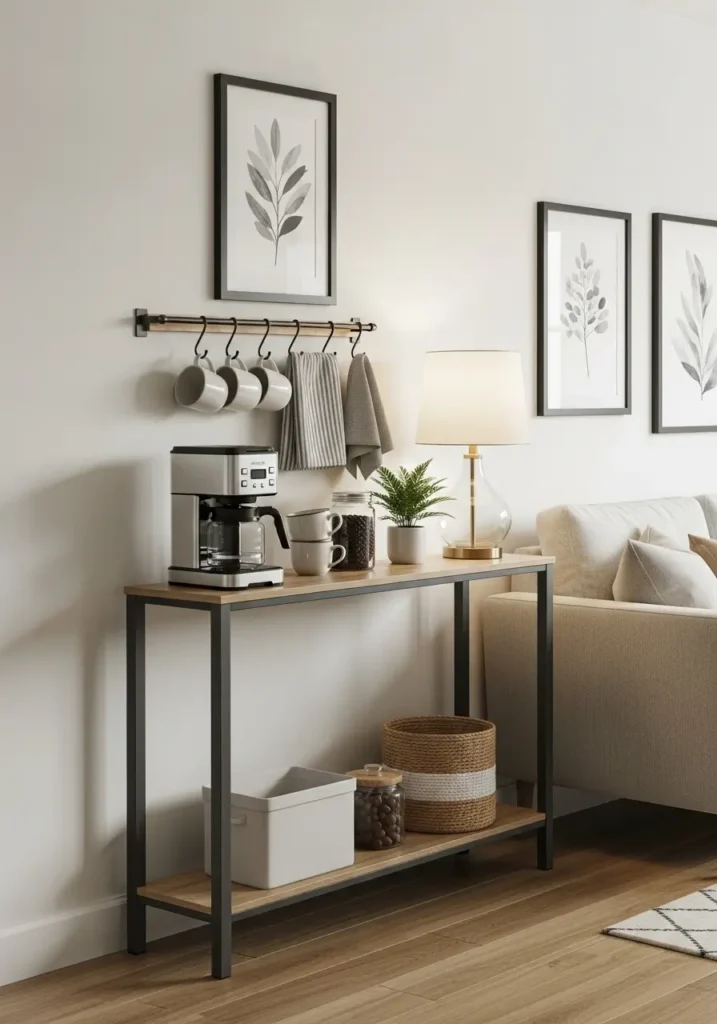
Best for: A compact brewer or a coffee-serving area outside the kitchen.
A narrow console can make use of an otherwise empty wall, but check depth carefully. The machine’s entire base must fit, with the clearances its manual requires. A console that works for cups and a serving carafe may be too shallow for an espresso machine.
Choose a drawer for teaspoons and filters, then keep mugs together at one end. Leave the other end available for setting down drinks.
If you prefer visible cup storage, the IBUYKE countertop mug tree in brown, model TBJ002H offers an alternative to wall hooks. Check that your mug handles fit and that loaded cups remain within the table’s footprint.
Make it work: Test the height as well as the depth. A low decorative table can be uncomfortable for repeated filling, grinding, and cleanup.
6. Cube-Storage Coffee Bar for a Small Apartment
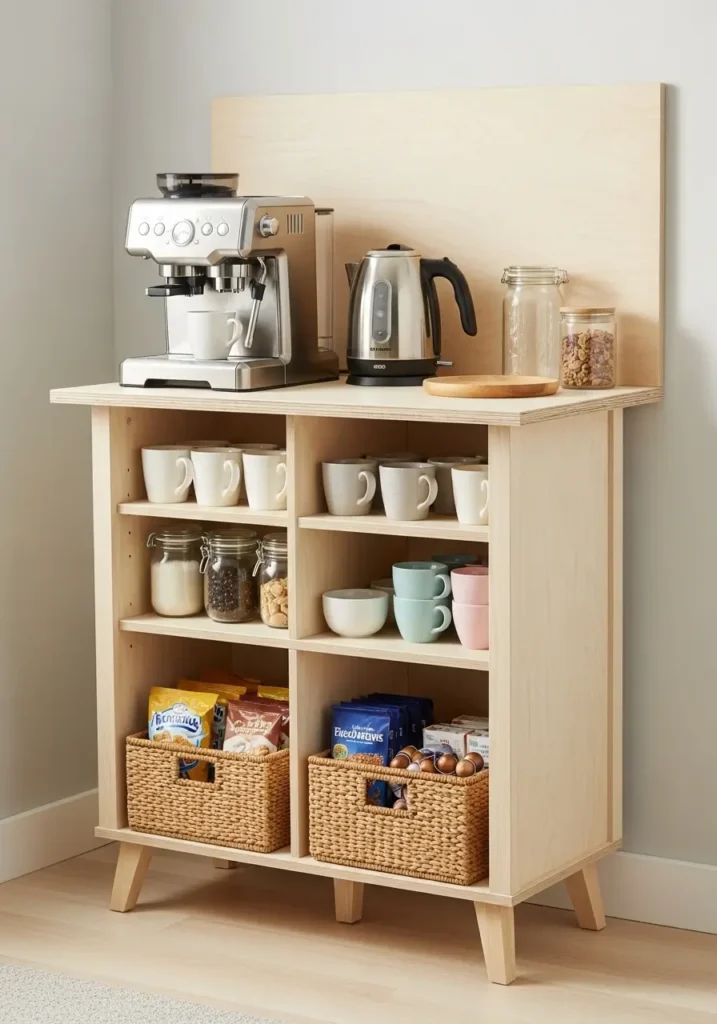
Best for: Combining coffee supplies with existing household storage.
A low cube-storage unit can provide useful compartments for mugs, filters, and napkins. Use removable bins for small supplies and leave one compartment open for the items you reach for most.
Before using the top for appliances, check the manufacturer’s load limits and assembly instructions. A board placed over the unit does not automatically increase its structural capacity, and adding unsupported legs can change its stability.
Make it work: Protect a suitable surface from drips and wipe spills promptly, especially around seams and exposed edges. Follow any anchoring requirements supplied with the furniture.
7. Minimalist Countertop Coffee Bar
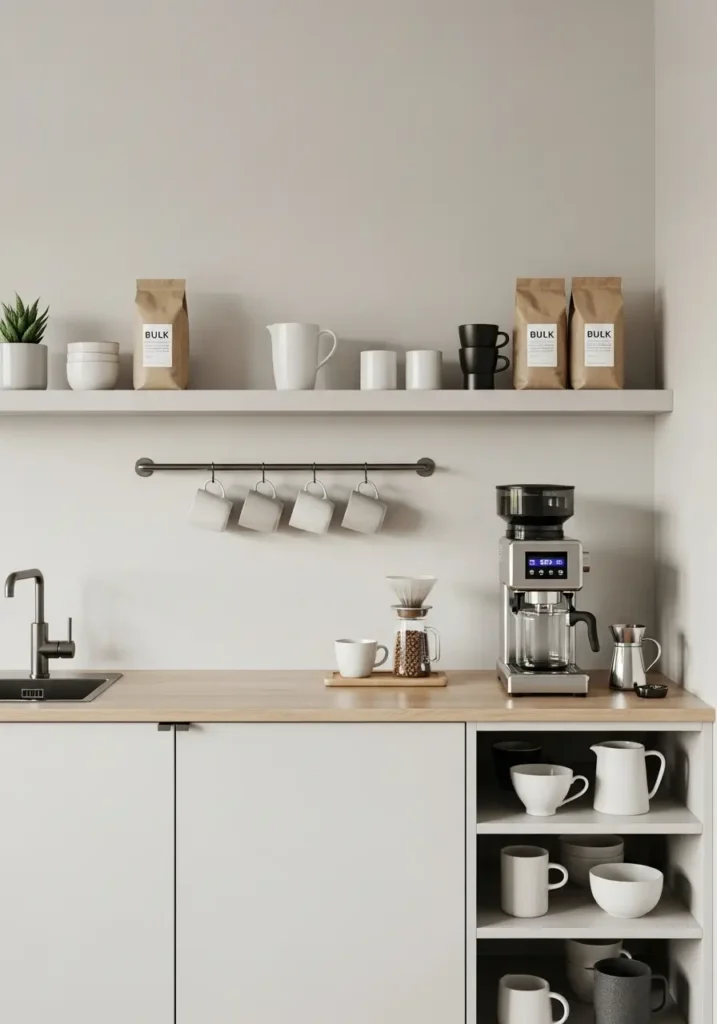
Best for: A simple routine and easy daily cleanup.
Keep one brewer, your daily cups, and a small container of essential tools on the counter. Put spare mugs, extra filters, and less-used equipment in a nearby cupboard.
For manual brewing, the Hario V60 02 ceramic coffee dripper in red can serve as the centerpiece. Pair it with compatible size 02 filters and a suitable cup or server, then keep a clear area beside it for pouring and handling the used filter.
A restrained palette can help, but the real benefit comes from leaving space between objects. You should be able to wipe the surface without dismantling a display.
Make it work: Before adding an accessory, decide which daily task it improves. Empty counter space is useful too.
8. Rustic Farmhouse Coffee Corner
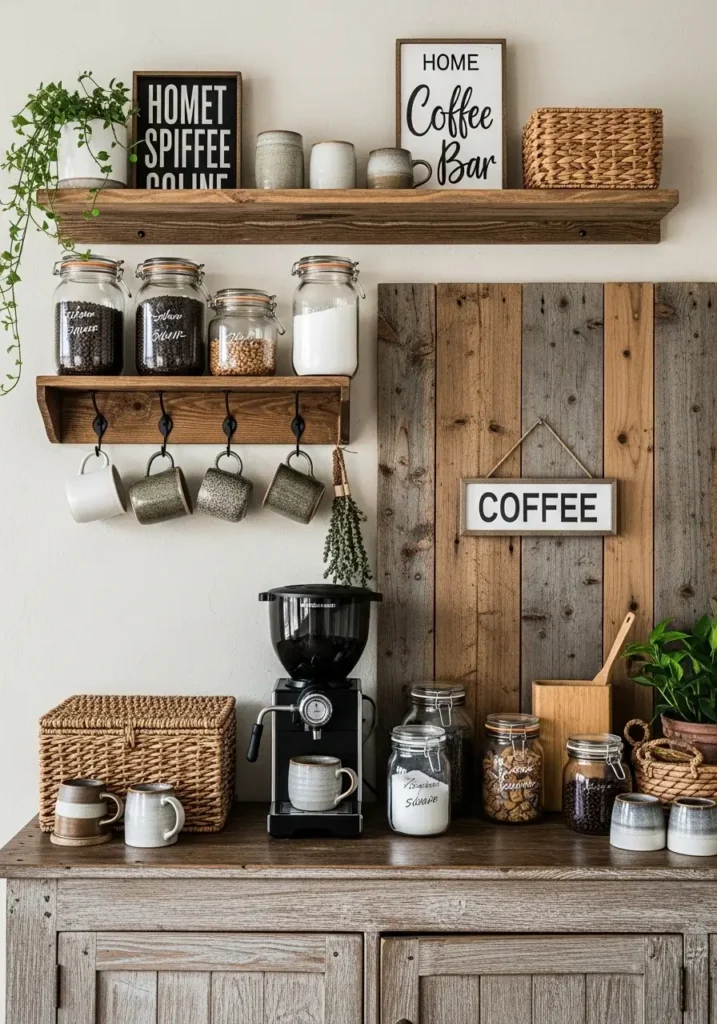
Best for: Bringing warmth to a kitchen, breakfast room, or dining area.
Pair a sturdy wood cabinet with ceramic mugs, woven storage baskets, and a simple shelf. An existing buffet can work well if its top is suitable for the equipment and protected from routine spills.
The MALACASA set of four multicolor 11-ounce ceramic mugs can add color without introducing extra ornaments. Choose cups that suit your usual drink size, and check their height against your machine’s dispensing area.
Use baskets for packaged supplies and a washable container for teaspoons. Keep decorative signs and small ornaments away from the preparation area so there is room to work.
Make it work: Keep textiles clear of hot equipment and choose a furniture finish you can clean according to the maker’s instructions.
9. Bold-Color Coffee Bar
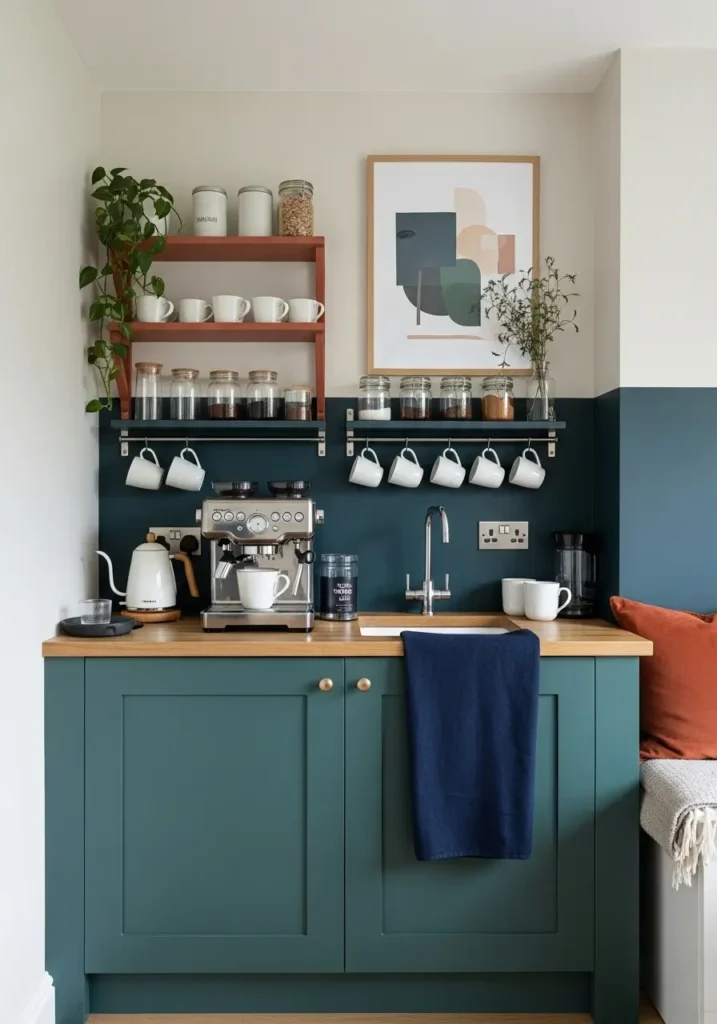
Best for: Giving a neutral room a distinct focal point without adding more furniture.
Paint the wall behind your station in a color you already enjoy elsewhere in the home. Forest green, deep blue, or warm terracotta can provide a backdrop for simpler cups and accessories.
Repeat the accent in one small item, such as a towel or print, rather than matching every object. If you cannot paint, a large framed artwork can provide a similar visual anchor.
Make it work: View color samples in both daylight and your usual morning lighting before committing.
10. Coffee, Tea, and Cocoa Center
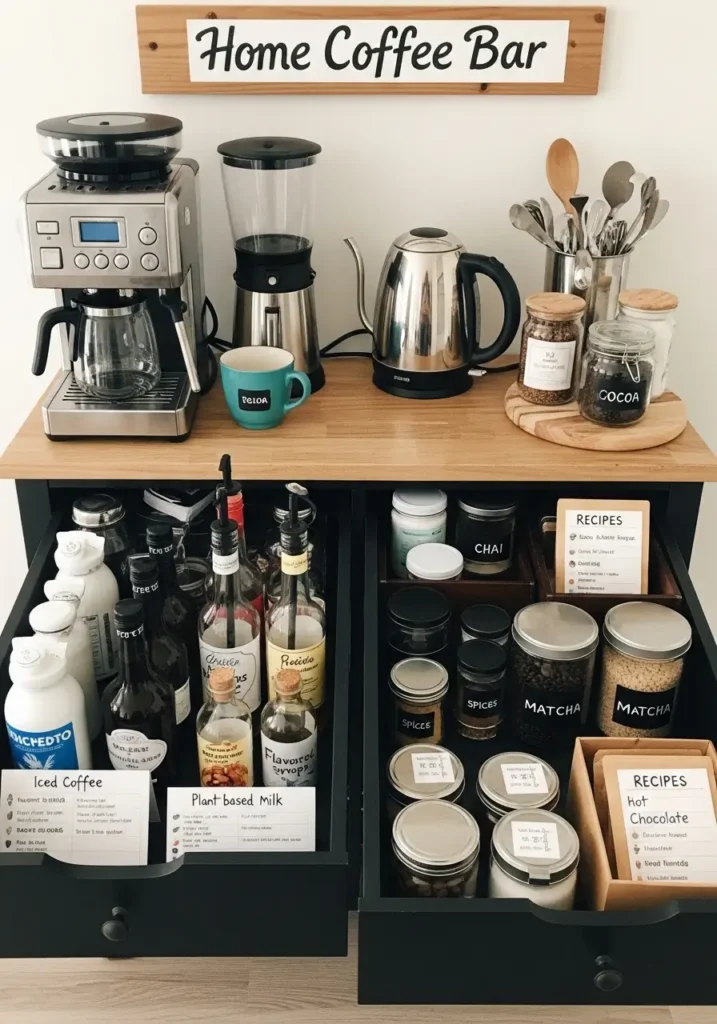
Best for: Households with different drink preferences.
Give coffee supplies one section and tea or cocoa another, with shared cups and spoons between them. Removable bins make it easy to bring out a particular set of ingredients without spreading everything across the counter.
A shared kettle can support several drink routines. Consider the COSORI 0.8-liter gooseneck electric kettle with temperature control in black if you want a dedicated kettle for tea and manual coffee brewing. Compare its capacity with the number of drinks your household usually prepares together.
Keep original ingredient and storage information when transferring products into containers. Label regular and decaffeinated coffee clearly, and store refrigerated ingredients according to their packaging.
Make it work: Place cold-drink cups and accessible dry supplies where family members can reach them without stretching across a hot appliance.
11. Dedicated Espresso Bar
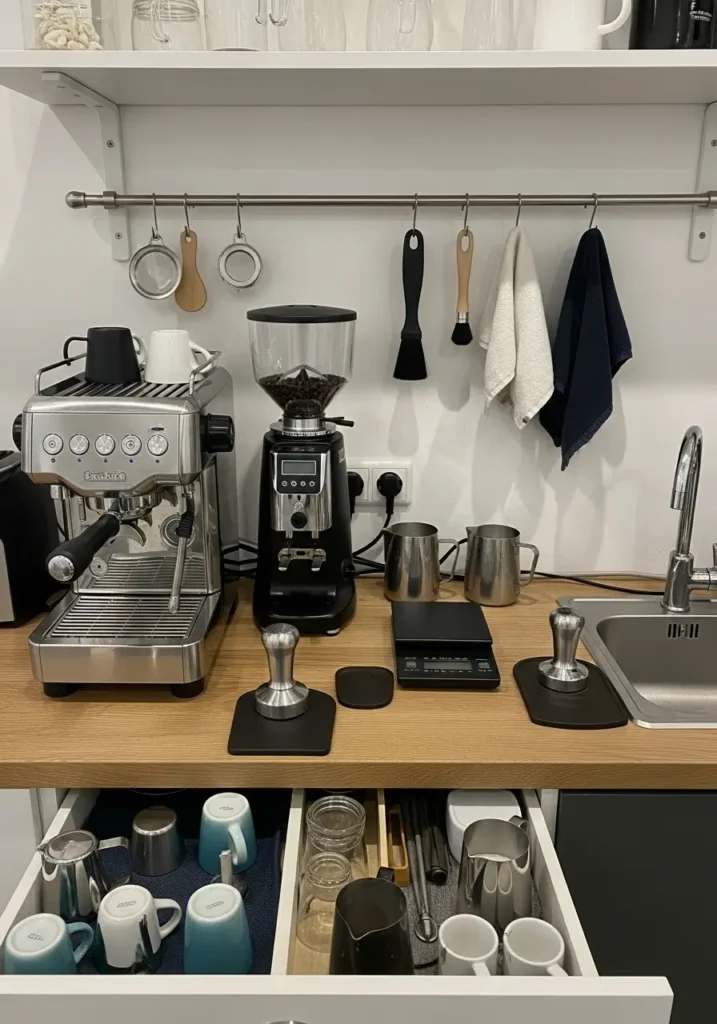
Best for: People who regularly make espresso and milk-based drinks.
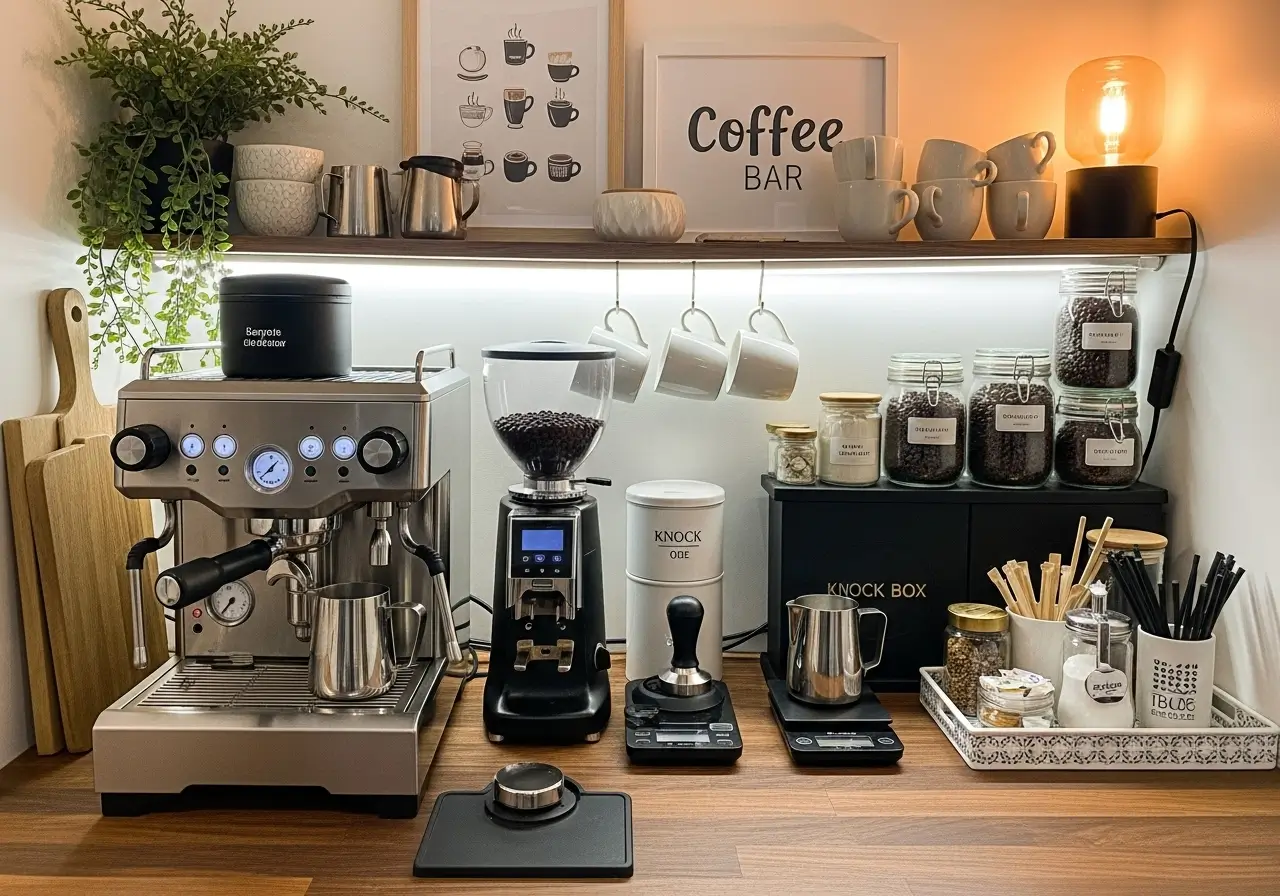
Arrange the space in the order you work: grinder, preparation area, espresso machine, then serving space. Reverse that arrangement if it better suits your hands or the machine’s controls.
The Breville BES450BSS Bambino espresso machine in brushed stainless steel is an option to consider for this layout. Plan the surrounding workspace before buying: you still need room for preparing coffee, handling a milk pitcher, and removing parts for cleaning.
Keep the scale, tamper, and knock box close to the preparation area. Leave enough room to insert the portafilter, move the steam wand, and remove the drip tray without shifting other equipment.
Make it work: Prioritize a stable surface and convenient access to water and cleanup. A narrow display ledge is unlikely to provide the working space this setup needs.
12. Office or Study Coffee Nook
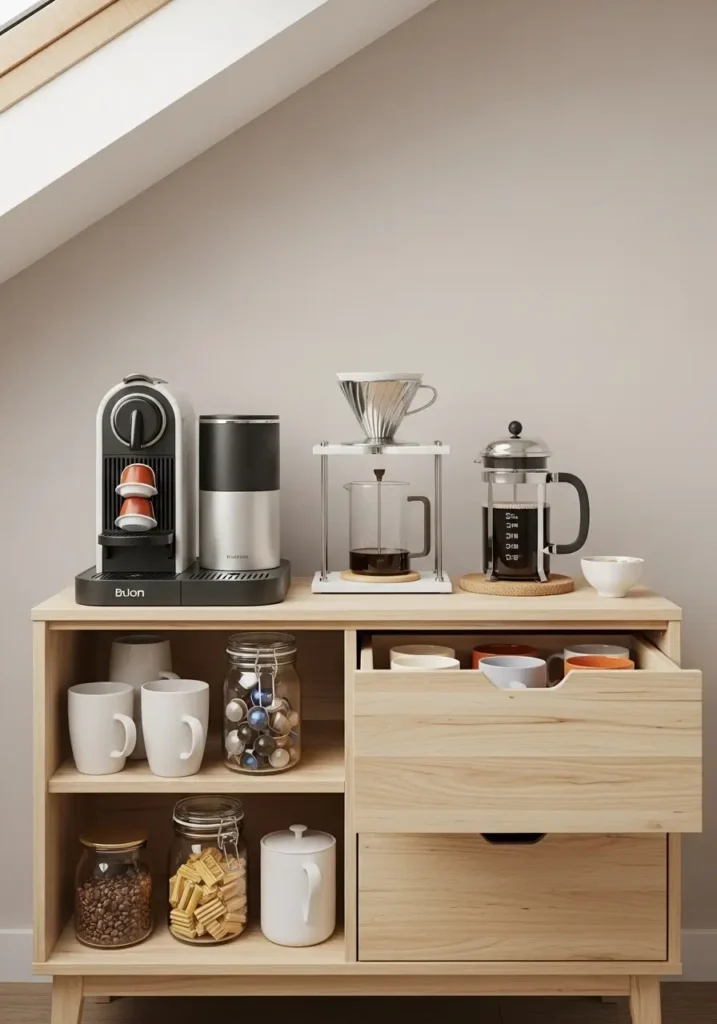
Best for: Keeping a drink station separate from your main desk.
A small sideboard can hold a compact brewer and a few cups, but consider noise, spills, and the distance to a sink. A grinder beside your microphone may be inconvenient during calls, and used grounds still need somewhere to go.
For an easier setup, brew in the kitchen and bring an insulated serving carafe to the office. You retain the convenience without adding another appliance to clean.
Make it work: Keep the drink station away from computers, paperwork, and charging equipment. Include a tray for returning used cups to the kitchen.
13. Patio or Sunroom Coffee Retreat
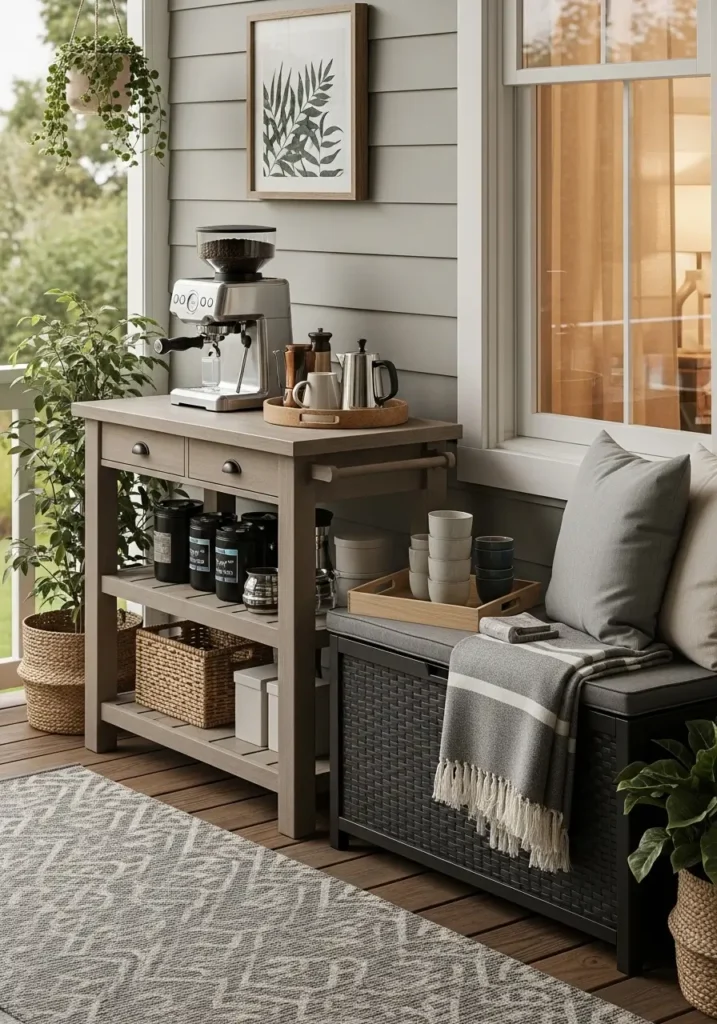
Best for: Enjoying coffee outdoors or beside a bright window.
The simplest version is a serving station: brew indoors, then carry out a tray with cups and an insulated carafe. A small outdoor table can hold drinks while a nearby basket stores cushions or blankets when appropriate.
Do not assume a covered patio makes an indoor appliance suitable for outdoor use. Follow the equipment’s permitted operating conditions, and keep stored coffee away from sunny windows and damp areas.
Make it work: Build the space around comfortable seating and a stable place to set a cup. You do not need a second brewing setup to enjoy a slower morning.
14. Dessert and Coffee Bar for Hosting
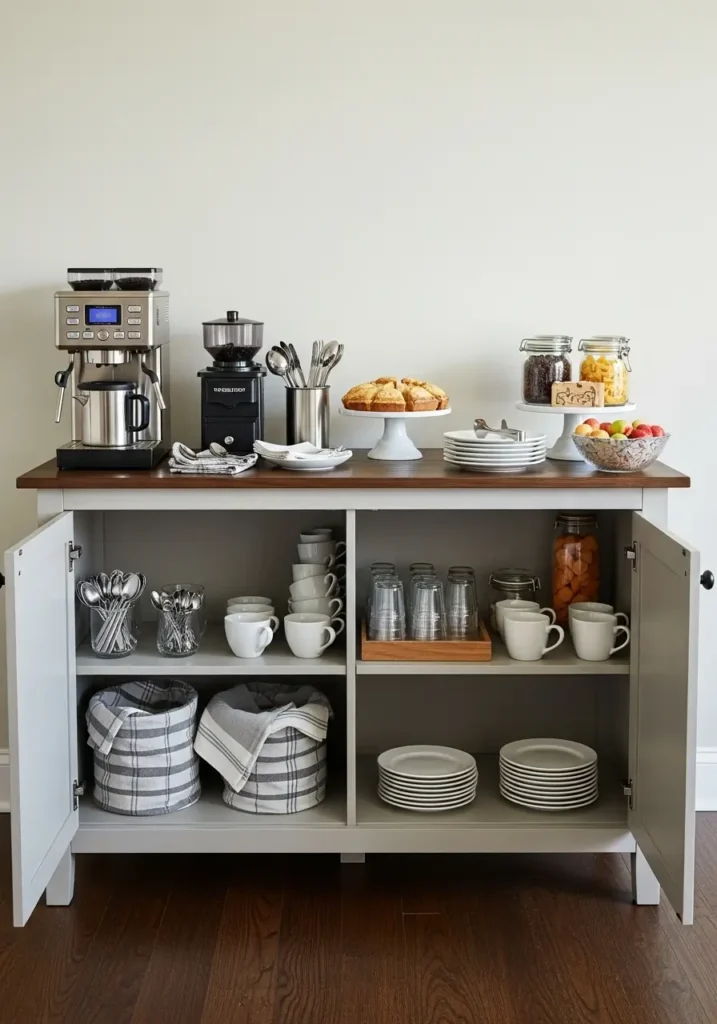
Best for: A dining-room buffet that serves both everyday and entertaining needs.
Arrange cups first, coffee next, and spoons and add-ins afterward so guests can move along the surface without reaching over one another. Place desserts and plates at the other end, with space to put down a cup while serving food.
For larger gatherings, a 102-ounce / 3-liter pump coffee carafe provides a serving option for coffee brewed in advance. Check the manufacturer’s instructions for suitable beverages, filling, and cleaning. Place it on a stable surface with enough room beneath the spout for cups.
Keep regular coffee, decaf, and other options clearly labeled. Offer milk in small quantities and return it to refrigerated storage promptly rather than treating it as permanent counter decor.
Make it work: Let guests serve from a simple carafe while you handle any unfamiliar espresso equipment. Store the extra serving pieces below when the gathering ends.
Organize the Station So It Stays Easy to Use
Give each stage a home
You do not need separate counters for preparation, brewing, serving, and cleanup. Even a small station can follow that sequence.
| Stage | Keep nearby | Leave room for |
|---|---|---|
| Prepare | Coffee, filters, scoop or scale, grinder if used | Measuring and handling grounds |
| Brew | Brewer and any required kettle | Opening lids, filling water, and using controls |
| Serve | Cups, teaspoons, and everyday add-ins | Setting down a finished drink |
| Clean | Washable cloth and a grounds-disposal container | Removing trays and collecting used utensils |
Keep the supplies you use each day in the easiest-to-reach positions. Put spare mugs and unopened supplies farther away. If two people make drinks at once, give the cups and add-ins a location that does not block the brewer.
Use trays selectively
A small tray works well for sugar, spoons, or syrup bottles. It can contain minor drips and make those items easier to move during cleaning, provided its finish is suitable.
The set of seven nesting rectangular wood serving trays with handles gives you different sizes for grouping accessories and serving guests. Use only the size your station needs and store the others elsewhere. Keep food on suitable dishes unless the product instructions confirm direct food contact is appropriate.
A heavy machine does not necessarily belong on a decorative tray. Its feet need firm support, its vents must remain clear, and any mat or protective surface should suit the appliance and furniture. Avoid placing the whole setup on something you must lift every day.
Store beans for flavor, not display
Use an airtight, opaque container in a cool, dark location, away from the brewer’s heat and steam. Buy amounts you can use while fresh rather than filling a large display jar. The National Coffee Association’s coffee-storage guidance explains why air, moisture, heat, and light matter.
If you prefer to see how much coffee remains, consider the Veken 22-ounce stainless steel coffee canister with a window. Because the window allows light in, keep it in a dark cupboard rather than on a sunny counter. Choose a container size that suits how quickly you use your coffee.
For other dry ingredients, keep labels, best-before dates, and any preparation instructions available. Matching jars are optional; knowing what is inside matters more.
Style Your Coffee Bar Without Losing Working Space
Choose two or three colors already present in the room and repeat them in a few useful objects. Wood, cream ceramics, and a dark metal accent can feel cohesive without requiring a matching set of everything.
Balance visible and hidden storage. Display the mugs you use most, then put refill bags, cleaning products, and spare accessories behind a door or in a drawer.
- Add one focal point: Choose a print, a painted backdrop, or an attractive shelf.
- Keep decoration out of the work area: Plants and frames should not block controls, lids, or cleanup.
- Make lighting useful: You should be able to see the water level and preparation surface clearly.
- Leave some space empty: A clear patch of counter makes the station easier to use and visually calmer.
For seasonal changes, swap a towel or a pair of mugs. There is no need to store several boxes of decorations for a small coffee corner.
Choose Equipment That Fits Your Drinks and Cleanup Habits
Build around one reliable brewing method before adding more. Your starter setup might be a drip brewer and filters, a French press and kettle, or a compact machine with the supplies it requires.
If you use whole beans, choose a grinder suitable for your brewing method. If you prefer pre-ground coffee, you can organize a useful station without one. A scale can help you repeat quantities, but specialized accessories should earn their place through regular use.
Think about maintenance before buying. Check whether you can comfortably remove the reservoir, clean the milk components, obtain replacement parts, and follow the machine’s care instructions.
To assess possible savings, compare the drinks you would genuinely replace with home-brewed ones. Include beans or pods, milk, filters, and maintenance supplies. New equipment is not automatically a saving if it adds spending without changing your café visits.
Build Cleanup Into the Routine
The station should be as easy to reset as it is to use. Keep cleaning supplies nearby but separate from drink ingredients, and give wet items somewhere appropriate to dry.
- After brewing: Deal with used grounds, drips, and milk-contact parts according to the equipment instructions.
- During your regular reset: Clear stray items, wash suitable accessories, wipe the surface, and check supplies.
- For machine maintenance: Follow the manufacturer’s schedule and approved products for cleaning, descaling, and filter replacement.
Cleaning coffee residue and removing mineral scale are different jobs. Avoid assuming that one weekly cycle handles both, or that the same cleaning solution suits every machine.
Keep a short supply list inside a cupboard door. When you open the last pack of filters or the backup bag of coffee, add it to your shopping list instead of crowding the station with unnecessary stock.
Common Coffee Bar Questions
How much space do I need?
There is no universal minimum. Measure your brewer in use, including its open lid, reservoir access, and required clearances, then add a place to prepare and set down a drink. A compact single-brewer station needs less room than a separate grinder and espresso machine.
Can I create a coffee bar without buying furniture?
Yes. Clear one section of an existing counter, move daily supplies into the drawer below, and group small accessories on a tray. Use the arrangement for a week before deciding whether you need shelves or a cabinet.
What works best for a rental?
An existing counter or a sturdy freestanding cabinet usually requires the fewest changes. Wall shelves depend on your lease, the wall construction, and suitable installation. Choose furniture that can also serve another purpose if your next home has a different layout.
Does my coffee bar need a sink?
A separate sink is not essential. What matters is having a manageable route for filling water and washing parts. The farther you are from the kitchen, the more useful a tray for used cups and a removable water reservoir may be.
How do I stop it becoming cluttered?
Give the station a clear boundary and keep only daily equipment within it. Store unopened supplies elsewhere, remove accessories you rarely use, and preserve the space where you prepare your drink. If every surface is full, reorganize before buying another storage piece.
Start With One Better Morning
Choose the idea that solves your main frustration: a countertop station for scattered supplies, a cabinet for hidden storage, or a serving cart for guests. Set it up with what you own, then make your usual drinks there for a week.
Notice what you have to move, reach around, or carry across the room. Fix those small obstacles first. A home coffee bar works best when making a drink and leaving the space clean afterward feels straightforward.