20 Creative and Cute Wall Decor Ideas for a More Personal Home
Blank walls can make a room feel unfinished, but decorating them does not require an expensive renovation. The best wall decor ideas combine personality, proportion, color, and function. A single oversized piece may be enough for a small room, while a large living-room wall might benefit from layered artwork, shelving, textiles, or a carefully arranged collection.
Before choosing a design, consider what the room needs. Mirrors can brighten a darker space, textiles add softness, shelves provide display space, and personal collections make a home feel distinctive. These 20 ideas include practical options for homeowners and renters, with suggestions for adapting each look to your space.
How to Choose Wall Decor That Fits Your Room
Begin with the wall rather than the accessory. Measure the available width and height, note nearby furniture, and identify switches, vents, doors, and other features that could affect placement. Above a sofa, bed, console, or desk, wall decor generally looks more connected when it relates visually to the furniture below instead of floating alone in the center of the wall.
- For a calm room: Repeat two or three colors already used in the furniture and textiles.
- For a focal wall: Choose one large piece or a coordinated arrangement with a clear visual center.
- For a small space: Use shallow decor, mirrors, narrow ledges, or vertically arranged artwork.
- For a rental: Check the lease before applying adhesive products, paint, wallpaper, or mounting hardware.
- For heavy objects: Use hardware appropriate for the wall material and the item’s weight. When necessary, fasten it to a stud or use a correctly rated anchor.
Textured and Nature-Inspired Wall Decor
1. Add Soft Texture With a Macramé Wall Hanging

A macramé hanging introduces texture without the visual weight of framed artwork. Natural cotton works especially well in bohemian, coastal, Scandinavian, and relaxed organic interiors. For a more contemporary result, look for a simple geometric pattern in cream, black, clay, olive, or another color already present in the room.
Choose the size according to the furniture beneath it. A narrow hanging can fill a vertical space beside a window, while a wider design can visually anchor a bed or console. Because textiles collect dust, place the piece where it can be removed and cleaned according to its care instructions.
2. Build a Gallery Wall With Eclectic Frames
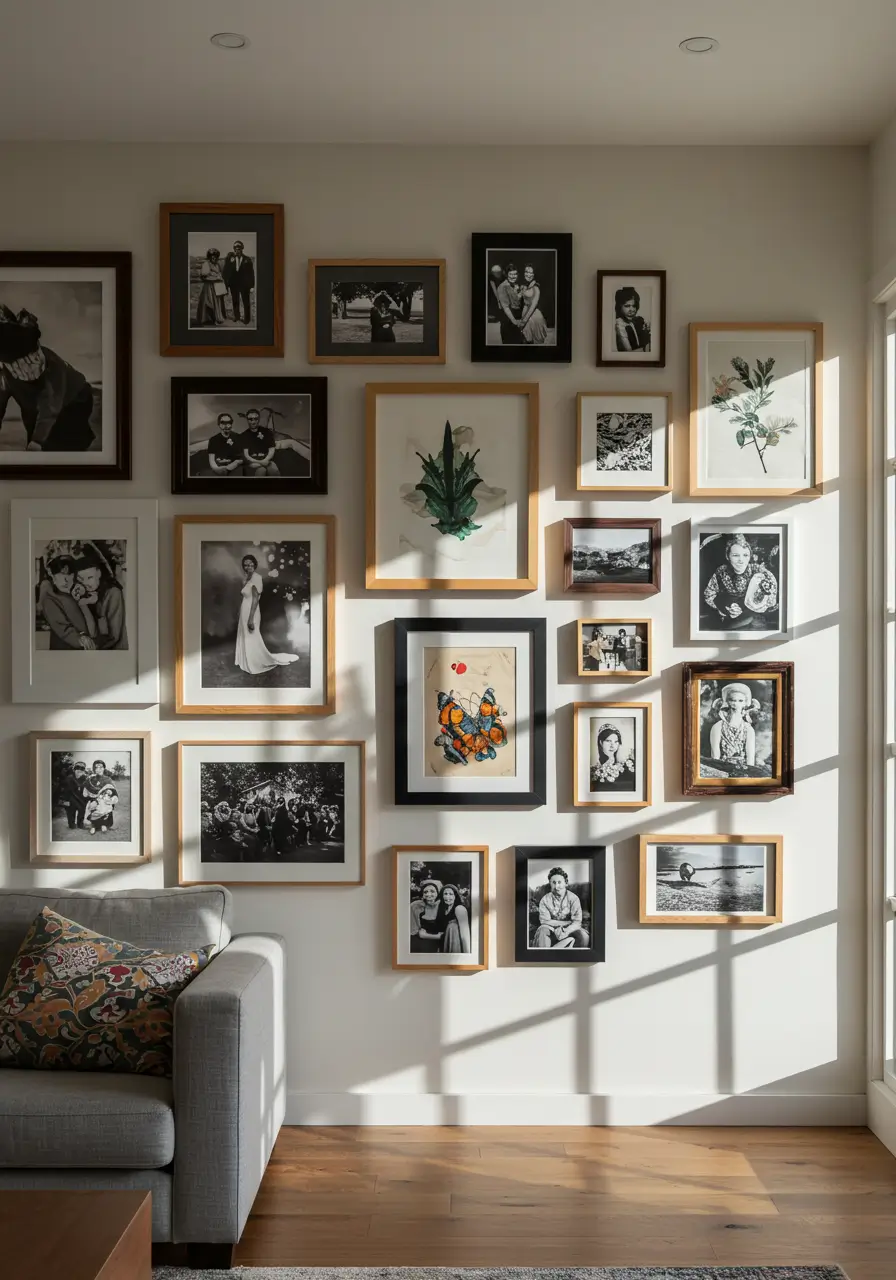
A gallery wall lets you combine family photographs, illustrations, paintings, postcards, and meaningful objects. The collection can be symmetrical and polished or relaxed and varied. To keep an eclectic arrangement cohesive, repeat at least one element, such as frame color, mat style, subject matter, or color palette.
Plan the composition on the floor first. You can also trace the frames onto paper, tape the templates to the wall, and adjust their positions before installing hardware. Keep the gaps reasonably consistent so the separate pieces read as one arrangement.
3. Display Memories With Fairy Lights and Photo Clips
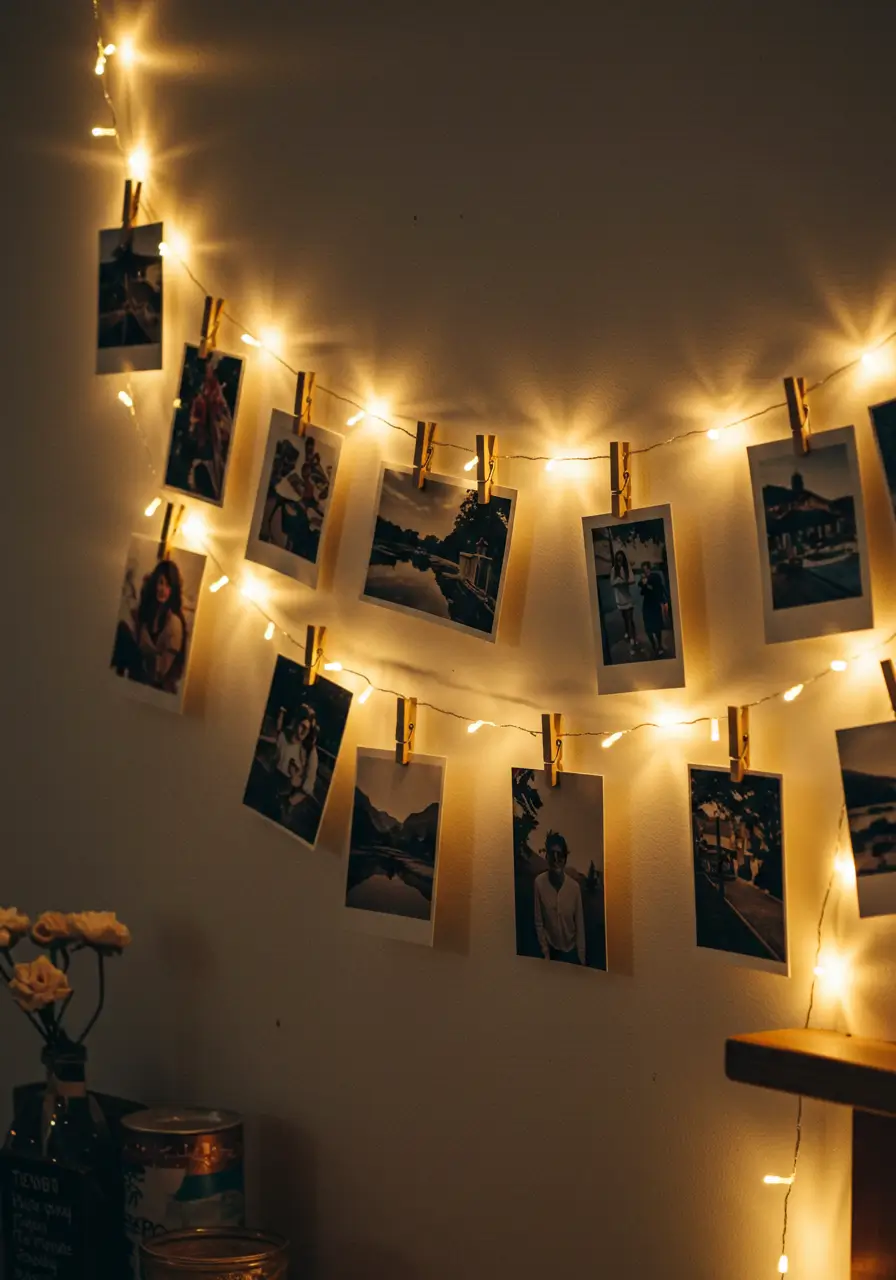
Fairy lights and small clips create an informal display for photographs, postcards, tickets, and lightweight art. This idea suits bedrooms, creative corners, dorm rooms, and casual home offices because the display is easy to update.
Use lights intended for indoor decorative use and follow the manufacturer’s installation instructions. Keep paper photographs away from hot bulbs or damaged wiring, and avoid placing the strand where it could be pulled down easily. Warm-white lights create a cozy effect, while an unlit cord-and-clip display offers a simpler daytime look.
4. Introduce Greenery With Wall-Mounted Planters
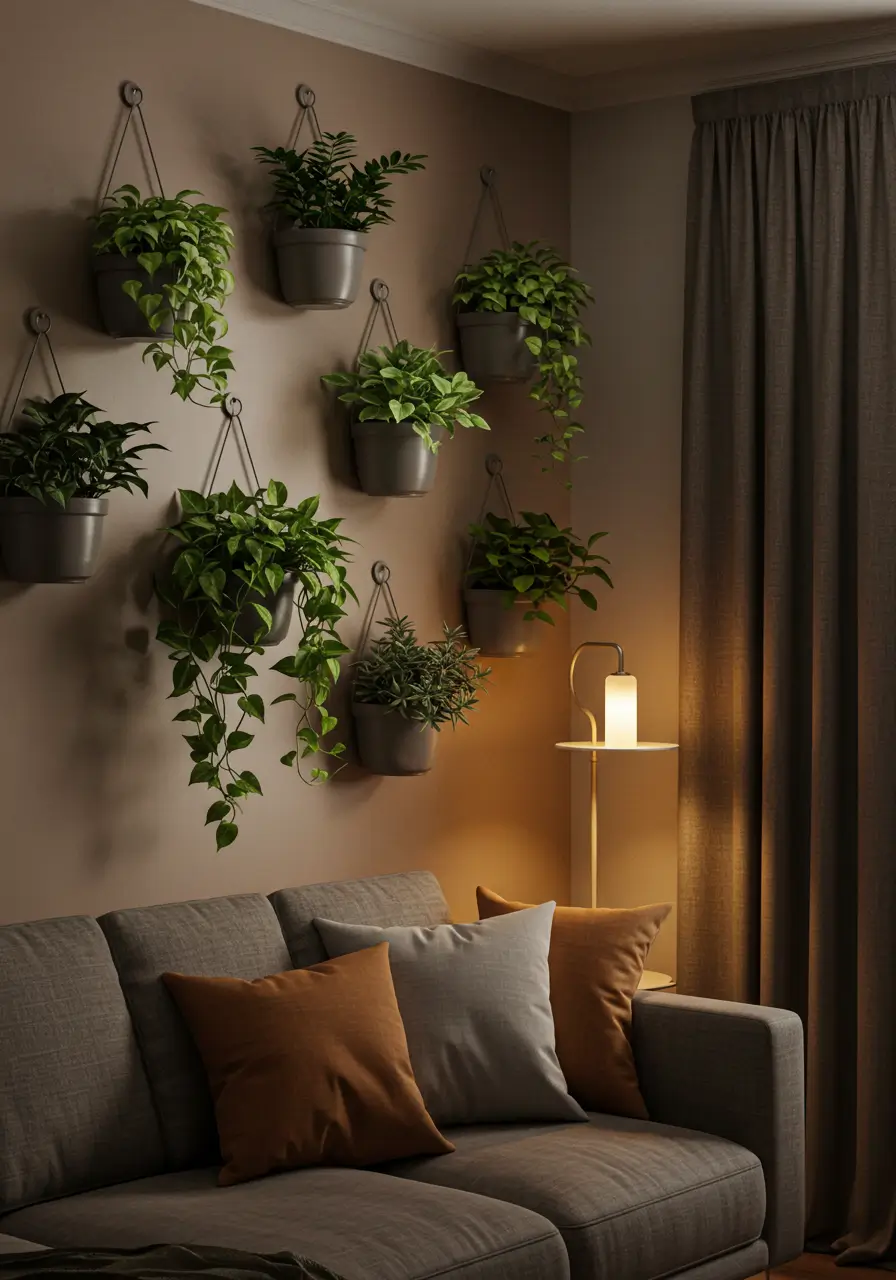
Wall planters bring color and natural movement to kitchens, sunrooms, bathrooms, and living areas. Trailing plants can soften straight architectural lines, while compact plants work well in a small group of containers.
Select plants according to the room’s actual light and humidity rather than appearance alone. Use containers with removable liners or reliable drip protection so water cannot damage the wall. If children or pets can reach the display, verify that the selected plants are suitable for the household and mount each planter securely.
5. Repurpose Vintage Finds as Wall Art
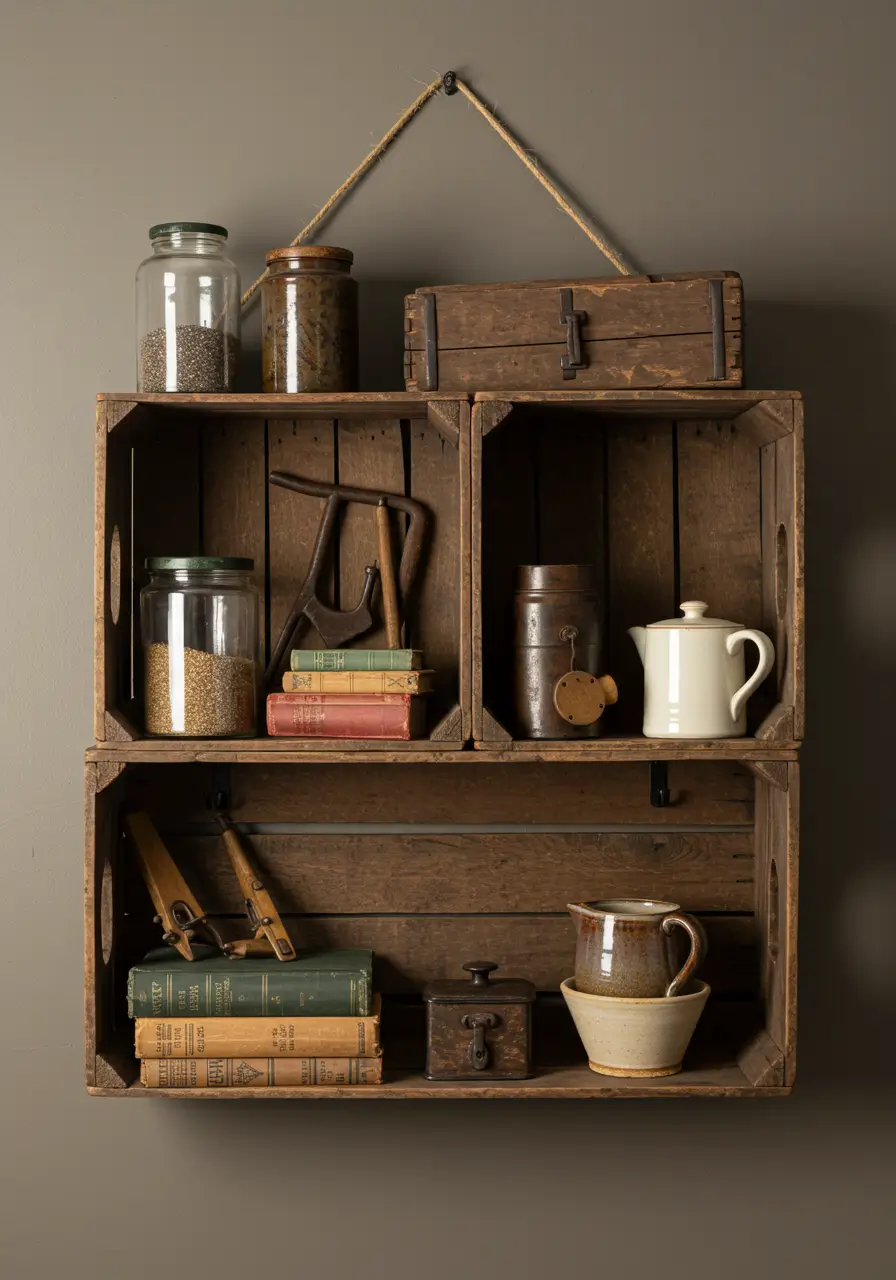
Old window frames, decorative plates, architectural fragments, maps, trays, signs, or small wooden crates can become distinctive wall decor. These pieces add age and character that mass-produced accessories sometimes lack.
Avoid overcrowding the wall with unrelated finds. Choose objects that share a material, period, color, or theme. Inspect older painted items for flaking finishes, sharp edges, loose glass, or unstable hardware before bringing them into frequently used rooms.
DIY and Budget-Friendly Wall Decor Ideas
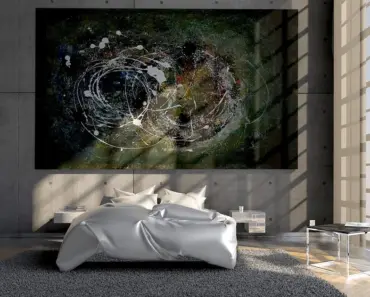
6. Paint Your Own Abstract Canvas
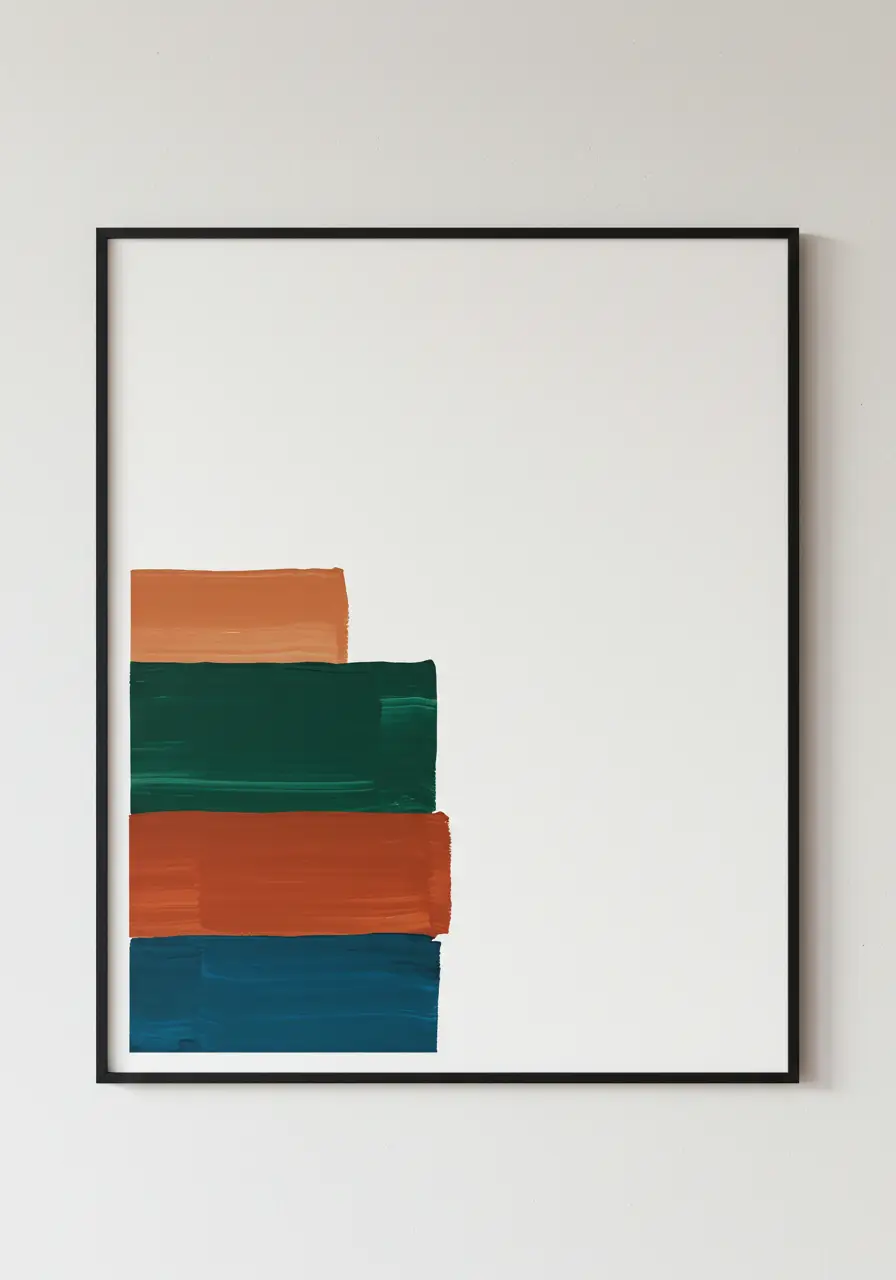
You do not need advanced painting skills to create attractive abstract artwork. Start with colors from the room, then experiment with broad shapes, repeated lines, layered brushstrokes, or simple color blocks. Limiting the palette often produces a more cohesive result than using every available color.
For a polished finish, paint the canvas edges or add a simple frame. Test your colors on paper first and view them in the room’s natural and artificial light before completing a large canvas.
7. Create Temporary Patterns With Washi Tape
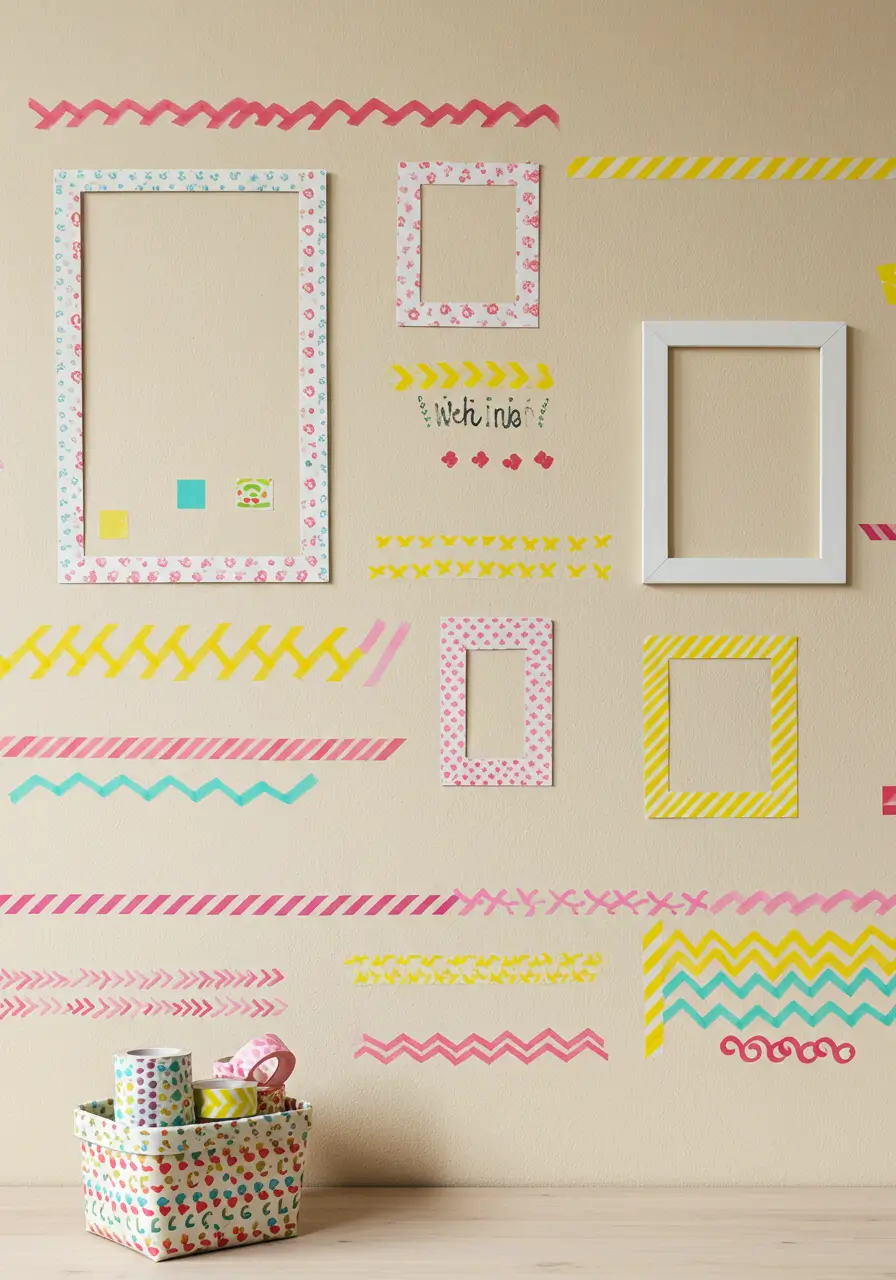
Washi tape can create geometric lines, faux frames, arches, small murals, or playful patterns. It is inexpensive and easy to reposition, making it useful for seasonal decorations or spaces that change frequently.
Adhesion and removal depend on both the tape and the wall finish. Test a small hidden area first, especially on delicate, recently painted, textured, or matte surfaces. Apply the tape to a clean, dry wall and remove it slowly rather than assuming every product will be damage-free.
8. Arrange Hats or Woven Baskets
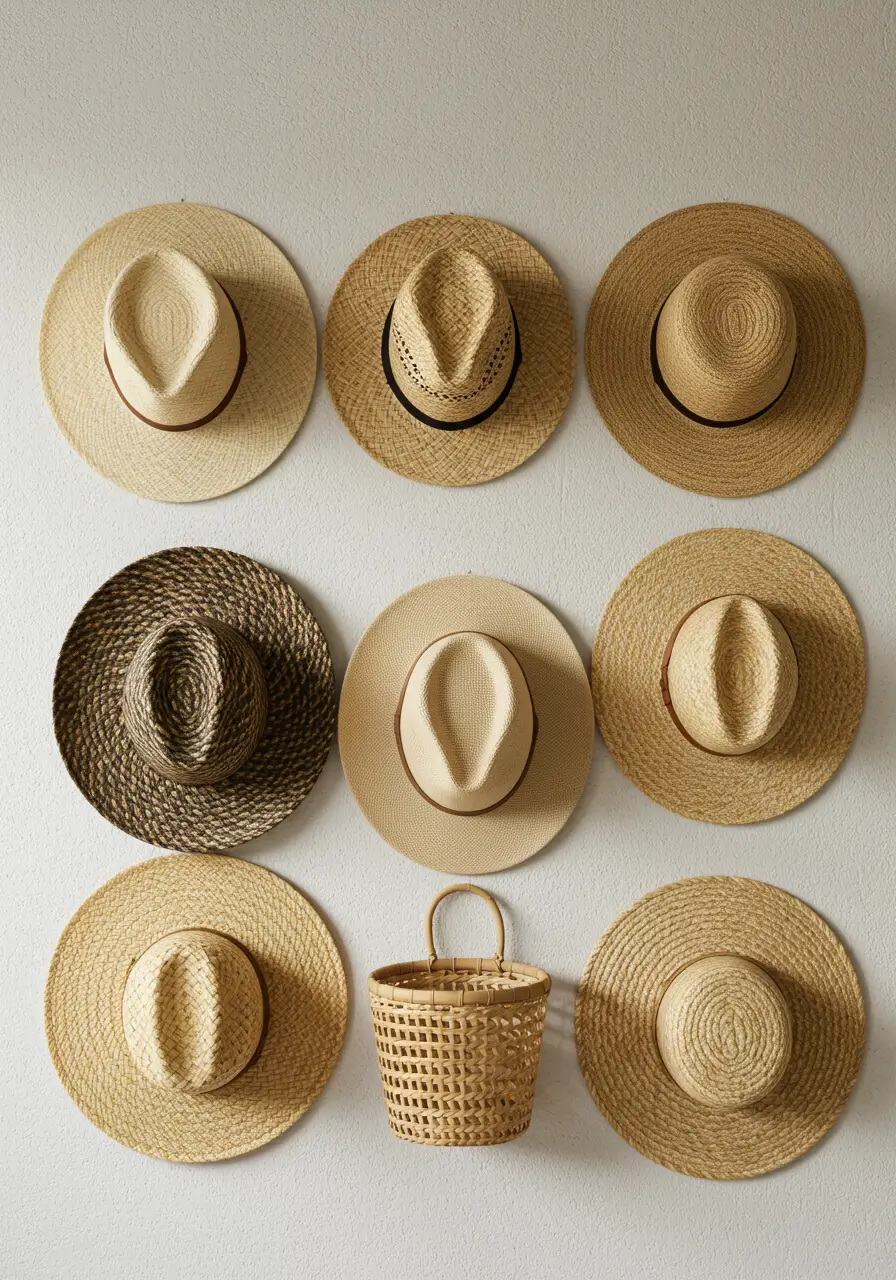
A collection of straw hats or shallow woven baskets adds warmth, dimension, and natural texture. It can fill a large wall while remaining visually lighter than bulky cabinets or shelves.
Begin with the largest item slightly off center, then arrange smaller pieces around it. Mix weave patterns and sizes while repeating a few tones. If you wear the hats regularly, use accessible hooks and allow enough space to remove one without disturbing the entire display.
9. Cover a Large Area With a Fabric Hanging

A tapestry or decorative fabric panel can cover a broad blank wall more affordably than a group of large framed prints. Textiles also soften rooms dominated by hard surfaces and can introduce pattern without permanent wallpaper.
Steam or press the fabric as appropriate before hanging it, and use a rod, discreet clips, or another support that distributes its weight evenly. Keep fabric away from open flames, heat sources, and damp walls.
10. Group Mirrors to Reflect More Light
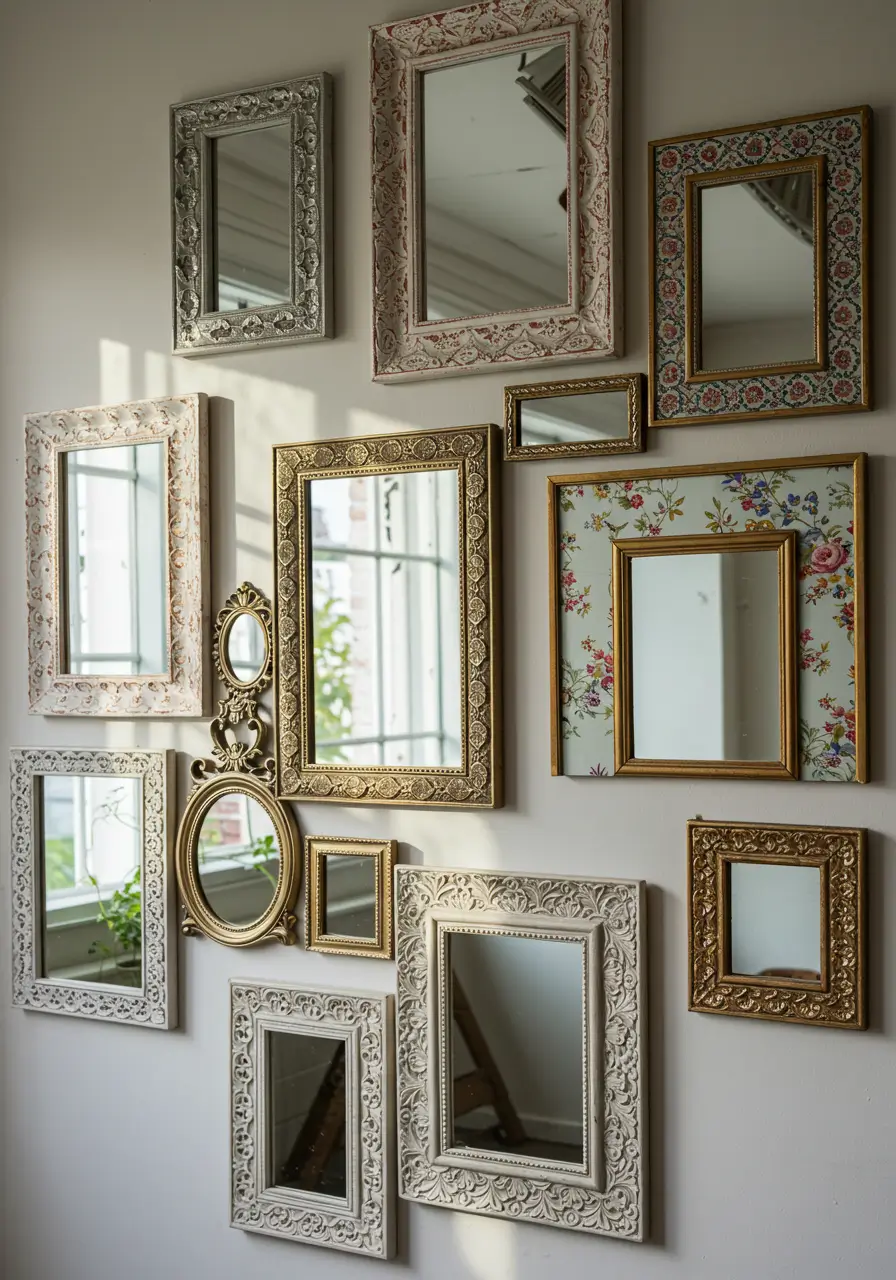
A cluster of small mirrors can brighten a room and add sculptural interest. Round, arched, sunburst, and vintage-style frames create an eclectic look, while identical frameless mirrors feel more modern.
Consider what each mirror will reflect before mounting it. A view of a window, plant, or attractive architectural feature is usually more pleasing than a reflection of clutter. Use secure hardware suitable for the mirror’s weight, particularly above beds, sofas, and walkways.
If you enjoy warm woods, natural fibers, neutral colors, and restrained accessories, explore these organic modern decorating tips for more ways to build a coordinated room.
Wall Decor That Adds Storage or Function
11. Style Floating Shelves With a Curated Collection
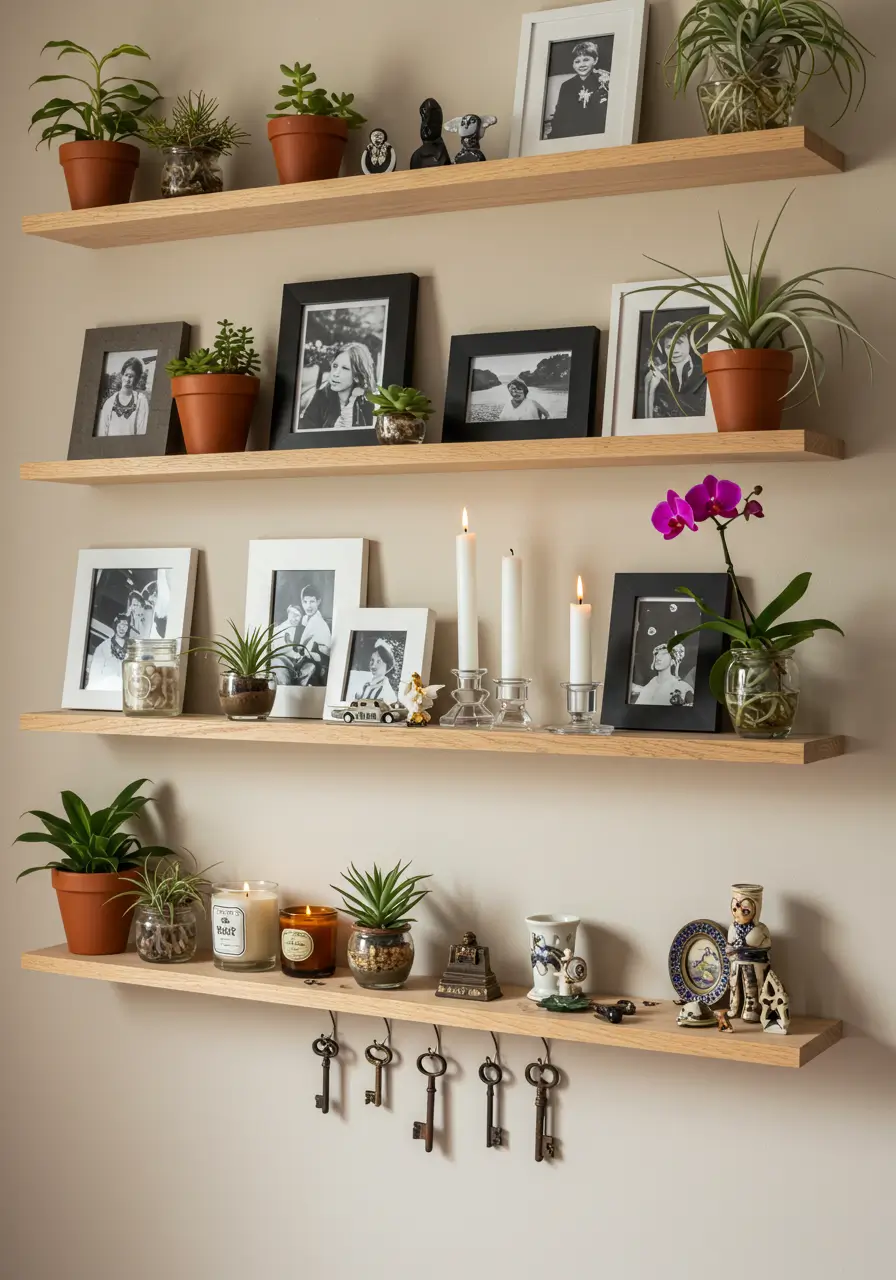
Floating shelves provide space for framed photographs, small artwork, plants, books, and collected objects. They are especially useful when you want a display that can change with the seasons.
Vary the height and shape of the objects, but leave some open space so the shelves do not look crowded. Place heavier pieces near the ends only when the shelf and mounting system can support them. Follow the stated load limit and use fasteners designed for your wall type.
12. Transform a Wall With Removable Wallpaper or Decals
Removable wallpaper can turn one wall into a focal point without covering the entire room. Botanical patterns add softness, stripes can emphasize height or width, and small-scale prints are easier to use in compact spaces. Decals offer a lighter alternative for arches, dots, stars, borders, or children’s-room themes.
Measure carefully and order enough material from the same production batch when possible. Samples help you judge color, scale, texture, and adhesion before committing. Even products marketed as removable can react differently to paint and wall conditions, so test first and check rental restrictions.
13. Make an Interactive Chalkboard or Whiteboard Area
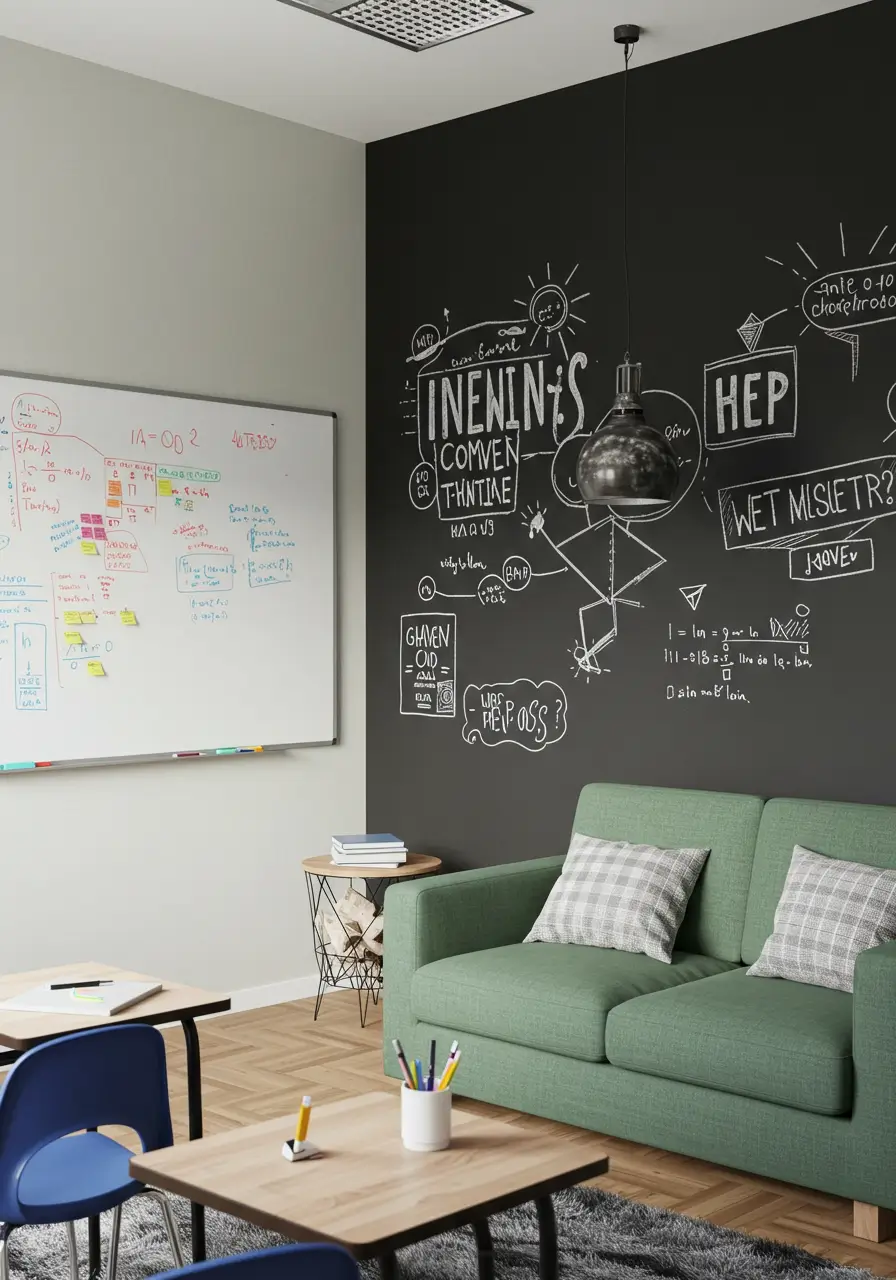
A chalkboard or whiteboard area can support grocery lists, family schedules, menus, sketches, or changing messages. It works well in a kitchen, playroom, entryway, or home office where practical information needs a visible home.
Frame the area with wood trim or paint to make it feel intentional. Before applying chalkboard paint, prepare the wall according to the product instructions. For a cleaner and less permanent option, mount a framed board rather than painting the wall itself.
14. Organize a Workspace With a Metal Grid Panel
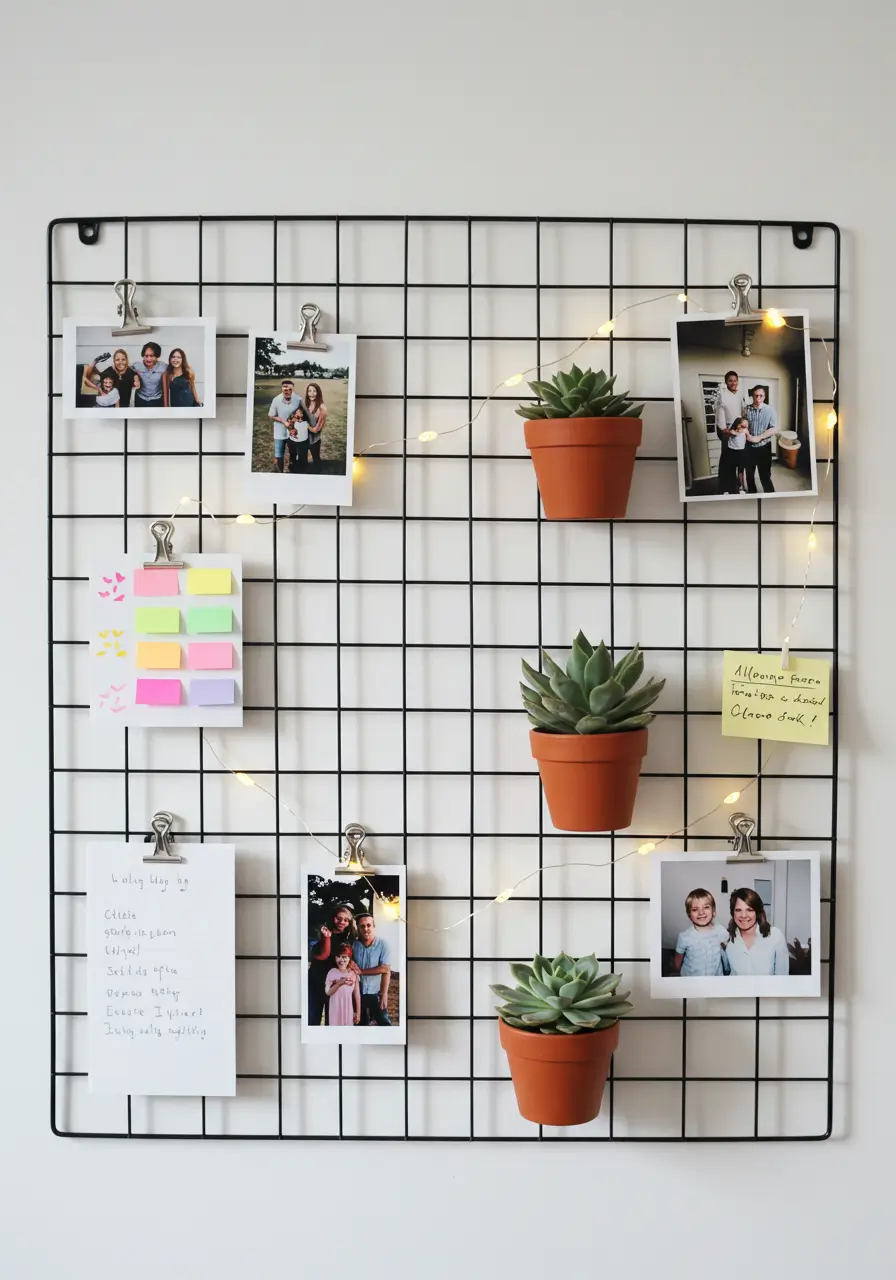
A metal grid panel combines decoration with lightweight organization. Clips can hold inspiration images, calendars, notes, swatches, and photographs, while compatible baskets may store small supplies.
Keep frequently used items within easy reach and limit the color palette to prevent visual clutter. Confirm how much weight the panel and its accessories can carry; it should not be used as heavy-duty storage unless specifically designed for that purpose.
15. Make a Yarn Wall Hanging
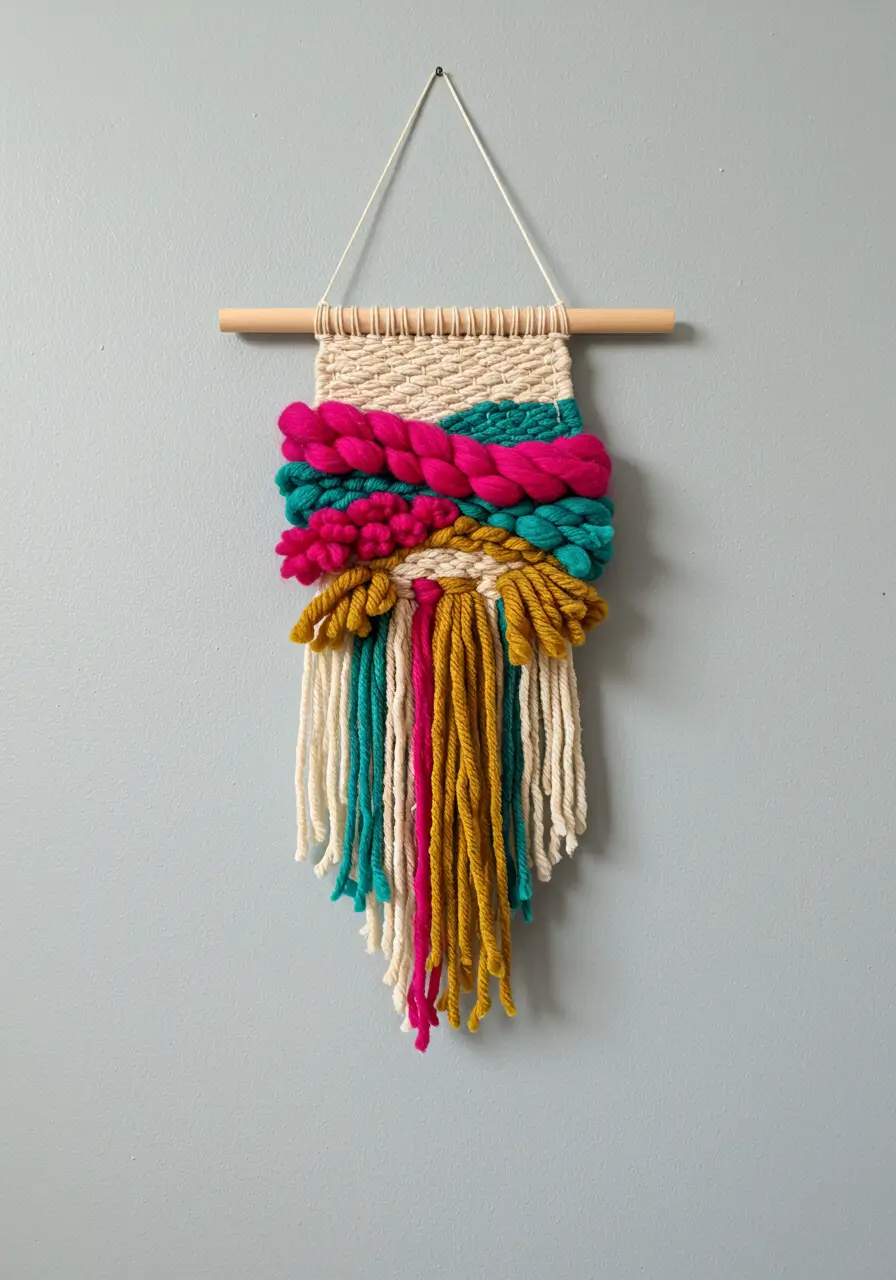
A yarn hanging is an approachable project that can be customized to fit awkward wall dimensions. Attach strands to a wooden dowel, smooth branch, metal ring, or embroidery hoop, then trim them into an arch, diagonal line, or geometric shape.
Combine different yarn weights for depth, but repeat colors from the room to maintain cohesion. This lightweight decor is useful above a desk, reading chair, or small dresser where a heavy object might feel overpowering.
Personal and Statement-Making Wall Displays
16. Frame Pressed Flowers and Leaves
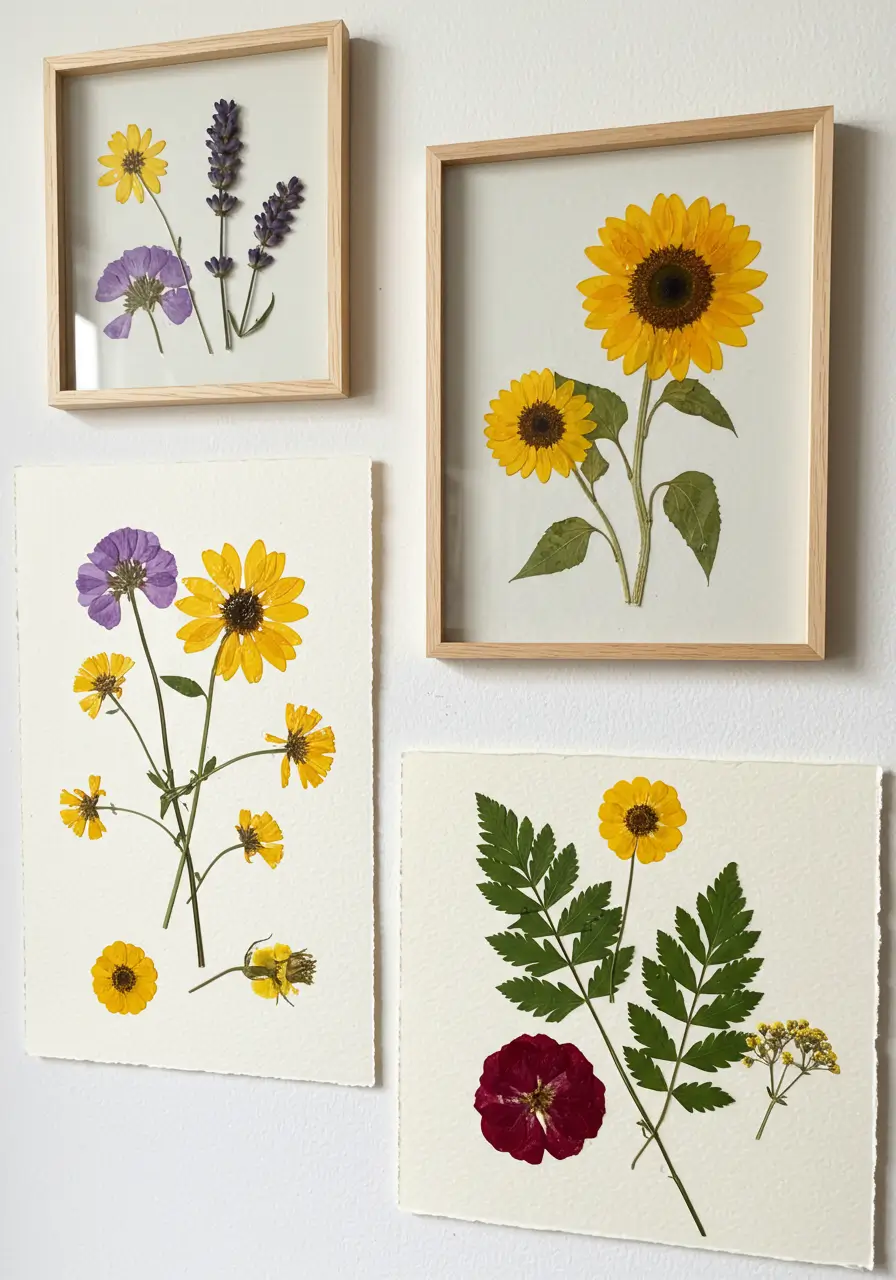
Pressed botanical art brings delicate color and organic detail indoors. Display specimens in floating frames or arrange them on acid-free paper with handwritten labels for a collected, vintage-inspired look.
Use flowers and leaves you are permitted to collect, dry them thoroughly, and keep the finished artwork away from direct sunlight and persistent humidity. Natural materials may fade over time, which can become part of the display’s character.
17. Create a Themed Poster Collection
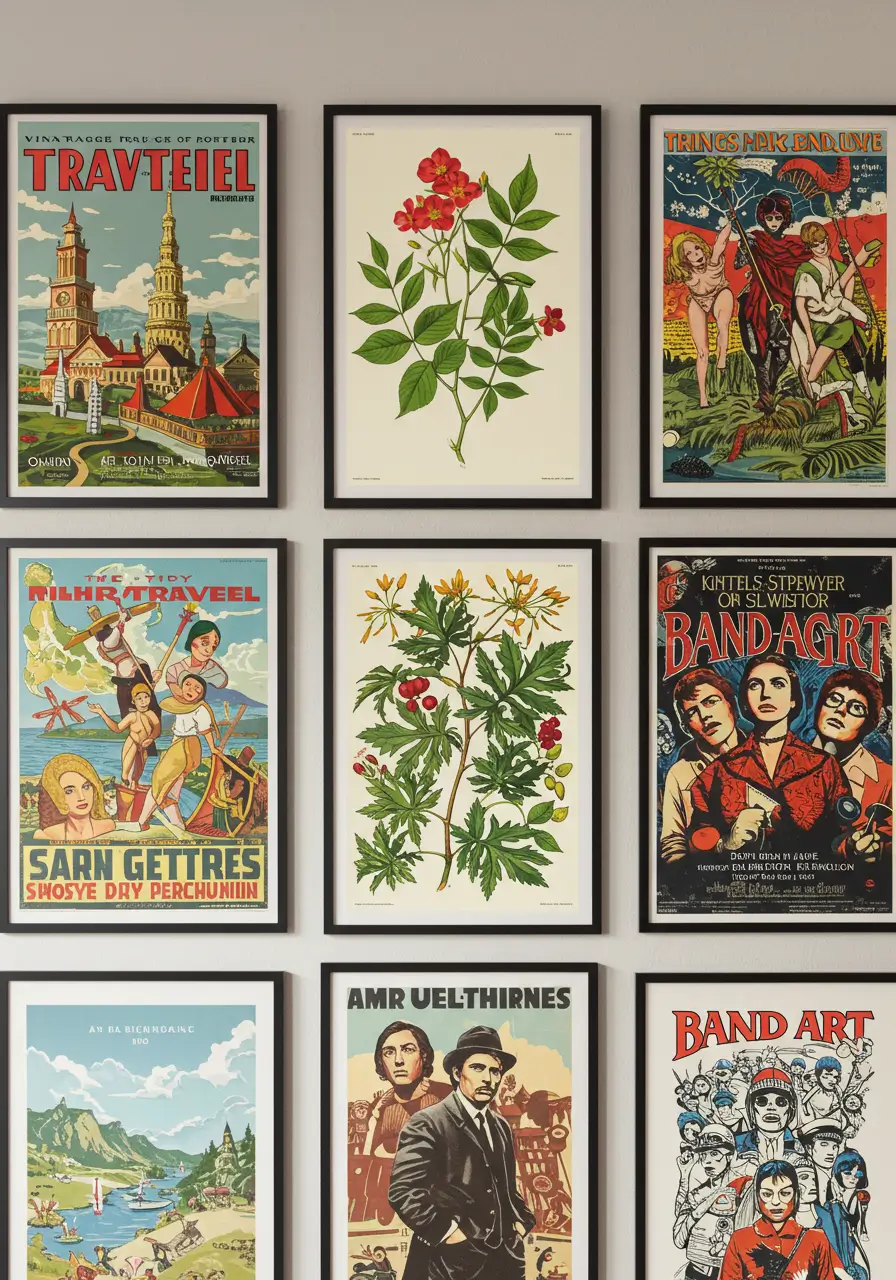
Build a collection around a genuine interest, such as botanical illustration, architecture, travel, cinema, music, or typography. A clear theme makes inexpensive posters feel purposeful rather than random.
Matching frames produce a structured look, while mixed frames feel more collected. Use artwork you own or have permission to print, and choose protective framing for valuable or irreplaceable pieces.
18. Add a Wooden Bead Garland
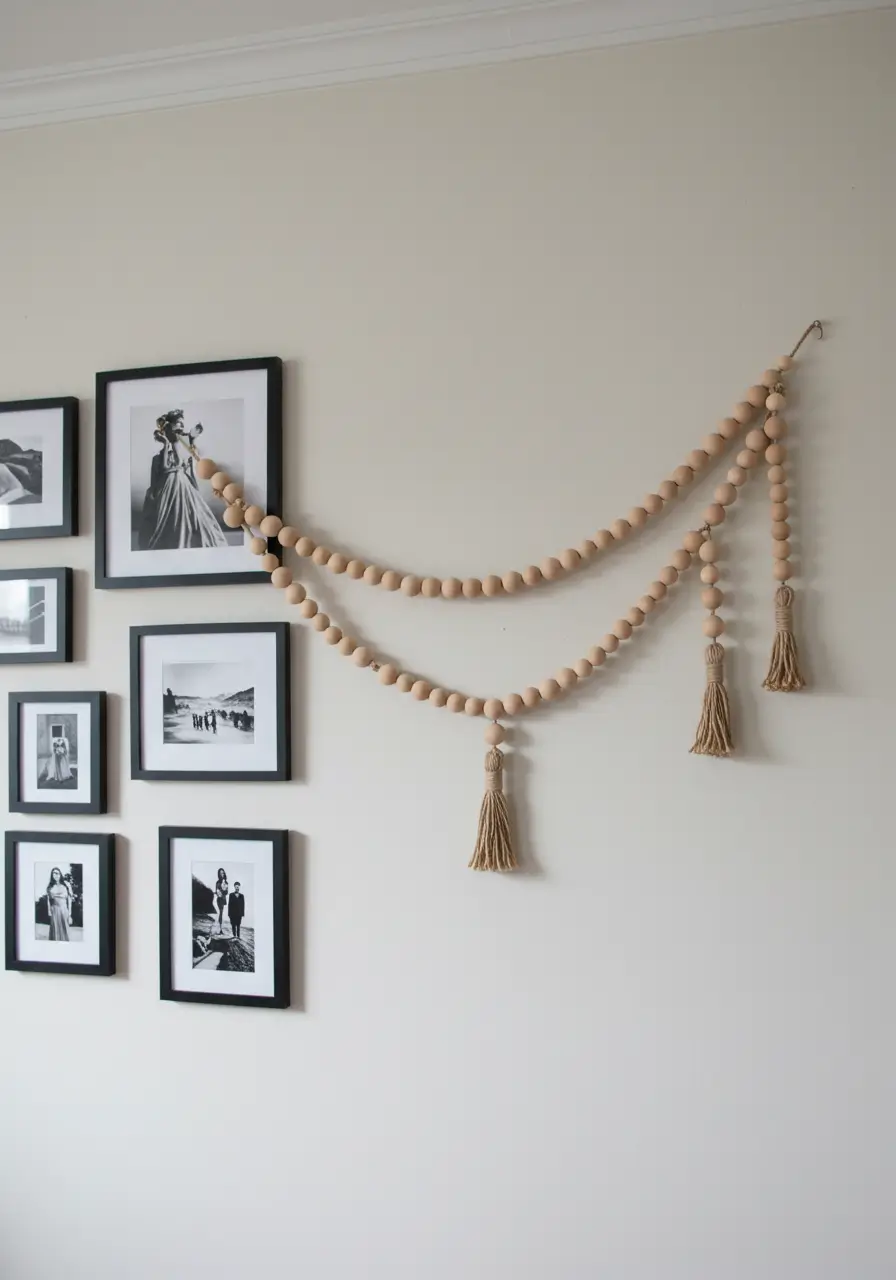
A wooden bead garland adds a small layer of texture to a mirror, shelf, peg rail, or gallery arrangement. Natural wood complements farmhouse, coastal, Scandinavian, and organic modern rooms, while painted beads can introduce a controlled accent color.
Use garlands sparingly so they look intentional rather than like filler. Keep small beads and long cords out of reach of young children and pets, and do not hang them where they could become tangled or pulled down.
19. Use an Oversized Clock as the Focal Point
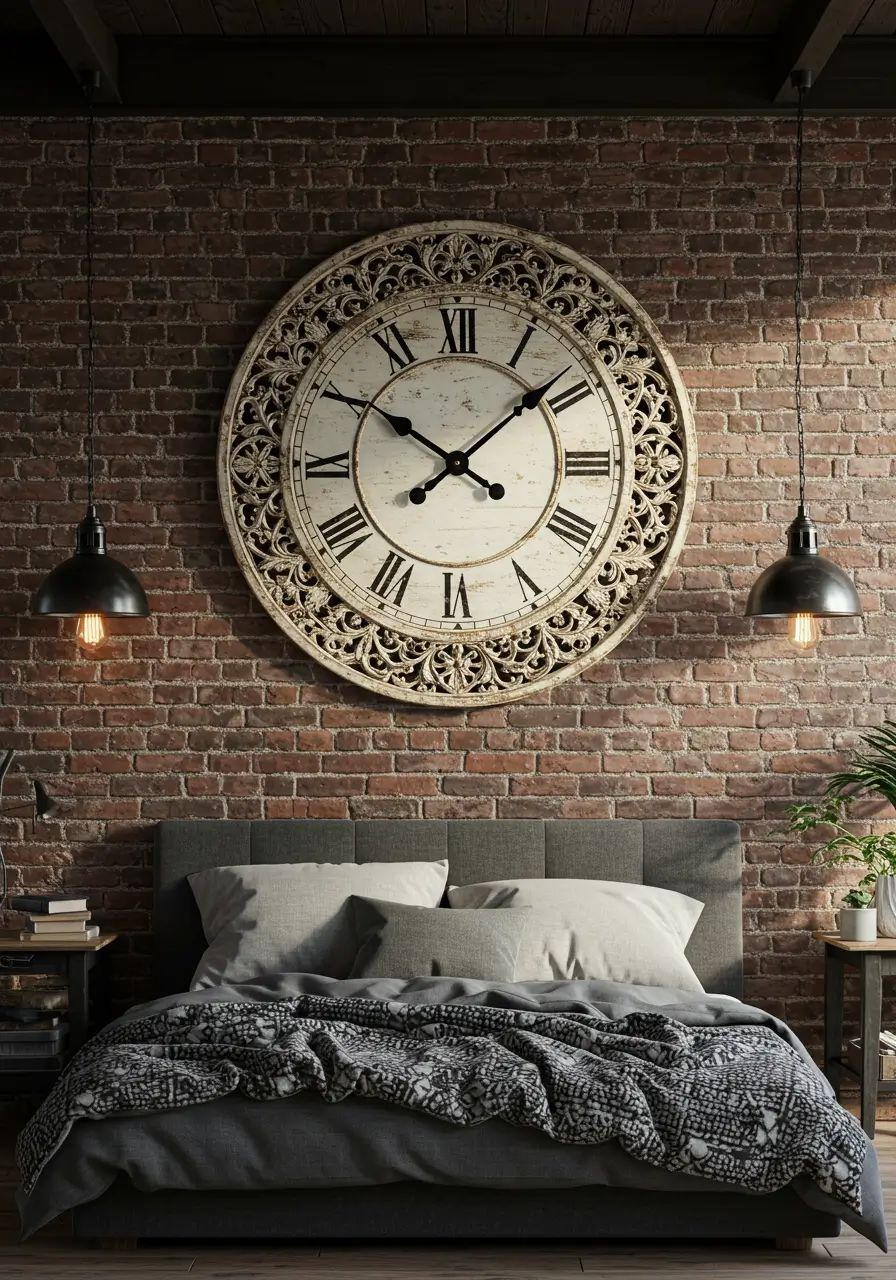
A large clock can provide function and visual impact in a kitchen, dining room, living room, or office. Minimal metal designs suit contemporary interiors, while weathered wood and Roman numerals create a more traditional or rustic effect.
Check the dimensions on the wall before buying by marking the diameter with painter’s tape. Confirm that the hands contrast with the face and that the clock can be read from the intended viewing distance. Because oversized models may be heavy, secure installation is essential.
20. Turn a Hobby or Collection Into Wall Decor
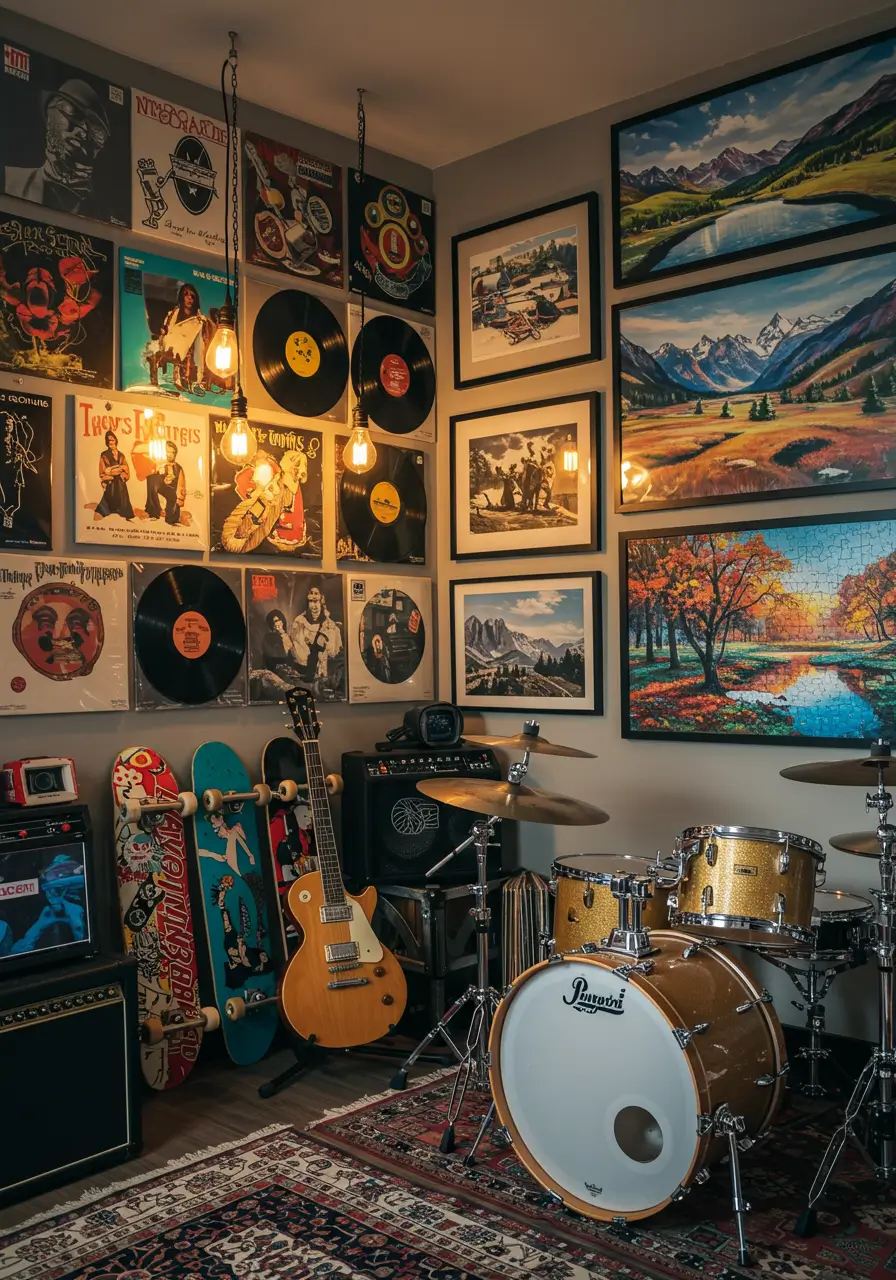
Vinyl records, musical instruments, cameras, skateboards, puzzles, sports memorabilia, handmade crafts, and travel keepsakes can become meaningful displays. This approach gives stored possessions a purpose and makes the room feel unmistakably personal.
Choose a mounting method that protects both the item and the wall. Valuable, fragile, or frequently used objects may be better displayed on ledges, in shadow boxes, or with purpose-built supports. Rotate the collection periodically instead of displaying everything at once.
A Simple Formula for Arranging Wall Decor
- Measure first. Record the wall dimensions and the width of nearby furniture.
- Choose a focal point. Decide which piece or area should attract attention first.
- Repeat visual elements. Connect the arrangement through color, shape, material, or subject.
- Test the layout. Use paper templates or painter’s tape before drilling holes.
- Check from a distance. View the arrangement from the room’s main entrance and seating areas.
- Install safely. Match the hardware to the object’s weight and the wall material.
Common Wall-Decor Mistakes to Avoid
- Choosing decor that is too small: A tiny piece above a wide sofa can look disconnected. Group it with other pieces or choose a larger format.
- Hanging everything too high: Consider typical viewing height and the relationship between the decor and the furniture below it.
- Ignoring visual balance: Distribute dark colors, large frames, and dimensional objects so one side does not feel unnecessarily heavy.
- Using unsuitable fasteners: Adhesive strips, nails, and wall anchors have different limits and are not interchangeable.
- Decorating every available surface: Some empty space helps important pieces stand out and gives the room a calmer rhythm.
Optional Wall Accent for a Playroom
For a child’s bedroom, classroom-inspired corner, or family playroom, the Play Learn & Grow Together wall stickers on Amazon offer a ready-made decorative option. Check the current dimensions, materials, included pieces, application instructions, customer feedback, and wall-surface compatibility before ordering, as listing details and availability can change.
Frequently Asked Questions
How do I choose wall decor that matches my style?
Look at the colors, materials, shapes, and patterns already present in the room. Select wall decor that repeats some of those elements while adding one new point of interest. A modern room might use clean frames and abstract forms, while a relaxed natural room may benefit from wood, woven fibers, plants, and handmade textiles.
What are the most affordable wall decor ideas?
Personal photographs, homemade abstract art, framed fabric, pressed flowers, printable art you have permission to use, washi-tape patterns, and thrifted frames are flexible budget options. Rearranging objects you already own can be more personal and economical than buying an entirely new collection.
How can I decorate a large blank wall?
Use one correctly scaled statement piece, a broad tapestry, removable wallpaper, a large mirror, a gallery arrangement, or several floating shelves. If the wall feels intimidating, divide it visually into smaller zones and develop one coordinated composition rather than scattering objects across the entire surface.
Which wall decor ideas work well for renters?
Leaning artwork, over-door displays, lightweight tension-supported decor, removable decals, and carefully tested adhesive products may reduce the need for permanent changes. However, no product is suitable for every paint or wall finish, so review the lease, follow the manufacturer’s directions, and test an inconspicuous area first.
How do I make a gallery wall look cohesive?
Repeat one or two features across the collection, such as black frames, white mats, botanical subjects, warm colors, or consistent spacing. Arrange everything on the floor or use paper templates before installation. A strong central piece can anchor an asymmetrical collection, while a grid works well when you want a cleaner, more formal result.
Can I mix several wall decor ideas in one room?
Yes, but give the room a visual hierarchy. Let one wall serve as the main feature and keep the remaining displays quieter. Repeating colors or materials across the gallery wall, shelves, textiles, and accessories will help the different ideas feel connected.
Your walls do not need to be filled all at once. Start with a piece that has meaning or solves a practical need, live with it for a few days, and add supporting elements gradually. A thoughtful arrangement of art, texture, storage, and personal objects will usually feel more welcoming than a wall decorated simply to occupy every empty space.