Serviceberries carry a quiet secret. These lovely native shrubs are members of the rose family, yet their name comes from a much more somber tradition. The plants bloom just as the ground thaws in early spring. In centuries past, that was the precise moment when graves could finally be dug after a frozen winter. The flowers and funeral services often coincided, leading to the common name we use today. But there is nothing grim about adding one of these four-season beauties to your landscape. From spring blossoms to summer berries, fiery autumn leaves, and silver winter bark, serviceberries deliver year-round interest. Here is how to get started with planting serviceberry shrubs so they thrive for years to come.
1. Choose the Right Location for Sunlight and Soil
Before you dig a single hole, take a close look at your yard. Serviceberries grow best when they receive the right balance of light. They are naturally understory plants, which means they tolerate some shade. But if you want abundant flowers and a heavy crop of berries, aim for full sun. That means at least six hours of direct sunlight each day. Part shade, defined as two to six hours of sun, still works, but you will see fewer blossoms and fruit.
Soil quality matters just as much. These shrubs prefer moist, well-drained loamy soil with a slightly acidic pH. They can adapt to neutral ground, but alkaline conditions often cause chlorosis, a condition where leaves turn yellow due to nutrient deficiencies. If your soil is heavy clay, you risk root rot because clay holds too much water. Add organic matter like compost or aged bark before planting serviceberry shrubs in clay-heavy areas. Some varieties tolerate clay better than others, so check the tag on your specific plant.
Spacing is another factor people often overlook. A mature serviceberry can reach 25 feet tall and just as wide. Give each plant enough room so sunlight can filter through the canopy. Crowded shrubs produce fewer berries and become more susceptible to disease.
2. Pick the Best Time of Year to Plant
Timing your planting correctly gives your serviceberry a strong start. For container-grown plants, aim for early spring or early fall. Spring planting allows the roots to settle in before summer heat arrives. Fall planting gives them a chance to establish during cooler weather before winter dormancy. Bare-root serviceberries should go into the ground in early spring, as soon as the soil is workable.
Avoid planting during the peak of summer or when the ground is frozen solid. Extreme temperatures stress young plants and reduce their chances of survival. If you miss the spring window, wait until autumn. The goal is to give the roots several weeks of mild weather to spread before facing harsh conditions.
3. Prepare the Planting Hole Correctly
The size and shape of your planting hole matter more than most people realize. For a container-grown serviceberry, dig a hole that is twice as wide as the pot but exactly the same depth. This wide hole encourages roots to spread outward into the surrounding soil. If you dig too deep, the plant may sink and the trunk base could rot.
For bare-root plants, dig a hole that is the same depth as the roots and slightly wider. Place the plant in the center, then backfill with the original soil. Do not add fertilizer or rich compost to the hole itself. This can cause roots to stay inside the planting hole instead of reaching out into the native soil. Firm the soil gently as you fill to remove air pockets. After backfilling, water thoroughly to settle everything in place.
Apply a two- to three-inch layer of mulch around the base, but keep it a few inches away from the trunk. Mulch helps retain moisture, regulates soil temperature, and suppresses weeds. Just do not pile it up against the bark, which invites rot and pests.
4. Water Strategically During the First Year
Newly planted serviceberries need consistent moisture to establish a strong root system. During the first growing season, water deeply once or twice a week, depending on rainfall. The soil should stay moist but never waterlogged. Stick your finger a couple of inches into the ground near the base. If it feels dry, it is time to water.
Always water at the base of the plant, not the leaves. Wet foliage increases the risk of fungal diseases. A soaker hose or drip irrigation works well for this purpose. After the first year, serviceberries become more drought tolerant. You can reduce watering to every two weeks or only during extended dry spells. Established plants can handle short dry periods, but do not plant them during a drought and expect them to thrive.
5. Prune for Shape, Health, and Light Penetration
Serviceberries do not demand heavy pruning. A little attention each year keeps them looking their best. The main goals are removing dead or damaged wood, shaping the plant, and opening up the canopy so light reaches the interior branches. More light inside the shrub means more flowers and berries throughout the plant.
Prune in late winter or early spring while the plant is still dormant. Start by cutting out any branches that cross or rub against each other. Remove suckers that sprout from the base unless you want a multi-stemmed shrub form. Thin out older, thicker stems to encourage new growth. Aim to create an open, vase-like shape that allows air circulation.
You may also enjoy reading: 7 Home Features That Immediately Turn Away Buyers.
If your serviceberry is growing as a small tree, choose a central leader and remove lower branches gradually over a few seasons. This creates a clean trunk and a rounded crown. For shrub forms, let multiple stems grow naturally and simply tidy up the shape each year.
6. Watch for Common Problems and Pests
Serviceberries are relatively low maintenance, but they are not completely trouble-free. Keep an eye out for a few common issues. Rust, powdery mildew, and leaf spot can appear, especially in humid climates or when air circulation is poor. Proper spacing and pruning help prevent these fungal problems. Avoid overhead watering to keep leaves dry.
Insect pests include aphids, spider mites, and borers. Aphids cluster on new growth and can be washed off with a strong stream of water. Spider mites appear during dry weather and cause stippled leaves. Borers are more serious; they tunnel into the trunk and branches. Keeping your plant healthy is the best defense. Stressed plants attract borers more readily than vigorous ones.
One unique concern with serviceberries involves livestock. The berries contain compounds that can convert to cyanide in the digestive systems of cattle, sheep, and goats. If you have grazing animals, keep them away from the plants. Birds, however, adore the berries and will flock to your shrub in summer. That is part of the charm for wildlife lovers.
7. Choose the Right Variety for Your Region
The genus Amelanchier includes many species and cultivars. Not every type suits every garden. Check your growing zone first. Serviceberries thrive in zones 2 through 9, which covers a huge range of climates. But within that range, some varieties perform better than others.
For smaller gardens, look for compact cultivars like ‘Allegheny’ or ‘Princess Diana’. These stay around 15 to 20 feet tall. For larger spaces, the native downy serviceberry (Amelanchier arborea) can reach 25 feet. The Saskatoon serviceberry (Amelanchier alnifolia) is popular in the western United States and Canada for its abundant, sweet berries. If you have boggy soil, the swamp serviceberry (Amelanchier canadensis) handles wet feet naturally.
Local native plant nurseries often carry the best selections for your area. They can advise which varieties attract the most local pollinators and birds. Planting a species native to your region also means less fussing over soil amendments and watering schedules.
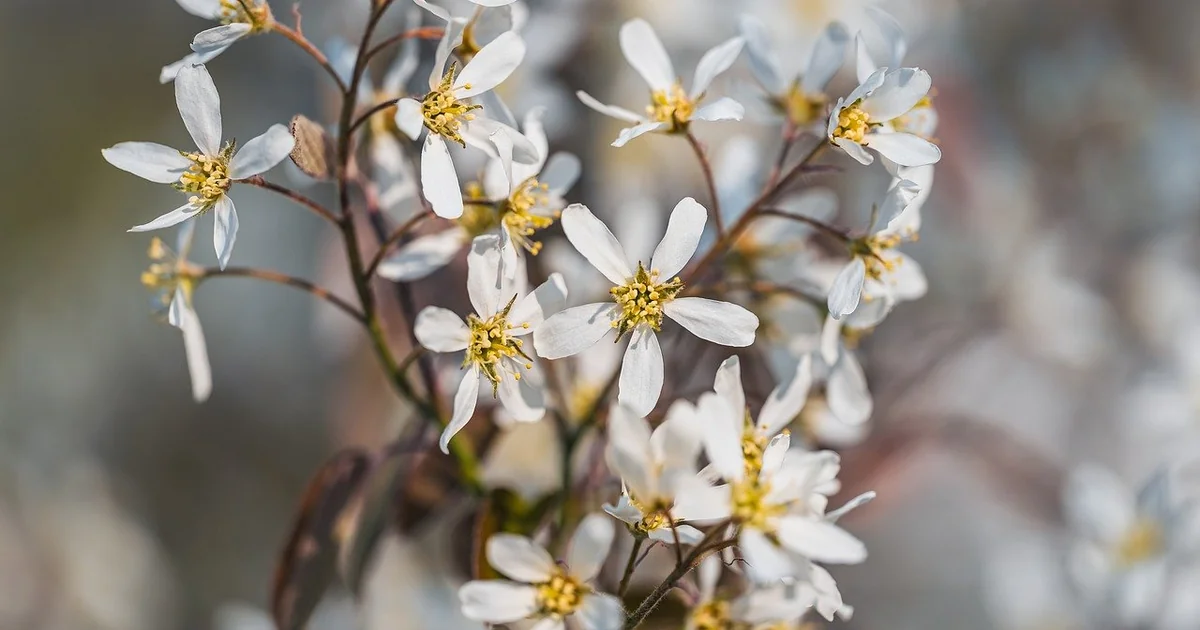
Serviceberries reward your efforts with beauty across every season. The white or pink blossoms appear in early spring, often before the leaves fully unfurl. Those five-petaled flowers resemble apple blossoms but with narrower petals. They last only about a week, but they provide some of the first nectar for bees and butterflies. Then come the berries, ripening from deep red to purple in summer. You can eat them fresh, bake them into pies, or make jams and jellies. The flavor is similar to blueberries with a hint of almond. Birds will compete with you for the harvest, so plan to share or cover the shrub with netting if you want a full crop.
Autumn transforms the foliage into shades of orange, red, and yellow. The display rivals any maple or burning bush. When the leaves drop, the silver-gray bark becomes the star. It stands out beautifully against a backdrop of evergreens or a dusting of snow. With the right care, your serviceberry will become a cherished part of your landscape for decades.